Advertisement
Advertisement
February 2025
Sponsored by Penumbra, Inc.
The Right Coil for Every Case: A Tailored Approach With Penumbra’s Embolization Platform
Optimizing embolization techniques is essential for achieving durable vessel occlusion and minimizing recanalization risk in high-flow and tortuous vascular anatomies. Embolization plays a critical role in managing pelvic venous disease, aneurysms, and pseudoaneurysms, requiring embolic agents that provide durable occlusion, control, and compatibility with a range of vessel anatomies. In high-flow or tortuous vasculature, coil performance directly impacts procedural efficiency and long-term success.
A 2024 retrospective study on high-volume, detachable, nonfibered coils in pulmonary arteriovenous malformations found a significantly higher persistent occlusion rate with mechanical occlusion (96.3%), compared to 81.8% with thrombus-dependent coils.1 These data underscore the benefit of high-volume, nonthrombogenic embolization strategies, particularly in applications requiring long-term vessel closure with reduced recanalization risk. Mechanical occlusion technology offers a promising alternative to traditional thrombus-dependent coils, enabling vessel closure without relying on clot formation.2,3
The Penumbra embolization platform—including Ruby®, POD®, and Packing Coil—is engineered to maximize packing density, minimize coil usage, and enhance procedural efficiency, addressing key limitations of conventional embolic strategies.
Penumbra’s embolization platform is designed to give physicians the right coil for every case, offering a versatile selection of large-volume and soft coils that adapt to different vessel anatomies and flow dynamics. Each of Penumbra’s dedicated embolization devices is designed to assist interventionalists across a wide variety of arterial and venous applications.
ADVANTAGES OF THE PENUMBRA EMBOLIZATION PLATFORM: THE RIGHT COIL FOR EVERY CASE
• Higher packing density. Large-volume platinum coils reduce the number of coils needed, streamlining procedures.
• Soft, conformable design. Enhances vessel occlusion while maintaining flexibility in tortuous anatomy.
• Versatile length configurations. Ranges up to 70 cm to accommodate embolization of extensive vascular segments.
• Detachable and resheathable. Allows for precise repositioning, optimizing placement and minimizing nontarget embolization.
1. Mathevosian S, Sparks HD, Cusumano LR, et al. Embolization of de novo pulmonary arteriovenous malformations using high-volume detachable non-fibered coils: propensity-matched comparison to traditional coils. J Clin Med. 2024;13:648. doi: 10.3390/jcm13030648
2. Enriquez J, Javadi S, Murthy R, et al. Gastroduodenal artery recanalization after transcatheter fibered coil embolization for prevention of hepaticoenteric flow: incidence and predisposing technical factors in 142 patients. Acta Radiol. 2013;54:790-794. doi: 10.1177/0284185113481696
3. Vogler J, Gemender M, Samoilov D. Packing density and long-term occlusion after transcatheter vessel embolization with soft, bare-platinum detachable coils. Am J Interv Radiol. 2020;4. doi: 10.25259/AJIR_31_2019
MANAGEMENT OF PELVIC VENOUS DISEASE WITH GONADAL VEIN EMBOLIZATION

WHY I USE PENUMBRA’S EMBOLIZATION PLATFORM
• Versatility of diameters and length options
• Ease of deployment/retraction and nonflimsy coil pusher
• High packing density advantage
PATIENT PRESENTATION
A woman in her early 30s with a long history of hospital admissions and emergency department (ED) visits for abdominal and pelvic pain of an undiagnosed source was referred to our institution. The patient’s pain was described as aching and cramping lasting for weeks, and it was associated with pressure and pelvic bloating.
Over the previous 18 months, she had undergone five inconclusive pelvic ultrasounds and four abdominal/ pelvic CT exams—all at our hospital. Only on the most recent CT exam did the radiologist describe a large (up to 10 mm) left gonadal vein with bilateral periuterine vessels consistent with pelvic congestion syndrome (Figure 1 and Figure 2). A referral was made for gonadal vein embolization.
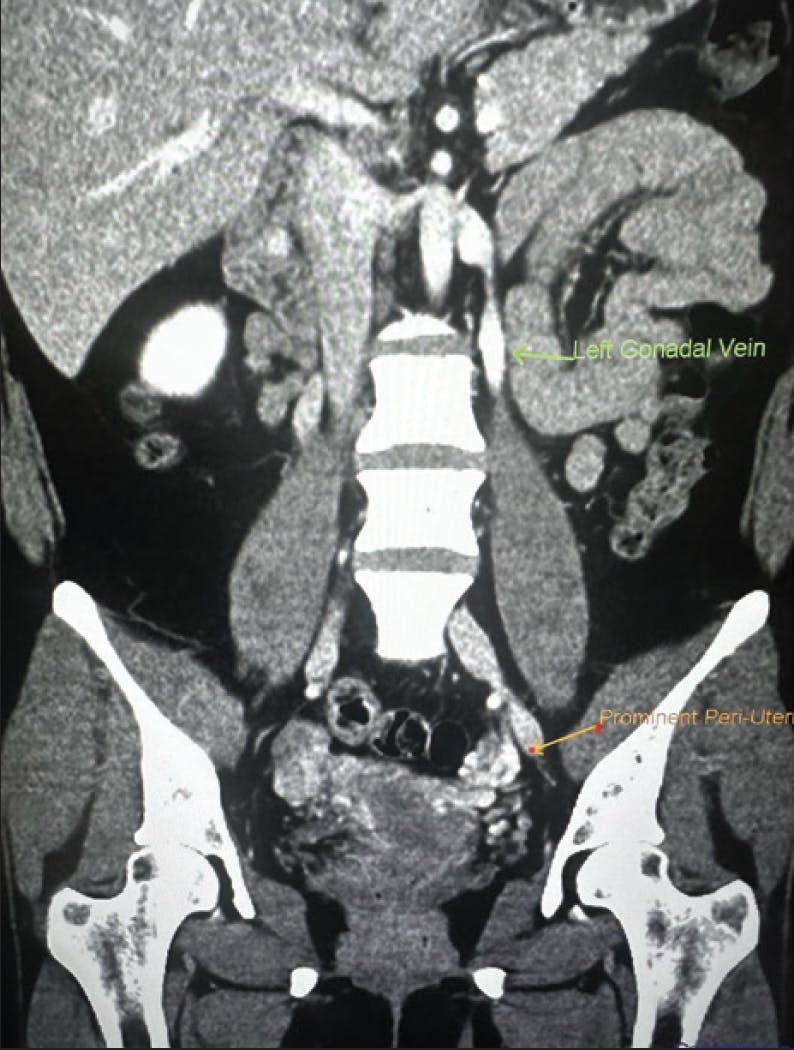
Figure 1. Coronal slice of CT with intravenous contrast demonstrating large left gonadal vein (green arrow) with diffuse periuterine veins (orange arrow).
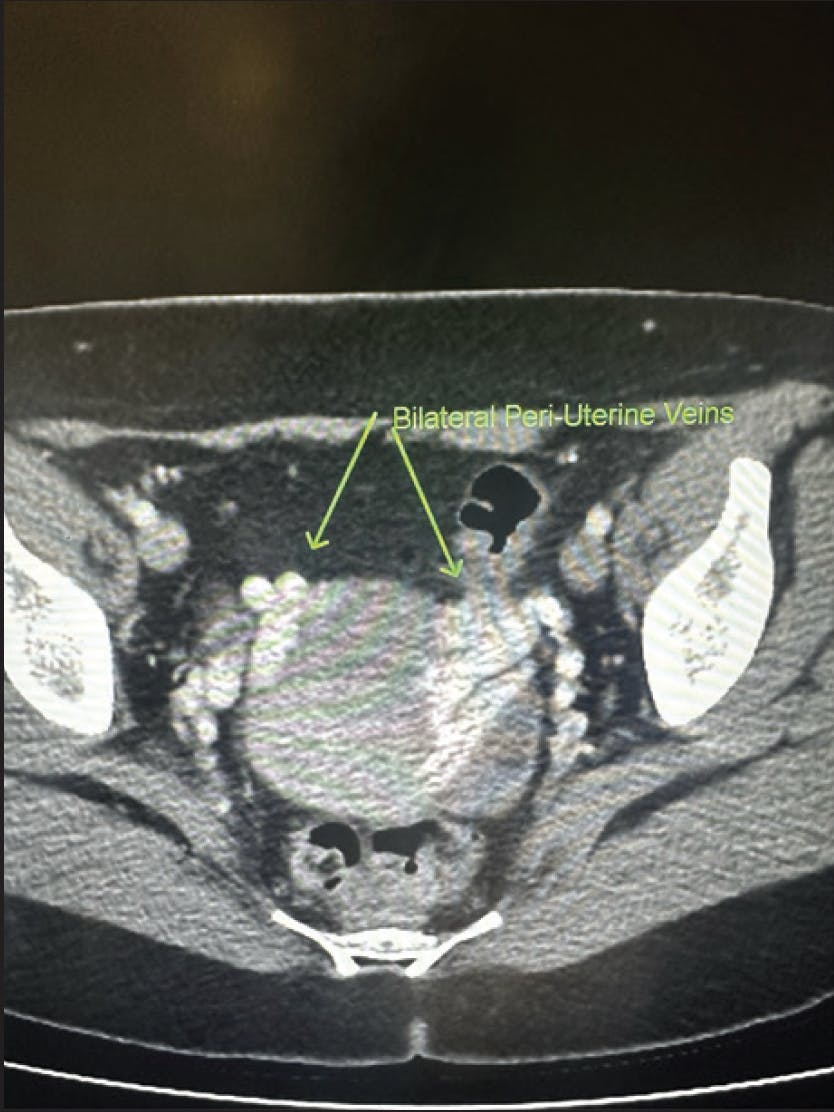
Figure 2. Axial image of the midpelvis showing diffuse web-like periuterine veins (green arrows).
INTERVENTION
Venous access was achieved under ultrasound guidance via the right internal jugular vein. A 0.035-inch Glidewire Advantage guidewire (Terumo Interventional Systems) was advanced inside a 5-F, 25-cm Pinnacle R/O II radiopaque marker introducer sheath (Terumo Interventional Systems).
Then, a 5-F, 65-cm angled Glidecath hydrophilic-coated catheter (Terumo Interventional Systems) was used to select the left renal vein. A distal left renal venogram was obtained, revealing large reflux into a dilated left gonadal vein (Figure 3). The same catheter was then used to subselect the left gonadal vein and advance distally to the midpelvic region. Sequential pelvic venograms were obtained while the patient was performing the Valsalva maneuver, and the images showed a dilated left gonadal vein with left-to-right, transpelvic, web-like venous collaterals (Figure 4).
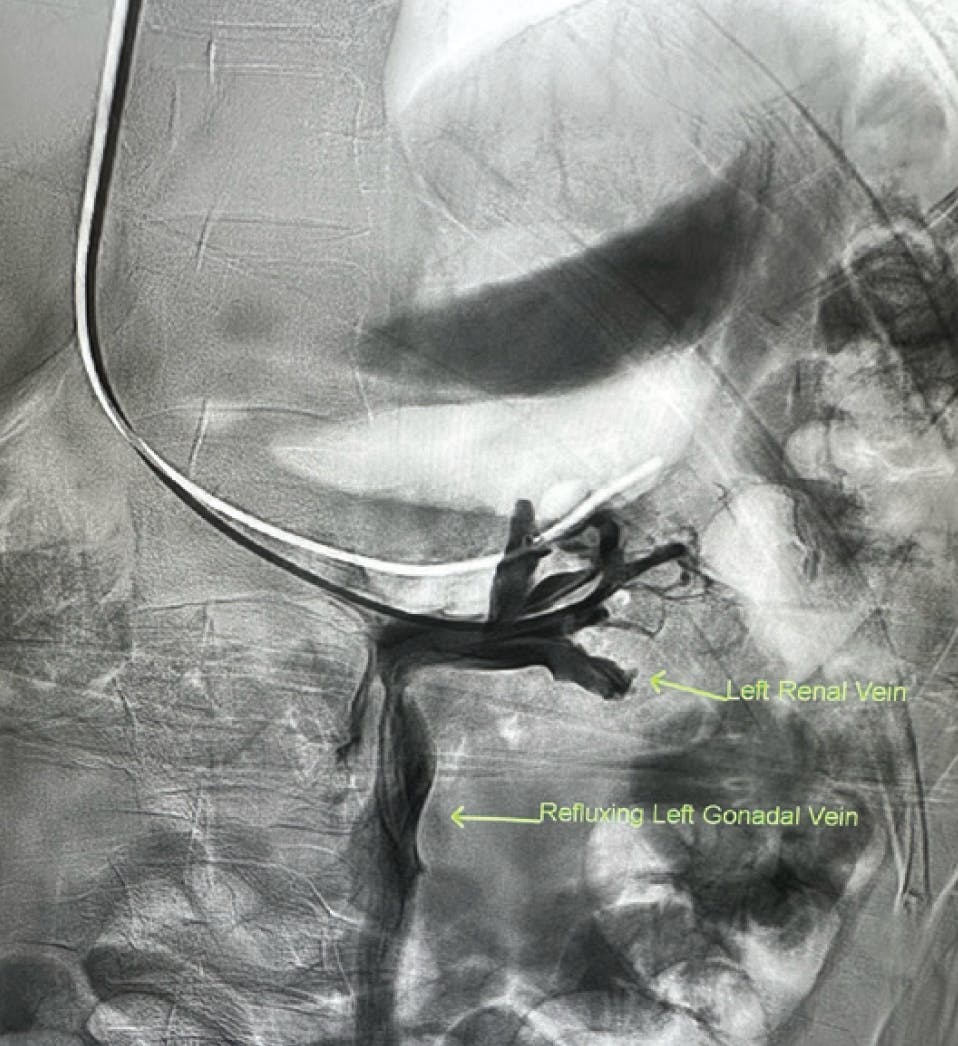
Figure 3. Initial left renal venogram demonstrating venous reflux into the left gonadal vein (lower arrow).
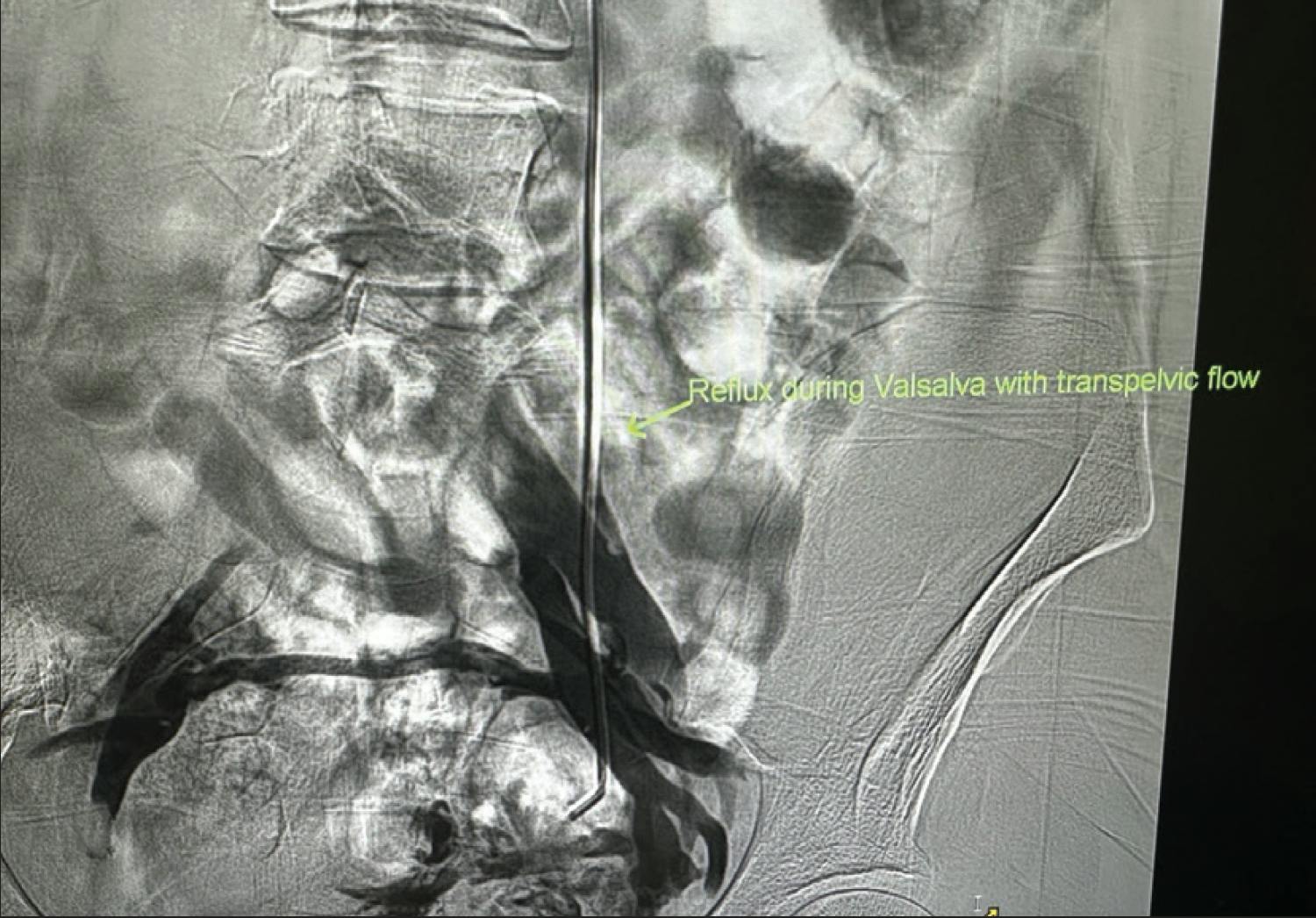
Figure 4. Left gonadal venogram during the Valsalva maneuver documenting refluxing veins with a transpelvic crossing (left to right) of large periuterine veins.
Next, a 2.8-F, 130-cm Progreat microcatheter (Terumo Interventional Systems) was further advanced caudally into the left periuterine region, and subsequent ascending embolization with coils was performed. The diameters of the coils were increased while progressing upward toward the left renal junction (from 5 mm in the periuterine area up to 10 mm near the junction with the left renal vein). A total of 4 mL of 1.5% sodium tetradecyl sulfate (STS) sclerosant (Hikma Pharmaceuticals) was also injected into the left gonadal vein in a sandwich pattern (coil-STS-coil). No cyanoacrylate medical glue was used due to the patient’s allergic history to tape and adhesives.
Penumbra Ruby Coils (Soft, Standard, and POD) were used. Given the relatively long vascular territory to embolize, the longest available coils were preferred with Ruby over fibered coils to achieve greater packing density. Post-embolization, a distal left renal venogram documented normal venous flow into the inferior vena cava (IVC) with no residual reflux into the densely packed left gonadal vein (Figure 5). An IVC venogram was then obtained (with the patient bearing down) that did not opacify a right gonadal vein.
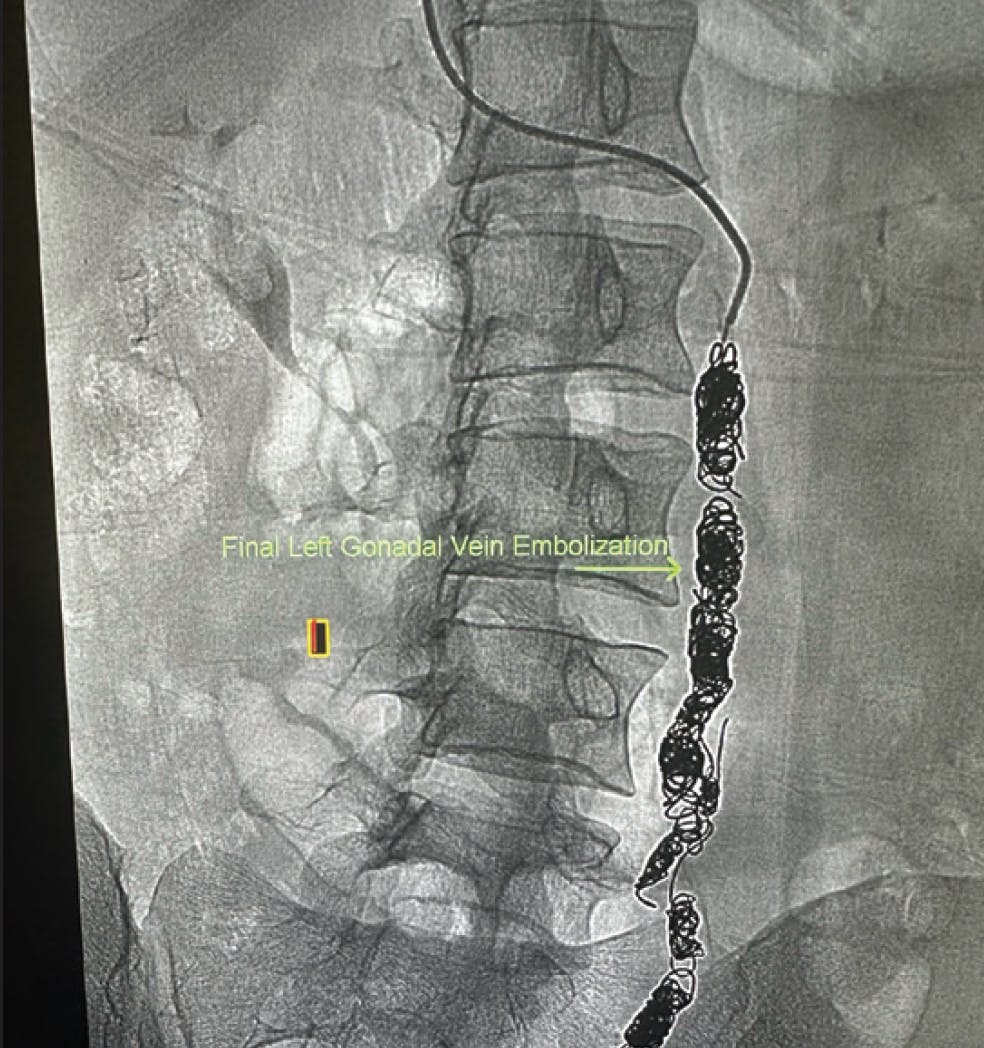
Figure 5. Final image of the densely compacted coils within the whole length of the left gonadal vein.
Conclusion
The catheters and sheath were removed, and manual pressure was applied over the venotomy access site. The patient was discharged home after a 3-hour observation, and she was asymptomatic on her 30-day clinical follow-up. We preferred the use of a large-volume coil platform for a one-size-fits-all solution in this particular case, and we were able to achieve a successful outcome.
EMBOLIZATION OF MESENTERIC ANEURYSM/PSEUDOANEURYSM WITH RUBY LP AND PACKING COILS LP

WHY I USE PENUMBRA’S EMBOLIZATION PLATFORM
• “Liquid” Packing Coils allow dense conformable embolization into aneurysms through 0.018- and 0.021-inch platforms
• Designed to track into small tortuous vessels with minimal to no catheter kick-back
• The variety of sizes and platforms for delivery through both low-profile and high-flow microcatheters
PATIENT PRESENTATION
A woman in her mid-50s with a history of squamous cell carcinoma of the right tonsil presented to the ED with severe abdominal pain after radiation treatment. Evaluation revealed a large 12- X 11-cm retroperitoneal hematoma with active extravasation from a ruptured 0.8- X 1.3-cm superior pancreaticoduodenal artery pseudoaneurysm; additionally, a 2- X 3-cm unruptured aneurysm was discovered (Figure 1A and 1B). CT imaging also showed a chronic celiac trunk ostial occlusion (Figure 1C).
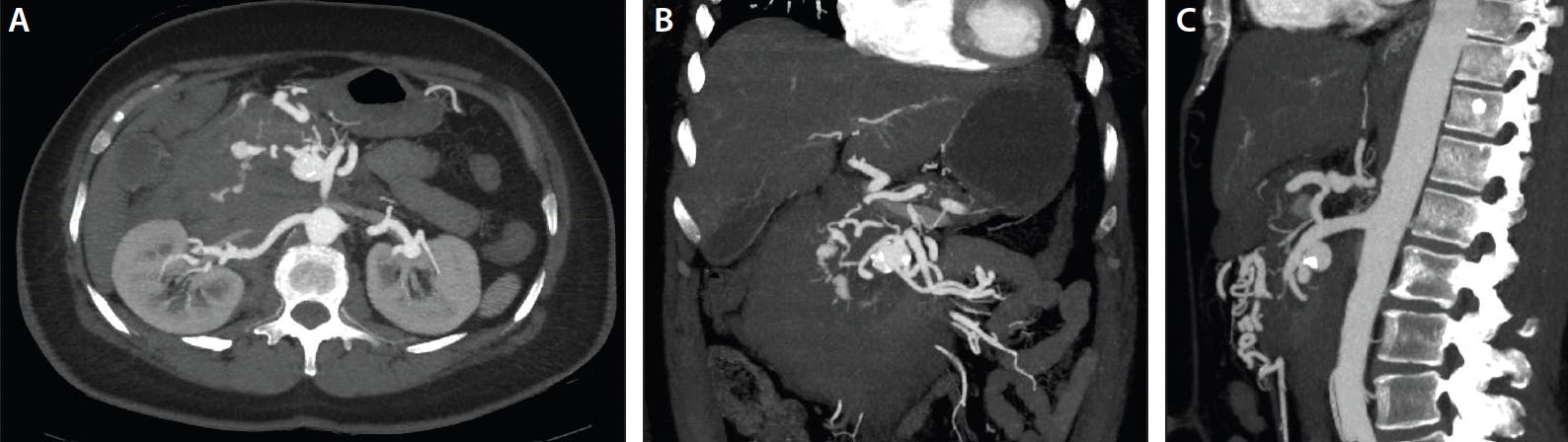
Figure 1. Axial (A) and coronal (B) images show the ruptured and unruptured aneurysms in the region of the superior pancreaticoduodenal artery branches, with a large retroperitoneal hematoma. Sagittal image shows the occluded celiac trunk (C).
INTERVENTION
The right common femoral artery was accessed with a Levin-1 catheter and used to select the superior mesenteric artery (SMA) due to the occluded celiac trunk. A proximal angiogram showed an irregularity of the inferior pancreaticoduodenal-to–superior pancreaticoduodenal anastomosis, with selective and superselective angiography further elucidating the pseudoaneurysm and subtle extravasation from a tertiary branch (Figure 2). The unruptured aneurysm was not well seen.
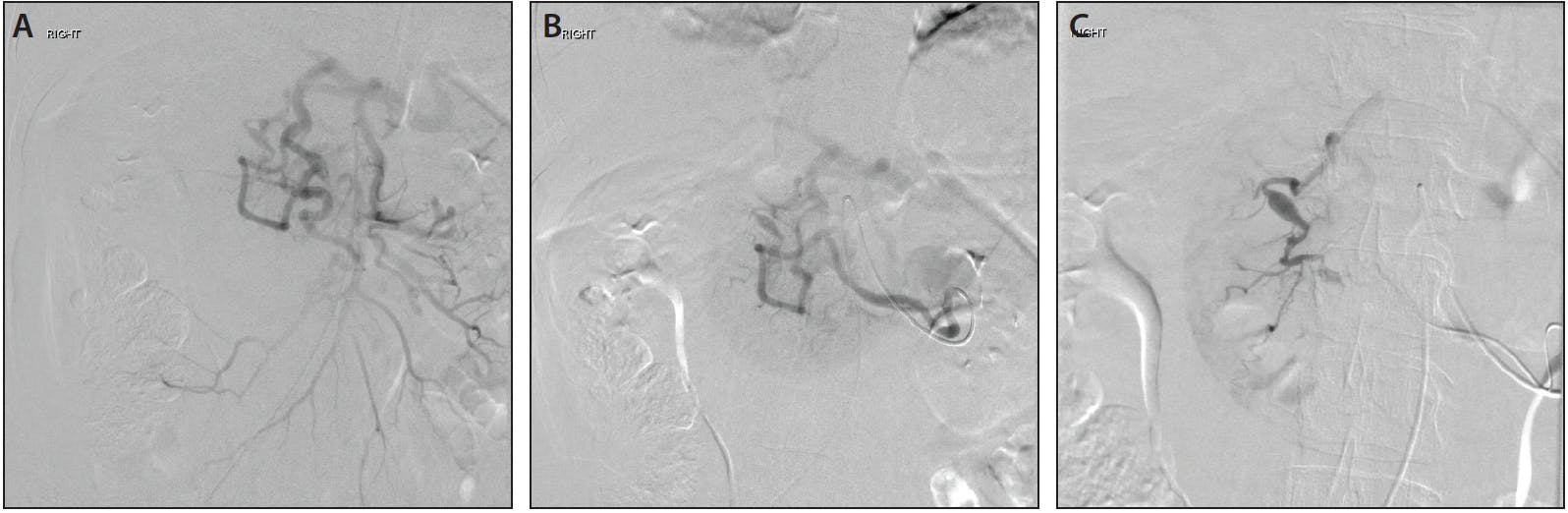
Figure 2. Proximal SMA (A), selective (B), and superselective (C) angiograms show the partially contained superior pancreaticoduodenal pseudoaneurysm, with contrast extravasation in the retroperitoneal space and retrograde flow through the inferior pancreaticoduodenal artery. The unruptured aneurysm is not well seen.
A 2.4-F microcatheter and 0.014-inch microwire were used to traverse the anastomotic irregularity, and coil embolization was performed from antegrade to retrograde across the pseudoaneurysmal tertiary branch with Ruby Coil LP and Packing Coil LP (Penumbra, Inc.). During embolization, the patient suddenly developed abdominal pain and marked active extravasation along the proximal segment, which resolved after complete embolization of this branch (Figure 3A and 3B). Care was taken to preserve retrograde flow through the gastroduodenal artery.
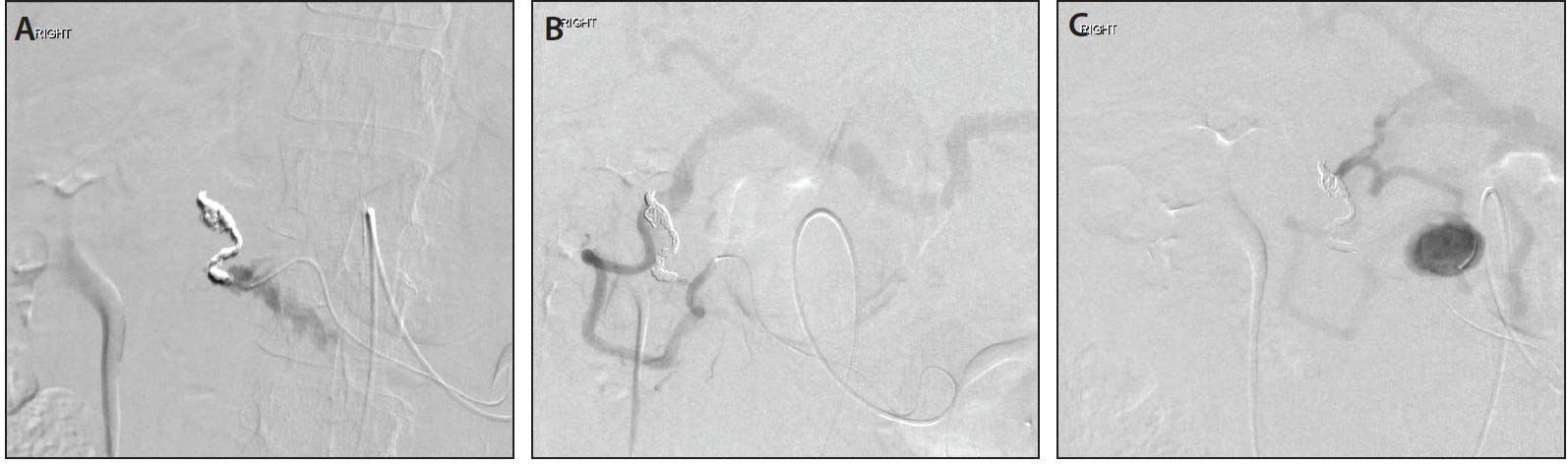
Figure 3. Partial coiling with increased extravasation (A). Complete coil embolization across irregular vasculature with Ruby Coil LP Standard and Packing Coils; gastroduodenal artery flow to proper and common hepatic artery and distal branches is preserved; note the celiac ostial occlusion (B). The unruptured aneurysm is selected from a proximal branch, and angiography is performed (C).
The microcatheter was then manipulated into a proximal tertiary branch, demonstrating filling of the unruptured aneurysm (Figure 3C). The microcatheter was exchanged for a 2.8-F microcatheter and a Ruby Standard Coil was used to frame the aneurysm sac, followed by Packing Coils until stasis was achieved (Figure 4). Care was taken to preserve flow through the main branches providing retrograde flow through the gastroduodenal artery.
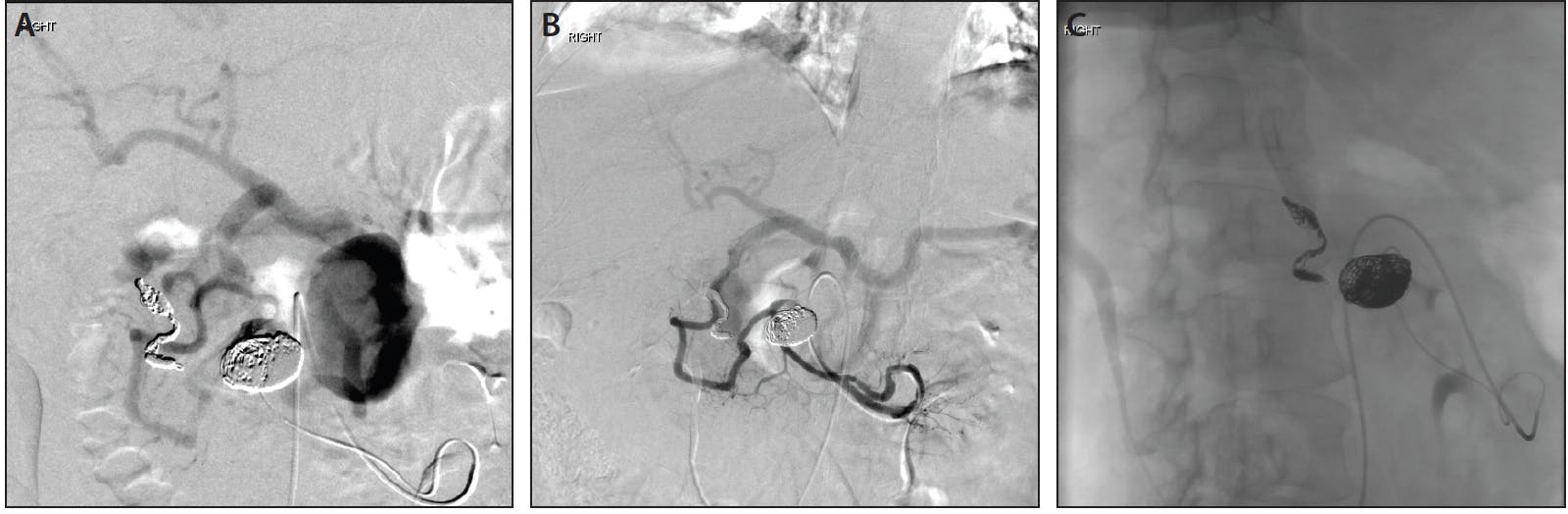
Figure 4. Framing coils and Ruby Packing Coils are placed in the sac to complete stasis of flow, with preserved flow through the main branch through the gastroduodenal artery.
Final angiography demonstrated no further filling of the aneurysm or pseudoaneurysm, and no further active extravasation was seen. Preserved retrograde flow was demonstrated through the gastroduodenal artery supplying the celiac branches.
CONCLUSION
The patient tolerated the procedure well, without evidence of immediate complication, and was discharged in stable condition. Follow-up CTA demonstrated the occluded superior pancreaticoduodenal pseudoaneurysm and aneurysm, without extravasation and with a resolving retroperitoneal hematoma (Figure 5).
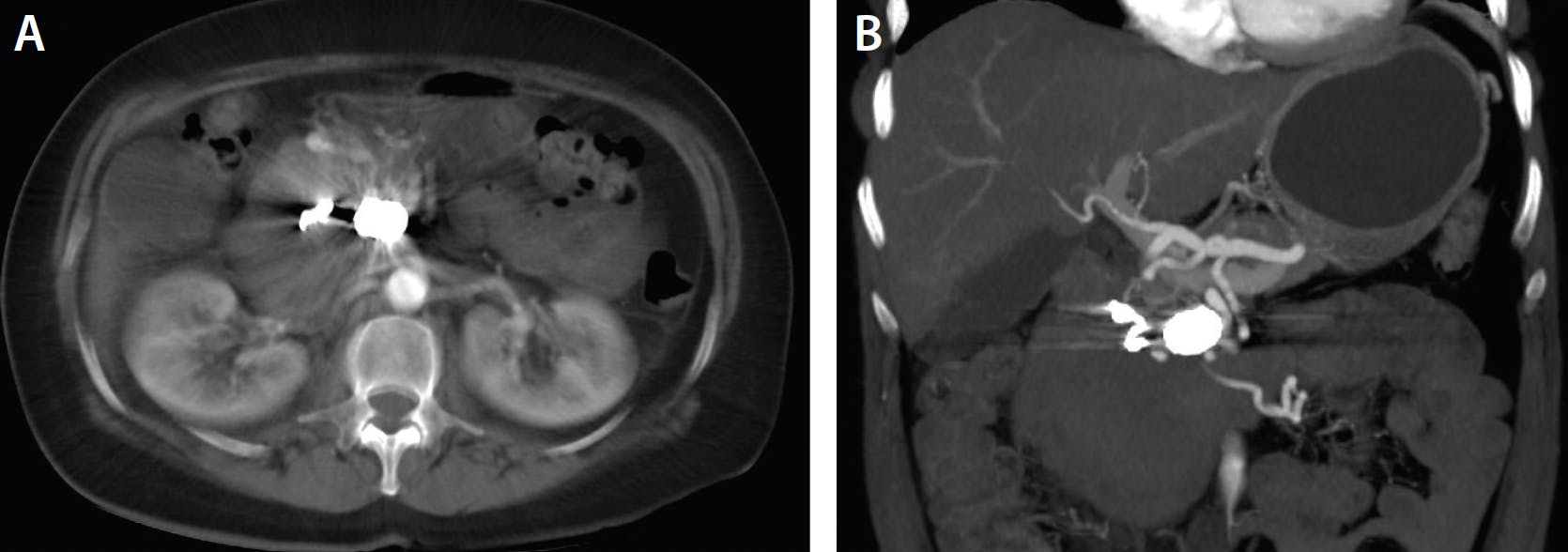
Figure 5. Two-week follow-up CTA demonstrated complete occlusion of the pseudo aneurysm and aneurysmal sacs, with no further extravasation and with the resolving retroperitoneal hematoma (A). Preserved retrograde flow is seen through the gastroduodenal artery to the celiac trunk, with persistent ostial celiac occlusion (B).
Disclaimer: The opinions and clinical experiences presented herein are for informational purposes only. The results may not be predictive of all patients. Individual results may vary depending on a variety of patient-specific attributes.
Advertisement
Advertisement