Advertisement
Advertisement
February 2025
Sponsored by Merit Medical Systems, Inc.
A New Innovation in Embolization: Merit Medical’s Microcatheter-Compatible Siege™ Vascular Plug
With Mahmood Razavi, MD; Christopher Stampe, MD; and Gustavo Andrade, MD, PhD
Embolization has made remarkable advances in recent years, becoming a widely adopted treatment option. The FDA approved the first vascular plug for peripheral vascular embolization in 2004, providing physicians with an effective alternative to coils. Since then, vascular plug technology has improved significantly, and with its advancement, has experienced a rise in popularity and demand. Data suggest that vascular plugs may offer multiple benefits, including low risk of migration, reduced fluoroscopy times, and shorter procedural times.1 Today, vascular plugs are available in a wide range of configurations and sizes, catheter compatibilities, deployment methods, and thrombogenic properties, helping interventionalists to safely embolize vessels and expand clinical application.2
PRODUCT OVERVIEW
A leader in embolotherapy, Merit Medical Systems, Inc. has built a comprehensive embolic portfolio including the market-leading Embosphere® Microspheres as well as particle and gel foam products to facilitate predictable, reliable, and targeted embolization. The latest addition to Merit’s Embolics portfolio is the Siege™ Vascular Plug to complement a comprehensive portfolio of embolic treatment solutions (Figure 1).
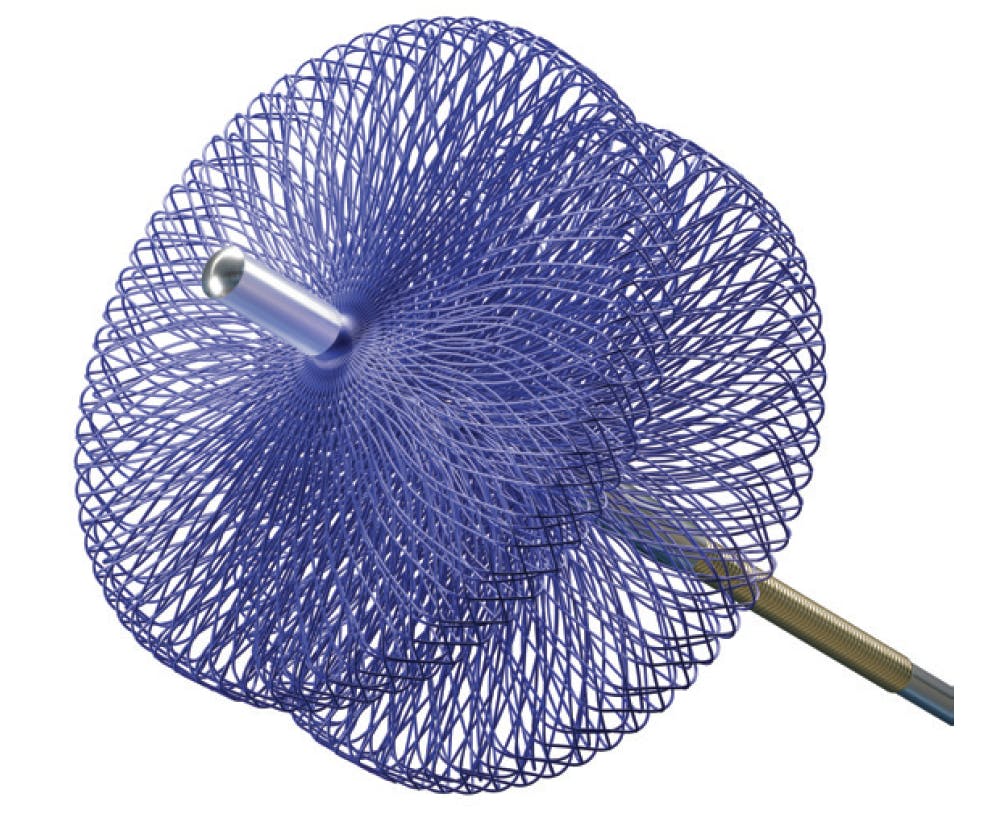
Figure 1. The Siege™ Vascular Plug.
The Siege™ Vascular Plug is designed with conformable, tightly woven, nitinol braiding that achieves apposition in the artery and minimizes potential for distal migration. Radiopaque marker bands provide enhanced proximal and distal visibility* for precise placement. With Siege™ Vascular Plug, operators can recapture, reposition, and redeploy the plug where needed. Average occlusion time is approximately 1.3 minutes.†
Treating arteries measuring from 1.5 to 6.0 mm in diameter, the Siege™ Vascular Plug is available in three sizes, all of which are compatible with a wide range of microcatheters. The versatility of the Siege™ Vascular Plug allows interventionalists to track through tortuous peripheral anatomy and treat multiple conditions with speed and precision without disrupting standard procedural workflows.
1. Prakash S, White SB. Advances in plug technology. Endovasc Today. 2022;21:53-56. https://evtoday.com/articles/2022-apr/advances-in-plug-technology
2. Ghosh A, Xiao N, Gordon AC, et al. Embolic agents: vascular plugs. Semin Intervent Radiol. 2022;39:526-532. doi: 10.1055/s-0042-1758112
*Compared to the leading competitor.
†Based on preclinical porcine subjects.
Successful Embolization of Gastroepiploic Artery Using the Siege™ Vascular Plug

PATIENT PRESENTATION
A male patient in his late 80s presented with a refractory upper gastrointestinal bleed due to a duodenal ulcer. The patient has had two prior endoscopic attempts to control the bleed. On angiography, common hepatic and gastroduodenal arteriograms did not show any bleeding.
PROCEDURAL OVERVIEW
The treatment plan was to embolize the gastroepiploic artery to prevent distal penetration of liquid embolic agent, followed by gastroduodenal artery (GDA) embolization using LAVA® 18 (Sirtex Medical) (Figure 1).
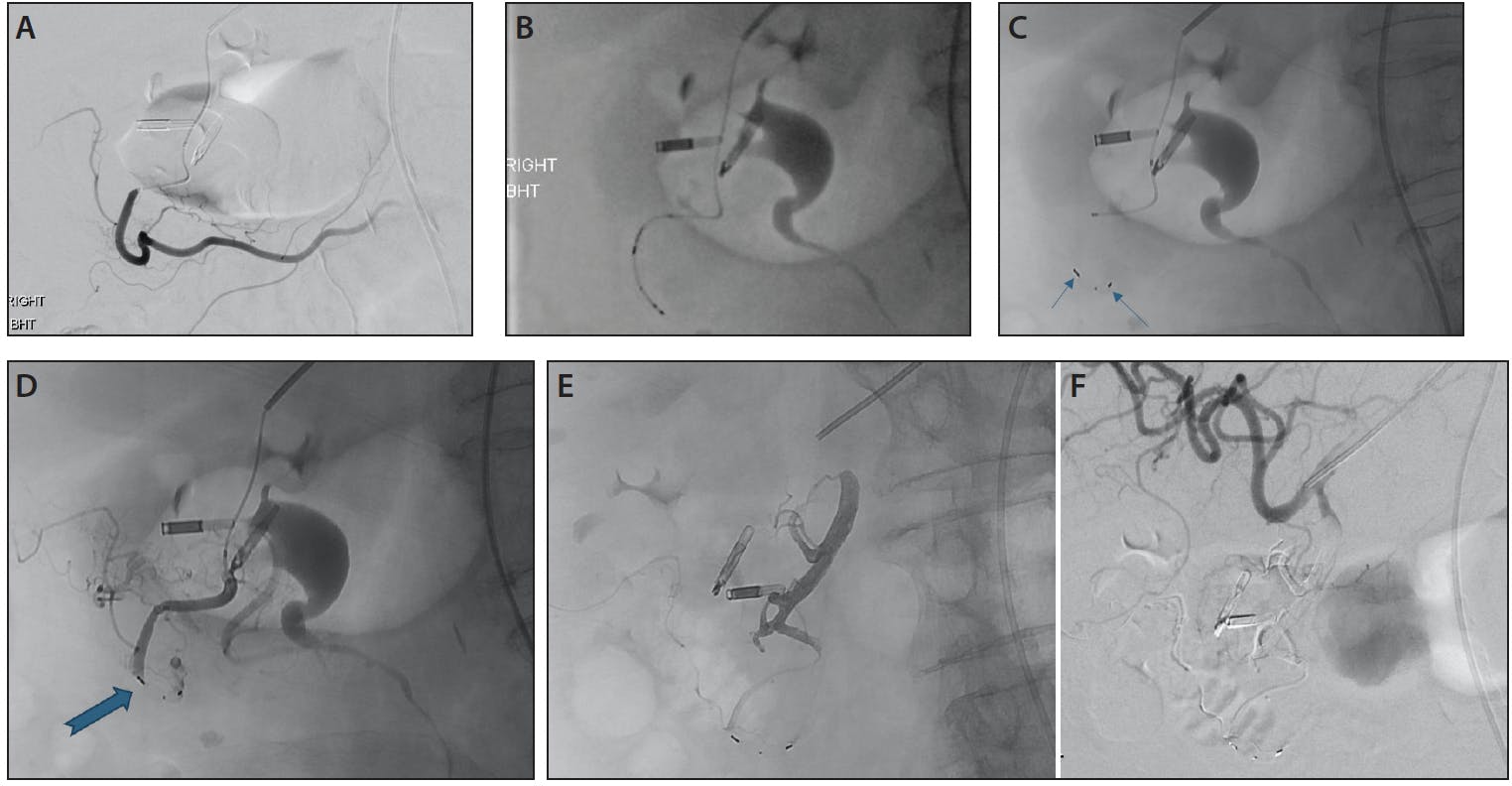
Figure 1. Selective angiogram of the gastroepiploic artery prior to plug placement (A). The 4.5-mm Siege™ Vascular Plug prior to placement (B). Arrows point to the radiopaque marker bands at each end of the Siege™ Vascular Plug deployed in the curved gastroepiploic artery (C). Selective GDA angiogram showing no flow past the plug (arrow) (D). Subtracted (E) and unsubtracted (F) images after GDA embolization. Note the absence of penetration of LAVA® past the Siege™ Vascular Plug.
Using a 2.4-F PROGREAT® microcatheter (Terumo Interventional Systems), a 4.5-mm Siege™ Vascular Plug was implanted into the 3.0-mm gastroepiploic artery. Follow-up angiography showed rapid occlusion at target vessel site (Figure 1).
POSTPROCEDURAL OUTCOME
The Siege™ Vascular Plug tracked well through the microcatheter and tortuous anatomy to the target location. The device was visible and occluded the vessel quickly. Although the target location was curved, the Siege™ Vascular Plug achieved good apposition and did not migrate. The patient was successfully treated with the combination therapy plan of using a vascular plug to prevent distal embolization and LAVA® 18 to embolize the rest of the artery.
Successful Closure of Gastric Artery During Y90 Mapping Using the Siege™ Vascular Plug

PATIENT PRESENTATION
A male patient in his mid-60s with cryptogenic cirrhosis presented with locally advanced multifocal hepatocellular carcinoma including multifocal lesions in left and right lobes with quite extensive tumor thrombus that was initially thought to be bland. In a patient with Child-Pugh A, MELD (Model for End-Stage Liver Disease) 12, and ECOG (Eastern Cooperative Oncology Group) performance status 0, this was originally classified as Barcelona Clinic Liver Cancer (BCLC) stage B and sent for consideration of ablation, transarterial chemoembolization, or radioembolization. Upon further review of imaging, the tumor thrombus was diagnosed extending from the left portal vein into the main portal vein. He also had multifocal infiltrative lesions in the left lobe and a solitary 3-cm mass in the right lobe (BCLC stage C). He was scheduled for percutaneous ablation of the right lobe tumor, consult for immunotherapy, and yttrium (Y90) mapping given his excellent performance status and good synthetic liver function.
PROCEDURAL OVERVIEW
Using a 5-F Cobra 2 Glidecath (Terumo Interventional Systems), hepatic angiography in the proper hepatic demonstrated an acute origin of the right gastric artery (RGA) from the proximal left gastric artery (Figures 1A and 1B). Next, imaging demonstrated distal RGA catheterization with a 2.4-F, 150-cm PROGREAT® microcatheter and 0.014-inch Fathom™ guidewire (Boston Scientific Corporation). A 4.5-mm Siege™ Vascular Plug was implanted into the 2.2-mm RGA during this Y90 mapping procedure (Figure 1C).
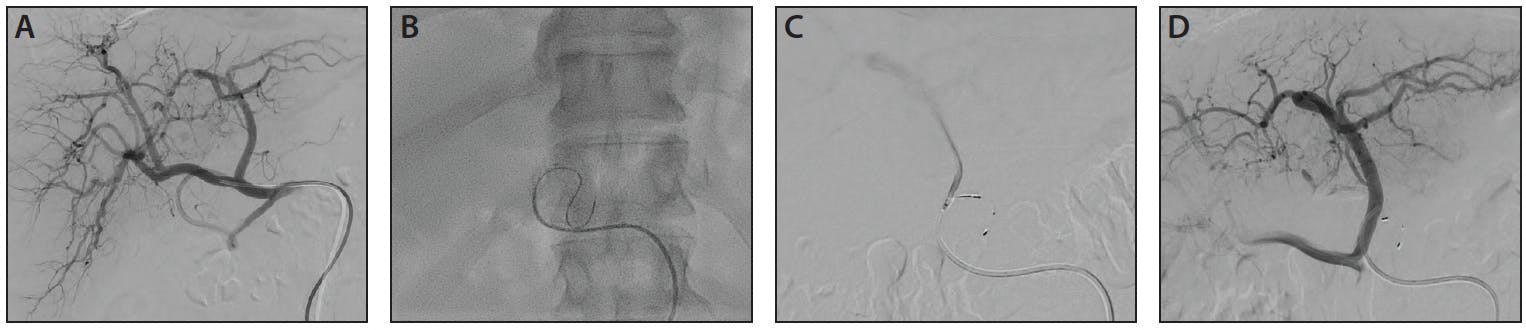
Figure 1. Acute angulation of RGA origin on proper hepatic angiography (A). Tortuous anatomy that typically precludes use of vascular plugs (B). Siege™ Vascular Plug positioned in the curved RGA prior to deployment (C). Angiography approximately 30 seconds after deployment showed immediate occlusion and precise deployment (D).
A follow-up angiogram showed immediate occlusion within approximately 30 seconds (Figure 1D). The completion angiogram demonstrated precise plug deployment with good visibility at the origin of the RGA.
POSTPROCEDURAL OUTCOME
The Siege™ Vascular Plug navigated through very challenging tortuous anatomy and achieved good vessel apposition on the curved artery. Occlusion was approximately 30 seconds, and the Siege™ Vascular Plug occluded as soon as the microcatheter was removed. Patient was successfully treated with split-dose TheraSphere™ Y90 (Boston Scientific Corporation) to the caudate and left hepatic arteries. The patient tolerated the procedure well, without evidence of immediate complication.
Successful Occlusion of the Gastropancreatoduodenal Arcade Using the Siege™ Vascular Plug

PATIENT PRESENTATION
A male patient in his early 30s with an alcohol abuse history presented to the emergency department with uncontrollable bloody vomiting and abdominal pain after 3 days without a bowel movement. CT showed duodenal perforation with large abdominal hematoma and active bleeding (Figure 1). The patient was transferred to our institution for angiography and embolization with ongoing blood transfusion.
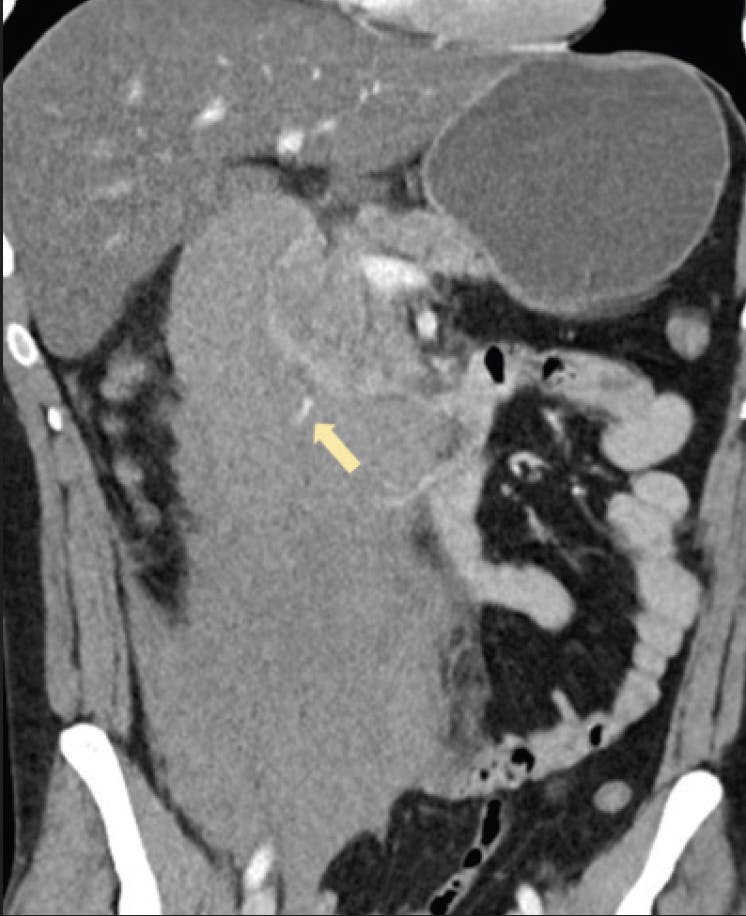
Figure 1. Coronal CT showing duodenal distension and perforation and a large intraduodenal and abdominal hematoma. Active bleeding is noted in the descending to horizontal segment transition.
PROCEDURAL OVERVIEW
Right groin access was obtained with a 5-F sheath, and a Simmons 1 catheter was used to inject into the celiac trunk, common hepatic artery, and superior mesenteric artery (SMA) (Figure 2). No active bleeding was noted. The decision was made to occlude the gastropancreatoduodenal arcade. Using a SwiftNINJA® Microcatheter (Merit Medical Systems, Inc.) and a 0.014-inch Fathom™ guidewire, we accessed the inferior pancreaticoduodenal artery (IPDA) and crossed the whole arcade until the common hepatic artery (Figure 3A). Facing a short gastroduodenal artery (GDA) trunk, we decided to put a Siege™ Vascular Plug in the branch we were in. The 6.5-mm Siege™ Vascular Plug navigated smoothly through the microcatheter, crossed the entire arcade, and was precisely delivered in the 3.5-mm vessel (Figure 3B). Occlusion was achieved in about 50 seconds.
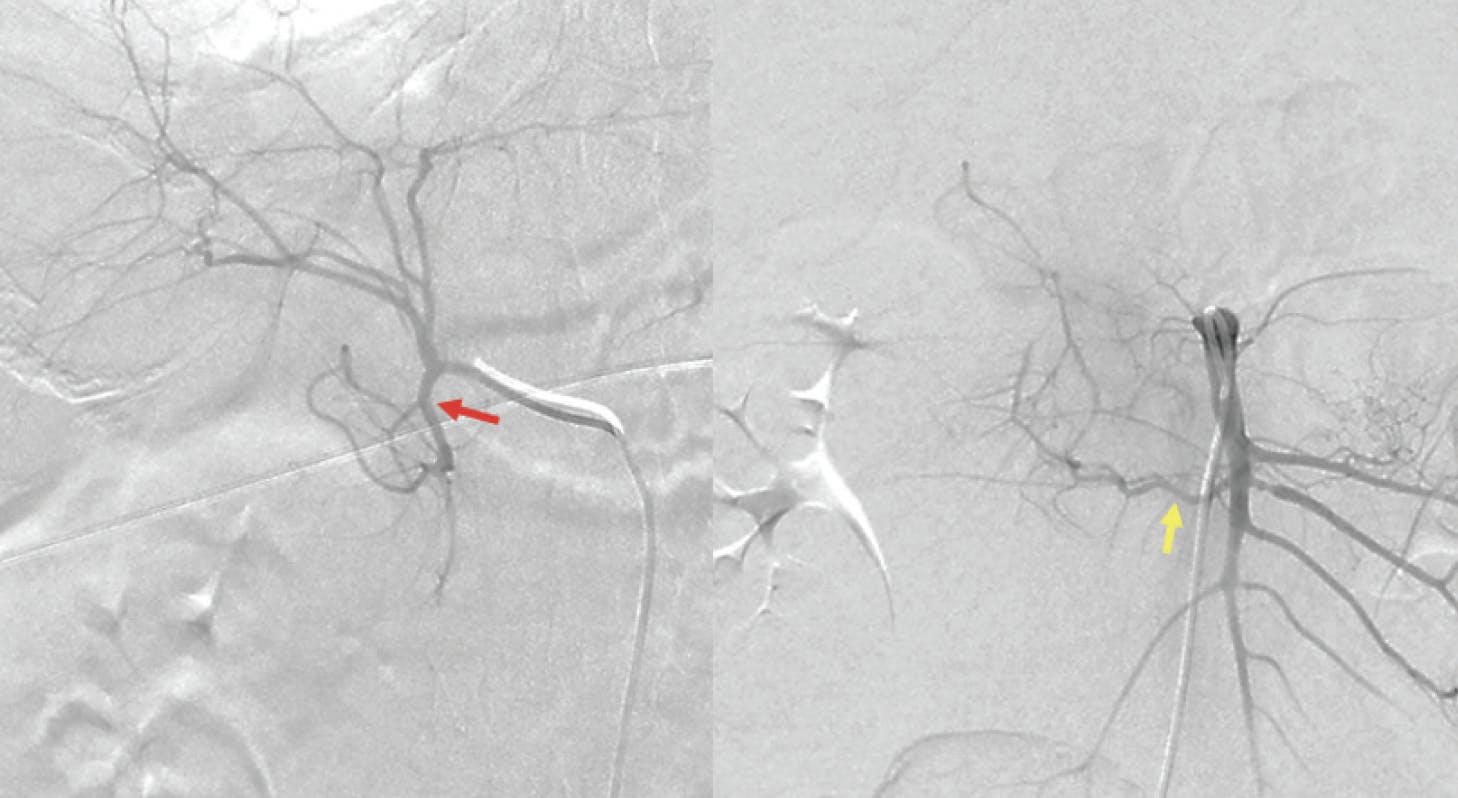
Figure 2. Frontal angiogram with some spasm and adequate identification of the GDA (red arrow) and the IPDA (yellow arrow). These arteries form an arcade communicating the hepatic artery with the SMA.
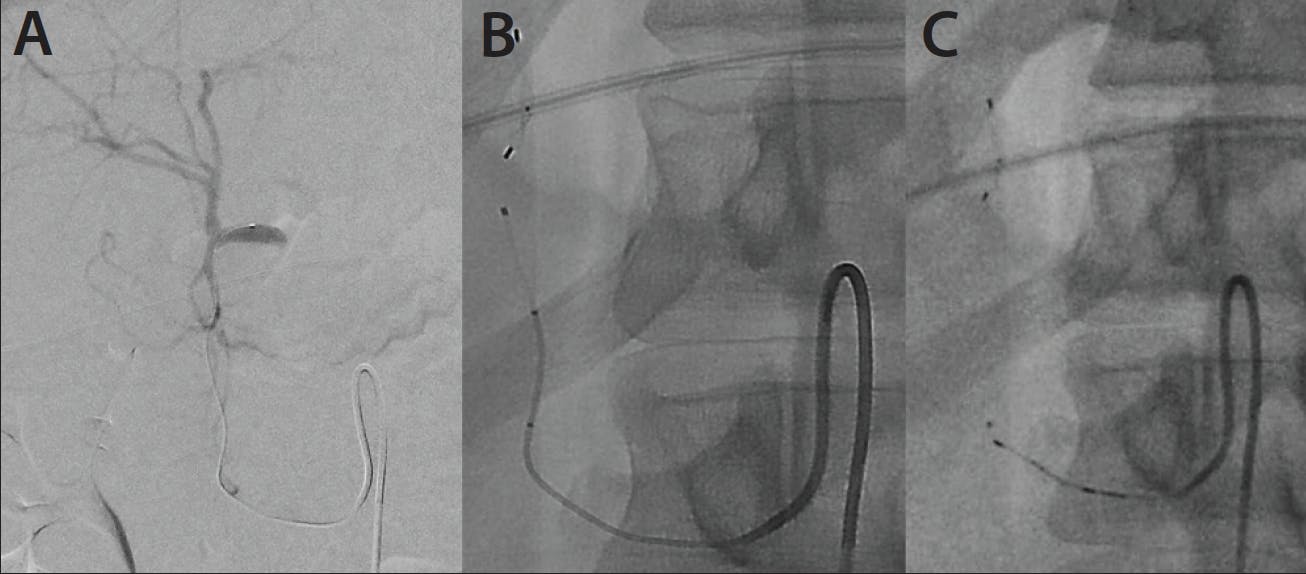
Figure 3. SwiftNINJA® crossing the gastropancreatoduodenal arcade reaching the common hepatic artery (A). Note the short length of the GDA trunk. The Siege™ Vascular Plug navigated easily through the microcatheter to occlude the medial branch (B), and a second plug was deployed in the IPDA, a very small horizontal artery arising from the SMA (C).
Pulling back the microcatheter and injecting, we still couldn’t find the bleeding spot. Once in the tiny IPDA, a vessel of 2 mm, a 4.5-mm Siege™ Vascular Plug was deployed (Figure 3C) and complete occlusion observed after about 35 seconds.
Finally, through the celiac trunk (Figure 4A), the microcatheter was positioned within the lateral branch of the GDA, and a 6.5-mm Siege™ Vascular Plug was used to occlude the branch (3-mm diameter) and GDA trunk (4-mm diameter) (Figure 4B). Vessel occlusion was observed in 60 seconds after deployment.
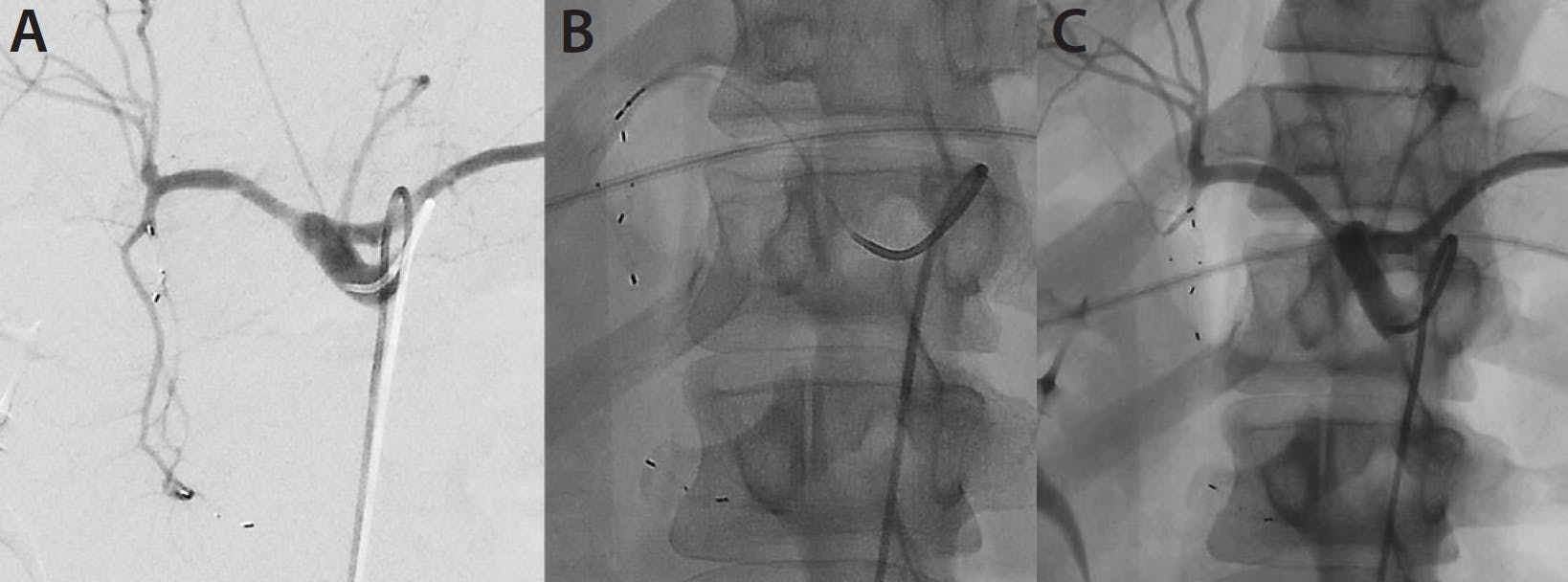
Figure 4. Note the precision of the previously deployed Siege™ Vascular Plug in the medial branch of the GDA (A). The microcatheter was positioned in the lateral branch, and a third Siege™ Vascular Plug was deployed (B). After 30 seconds, celiac injection showed some very residual flow through the lateral branch, helping to verify its positioning (C).
POSTPROCEDURAL OUTCOME
Final angiography confirmed complete GDA occlusion (Figure 4C). The patient was stabilized without new hemorrhage, and a new CT was performed after 1 week (Figure 5) to manage the duodenal perforation. The patient was discharged home 10 days after embolization.
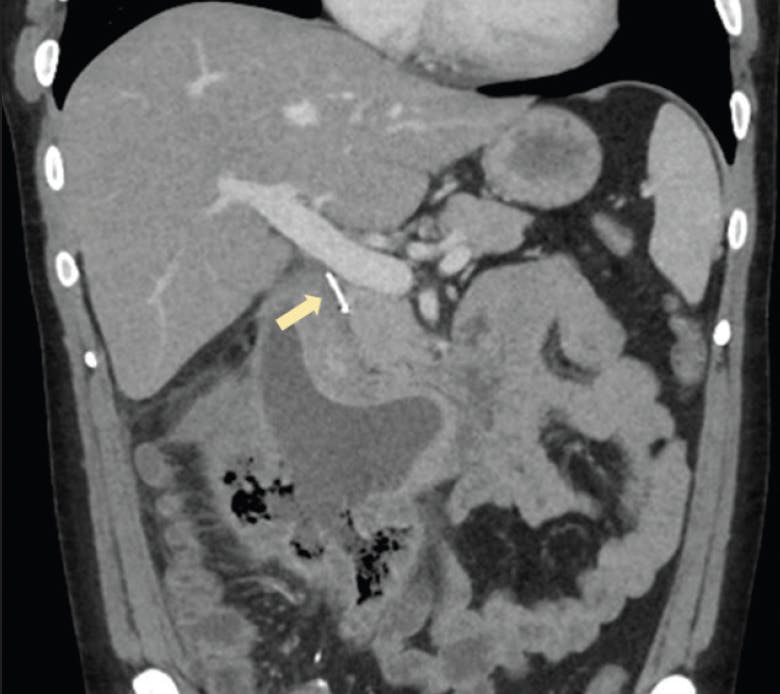
Figure 5. Coronal CT, 1 week after showing liquefaction of the hematoma and contained duodenal perforation. Note the good radiopacity of the plug without streak artifact (yellow arrow).
The Siege™ Vascular Plug’s visibility and navigability are very good, just like the best microcoils on the market. It is easier (especially for beginners), more precise, and faster to use to achieve occlusion. In massive active bleeding, sometimes coiling is stressful. You just deliver one Siege™ Vascular Plug and achieve vessel occlusion in a few seconds. It makes more sense than a coil where you need to wait 2 or 3 minutes to get vessel occlusion. The Siege™ Vascular Plug’s precision and necessary length are much more predictable and reliable.
PROGREAT is a registered trademark of Terumo Kabushiki Kaisha.
LAVA is a registered trademark of BlackSwan Vascular, Inc.
TheraSphere is a registered trademark of Theragenics Corporation used under license by Boston Scientific Medical Device Limited, a wholly owned indirect subsidiary of Boston Scientific Corporation.
Advertisement
Advertisement