Advertisement
Advertisement
January 2025
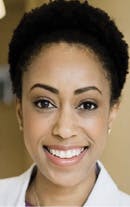
An Interview With Chelsea Dorsey, MD, FACS, DFSVS, RPVI
Dr. Dorsey discusses her new role as At-Large Executive Board Member of the SVS, her “intentional” style of mentorship, employing effective DEI strategies, and more.
You were recently announced as a new At-Large Executive Board Member of the Society for Vascular Surgery (SVS), as part of the society’s Executive Board restructuring. Can you tell us about the goals that led to this restructuring?
In 2023, the SVS passed a Bylaws Referendum that established five at-large Executive Board positions and expanded the Board from nine to 11 members. I believe the changes to the Board were made in an effort to bring a broader range of perspectives, experiences, and skill sets to the SVS governance structure. Prior to the formal nomination process, the leadership of the Society identified content areas and perspectives that they felt would be beneficial to integrate into their existing leadership structure. In my opinion, this was a needed and important change that will allow SVS to evolve and more effectively respond to the changing needs of the SVS membership.
What do you see as your role on the Board, and what do you hope to accomplish during your term?
I am incredibly excited about the opportunity to serve on the SVS Executive Board. It is a huge responsibility, but one that I feel ready to take on based on the varied leadership roles I hold at my home institution and the work I have put into the SVS to date. I really enjoyed my time as Chair of the SVS Young Surgeons Section, which allowed me the chance to serve as a member of the Strategic Board and interface directly with the executive leadership. With respect to my role, along with the other members of the Executive Board, I will assist with strategic planning and governance policy development for SVS, and I will provide critical guidance to the President, Executive Director, and other key members of the Board. I am confident my expertise as it relates to the experience of the early career surgeon and how they engage with the SVS will come into play. SVS has made a concerted effort to focus on this demographic over the last few years, and I’m hopeful they will continue to do so.
As evidenced by this involvement with the Young Surgeons Section and your role as Associate Dean, you’re very invested in mentorship and education. When surveying the current training for future vascular/interventional physicians, what are the biggest areas for improvement?
I have always felt that vascular training was too heavily weighted toward exposing trainees to a career in academic surgery. Ideally, trainees should have the opportunity to experience vascular in all the ways it is practiced (community, Veterans Affairs, private, county hospitals, etc) to better inform their decision at the end of training. I also think we could prepare trainees with more skills to tackle the business and policy side of the work. Integrating lectures and workshops that focus on negotiating, coding, private equity, and advocacy could all be advantageous for an early career surgeon.
Additionally, I have always been a proponent of introducing medical careers to students at earlier stages to strengthen and diversify the “pathway.” Surgical societies often have travel scholarships and programming geared toward medical students, but recruitment should really start at earlier stages to allow exposure to our field. The return on investment for these types of initiatives is harder to establish, but I believe it’s critical to maintaining and increasing interest in our field—especially in demographic groups that have traditionally not pursued a career in surgery.
What kind of advisor and mentor do you strive to be?
I strive to function as an “intentional mentor.” This was a descriptor coined by one of my mentees in an article in Vascular Specialist.1 Intentional mentors “use their lived experiences and backgrounds to relate to their students and actively foster a meaningful relationship.” This sounds easy enough, but I think it takes time, energy, and paying attention to the unique needs of each student, trainee, or faculty member seeking guidance. Everyone’s journey pursuing a career in medicine is different, and it is colored by their own personal experiences. As a mentor, I think it’s important to understand all of this in order to truly help someone and put them on a path toward success.
What I Wish I Knew in Med School
- The field of surgery needs surgeons with varied interests and skills. It has been incredibly fulfilling to blend my surgical career with my medical education and DEI interests. I hope to show the generations that follow me that the field only benefits from a diversity of perspectives and experiences.
- Networking and collaborating with colleagues from other practice settings is critical to a successful career—particularly in academic surgery. These interactions often give way to opportunities that are important for career advancement and the ability to socialize one’s ideas.
- Find your “ride or die” mentors! Hard work and resilience are certainly key factors in setting yourself up for a successful career in surgery, but those efforts are exponentially augmented with mentors and sponsors in your corner. I would not be where I am today without the many people who have helped support and guide me along the way.
You also serve as Vice Chair of Diversity, Equity, and Inclusion (DEI) and Chair of the DEI Steering Committee at the UChicago Department of Surgery. Can you share a bit about the group’s main priorities for 2025 and any highlights from 2024?
Our strategic plan for the 2025 academic year is focused on (1) expanding our ability as a department to engage in meaningful activities involving the surrounding community that we serve on the South Side of Chicago, and (2) expanding our reach by continuing to communicate the success of our efforts on the national stage. One of the initiatives I am most excited about is a pathway program we are in the process of developing that will be specific to our department of surgery and will aim to bring high school students from the South and West Sides of the city to our department to learn about different surgical careers. The University of Chicago hosts a number of pathway programs on campus, but this would be the first with a direct connection to our department of surgery and would allow faculty and trainees to have a very direct and meaningful impact on local youth.
We also have a number of manuscripts, including original research, opinion pieces, and position papers, which I believe will be instructional for other departments hoping to do the same type of work in a structured and intentional way. Our department is also excited to host the Surgical Section of the National Medical Association in the summer of 2025. With respect to highlights from the 2024 academic year, I would be remiss if I failed to mention the regional Emmy our department won for our annual report entitled “The Souls of Surgery: Behind the Mask”2—a short documentary focusing on the inclusive principles we try to adhere to in our department that hopefully allow everyone to bring their authentic selves to work each day.
You reflected on your Vice Chair of DEI role in an editorial in Journal of Vascular Surgery entitled “A Beginner’s Guide to Diversity, Equity, and Inclusion Typecasting.”3 What advice would you share with institutions and departmental leadership for employing effective DEI strategies while also avoiding the siloing of DEI efforts and roles?
There are a number of critical features of a successful DEI program. First and foremost, DEI cannot be cookie-cutter. Each institution, department, and section has different needs based on who makes up that unit and the needs of the patients they are serving. As such, a comprehensive environmental scan with regular reassessment is key. Secondly, visible engagement by departmental leaders, including the department Chair, is necessary to show the importance of the work, push for continued engagement, and create a sustainable infrastructure. Additionally, the DEI leader must be incorporated in the department’s executive apparatus with a named role, protected time, budgetary oversight, and dedicated administrative support—these are nonnegotiable if one is expected to be effective in the role. Lastly, I’ll add that broad participation, including faculty at all ranks, research faculty, residents, and staff, should be encouraged to engage, with a heavy emphasis on participation from nonminoritized members of the department. It certainly takes a village to do this work, and all members of a department should be encouraged to get involved.
If you were to receive funding for a research project or initiative of your choice in the venous space, what would you request?
I would love to see a chronic venous insufficiency patient education and screening program focused on disadvantaged communities nationally. Most of the vascular community campaigns focus on arterial disease processes, which is incredibly important but, unfortunately, often means that venous conditions are given minimal airtime despite the $3 billion it costs our health care system each year. As a second project, I would love to delve into the psychological implications of postthrombotic syndrome. I feel that as providers, we often forget about the significant impact that a diagnosis of a deep vein thrombosis can have on someone’s quality of life, both in the short and long term. Understanding this phenomenon could help us provide better, more holistic care for our patients.
Can you give us a preview of some of your upcoming research projects?
Our Department of Surgery at the University of Chicago developed a novel classification system designed to provide a starting point to discuss how access to care and bias play into some surgical complications. The uChicago Health Inequity Classification System (CHI-CS) was integrated into our weekly morbidity and mortality conferences as a pilot in surgery a few years ago. The results of that intervention were recently published in American Journal of Surgery.4 At present, CHI-CS is being expanded to other clinical departments at our institution and departments of surgery across the country. We are excited to present our preliminary data from the national study at the 2025 Academic Surgical Congress.
I also have a sincere interest in better preparing incoming students for the rigors of medical school. I was recently awarded a small grant to develop a prematriculation program for students to come and learn effective approaches to studying, meet the faculty and staff involved with providing academic support, and begin to interact with the curriculum in a less stressful environment. This is an evolution of an academic workshop I have led for the last 2 years. This formal prematriculation program will focus on similar skills and will target at-risk students. These interventions will be measured for fidelity and effectiveness.
1. Paz M. Intentional mentorship and pushing beyond representation. Vascular Specialist. April 15, 2023. Published December 5, 2024. https://vascularspecialistonline.com/intentional-mentorship-and-pushing-beyond-representation/
2. UChicagoSurgery. The souls of surgery: behind the mask. Accessed December 5, 2024. https://youtu.be/GDeoUsy_aWM?
3. Dorsey C. A beginner’s guide to diversity, equity, and inclusion typecasting. J Vasc Surg. 2022;75:1499-1500. doi: 10.1016/j.jvs.2021.12.063. PMID: 35461673
4. Vigneswaran J, Ogunnowo S, Millis JM, et al. Effectiveness of the uChicago Health Inequity Classification System on surgical morbidity and mortality conference: a pilot study. Am J Surg. 2024;236:115834. doi: 10.1016/j.amjsurg.2024.115834
Advertisement
Advertisement
Interested in reading more interviews?
To read more interviews with thought leaders in the vascular field, check out our Profiles & Perspectives hub.
Read More