Advertisement
Advertisement
July 2025
Navigating Vein Care Reimbursement Today and Beyond
The evolution of reimbursement models, the challenge of budget neutrality mandates and decreasing reimbursements in the setting of rising inflation, and strategies to address these challenges.
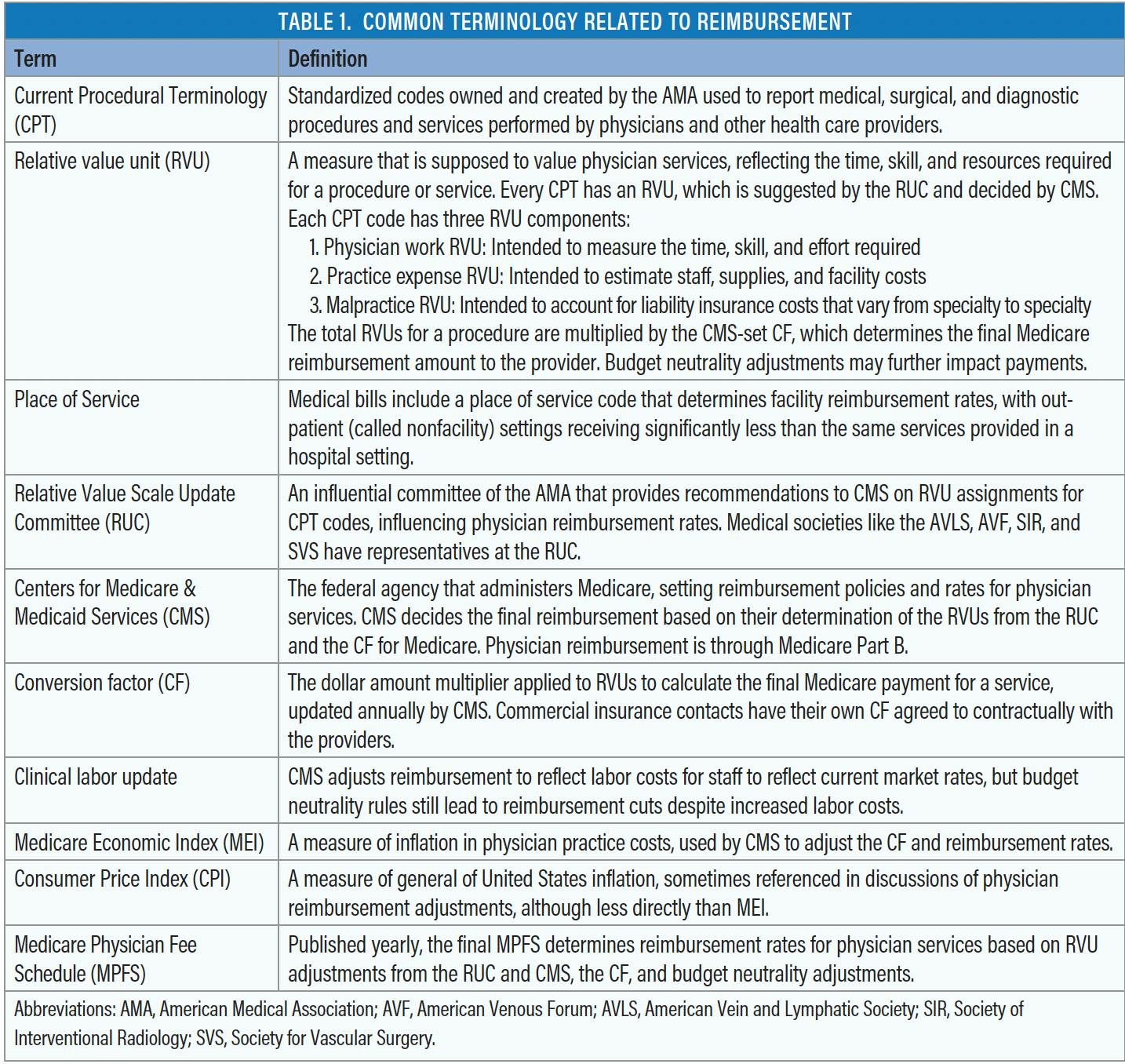
Those providing outpatient vein and vascular care face mounting financial and regulatory challenges, including declining reimbursements, increasing administrative burdens, and rising costs, all of which demand a reevaluation of traditional practice models. To not just survive but thrive, we must prioritize efficiency and cost-effectiveness in delivering care and managing our practices while advocating for fair reimbursement policies and reduced regulatory barriers. By working together to shape the future, we can continue meeting the needs of our patients and communities despite these pressures. To navigate these challenges, one must be familiar with the various acronyms and industry terms (Table 1) and understand the historical political and economic factors that led us here.
HOW DID WE GET HERE?
Historically, physicians billed using the UCR (usual, customary, and reasonable) model, where reimbursement was based on typical fees for services within a geographic area. This system allowed physicians to set their own prices, leading to inconsistent billing and arbitrary cost increases. By the late 1980s, Medicare transitioned to the resource-based relative value scale (RBRVS) to align payments with physician effort, practice costs, and malpractice expenses. Around 1992, through the American Medical Association’s (AMA) RVS Update Committee (RUC) process, each procedure was assigned a Current Procedural Terminology (CPT) code, linked to a relative value unit (RVU) that determines reimbursement. The payment is calculated by multiplying the RVU by the Medicare conversion factor (CF), which is set annually by the Centers for Medicare & Medicaid Services (CMS). Private insurance companies followed suit, negotiating contractual payments based on CFs and a particular year’s RVU.1-3
Vein and vascular specialists and other nonfacility providers were reimbursed under this new system. In the 1990s, the RUC’s mandate broadened to include assessing practice expense inputs, such as nonphysician labor, supplies, and fixed equipment associated with each CPT code. Office-based vein specialists could invest in costly equipment such as ultrasound machines and radiofrequency or laser generators, as well as high-cost specialized catheters and procedural kits. Reimbursement rates enabled a sustainable practice model, with office-based vein ablation being more cost-effective than hospital-based vein stripping, delivering savings while maintaining high-quality care.
BUDGET NEUTRALITY CREATES A ZERO-SUM GAME
Federal law that governs the Medicare Part B payment system for outpatient providers is statutorily based on a legislative mandate for budget neutrality. Unfortunately, congressional appropriations and budget neutrality mandates transformed the RBRVS into a zero-sum game, pitting specialties against each other in a never-ending battle for a fixed pie of reimbursement dollars. To accomplish this, CMS had to implement yearly cuts to the CF overall, with commensurate cuts to RVUs for specific procedures to maintain budget neutrality.
Over the past 20 years, the CF has gone down in nominal terms but declined by 25% to 30% in real value when adjusted for inflation. Meanwhile, direct and indirect practice expenses—rent, staff salaries, medical supplies, and technology—tracked by the Medicare Economic Index (MEI) or more broadly by the Consumer Price Index (CPI), have risen sharply, pressuring office-based vein care providers (Figure 1). Temporary last-minute congressional CF “doc fixes” in the early 2000s mitigated some cuts, but legislative gridlock has made these unreliable. At the RUC level, budget neutrality requires RVU reductions that fall mostly on procedural specialties to offset legislated increases for primary care, creating tension among specialties. Today, in the outpatient setting, total reimbursement barely captures the costs of practice expense inputs, and in some code examples, is actually negative.
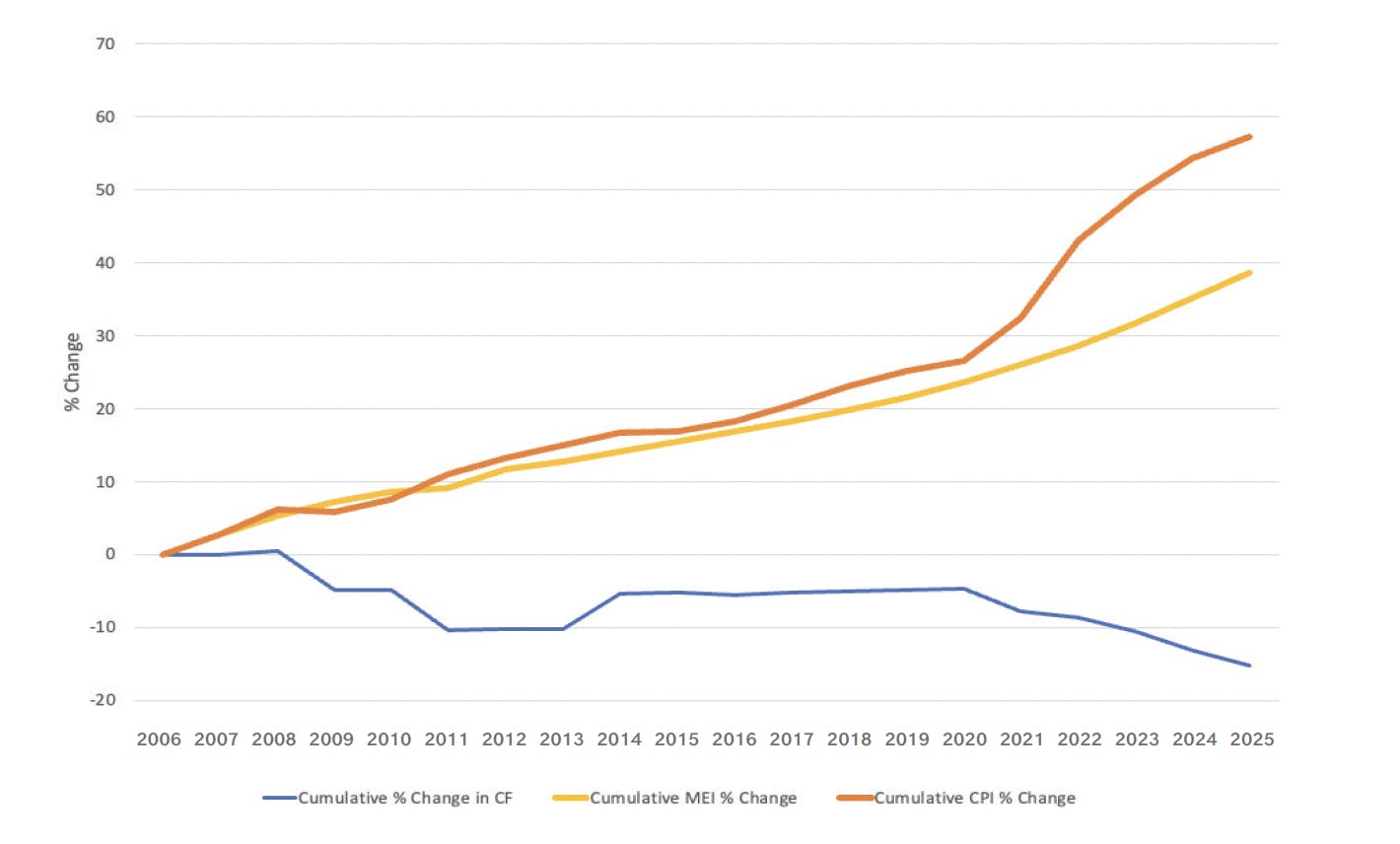
Figure 1. Cumulative percentage change in CF, MEI, and CPI from 2006 through 2025.
THE PERFECT STORM CONTINUES: DECLINING CF, DECLINING RVUs, AND RISING INFLATION
As CMS continues to cut the CF, the AMA’s RUC has in parallel reduced nonfacility RVUs, particularly for image-guided outpatient vein and vascular care (Figure 2). For example, Medicare reimbursement for endovenous radiofrequency ablation (RFA) in an office setting has dropped from approximately $1,655 in 2010 to around $990 in 2025, a 40% reduction, despite rising practice costs, supply expenses, and overall inflation. Similar cuts have affected other vein ablation procedure codes, forcing vein and vascular specialists to increase patient loads, which lowers patient and staff satisfaction and heightens physician burnout. This approach is unsustainable long term, as efficiency gains cannot offset inflation and ongoing reimbursement reductions indefinitely. As a result, physicians must make difficult decisions each year—either cutting services, closing clinics, or integrating into hospital systems—which raises community health care costs and limits patient access to specialized vein care.
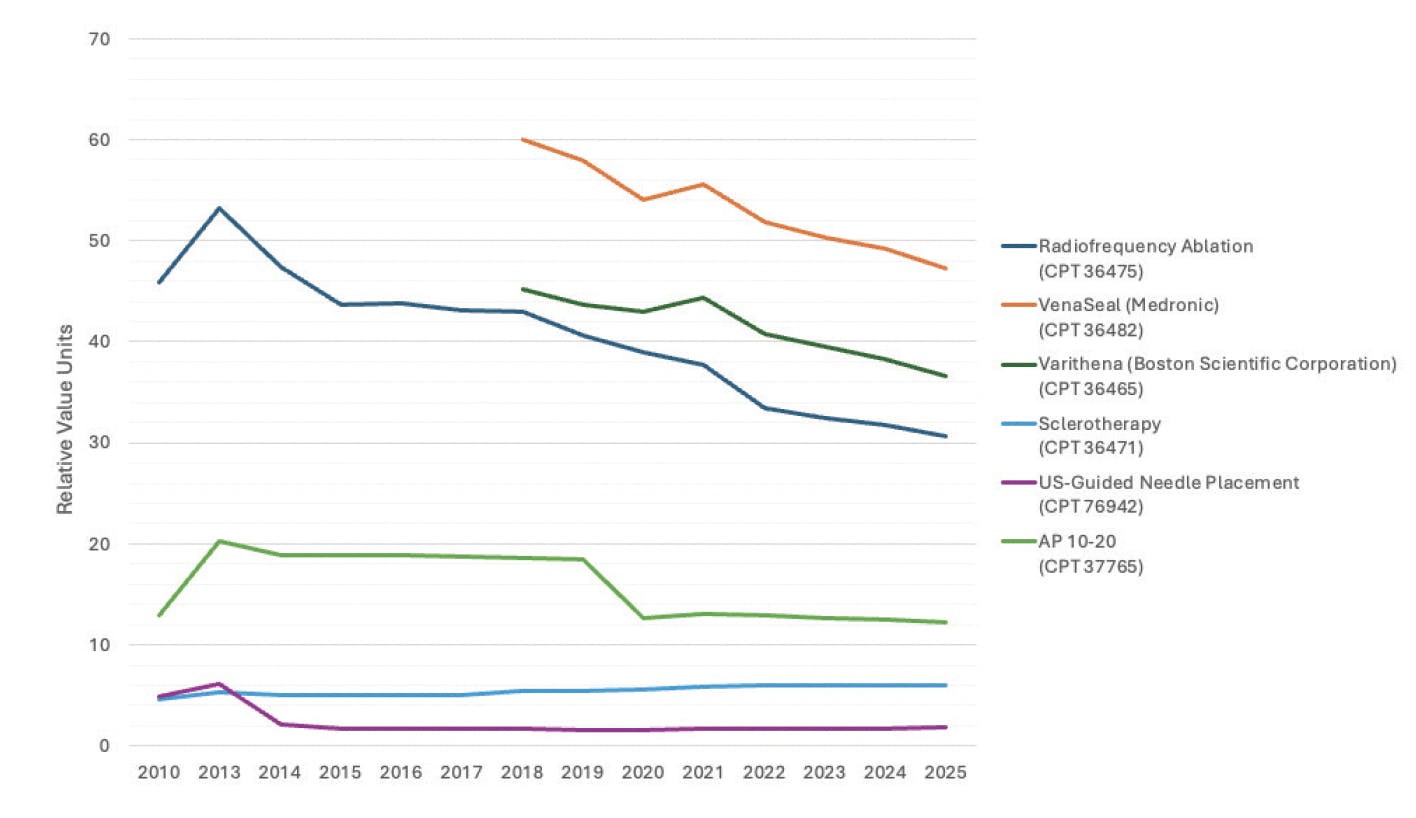
Figure 2. Reduction in nonfacility RVUs for major vein procedures since 2010. AP, ambulatory phlebectomy; US, ultrasound.
STRATEGIES TO ADDRESS REIMBURSEMENT CHALLENGES
Optimize Your Private Contract Reimbursement Rates
Practice leaders should periodically review and negotiate commercial payer contracts to advocate for higher CFs per CPT code, aligning reimbursement with the value their practice delivers through high-quality outcomes and cost-effective care. Establishing a structured process to assess contract terms, track performance metrics, and build relationships with payers can strengthen a practice’s case for improved rates. However, the reality is challenging due to vertical market consolidation, which concentrates market power among fewer payers and hospital systems in a given region, reducing independent providers’ leverage. This dynamic often limits the ability to secure rate increases that adequately cover rising operational costs, making strategic preparation and data-driven advocacy critical for successful negotiations.
Consider Teaming Up With Others
Like many aspects of life, there can be safety in numbers. As margins shrink and administrative complexity grows, collaboration offers a solution. Although vertical integration into a hospital system usually raises costs considerably for the communities and limits access, horizontal consolidation via medical service organizations (MSOs) offers alternatives that do not generally raise costs for the community and can expand access for patients. MSOs are generally set up to maintain clinical autonomy at the physician level while providing financial and administrative support at scale. This approach can leverage economies of scale to reduce overhead, streamline operations, and pool expertise for revenue cycle management, compliance, and technology group purchasing with volume discounts. By centralizing nonclinical functions across many clinic providers, the clinicians can focus on patient care with less daily administrative distractions of running a clinic. This model, common in dentistry and growing in outpatient specialties, can help physicians reduce practice costs, improve efficiency, and enhance patient outcomes, facilitating long-term practice sustainability. These arrangements can range from the MSO “light” approach, such as group purchasing organizations, to a more fully integrated approach as tens or hundreds of independent clinics team up to address these challenges together at scale.
Advocate for Legislative Fixes
The United States legislative system depends on advocacy and lobbying, making physician involvement crucial. However, insurance companies, hospital systems, and pharmaceutical and medical device manufacturers wield immense lobbying power, often overshadowing physician voices. Compounding the challenge, doctors are divided by competing for fixed, budget-neutral reimbursement at the RUC, rather than presenting a united front. Without stronger advocacy, larger entities will continue shaping health care policies to their advantage. To counter this imbalance, physicians must engage in legislative efforts, collaborate, and advocate for fair reimbursement and regulations that help sustain independent practices and improve patient care. The following are active legislation currently being considered by Congress where your advocacy could make a difference.
- The Medicare Patient Access and Practice Stabilization Act. In 2025, the Medicare CF dropped by 2.83%, from $33.29 to $32.35, leading to an effective 5.76% reimbursement cut when factoring in the expiration of a temporary 2024 2.93% payment increase. Despite a 3.5% rise in the MEI, physicians must advocate for legislative changes to protect reimbursement rates and financial stability. Key efforts include engaging with professional organizations and grassroots initiatives, supporting bills like the Medicare Patient Access and Practice Stabilization Act—which aims to reverse the 2025 cuts and provide a 2% payment increase—and urging Congress to incorporate these fixes into future budget reconciliation efforts.4
- The Lower Costs, More Transparency Act. This Act originally sought to standardize Medicare payments across care settings (known as site neutrality), ensuring fairness between the huge discrepancy in reimbursement for hospital-based facilities versus outpatient facilities.5 However, its site-neutral provisions were removed due to strong opposition from the hospital industry. Continued advocacy is needed to bring back measures that would help independent physicians compete on equal financial footing through site neutrality.
- New office-based facility codes. The Promoting Fairness for Medicare Providers Act of 2024, introduced in November 2024, seeks to create additional Medicare payments for office-based surgical procedures that involve high-cost supplies in office-based facilities.6 This legislation is crucial for vascular and vein specialists who rely on specialized equipment and supplies to provide efficient outpatient care.
- Any willing provider legislation. At the state level, office-based specialists need to work with lawmakers to ensure that insurers contract with any provider meeting plan terms, thereby preventing restrictive networks that limit patient access. Although primarily a state-level initiative, Federal efforts are growing to ensure broader applicability. Expanding this framework could help independent specialists reach more patients without anticompetitive network barriers.
- State-level advocacy. State-level legislation can significantly impact independent physicians, sometimes with unintended consequences. Although laws aimed at limiting corporate influence in medicine may be well-intentioned, poorly crafted policies can restrict independent practice viability. Issues like scope-of-practice expansions, insurance regulations, and reimbursement policies are often decided at the state level, making physician advocacy essential. By staying informed and engaging in legislative efforts, physicians can help shape policies that protect their autonomy, financial stability, and ability to provide high-quality care in their communities.
Understand the RUC Process: You Can Help!
As noted previously, the AMA’s RUC determines RVUs through a system of physician surveys conducted by specialty societies like the Society for Vascular Surgery, Society of Interventional Radiology, American Venous Forum, and American Vein & Lymphatic Society. For vein care, procedures like endovenous ablation, phlebectomy, sclerotherapy, and thrombectomy are evaluated based on time, complexity, and resources. The timing of these surveys varies and is based on utilization trends and a system of “screens” that CMS and the RUC system employs. CMS’s RVU decisions are constrained by budget neutrality, meaning increases for one procedure may cut others. Vein specialists must advocate strategically for fair and appropriate RVU adjustments through this process.
Recognize the Importance of an RUC Survey
A RUC survey from your specialty society and the AMA (which collects data from specialists) determine the relative value of medical services when a new CPT code is introduced, an existing code is revised, or a procedure is flagged for review. The survey evaluates key components such as physician work, measuring the time, intensity, and complexity of performing the service; clinical staff time, assessing the support needed from nurses and technicians; medical supplies and equipment, estimating the cost of necessary tools and consumables; and professional liability insurance, accounting for associated risk. Specialty societies randomly select physicians performing the procedure to participate, ensuring broad representation. The results are presented to the AMA/specialty society RUC, which reviews the data and submits recommended physician work RVUs and practice expense inputs to CMS for final reimbursement decisions. Physician participation in this process is crucial, as it helps shape accurate fair payment rates structures and ensure up-to-date practice expense inputs for medical services.
If selected to participate in a RUC survey, it is a crucial opportunity to ensure fair reimbursement for procedures within your specialty. To contribute effectively, be thorough and accurate in assessing the time, effort, and intensity involved in performing the procedure, as underestimating these factors can lead to errant data. When taking a survey, the key principle is to keep in mind your typical patient. Specialty society RUC advisors are tasked with ensuring that necessary medical supplies, equipment, and clinical staff time and associated costs are properly documented and submitted to the RUC.
In taking a survey, you will be provided a reference code(s) that you can use to compare the work of the code you are surveying. Again, your typical patient is what you should keep in mind when giving your responses. If uncertain, the survey has a contact at the society that you may consult for assistance in filling out the survey. Given the level of detail required, take your time to provide precise data, as accurate information helps the RUC and ultimately CMS develop a realistic picture of the work involved. Thoughtful participation in these surveys not only helps ensure fair reimbursement for your practice but also benefits your specialty as a whole.
CONCLUSION
Currently, our Medicare physician payment system is systemically broken, and without fixes from Congress, 2026 and beyond will be challenging. Declining reimbursements, coupled with increasing costs and administrative complexity, threatens our ability to deliver high-value outpatient vein and vascular care, which will lead to higher costs as care shifts to more expensive hospital settings where access can be difficult. Through collaboration, advocacy for legislative fixes, and RUC survey participation, physicians can work toward a sustainable reimbursement system that supports ongoing high-quality, cost-effective vein care.
1. American Medical Association. Medicare physician payment schedule. Updated March 4, 2025. Accessed May 29, 2025. https://www.ama-assn.org/practice-management/medicare-medicaid/medicare-physician-payment-schedule
2. American Medical Association. History of budget neutrality. Accessed May 29, 2025. https://www.ama-assn.org/system/files/history-of-budget-neutrality.pdf
3. American Medical Association. 2025 Medicare Physician Payment Schedule (PFS) and Quality Payment Program (QPP) final rule summary. Accessed May 29. 2025. https://www.ama-assn.org/system/files/ama-2025-mpfs-summary.pdf
4. Medicare Patient Access and Practice Stabilization Act of 2025, HR 879, 119th Cong (2025). Accessed May 29, 2025. https://www.congress.gov/bill/119th-congress/house-bill/879
5. Lower Costs, More Transparency Act, HR 5378, 118th Cong (2023-2024). Accessed May 29, 2025. https://www.congress.gov/bill/118th-congress/house-bill/5378
6. Promoting Fairness for Medicare Providers Act of 2024, HR 10136, 118th Cong (2023-2024). Accessed May 29, 2025. https://www.congress.gov/bill/118th-congress/house-bill/10136
Advertisement
Advertisement