Advertisement
Advertisement
November 2025 Supplement
Sponsored by Surmodics, Inc.
Doing the Twist: There’s More to Microcatheter Torqueability Than Meets the Eye
Physicians who perform complex peripheral interventions are well aware of the value of microcatheter torqueability for navigating through challenging vessel anatomy. Applying rotational torque to a catheter—if the catheter can transmit it—reduces frictional resistance, improving crossability of tight lesions and enhancing the catheter’s ability to track through tortuous vessels (spin-deliverability).1,2 Peripheral interventions, no less than coronary, require robust crossing tools: 40% to 50% of femoropopliteal interventions involve total occlusions.3 For the Sublime™ Microcatheter, Surmodics sought to provide the key features of spin-deliverable, high-performance coronary crossing catheters in a device purpose-built for complex peripheral interventions. Adding to the challenge, the Sublime™ Microcatheter platform specifications called for device working lengths up to 200 cm, available in .014, .018, and .035 guidewire compatible platforms. Achieving these goals was a daunting task.
Highly torqueable microcatheters, as compared to nontorqueable or “push-only” microcatheters, ensure that rotation put into the hub translates to the tip. Engineering torqueability into a catheter requires structural support, often achieved with metallic braids or coils. The Sublime™ Microcatheter is engineered to optimize torqueability, flexibility, pushability, and kink resistance (Figure 1). Specifically, the microcatheter’s proprietary braid structure allows for individually optimized performance elements with much greater freedom from typical trade-offs, such as sacrificing torque or push to gain flexibility or increasing wall thickness to improve kink resistance.
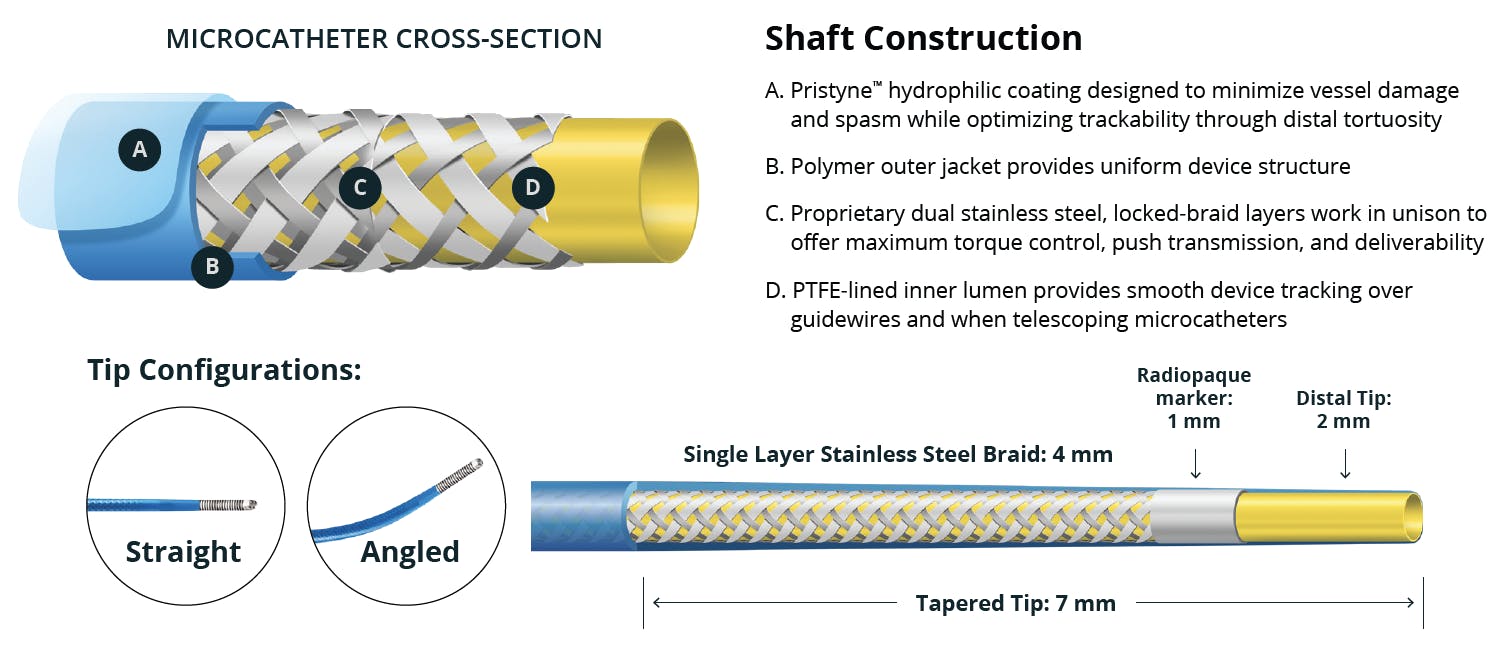
Figure 1. Structural design of the Sublime™ Microcatheter. PTFE, polytetrafluoroethylene.
Torqueability refers to a catheter’s ability to transmit rotational force (torsion) without yielding. Importantly, it also refers to the ability of a catheter to avoid storing torsion as it is being rotated.4 Understanding these two different aspects of torque is useful for interventionalists seeking the right microcatheter for their needs.
TORQUE POWER VERSUS TORQUE CONTROL
Torque power refers to the amount of rotational force a catheter can deliver from hub to tip (ounce-inch). While increased catheter shaft length generally makes efficient torque transmission between hub and tip more difficult, the 200 cm Sublime™ Microcatheter showed superior torque transmission against shorter 150 cm competitors (Figure 2).
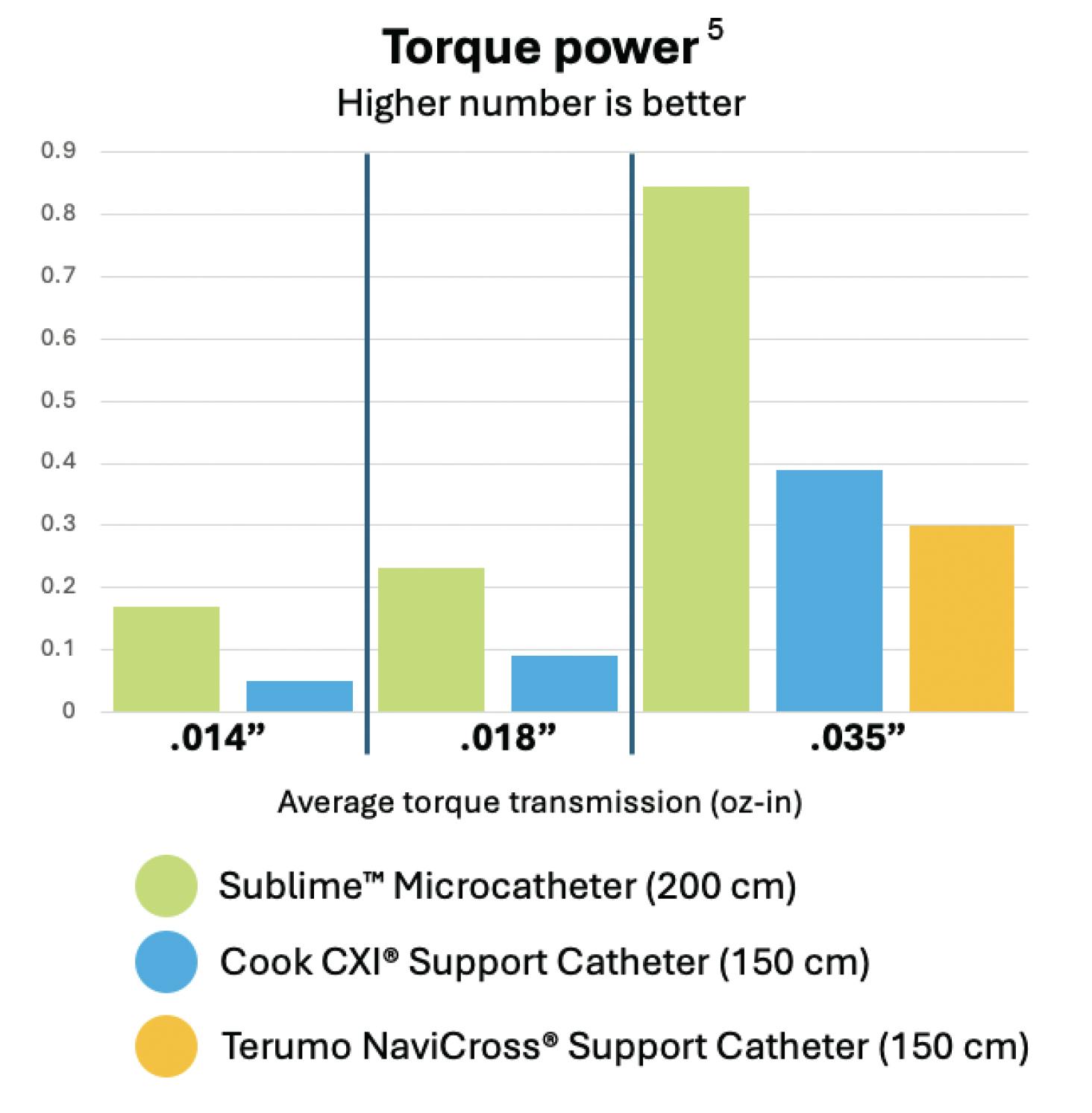
Figure 2. Sublime™ Microcatheter torque power testing versus competitors (2021). Bench testing may not be representative of actual clinical performance.
On the other hand, torque control refers to the catheter’s ability to efficiently and accurately translate proximal rotation at the catheter hub into corresponding, predictable rotation at the distal tip. Inefficient translation of this rotational force can cause the catheter tip to lag behind the hub, hindering accurate control of the tip and allowing torque energy (torsion) to build up within the catheter shaft. This built-up energy can be released unpredictably, causing the distal tip to “whip.” As Dr. Hirsch emphasizes (see here), this unpredictability can make delicate adjustments, such as fine-tuning guidewire angles or tip positions, far more difficult. In bench testing, Surmodics quantified torque control by measuring the degree of lag at the distal tip relative to hub rotation (Figure 3).
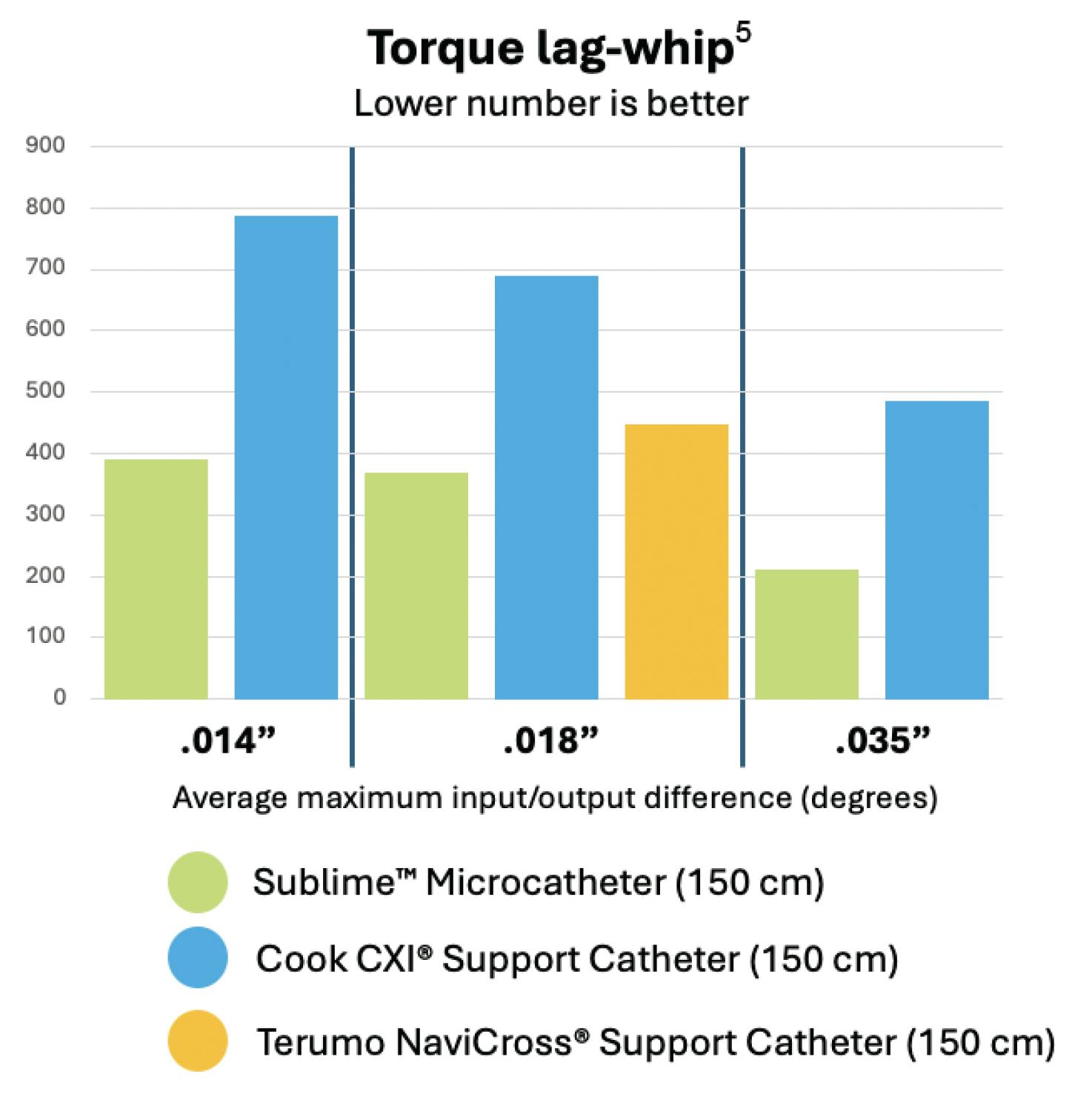
Figure 3. Sublime™ Microcatheter torque lag-whip (control) testing versus competitors (2021). Bench testing may not be representative of actual clinical performance.
Important as it is, enhancing torqueability is only one aspect of engineering high-performance crossing catheters. Optimizing pushability, trackability, tip profile, and lubricity with hydrophilic coatings each play a critical role. This engineering is focused on a single goal: enabling interventionalists to precisely deliver and manipulate their instruments to restore blood flow in blocked vessels in the most demanding conditions of tortuosity, tight strictures, and working length. We are proud of what peripheral interventionalists are telling us about the Sublime™ Microcatheter. After reading this supplement, you’ll understand why.
Caution: Federal (US) law restricts the Sublime™ Radial Access Guide Sheath, the Sublime™ Radial Access .014 and .018 RX PTA Dilatation Catheters, and the Sublime™ Radial Access .014, .018, and .035 Microcatheters to sale by or on the order of a physician. Please refer to each product’s Instructions for Use for indications, contraindications, warnings, and precautions. SURMODICS, SUBLIME, and SURMODICS and SUBLIME logos are trademarks of Surmodics, Inc. and/or its affiliates. Third-party trademarks are the property of their respective owners.
1. McQuillan C, Jackson MW, Brilakis ES, Egred M. Uncrossable and undilatable lesions—a practical approach to optimizing outcomes in PCI. Catheter Cardiovasc Interv. 2021;97:121-126. doi: 10.1002/ccd.29001
2. Khabbaz RC, Polikaitis K, Niemeyer MM. Understanding the basics of commonly used catheters in interventional radiology. Semin Intervent Radiol. 2023;40:247-252. doi: 10.1055/s-0043-1768679
3. Gutierrez JA, Patel MR. Crossing peripheral chronic total occlusions: more tolls and more questions. J Am Heart Assoc. 2021;10:e023423. doi: 10.1161/JAHA.121.023423
4. Kucklick TR. Basics of catheter assembly. In: Kucklick TR, ed. The Medical Device R&D Handbook. 2nd ed. CRC Press; 2012:107-126.
5. Surmodics data on file.

Advertisement
Advertisement