Advertisement
Advertisement
April 2026
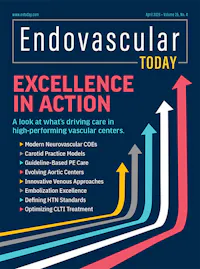
Evolutions in Aortic Centers of Excellence
Expert perspectives on how multidisciplinary teams, innovation, and long-term care are redefining aortic care.
With Rana Afifi, MD; Matthew J. Eagleton, MD; and Hence Verhagen, MD


What defines an “aortic center of excellence” today, and how has that definition changed over the last decade?
Dr. Afifi: An aortic center of excellence is far more than a program that performs complex aortic surgery. It is a high-performing, multidisciplinary system of care that delivers comprehensive, evidence-based, and outcomes-driven management across the full spectrum of aortic disease.
Such a center integrates a coordinated medical and surgical team, advanced imaging and diagnostic capabilities, active research engagement, and structured longitudinal follow-up pathways. Its strength lies not only in technical expertise but in the alignment of systems, protocols, and accountability that support consistent, high-quality outcomes.
The definition of an aortic center of excellence has evolved significantly over time. Historically, excellence was measured primarily by surgical capability and immediate perioperative outcomes. Today, it reflects a broader understanding of aortic disease as a lifelong condition requiring surveillance, risk stratification, and timely reintervention, within a structured continuum of care.
Importantly, in the modern era of aortic care, there must also be intentional space for innovation and continued advancement. A true center of excellence fosters research, device development, imaging innovation, and refinement of both open and endovascular strategies. It actively participates in clinical trials, contributes to guideline development, and pushes the field forward rather than simply applying existing standards.
Modern centers are increasingly patient-centered, recognizing that optimal care extends beyond anatomy and technical repair to include shared decision-making, longitudinal engagement, innovation, and attention to the patient’s overall health context.
Dr. Eagleton: An “aortic center of excellence,” in my opinion, is a multidisciplinary program that provides all the key components to clinically evaluate and treat patients with aortic disease. The program must provide all aspects of clinical patient care—from initial evaluation and multimodality surgical (endovascular, open surgical, and hybrid procedures) intervention to long-term follow- up. The clinical program must continuously evaluate its outcomes with ongoing efforts to adjust both individual and systems-sensitive improvements in order to provide quality outcomes. It should have a mission to develop and standardize clinical care pathways based on these outcomes assessment.
In addition, it should provide robust rescue and transfer systems. Aortic centers of excellence should also provide the platform to support ongoing research and investigation to understand and develop the best course of treatment for patients with aortic disease. Research would extend from technology development/evaluation and outcomes research to benchtop translational research, developing truly novel ideas about controlling and treating aortic disease.
Prof. Verhagen: The term “aortic center” is relatively new and likely reflects a trend toward clearly defining the focus of collaborative groups working to advance expertise and improve patient care. First, we noted (cardio)vascular centers, then (cardio)vascular institutes appeared, and more recently aortic centers came up. The three types of centers are distinctly different, but the ideas behind them were more or less similar. An aortic center is a specialized, multidisciplinary facility dedicated to the comprehensive diagnosis, treatment, and long-term surveillance of diseases affecting the aorta, such as aneurysms and dissections. In these centers, the expertise of vascular surgeons, cardiovascular surgeons, cardiologists, radiologists, cardiovascular anesthetists, and specialized nursing staff is combined. With the addition of basic scientists, geneticists, and research leading to a steady flow of publications, an “aortic center of excellence” is created.
As programs evolve, what are the most essential components needed to build a sustainable, high-functioning aortic center from the ground up?
Prof. Verhagen: We should organize multidisciplinary meetings at least weekly. Aside from state-of-the-art operating rooms, latest-generation hybrid rooms including top-notch imaging facilities and sufficient staff to deliver care of the highest level 24/7 should be present.
Dr. Afifi: The first essential component in managing complex aortic disease is the establishment of a truly multidisciplinary team with the surgical expertise to deliver the full spectrum of aortic care. This includes both open and complex endovascular capabilities. Equally important is the presence of dedicated cardiovascular/aortic anesthesia and specialized intensive care unit teams, as intraoperative and postoperative management significantly influence outcomes.
The multidisciplinary team should include cardiac surgeons, vascular surgeons, cardiologists, radiologists, anesthesiologists, critical care team, geneticists, and dedicated nursing and advanced practice provider teams. In cases involving young women of childbearing age or pregnancy, maternal-fetal medicine specialists must be integrated into care planning. This breadth of expertise ensures that decision-making is comprehensive, individualized, and evidence based.
Advanced imaging is another critical pillar. Accurate diagnosis and procedural planning require access to high-level imaging and diagnostic tools, along with dedicated cardiovascular imaging specialists who are experienced in interpreting complex aortic anatomy and physiology. Imaging must function not only as a diagnostic modality but also as a strategic planning instrument.
Equally crucial is the ability to provide this level of care around the clock. A high-functioning aortic center must have 24/7 surgical, endovascular, anesthesia, imaging, and critical care capability. Investing in this capacity is fundamental to improving outcomes, particularly for acute aortic syndromes.
To ensure sustainability and consistent performance, standardized protocols are essential. These should encompass diagnostic pathways, perioperative management, and structured long-term surveillance. Protocol-driven care reduces variability, improves efficiency, enhances patient safety, and supports predictable high-quality outcomes over time.
Dr. Eagleton: The essential components of an aortic center of excellence are:
- Clinical care: Experienced clinicians who can provide excellent clinical outcomes as part of an aortic care team are imperative. These providers exist at many levels within the system and will have different specializations. These will include surgeons versed in both open and endovascular techniques; anesthesia teams that understand the course of the operations and where the pitfalls may arise intraoperatively; and intensivists who help oversee care postprocedurally in the intensive care setting (if necessary). Outcomes of complex aortic procedures require an experienced team. The clinical program must also provide the opportunity for multidisciplinary clinics/conferences where cases are discussed and alternative approaches are reviewed by the team. It also must provide the clinical support that is required for patients with potential familial or genetic disorders, including a geneticist and genetic counseling. The program must be able to provide patients with follow-up and surveillance, with reliable communication to their referring physicians who may need to play a continued role in their long-term follow-up (particularly if they are not from the local community). Some of these essentials are outlined in the American College of Surgeons and Society for Vascular Surgery Vascular Verification Program.1
- Quality outcomes program: Centers must evaluate their outcomes through structured quality programs. The programs must invest in the analysis of their outcomes with discussions of how those outcomes can be translated into improved clinical care with the development of new clinical care pathways.
- Research: Aortic research will span many different modalities. Programs must be involved in ongoing, multicenter clinical trials. Much of these currently involve the assessment of different or new technologies, such as new or iterative assessment of endovascular tools. Centers of excellence will also invest in translational research programs. This is where the real “game changers” will evolve from. Whether it is the identification of a new genetic variant that places patients who are at risk for developing specific aortic disease or the development of a new medical treatment that can halt or slow aortic disease progression, these are the types of programs that could make the largest impact on the future of patient care.
- Education: Aortic centers of excellence must also focus on providing education. Our future aortic experts may not arise from standard surgical or specialty training programs. Already we are seeing some formal aortic training programs deployed. With the need for a variety of different skill sets in providing clinical care, it is likely that there will be a demand for a variety of medical and surgical physician training programs. This will not be limited to physicians either as we see a need for additional support at many points along the patients’ journey, requiring individuals with the need for more specific knowledge about aortic disease.
- Community outreach: Many centers of excellence may develop due to the need for locations that can provide a level of care that is not available at regional or community hospitals. This will require communication between the content experts and the referring organizations. This includes a variety of different specialties (ie, primary care and emergency care providers). In addition, it also will need to provide patient and family education through outreach programs.
How important is multidisciplinary collaboration in modern aortic care, and what does that collaboration look like in practice?
Dr. Eagleton: Multidisciplinary collaboration is mandatory for modern aortic care. There is not one specialty that can provide every aspect of aortic care. Those who are expert, and busy, at complex open aortic surgery will likely offer a different skill subset than those who have become expert at complex endovascular procedures. It is said that it takes 10,000 hours to be an expert at something. That is a significant investment in time.
In our practice, the collaboration most frequently takes place through thoughtful conversations about specific case management. Members of the team providing expertise from one viewpoint or another discuss the options and attempt to develop a care plan that best mitigates the risk/benefits of the specific patient. In some instances, we work together in the operating room, and in other instances we don’t find that level of collaboration necessary. Each member’s viewpoint is heard and considered. One difficulty as programs become busier is finding the time to review cases. Perhaps that is the benefit of multidisciplinary clinics (but those aren’t perfect either).
Developing institutional guidelines as to which patients should be considered for multidisciplinary review is likely the best solution in our current state. It does require trust in one another, which only happens when we work together over time.
Dr. Afifi: Multidisciplinary care is a foundational pillar of any high-functioning aortic center. As technology advances and treatment strategies increasingly require a combination of open and complex endovascular expertise, it becomes essential to build a comprehensive team capable of delivering the full spectrum of options.
Each center may structure this differently, depending on its volume and institutional culture, but most successful programs establish standing case conferences (weekly, biweekly, or monthly) in which all relevant specialists review cases collectively. These meetings enable structured risk assessment, discussion of timing, and consensus on the optimal intervention strategy. Clear protocols must also be in place for urgent and emergent cases to ensure rapid mobilization of the appropriate team and minimize variability in decision-making.
A coordinated multidisciplinary model reduces fragmentation, improves accountability, and enhances both patient safety and outcomes.
In your experience, what are the biggest challenges in centralizing complex aortic care within a high-volume specialized center?
Dr. Eagleton: There are many challenges to centralizing complex aortic care, especially at a high-volume center. These can be summarized into four categories: space, time, money and ego.
Depending on the size and location of the institution, space can be a significant deterrent to building a robust aortic program. Do the operative facilities have the room to support the breadth of cases—from those that require support to perform procedures under deep hypothermic circulatory arrest to operating rooms that provide a hybrid function and offer both open and endovascular capabilities? Are these rooms near each other to make it easier for the surgeons to communicate and interact with each other in real time? Space is needed to potentially support multidisciplinary teams.
Time is an issue in organizing these types of practices. Once space is acquired for these clinics, how do the providers adjust their workflow? Not every aortic patient likely needs to see multiple different specialties all in one visit, or ever in some scenarios. Are these patients best seen in a multidisciplinary space, or is it more beneficial to have an aortic case conference in which a group of physicians discusses individual patients? Regardless, organization of this type of program requires time, which many surgeons do not have. This can often be overcome with the help of program coordinators.
Money can be a hurdle at every step of the way. Hybrid operating rooms are expensive. Imaging is expensive. Endovascular tools are expensive. Reimbursement for both the institution and providers will likely not reflect the time, effort, and resources that are necessary to run this type of busy program.
Once we resolve time, money, and space, that leaves ego as a potential distractor. Providers involved in these programs must buy into the idea that there are multiple specialties that can provide valuable insight into how these patients are best cared for. That input will come from a variety of different specialties, and opinions will vary widely. Those involved in these programs must invest in the idea that the outcomes together will be better than the outcomes alone. That is not an idea that is accepted by everyone.
Prof. Verhagen: This is a very relevant subject, and efforts have been made over the years toward the centralization of complex aortic care, usually with limited success and often leading to political battles that challenge regional and national relationships. There is no doubt that centralization of complex aortic care leads to better patient outcomes and, usually, more efficient workflows. Less consensus exists on what the exact minimum volume threshold should be. Where does the improvement curve stop rising, and is there a maximum volume threshold after which quality of care may decrease? How many complex aortic care centers are necessary per region/country? It is even more difficult is to come to consensus on what the minimum requirements are for the rest of the hospital to have the ultimate quality of aortic care with the lowest rates of “failure to rescue”?
Obviously, the elephant in the room here is reimbursement: As long as strict rules on this are not set, true centralization is a myth. Due to the many political, personal, and financial issues, I’m convinced that relevant centralization of basically all complex care can only be accomplished through enforcement by institutions outside the direct care for the patients involved. This will be a lengthy and difficult process as those institutions usually lack the specialized knowledge that is essential to making the right decisions, leading to serious resistance of the people directly involved in patient care.
How are advancements in endovascular technology reshaping what centers can offer?
Dr. Eagleton: Endovascular advancements have been one of the driving forces for developing complex aortic centers. There was a time when endovascular aneurysm repair (EVAR) and thoracic endovascular aortic repair were performed at larger centers and the technology was new and outcomes not as well defined. We now see these procedures predominantly being performed in regional and community hospital programs. The aortic centers of excellence are predominantly referred for patients with true complex disease.
With the commercialization of more complex endovascular aortic devices, it will be interesting to see how disseminated that technology really becomes. If we evaluate the Z-FEN device (Cook Medical) dissemination, there was initially an expectation that it might have a much larger use in the regional hospital setting, but that has not happened. With the commercialization of Gore Excluder thoracoabdominal branch endoprosthesis (Gore & Associates), we are at another potential inflection point. Will its use in the region/community alter the referral pattern to aortic centers? I’m not sure. The devices are expensive, and the patients do not typically go home the next day. The procedures are less invasive, but they also require an operating room skill set that is not limited to the surgeon. It will be interesting to see how the allocation of time, money, and patient outcomes drives the referral process.
What quality metrics or benchmarks should the next generation of aortic centers be held accountable for beyond procedural volume (mortality, complication rates, long-term surveillance, patient-reported outcomes)?
Dr. Eagleton: I’m not sure the metrics will be much different than what we are currently held to. Mortality rates will be important to know, both perioperative and long term. We have a tremendous amount of global experience with complex endografting, and we know what it takes to have a lower mortality rate in the perioperative period. What we may struggle with—as experience continues to dwindle—are the outcomes related to complex open repair. Will the diminishing lack of experience in that area cause our outcomes to become worse? That may really force centralization of those procedures.
There is a whole group of additional outcomes we will need to monitor, including perioperative mortality and long-term mortality (aortic and nonaortic related). We have seen in the EVAR literature that there may be an uptick after about 7 years in mortality in patients undergoing EVAR repair. Some of that mortality may be attributed to the endovascular approach. What will happen when we use more complex devices in a more complex disease process? There have also been increasing questions about whether relining the aorta with endovascular devices may trigger other issues that can lead to a higher mortality rate. These issues can include problems such as alterations in cardiac morbidity due to changes in cardiac strain from alterations in aortic compliance after the placement of an endograft. A lot more information on these types of issues is necessary and will be collected over time. We will also need to monitor other specific outcomes related to endograft repair, such as branch vessel instability, reintervention rates, and long-term outcomes.
How are aortic centers adapting to the growing need for lifelong surveillance and chronic management of aortic disease?
Dr. Afifi: Aortic centers can adapt to the growing need for lifelong surveillance by investing in dedicated outpatient aortic clinic teams. Establishing standardized follow-up pathways and clear reintervention protocols creates a structured, reliable system of care rather than a reactive one. By formalizing surveillance algorithms and escalation criteria, the process becomes more predictable, efficient, and patient-centered. This approach improves compliance, facilitates earlier detection of disease progression, and reduces variability in management decisions, ultimately strengthening both outcomes and sustainability.
In addition, centers must implement structured protocols to minimize loss to follow-up by proactively identifying barriers and addressing them. This includes recognizing challenges related to transportation, insurance coverage, health literacy, socioeconomic constraints, and mental health. Dedicated care coordinators and social work support can help close these gaps, ensuring continuity of surveillance and timely intervention.
A sustainable aortic program is not defined solely by technical excellence in the operating room but also by its ability to retain patients within a reliable, lifelong care pathway.
Prof. Verhagen: This has actually already been the case since the start of endovascular surgery. Surveillance in general is time consuming, expensive, a burden for patients and society, and very inefficient. We need improved prediction models to better stratify patients who truly require surveillance and determine the appropriate monitoring intervals. Artificial intelligence will likely help us with this in the next 5 to 10 years.
Dr. Eagleton: We are reorganizing some of our follow-up protocols. We work within our system to ensure cross-sectional imaging locations provide the same level of service as is available at our academic medical centers. We offer a robust selection of telemedicine/virtual visits, which makes follow-up easier for elderly patient populations. We employ advanced practice providers to ensure that imaging is completed and additional follow-up is scheduled if needed. This makes it easier for our patients.
Looking ahead 5 to 10 years, what do you believe will define the aortic center of the future?
Dr. Eagleton: I’m not entirely sure they will look much different than they do now in that short period of time. I do think we will see, perhaps by 10 years, a larger regionalization of open aortic care than we may see now. Time will tell.
Prof. Verhagen: A center with all the possibilities as described previously but with better organized regional care.
Dr. Afifi: Aortic centers of the future will adopt a far more holistic approach to care. Beyond excellence in surgical and endovascular management, these programs will deliver truly individualized care that considers the patient, including social context and mental health, to tailor treatment to each individual.
This evolution means expanding the core team to include social workers and psychologists as permanent members alongside traditional medical, surgical, imaging, and critical care specialists. Comprehensive care will no longer focus solely on anatomy and technical repair but also on the full spectrum of factors that influence outcomes.
It will represent a true precision medicine model, one in which treatment plans are individualized and patient centered, based on disease acuity, anatomy, location, physiology, and patient-specific hemodynamics, as well as social determinants of health and mental health considerations that significantly influence recovery and long-term success.
Disclosures
Dr. Afifi: Consultant to Medtronic; shareholder for Endoron Ltd and Voythos.
Dr. Eagleton: None.
Prof. Verhagen: Consultant to Medtronic, Gore & Associates, Cook Medical, Abbott, Artivion, Endologix, Terumo Aortic, Philips, and MicroPort.
1. American College of Surgeons. Vascular verification program. Accessed March 11, 2026. https://www.facs.org/quality-programs/accreditation-and-verification/vascular-verification/
Advertisement
Advertisement