Advertisement
Advertisement
November 2025
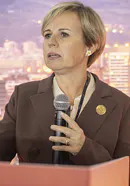
An Interview With Laura Crocetti, MD, PhD, EBIR, EBIR-IO
Dr. Crocetti discusses a personalized approach to ablation treatment, her work with CIRSE and the EBIR to advance modern interventional radiology, overcoming barriers for interventional radiologists in today’s tumor boards, and more.
When you consider your career in medicine so far, what has been most surprising about your path?
What continues to surprise me is how passionate I still am about what I do—even more than 20 years after I began. Interventional radiology (IR) constantly evolves, and each new challenge renews my enthusiasm. The sense of purpose and curiosity that first drove me into this field are still very much alive today.
What do you think a personalized approach to care looks like for liver ablation? How do patient-specific factors influence your choice of ablation and imaging modalities?
Every patient is unique—not only in their medical history and current condition but also in their personal circumstances. A truly personalized ablation treatment must take into account both the tumor’s characteristics (such as size, location, and histology) and the broader therapeutic context: for example, whether the patient is elderly or a potential transplant candidate.
In my clinical practice, I treat most liver tumors with microwave ablation, but I always tailor the protocol (ie, power, duration, approach) to the specific lesion. The choice of imaging guidance also depends heavily on tumor location and size.
Finally, personalization extends to communication. The way I explain the treatment must adapt to each patient’s psychological and cultural background. Building empathy and trust is as essential as the technical precision of the procedure itself.
As Treasurer of the Cardiovascular and Interventional Radiological Society of Europe (CIRSE) Executive Committee and former Program Chair for the European Conference on Interventional Oncology (ECIO) annual meeting, you’ve had a central role in shaping CIRSE as a society and its scientific programming. How do you see the society’s priorities evolving in the next few years?
One key priority is to empower interventional radiologists to take the clinical lead in managing their patients, as equal partners among other specialists such as oncologists and surgeons. The era of the “plumber” interventional radiologist is definitely over.
Another crucial focus is education. We must engage and train the next generation of interventional radiologists early, ideally during medical school.
CIRSE will continue to support the development of IR in emerging regions, both within and beyond Europe, to ensure global and equitable growth of the specialty and, even more importantly, access to IR therapies.
These strategic objectives are also included in CIRSE’s “Vision for the Future of IR,” which was first presented at the 2023 CIRSE Annual Congress.1 This vision aims to encourage a modern IR practice across Europe and beyond, regardless of the specialty status of IR in the respective countries. The three priority areas were defined as (1) a focus on clinical services and patient care, (2) a focus on therapies and treatment, and (3) a focus on training and excellence in IR.
Lastly, with > 10,000 members from around the world, CIRSE has become a global society and is perfectly positioned to continue building global partnerships for advancing IR together!
What role do you see CIRSE and other societies globally playing in driving growth of the interventional oncology (IO) field specifically?
Scientific societies play a vital role in fostering collaboration across disciplines. CIRSE in particular can act as a bridge, establishing communication channels with other societies and specialties.
Just as multidisciplinary teamwork is essential for optimal patient care, strong intersocietal connections are crucial at the scientific level. Shared initiatives, joint meetings, and inclusive guidelines that reflect all therapeutic options, including IR, can significantly advance the field and benefit patients worldwide.
With this in mind, CIRSE established the ECIO as a dedicated multidisciplinary IO meeting, bringing together interventional radiologists, oncologists, radiotherapists, surgeons, and other disciplines. In addition, it has launched a new journal dedicated exclusively to IO: CVIR Oncology. CIRSE also provides the world’s only IO certificate (EBIR-IO) and has pushed the envelope for quality assurance in IO through the International Accreditation System for Interventional Oncology Services (IASIOS), which already counts almost 100 participating high-caliber oncology institutes.
You’re also very involved with CIRSE’s European Board of Interventional Radiology Council (EBIR)—as Chair, why do you think someone should take the EBIR? What changes do you think are needed in training standards to reflect the evolving IR practice of today?
The EBIR represents much more than a certification. It is a recognized standard of excellence that validates an interventional radiologist’s knowledge, skills, and clinical mindset, at the European level and globally. Taking the EBIR demonstrates commitment to high-quality, evidence-based, and patient-centered practice, and it strengthens our collective identity as clinicians, not just proceduralists.
Ultimately, the goal is to ensure that every interventional radiologist in Europe and globally, regardless of where they train, reaches the same high level of competence and confidence to lead patient care.
Preparing for EBIR ensures a solid foundation across all areas of IR and helps identify and fill gaps in one’s clinical knowledge. We hear quite often that hospitals or academic institutions require or prefer EBIR certification for senior interventional radiologist positions, and in some countries, EBIR has already become an integral part of the certification pathway to become an interventional radiologist.
We think that one of the strengths of the EBIR is that it can be integrated in any national certification system and will support the recognition of IR as a clinical discipline.
We will soon reach > 2,000 EBIR holders globally, which I think is a phenomenal success and shows how motivated young interventional radiologists are to achieve high competence and be recognized for their expertise.
In 2020, you published the CIRSE Standards of Practice on thermal ablation of liver tumors.2 Where has this field changed most dramatically in the years since? If you were to draft an addendum to these guidelines, what would you focus on?
Since the publication of the CIRSE Standards of Practice, the field of thermal ablation for liver tumors has seen significant advancements, particularly in technology and techniques. If I were to draft an addendum to these guidelines, I would focus particularly on margin assessment. This is crucial because achieving clear margins can significantly impact the outcomes for patients. I would advocate for standardized protocols that enhance the accuracy of margin evaluation, ensuring that we optimize patient safety and treatment efficacy.
At CIRSE this year, you presented an economic analysis that found cost-effectiveness of transarterial radioembolization (TARE) with yttrium-90 (Y90) glass microspheres over transarterial chemoembolization (TACE).3 How should this guide the decision-making process for patients with hepatocellular carcinoma (HCC)?
The findings from the economic analysis highlighting the cost-effectiveness of TARE with Y90 glass microspheres compared to TACE are essential for guiding clinical decision-making. Although TARE is already recognized as a valid alternative to TACE, it is not fully integrated into guidelines across all its potential applications in different stages of HCC. The economic benefits should encourage health care systems to adopt TARE more widely, but we also need to address the gaps in its availability. This requires an increase in number of centers that can deliver TARE effectively and consistently. By ensuring that these centers operate under uniform protocols, we can improve access for patients with HCC and, more generally of liver tumors, ultimately enhance patient outcomes.
In 2025, you debuted a course on maneuvering the modern multidisciplinary tumor board. What do you consider the biggest structural or cultural barriers and challenges for interventional radiologists in tumor boards today?
One of the main barriers interventional oncologists face in tumor boards today is structural. In many institutions, interventional radiologists are still not formally integrated as clinical decision-makers but rather consulted as technical experts. This limits our ability to contribute proactively to treatment planning from the beginning.
A further challenge for interventional oncologists in tumor boards is effective communication: learning how to clearly present data, advocate for our treatments, and engage as equal clinical partners. It’s not just about technical expertise but also about speaking the same clinical language as oncologists and surgeons to ensure IR has a strong voice in patient management.
The Modern Multidisciplinary Tumour Board course, which was organized in collaboration between the European School of Interventional Radiology and IASIOS, was a great start and much appreciated by the numerous delegates. For us, it was an important pilot to see what works best and what can be improved. We are already passionately working on the 2026 course, which I hope I can host in my home institute in Pisa, Italy.
As an accomplished pianist, do you see any parallels between music and IR?
Definitely. Playing the piano has taught me how to combine technical mastery with artistic expression, and I see the same balance in IR. In both cases, you work with intricate systems, and you need rhythm, precision, and flow.
When I play, I aim to connect emotionally with the music; in IR, I try to connect with the patient and the team. Both require discipline, empathy, and the ability to stay composed under pressure.
1. Cardiovascular and Interventional Radiological Society of Europe. CIRSE vision for the future of IR. Accessed October 28, 2025. https://www.cirse.org/society/cirse-vision-for-the-future-of-ir-overview/
2. Crocetti L, de Baére T, Pereira PL, Tarantino FP. CIRSE standards of practice on thermal ablation of liver tumours. Cardiovasc Intervent Radiol. 2020;43:951-962. doi: 10.1007/s00270-020-02471-z
3. Crocetti L. Cost benefit analysis of selective internal radiation therapy with Y-90 glass microspheres versus drug-eluting bead transarterial chemoembolization for patients with unresectable hepatocellular carcinoma in Italy. Presented at: CIRSE 2025; September 13-17, 2025; Barcelona, Spain.
Advertisement
Advertisement
Interested in reading more interviews?
To read more interviews with thought leaders in the vascular field, check out our Profiles & Perspectives hub.
Read More