Advertisement
Advertisement
November 2025
Sponsored by Shockwave Medical
Proven Crack Record: How Shockwave’s PAD Innovations Continue to Shatter Calcium Barriers
Reviewing Shockwave’s pioneering intravascular lithotripsy technologies and a look at what’s on the horizon.
Over the past 8 years, Shockwave Medical has pioneered intravascular lithotripsy (IVL) and rapidly responded to physician feedback to innovate its portfolio, addressing the critical need for safer, more predictable approaches to treating calcified peripheral artery disease (PAD) and calcified coronary artery disease. Starting with its proprietary ultrasonic acoustic waveform that is the basis of IVL’s mechanism of action, Shockwave has developed a robust IVL portfolio, including five peripheral and three coronary IVL catheters that, to date, have been used to treat > 1 million patients worldwide, including > 20,000 in published clinical studies (Figure 1).1
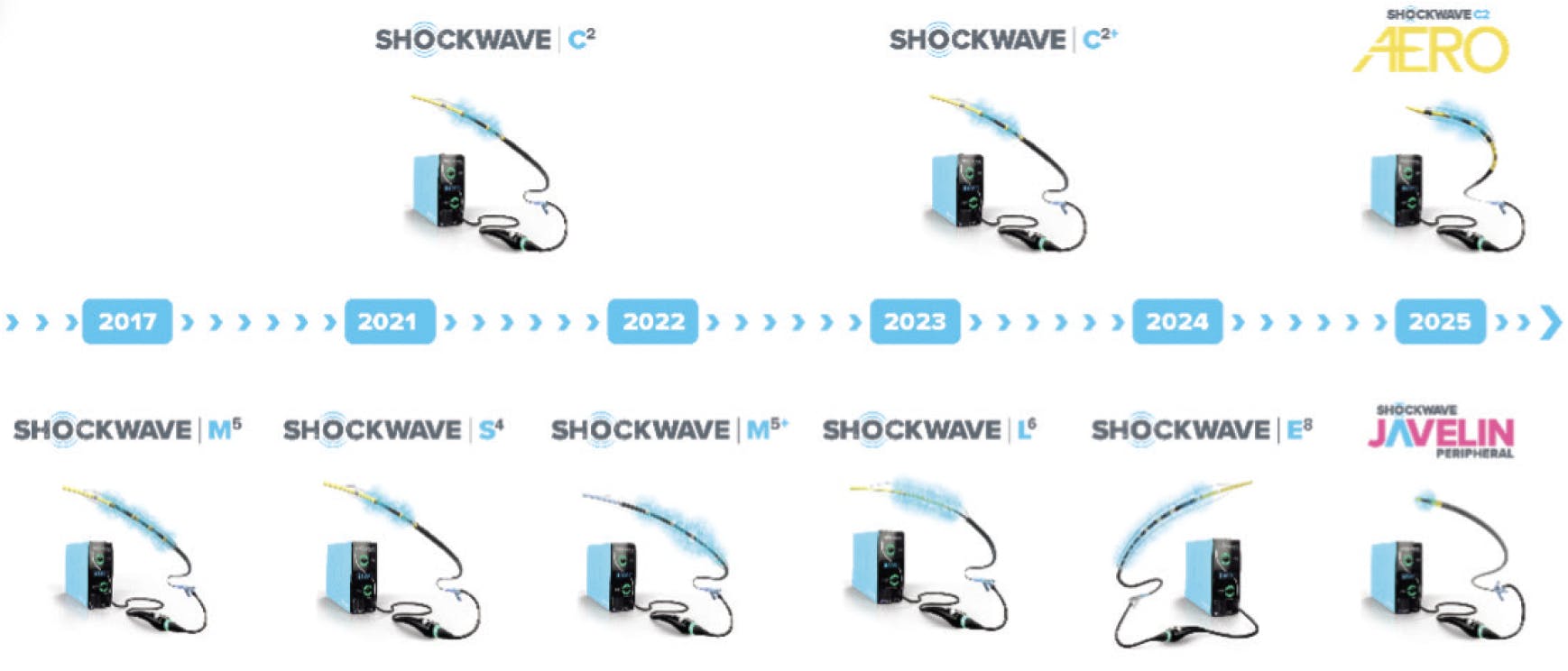
Figure 1. Shockwave’s consistent track record of pioneering IVL technologies.
SHOCKWAVE’S INNOVATIVE HISTORY BEGINS WITH AN ULTRASONIC ACOUSTIC WAVEFORM
Shockwave IVL originated from the idea of its two cofounders, clinical engineer John Adams and entrepreneur Daniel Hawkins, to re-engineer extracorporeal lithotripsy—originally used to fragment kidney stones—into a catheter for cardiovascular applications. Building on this concept, the founders developed a unique ultrasonic acoustic pressure waveform tailored specifically for cardiovascular use. This unique waveform serves as the foundation of Shockwave IVL technology, with efficacy driven by its instantaneous and relatively high positive peak pressure for compressive stress for calcium modification and safety driven by its extended duration and low negative peak pressure, which minimizes soft tissue damage due to tensile stress (Figure 2).2 Early proof-of-concept testing was performed on an eggshell, demonstrating the device’s ability to effectively crack the hard shell (calcium) while preserving the integrity of the soft membrane inside (healthy tissue), generating the idea of Shockwave IVL being “soft on soft and hard on hard” (Figure 3).
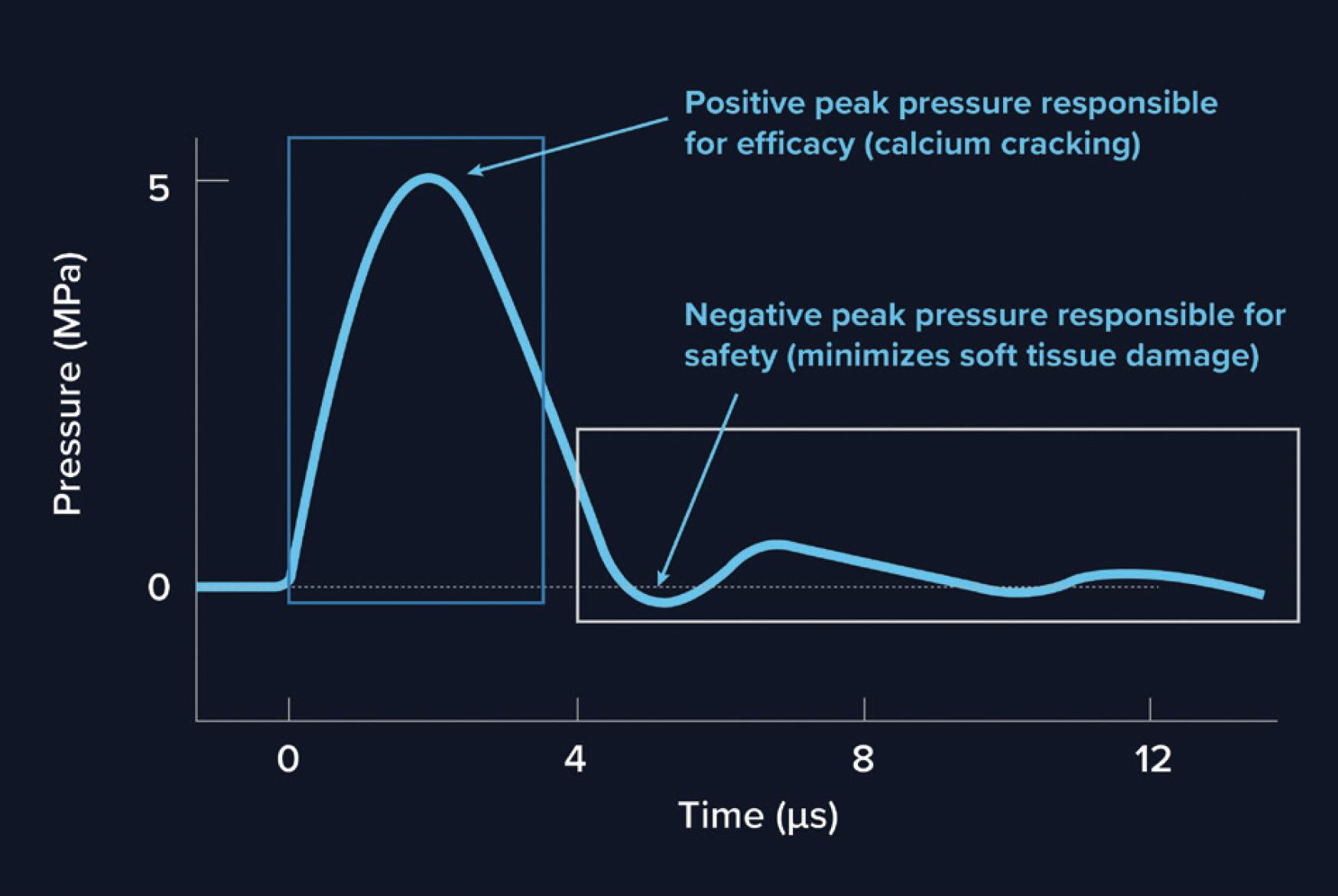
Figure 2. Shockwave’s waveform tuned for safety without compromising effectiveness.
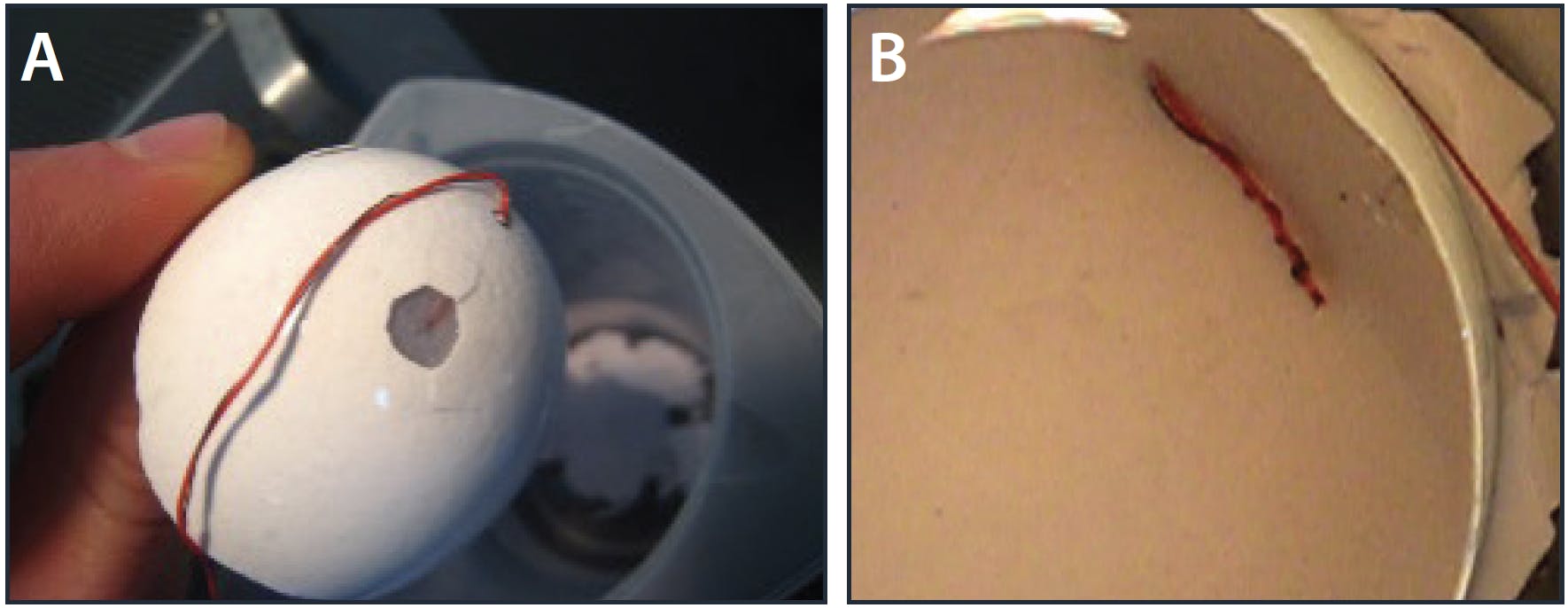
Figure 3. First egg experiment resulted in “million-dollar picture” proving that the shell is fractured (A) and the membrane is fully intact (B), sparking investment in Shockwave Medical.
THE PRINCIPLE OF CONSISTENCY
All Shockwave IVL solutions have been developed with consistency as a primary principle—consistent product performance, consistent clinical outcomes, and consistent ultrasonic acoustic output.1
Consistent—From First to Last Shockwave
The acoustic output of Shockwaves is measured to be consistent from the first to the last Shockwave delivered, with 98% to 102% wave power consistency from pulse to pulse (Figure 4).3
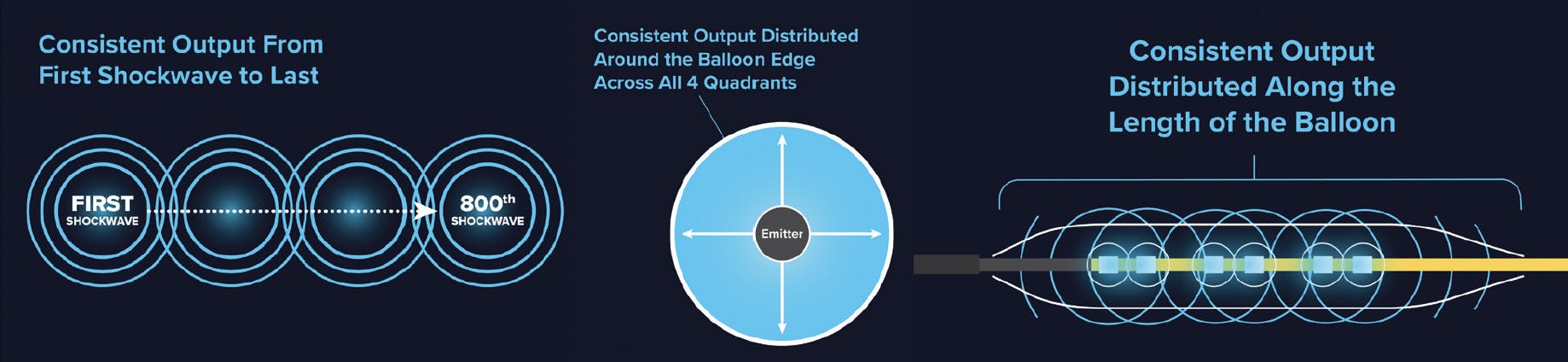
Figure 4. Consistent output from the first Shockwave to the last, circumferentially and along the length of the balloons.3-5
Consistent—Circumferential Energy Delivery
Shockwave IVL’s clinically validated efficacy across all types of calcium is driven by its circumferential acoustic output distributed around the balloon edge.4
Consistent—Along the Length of the Balloon
Shockwave’s balloon IVL platform provides therapeutic acoustic output along the length of the balloon to disrupt calcium regardless of where it is located, while minimizing damage to the soft tissue.5
PORTFOLIO OVERVIEW: TREATING ILIAC TO BELOW THE ANKLE
Shockwave’s first-of-its-kind technology is now available on two platforms: a Forward IVL platform and a Balloon IVL platform (Figure 5).
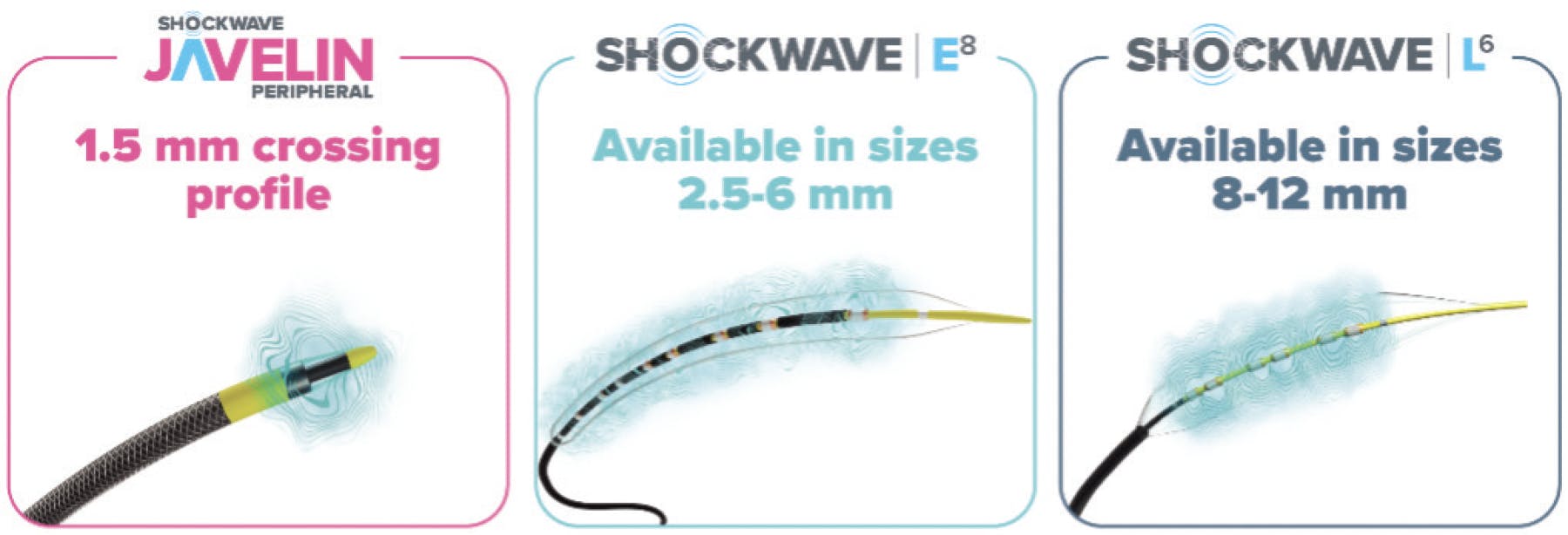
Figure 5. Shockwave Peripheral IVL product offerings.
Shockwave Forward IVL Platform
Shockwave Javelin. Starting with the newest device to become available to physicians, Shockwave Javelin expands physicians’ ability to treat calcified occlusive or uncrossable disease while maintaining the trusted safety and efficacy of Shockwave’s balloon-based catheters. This first-of-its-kind Forward IVL platform features a single emitter positioned distally 3 mm from the catheter tip, allowing it to crack calcium ahead of the catheter. By modifying the calcium, Javelin enables the crossing of challenging calcific occlusions with either Javelin or other ancillary tools to keep procedures moving forward.
Shockwave Balloon IVL Platform
Shockwave E8. Shockwave E8, which has quickly become the workhorse catheter in physicians’ hands for above- and below-the-knee vessels, provides enhanced treatment capabilities over the first-generation products through a longer balloon (80 mm), more available Shockwaves and pulses, improved deliverability, and a longer working length of 150 cm (Table 1). Despite its increased length, Shockwave E8 is the most deliverable Shockwave IVL peripheral catheter to date, with a smaller crossing profile and longer portion of hydrophilic coating, enabling delivery to and crossing of some of the tightest, most distal tibial lesions.6
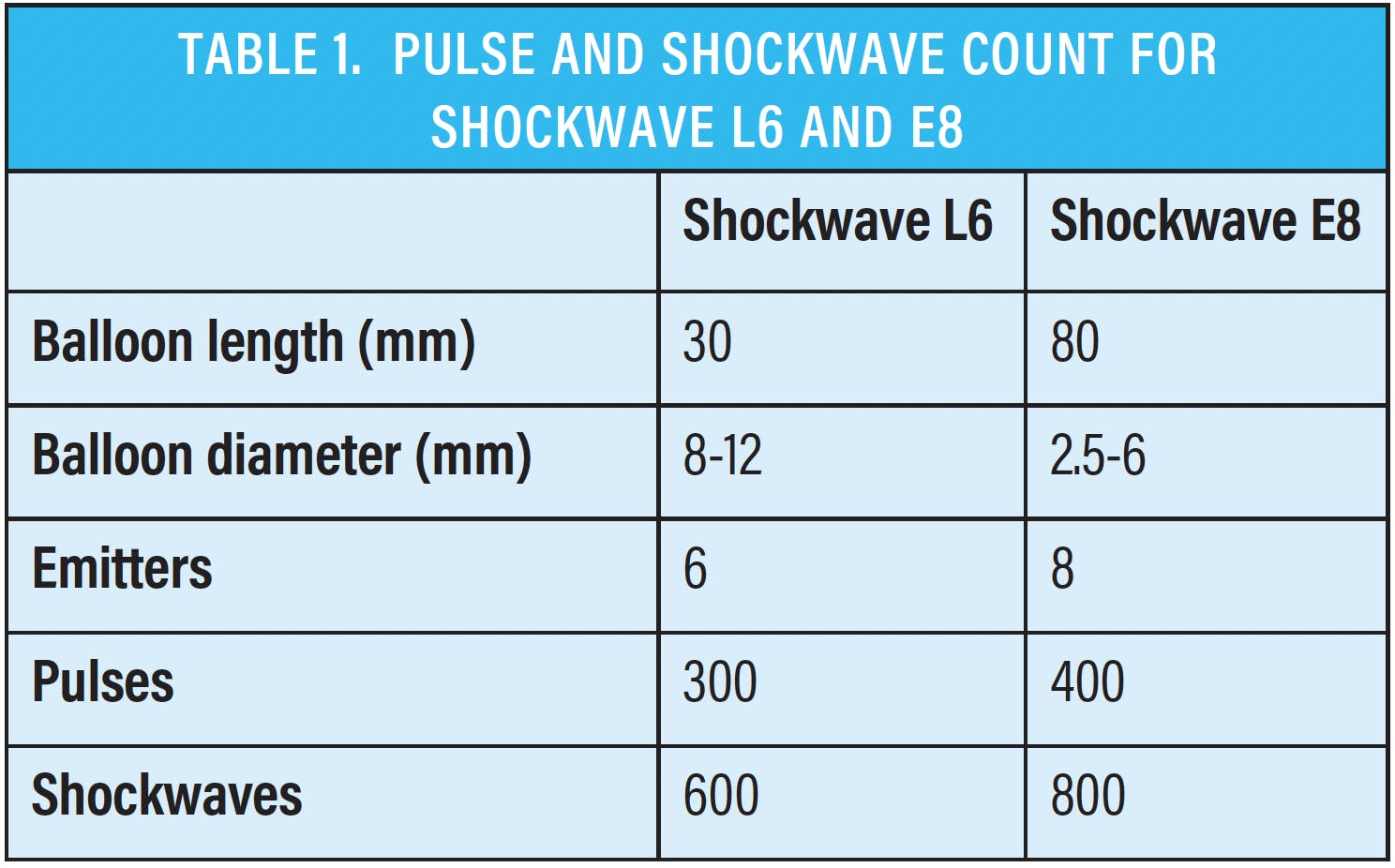
Shockwave L6. The large-diameter balloons of Shockwave L6 allow for effective sizing in large vessels for optimal IVL treatment.1,7,8 The specific design of Shockwave L6 provides improved cracking capabilities for large-diameter vessels by moving emitters closer together, along a shorter balloon (30 mm) to provide enough energy depth to reach large-diameter vessels (Table 1).
Pulses, Shockwaves, & Tandem Firing Emitters. Shockwave’s Balloon IVL Platform includes tandem-firing emitters, which means each pulse fires two emitters at a time, producing two Shockwaves per pulse (Figure 6).5
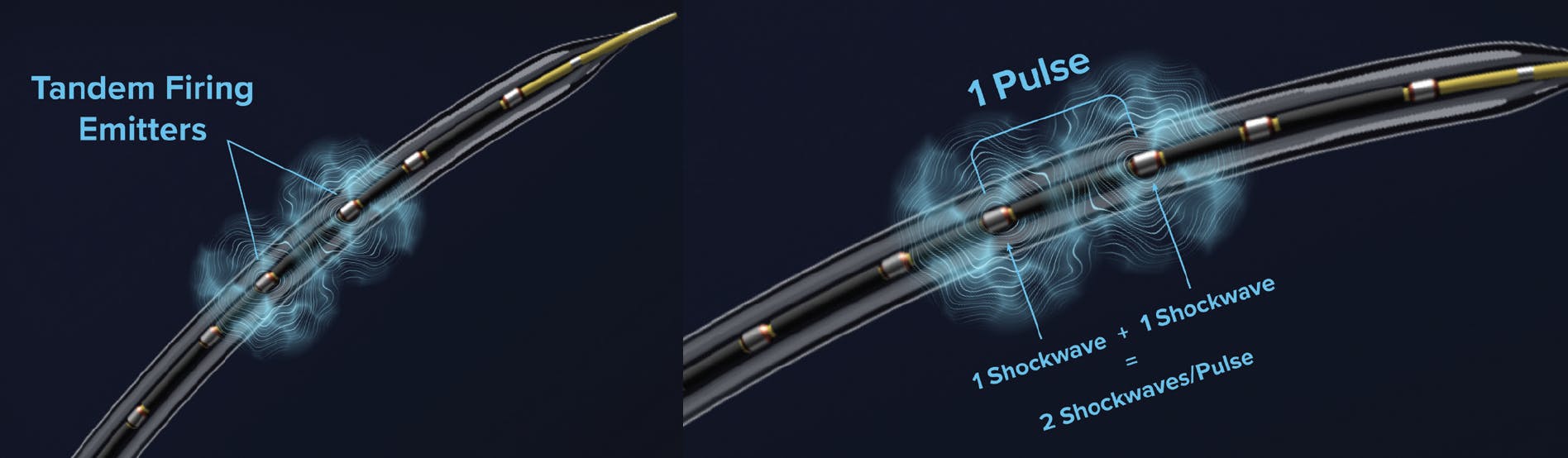
Figure 6. One pulse delivers two Shockwaves as tandem emitters fire in pairs.
CLINICALLY PROVEN SAFETY AND EFFECTIVENESS, REPEATED AGAIN & AGAIN IN > 1,900 PATIENTS
Shockwave’s commitment to product innovation is matched by its commitment to generating robust clinical data to support the technology’s growing clinical utility. Shockwave IVL’s unique mechanism of action and published acoustic waveform have been tested across seven core lab–adjudicated DISRUPT and FORWARD PAD studies with notably consistent outcomes, including populations with chronic limb-threatening ischemia and across all vessel beds (Figure 7). Additionally, Shockwave’s DISRUPT PAD III randomized controlled trial, which showed the superiority of IVL over percutaneous transluminal angioplasty, remains the largest long-term, level 1 evidence in the treatment of heavily calcified femoropopliteal lesions, while the observational study remains the largest prospective, real-world evidence for the treatment of complex, heavily calcified PAD.9
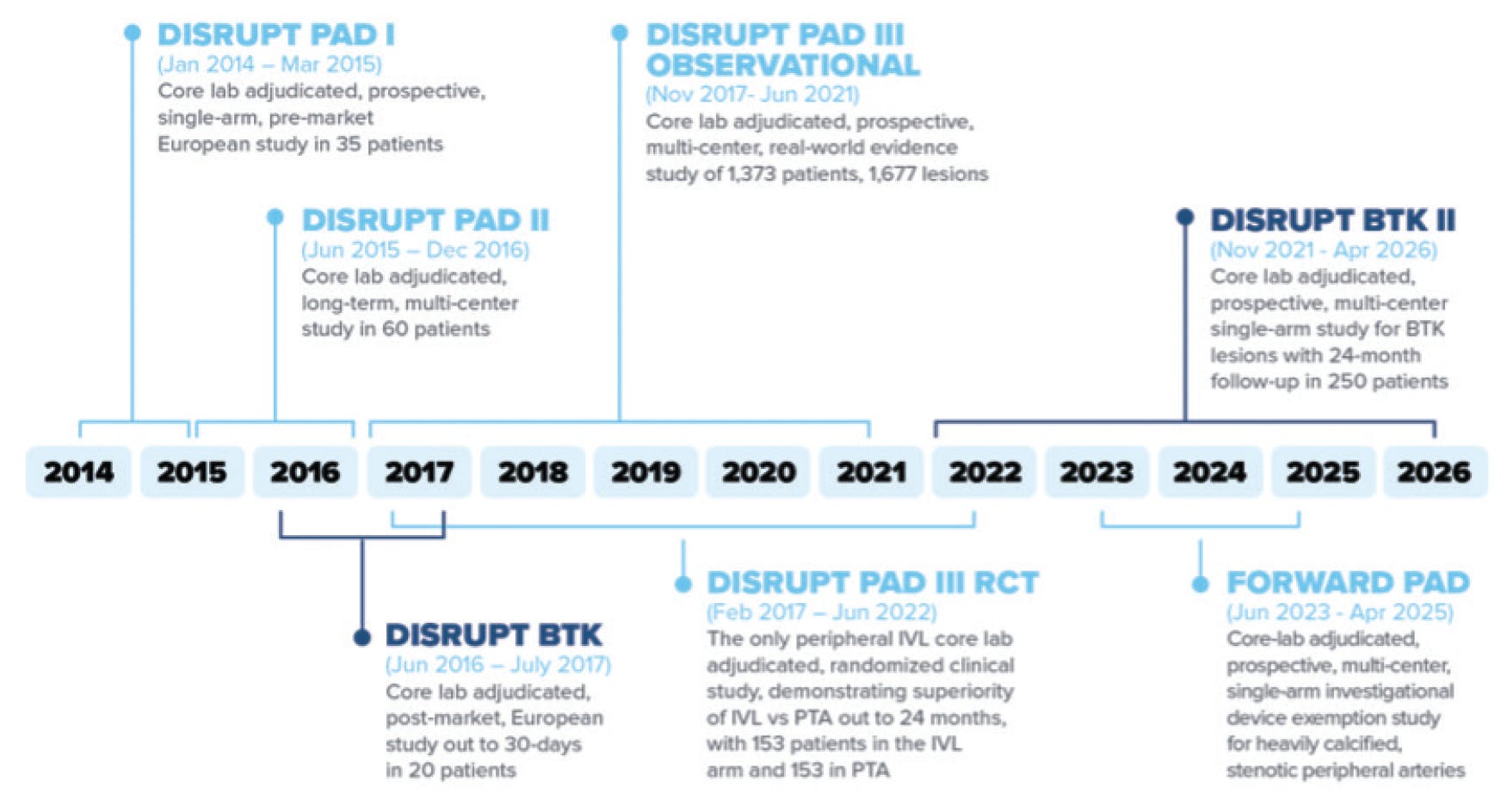
Figure 7. Shockwave Medical’s seven sponsored clinical trials.
SHOCKWAVE IS ONLY JUST GETTING STARTED
Now as part of Johnson & Johnson, Shockwave’s ability to innovate, provide more support to customers, and fund additional clinical research has only increased. Postacquisition, Shockwave has only grown the funds committed to research and development, reaching 38 active projects this year (Figure 8). Shockwave Medical remains committed to ensuring its products continue to treat calcium across multiple existing and new vessel beds, while ensuring that physician feedback is highly valued and quickly implemented in order to maintain wave after wave of IVL innovation in the years to come.
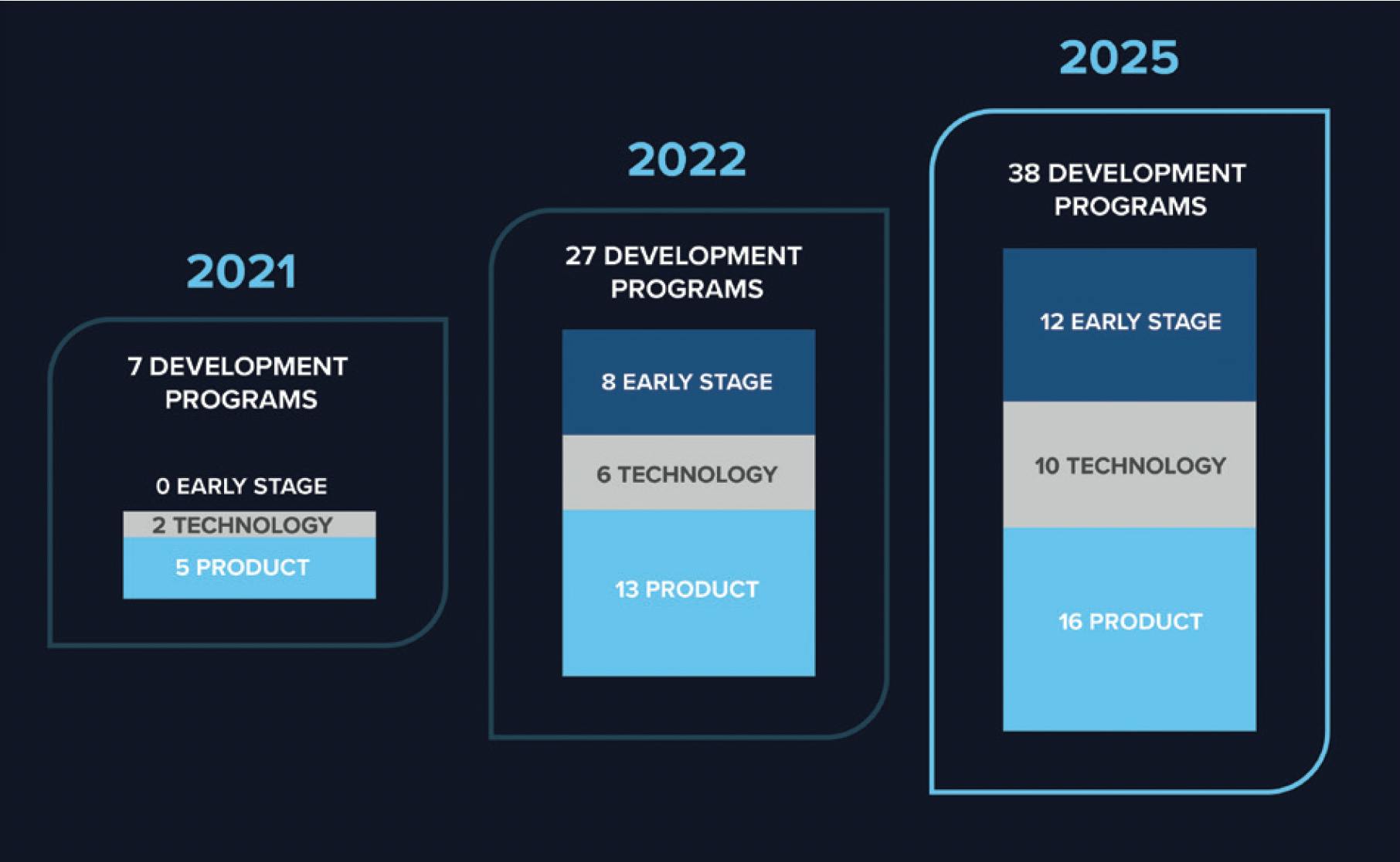
Figure 8. Shockwave’s innovative R&D pipeline continues to expand, with further growth expected with J&J resources.
1. Data on file, Shockwave Medical.
2. Kereiakes DJ, Virmani R, Hokama JY, et al. Principles of intravascular lithotripsy for calcific plaque modification. JACC Cardiovasc Interv. 2021;14:1275-1292. doi: 10.1016/j.jcin.2021.03.036
3. Data on file, Shockwave Medical. Based on acoustic output measurements of Shockwave E8 by hydrophone. IEC standard 61161.
4. Data on file, Shockwave Medical. Based on overall and by quadrant average acoustic output of 28 measurements at balloon edge adjacent to emitter. IEC standard 61161.
5. Data on file, Shockwave Medical. Based on longitudinal acoustic output scans. IEC standard 61161.
6. Data on file, Shockwave Medical.
7. Data on file, Shockwave Medical. 83% of 183 physicians in the Limited Market Release rated Shockwave E8 to be more deliverable than the previous generation catheters.
8. Brodmann M, Werner M, Holden A, et al. Primary outcomes and mechanism of action of intravascular lithotripsy in calcified, femoropopliteal lesions: results of Disrupt PAD II. Catheter Cardiovascular Interv. 2019;93:335-342. doi: 10.1002/ccd.27943
9. Tepe G, Brodmann M, Werner M, et al. Intravascular lithotripsy for peripheral artery calcification: 30-day outcomes from the randomized Disrupt PAD III trial. JACC Cardiovasc Interv. 2021;14:1352-1361. doi: 10.1016/j.jcin.2021.04.010
Shockwave M5, Shockwave M5+, Shockwave S4, Shockwave L6 and Shockwave E8 Safety Information
In the United States: Rx only.
Indications for Use— The Shockwave Medical Intravascular Lithotripsy (IVL) System is intended for lithotripsy-enhanced balloon dilatation of lesions, including calcified lesions, in the peripheral vasculature, including the iliac, femoral, ilio-femoral, popliteal, and infra-popliteal arteries. Not for use in the coronary, carotid or cerebral vasculature. Peripheral IVL is also indicated for use in renal arteries in certain jurisdictions, including the United States. Please reference Instructions For Use for country specific information.
Contraindications— Do not use if unable to pass 0.014” (M5, M5+, S4, E8) or 0.018” (L6) guidewire across the lesion-Not intended for treatment of in-stent restenosis or in coronary, carotid, or cerebrovascular arteries.
Warnings— Only to be used by physicians who are familiar with interventional vascular procedures—Physicians must be trained prior to use of the device— Use the generator in accordance with recommended settings as stated in the Operator’s Manual.
Precautions— Use only the recommended balloon inflation medium—Appropriate anticoagulant therapy should be administered by the physician— Decision regarding use of distal protection should be made based on physician assessment of treatment lesion morphology.
Adverse effects— Possible adverse effects consistent with standard angioplasty include-Access site complications -Allergy to contrast or blood thinner- Arterial bypass surgery—Bleeding complications—Death— Fracture of guidewire or device—Hypertension/Hypotension— Infection/sepsis—Placement of a stent—renal failure— Shock/pulmonary edema—target vessel stenosis or occlusion— Vascular complications. Risks unique to the device and its use— Allergy to catheter material(s)— Device malfunction or failure— Excess heat at target site.
Prior to use, please reference the Instructions for Use for more information on indications, contraindications, warnings, precautions and adverse events. www.shockwavemedical.com/IFU
Shockwave Javelin Peripheral IVL Catheter Safety Information
In the United States: Rx only.
Indications for Use— The Shockwave Medical IVL System with the Javelin Peripheral IVL Catheter is intended for lithotripsy- enabled modification and crossing of calcified lesions in the peripheral vasculature, including the iliac, femoral, ilio-femoral, popliteal, and infra-popliteal arteries, prior to final treatment.
Not for use in coronary, carotid, or cerebral vasculature. Additionally, not for use in pulmonary vasculature in the U.S. and New Zealand.
Contraindications— Do not use if unable to pass 0.014” (0.36 mm) guidewire across the treatment site-Not intended for treatment of in-stent restenosis or in coronary, carotid, cerebral or pulmonary arteries.
Warnings— Only to be used by physicians who are familiar with interventional vascular procedures—Physicians must be trained prior to use of the device— Use the generator in accordance with recommended settings as stated in the Operator’s Manual.
Precautions— Avoid applying acoustic pressure pulses while IVL window is not filled with sterile saline—Appropriate anticoagulant therapy should be administered by the physician— Decision regarding use of distal protection should be made based on physician assessment of treatment lesion morphology.
Adverse effects— Possible adverse effects consistent with standard angioplasty include-Access site complications -Allergy to contrast or blood thinner- Arterial bypass surgery—Bleeding complications—Death— Fracture of guidewire or device—Hypertension/Hypotension— Infection/sepsis—Placement of a stent—renal failure— Shock/pulmonary edema—target vessel stenosis or occlusion— Vascular complications. Risks unique to the device and its use— Allergy to catheter material(s)— Device malfunction or failure.
Prior to use, please reference the Instructions for Use for more information on indications, contraindications, warnings, precautions and adverse events. www.shockwavemedical.com/IFU
© Shockwave Medical, Inc. All Rights Reserved. SPL 78074 Rev. A
Advertisement
Advertisement