Advertisement
Advertisement
October 2025 Supplement
Sponsored by Contego Medical, Inc.
Advancing Stroke Protection in Carotid Stenting With Integrated Embolic Protection (IEP™) Technology
MODERATOR
Steven Abramowitz, MD
Executive Director
MedStar Vascular Surgery Program
Chair, Department of Vascular Surgery
MedStar Washington Hospital Center
Associate Professor of Surgery
Georgetown University
Washington, DC
PANELISTS
Gregg S. Landis, MD, FACS
System Chief of Vascular Surgery
Vice Chairman of Surgery
Northwell Health
Associate Professor of Surgery
Zucker School of Medicine at Hofstra/Northwell
Hempstead, New York
Alexandros Mallios, MD
Department of Vascular and Endovascular Surgery
Groupe Hospitalier Paris Saint Joseph
Paris, France
Department of Surgery
Centre Hospitalier de Chartres
Chartres, France
Syed Bokhari, MBBS
PGY3
UT Southwestern Medical Center
Dallas, Texas
Michael C. Siah, MD
Assistant Professor
Department of Surgery
Director of Limb Salvage
UT Southwestern Medical Center
Dallas, Texas
Sean P. Lyden, MD
Professor and Chairman
Department of Vascular Surgery
Cleveland Clinic
Cleveland, Ohio
Nicolas J. Mouawad, MD, MPH, MBA, DFSVS, FACS, FRCS, RPVI
Chief and Medical Director, Vascular & Endovascular Surgery
McLaren Health System–Bay Region
Associate Clinical Professor of Surgery
Michigan State University
Central Michigan University
Bay City, Michigan
Meeting Unmet Innovation Needs Will Determine the Long-Term Success of TCAR
Dr. Abramowitz: We now have 10 years of experience with TCAR, what improvements are needed?

Dr. Landis: TCAR has emerged as a strong competitor to legacy TF-CAS and CEA, offering cerebral protection through flow reversal while minimizing access-related complications. Despite its successes, several areas demand innovation to expand its safety, efficacy, and applicability.
Stent Design Optimization
Current devices are borrowed largely from peripheral practice and may not optimally address carotid hemodynamics. Important design questions include radial force versus flexibility and open versus closed versus mesh-covered interstice configurations to resist plaque prolapse. Ongoing trials are evaluating TCAR-specific systems and stents to determine which designs provide the most durable luminal patency while minimizing embolic risk. The Neuroguard IEP stent offers several advantages over current stent designs: excellent flexibility and vessel conformability in the setting of optimized and balanced resistive radial force and outward radial force. The stent features a closed-cell design for maximum plaque coverage and has demonstrated a low restenosis rate (Figure 1).6,7
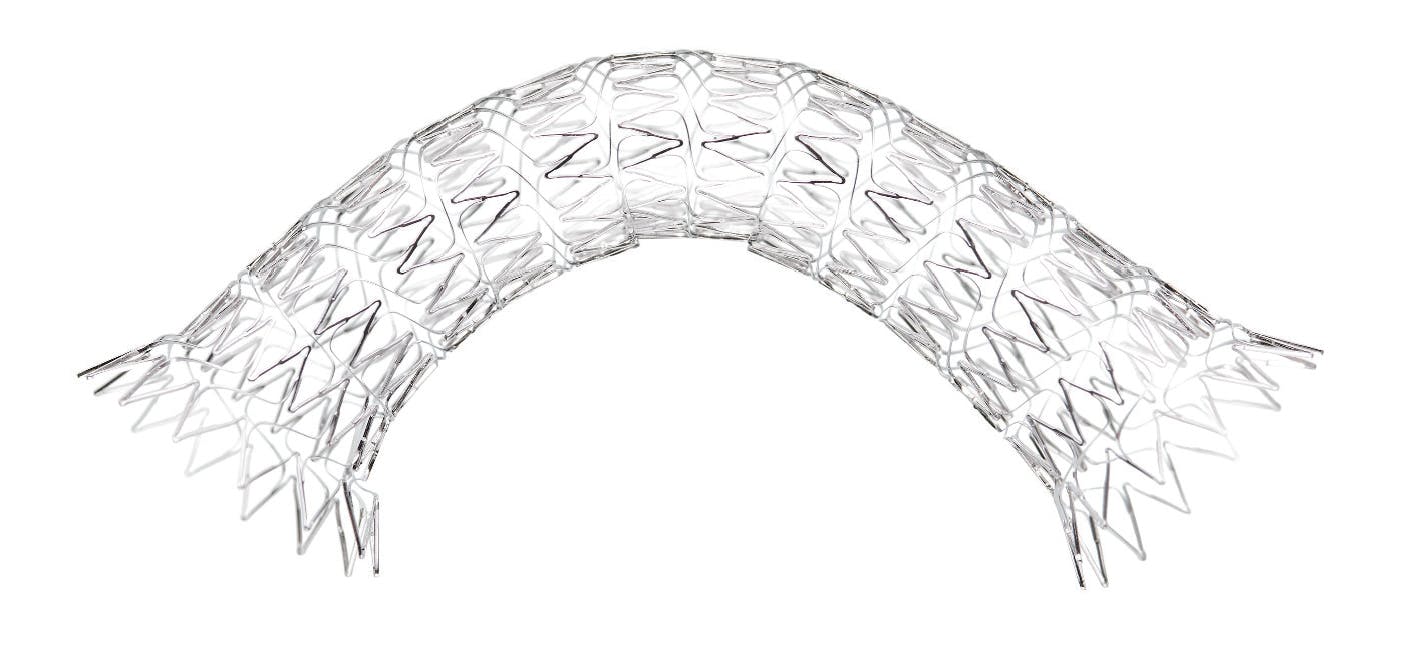
Figure 1. The Neuroguard IEP stent.
Management of Heavily Calcified Lesions
Severe circumferential calcification poses a major challenge in CAS, limiting stent expansion and increasing embolic risk. Adjunctive technologies such as intravascular lithotripsy and other plaque-modifying technologies must be evaluated in the context of TCAR to establish safe algorithms for treating these difficult lesions.
Breakthrough Emboli and Lesions Prone to It
Although flow reversal or distal embolic protection individually reduce intraprocedural cerebral embolization, breakthrough emboli can still occur. Better lesion characterization through high-resolution imaging and biomarkers may help predict which plaques are most likely to shed debris despite protection. Furthermore, differential flow reversal from the ICA and external carotid artery (ECA) remains a subject of investigation. TCAR-IEP represents a “belt and suspenders” approach to cerebral protection. In this approach, flow reversal is combined with a 40-µm IEP filter for dual-neuroprotection, a design intended to reduce the risk of breakthrough emboli reaching the brain.
Percutaneous Cervical Access
The current technique requires a small cervical incision and direct carotid puncture, which, although less invasive than CEA, still introduces risks of hematoma, cranial nerve injury, and wound complications. A percutaneous system has the potential to further reduce procedural morbidity, improve patient comfort, and expand TCAR use in high-risk surgical candidates. Impeccable reliability is critical in preventing the catastrophic complication of cervical hematoma. The development of reliable closure devices tailored to the CCA will be central to this progress.
Conclusion
TCAR represents a major step forward in carotid artery revascularization, offering benefits beyond TF-CAS and CEA, but its long-term success will hinge on continuous innovation. The next generation TCAR-IEP approach combines multiple advancements into a user-friendly platform while leveraging the proven Neuroguard IEP stent. The ongoing PERFORMANCE III trial will provide important data on the impact of this enhanced embolic protection strategy.
Monitoring Flow Reversal With TCD and Clinical Implications
Dr. Abramowitz: You have recently published a thought-provoking study that discussed the findings of TCD monitoring during TCAR that characterized flow direction in the ICA during flow reversal.5 Can you please discuss these results and their clinical implications?

Dr. Mallios: During TCAR, unlike CAS with the Mo.Ma system (Medtronic), only the CCA is clamped. We assume that this produces complete flow reversal and therefore absolute protection from embolic events. Nonetheless, from a physiologic standpoint, it remains possible that adequate retrograde flow from the ECA could maintain some antegrade flow in the ICA, thereby negating the aforementioned protection. This phenomenon may also explain why patients undergoing TCAR generally tolerate CCA clamping without neurologic events, whereas approximately 5% of patients undergoing awake CEA—in which both the ECA and ICA are clamped—require placement of a shunt.
We aimed to investigate this further. We performed TCD scanning of the ipsilateral petrous ICA in 22 consecutive patients. In 16 of 22 patients, we obtained an adequate acoustic window that allowed high-quality, continuous imaging throughout the intervention. Interestingly, after the CCA was clamped and flow reversal was observed into the sheath, only 8 (50%) patients demonstrated continuous retrograde flow in the ipsilateral petrous ICA.
Although our series is too small to permit generalization, it supports our assumption that CCA clamping plus a flow-reversal circuit does not reliably achieve distal ICA reversal and additional protection during TCAR using an embolic protection system may be a valuable and necessary enhancement.5
Design Features of the Neuroguard IEP System and PERFORMANCE II Trial Results
Dr. Abramowitz: The Neuroguard IEP System for TF-CAS and transradial CAS with IEP received FDA approval in October 2024. Could you briefly describe the design features of this carotid artery stent delivery system and summarize the findings from the PERFORMANCE II trial that led to FDA approval?


Drs. Bokhari and Siah: As vascular surgeons, the Neuroguard IEP System represents a compelling advancement in the management of carotid stenting. It’s a smart design with three components: (1) a purpose-built, closed-cell nitinol stent that is both flexible and conformable while optimizing radial resistive and outward force; (2) a semi-compliant post-dilation balloon; and (3) an adjustable 40-µm IEP filter—all in a single device. This design allows for procedural efficiency by minimizing device exchanges resulting in fewer catheter manipulations, which is a major benefit.
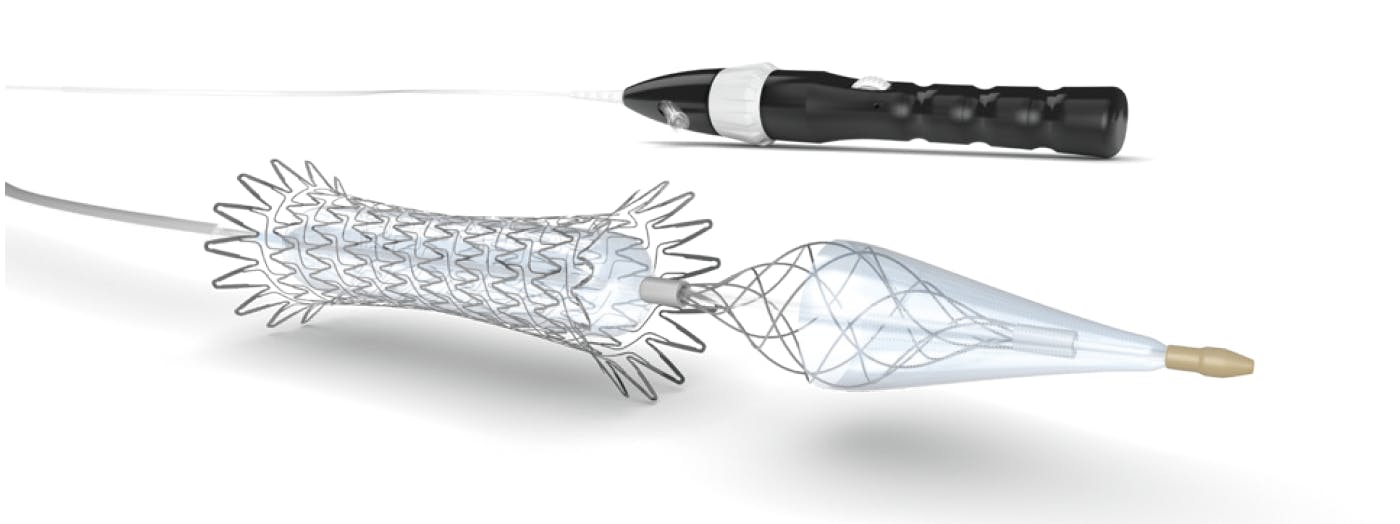
The Neuroguard IEP® System.
A 3-in-1 System: Carotid Stent + Dilation Balloon + Integrated Embolic Protection.
The results from the PERFORMANCE II trial were outstanding. Stroke rates were remarkably low—just 1.3% at 30 days and 1.8% at 1 year—representing the lowest 1-year stroke incidence ever reported in any prospective, multicenter pivotal trial of CAS, regardless of patient risk. Notably, there were no major strokes, stent thromboses, or neurologic deaths at either 30 days, 12 months, and 24 months in this high-surgical-risk cohort.7
PERFORMANCE III Trial Evaluating the Neuroguard IEP Stent and Embolic Protection System for TCAR-IEP
Dr. Abramowitz: Can you describe the key innovations that led to the development of the Neuroguard IEP System for a direct access approach (TCAR-IEP)? Also, as one of the National Principal Investigators of the PERFORMANCE III trial, which completed enrollment in July 2025, could you review the trial’s design?

Dr. Lyden: The entire TCAR-IEP approach is designed to improve the procedure—from the microintroducer kit to the direct access sheath, to the dual-neuroprotection, to the 3-in-1 stent. The direct access sheath has a curve at the tip, so it does not point down in the CCA, as well as a second curve, so it sits easier on the patient’s chest. Flow is reversed to a collection device, leveraging both pressure differential and gravity to create flow reversal, and eliminates the need for a second access for venous return. Flow reversal volume is kept consistent by a physician-activated manual switch on the flow reversal system, which is based on the stage of the procedure and device dimensions (guidewire vs stent delivery catheter).
By eliminating the need for a separate venous return access and leveraging the inherent efficiency of the Neuroguard IEP System—which integrates the stent, post-dilation balloon, and embolic protection into a single device—several steps of the typical TCAR procedure are streamlined and removed.
The objective of the PERFORMANCE III trial (NCT05845710)8 is to evaluate the safety and effectiveness of the Neuroguard IEP system for direct transcarotid access. The primary endpoint is a composite of all stroke, myocardial infarction, and death at 30 days. Secondary endpoints include acute success, technical success, procedural success, major and minor stroke through 30 days, cranial nerve injury, and access site complications. The volume of blood removed from the collection device will also be quantified.
The trial allows treatment of patients at high risk for CEA adverse events based on physiology or anatomy and symptomatic stenosis ≥ 50% or asymptomatic stenosis ≥ 70%. Both pre- and post-procedural extracranial and intracranial imaging are required. The shortened 30-day endpoint of PERFORMANCE III is possible based on the known long-term outcomes of the Neuroguard IEP Stent from the TF/transradial PERFORMANCE II trial.
To date, two clinical studies (PERFORMANCE I and II) of the Neuroguard IEP System have demonstrated 99% freedom from any stroke through 30 days and the lowest 1-year stroke outcomes (1.8%) from CAS pivotal trials, regardless of patient risk. Specifically, the PERFORMANCE II trial demonstrated no major strokes, stent thromboses, or neurologic deaths reported through 2 years.9 These outcomes are particularly notable given the high rate of diabetes (43.3%) and severe calcification (34.5%) among participants enrolled. Regarding the Neuroguard IEP stent, in-stent velocities at 2 years remained low across all participant populations,10 demonstrating continued stent durability and patency, complementary to the low rates of core lab–adjudicated target lesion revascularization (2.7%) and in-stent restenosis (3.9%).
The Importance of Stent Post-Dilation
Dr. Abramowitz: Many studies have validated that post-dilation of a carotid artery stent causes the highest volume of embolic activity on TCD monitoring during a carotid stent procedure. Therefore, many practitioners have avoided post-dilating a carotid stent as part of a TCAR procedure. Could you comment on this practice in the context of the Neuroguard IEP System used in TCAR-IEP procedures and some of the available data on restenosis as it relates to post-dilation of carotid artery stents?
Dr. Lyden: Data from the CREST trial have shown that when a carotid artery stent is not post-dilated, there is a statistically significant higher risk of restenosis compared to when post-dilation is performed (10.3 % vs 3.7 % at 2 years).11 When carotid stenting is performed, whether from a TF or transcarotid approach, adequate expansion of the stenosis is critical. Some noncalcified lesions may expand with the outward force provided by the radial strength of the stent alone; however, in the absence of this, post–stent dilation is critical to achieve good results. Post-dilation is the time of highest risk of embolization during CAS12; however, this is not a reason to avoid this necessary step, but rather a time for better protection. When flow reversal is used as an embolic protection strategy, both from a TF and transcarotid approach, the incidence of new lesions on diffusion-weighted MRI is similar to CEA,13,14 regardless of the type of stent used. Importantly, TCAR-IEP uses both flow reversal and an integrated 40-µm pore filter, offering dual-neuroprotection during this high-risk step of post-dilation.
The Future of Carotid Artery Revascularization
Dr. Abramowitz: As a highly experienced TCAR operator and one of the leading enrollers in the PERFORMANCE III trial, could you provide us with your thoughts on the future of carotid artery revascularization? Is TCAR here to stay? Will TCAR-IEP change practice patterns? What is the future of CEA?

Dr. Mouawad: The future of carotid artery revascularization is at a fascinating crossroads, driven by factors such as technology and innovation, clinical evidence, patient preferences, marketing, and health system economics. In my opinion, there are a few overarching themes—(1) minimally invasive is the trend; (2) cost, reimbursement, and health economics will play a prominent role and likely shape access; (3) medical management is improving with the threshold on intervening on asymptomatic patients rising; (4) physician preference/comfort with procedures and the subsequent effect on training paradigms is evolving; and (5) we continue to gather more and more data.
Transcarotid access has revolutionized carotid revascularization. This route offers a minimally invasive access with important benefits of avoiding manipulating the aortic arch and, more importantly, providing neuroprotection with “reverse-flow,” which has resulted in low stroke rates. With the expanded Centers for Medicare & Medicaid coverage, strong adoption with comparable short- and medium-term outcomes with CEA, and anatomic and recovery advantages, TCAR is definitely here to stay.
If the outcomes of PERFORMANCE III are favorable, they may inform how physicians view the role of dual-neuroprotection during TCAR. Innovations designed to increase procedural efficiency with a focus on patient safety will continue to push TCAR forward and likely increase adoption.
Despite the aforementioned benefits of TCAR, the gold standard of carotid revascularization remains CEA. It is tried, tested, and true—and it will never go away because there will always be patients who are not suitable anatomically for transcatheter stenting.
All in all, I believe carotid revascularization should follow a patient-centered approach. We now have different methods of treatment, and the options should be tailored to the patient anatomy, risk, and preference.
Disclosures
Dr. Abramowitz: Investigator, PERFORMANCE III trial (Contego Medical).
Dr. Landis: Investigator, PERFORMANCE III trial (Contego Medical).
Dr. Mallios: Consultant to Contego Medical, Inc.; Investigator, PERFORMANCE III trial (Contego Medical).
Dr. Bokhari: None.
Dr. Siah: Investigator, PERFORMANCE III trial (Contego Medical).
Dr. Lyden: Consultant to BD, Boston Scientific, Contego Medical, Cordis, Endologix, InspireMD, Medtronic, Shockwave, Reflow Medical, Penumbra, and Nectero; Co-National Principal Investigator, PERFORMANCE III trial (Contego Medical).
Dr. Mouawad: Investigator, PERFORMANCE III trial (Contego Medical).
1. Criado E, Doblas M, Fontcuberta J, et al. Carotid angioplasty with internal carotid artery flow reversal is well tolerated in the awake patient. J Vasc Surg. 2004;40:92-97. doi: 10.1016/j.jvs.2004.03.034
2. Chang DW, Schubart PJ, Veith FJ, Zarins CK. A new approach to carotid angioplasty and stenting with transcervical occlusion and protective shunting: why it may be a better carotid artery intervention. J Vasc Surg. 2004;39:994-1002. doi: 10.1016/j.jvs.2004.01.045
3. Kwolek CJ, Jaff MR, Leal JI, et al. Results of the ROADSTER multicenter trial of transcarotid stenting with dynamic flow reversal. J Vasc Surg. 2015;62:1227-1234. doi: 10.1016/j.jvs.2015.04.460
4. NeuroNews International. Silk Road celebrates milestone of 100,000 TCAR procedures. Published July 31, 2024. Accessed September 24, 2025. https://neuronewsinternational.com/silk-road-celebrates-milestone-of-100000-tcar-procedures/
5. Mallios A, Henry-Bonniot G, Chaouch N, et al. Transcranial duplex evaluation of internal carotid artery flow direction during transcarotid artery revascularisation with integrated embolic protection. Eur J Vasc Endovasc Surg. 2025;69:807-811. doi: 10.1016/j.ejvs.2025.01.045
6. Data on file, Contego Medical, Inc.
7. Gray WA, Metzger DC, Zidar J, et al. The PERFORMANCE II trial: a prospective multicenter investigation of a novel carotid stent system. JACC Cardiovasc Interv. 2025;18:367-376. doi: 10.1016/j.jcin.2024.10.031
8. Direct access carotid artery stenting using the Neuroguard IEP System (PERFORMANCE III). Clinicaltrials.gov. Accessed September 2, 2025. https://www.clinicaltrials.gov/study/NCT05845710
9. Gray WA. 2-year outcomes of the PERFORMANCE II trial: a prospective multicenter single-arm investigation of the Neuroguard IEP® 3-in-1 carotid stent system with integrated embolic protection. Presented at: Vascular InterVentional Advances (VIVA) 2024; November 3-6, 2024; Las Vegas, Nevada.
10. Metzger DC. The PERFORMANCE II Trial: A prospective multicenter single-arm investigation of the Neuroguard IEP® 3-in-1 carotid stent system with integrated embolic protection. Stent durability and patency at 2 years. Presented at: Society for Cardiovascular Angiography and Interventions (SCAI) 2025; May 1-3, 2025; Washington, DC.
11. Malas M. Angioplasty following carotid stent deployment reduces the risk of restenosis and may or may not increase the risk of procedure-related stroke. Presented at: SCAI Scientific Sessions; May 8-11, 2013; Orlando, Florida.
12. Hellings WE, Ackerstaff RG, Pasterkamp G, et al. The carotid atherosclerotic plaque and microembolisation during carotid stenting. J Cardiovasc Surg (Torino). 2006;47:115-126.
13. Bijuklic K, Wandler A, Hazizi F, Schofer J. The PROFI study (Prevention of Cerebral Embolization by Proximal Balloon Occlusion Compared to Filter Protection During Carotid Artery Stenting): a prospective randomized trial. J Am Coll Cardiol. 2012;59:1383-1389. doi: 10.1016/j.jacc.2011.11.035
14. Alpaslan A, Wintermark M, Pintér L, et al. Transcarotid artery revascularization with flow reversal: the PROOF study. J Endovasc Ther. 2017;24:265-270. doi: 10.1177/1526602817693607
The Neuroguard IEP® 3-in-1 Carotid Stent and Post-Dilation Balloon System with Integrated Embolic Protection, 70 cm (Neuroguard IEP® System, 70 cm), the Neuroguard IEP® Embolic Protection System, and the Neuroguard IEP® Microintroducer Kit are investigational devices and limited to Federal (USA) law to investigational use. The Neuroguard IEP® System, 140 cm is approved via Premarket Approval by the United States Food and Drug Administration.
Neuroguard IEP® 3-in-1 Carotid Stent and Post-Dilation Balloon System with Integrated Embolic Protection
Important Information: Prior to use, please see the Instructions for Use for a complete listing of Indications, Contraindications, Warnings, Precautions, Potential Adverse Events, Operator Instructions, and Directions for Use.
Indications (or Intended Use)
The Neuroguard IEP 3-in-1 Carotid Stent and Post-Dilatation Balloon System with Integrated Embolic Protection is indicated for improving the carotid luminal diameter in subjects at high risk for adverse events from carotid endarterectomy who require carotid revascularization and meet the criteria outlined below:
- Patients with symptomatic stenosis of the common or internal carotid artery with ≥ 50% as determined by angiography using NASCET methodology, OR Patients with asymptomatic stenosis of the common or internal carotid artery with ≥ 80% as determined by angiography using NASCET methodology.
- Patients with reference vessel diameters 4.0 – 8.0 mm.
This device is also indicated for post-dilation of the stent component with simultaneous capture and removal of embolic material. The Neuroguard IEP System should always be used in conjunction with an available primary distal embolic protection device as described in the IFU.
Contraindications
The Neuroguard IEP® 3-in-1 Carotid Stent and Post-Dilation Balloon System with Integrated Embolic Protection is contraindicated for use in:
- Patients in whom anticoagulant and/or antiplatelet therapy is contraindicated;
- Patients with a known hypersensitivity to nickel-titanium;
- Patients with severe vascular tortuosity or anatomy that would preclude the safe introduction of a guidewire, catheter, introducer sheath, delivery system or embolic protection device;
- Patients with uncorrected bleeding disorders;
- Patients with known hypersensitivity to heparin, including those patients who have had a previous incident of Heparin-Induced Thrombocytopenia (HIT) type II.
Potential Adverse Events (or Potential Complications)
Complications may occur at any time during or after the procedure. Possible complications include, but are not limited to the following: angina, allergic reactions (including to antiplatelet agents, contrast medium or stent materials), aneurysm, arrhythmias, arterial occlusion/thrombosis at puncture site, bleeding from anticoagulant or antiplatelet medications, bradycardia, carotid artery spasm, cerebral edema, cerebral hemorrhage, cerebral ischemia/transient ischemia attack (TIA), cardiac tamponade, cardiogenic shock, death, detachment and/or implantation of a component, embolism, fever, filter thrombosis/occlusion, groin hematoma with or without surgical repair, heart failure, hematoma, hemorrhage, hypotension/hypertension, infection, ischemia/infarction of tissue/organ, myocardial infarction, pain and tenderness, pericardial effusion, pulmonary edema, pseudoaneurysm at the vascular access site, renal failure/insufficiency, respiratory failure, restenosis of the stented segment, seizure, severe unilateral headache, stent embolization, stent/filter entanglement/damage, stent malapposition, stent migration, stent misplacement, stent thrombosis/occlusion, stroke/cerebrovascular accident (CVA), total occlusion of carotid artery, vessel dissection, perforation, spasm or recoil, vessel trauma requiring surgical repair or reintervention.
CAUTION: Federal (USA) law restricts this device to sale by or on the order of a physician.
Neuroguard IEP, Contego Medical, and Integrated Embolic Protection are trademarks or registered trademarks of Contego Medical, Inc. Medtronic is the sole authorized distributor of commercially available Contego Medical products in the United States.
Advertisement
Advertisement