Advertisement
Advertisement
September 2025
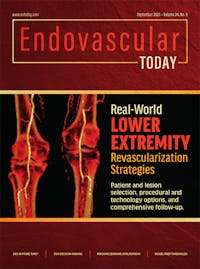
Real-World Lower Extremity Revascularization Strategies

Looking at the entirety of the lower extremity revascularization landscape in 2025, it is encouraging to see continued interest and investment in bringing newer and hopefully more effective options to our practices and patients. From a technologic standpoint, several recent innovative advancements are reaching relative maturity while still bearing the burden of proof—not only of utility but of practicality. Meanwhile, several newer potential entries to the market are arriving at the crossroads that will determine their ultimate staying power in a crowded and challenging market.
As clinicians, we observe the progress of next-generation technologies through trial and regulatory hurdles with interest, but most of our time is focused on when and how best to apply the therapies we have access to today. With comparative effectiveness data increasingly hard to reach as the armamentarium expands, these decisions can be complicated. Where data are sparse, we look to each other’s experience to guide our own, all with the same goal in mind—to provide our patients with a durable treatment that matches their unique needs.
In this edition of Endovascular Today, we invite global experts to share their findings and insights across the broad variety of therapeutic options and conditions comprising the lower extremity revascularization field.
Drs. Brian DeRubertis, Andrew Holden, Peter A. Schneider, Sabine Steiner, and Edward T.C. Choke each bring a wealth of experience across a variety of drug-delivery platforms and studies. This panel comes together to share a deep dive on trial data, applications above and below the knee and—true to our theme for this edition—utility in real-world practices.
Next, Prof. Ramon Varcoe and Abigail Kleine take a closer look at drug-eluting resorbable scaffolds and their optimal uses.
Deep venous arterialization (DVA) has also gained traction in many practices with potential applicability in patients with limited options. We’re fortunate to have a multidisciplinary panel comprising Drs. Nicholas Petruzzi, Mehdi H. Shishehbor, Nicholas Alianello, and Miguel Montero-Baker discussing predictors of success and failure, expectations for operators and patients, and the critical importance of follow-up care in these patients. Complementing this article is a tutorial by Jill Sommerset and Drs. Brian Lepow and Montero-Baker on duplex ultrasound–guided treatment and advanced follow-up methods and metrics, including pedal acceleration time and venous maturation.
Another key to procedural success and maximizing the utility of selected therapies is to know when you’ve accomplished your goal in opting for a vessel prep modality, such as atherectomy or lithotripsy. Dr. Mike Watts walks us through their unique mechanisms of action and how these inform their optimal applications. Finally, in a piece demonstrating that the future has become the present, Dr. Anahita Dua details current and potential uses of artificial intelligence in peripheral artery disease, which we hope will help in the vital areas of early detection, risk assessment, and ultimately improved outcomes.
It has been a pleasure to work with this group of authors and panelists to build this edition of Endovascular Today. We’re grateful for their time and generosity in sharing their experiences, and I hope you learn as much as I have in reading these valuable insights.
Kumar Madassery, MD, FSIR
Guest Chief Medical Editor
Advertisement
Advertisement