Advertisement
Advertisement
April 2026
Achieving Excellence Across Embolization Applications
Experience at a large, urban academic institution with a focus on comprehensive clinical practice, multidisciplinary collaboration, innovation, and training.
By Ariana Mills, MD; Bryan Pacheco, MD; Linzi Webster, MD, MBA; Rahul Patel, MD, FSIR; Kirema Garcia-Reyes, MD; and Aaron Fischman, MD, FSIR
Excellence in embolization requires more than technical expertise. It depends on a comprehensive clinical practice, close collaboration with referring specialties, a culture that supports research and innovation, and a robust training model. At the Mount Sinai Hospital, a large academic medical center in New York City, embolization is practiced across a wide clinical spectrum, ranging from emergent hemorrhage control to complex elective interventions. These procedures are supported by a multidisciplinary framework that integrates procedural expertise with longitudinal patient care (Figure 1).
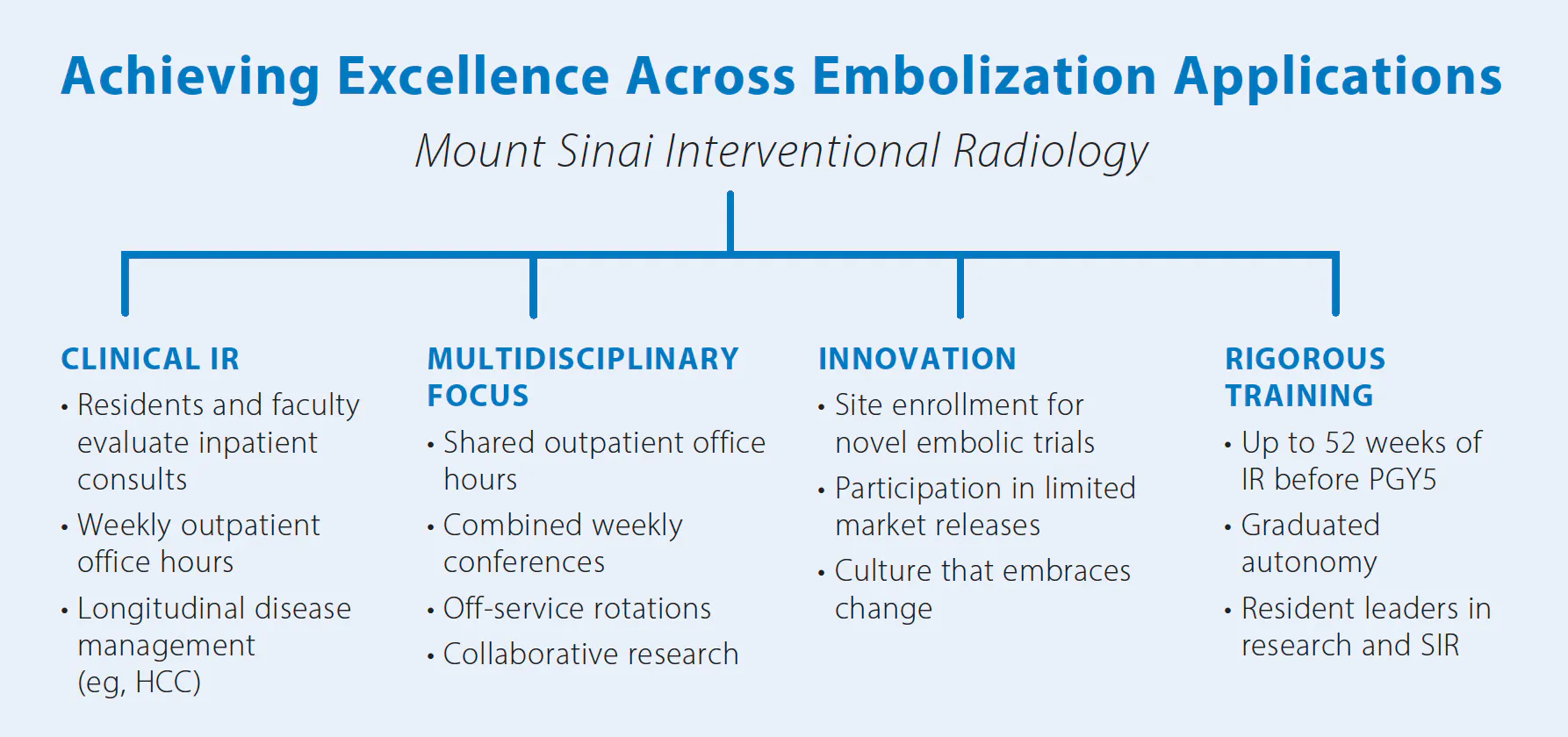
Figure 1. Pillars of the IR division at Mount Sinai Hospital in New York, New York. The Mount Sinai IR team has made a commitment to clinical IR, multidisciplinary collaboration, innovation, and trainee education. These pillars form the foundation for achieving excellence across embolization applications. PGY5, postgraduate year 5; SIR, Society of Interventional Radiology.
SCOPE OF EMBOLIZATION PRACTICE
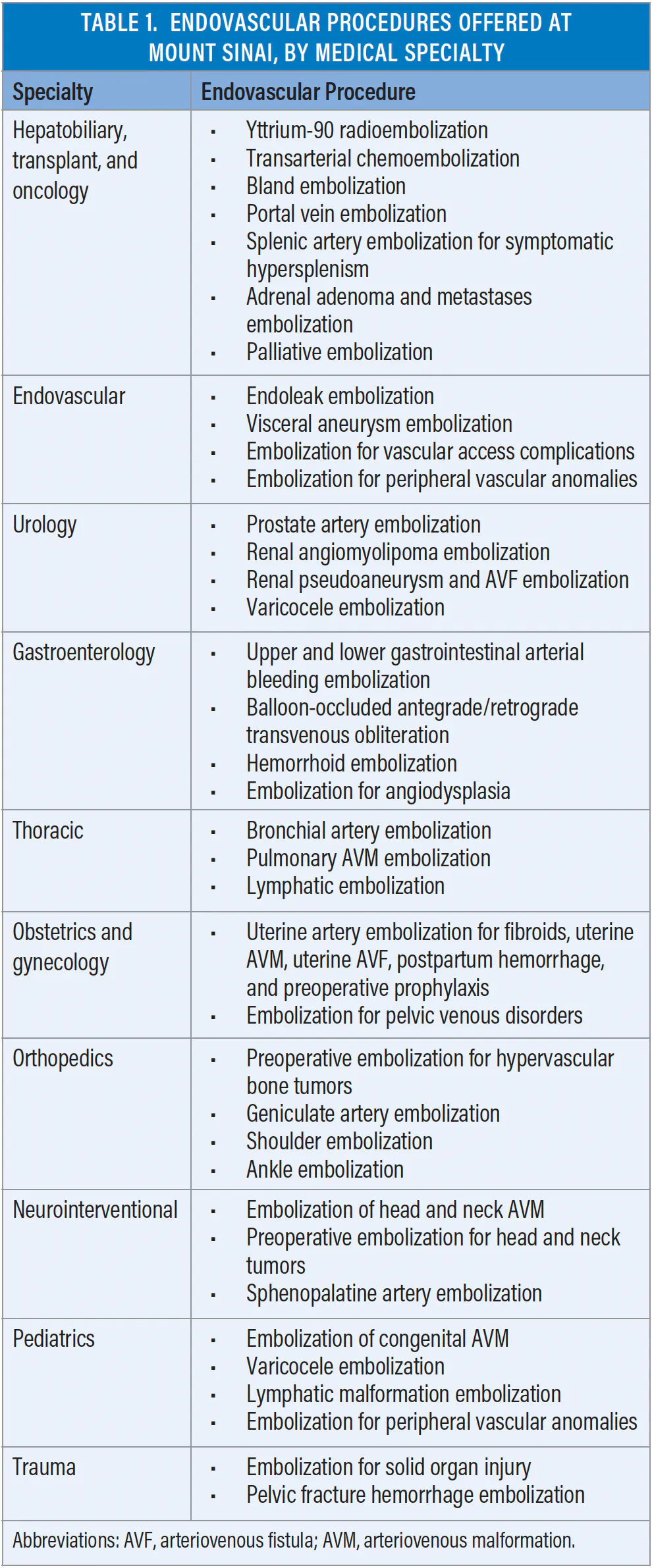
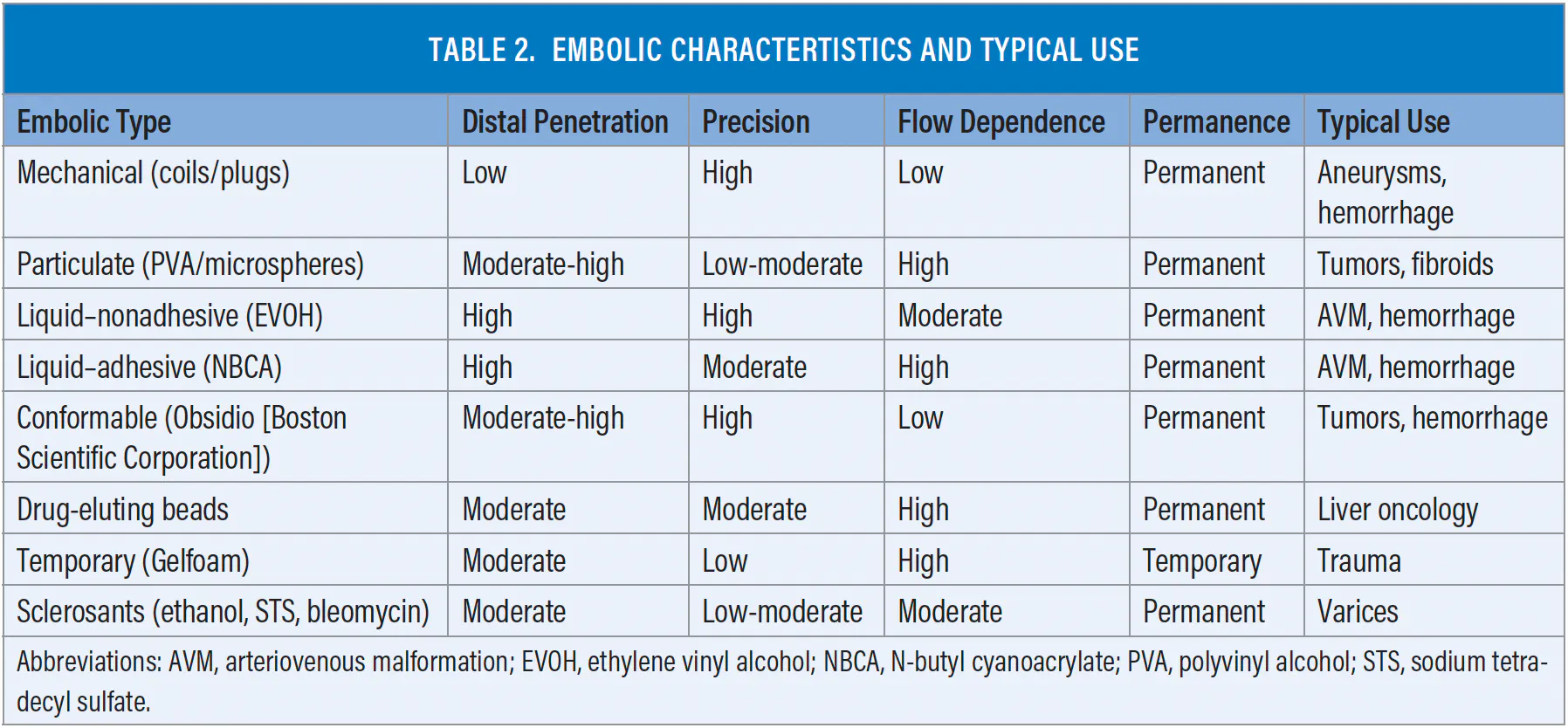
The interventional radiology (IR) embolization service at Mount Sinai reflects the demands of a large, urban health system. These demands include managing a range of case acuity, collaborating with multiple specialties, and delivering high-volume procedural care while maintaining rigorous clinical standards. Emergent procedures range from embolization for postpartum and gastrointestinal (GI) hemorrhage to bronchial artery embolization for massive hemoptysis, among others. Elective embolization represents an equally important component of the practice and includes prostate artery embolization (PAE), uterine fibroid embolization, musculoskeletal embolization, oncologic embolization therapies, treatment of pelvic venous disorders, and management of vascular malformations (Table 1). The diversity of our caseload requires fluency across a spectrum of embolic agents, each selected for precise clinical indications and technical considerations (Table 2).
As one of the largest liver transplant centers in New York City, Mount Sinai maintains a high-volume interventional oncology practice. Radioembolization, chemoembolization, and portal vein embolization are routinely integrated into multidisciplinary cancer care.1 This combination of procedural volume, clinical diversity, and academic engagement yields an environment of clinical excellence.
MULTIDISCPLINARY COLLABORATION
Strong collaboration with other specialties is central to the success of the embolization program. There are particularly close relationships with hepatobiliary/transplant surgery, liver medicine, medical oncology, vascular surgery, obstetrics and gynecology, urology, orthopedics, and pediatrics via institutional referral patterns and even structural office spaces. On the inpatient side, any clinical evidence of bleeding prompts a consultation to IR. On the outpatient side, our hepatobiliary office hours are shared with liver medicine and hepatobiliary/transplant surgery, allowing same-day multidisciplinary patient evaluations. Weekly tumor boards connect surgery, radiation oncology, medical oncology, and IR to ensure therapies are appropriately incorporated into cancer treatment plans after discussion of the highest-quality evidence available.
These collaborations extend to academics as well. The RASER study was a joint effort with hepatobiliary and transplant colleagues evaluating the safety and efficacy of radiation segmentectomy with yttrium-90 in patients with unresectable very early to early stage hepatocellular carcinoma (HCC) who were suboptimal ablation candidates. Radiation segmentectomy achieved robust sustained complete radiologic response rates and high rates of complete pathologic necrosis, highlighting the potential of this therapy for curative intent, and also supporting its role within standardized treatment algorithms for HCC.1 Our team has also published with obstetrics and gynecology colleagues on fertility outcomes after uterine artery embolization for postpartum hemorrhage, demonstrating a robust rate of spontaneous pregnancies with live births after embolization.2
Additionally, residents provide multidisciplinary patient care on off-service rotations. As early as intern year, trainees rotate on the vascular surgery service, and our team participates in weekly combined vascular surgery–IR conferences. Senior residents may also pursue elective rotations such as vascular lab, transplant surgery, and neurointerventional radiology.
OVERCOMING HURDLES AND ESTABLISHING THE SERVICE
Efficiently coordinating patient care across a multitude of services is essential for a center of excellence in embolization. This system is especially important on the inpatient side for life-saving hemorrhage embolization, which often requires coordination between the emergency department, intensive care unit (ICU), and any relevant specialist teams such as the GI and surgical services in cases of GI arterial hemorrhage or the liver medicine and transplant surgery teams for variceal hemorrhage. Managing bleeding also requires 24/7 IR resident, faculty, technologist, and nursing staffing, as well as an on-call anesthesiologist, to enable rapid and safe access to the embolization suite.
Establishing a comprehensive embolization service requires navigating complex hospital dynamics and securing administrative buy-in. When introducing new procedures or expanding outpatient clinical pathways, early challenges often include securing capital for specialized equipment and establishing dedicated clinical spaces. We overcame these hurdles by demonstrating the downstream value of minimally invasive therapies such as reduced length of stay and fewer ICU admissions.
INNOVATION AND DATA-DRIVEN PRACTICE
Innovation is essential to sustaining excellence in embolization, and our team is on the cutting-edge of interventional therapies and research. The culture at Mount Sinai welcomes integration of new devices, imaging techniques, and procedural strategies into clinical practice. We routinely are a site of enrollment for major novel peripheral embolization trials and have also participated in the limited market release for multiple embolization products.
Retrospective data analysis helps evaluate the effectiveness and safety of interventions over time to drive practice patterns toward a more durable result. For example, we recently copublished that for patients who underwent PAE using N-butyl cyanoacrylate glue, improved distal glue penetration correlated with improved patient outcomes.3 To further evaluate our PAE cohort, we maintain a > 500-patient database. This project requires standardizing follow-up protocols and establishing a strong referral network with our urology and primary care colleagues across the health system. Not only do these projects improve patient selection, but they also establish data necessary to support novel therapies and generate hypotheses for future prospective trials. In cases of nonresponse or retreatment, detailed analysis of embolization technique informs iterative improvement in treatment strategy.
The Mount Sinai IR team is at the forefront of innovation in medical education. Through the TREAT iR LIVE platform, we routinely live stream endovascular interventions, including a wide range of embolization procedures. These sessions foster real-time engagement between Mount Sinai faculty, residents, and expert panelists from peer institutions, enabling dynamic discussion of best practices, technical strategies, and procedural troubleshooting. By also making these cases accessible to patients, Mount Sinai IR promotes transparency, demystifies complex IR procedures, enhances patient understanding, and strengthens shared decision-making.
TRAINING MODEL
Finally, sustaining excellence across embolization applications requires a robust training environment that prepares future interventionalists through early clinical exposure, graduated autonomy, and academic engagement.
The Mount Sinai IR residency program is among the largest in the country. Our integrated IR residents receive 4 months of IR training during each year of diagnostic radiology residency. There is an emphasis on graduated autonomy, empowering residents to take ownership of patient evaluations, procedural planning, and periprocedural management under tailored supervision.
Training extends beyond the angiography suites. Residents attend mandatory daily conferences, as well as spend multiple weeks on inpatient consult services and in outpatient office hours each year. Junior residents take six weekends of call alongside independent residents and senior integrated IR residents (fellows), covering the Mount Sinai Health System. Trainees also rotate at Elmhurst Hospital in Queens, a high-volume trauma center serving one of the most diverse patient populations in the United States.
Research participation is highly encouraged, and residents are paired with faculty mentors at the start of the program. Trainees are expected to present at national meetings and publish regularly. Mount Sinai residents remain active nationally within the specialty and currently serve as chair and vice-chair of the Society of Interventional Radiology Resident, Fellow, and Student Governing Council.
Beyond the physician and trainee roster, our center of excellence relies heavily on a dedicated support infrastructure. Advanced practice providers, specialized IR nurses, technologists, and clinical coordinators play integral roles in patient triage, periprocedural care, and longitudinal follow-up, ensuring high-volume throughput without compromising safety or the patient experience. Together, our team delivers thoughtful, technically precise embolization care across a wide range of clinical scenarios.
CONCLUSION
Achieving excellence across embolization applications requires strong training in clinical IR, multidisciplinary collaboration, and continuous innovation. At the Mount Sinai Hospital, a high-volume and clinically diverse practice combined with a strong commitment to education and data-driven care supports excellence across emergent and elective settings. As embolization techniques and technologies continue to evolve, adaptability, collaboration, and rigorous training will remain essential to delivering effective, patient-centered care and advancing the field of minimally invasive endovascular therapies.
Disclosure of AI use: During the preparation of this work the authors used ChatGPT 5.4 to improve readability and language. After using this tool, the authors reviewed and edited the content as needed and take full responsibility for the content of the publication.
1. Kim E, Sher A, Abboud G, et al. Radiation segmentectomy for curative intent of unresectable very early to early stage hepatocellular carcinoma (RASER): a single-centre, single-arm study. Lancet Gastroenterol Hepatol. 2022;7:843-850. doi: 10.1016/S2468-1253(22)00091-7
2. Mills AC, Marinelli B, Klein ED, et al. Fertility after transcatheter arterial embolization for obstetric hemorrhage: an urban health care system observational study. Am J Perinatol. 2024;41:e1257-e1263. doi: 10.1055/s-0043-1761917
3. Williams T, Marquis A, Unger P, et al. Glue (n-butyl cyanoacrylate) for prostate artery embolization: development of a glue penetration score and association with clinical outcomes. J Vasc Interv Radiol. 2026;37:107911. doi: 10.1016/j.jvir.2025.107911
Advertisement
Advertisement