Advertisement
Advertisement
April 2026
An Interview With Kathleen Ozsvath, MD, FACS
Dr. Ozsvath discusses leadership in venous societies, community engagement in vascular care, venous research priorities, and more.
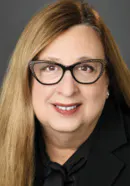
As someone who balances an active clinical practice, research, administrative leadership, and society leadership, how has the way you approached your career foci changed over time, and what aspect of your work is energizing you the most right now?
I have had the ability to increase my involvement in research, administrative leadership roles, and academic society leadership as my child is now grown up! I think this happens organically as life changes. My clinical work is so rewarding. I love taking care of patients and making a real difference in their lives. Whether it is limb salvage, cerebrovascular disease, aneurysmal disease, or venous disease, the patients are what bring me to work every day. The needs of the patients are different, which is what keeps the conversations and the procedures mixed. Technology is changing at a very fast pace. Education, clinical judgment, and an understanding of the data behind emerging technologies are imperative when determining when to use a given therapy. I love attending conferences and listening to other experts in the field. I continue to evolve.
In published research and at conferences, we are now seeing more attention paid to venous-origin pelvic pain. As awareness grows, what concrete changes in research, clinical practice, or systems of care are needed to translate that attention into better patient outcomes?
There is very important work being conducted currently to really understand this disease process. Pelvic venous disease is very complex. Great work has been done in developing a classification system. We are currently in the early stages of understanding the pathophysiology and having the right tools to treat the problem. Understanding the anatomy and correlation with the symptoms is of paramount importance. The patients must have expectations set and understand what the proposed procedures entail. Research will continue to help guide treatment algorithms.
You are very involved in the American Venous Forum (AVF), serving in numerous leadership and committee roles. You and colleagues recently published a review noting that while progress has been made, attention to gaps in access to care has been a focus of the AVF and represents a key opportunity for growth.1 Can you tell us about the steps AVF is taking in this regard?
The venous community committee, under the direction of Dr. Karem Harth, addressed these issues directly with a fantastic program at the annual meeting. The panelists were presented with two real-life cases, with discussion regarding access to care, patient-focused problem solving, and need for research directed toward a heterogeneous patient population. Dr. Brajesh K. Lal has joined the AVF in a new role as Chief Scientific Officer in charge of research development. It is the charge of the research arm of the AVF to support research that tackles important questions in venous disease, enrolling patients equitably from all backgrounds.
What additional core goals are guiding AVF currently? How do you think the society should evolve to meet the needs of both clinicians and patients in the coming years?
The core values of the AVF are leadership, membership, research, education, and fiscal responsibility to its members. Dr. Joseph Raffetto, in his presidential address, eloquently spoke about these values as they impact patient-centric care. The society has opened its arms to welcome venous care physicians and surgeons, trainees and students, and advanced care providers from all specialties. The membership has increased, including 30% of the members from around the world. Forty-seven countries were represented at the annual meeting. Learning and collaborating globally has been a significant focus of the AVF. We look forward to partnering with our colleagues on guideline publications, educational opportunities, and research collaboration. The goal is to provide the best treatment for all patients.
You are also Vice President of the International Society for Women Vascular Surgeons (ISWVS). What types of conversations does a meeting specifically focused on vascular disease in women allow that otherwise might not happen?
Historically, research has targeted homogeneous patient populations. There is a real, concerted effort to raise awareness and understanding of less-studied patient populations. It is the goal of the ISWVS to bring light to research, education, and treatment of vascular disease in women. It is also the goal of the ISWVS to give opportunities to all of its membership. Open dialogue and discussions lead to better patient care.
During your term as President of the Eastern Vascular Society (EVS), you hosted the meeting’s first-ever community service event. What role do you think community engagement should play in vascular care? What advice would you share with a clinician who wants to participate beyond the clinic or hospital?
At the 2024 annual meeting of the EVS, we hosted the first venous session dedicated to trainees, students, and early career attendees, featuring invited experts, a hands-on session with industry colleagues, and a Day of Service event. I felt strongly that we owed our students, trainees, and early career attendees a dedicated venous disease experience at EVS. The Day of Service event has been a personal dream of mine that became a reality at the AVF 3 years ago. Partnering with my colleagues Drs. Ruth Bush, Anil Hingorani, and Misaki Kiguchi, we planned and executed these events at the annual meetings of three different societies, including AVF, EVS, and ISWVS. The third iteration of this at AVF 2026 was the largest to date. We served more than 350 guests at the Denver Mission. Industry colleagues donated hundreds of stockings. Guests were able to interact with AVF members to learn about their health.
In my journey as a vascular surgeon, I am driven by my passion for helping underserved patients who lack access to care. At one of the events, a patient was found to have critical carotid disease. She was referred to a local specialist to help her. At several events, we found patients with severe hypertension and were able to refer them to proper care in their area. In Chicago, we partnered with a local podiatrist and helped educate patients on their vascular disease. Local experts were present who were able to connect with the patients. There is no secret to how to do this. Reaching out to local shelters or churches involved in outreach is a great way to start. It gives patients an opportunity to learn, and it gives us the opportunity to help those in need.
Earlier this year, you and colleagues published a review highlighting the pathophysiologic drivers of wound chronicity and their overlapping mechanisms of hypoxia, edema, and inflammation.2 How will framing chronic wounds as a multifactorial process inform how we approach treatment going forward?
This is such an important point. We are learning that patients with venous disease, and specifically those with venous wounds, have multifactorial issues that can be affected at a systemic level. Patients with CEAP (clinical, etiology, anatomy, pathophysiology) 6 disease are best managed with a multidisciplinary approach. Having learned about venoactive medications and supplements from my European colleagues, I have had the opportunity to share with my patients.
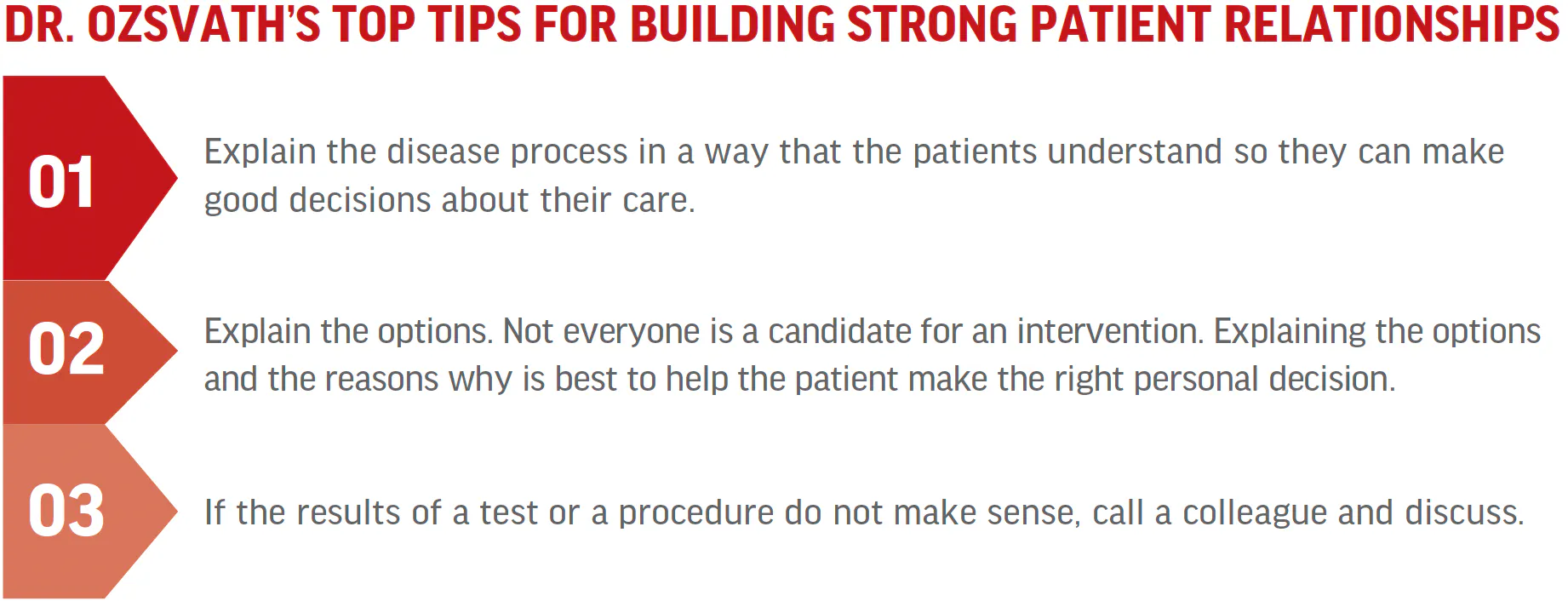
You’ve emphasized the importance of building relationships with your patients and ensuring they have a voice in their care. Why is this relationship-centered approach so critical in venous disease?
The days of dictating to patients are over, thankfully. For the best outcomes, patients need to be invested in their care and their recovery from procedures. I feel strongly that it is the duty of the provider to create the environment necessary to answer questions and help educate the patients and their families regarding their options.
On the days when work feels especially demanding, what helps you stay grounded and connected to why you chose this path?
To see patients who have been impacted by the care they received. Seeing patients who were referred to me by their family members or friends is such an honor.
1. Yang L, Bush RL, Ozsvath K, et al. Advancing opportunity and representation in the American Venous Forum. J Vasc Surg Venous Lymphat Disord. 2025;13:102239. doi: 10.1016/j.jvsv.2025.102239
2. Lohr JM, Raffetto JD, Dexter DJ, et al. A synergistic multimodality treatment approach to address the key drivers of wound chronicity. J Vasc Surg Venous Lymphat Disord. 2026;14:102348. Published correction appears in J Vasc Surg Venous Lymphat Disord. Published online February 28, 2026. doi: 10.1016/j.jvsv.2025.102348.
Advertisement
Advertisement
Interested in reading more interviews?
To read more interviews with thought leaders in the vascular field, check out our Profiles & Perspectives hub.
Read More