Advertisement
Advertisement
January 2026
An Interview With Laura Drudi, MD
Dr. Drudi discusses advancing community-engaged vascular care in Montreal, physician burnout, keys to effective amputation reduction, and how her space studies have shaped her approach to vascular care.
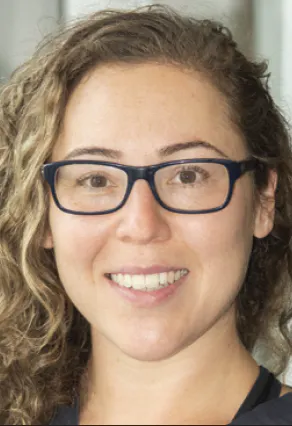
A defining aspect of your career is your active involvement in research to advance equitable delivery of vascular care. What does this community-centered strategy look like in practice, and how does it create durable improvements in care?
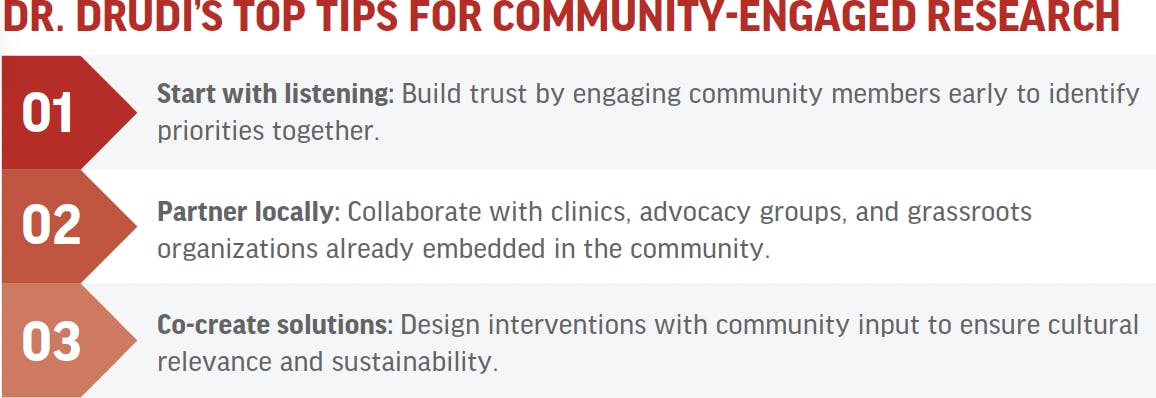
In practice, this begins with listening and partnering with patients, families, and community organizations in my hometown of Montreal to understand the barriers they face, whether those are geographic, cultural, or socioeconomic. From there, I design research and interventions that meet people where they are, including culturally tailored educational programs and training for community health workers to deliver preventive care and connect patients to specialists. We developed a multidisciplinary diabetic foot care clinic at the heart of the Centre Hospitalier de l'Université de Montréal (CHUM). The clinic is a one-stop shop to assist patients with diagnosis, management, and treatment, avoiding multiple appointments, delayed diagnosis, and fragmented care. Furthermore, my goal is to provide equitable care to those in rural and remote regions of our province. I am partnering with colleagues and collaborators in Quebec City to provide peripheral artery disease (PAD) screening and care using mobile vascular screening units in underserved neighborhoods.
This approach creates durable improvements because it builds trust and capacity within the community itself. By embedding vascular care into existing local structures, we ensure continuity even when resources are limited. And, it can be measurable: We track outcomes such as ulcer healing rates, amputation incidence, improved adherence to treatment, improved quality of life, and improved satisfaction of care.
Ultimately, my goal is to transform vascular care from a hospital-centered model into a community-anchored ecosystem, which is one that empowers patients, strengthens local health infrastructure, and delivers equitable outcomes.
What targeted actions, clinical and/or community-based, do you think are most effective at reducing lower extremity amputations among these vulnerable populations?
I would emphasize that these strategies only succeed when they are implemented with intentionality and accountability and in partnership with diverse stakeholders. It’s not enough to design rapid-access pathways or multidisciplinary clinics; we need to ensure they are accessible to the populations most at risk. That means embedding early detection into primary care and dialysis units, creating culturally sensitive education programs, and removing social and structural barriers to care. What I have discovered is that there is not a one-size-fits-all solution, and what works with one community may not work with another.
The durability of programs comes from building systems that are responsive to community needs and continuously measured against equity outcomes. In my research and practice, I have not discovered a miraculous solution to diminish amputations yet; however, I am working hand in hand with patients, caregivers, and community partners to explore what they need and how we may work with the community to codevelop limb preservation strategies that work for them. We will then pilot these strategies in the future, with hopes of upscaling and adapting to other contexts.
What I have seen from the literature and in speaking with leaders in this field is that the most effective actions combine rapid-access limb salvage pathways, multidisciplinary one-stop clinics, and community navigation that removes structural barriers to care. When paired with equity-focused measurement and early detection and embedded in everyday care settings, these steps consistently drive down avoidable amputations and make those gains durable.
You work closely with several local clinics in Montreal, including one dedicated to Indigenous people. How would you describe the primary challenges this community is facing, and what is your involvement?
Working alongside local clinics in Montreal, including one dedicated to Indigenous people and homeless shelters, has certainly highlighted the profound challenges these communities face in accessing vascular care, even in urban settings. The burden of chronic conditions such as diabetes and PAD is disproportionately high, and yet systemic barriers (eg, limited access to specialists, socioeconomic disadvantage, historical mistrust of the health system) often delay diagnosis and treatment. This leads to late presentation, with advanced disease, higher rates of limb loss, and poorer overall outcomes.
My involvement has been to help bridge those gaps. I collaborate directly with the Indigenous Health Centre of Tiohtià:ke to bring my services to these communities and design culturally sensitive outreach and educational programs, ensuring that prevention and early detection are embedded in care. I work with community health workers to provide foot checks and vascular screening, and I’ve helped establish referral pathways so that urgent cases are seen quickly by vascular specialists. Importantly, I integrate equity-focused research into this work, such as listening to patient voices and adapting interventions based on community feedback based on their needs.
For me, the goal is not only to deliver care but also to co-create solutions with the community. By building trust, strengthening local capacity, and embedding vascular health into everyday care, we can reduce preventable amputations and create durable improvements in vascular outcomes for Indigenous patients in Montreal.
In 2025, you published a review noting that foot problems (ulcers, PAD, infection, amputation) in people experiencing homelessness have been reported for decades but remain unchanged.1 What systemic strategies are most urgently needed, and how can vascular clinicians influence change in this space?
We require low-barrier, community-embedded services that bring vascular and wound care directly into shelters, drop-in centers, and street medicine programs; rapid-access pathways for revascularization that do not depend on stable housing or traditional referral systems; and provincial coverage for essential supplies like dressings, off-loading devices, and footwear. Equally critical is the integration of social supports, such as transportation, and navigation, so that patients can actually adhere to treatment. Vascular clinicians have a unique role to play in driving this change—for example, building mobile multidisciplinary limb preservation teams and advocating for policy and reimbursement models that recognize housing instability as a health determinant. Only by aligning clinical innovation with systemic advocacy can we begin to reverse the cycle of preventable amputations in this vulnerable population.
Another theme of your research is frailty assessment and risk prediction in vascular surgery. As the population requiring vascular intervention continues to age, what do you think should comprise a practical, meaningful frailty evaluation before an intervention? What are the barriers to incorporating this into routine workflow?
Frailty assessment is becoming increasingly central to vascular surgery as our patient population ages, and I believe a practical, meaningful evaluation must go beyond chronological age to capture physiologic reserve and vulnerability. That means incorporating simple, validated measures of mobility, nutrition, cognition, and social support alongside traditional risk scores. Tools such as gait speed, grip strength, or a short frailty index can be integrated into preoperative assessment without being overly burdensome, and when combined with comorbidity profiles and patient-reported outcomes, they provide a more holistic picture of surgical risk and recovery potential.
The barriers to routine incorporation are largely systemic: time constraints in busy clinics, lack of standardized protocols across institutions, and limited awareness among clinicians of how frailty data can directly inform decision-making. There is also the challenge of integrating these assessments into electronic health records in a way that is seamless and actionable. Overcoming these barriers requires cultural change and recognizing frailty as a vital sign in vascular surgery. We need to build streamlined workflows that allow clinicians to capture this information quickly, interpret it meaningfully, and use it to guide shared decision-making with patients and families. Ultimately, embedding frailty assessment into routine practice is not just about predicting risk but about tailoring interventions to maximize outcomes and preserve quality of life.
The rising rate of burnout in the vascular workforce has been an important cause for you in recent years. How should institutions support and promote wellness in their physicians, and how can training programs better prepare these physicians early on?
Burnout in the vascular workforce is a pressing issue, and I believe institutions must take a proactive, systemic approach to wellness rather than leaving it to the individual. At the institutional level, this means creating environments where physicians feel supported, such as through protected time for rest and recovery, access to mental health resources, flexible scheduling, and recognition of the emotional toll of high-stakes vascular care and surgical complications. Equally important is fostering a culture that values teamwork, mentorship, and open dialogue about wellness, so physicians do not feel isolated in their struggles.
For training programs, the responsibility is to prepare physicians early by normalizing conversations about burnout and mental health challenges, embedding wellness curricula into surgical education, and teaching practical strategies for managing stress, setting boundaries, and maintaining balance. Exposure to mentorship and coaching models that emphasize sustainable practice, as well as structured opportunities for reflection and peer support, can help trainees develop the tools they need before entering independent practice. Ultimately, wellness must be treated as a core competency in vascular surgery, integral to patient care, professional longevity, and the health of our workforce.
You’re invested in shaping the next generation of vascular interventionalists, with key roles on the Society for Vascular Surgery Young Surgeons Section Steering Committee and the Vascular and Endovascular Surgery Society Student Education Committee, as well as the Canadian Society for Vascular Surgery (CSVS) Executive Committee. What key shifts are needed to support trainees today?
Supporting the next generation of vascular surgeons requires us to recognize that the landscape of training is changing rapidly. Trainees today need more than technical excellence; they need structured mentorship, exposure to multidisciplinary care, and preparation for the realities of wellness, equity, and system-level advocacy. Key shifts include embedding formal mentorship programs that connect students and residents with leaders early on, incorporating training in leadership and advocacy, and creating space for conversations around resilience and sustainability in practice. Equally important is broadening access: ensuring that opportunities in vascular surgery are visible and attainable to diverse trainees across Canada, including those from underrepresented backgrounds.
And, how do you see the Society evolving to meet the broader challenges facing Canadian vascular surgery?
As for the CSVS, I see it evolving into a more outward-facing organization—one that not only advances science and education but also actively addresses systemic challenges such as workforce shortages, regional disparities in access to care, and the need for national advocacy around limb preservation and equity. By strengthening collaboration with allied societies, investing in trainee development, and positioning vascular surgeons as leaders in health policy, the Society can ensure that Canadian vascular surgery remains innovative, inclusive, and responsive to the needs of both patients and practitioners. Ultimately, our role is to prepare the next generation not just to operate but to lead.
In 2023, you completed a year-long health coach training program from the Institute for Integrative Nutrition. Why did you decide to pursue this, and how has this changed how you counsel your patients?
I decided to pursue the health coach training program at the Institute for Integrative Nutrition because I wanted to expand the way I approach patient care beyond the operating room and provide comprehensive vascular care. Vascular disease is deeply intertwined with lifestyle, nutrition, stress, and social determinants of health, and I felt that having formal training in integrative health would allow me to better support patients in making sustainable changes. Believe it or not, trainees receive little to no training in nutrition, and I wanted to gain that competency. The program gave me tools to engage patients in conversations about nutrition, movement, sleep, and mindset in a way that is practical and empowering, rather than prescriptive.
Since completing the training, my counseling has shifted to a more holistic, patient-centered model. I now focus not only on the technical aspects of vascular intervention but also on helping patients understand how daily choices influence their long-term outcomes. I use motivational interviewing techniques, set achievable goals with patients, and emphasize small, incremental changes that build confidence and adherence. This has allowed me to connect more deeply with patients, meet them where they are, and integrate lifestyle coaching into vascular care, ultimately improving both their health and their quality of life.
Before med school, you completed a diploma of space studies at the International Space University in Austria. How have your space studies shaped the way you look at medicine in general and vascular care specifically?
My time at the International Space University profoundly shaped how I think about medicine and, ultimately, vascular care. Space studies taught me to approach problems from a systems perspective, such as recognizing that health outcomes are influenced by complex interactions between biology, environment, technology, and society. In space, every variable matters: oxygen levels, nutrition, radiation exposure, psychological resilience. That mindset translates directly into medicine, where patient outcomes are rarely determined by a single factor but rather by the interplay of physiology, lifestyle, and social determinants.
Specifically in vascular care, space studies reinforced the importance of innovation and adaptability. Just as astronauts rely on multidisciplinary teams and cutting-edge technology to sustain life in extreme environments, vascular patients require coordinated, multidisciplinary approaches to limb preservation and cardiovascular health. It also instilled in me a deep appreciation for prevention, because in space, you cannot afford to wait until a crisis occurs, and the same is true in vascular disease.
Ultimately, my background in space studies gave me a lens of curiosity and systems thinking. It pushes me to look beyond the operating room; integrate technology, equity, and holistic care; and imagine new models of delivery that can meet patients where they are, even in the most challenging environments.
1. Benadda I, Lozano-Franco R, et al. A preliminary assessment of barriers and facilitators to accessing foot care in homeless shelters: a scoping review. Ann Vasc Surg. 2025;111:279-289. doi: 10.1016/j.avsg.2024.10.026
Advertisement
Advertisement
Interested in reading more interviews?
To read more interviews with thought leaders in the vascular field, check out our Profiles & Perspectives hub.
Read More