Advertisement
Advertisement
January 2026
Sponsored by Imperative Care, Inc.
How the Symphony Thrombectomy System IDE Trial Results Translate to Real-World Outcomes
A look into 200+ commercial cases using Symphony for the treatment of pulmonary embolism.

Pulmonary embolism (PE) treatment has come a long way. In my own practice, the adoption of aspiration thrombectomy—particularly during the COVID-19 pandemic when ICU beds were in high demand—has played a major role in how we manage these patients. This trend continues today as our practice has become a referral center for many complex interventional radiology (IR) procedures including trauma, transplant, and venous thromboembolism. As a result, my practice shifted toward large-bore thrombectomy to provide rapid relief with hemodynamic improvement, minimize ICU utilization, and decrease length of stay.
SYMPHONY IN THE CLINIC VERSUS IDE TRIAL RESULTS
In search of a PE thrombectomy solution offering intraprocedural hemodynamic monitoring and rapid clot extraction with minimal blood loss, I was introduced to the Symphony® Thrombectomy System (Imperative Care®, Inc.) shortly after its FDA clearance in August 2025 (Figure 1). After seeing the SYMPHONY-PE investigational device exemption (IDE) trial results published in Circulation: Cardiovascular Interventions, I was eager to evaluate the technology.
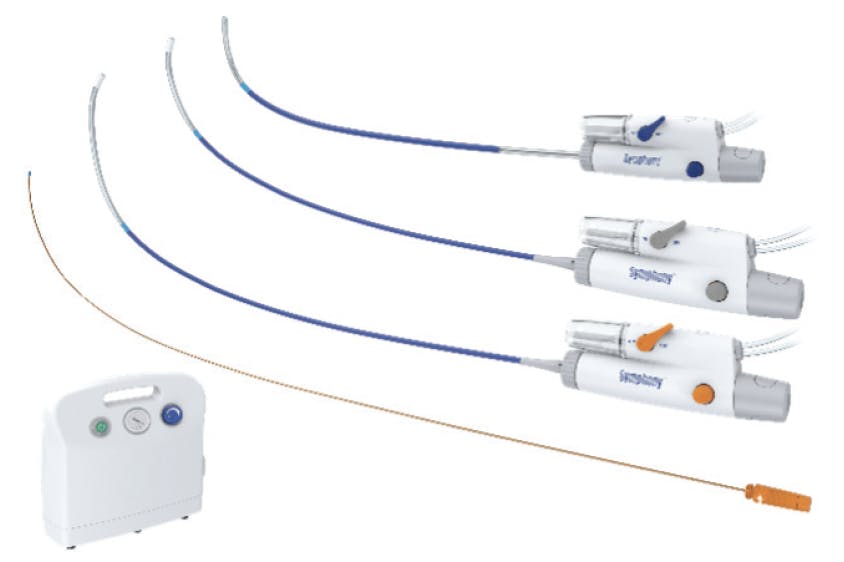
Figure 1. The Symphony Thrombectomy System portfolio includes two 16 F (82 and 117 cm) and 24 F offerings, ProHelix mechanical assist, and the Imperative Care Generator.
Although all IDE trials have their limitations, this 109-patient data set is very compelling. In particular, significant improvements were seen in mean right ventricular/left ventricular (RV/LV) ratio reduction (0.44), mean pulmonary artery pressure (PAP) reduction (24%), and clot burden reduction assessed by refined modified Miller Index reduction (38.4%), with no device-related serious adverse events and no mortality reported through 30 days.1 It’s worth noting that this was accomplished with no roll-in patients. Each operator enrolled their first patients never having used the device to treat a PE.
We all expect a learning curve with any new technology, and yet in my experience, Symphony was intuitive and easy to use given my familiarity with large-bore thrombectomy. I was impressed by how quickly I could remove large clot burdens in complex patients. Consistent with my experience, real-world outcomes from the first ~200 commercial patients suggest that lower estimated blood loss (EBL) and shorter device times can be achieved. In the SYMPHONY-PE IDE trial, the median EBL was 250 mL with a device time of 31 minutes.
In real-world commercial use, new users (≤ 3 Symphony cases) achieved the same median EBL (250 mL) and a lower median device time (20 minutes), while experienced users (> 3 Symphony cases) achieved substantial reductions in both median EBL (210 mL) and median device time (15 minutes) (Figure 2). These findings demonstrate that as users gain experience with Symphony, clinical results continue to improve.
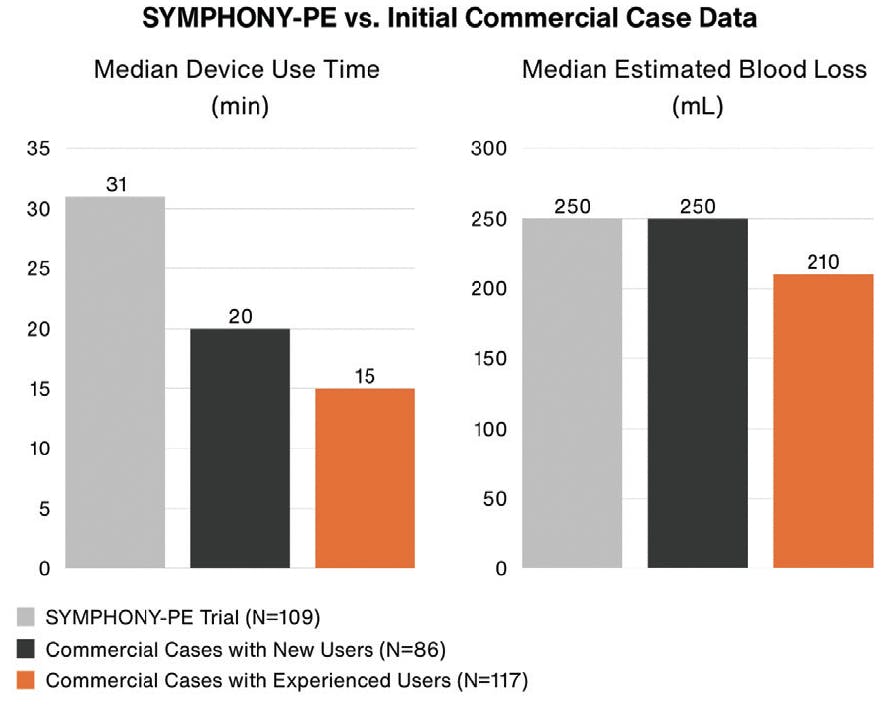
Figure 2. A comparison of device time and EBL in the SYMPHONY-PE trial and ~200 commercial cases performed by new users (≤ 3 cases) versus experienced users (> 3 cases).
Notably, over 75% of these ~200 commercial procedures were performed by physicians who did not participate as investigators in the IDE trial, further underscoring the system’s ease of adoption and usability in routine clinical practice.
BENEFITS OF LARGE-BORE DEEP VACUUM CONTROL
I prefer large-bore power in my PE thrombectomy cases especially when I suspect a large clot burden or organized clot, which is what first drew me to Symphony. With the system's 24 F and 16 F large-bore catheters, powered by a deep vacuum pump, I can rapidly reduce clot burden. Symphony’s Power Chamber, located on the system’s controller, stores deep vacuum and delivers it closer to the clot, generating a powerful Deep Pulse of aspiration that I can noticeably feel in my hand (Figure 3). The Power Chamber’s proximity to the clot mitigates the vacuum loss seen with tubing-based systems, with bench studies demonstrating 2.7 times greater power with Symphony 16 F compared to legacy 16 F tubing-based systems and 6.3 times greater power with Symphony 24 F.2 Symphony also provides actionable insights into case progress through clot capture and visualization on the sterile field as well as hemodynamic monitoring.
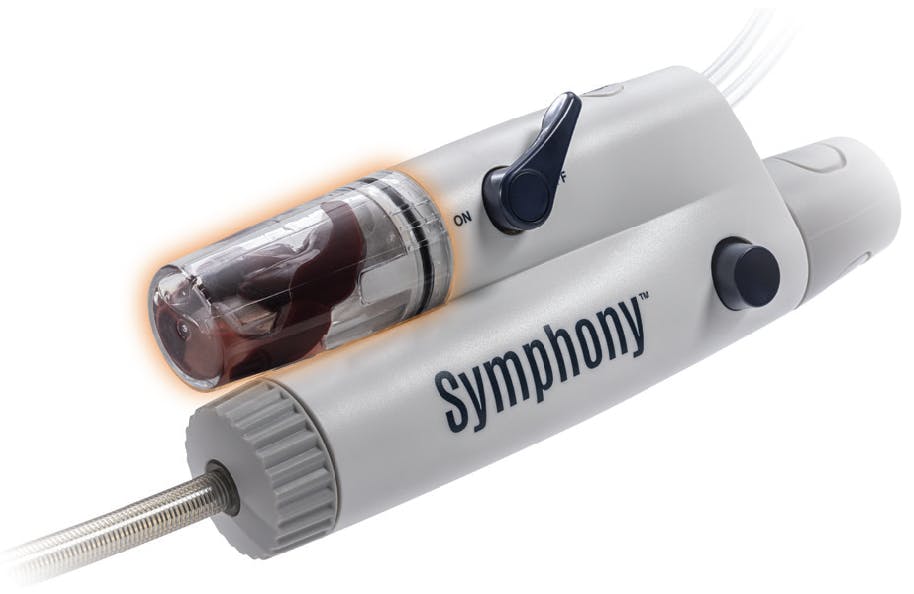
Figure 3. The Symphony controller with clot in the Power Chamber, highlighted in orange.
For a large-bore system, the Symphony 24 F catheter offers excellent trackability. My first Symphony PE case involved the patient presenting with an RV/LV ratio of 3.2, and yet I was able to navigate the 24 F Symphony catheter from internal jugular access to the pulmonary arteries (PAs) and extract the clot, allowing for the patient's discharge 2 days later (Figure 4).
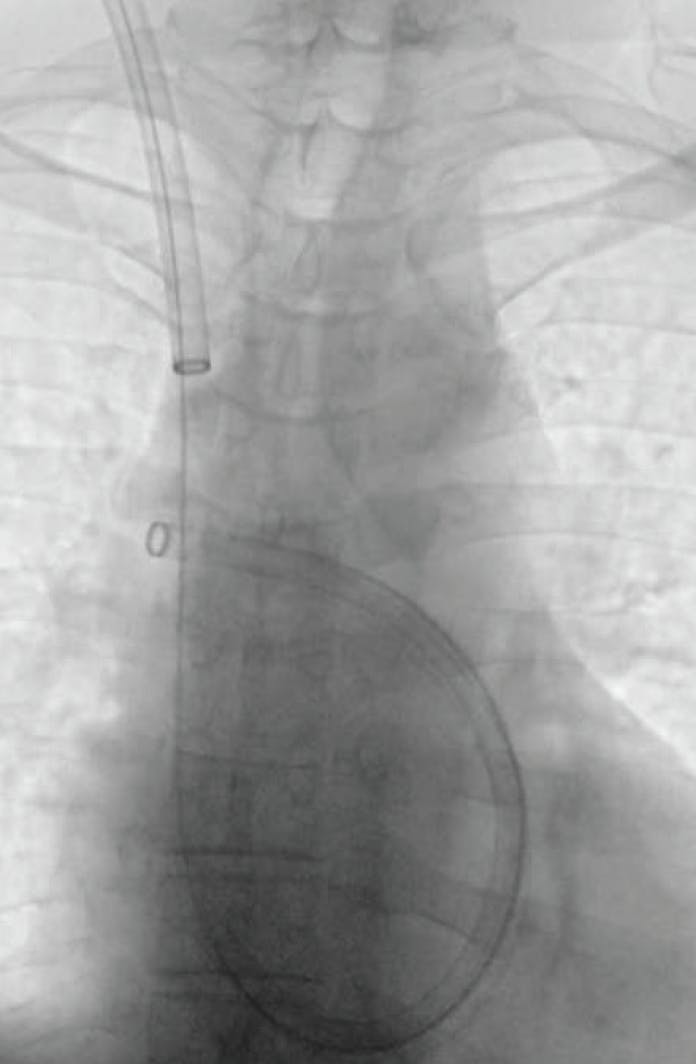
Figure 4. Intraprocedural angiogram of Symphony in the right PA after transversing from IJ access through the heart with an RV/LV of 3.2.
CASE STUDY: SADDLE BILATERAL PE WITH 24 F CATHETER
Patient Presentation
A man in his early 70s with history of hypertension and hypothyroidism presented to an outside hospital with shortness of breath for 5 days prior to arrival. CT revealed right heart strain (RV/LV ratio, 2.3) and a saddle PE with significant clot burden in the distal main PA bilaterally (Figure 5A and 5B). He was then transferred to our institution for further workup and treatment. In the emergency room, he had elevated troponin and brain natriuretic peptide (BNP) and was immediately started on weight-based enoxaparin. His heart rate was > 90 bpm, blood pressure was 130/97 mmHg, and oxygen requirement was 96% on 2 L nasal cannula, with trouble speaking in full sentences.
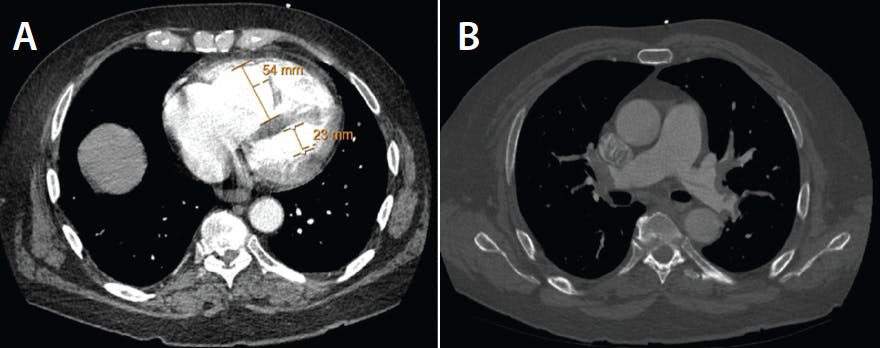
Figure 5. CT scan showing RV/LV ratio of 2.3 (A). Bilateral clot burden partially imaged (B).
Intervention With Symphony
Clot appeared partially wall-adherent on CT, so we selected a Symphony 24 F catheter due to its large-bore power, which facilitates removal of both acute and organized thrombus. After achieving right groin access and using a standard technique to get distal wire purchase in the PAs, we advanced Symphony 24 F over an Amplatz Support Extra Stiff guidewire (Cook Medical) into the main PA. We used continuous pressure monitoring via Symphony’s Multiport throughout the procedure, and after an initial reading of 36 mmHg in the main PA, we advanced the catheter into the proximal right lower lobar branch (Figure 6A). Two to three Deep Pulses were performed, yielding significant acute and organized clot. The Symphony 24 F was retracted slightly and repositioned toward the upper lobar branch, where an additional two to three Deep Pulses yielded similar mixed-chronicity clot, which was immediately visible in the Power Chamber.
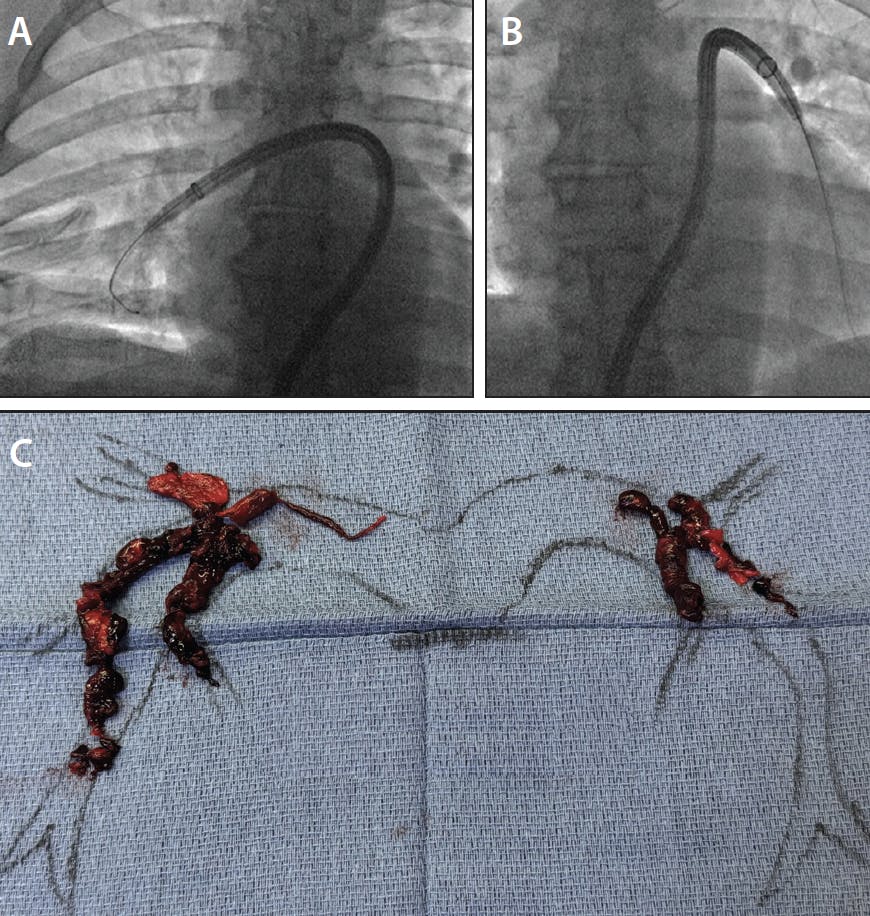
Figure 6. Symphony 24 F catheter positioned in the distal segment of clot in the right PA (A) and positioned in left PA (B). Clot removed (C).
Symphony 24 F was then retracted into the main PA and advanced into the left PA over the wire. We positioned Symphony 24 F in the distal segment of clot and performed three Deep Pulses, yielding a significant amount of mixed chronicity clot (Figure 6B). After retracting Symphony 24 F into the main PA, the Multiport’s continuous pressure monitoring showed that mean PAP had dropped to 26 mmHg. Given the improvement in PAP and significant clot removal, we decided to end the case (Figure 6C). Groin closure was achieved with a temporary adjustable purse-string suture flowswitch device with excellent hemostasis.
Results
After thrombectomy, the patient’s heart rate lowered to 73 bpm, and blood pressure increased to 147/88 mmHg. The patient reported no chest pressure, pain, or heaviness, and stated that breathing was better. His temporary groin suture was removed, and he was discharged on postoperative day 2 on DOAC. Per our protocol, we plan to see him in our IR/PE clinic at 3 months post-thrombectomy with two-dimensional–echo and lower extremity venous duplex studies.
Total device time was 30 minutes, with a total case time of 2 hours. As is common with large-bore thrombectomy, the initial cases may take longer to ensure a new device is advanced safely. However, as we become more familiar with it, I anticipate even shorter device times for high clot volume cases given Symphony’s 24 F deep vacuum power, the ability to evaluate case progress with continuous pressure monitoring, and the clear visualization of clot within the Power Chamber. The catheter demonstrated good trackability despite significant RV/right arterial dilation and allowed repositioning to aspirate from the right upper lobe without buckling into the main PA or having to reselect the upper branch with a wire or catheter.

ADOPTION OF SYMPHONY AND IMPACT ON CASE TIME
I first started using Symphony in my venous practice over a year ago and was quickly converted after the overwhelmingly positive impact it had on my procedure times. Based on these results, I was eager to see the same efficiencies in my PE cases and integrate the system into my broader VTE practice. In my clinical experience, the combination of instantaneous aspiration, superior tracking, and continuous real-time pressure monitoring tangibly improves efficiency and decreases procedure time for these often clinically tenuous patients.
Since adopting Symphony into my PE practice, my average device time is 13 minutes with acceptable average blood loss of 192 mL. All cases were completed with a single pass across the right heart, which could contribute to a favorable safety profile and short device times. One of the key drivers of this efficiency has been the Deep Pulse Algorithm, a technique focused on consistency and results that involves pulsing aspiration on and off, rapidly recharging the system with the push of a button, and systematically repositioning the catheter for the next Deep Pulse. This algorithm has contributed to reduced blood loss, eliminating the need for blood return in my practice. I’ve been able to consistently use the 24 F catheter without the need for an autotransfusion in any of my PE cases.
A patient’s condition can change rapidly, and Symphony offers auxiliary features that give me peace of mind for a more streamlined procedure. The ability to telescope the 16 F catheter through the 24 F catheter has been particularly useful in reaching distal thrombus and reducing catheter exchanges (Figure 7). I primarily use the 24 F catheter in the right PA, but when thrombus extends into the left lower or subsegmental branches, the 75° angle of the telescoped 16 F catheter has facilitated fast and effective clot removal.
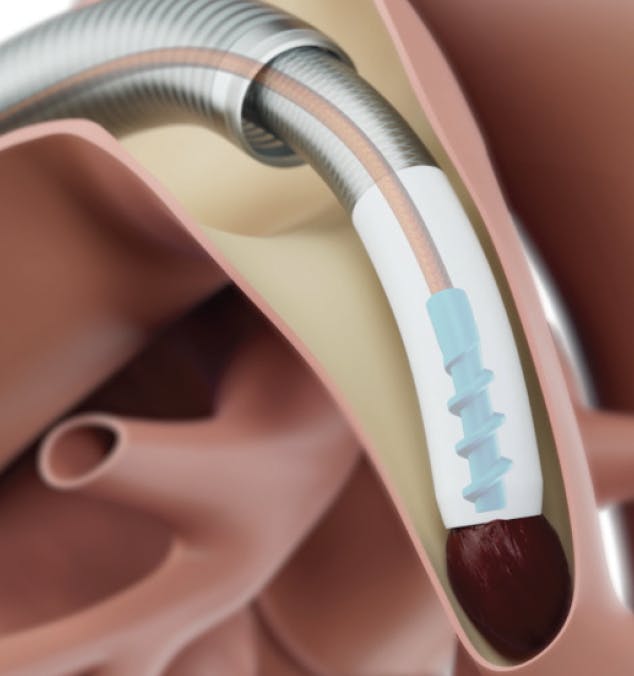
Figure 7. The Symphony 16 F telescoping through the 24 F in the left PA, with ProHelix inserted to assist in clot ingestion from a corked catheter.
Another valuable feature is Multiport, which provides continuous pressure monitoring and in-line contrast injection. I can assess pressure changes as I work my way through the pulmonary anatomy, confirming hemodynamic progress and providing real-time assessment.
Symphony also includes ProHelix®, an over-the-wire mechanical tool designed to unclog the tip of the catheter with an Archimedes screw mechanism (Figure 7). While I haven’t yet needed to use ProHelix, I like that it’s available to mitigate catheter corking and avoid walking the system out.
CASE STUDY: BILATERAL PE WITH TELESCOPING
Patient Presentation
A woman in her early 60s with a history of type 2 diabetes mellitus, chronic obstructive pulmonary disease, chronic heart failure, hypertension, hyperlipidemia, and morbid obesity (body mass index, 43.3 kg/m2) presented after 4 days of shortness of breath and chest pain. Her heart rate was 116 bpm with elevated troponin and BNP levels. Imaging revealed extensive deep vein thrombosis with multiple filling defects in the right main, lobar, and segmental PAs, indicating a large PE and evidence of right heart strain, with an RV/LV ratio of 1.8 (Figure 8).

Figure 8. CT scans showing RV/LV (A), right PA clot burden (B), left PA clot burden (C), and left lower lobe lateral segment clot burden (D).
Intervention With Symphony
After standard access across the heart via a pigtail catheter and Bentson™ wire (Cook Medical), the Symphony 24 F catheter was inserted through a 24 F Gore® DrySeal Flex introducer sheath (Gore & Associates) over a 260-cm, 0.035-inch carotid-tip Amplatz Super Stiff guidewire. The catheter tracked smoothly to the right lower lobe posterior basal segmental branch, with wire purchase in the distal interlobar PA. I performed a series of three Deep Pulses, quickly recharging the system and moving the catheter back toward the right main PA with each pulse.
Contrast injection through Multiport revealed thrombus clearance in the right lower lobe and some persistent thrombus in the truncus anterior (TA) branch (Figure 9B). I pulled the wire back into the tip of Symphony 24 F to deflect into the proximal TA. There, I performed two Deep Pulses that yielded more clot into the Power Chamber, followed by another angiogram through Multiport, confirming complete thrombus clearance from the right side (Figure 9C). Once back in the main PA, the 24 F catheter and wire naturally realigned toward the left main PA. I inserted a 125-cm vertebral catheter inside the Symphony 24 F and exchanged for a Bentson wire to gain distal purchase in the left lower lobe lateral segmental branch. Once the vertebral catheter was advanced, the Bentson wire was exchanged back for the Amplatz wire.
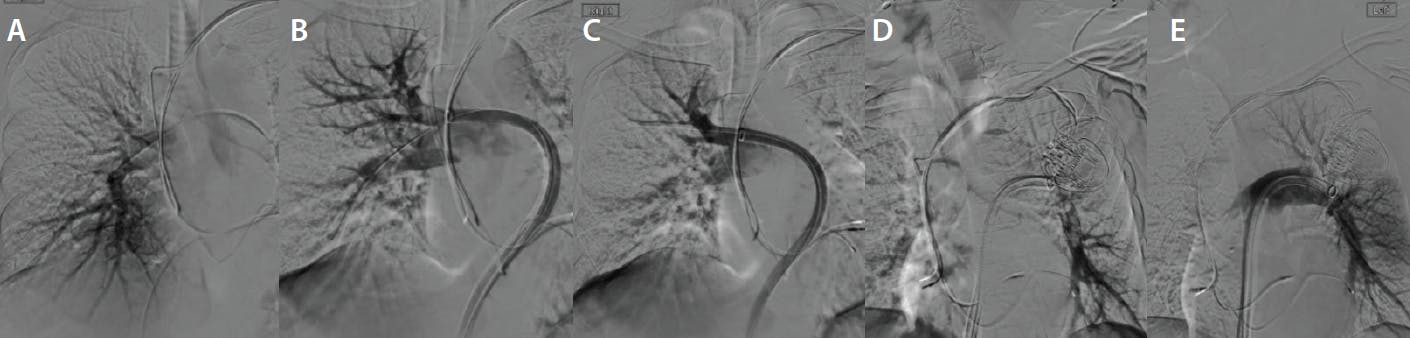
Figure 9. Preprocedure angiogram in right PA (A) and periprocedure angiogram for right TA (B). Postprocedure angiogram of TA in right PA (C). Pre- and postprocedure left PA angiogram (D, E).
I felt that Symphony 24 F was a bit large to advance to the level of thrombus, and therefore I removed the vertebral catheter and telescoped Symphony 16 F through the 24 F. With Symphony 16 F, I performed three Deep Pulses followed by angiography through Multiport, which revealed thrombus clearance in the left lower lobe with residual in the left upper lobe. To address this, I selected the upper branch with the 16 F catheter and wire, then delivered the 24 F catheter over the 16 F catheter in a mother-daughter technique to position the 24 F catheter more distal, then removed the 16 F catheter. I withdrew the Amplatz wire far enough to allow the 24 F catheter to reflect cephalad, and two more Deep Pulses were performed. The final arteriogram revealed clearance of thrombus from the left PA without significant residual thrombus (Figure 9E).
Results
The patient’s heart rate lowered to 95 bpm, and blood pressure remained stable. She remained on room air and reported feeling subjectively better. A 6-minute walk test was performed 2 days after the procedure with 98% on room air and 88% after ambulation.
Total device time from device introduction to exiting the sheath was 6 minutes. Overall procedure time was 30 minutes with a total EBL of 250 mL, demonstrating Symphony’s ability to rapidly remove large volumes of mixed morphology clot with acceptable blood loss.
1. Bangalore S, Tomalty RD, Kado H, et al. Prospective multicenter IDE study of the next-generation precision aspiration thrombectomy system for intermediate-risk pulmonary embolism: the SYMPHONY-PE trial. Circ Cardiovasc Interv. 2025;18:e015815. doi: 10.1161/CIRCINTERVENTIONS.125.015815
2. Data on file, Imperative Care, Inc.
Important Safety Information:
Rx only.
The Symphony® Thrombectomy System is intended for:
The non-surgical removal of fresh, soft emboli and thrombi from blood vessels. Injection, infusion, and/or aspiration of contrast media and other fluids into or from a blood vessel.
The Symphony Thrombectomy System is intended for use in the peripheral vasculature and for the treatment of pulmonary embolism.
The Symphony 16F 82 cm Thrombectomy System shares the same peripheral indications described herein; however, it is not for use in the pulmonary vasculature.
For complete product information, including indications, contraindications, warnings, precautions and adverse events, see product IFU included in product packaging, visit //bit.ly/3pAaUlw, or contact Customer Service at:
Phone: +1-408-502-7548 | Email: customerservice@imperativecare.com | Web: www.imperativecare.com/vascular
© 2025 Imperative Care, Inc. All Rights Reserved.
“Imperative Care“ is a registered trademark and all other trademarks are those of their respective owners.
See www.imperativecare.com/trademarks for trademark information.
Product images are not necessarily reflective of current branding.
Results may vary.
To learn more about Symphony and schedule a demo, contact your local rep or visit: imperativecare.com/vascular/symphony
M003166.A
Advertisement
Advertisement