Advertisement
Advertisement
January 2026
Mentors and Protégés: Conversations on Career and Craft With Dr. Dania Daye, MD, PhD
Shakthi Kumaran Ramasamy, MD, a research associate at Miami Cardiac and Vascular Institute, talks with Dania Daye, MD, about her career trajectory from bioengineer to interventional radiologist, research endeavors into applying AI to practice, the importance of mentorship, and more.
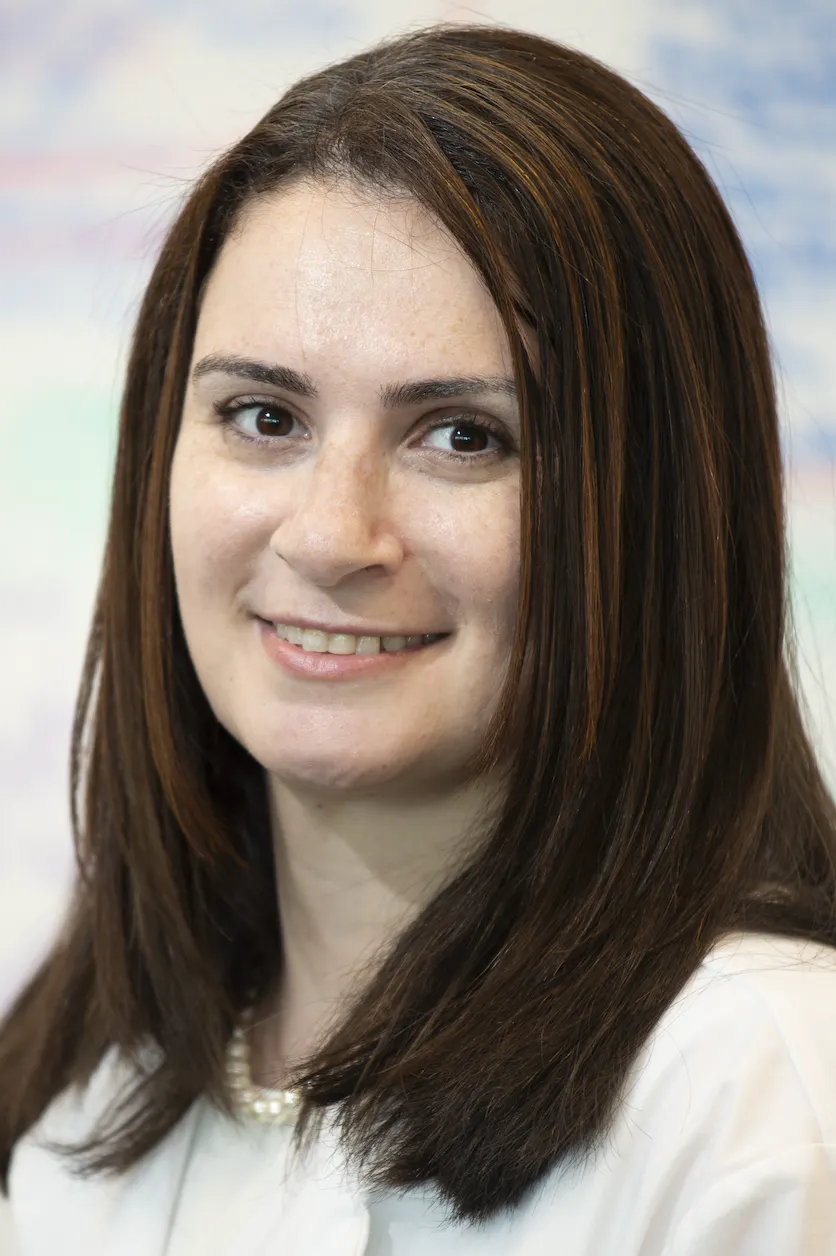
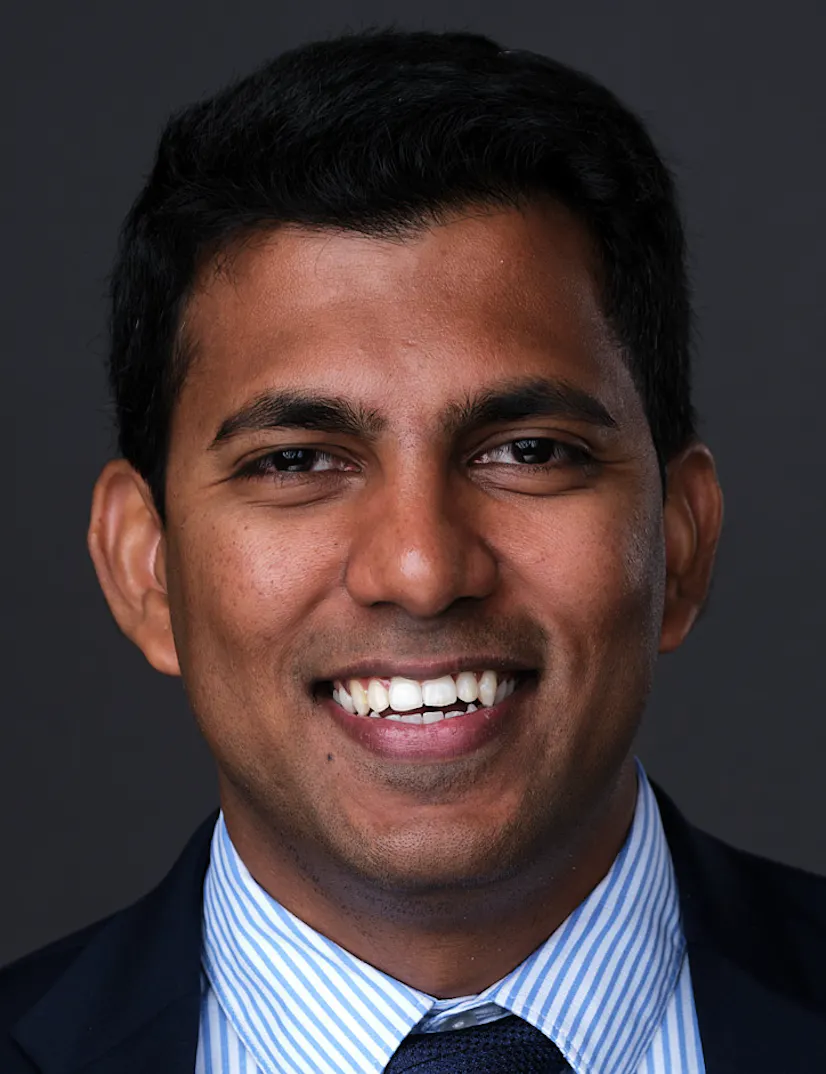
Dr. Ramasamy: To start, please share a bit about yourself. What initially sparked your interest in medicine, and how did your journey lead you to the exciting field of interventional radiology (IR)?
Dr. Daye: I originally grew up in the Middle East, and I came to the United States in high school. I went from a French school in the Middle East to the American system, which was quite the transition, and I have been here ever since. I initially started in college as an electrical engineer. Eventually, I switched to bioengineering because I did a lot of emergency medical service work in college, and I found that I was very interested in medicine and patient care. During my undergrad, I also performed a lot of research, which emphasized and grew my interest in research and led me to an MD-PhD program. I completed my MD-PhD training at the University of Pennsylvania, where I focused my PhD on bioengineering and did a lot of imaging work that eventually got me interested in radiology. I came to IR by accident—it was about having the right mentors and being in the right place at the right time. Those mentors showed me that IR would be a nice fit for what I wanted to do. As an engineer, I found IR to be a great way to use my engineering mindset every day in the IR suite. Each IR procedure tends to be different from the procedure before it—it’s all about problem-solving. Frankly, employing an engineering mindset to find a new solution for previously unsolved problems makes IR very exciting. I look forward to doing what I do every day for this reason.
Dr. Ramasamy: Congratulations on winning the 2024 Society of Interventional Radiology (SIR) Foundation Gary J. Becker Young Investigator Award for the project Beyond MELD Score: Association of Machine Learning–Derived CT Body Composition With 90-Day Mortality Post-TIPS Placement.1 Can you discuss more about this project and how you see this award shaping the future of your research?
Dr. Daye: As a physician-scientist, I run a small lab focused on artificial intelligence (AI) and applying AI in procedural care, specifically in IR. One area that has emerged in the past few years is the idea of opportunistic screening. Here, we use CT scans that were obtained for other indications to calculate different CT body composition metrics, such as subcutaneous fat or muscle area. There is a growing body of evidence demonstrating that many of these factors are predictive of clinical outcomes, including response to therapy in patients with cancer and postoperative recovery across surgical populations. There has been very little work on applying this opportunistic screening in IR, and thus this is a big opportunity for us to see in what applications we might see this work to augment the care of the IR patient. In this specific study, we used a large database of patients who underwent transjugular intrahepatic portosystemic shunt (TIPS) at our institution. We screened that population for patients who had a CT scan performed in the prior year, and we were able to do opportunistic screening with those CT scans using a previously developed machine learning algorithm to extract CT body composition metrics. We showed very clearly that adding those CT body composition metrics was indeed predictive of mortality at 90 days post-TIPS. Those metrics performed better than the MELD (Model for End-Stage Liver Disease) score alone when it came to predicting mortality. This tells us that there are definitely new avenues with AI to improve the prediction of outcomes from our IR procedures and personalize care to the specific patient we are treating.
Dr. Ramasamy: What inspired you to focus your career on IR and research? Were there specific moments or challenges that were pivotal in shaping your journey?
Dr. Daye: This is a very important question—one I always ask my mentors. It’s interesting to see how different people come to be who they are. For me, it was all about being in the right place, at the right time, and with the right mentors who showed me that this was the right career path for me. I’m indebted to so many mentors over my career who have been instrumental in getting me to where I am today. This journey to IR and being a young IR attending in the first few years of my career has many challenges, and I will emphasize that being a woman in IR carries its own challenges as well. It has been my mentors and others along the way who have shown me how to deal with these challenges and helped shape my journey to where I am today.
Dr. Ramasamy: How have mentors influenced your professional development? What do you believe makes a great mentor, and how do you aim to embody these qualities in your own mentoring efforts?
Dr. Daye: I have given a few talks on mentorship, and I will say that mentorship is among the most important factors to the success of any individual. An American Board of Radiology article was written about my experience with mentorship,2 and it has been humbling to see the influence I have had as a mentor. I always give feedback to my own mentors about how much impact they have had on my career. After I received the Harvard Young Mentor Award 2 years ago, I reflected on what makes a great mentor. I realized that the mentor I am today has been shaped by all the mentors I have been fortunate to have over the course of my career. Your investment in your mentees is vital. When I mentor someone, the initial meeting aims to understand their goals and how I might contribute to getting them to that endpoint. In terms of research, I tell everyone that you must have something to show for the research you are doing. At the end of the day, it’s about having a final product that gets you to your desired next step. Everyone has great qualities as well as challenges and areas they’re working on. Trying to maximize and bring out those qualities and then provide support in the areas they may struggle with is a great way to approach mentoring. Mentorship is about the whole person and helping them reach their personal goals. I often mentor people trying to get into residency or even undergrads trying to get to med school. So far, I’ve had a great track record of helping individuals to wherever their next step is, and I hope to continue doing that.
Dr. Ramasamy: Your research focuses on the intersection of AI, radiology, and IR. Can you share some highlights of your current projects and what excites you most about them? What are the key challenges and opportunities in integrating AI into precision medicine and for IR?
Dr. Daye: Right now, AI is at a very exciting stage, and there is no doubt that it will change how we practice as clinicians in general. For IR specifically, we are still in the infancy of AI applications. If we look at what is available on the market, there are a couple of products available for triage and a few for intraprocedural guidance. But, there is still a lot of work to be done regarding AI use for patient selection and improving patient-facing care. These are two areas I focus on in my lab, in addition to using AI to predict response to therapy and complications. I’m really excited about all of these applications because I think they will be a great way to personalize the care we provide our patients and deliver it at the N of 1. My hope is that AI will eventually allow us to pick the right procedure, the right device, for the right patient, and for the most optimal outcome. We are definitely not there yet. However, there is a lot of very exciting work being done in different areas. We discussed earlier some of our work on applications of opportunistic screening in IR, and much of our work right now is aimed at predicting complications and response to certain IR procedures. Even more exciting are the potential applications of generative AI and large language models (LLMs) in IR. We recently published a paper in that space, with the goal of making the information we provide more patient-friendly and accessible at a lower grade level.3 We also presented our work evaluating AI to translate procedure instructions into different languages at the Society for Imaging Informatics in Medicine, with great degrees of success. I also gave a talk at the Radiological Society of North America (RSNA) on potential applications of LLMs and generative AI in radiology, including IR. The sky is the limit, and these technologies are poised to significantly change radiology, and likely IR, over the next 10 to 20 years. I cannot wait to see how this evolution unfolds. In terms of the challenges with integrating AI into IR for precision medicine, we’re not seeing many startups in this space. A lot of work is being done by a few labs around the world to advance the applications of AI and IR, but there tends to be a huge gap between developing an application in the lab and getting it ready for clinical use. It is my hope that some of the companies and industry partners will start looking at AI as an important tool to incorporate into patient care and help us translate some of the things we’re developing in our labs into patient care.
Dr. Ramasamy: What do you think is the most critical factor for the future of AI in radiology and IR, and how can the IR community prepare to embrace these advancements?
Dr. Daye: Dr. Daye: I feel strongly that interventional radiologists must own the AI applications in IR and procedural care in general, because if we don’t, someone else will. Dr. Nina Kottler gave a keynote address at the 2024 RSNA exploring the idea that the best way to predict the future is to create it. We need to think of AI as a powerful tool that can enhance how we practice and embrace its ability to transform how we deliver patientcare. In the IR community, it is important to increase awareness and education about AI and IR. I have been running sessions about AI and IR at the SIR annual meeting for the past few years, and I think making sure that more and more IRs are aware of the developments in this field and the potential of what AI can do is a great starting point. I say this in every talk I give in the IR community: You don’t need to code to embrace AI in IR. You just need to understand the applications and the limitations. You need to be able to ask industry vendors about the limitations of their algorithms and decide if this is a good application for your practice. Learning how to evaluate AI for your practice is a great starting point to embracing this technology moving forward.
Dr. Ramasamy: What advice would you give to early career professionals who aspire to follow a similar path? Reflecting on your journey, what is one thing you wish you had known when starting out?
Dr. Daye: This should go without saying, but one of the most important things is to work hard and work smart. Networking is key for anyone in their early careers stage because a lot of opportunities arise due to connections at meetings. For me, I had a decent presence on social media when I started, and that allowed me access to opportunities over the first few years of my career. I wrote a paper with several people I have never met in real life, and it came about because of the activity I had on Twitter. Reflecting on my journey, I would say network, network, network. Building meaningful connections early in your career is one of the most valuable things you can do to help access the areas you’re interested in, grow within them, and remain active in the broader community and professional societies related to those interests. Dr. Ramasamy: Beyond your remarkable achievements, what drives your passion for IR and innovation? Dr. Daye: My patients come first. A lot of the projects I do in my lab are driven by patient experiences and the specific patients I see in clinic. As a physician-scientist, I view this as a continuum. Seeing patients in clinic highlights gaps in care. I then look for solutions to those gaps in my lab and bring the innovations back to the clinic. My patients are what keeps my passion going.
Dr. Ramasamy: What hobbies and activities do you enjoy away from work? How do they help you maintain balance and perspective in your life?
Dr. Daye: I really enjoy traveling, both for conferences and fun. I’m often traveling once or twice a month, and I take the opportunity to bring my family along to many of these meetings so I can travel with them. This allows me to spend meaningful family time, recharge, and experience new places. At this point, I’ve visited every continent except Antarctica, and it is on my list. Hopefully, one day I’ll make it there on one of those Antarctic cruises.
Dr. Ramasamy: What’s next for you in terms of research and contributions to the field of IR?
Dr. Daye: The sky is the limit. I’m always energized by the passion I see in the young trainees I’m mentoring. They give me great ideas with all the excitement they bring and show me that the future is really bright. For me specifically in my research area of AI and IR, I am very excited about the applications that LLMs and large vision models will bring to our field, and how they will change how we practice over the next 10 to 15 years. I can’t wait to see how the field embraces some of those changes and how it leads to better patient care and better outcomes for the IR patients.
1. Elhakim T, Mansur A, Kondo J, et al. Beyond MELD score: association of machine learning-derived CT body composition with 90-day mortality post transjugular intrahepatic portosystemic shunt placement. Cardiovasc Intervent Radiol. 2025;48:221-230. doi: 10.1007/s00270-024-03886-8
2. American Board of Radiology. She’s proof physicians can be mentees, mentors. Accessed January 19, 2026. https://www.theabr.org/blogs/shes-proof-physicians-can-be-mentees-mentors/
3. Elhakim T, Brea AR, Fidelis W, et al. Enhanced PROcedural information READability for patient-centered care in interventional radiology with large language models (PRO-READ IR). J Am Coll Radiol. 2025;22:84-97. doi: 10.1016/j.jacr.2024.08.010
Advertisement
Advertisement