Advertisement
Advertisement
July 2026
PE Compass: Bridging the Gap Between Guidelines and Real-World Practice
Insights into the challenges of translating contemporary pulmonary embolism guidelines into bedside decision-making and the development of the PE Compass tool for supporting real-time clinical care.
I was in the room—figuratively, at least—for every argument, compromise, and consensus-building moment that produced the 2026 American Heart Association/American College of Cardiology (AHA/ACC) multisociety guideline for the evaluation and management of acute pulmonary embolism (PE) in adults.1 As one of the writing committee members, I watched an extraordinary group of clinicians spanning cardiology, interventional radiology (IR), hematology, emergency medicine, pulmonology, and other specialists spend months wrestling with the evidence, debating the nuances, and eventually producing something genuinely comprehensive and clinically meaningful.
Then, I saw firsthand just how challenging it is to translate a document of that scope into bedside practice. This was not because clinicians didn't care, or because they disagreed with the recommendations. However rigorously written, a > 100-page guideline is just nearly impossible to operationalize in real time when you’re standing at the bedside of a hemodynamically borderline patient at 2 AM. This tension between the quality of evidence and the reality of clinical execution ultimately led me to build the PE Compass tool ( Figure 1 and Figure 2).
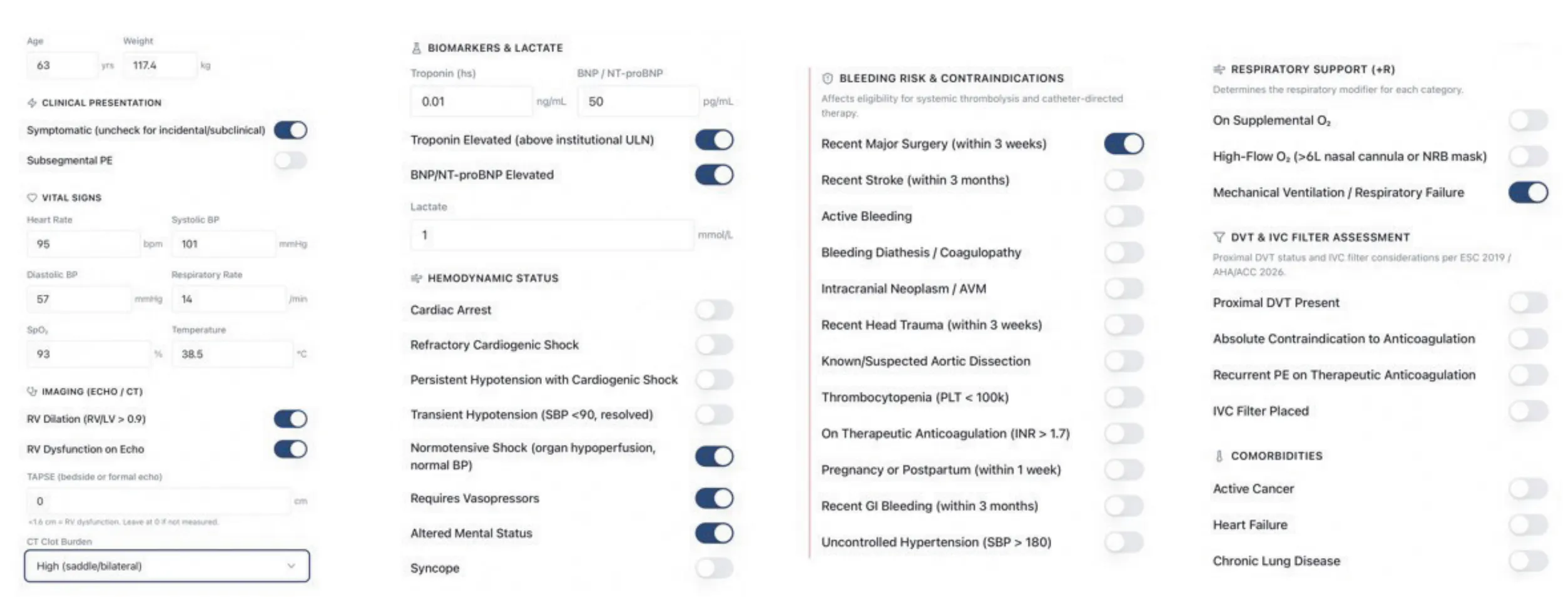
Figure 1. PE Compass Workflow app selection tool.
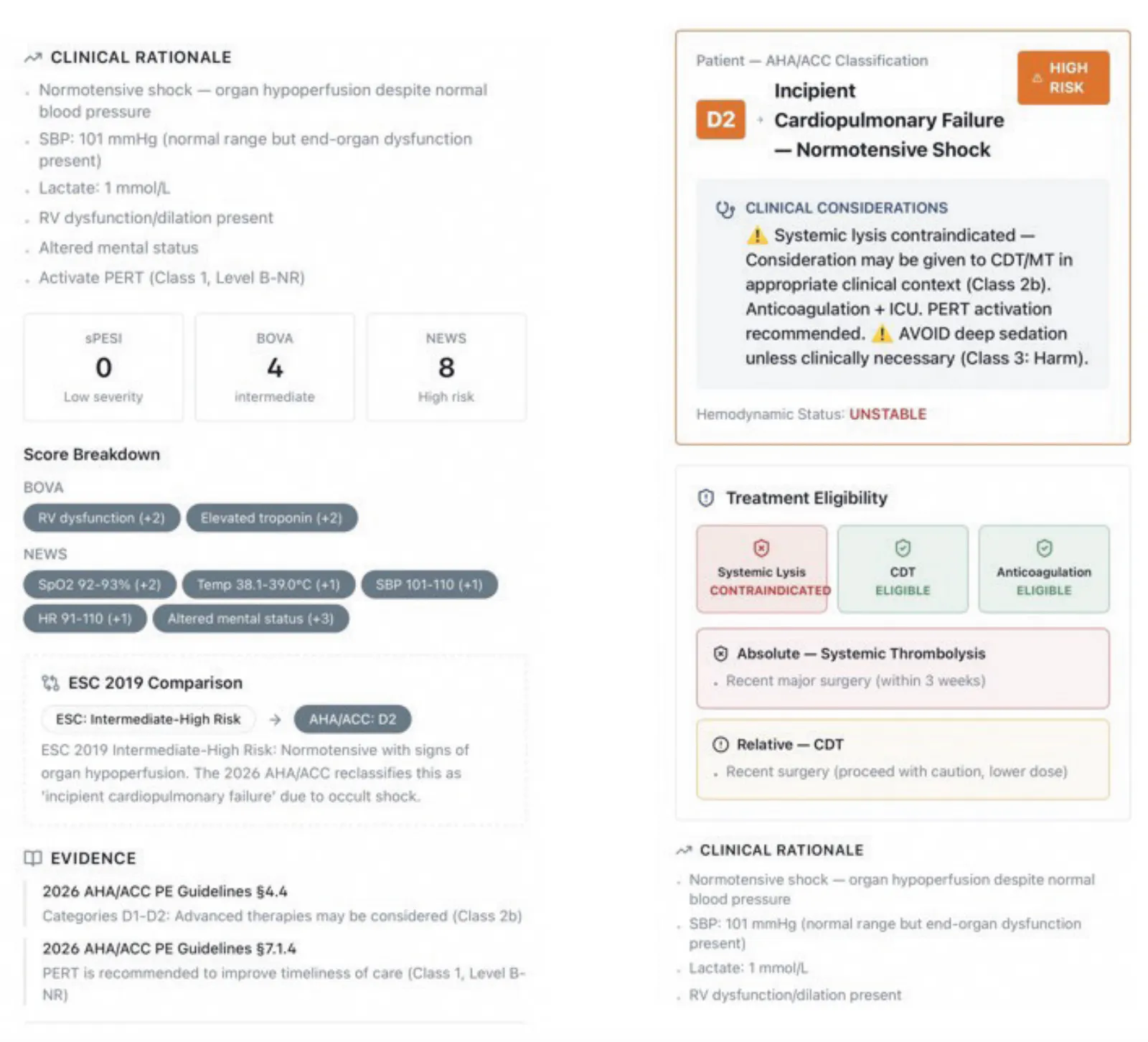
Figure 2. PE Compass app assessment dashboard.
THE PROBLEM
PE management has become genuinely sophisticated. The new AHA/ACC clinical category system offers an expanded vocabulary for risk stratification, replacing the older low/intermediate/high framework with more granular subcategories. We have robust data on catheter-directed thrombolysis, large-bore mechanical thrombectomy, and the appropriate role of systemic thrombolytics. We have growing consensus on anticoagulation selection, post-PE follow-up, and inferior vena cava (IVC) filter retrieval. Multidisciplinary PE response teams (PERTs) have proliferated across the country, creating structures for cross-specialty collaboration that simply did not exist a decade ago.
Despite this progress, I kept encountering the same operational fractures in real-world practice. The same patient presentation would be triaged differently depending on whether cardiology, pulmonology, or IR was leading the consult. The same intermediate-risk presentation would generate wildly different treatment decisions depending on which attending happened to be on call and which society guideline they were most comfortable citing. Trainees entering high-acuity situations were often synthesizing multiple frameworks on the fly with no practical workflow to anchor them.
Importantly, this reflected not a deficit of knowledge or effort but rather the operational complexity of modern PE care itself. The field had evolved faster than the infrastructure supporting its consistent execution.
BUILDING A TOOL FOR CLINICAL DECISION-MAKING
I built PE Compass using Lovable, an artificial intelligence (AI)–assisted development platform that allowed me to move quickly without a traditional engineering team. The concept was straightforward: take the clinical decision-making logic embedded in the 2026 AHA/ACC guidelines and transform it into an intuitive, navigable workflow that clinicians could actually use at the bedside, in the moment when the decision needs to be made.
The design philosophy was deliberate. I didn’t want to build another static reference tool or a glorified PDF viewer. I wanted something that functioned how experienced consultants think: moving through inputs systematically, surfacing the right questions, accounting for contraindications in real time, and arriving at a manageable decision set rather than an overwhelming list of possibilities.
PE Compass walks users through risk stratification using the new AHA/ACC clinical category framework, thrombolytic contraindication checklists, imaging findings, anticoagulation considerations, catheter-directed therapy pathways, escalation criteria, and postprocedural management. Each module mirrors the actual sequence of clinical reasoning rather than the organizational structure of a guideline document. The goal was to make the right answer easier to find than the wrong one.
EARLY ADOPTION AND FEEDBACK
I launched PE Compass quietly—a few posts on LinkedIn and Twitter/X, no formal marketing, no press release. The response that first week surprised me. The tool reached physicians across the United States, Europe, and beyond, accumulating > 1,200 unique visitors organically and generating substantive feedback from interventional radiologists, cardiologists, pulmonologists, emergency physicians, and advanced practice providers.
What struck me most was the character of engagement. People were sharing specific use cases, asking detailed questions about edge cases in the algorithm, and describing exactly the kinds of bedside situations I had designed the tool to address. The feedback confirmed, as I suspected, that clinicians across disciplines are actively looking for tools that operationalize guidelines rather than simply presenting them.
Several colleagues from PERT-active institutions reached out specifically about the potential to use PE Compass as a communication scaffold during multidisciplinary calls: a common framework that allows cardiologists, pulmonologists, and IR physicians to be on the same page when discussing risk category, contraindications, and treatment thresholds. That use case had not been my primary intention when I built the tool, but it made immediate sense. Terminology and threshold variability across specialties is a persistent challenge in PERT-based care, and a shared decision-support interface could meaningfully reduce that friction.
One of the most meaningful early responses came from Parth Rali, MD, Director of the PERT Program at Temple University Hospital and Chair of The National PERT Consortium Clinical Protocols Committee. Dr. Rali is one of the foremost pulmonology voices in PE care, someone who has spent his career thinking about exactly the implementation challenges that PE Compass was designed to address. He reached out shortly after launch with substantive clinical feedback, the kind that only comes from someone who has run hundreds of PERT activations and knows precisely where decision-support tools succeed or fall short in real-world multidisciplinary settings.
That collaboration changed the tool. Dr. Rali’s input helped refine the clinical logic in several modules, sharpened the language around intermediate-risk categorization, and pushed the workflow to better reflect the sequencing of decisions that actually happen during a PERT call, where pulmonology, cardiology, and IR are often reasoning from the same data but asking subtly different questions. Having that pulmonology perspective embedded in the development process made PE Compass more honest about the complexity of the decisions it supports and more useful to the full multidisciplinary team it is meant to serve.
EXPANDING THE SCOPE: DEEP VEIN THROMBOSIS AND IVC FILTERS
It quickly became clear that PE cannot be managed in isolation. The clinical scenarios that generate the most difficult decisions (Do we anticoagulate? Do we intervene on the deep vein thrombosis [DVT]? Do we place a filter?) require simultaneous navigation of PE risk stratification, DVT burden assessment, anticoagulation contraindications, and IVC filter guidelines that are often fragmented across different society documents and practice patterns.
For that reason, PE Compass expanded to include dedicated modules on DVT management pathways and IVC filter decision-making, incorporating multisociety guidance on filter placement, retrieval timelines, and the increasingly nuanced indications for selective use. These additions were driven directly by the feedback I received from users who described exactly the workflow I recognized from my own practice: trying to hold three separate guideline frameworks in your head simultaneously while a patient waits.
CLINICAL COMPASS: THE BIGGER PICTURE
Building PE Compass taught that this implementation gap actually exists in almost every subspecialty where guidelines have outpaced the practical infrastructure for applying them consistently at the bedside.
That realization became the foundation for Clinical Compass, a broader platform that extends this model into > 100 subspecialty-focused decision-support modules. The vision is the same as for PE Compass, to take complex, evidence-based frameworks and build them into intuitive, patient-specific workflows that clinicians can actually execute in real time. The platform spans areas including women’s interventional health, men’s health, and genicular artery embolization, with more in development.
I think of Clinical Compass as something like TurboTax (Intuit, Inc.) for clinical decision-making. TurboTax doesn’t make tax law simpler. Rather, it makes navigating tax law manageable for people who are not tax attorneys. The law is still complex, but the interface absorbs that complexity so the user can focus on the inputs and decisions that are actually theirs to make. This is the model I am trying to build for clinical medicine.
AI-ASSISTED DEVELOPMENT
I think this experience of building a clinical tool using an AI-assisted platform is relevant to where medicine is heading. I am not a software engineer, but I built PE Compass because the clinical need was clear and the tools to address it had become accessible enough that a practicing physician could build something useful without a full development team. Lovable allowed me to translate clinical logic into a functional application in a timeframe that would have been impossible even 3 years ago.
However, I want to be clear that PE Compass is a clinical decision-support tool, not a clinical decision-maker. It does not replace physician judgment. It does not adjudicate complex cases or account for the full texture of individual patient situations. It organizes the relevant inputs and guideline-based considerations in a format that makes physician judgment faster, more consistent, and better informed. The distinction matters, and I’ve tried to be explicit about it in how the tool is designed and communicated to users.
However, I think there is also a broader lesson. Physicians with deep clinical expertise are increasingly positioned to build tools that operationalize that expertise, without waiting for a health system, a tech company, or a grant cycle to make it happen. That’s a meaningful shift, and I think it will accelerate.
LOOKING FORWARD
The 2026 AHA/ACC guidelines represent a genuine milestone. I believe the introduction of the A-through-E clinical categorization system alone will meaningfully improve the consistency of risk stratification across institutions once it gains traction, and tools like PE Compass are part of how that traction happens. Guidelines do not implement themselves. They require a practical scaffolding that meets clinicians where they actually are: busy, time-pressured, often working across specialty boundaries, and in need of frameworks that are not just correct but usable.
The future of PE care, and of medicine more broadly, will be shaped both by the quality of the evidence we generate and, vitally, by how effectively we build the infrastructure to act on it. I built PE Compass because I believed that gap was real and that someone with the right combination of clinical experience and newly accessible tools could do something about it. The response from the physician community suggests I was not alone in that assessment.
PE Compass is available at pecompass.org. Clinical Compass is available at clinicalcompass.net. Both are free for clinicians.
Disclosure of AI use: Claude was used by the author for light copyediting of the original draft.
1. Writing Committee Members; Creager MA, Barnes GD, Giri J, et al. 2026 AHA/ACC/ACCP/ACEP/CHEST/SCAI/SHM/SIR/SVM/SVN guideline for the evaluation and management of acute pulmonary embolism in adults: a report of the American College of Cardiology/American Heart Association Joint Committee on Clinical Practice Guidelines. Circulation. 2026;153:e977-e1051. doi: 10.1161/CIR.0000000000001415
Advertisement
Advertisement