Advertisement
Advertisement
June 2026
Translating Awareness of Radiation and MSK Risks Into Action: What Will It Take?
Perspectives on steps from awareness to action in radiation safety.
With Mina S. Makary, MD, FSVM, FAHA, FCCP, and Giorgio A. Medranda, MD, FACC, FAHA, FSCAI
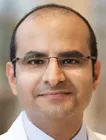
Moving the needle requires a shift from “radiation safety and ergonomics are important” to “this is how we do every case here.” Culture changes when safety is treated like sterile technique: nonnegotiable, expected, and owned by the whole team. That starts with visible leadership with the physicians, technologists, and nurses aligning on a shared definition of excellent performance that explicitly includes radiation and musculoskeletal (MSK) protection. When leaders consistently model the behaviors (collimation, low-dose defaults, shield positioning, neutral posture) and respond to lapses with coaching, the team learns that safety isn’t optional or personality dependent. Just as importantly, culture becomes durable when anyone in the room is empowered to speak up. A lab where the technologist can say “Pause—let’s collimate, drop pulse rate, and reposition the ceiling shield” without social penalty will outperform any lab that relies on individual heroics.
The practical way to build that culture is to make safety a standard operating procedure with a predictable cadence. Every case gets a “radiation/ergonomics timeout” that is as routine as confirming patient identity: planned imaging approach (pulse/frame rate, expected views, use of last-image hold/fluoro save), shielding plan (table skirts, ceiling-suspended shield position, personal protection), and an ergonomics setup (monitor position, table height, stance, and where the operator will stand for key steps). Then, during the case, normalize brief “dose/strain checks” at natural transitions, so the team can reset technique and posture before drift becomes dose and pain. Over time, these microroutines become the lab’s muscle memory, and the safest workflow becomes also the most familiar and efficient.
Finally, culture becomes measurable when the team tracks what it values and talks about it regularly. Putting radiation and ergonomic metrics on the same quality dashboard as contrast, complications, and throughput and reviewing them the same way will support an enduring culture of safety. For example, we can evaluate trends by procedure type, room, and operator, and offer a quick “learning review” for outliers focused on what changed and what will change next time. We can celebrate improvements and share “best-case” examples, so safer technique is socially rewarded, not just quietly practiced. When radiation and MSK health are embedded into standard work, reinforced by peer norms, and supported by transparent feedback, they stop being ancillary topics and become part of the everyday identity of the lab.

The field of interventional cardiology has undergone unprecedented growth over the last decade, driven by the rise of transcatheter structural heart interventions and increasingly complex coronary procedures. Cases that once required surgery are now routinely performed by interventional cardiologists percutaneously, often with longer procedural times, greater imaging demands, and higher technical complexity. These advances have transformed patient care and expanded what is possible in the cath lab, but they have also come with increased occupational exposure to ionizing radiation and the cumulative physical strain associated with protective equipment and prolonged case duration. In approaching these occupational hazards and challenges like those facing contemporary interventionalists, I believe progress requires a CLEAR framework: Confront, Learn, Engineer, Apply, and Refine.
CONFRONT
Confrontation begins with acknowledging that MSK injury and radiation exposure are not inevitable byproducts of practice but modifiable occupational risks. Chronic neck, back, and hip injury has too often been normalized despite clear implications for career longevity. Similarly, radiation safety practices remain variable across institutions. Importantly, moving the field forward will require greater transparency and willingness among operators to share real-world experiences, including cases of life-altering MSK injury and radiation-associated disease, where appropriate and deidentified. These narratives are not anecdotal outliers—they are critical signals that complement epidemiologic data and help the broader community understand the tangible consequences of cumulative exposure and ergonomic neglect. Increasing visibility of these outcomes can strengthen collective urgency, reduce normalization of harm, and support a culture where operator safety is treated as an essential component of procedural excellence rather than an individual burden.
LEARN
The next step is learning from objective data and workflow patterns. Radiation safety should be approached with the same rigor as procedural quality metrics. Fluoroscopy time, air kerma, dose area product, shielding utilization, and ergonomic workflow assessments should be routinely reviewed at both the operator and institutional level. Fellows and early career operators should also receive formal education in ergonomic positioning, imaging optimization, and radiation stewardship rather than inheriting habits passively through procedural culture alone.1
ENGINEER
We have come a long way in achieving the first two objectives; however, sustained change requires engineering systems that make safe behavior easier and more reproducible. Standardized room setup, optimized monitor positioning, routine use of ceiling-mounted shielding, ergonomic table height adjustments, radiation scatter reduction technologies, and lighter or suspended lead systems should become integrated into daily workflow rather than optional adjuncts.2,3 Many of the most basic and low-cost practices are absent in routine practice across the country, which requires a more strategic and structured approach to educating all cath labs. Eventually, technologic innovation—including lead-free systems and improved imaging software—should be viewed as procedural advancements as well as investments in operator longevity and workforce sustainability.
APPLY
Even the best safety strategies fail without consistent daily application. Radiation and orthopedic protection must become team-based responsibilities embedded into cath lab culture. Operators, nurses, technologists, anesthesiologists, and industry partners all contribute to procedural workflow and should participate in preprocedural safety optimization. Simple behavioral changes—such as minimizing unnecessary fluoroscopy, optimizing imaging angles, confirming shielding placement before radiation exposure begins, and maintaining ergonomic positioning throughout the procedure—must become routine habits rather than occasional considerations.
REFINE
Finally, sustained progress requires continuous refinement. Radiation safety and orthopedic health are not static initiatives; instead, they are evolving processes that require ongoing feedback, reassessment, and adaptation as technologies and procedural complexity continue to advance. Institutions should foster cultures where operators feel empowered to discuss workflow inefficiencies, ergonomic concerns, and safety improvements openly. Long-term success will ultimately depend on creating cath lab environments where procedural excellence and operator safety are viewed as inseparable components of high-quality cardiovascular care instead of competing priorities.
1. Uthirapathy I, Dorairaj P, Ravi S, et al. Knowledge and practice of radiation safety in the catherization laboratory among interventional cardiologists—an online survey. Indian Heart J. 2022;74:420-423. doi: 10.1016/j.ihj.2022.08.001
2. Sattar Y, Sengodan PM, Cheema MS, et al. Lead cap use in interventional cardiology: time to protect our head in the cardiac catheterisation laboratory? Interv Cardiol. 2023;18:e18. doi: 10.15420/icr.2023.10
3. Roguin A, Wu P, Cohoon T, et al. Update on radiation safety in the cath lab—moving toward a “lead-free” environment. J Soc Cardiovasc Angiogr Interv. 2023;2:101040. doi: 10.1016/j.jscai.2023.101040
Advertisement
Advertisement