Advertisement
Advertisement
June 2026
Converging Solutions for Sustainable Safety in the Interventional Lab
Integrating technologic innovation and cultural shifts to achieve durable reductions in radiation exposure and musculoskeletal strain.
Radiation exposure and musculoskeletal (MSK) strain remain persistent occupational hazards in endovascular practice, despite decades of operator awareness, routine monitoring, extensive scientific publications, and technical innovations. Acute radiation-induced DNA damage has been documented in operators during complex aortic repairs, with targeted leg shielding shown to mitigate this risk.1 A recent systematic review further consolidated evidence linking chronic occupational exposure with genomic instability, cataracts, and increased cancer prevalence among endovascular specialists,2 especially as case complexity increases, urging the need for robust dose optimization strategies.2-7
MSK morbidity is similarly widespread. Between 60% and 80% of interventionalists report MSK pain at some point in their career, most commonly cervical and lumbar degeneration. These symptoms are strongly associated with prolonged use of heavy lead aprons, high procedural volumes, and ergonomically unfavorable positions, including frequent neck flexion and trunk rotation due to constrained access around traditional C-arm geometries, as well as poor lab setup and suboptimal monitor sight lines.8-11
In this context, making the transition from awareness about radiation safety and MSK health to sustained, measurable improvements in daily practice emerges as a critical challenge for the endovascular field, requiring a timely combination of technologic and cultural factors.
EVOLUTION OF THE INTERVENTIONAL TECHNOLOGIC ENVIRONMENT
Advanced Imaging, Hybrid Operating Rooms (ORs), and the Expanding Role of Cone-Beam CT (CBCT)
Recent generations of interventional and hybrid ORs have enabled substantial radiation dose reductions by combining low-dose imaging presets, artificial intelligence (AI)–assisted imaging optimization,12,13 continuous dose monitoring, real-time operator feedback with intuitive management settings for dose/image quality (Figure 1A), digital zoom to avoid dose-intensive magnification, and augmented fusion imaging guidance from tableside to limit digital subtraction angiography (DSA) use and allow x-ray–free centering and angulation optimization (Figure 1B).
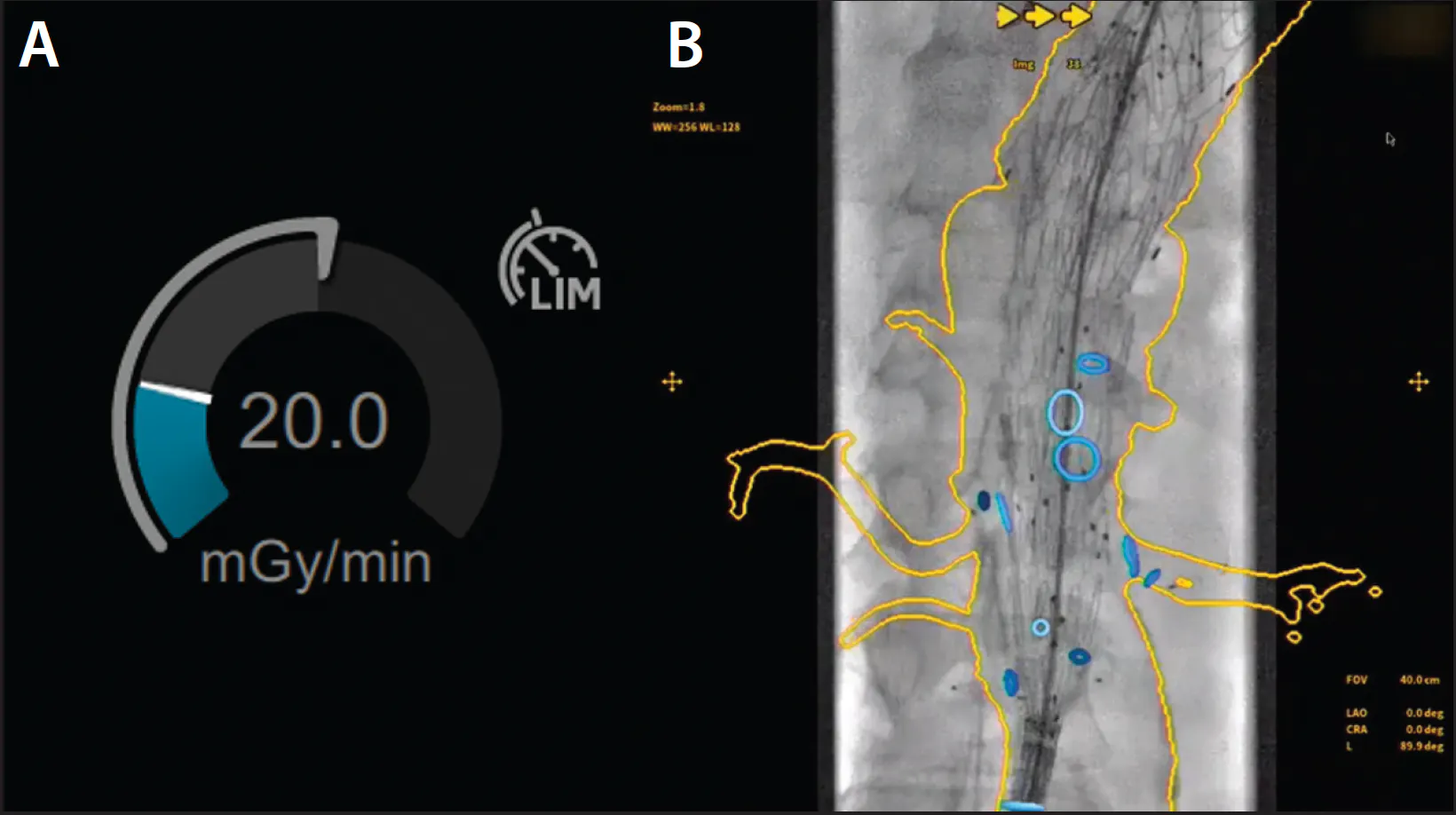
Figure 1. Real-time dose-rate meter providing visual operator feedback (AutoRight cockpit, GE HealthCare) (A). Overlay of 3D procedural planning to augment live fluoroscopy guidance, with digital zoom (EVAR ASSIST, GE HealthCare) (B).
In complex aortic procedures, modern hybrid ORs have enabled 45% reductions in cumulative air kerma (CAK) and dose area product (DAP) and 55% to 60% reduction in operator dose compared with older systems and mobile C-arms, consistently achieving the lowest radiation levels when ALARA (as low as reasonably achievable) workflows are enforced.14-16 Increased adoption of fusion imaging, facilitated by improved hybrid OR usability, has also been associated with significant reductions in operator exposure, despite increasing procedure complexity.17 A recent 10-year multicenter, prospective study similarly reported a significant decrease in radiation dose levels over the past decade despite increasing anatomic complexity, informing updated diagnostic reference levels but also revealing significant variability among interventional systems, including among contemporary labs, with some platforms designated as more protective compared to others.18
CBCT has also been associated with lower overall radiation exposure by replacing multiple DSA runs, allowing procedural planning and facilitating guidance, and enabling immediate intraoperative assessment. However, CBCT adoption remains limited due to setup complexity and significant variability between interventional systems.
In a single-operator study of prostate artery embolization, CBCT use increased from 31% to 85% after transition to a wide-bore interventional system designed to facilitate CBCT use, including with the patients’ arms down; substantial decreases in CAK and DAP were also noted.19 DAP is strongly correlated with operator exposure, and operators leave the room during CBCTs but often remain tableside for DSAs. Thus, the significant increase in CBCT use, associated decrease in number of DSAs, and reduction in patient radiation exposure likely yielded a greater decrease in personnel radiation exposure. In complex aortic repairs, CBCT has been shown to improve intraoperative technical assessment while reducing iodine contrast volumes and patient radiation exposure compared with completion DSA and predischarge CTA.20
In parallel, the introduction of AI-based CBCT reconstruction aims to overcome image quality barriers by limiting artifacts linked to pulsatility, further supporting routine use of intraoperative CBCT by improving its diagnostic confidence (Figure 2).21
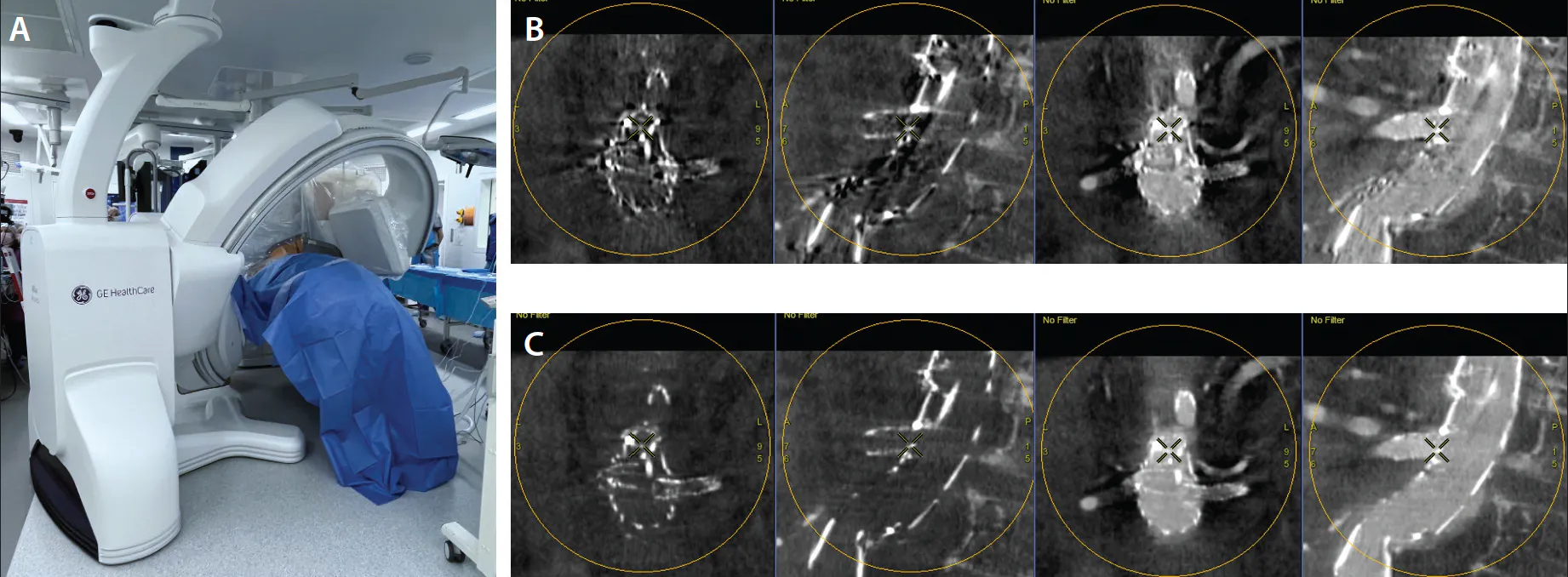
Figure 2. Wide-bore gantries (Allia Moveo, GE HealthCare) facilitate steep angulations, smoother CBCT workflow, and more routine adoption (A). Conventional reconstruction (B) compared to AI-based CBCT reconstruction (CleaRecon DL, GE HealthCare) (C) after fenestrated/branched endovascular aortic repair. The AI-based reconstruction is designed to limit artifacts linked to pulsatility, significantly improving image quality and diagnostic confidence of CBCT.
Although variability remains between platforms, interventional and hybrid ORs have significantly evolved in the past decade, enabling default low-dose, high-quality imaging along with routine adoption of easy-to-use CBCT, three-dimensional (3D)/two-dimensional fusion imaging, and digital zoom.
Ergonomic Improvements
Operator comfort has also improved, with modern interventional labs redesigned with a focus on workspace ergonomics. Fingertip-accessible, tableside controls from all working positions (including on the detector) minimize the need for operators to twist and reach. Screen positioning is being optimized via articulating monitors. Augmented reality (AR) secondary displays to avoid neck flexion are emerging, as are wide-bore, fully mobile gantries with preset room layouts to allow fast, easy, and versatile room setup with any patient access or imaging needs, while facilitating smooth, collision-free x-ray acquisitions in intubated or arms-down patients (Figure 3). These ergonomic improvements complement radiation-reduction strategies by limiting time spent in awkward, load-bearing postures, thereby limiting MSK strain.
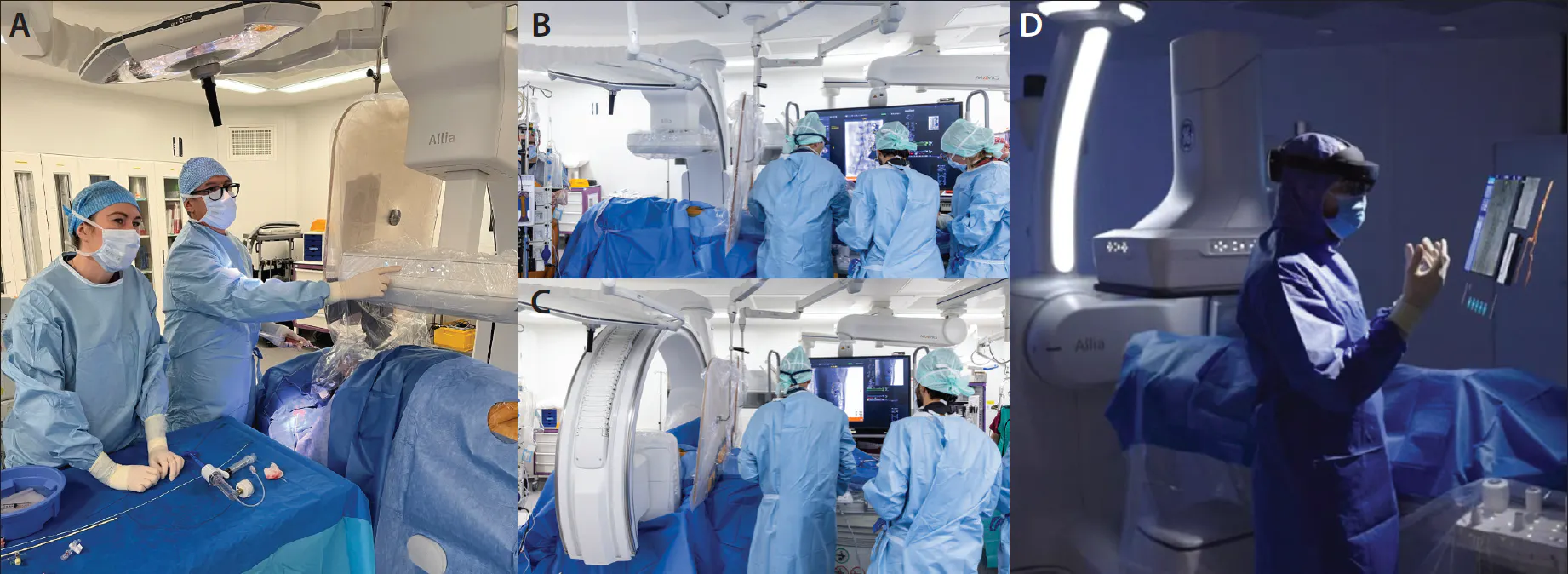
Figure 3. Workspace ergonomics in modern vascular labs, with fingertip-accessible controls including on the detector (A), gantry mobility and flexibility offering multiple options for patient access (B) and imaging (C), as well as optimized screen positioning with articulating monitors and the emergence of AR virtual displays (D) (Allia with OmnifyXR, GE HealthCare). (Figure 3D courtesy of GE Healthcare.)
Low-Dose Navigation Technologies
In the broader interventional lab, robotic solutions are emerging to support device navigation, allowing operators to perform procedures seated, away from the radiation field, and without wearing lead aprons. Early feasibility studies in coronary and peripheral interventions have reported 70% to 97% reduction in operator radiation exposure and improved operator comfort, yielding concurrent MSK and radiation safety gains.22-28
X-ray–free endovascular navigation solutions such as fiber optic or electromagnetic-guided catheters are also being explored for complex aortic repairs, with early feasibility studies suggesting reduced fluoroscopy dependence during navigation tasks, yielding reduction in operator radiation exposure.29-33 However, these systems require intermittent x-ray use and the operator’s presence at tableside; therefore, they do not eliminate the need for personal lead protection.
Advanced Shielding Systems
Finally, advanced radiation shields—including suspended, lightweight, exoskeleton-supported, and zero-gravity systems—are increasingly being adopted and have demonstrated significant reductions in operator radiation exposure and MSK pain.34-39 When combined with room shields and consistent ALARA governance to address residual exposure zones (eg, left axilla), self-supporting lead systems provide a meaningful ergonomic benefit, reducing shoulder load by 74% to 84% compared with traditional one- and two-piece aprons.40
Future Directions: Toward Automation and Workflow Integration
As these technologies continue to be made easier to use and more automated to be less dependent on operator vigilance, future innovations such as voice-controlled imaging instead of the foot pedal and the integration of more established, affordable robotic solutions and x-ray–free navigation systems into the interventional suite will provide additional technologic foundation for sustainable improvements in operator radiation safety and MSK health.
IMPACT OF THE INTERVENTIONAL CULTURAL ENVIRONMENT
Department culture is as important as equipment in limiting operator exposure and MSK strain. By influencing how consistently safety behaviors are adopted, senior staff and leadership play a key role in supporting the entire team’s safety.41,42 This is particularly challenging in the interventional lab, where procedural pressure, time constraints, and long-standing behaviors can normalize the gradual erosion of protective practices. As a result, creating an environment in the interventional lab that promotes a positive culture in safety is not only beneficial but essential.
In particular, continuous operator dose monitoring should be prioritized and reviewed by radiation physicists and the equipment supplier to ensure imaging protocols, room setups, and protection equipment are maximizing radiation safety and MSK health. Benchmarking and coaching may help install a positive emulation within teams to behave safely.
Senior staff have a key role in driving cultural change by consistently using shields, following the ALARA principles, supporting continuous monitoring and coaching of operator dose and MSK health, calling out unsafe patterns, investing in modern technologies that support staff safety, and empowering nurses and technologists to actively facilitate team safety in the lab. Finding ways to incentivize leadership and senior staff to help drive and sustain this culture may also help solidify radiation safety practices and MSK health as a core performance metric, moving safety from individual awareness to an inherent structure embedded across every level of the interventional and surgical teams.
SYNTHESIS OF TECHNOLOGY AND CULTURE
Radiation and MSK morbidity are interdependent occupational risks, and solutions that reduce radiation time or proximity to the x-ray source simultaneously reduce MSK strain. Encouragingly, we have a credible path toward durable, structural improvements in operator safety: the convergence of a team-wide cultural shift and modern interventional systems, including easy-to-use, low-dose, high-quality imaging; wide-bore CBCT; routine fusion imaging; and advanced shielding solutions with emerging robotic and x-ray–free navigation.
1. El-Sayed T, Patel AS, Cho JS, et al. Radiation-induced DNA damage in operators performing endovascular aortic repair. Circulation. 2017;13:2406-2416. doi: 10.1161/CIRCULATIONAHA.117.029550
2. Maris EL, Klaassen J, Hazenberg CEVB, et al. Systematic review on radiation-induced DNA damage and cancer risk in endovascular operators. J Vasc Surg. 2025;82:2283-2297.e1. doi: 10.1016/j.jvs.2025.07.058
3. Roguin A, Goldstein J, Bar O. Brain tumours among interventional cardiologists: a cause for alarm? Report of four new cases from two cities and a review of the literature. EuroIntervention. 2012;7:1081-1086. doi: 10.4244/EIJV7I9A172
4. Veillette JB, Carrier MA, Rinfret S, et al. Occupational risks of radiation exposure to cardiologists. Curr Cardiol Rep. 2024;26:601-622. doi: 10.1007/s11886-024-02056-z
5. Borghini A. The head of invasive cardiologists as a target of professional exposure to ionizing radiation. Explor Cardiol. 2024;2:224-240. doi: 10.37349/ec.2024.00036
6. Fiorilli PN, Goldsweig AM. Occupationally exposed: it is time to protect ourselves! J Soc Cardiovasc Angiogr Interv. 2023;2:100610. doi: 10.1016/j.jscai.2023.100610
7. Vacirca A, Tenorio E, Neto M, et al. Prospective assessment of direct measurements of absorbed radiation exposure in operators and patients undergoing F/B-EVAR. J Vasc Surg. 2023;77:e332-e333. doi: 10.1016/j.jvs.2023.03.458
8. Cornelis FH, Razakamanantsoa L, Ben Ammar M, et al. Ergonomics in interventional radiology: awareness is mandatory. Medicina (Kaunas). 2021;57:500. doi: 10.3390/medicina57050500
9. Knuttinen MG, Zurcher KS, Wallace A, et al. Ergonomics in IR. J Vasc Interv Radiol. 2021;32:235-241. doi: 10.1016/j.jvir.2020.11.001
10. Koenig AM, Froehlich L, Viniol S, et al. Occupational orthopedic problems and its relation to personal radiation protection in interventional radiology. Eur J Radiol. 2024;175:111401. doi: 10.1016/j.ejrad.2024.111401
11. Stahl CM, Meisinger QC, Andre MP, et al. Radiation risk to the fluoroscopy operator and staff. AJR Am J Roentgenol. 2016;207:737-744. doi: 10.2214/AJR.16.16555
12. Gibrael M, Dohad S. Utilizing ultra-low fluoroscopy frame rate to minimize radiation exposure during cardiac catheterization. J Am Coll Cardiol. 2024;83(13 suppl):884. doi: 10.1016/S0735-1097(24)02874-2
13. Dessalegn N, Al-Mohamad T, Corsino Espino J, Patel C. 100.87 Reducing radiation exposure in the cath lab using a new low-dose protocol. 2024;17(4 suppl):S27-S28. doi: 10.1016/j.jcin.2024.01.139
14. Hertault A, Maurel B, Sobocinski J, et al. Impact of hybrid rooms with image fusion on radiation exposure during endovascular aortic repair. Eur J Vasc Endovasc Surg. 2014;48:382-90. doi: 10.1016/j.ejvs.2014.05.026
15. Hertault A, Bianchini A, Amiot S, et al. Editor’s choice–comprehensive literature review of radiation levels during endovascular aortic repair in cathlabs and operating theatres. Eur J Vasc Endovasc Surg. 2020;60:374-385. doi: 10.1016/j.ejvs.2020.05.036
16. Hertault A, Rhee R, Antoniou GA, et al. Radiation dose reduction during EVAR: results from a prospective multicentre study (the REVAR study). Eur J Vasc Endovasc Surg. 2018;56:426-433. doi: 10.1016/j.ejvs.2018.05.001
17. Tenorio ER, Oderich GS, Sandri GA, et al. Impact of onlay fusion and cone beam computed tomography on radiation exposure and technical assessment of fenestrated-branched endovascular aortic repair. J Vasc Surg. 2019;69:1045-1058.e3. doi: 10.1016/j.jvs.2018.07.040
18. Mesnard T, Huang Y, Schanzer A, et al; United States Aortic Research Consortium. Multicenter prospective evaluation of patient radiation exposure during fenestrated-branched endovascular aortic repair: a ten-year experience. Ann Surg. Published online February 18, 2025. doi: 10.1097/SLA.0000000000006676
19. Sajan A, Griepp DW, Isaacson AJ. Variation in cone beam computed tomography utilization and radiation exposure associated with prostatic artery embolization on two separate angiography systems. J Clin Med. 2024;13:7403. doi: 10.3390/jcm13237403
20. Tenorio ER, Oderich GS, Sandri GA, et al. Prospective nonrandomized study to evaluate cone beam computed tomography for technical assessment of standard and complex endovascular aortic repair. J Vasc Surg. 2020;71:1982-1993.e5. doi: 10.1016/j.jvs.2019.07.080
21. Haulon S. CleaRecon DL: deep learning technology specifically trained on artifacts generated by pulsatile flow: the new era of CBCT. Presented at: VEITHsymposium. November 18-22, 2025. New York, New York.
22. Weisz G, Metzger DC, Caputo RP, et al. Safety and feasibility of robotic-assisted percutaneous coronary intervention: PRECISE (percutaneous robotically-enhanced coronary intervention) study. J Am Coll Cardiol Intv. 2013;61:1596-600. doi: 10.1016/j.jacc.2012.12.045
23. Mahmud E. Efficacy and safety outcomes of radial- vs femoral-access robotic percutaneous coronary intervention: final results of the multicenter PRECISION registry. Presented at: Society for Cardiovascular Angiography and Interventions (SCAI) Scientific Sessions; May 12, 2017; New Orleans, Louisiana.
24. Berczeli M, Legeza P, Lumsden A. Catheter robots in the cardiovascular system. In: Küçük S, ed. Latest Developments in Medical Robotics Systems. IntechOpen; 2021.
25. Pourdjabbar A, Ang L, Reeves RR, et al. The development of robotic technology in cardiac and vascular interventions. Rambam Maimonides Med J. 2017;8:e0030. doi: 10.5041/RMMJ.10291
26. Pescio M, Kundrat D, Dagnino G. Endovascular robotics: technical advances and future directions. Minim Invasive Ther Allied Technol. 2025;34:239-252. doi: 10.1080/13645706.2025.2454237
27. Durand E, Sabatier R, Smits PC, et al. Evaluation of the R-One robotic system for percutaneous coronary intervention: the R-EVOLUTION study. EuroIntervention. 2023;18:e1339-e1347. doi: 10.4244/EIJ-D-22-00642
28. Mahmud E, Schmid F, Kalmar P, et al. Robotic peripheral vascular intervention with drug-coated balloons is feasible and reduces operator radiation exposure: results of the robotic-assisted peripheral intervention for peripheral artery disease (RAPID) study II. J Invasive Cardiol. 2020;32:380-384. doi: 10.25270/jic/20.00246
29. The Shape Sensing Company. Reduced radiation and 3D navigation: a phantom study on aortic side branch cannulation using a shape-sensed guidewire. Accessed March 31, 2026. http://www.transceryn.com/uploads/allimg/20250829/2-250R91IU0163.pdf
30. van Herwaarden JA, Jansen MM, Vonken EJPA, et al. First in human clinical feasibility study of endovascular navigation with Fiber Optic RealShape (FORS) technology. Eur J Vasc Endovasc Surg. 2021;61:317-325. doi: 10.1016/j.ejvs.2020.10.016
31. Lemmens CC, Klaassen J, Beck AW, et al. Use of Fiber Optic RealShape technology during complex endovascular aortic repair: results of a transatlantic registry. Eur J Vasc Endovasc Surg. Published online April 24, 2026. doi: 10.1016/j.ejvs.2026.04.29
32. Finnesgard EJ, Simons JP, Jones DW, et al. Initial single-center experience using Fiber Optic RealShape guidance in complex endovascular aortic repair. J Vasc Surg. 2023;77:975-981. doi: 10.1016/j.jvs.2022.11.041
33. Panuccio G, Schanzer A, Rohlffs F, et al. Endovascular navigation with Fiber Optic RealShape technology. J Vasc Surg. 2023;77:3-8.e2. doi: 10.1016/j.jvs.2022.08.002.
34. Zanca F, Dabin J, Collard C, et al. Evaluation of a suspended radiation protection system to reduce operator exposure in cardiology interventional procedures. Catheter Cardiovasc Interv. 2021;98:E687-E694. doi: 10.1002/ccd.29894
35. Savage C, Balter S, Miller DL, et al. Comparison of a suspended radiation protection system versus standard lead apron for radiation exposure of a simulated interventionalist. J Vasc Interv Radiol. 2011;22:437-442. doi: 10.1016/j.jvir.2010.12.016
36. Apostolou A, Leichert HJ, König AM, et al. Efficiency in radiation protection of a novel exoskeleton-based interventional radiology apron and correlation with conventional aprons. Eur J Radiol. 2025;184:111946. doi: 10.1016/j.ejrad.2025.111946
37. Rizik DG, Burke RF, Klassen SR, et al. Comprehensive shielding system enhances radiation protection for structural heart procedures. J Soc Cardiovasc Angiogr Interv. 2023;3:101110. doi: 10.1016/j.jscai.2023.101110
38. McCutcheon K, Vanhaverbeke M, Paulwels R, et al. Efficacy of MAVIG x-ray protective drapes in reducing operator radiation dose in the cardiac catheterization laboratory: a randomized controlled trial. Circ Cardiovasc Interv. 2020;13:e009627. doi: 10.1161/CIRCINTERVENTIONS.120.009627
39. Lisko J, Shekiladze N, Sandesera P. Cutting-edge structural interventions: innovations to reduce radiation exposure for interventionalists. American College of Cardiology. July 15, 2021. Accessed March 31, 2026. https://www.acc.org/Latest-in-Cardiology/Articles/2021/07/01/01/42/Innovations-to-Reduce-Radiation-Exposure-For-Interventionalists
40. Koenig AM, Schweer A, Sasse D, et al. Physical strain while wearing personal radiation protection systems in interventional radiology. PLoS One. 2022;17:e0271664. doi: 10.1371/journal.pone.0271664
41. Modarai B, Haulon S, Ainsbury E, et al. Editor’s choice–European Society for Vascular Surgery (ESVS) 2023 clinical practice guidelines on radiation safety. Eur J Vasc Endovasc Surg. 2023;65:171-222. doi: 10.1016/j.ejvs.2022.09.005
42. World Health Organization. Enhancing radiation safety culture in health care: guidance for health care providers. July 10, 2024. Accessed March 31, 2026. https://www.who.int/publications/i/item/9789240091115
Advertisement
Advertisement