Advertisement
Advertisement
June 2026
Endovascular Treatment of Migraine and the Clinical Evidence Landscape
Pathophysiologic rationale, procedural techniques, clinical evidence, and future directions for intra-arterial middle meningeal artery (MMA) lidocaine infusion and MMA embolization in refractory migraine.
By Rami Fakih, MD; Pervinder Bhogal, MBBS; Alex Sirakov, MD; M. Fareed K. Suri, MD; and Adnan I. Qureshi, MD
Migraine is a profoundly disabling neurologic disorder affecting an estimated 1 billion people globally, including nearly 40 million individuals in the United States.1,2 The socioeconomic burden of the disease is staggering, with associated annual health care costs estimated at $3.2 billion for outpatient visits, $700 million for emergency department utilization, and $375 million for inpatient hospitalizations in the United States alone.3 Although the advent of novel preventive pharmacotherapies, such as calcitonin gene-related peptide (CGRP) receptor antagonists, has transformed headache medicine, a significant proportion of patients remain refractory to optimal medical management.4 Refractory migraine is generally defined as persistent, debilitating headaches occurring on at least 8 days per month for 3 to 6 consecutive months, despite trials of multiple preventive medication classes.4,5 This challenging cohort represents at least 10% of migraine sufferers, translating to millions of patients annually who lack effective therapeutic options.5
To address this unmet clinical need, the therapeutic landscape has expanded beyond systemic pharmacotherapy and toward targeted neurovascular interventions. The middle meningeal artery (MMA) and its associated trigeminal innervation have emerged as a critical connection in migraine pathogenesis, making the MMA a prime target for endovascular therapy. This article reviews the current clinical evidence regarding endovascular interventions for refractory migraine. The discussion focuses primarily on the efficacy, mechanism, and optimization of intra-arterial (IA) MMA lidocaine infusion, while reviewing the role of MMA embolization within the broader treatment paradigm. Finally, it outlines the trajectory for future research, emphasizing the necessity of patient registries and randomized controlled trials.
PATHOPHYSIOLOGIC RATIONALE
The rationale for targeting the MMA is rooted in the complex physiology of the trigeminovascular system. The cranial dura mater is densely innervated by pain-sensitive, unmyelinated C-fibers and thinly myelinated A-delta fibers that originate from the ophthalmic and mandibular divisions of the trigeminal nerve.6 The highest concentration of these nociceptive fibers is localized within the adventitia of meningeal blood vessels, with the MMA supplying the vast majority of the cranial dura.7
Migraine pain is mediated by the activation and sensitization of this trigeminovascular pathway.7 Stimulation of trigeminal afferents triggers the release of potent vasoactive neuropeptides (notably CGRP) into the perivascular space. CGRP acts as a powerful vasodilator and initiates neurogenic inflammation, which significantly lowers the activation threshold of dural nociceptors. This renders the meninges hypersensitive to mechanical stimuli, including the normal pulsatile expansion of dural arteries.7
MMA dilation and meningeal inflammation activate perivascular pain pathways, resulting in migraine headaches.6,7 Furthermore, the administration of vasoconstrictive abortive agents, such as sumatriptan, reliably reverses the dilation of the MMA.8 These specific neurovascular dynamics confirm the MMA as a highly active participant in migraine pathogenesis and a logical target for endovascular intervention.
IA MMA LIDOCAINE INFUSION
Intravenous (IV) lidocaine has been used for decades in the management of status migrainosus and chronic daily headache, capitalizing on its ability to block voltage-gated sodium channels and inhibit pain transmission.9 However, continuous IV infusions require prolonged inpatient hospitalization, continuous cardiac monitoring, and risk of systemic toxicity. The translation of this pharmacologic strategy to the endovascular suite allows neurointerventionalists to deliver substantially higher local concentrations of the anesthetic directly to the MMA and perivascular dural nociceptors, utilizing total doses that remain far below the threshold for systemic central nervous system or cardiac toxicity.10
IA lidocaine infusion into the MMA has the distinct advantage of avoiding permanent occlusion of the MMA. By preserving the anatomic and functional integrity of the dural vasculature, this approach avoids the risks of permanent occlusion, leaving the vascular architecture intact for normal physiological function or future therapeutic interventions. Permanent occlusion of the MMA, particularly when embolic material remains sequestered in the proximal segments, can lead to collateral reconstitution of its distal branches, as seen after incomplete embolization of dural arteriovenous fistulas.11
Procedural Technique and Safety Profile
Endovascular infusion of lidocaine into the MMA is a minimally invasive, fluoroscopy-guided procedure routinely performed under local anesthesia and light conscious sedation.12 A transradial approach is preferentially used because it offers greater patient comfort. After placement of a radial sheath, a guide catheter is navigated into the external carotid artery. Angiography is critical for mapping the vascular anatomy and excluding dangerous anastomoses between the MMA and the ophthalmic artery or intracranial pial circulation, as inadvertent delivery of lidocaine into the cerebral circulation can induce seizures.13 Under fluoroscopic guidance, a microcatheter is navigated over a microwire and positioned superselectively within the proximal main trunk of the MMA, distal to the entry into the foramen spinosum. Preservative-free lidocaine (formulated at a 1%-2% concentration and diluted in normal saline) is then administered as a slow, continuous infusion over 5 to 10 minutes. The patient remains awake and conversant throughout the infusion, allowing for continuous neurologic monitoring.
Acute Efficacy and Safety
The acute efficacy of MMA lidocaine infusion in terminating severe, treatment-resistant migraine attacks is well documented.12,14,15 Lidocaine induces potent sodium channel blockade, stabilizing neuronal membranes and suppressing nociceptive discharges from dural afferents.16 Simultaneously, it halts the release of CGRP, suppressing neurogenic inflammation.16
The MMA also supplies the trigeminal ganglion via the artery to the trigeminal nerve ganglion (also called the artery of Qureshi, located in the foramen ovale), which arises from the extracranial segment of the MMA prior to the entry into the foramen spinosum (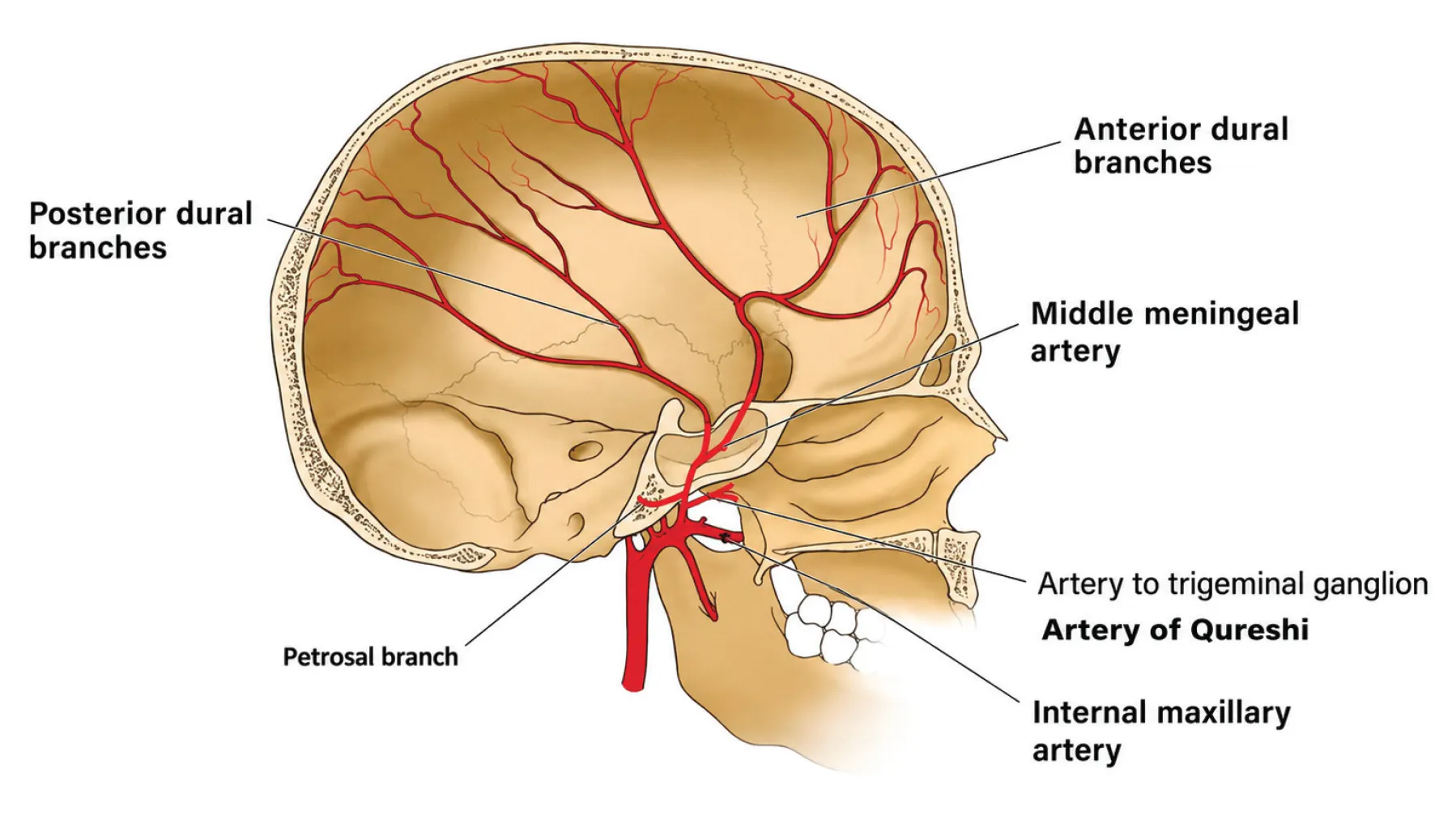
Figure 1. Illustration of the MMA with its branches, along with the artery to trigeminal ganglion. Wikimedia Commons. Image © Ahmerasif. Used under Creative Commons license (CC BY-SA 4.0). https://commons.wikimedia.org/wiki/File:Artery_of_Qureshi_(Figure_1).jpg
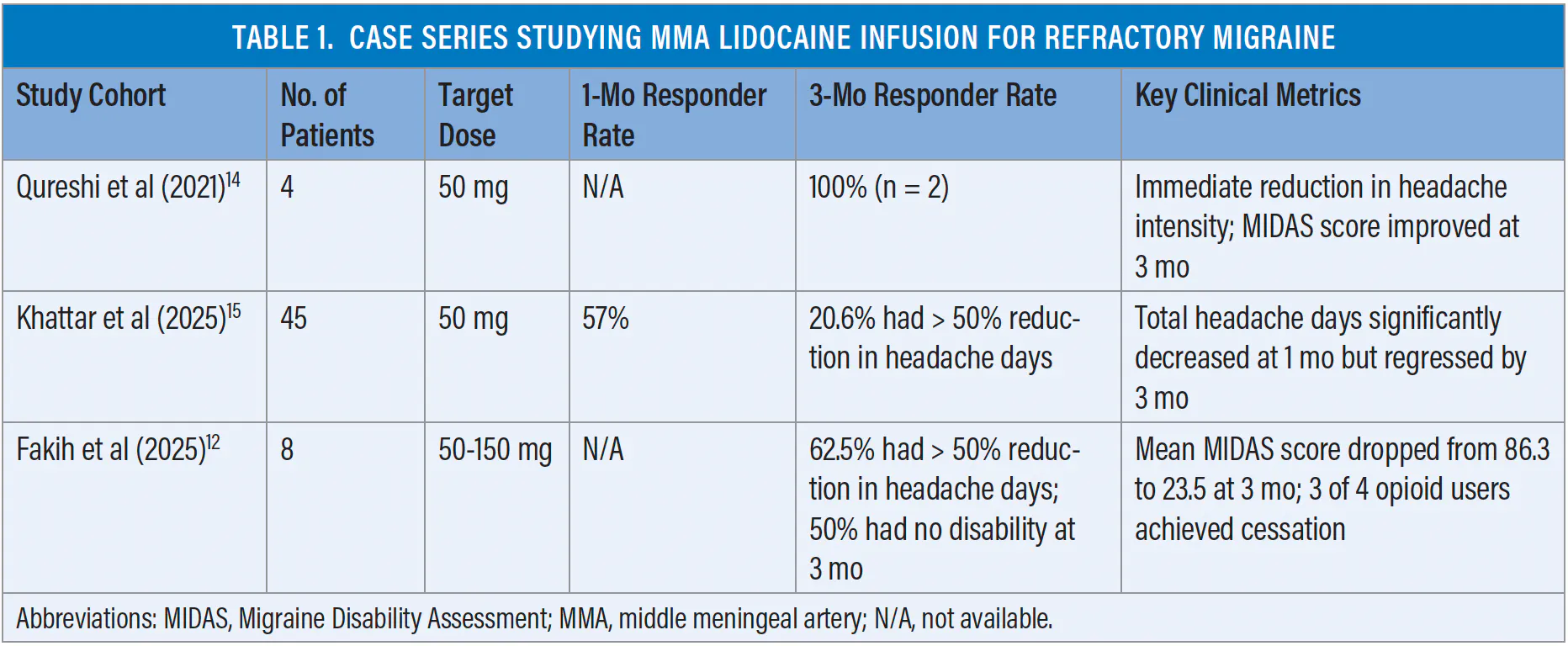
Patients with intractable headaches and status migrainosus can experience a rapid reduction in pain intensity. A retrospective analysis evaluated 45 patients with refractory headache who averaged 27.5 headache days per month (Table 1).15 In this cohort, 64.4% (29 of 45) of patients reported immediate headache relief postprocedure, within 0 to 24 hours. A recent study evaluating eight patients treated with escalated doses of lidocaine reported that 100% of the cohort achieved complete headache relief within 1 to 2 hours of infusion completion (Table 1).12
The safety profile across these series has been excellent, with no observed neurologic deficits, cardiac arrhythmias, or systemic toxicity. The most frequent adverse events are mild and self-limiting, such as access site discomfort or transient facial numbness.
Duration of Effect and Central Desensitization
An important clinical observation regarding MMA lidocaine infusion is that its therapeutic benefit far outlasts the drug’s pharmacokinetic presence. The elimination half-life of lidocaine after a bolus injection is short, typically ranging from 1.5 to 2 hours. However, the clinical relief frequently persists for weeks to months.12,14,15
This prolonged efficacy is theorized to result from the disruption of central sensitization.14,19 In chronic migraine, the continuous bombardment of the central nervous system by peripheral nociceptive signals leads to maladaptive neuroplasticity, rendering central pain networks hypersensitive.19 By enforcing a period of silence in the peripheral trigeminovascular afferents, the high-concentration local lidocaine infusion effectively “breaks the cycle” of chronic pain, allowing hypersensitized central neurons to reset to their baseline resting states.14
The initial clinical evidence for this extended therapeutic window emerged from the first small case series evaluating MMA lidocaine injections in four patients with intractable headaches and status migrainosus (Table 1).20 In this pilot study, patients received infusions of up to 50 mg of lidocaine per MMA, which resulted in an immediate reduction in headache intensity, with pain scores frequently dropping from 8/10 or 10/10 to 0/10. Migraine Disability Assessment (MIDAS) scores at 3-month follow-up were also reduced, including one patient who improved from severe disability to little or no disability. These observations were the first to suggest that migraines could be treated by facilitating a prolonged central desensitization via lidocaine in the MMA.
The longitudinal durability of this effect varies. In the 45-patient series, responder status was defined as a > 50% reduction in monthly headache days (Table 1).15 At 1-month follow-up, 57% of the cohort met the criteria for responder status. The data revealed a strong correlation between acute procedural success and short-term durability; 85.1% of patients who experienced acute relief maintained their responder status at 1 month. However, there was a decline in efficacy over subsequent months. In this standard-dose cohort, the responder rate declined to 34% at 2 months and 20.6% by the 3-month follow-up interval.15 This indicates that while standard lidocaine protocols successfully disrupt the pain cycle initially, the underlying pathophysiologic drivers of chronic migraine eventually reassert themselves in many patients.
OPTIMIZING INFUSATES FOR PROLONGED EFFICACY
Because MMA lidocaine infusion preserves vascular architecture, the procedure is inherently repeatable. However, requiring patients to undergo recurrent endovascular catheterizations every few months to maintain migraine remission is not a sustainable long-term management strategy. Therefore, optimizing the infusate to maximize duration of relief is the most pressing pharmacologic challenge in this space.
Escalating Lidocaine Doses
Recent research suggests that increasing the total dose of lidocaine safely extends the therapeutic window. A 2025 study evaluated the administration of higher doses of IA lidocaine, titrating the infusion from 50 mg up to 150 mg per procedure (Table 1).12 This study provided the first quantified angiographic dose-response data, utilizing selective MMA contrast injections after each 25-mg increment to observe a dose-dependent vasoconstrictive response (Figure 2 and Figure 3). Vasoconstriction was graded on a 0 to 5 scale, ranging from baseline vessel caliber (grade 0) to severe narrowing or near occlusion of the proximal MMA and its dural branches (grade 5). In most patients, increasing the lidocaine dose yielded progressive, linear constriction of the artery, although some exhibited a “ceiling effect” where maximal vasoconstriction was achieved at moderate doses.12
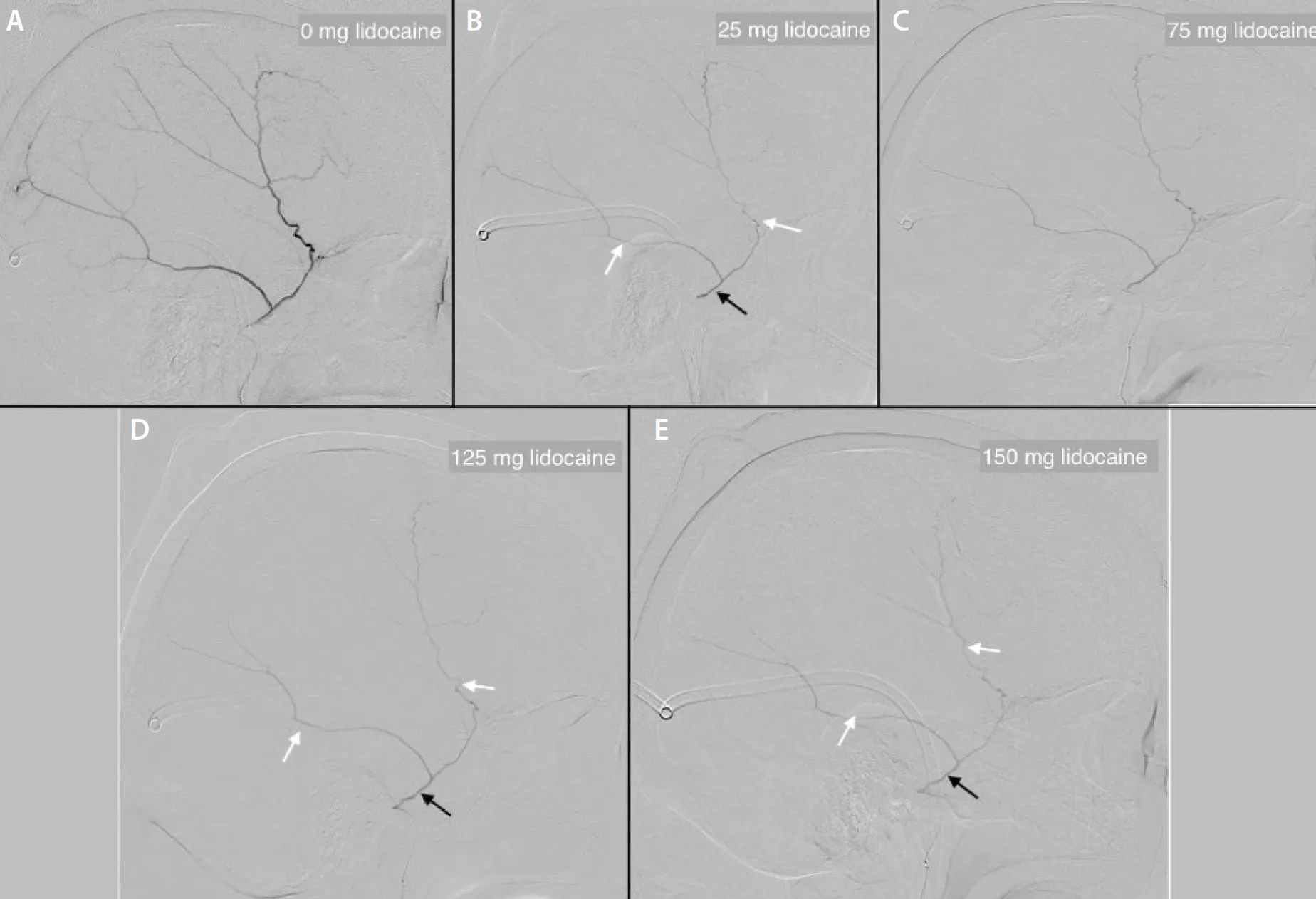
Figure 2. A dose-dependent response is observed in this patient, with progressive constriction of the MMA according to increasing doses of lidocaine (MMA, black arrows; anterior and posterior branches, white arrows): baseline at 0 mg (A), grade 1 at 25 mg (B) and 75 mg (C), grade 2 at 125 mg (D), and grade 3 at 150 mg (E). Each angiographic image was obtained approximately 5 minutes apart. Reproduced with permission from Fakih R, Ranjini NJ, Gillani SA, et al. Middle meningeal artery lidocaine infusion for refractory migraine: angiographic dose response and 3‐month outcomes. J Neuroimaging. 2025;35:e70096. doi: 10.1111/jon.70096
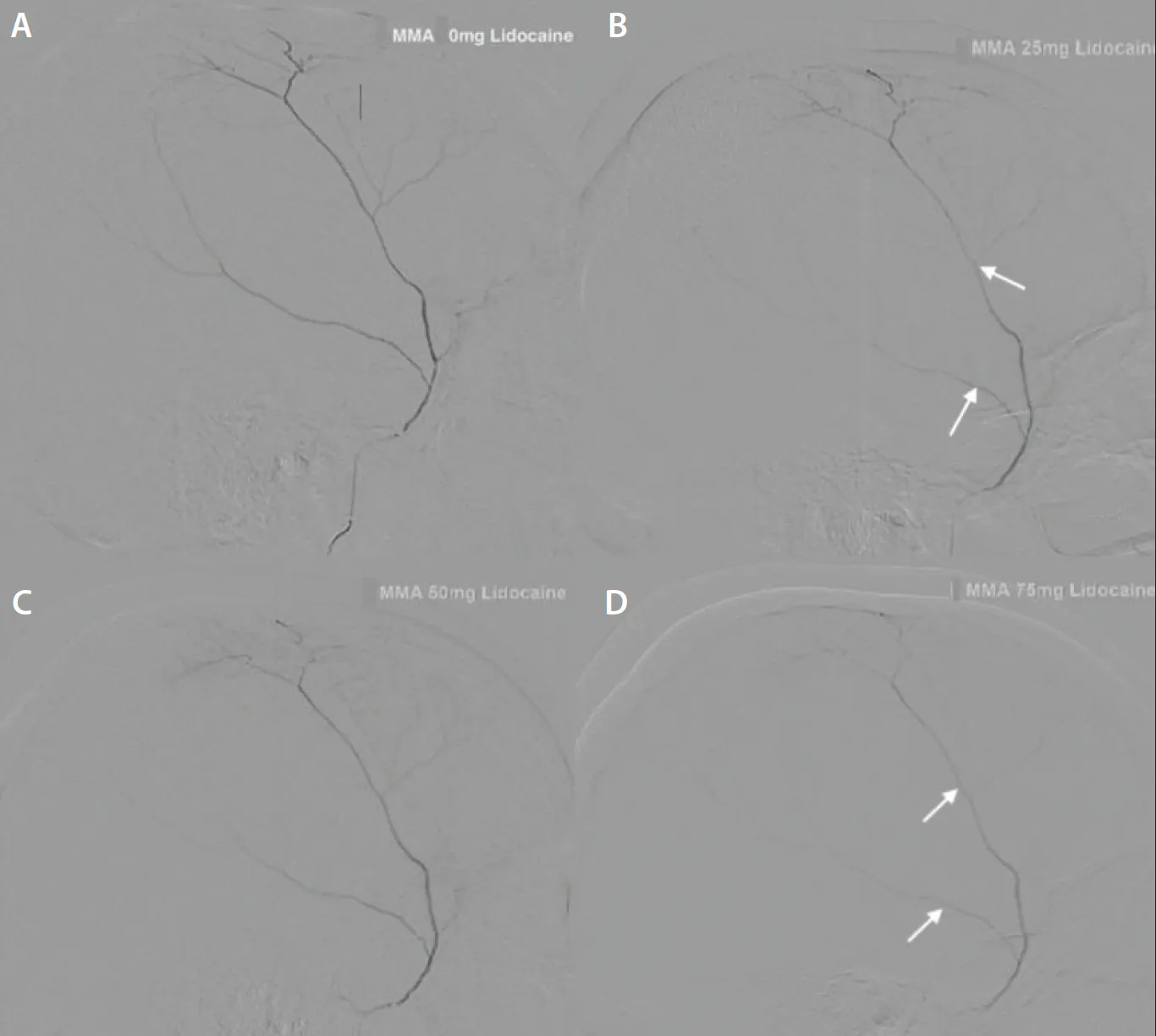
Figure 3. A dose-dependent vasoconstrictive response is observed (anterior and posterior branches, white arrows): baseline at 0 mg lidocaine (C), with grade 2 changes at 25 mg (B) and 50 mg (C) of lidocaine to grade 4 at 75 mg of lidocaine (D). Reproduced with permission from Fakih R, Ranjini NJ, Gillani SA, et al. Middle meningeal artery lidocaine infusion for refractory migraine: angiographic dose response and 3‐month outcomes. J Neuroimaging. 2025;35:e70096. doi: 10.1111/jon.70096
There was a signal in this study that administration of higher lidocaine doses (100-150 mg) correlated with improved durability, but the sample size was not large enough to make pertinent conclusions. At 3-month follow-up, this cohort demonstrated a responder rate of 62.5% (defined as a ≥ 50% reduction in the MIDAS),12 an improvement over the 20.6% 3-month responder rate seen in the lower-dose cohorts (Table 1).15 Furthermore, 50% of patients in the higher-dose study transitioned from “severe disability” to “no disability” at 3 months, and 75% of the patients utilizing baseline opioid analgesics successfully discontinued their opioid use.12 The human systemic toxicity threshold for lidocaine is about 4.5 mg/kg, and a 150 mg IA dose in an average adult equates to roughly 2 mg/kg. Because the drug is delivered superselectively, systemic venous absorption is diluted, maintaining blood concentrations safely below toxic thresholds.
Transition to Longer-Acting Anesthetics
To alter the durability curve, future protocols should investigate the substitution of lidocaine with longer-acting amide local anesthetics, such as ropivacaine and bupivacaine.
Ropivacaine could present an attractive alternative for IA MMA infusion. It possesses a significantly longer duration of action compared to lidocaine, driven by its higher lipid solubility and extensive protein binding.21 Similar to lidocaine, the dual action of ropivacaine (prolonged sodium channel blockade combined with intrinsic attenuation of dural vasodilation) yields a synergistic suppression of the trigeminovascular reflex. Both bupivacaine and ropivacaine are frequently utilized in greater occipital nerve blocks, sphenopalatine ganglion blocks, and trigger point injections to provide prolonged relief for refractory migraines and other severe headache disorders.22 However, preclinical safety profiling would be required to ensure these agents could be safely infused into the dural vasculature without causing systemic complications.
Sustained-Release Delivery Systems
The evolution of reversible endovascular migraine therapy might lie in the deployment of sustained-release drug delivery systems. By formulating local anesthetics into advanced biochemical matrices, the drug can be sequestered within the dural vascular bed, slowly eluting therapeutic concentrations over days to weeks without permanently occluding the vessel.23
Liposomal bupivacaine uses a multivesicular liposomal delivery platform that encapsulates the anesthetic within microscopic lipid bilayers.24 As the liposomes naturally degrade, the bupivacaine is gradually released, providing continuous, localized analgesia for up to 72 hours. The theoretical advantage of infusing liposomal formulations into the MMA is the ability to subject the dural nociceptors to a continuous, multiday blockade, which may more effectively extinguish central sensitization than the brief window provided by aqueous lidocaine. This is currently used for surgical site infiltration, and rigorous preclinical modeling is required to assess the safety of liposomal particles within the dural microvasculature to ensure they do not induce inadvertent complications. QureMed LLC has started initial clinical studies using sustained-release lidocaine preparations.
Beyond liposomes, researchers are engineering polymeric delivery vehicles such as thermoreversible poloxamer-based hydrogels.25 These liquid formulations can be infused through a standard microcatheter; upon encountering physiologic body temperature, the solution undergoes micellization and transitions into a gel. This gel acts as a biodegradable depot, anchoring the anesthetic within the target vessel and facilitating sustained release over several weeks, eventually dissolving and leaving the MMA patent. Such technologies could hold the promise of transforming a transient nerve block into a durable, prophylactic intervention.
MMA EMBOLIZATION
The preservation of vascular architecture makes lidocaine infusion highly appealing, but we must acknowledge the rapid emergence of MMA embolization within the clinical landscape.26 MMA embolization involves the permanent occlusion of the vessel using liquid embolic agents (such as Onyx [Medtronic] or n-butyl cyanoacrylate), polyvinyl alcohol particles, or detachable coils and is establishing itself as a standard-of-care intervention for chronic subdural hematomas (cSDHs).26
The application of MMA embolization for headache management stems from observations in the treatment of cSDHs. Neurointerventionalists noted that patients undergoing MMA embolization frequently reported the rapid resolution of pre-existing chronic headaches, often occurring long before any radiographic reduction in the hematoma was evident. In a retrospective analysis, nine patients with a history of chronic severe headaches underwent MMA embolization for cSDHs; postprocedurally, eight of these nine patients reported significant improvement, with seven achieving complete and sustained resolution.27
By permanently devascularizing the dural membranes, embolization reduces the pulsatile mechanical forces applied to perivascular nociceptors, induces localized ischemia that halts the release of CGRP, and physically disrupts the fine nerve fibers traveling along the vessel wall.28 It is important to emphasize that embolization and lidocaine infusion occupy different spaces in the treatment algorithm. Lidocaine infusion is both a diagnostic and therapeutic tool that preserves the physiological function of dural blood supply, carrying low risk of any nontarget tissue damage. Embolization provides permanent neurovascular modulation but carries inherent procedural risks associated with the permanent occlusion of the cranial vasculature.
These two modalities can be linked through the concept of a “provocative test.” Because refractory migraine is a heterogeneous disorder, patients with centrally mediated or multifactorial pain syndromes (eg, related to prior craniotomies) are unlikely to benefit from peripheral MMA intervention. IA lidocaine could be administered as a predictive screening tool; if a patient experiences profound relief after an MMA lidocaine infusion, it suggests that their specific pain syndrome is heavily dependent on the peripheral pathways mediated by the MMA. Following the eventual recrudescence of their headaches, these confirmed responders could then be offered permanent MMA embolization with a high degree of confidence in favorable long-term outcome.
CLINICAL EVIDENCE LANDSCAPE AND KEY QUESTIONS to address
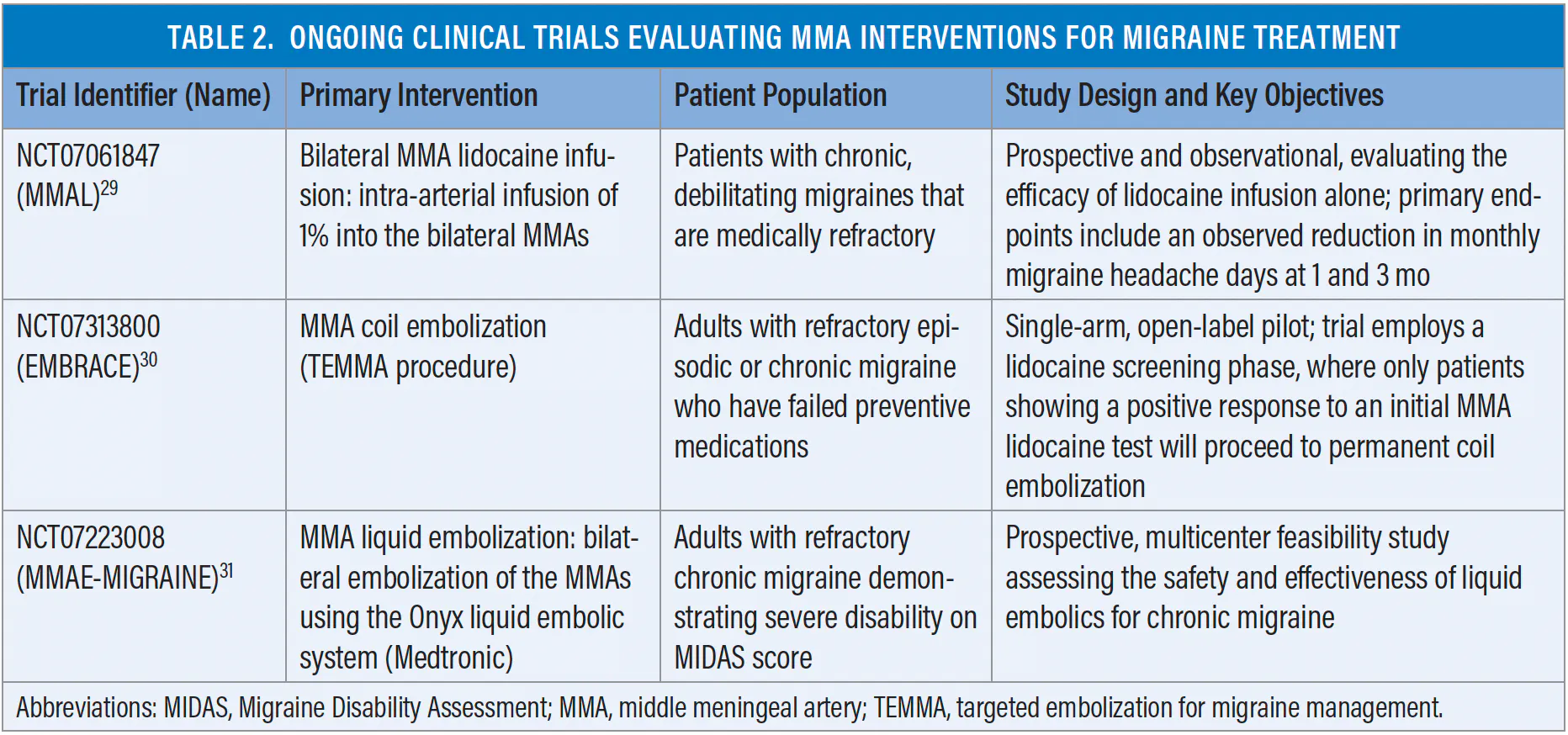
Positive data from retrospective studies have prompted the initiation of clinical trials to evaluate endovascular migraine therapies. Three ongoing trials currently investigating these treatments are summarized in Table 2.29-31
The endovascular treatment of refractory migraine via MMA intervention represents one of the most exciting developments in modern neurointerventional surgery. The pathophysiologic rationale is robust, targeting the neurogenic inflammation and central sensitization propagated by the trigeminovascular system, and the preliminary clinical data demonstrate safety and efficacy. IA MMA lidocaine infusion offers an effective, tissue-sparing mechanism to terminate severe headache cycles without permanently occluding the artery. By selecting the right patients, exploring higher anesthetic doses, and transitioning to longer-acting agents, the field can have a clear roadmap to extend the durability of this therapy.
However, the current evidence landscape remains heavily reliant on small case series and unblinded pilot studies. The interpretation of these outcomes is inherently confounded by the well-documented placebo effect in headache medicine, which can reach up to 50% in trials evaluating invasive procedures. To overcome these methodologic limitations, the field must pursue some strategic initiatives. The establishment of a comprehensive, multicenter patient registry is paramount. A dedicated registry would systematically capture real-world data across diverse patient populations, enforce standardized diagnostic criteria based on the International Classification of Headache Disorders (ICHD-3), and mandate the uniform collection of validated longitudinal outcome measures. A robust registry can identify clinical and angiographic biomarkers that distinguish true responders from nonresponders, refining patient selection criteria. The data generated by the registry will complement future randomized clinical trials.
Future efforts should focus on identifying clinical and imaging biomarkers to distinguish patients with predominantly peripheral (and thus MMA-responsive) pain from those with centralized pain. A detailed headache history remains paramount. We hypothesize that patients with classic migraine features by history according to the ICHD-3 would benefit the most from the treatment, whereas those with multifactorial causes for migraines (prior brain surgeries, nonspecific headaches, trigeminal neuropathy) would benefit less. However, the jury is still out, and to fully optimize this intervention, we must answer important questions regarding the effect of the lidocaine dose and its response, specifically whether the degree of MMA constriction or escalating doses correlate directly with a longer duration of therapeutic effect. Addressing some of these questions might require the use of placebo controls. However, implementing sham procedures for invasive endovascular interventions presents significant logistical and ethical challenges.
The millions of patients incapacitated by refractory migraines require innovative solutions that transcend traditional pharmacotherapy. Through disciplined investigation, the optimization of pharmacologic techniques, and commitment to high-quality trial design, endovascular interventions targeting the MMA hold the potential to profoundly alter the trajectory of headache management.
1. GBD 2023 Headache Collaborators. Global, regional, and national burden of headache disorders, 1990–2023: a systematic analysis for the Global Burden of Disease Study 2023. Lan-cet Neurol. 2025;24:1005-1015. doi: 10.1016/S1474-4422(25)00402-8
2. Amiri P, Kazeminasab S, Nejadghaderi SA, et al. Migraine: a review on its history, glob-al epidemiology, risk factors, and comorbidities. Front Neurol. 2021;12:800605. doi: 10.3389/fneur.2021.800605
3. Insinga RP, Ng-Mak DS, Hanson ME. Costs associated with outpatient, emergency room and inpatient care for migraine in the USA. Cephalalgia. 2011;31:1570-1575. doi: 10.1177/0333102411425960
4. Ornello R, Andreou AP, De Matteis E, et al. Resistant and refractory migraine: clinical presentation, pathophysiology, and management. eBioMedicine. 2024;99:104943. doi: 10.1016/j.ebiom.2023.104943
5. D’Antona L, Matharu M. Identifying and managing refractory migraine: barriers and opportunities? J Headache Pain. 2019;20:89. doi:10.1186/s10194-019-1040-x
6. Goadsby PJ, Charbit AR, Andreou AP, et al. Neurobiology of migraine. Neuroscience. 2009;161:327-341. doi: 10.1016/j.neuroscience.2009.03.019
7. Levy D, Moskowitz MA. Meningeal mechanisms and the migraine connection. Annu Rev Neurosci. 2023;46:39-58. doi: 10.1146/annurev-neuro-080422-105509
8. Asghar MS, Hansen AE, Kapijimpanga T, et al. Dilation by CGRP of middle meningeal ar-tery and reversal by sumatriptan in normal volunteers. Neurology. 2010;75:1520-1526. doi: 10.1212/WNL.0b013e3181f9626a
9. Schwenk ES, Walter A, Torjman MC, et al. Lidocaine infusions for refractory chronic mi-graine: a retrospective analysis. Reg Anesth Pain Med. 2022;47:408-413. doi: 10.1136/rapm-2021-103180
10. El-Boghdadly K, Pawa A, Chin KJ. Local anesthetic systemic toxicity: current perspectives. Local Reg Anesth. 2018;11:35-44. doi: 10.2147/LRA.S154512
11. Bhatia KD, Lee H, Kortman H, et al. Endovascular management of intracranial dural arteriovenous fistulas: transarterial approach. Am J Neuroradiol. 2022;43:324-331. doi: 10.3174/ajnr.A7296
12. Fakih R, Ranjini NJ, Gillani SA, et al. Middle meningeal artery lidocaine infusion for refractory migraine: angiographic dose response and 3‐month outcomes. J Neuroimaging. 2025;35:e70096. doi: 10.1111/jon.70096
13. DeToledo JC, Minagar A, Lowe MR. Lidocaine-induced seizures in patients with history of epilepsy: effect of antiepileptic drugs. Anesthesiology. 2002;97:737-739. doi: 10.1097/00000542-200209000-00031
14. Qureshi AI, Pfeiffer K, Babar S, et al. Intra‐arterial injection of lidocaine into middle meningeal artery to treat intractable headaches and severe migraine. J Neuroimaging. 2021;31:1126-1134. doi: 10.1111/jon.12918
15. Khattar NK, Arthur AS, Santori D, et al. Middle meningeal artery lidocaine infusion for refractory headache. J NeuroInterventional Surg. 2026;18:8-10. doi: 10.1136/jnis-2025-023246
16. Berk T, Silberstein SD. The use and method of action of intravenous lidocaine and its metabolite in headache disorders. Headache. 2018;58:783-789. doi: 10.1111/head.13298
17. Mohammad Y. Therapeutic use of the newly described “artery of Qureshi.” J Vasc Interv Neurol. 2018;10:65.
18. Qureshi AI, Saleem MA, Jadhav V, et al. Intra‐arterial modulation of the trigeminal nerve ganglion in patients with refractory trigeminal neuralgia. J Neuroimaging. 2018;28:79-85. doi: 10.1111/jon.12476
19. Woolf CJ. Central sensitization: implications for the diagnosis and treatment of pain. Pain. 2011;152:S2-S15. doi: 10.1016/j.pain.2010.09.030
20. Qureshi AI, Pfeiffer K, Babar S, et al. Intra‐arterial injection of lidocaine into middle meningeal artery to treat intractable headaches and severe migraine. J Neuroimaging. 2021;31:1126-1134. doi: 10.1111/jon.12918
21. Kalath RN, Kulal R, Gopinath S. Comparison of clinical efficacy of ropivacaine and lignocaine with adrenaline for implant surgery anesthesia: a split-mouth randomized controlled clinical trial. J Dent Anesth Pain Med. 2021;21:337. doi: 10.17245/jdapm.2021.21.4.337
22. García-Leiva JM, Hidalgo J, Rico-Villademoros F, et al. Effectiveness of ropivacaine trigger points inactivation in the prophylactic management of patients with severe migraine. Pain Med. 2007;8:65-70. doi: 10.1111/j.1526-4637.2007.00251.x
23. Getachew M, Tesfaye H, Yihunie W, et al. Sustained release local anesthetics for pain management: relevance and formulation approaches. Front Pain Res (Lausanne). 2024;5:1383461. doi: 10.3389/fpain.2024.1383461
24. Gorfine SR, Onel E, Patou G, Krivokapic ZV. Bupivacaine extended-release liposome injection for prolonged postsurgical analgesia in patients undergoing hemorrhoidectomy: a multicenter, randomized, double-blind, placebo-controlled trial. Dis Colon Rectum. 2011;54:1552-1559. doi: 10.1097/DCR.0b013e318232d4c1
25. Jacob S, Kather FS, Satyam SM, et al. Injectable in situ thermoreversible gel depot system of lidocaine nanoemulsion for prolonged anesthetic activity in dental and operative procedures. Pharmaceutics. 2025;17:1355. doi: 10.3390/pharmaceutics17101355
26. Papageorgiou NM, Palaiodimou L, Melanis K, et al. Embolization of middle meningeal artery in patients with chronic subdural hematoma: a systematic review and meta-analysis of randomized-controlled clinical trials. J Clin Med. 2025;14:2862. doi: 10.3390/jcm14092862
27. Catapano JS, Karahalios K, Srinivasan VM, et al. Chronic headaches and middle meningeal artery embolization. J NeuroInterventional Surg. 2022;14:301-303. doi: 10.1136/neurintsurg-2021-017602
28. Boyett D, Khoury NM, Shlobin N, et al. Middle meningeal artery embolization for migraine: a review. Surg Neurol Int. 2025;16:475. doi: 10.25259/SNI_651_2025
29. Bilateral middle meningeal artery lidocaine infusion for chronic debilitating migraines. Clinicaltrials.gov website. Accessed March 19, 2026. https://clinicaltrials.gov/study/NCT07061847
30. Migraine benefit from responsive artery coil embolization (EMBRACE). Clinicaltrials.gov website. Accessed March 19, 2026. https://clinicaltrials.gov/study/NCT07313800
31. Bilateral embolization of the middle meningeal arteries for refractory chronic migraine (MMAE-Migraine). Clinicaltrials.gov website. Accessed March 19, 2026. https://clinicaltrials.gov/study/NCT07223008
Advertisement
Advertisement