Advertisement
Advertisement
June 2026
Expanding Neurovascular Applications of the Swift™ Coil System
Case-based perspectives on the utility of SwiftPAC™ and SwiftSET™ coils across diverse neurovascular embolization applications.
With Mohsen Nouri, MD; Robert M. Starke, MD; Allison E. Strickland, MD; and Nitin Goyal, MD
The Swift™ Coil System (Penumbra, Inc.) is purposefully designed to facilitate efficient vessel occlusion. SwiftSET™ (Penumbra, Inc.) is engineered to optimize vessel wall apposition, thereby facilitating smooth deployment and natural conformity to tight spaces for dense occlusion in small vessels. SwiftPAC™ (Penumbra, Inc.) is engineered like “liquid metal” to function as a soft, space-seeking coil that conforms to the target vessel for dense packing. Together, the system is designed to balance occlusion efficiency with shape adaptability for a range of applications.
This article reviews a selection of conditions that can be addressed with the Swift system and highlights physician experiences using the Swift system for each case type.
CAROTID CAVERNOUS FISTULA EMBOLIZATION
A carotid cavernous fistula (CCF) is an abnormal connection between the carotid artery and the cavernous sinus, further classified by subtype based on presentation and etiology. Direct CCFs (subtype A) are typically the result of trauma to the artery, while indirect CCFs (subtypes B-D) result from gradual weakening of the artery wall in the dural branches of the carotid, ultimately causing the vessel to rupture in the absence of acute trauma.1
Common symptoms of a CCF include ocular swelling and irritation, visual disturbances, orbital pain, and cranial nerve deficits. If untreated, there is a risk of permanent injury to the involved eye. Thus, while monitoring may be an option for low-flow indirect CCFs, intervention is typically necessary for direct and/or high-flow CCFs. The goal of treatment is to fully occlude the fistula without compromising internal carotid artery (ICA) flow. Compression, surgical intervention, and endovascular intervention are all options for treating CCF.1
Endovascular intervention, which includes embolization with coils or liquid embolics, placement of a covered stent graft in ICA, and endovascular arterial sacrifice, is typically considered the frontline approach. Embolization is the most popular of these approaches, with a high rate of complete obliteration for direct (93%) and indirect (81.5%) CCFs and a low risk for complications.2
Meta-analytic results suggest that coils and liquid embolics are equally effective for addressing direct CCF, but coils may be associated with lower odds of complications and cranial nerve palsy.3 “The SwiftPAC coil’s two-dimensional sinusoidal shape for dense packing with length options up to 60 cm helps facilitate efficiency while embolizing large areas in CCF cases,” remarked Mohsen Nouri, MD, a dual-trained neurosurgeon at South Shore University Hospital in Bay Shore, New York.
Successful embolization of the CCF should cause most symptoms to resolve within hours or days. Follow-up care may include an angiogram to confirm that the fistula is fully occluded.1
CASE 1: CCF ADDRESSED WITH SWIFTPAC COILS

CASE PRESENTATION
A patient presented with indirect CCF to the left cavernous sinus, with only venous access possible.
INTERVENTION
Access was obtained via direct orbital stick, and a 4-F microcatheter was introduced into the superior ophthalmic vein. A Headway Duo (Terumo Neuro) was used to deploy two 15-cm SwiftPAC coils and two 60-cm SwiftPAC coils (Figure 1).
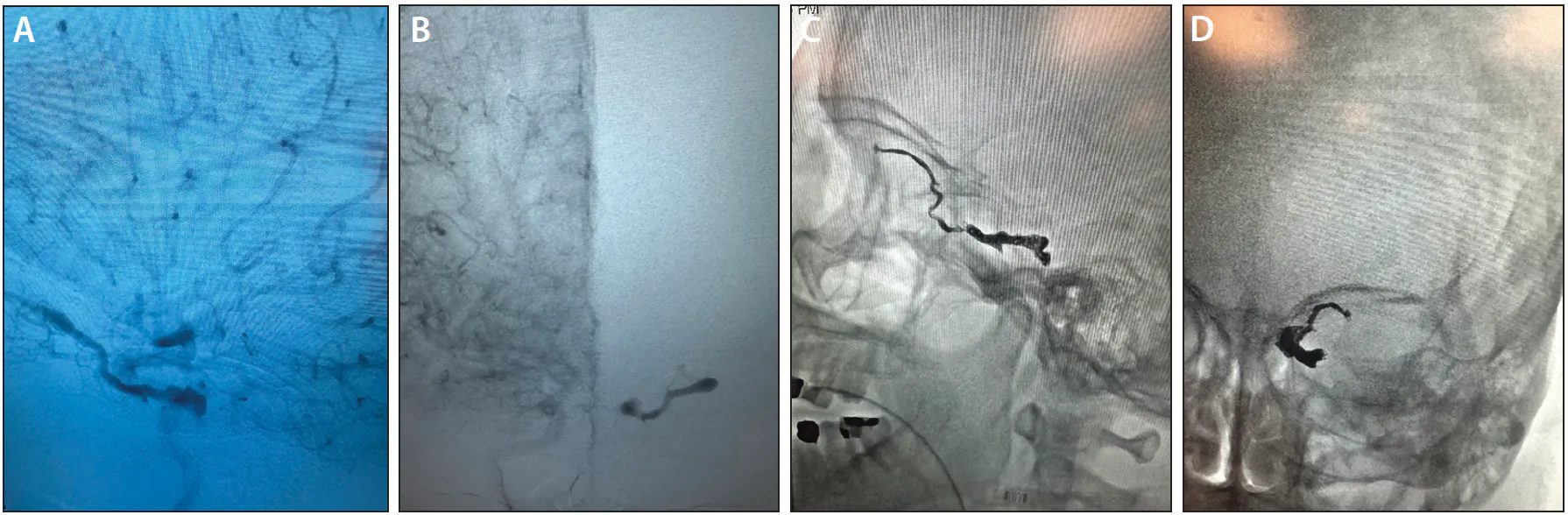
Figure 1. Preembolization lateral view (A), preembolization anteroposterior (AP) view (B), postembolization unsubtracted lateral view (C), and postembolization unsubtracted AP view (D).
ARTERIOVENOUS MALFORMATION
An arteriovenous malformation (AVM) is a blood vessel malformation in which arteries are directly connected to veins, rather than arteries and veins being connected via a network of capillaries. AVMs can occur anywhere in the body, but brain AVMs (bAVMs) are most likely to have serious consequences. AVMs are present at birth or develop shortly thereafter, and the cause of these malformations is unknown. AVMs are not known to be hereditary, although there may be genetic risk factors.4
A bAVM can lead to a wide range of neurological symptoms: headache, weakness, seizures, vision changes, facial paralysis, difficulty speaking, dizziness, and loss of consciousness. If untreated, there is a risk that the vessels will rupture and hemorrhage. Hemorrhage due to bAVM rupture is rare but often fatal. Other serious risks of an untreated bAVM include a reduction in the amount of oxygen to the brain, increased pressure on surrounding tissues, and heart failure due to excessive demand on the heart.5
Treatment options include radiosurgery, surgical resection, and endovascular embolization. Radiosurgery uses highly focused beams of radiation to shrink the bAVM over the course of a few years. This may be a reasonable option for patients who are not experiencing severe symptoms from their bAVM. Surgical resection, in which the surgeon removes the bAVM and redirects flow to normal vessels, is the only immediate and complete cure for a bAVM. Endovascular embolization stops the AVM from growing by blocking blood flow to the bAVM. Embolization is often performed prior to surgery to minimize bleeding. Embolization may also be an option for patients who are not candidates for surgery.6
bAVM embolization is typically performed with liquid embolics, particles, coils, or a combination of materials. The optimal material(s) for a given case are dictated by the specific anatomic features of the AVM. Complications of embolization include intracerebral hemorrhage and ischemic stroke, both of which can be caused by a variety of factors, including vessel wall injury, AVM rupture, and off-target embolization.7 Regarding the case illustrated in Figure 2, Dr. Robert Starke, MD, stated, “A young patient presented with seizures and hemorrhage from AVM. SwiftPAC allowed for straightforward closure of the deep feeding AVM arteries. Its softness and dense occlusion make it well suited for targeted preoperative flow reduction, allowing for removal of the AVM in under 1 hour.” Dr. Starke is a dual-trained neurosurgeon with the Miller School of Medicine at University of Miami in Florida.
Patients who undergo successful resection are cured of their AVM. For those treated with radiosurgery or standalone embolization, treatment success is defined as a reduction in AVM size. AVM recurrence after surgical resection is rare but possible and is more commonly seen in children than adults. Thus, long-term follow-up is particularly important for high-risk pediatric patients.7
CASE 2: AVM ADDRESSED WITH SWIFTPAC COILS

CASE PRESENTATION
A young patient presented with seizures and hemorrhage from an AVM (Figure 2A). The patient was initially confused but recovered to neurologically intact. The patient was determined to have a Spetzler-Martin grade 3 AVM (S2, V1, E0).
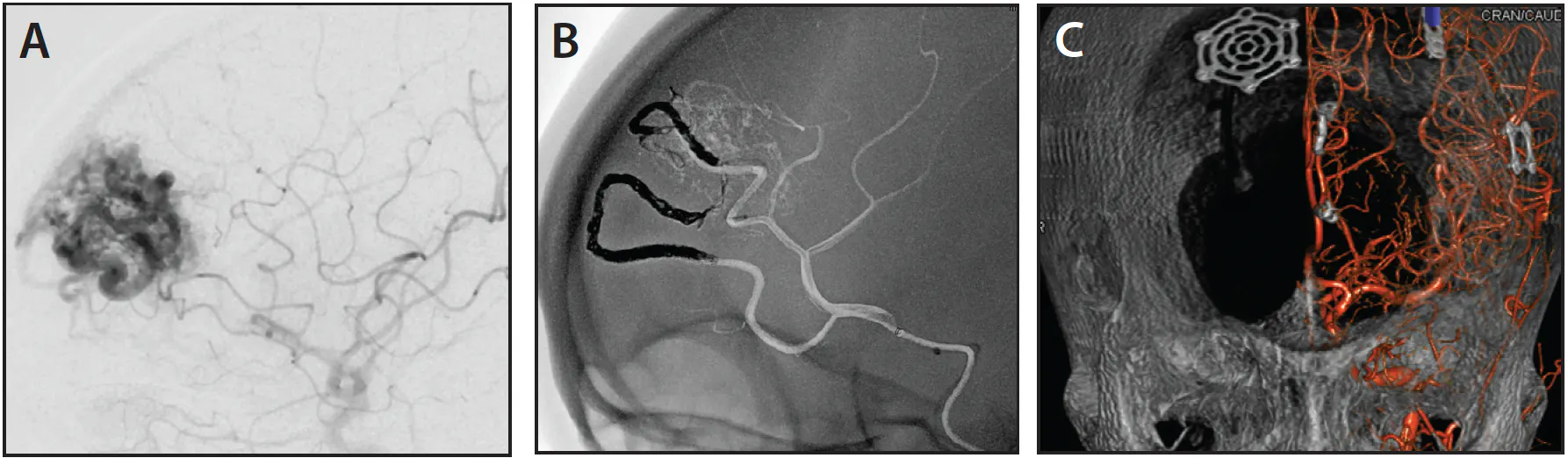
Figure 2. Preembolization (A), postembolization (B), and final angiography (C).
INTERVENTION
Embolization of the two deep feeding pedicles was performed (Figure 2B), leaving the superficial feeding pedicle. The AVM was removed in a 1-hour surgery. The patient was neurologically intact postsurgery.
CASE CONCLUSION
Follow-up angiography at 6 months and 1 year showed no residual AVM, with the patient neurologically “intact” (Figure 2C).
MIDDLE MENINGEAL ARTERY EMBOLIZATION FOR CHRONIC SUBDURAL HEMATOMA
A chronic subdural hematoma (cSDH) is a cerebrovascular disease that starts as injury to the dura, leading to a positive feedback cycle of inflammation, transudation, recurrent hemorrhage, and neovascular membrane ingrowth. They are distinct from acute SDH, which forms due to tearing of bridging veins or arteries.8 Due to age-related vulnerabilities like brain atrophy and weakened blood vessels, the elderly are prone to SDHs from even minor ground-level falls. The inflammation and neovasculature leading to cSDH often initiate from acute SDHs.9 Symptoms include headache, seizures, cognitive decline, aphasia and weakness.8
Monitoring or nonsurgical management may be appropriate for small cSDHs that are not causing severe symptoms. However, large and/or symptomatic cSDHs can have consequences in the absence of timely treatment. An untreated cSDH can lead to a worsening of neurologic symptoms.8
Treatment options include nonsurgical medical management, surgical evacuation, and MMA embolization (MMAe). In recent years, a growing body of research has demonstrated that MMAe is a safe and effective approach for reducing the risk of cSDH recurrence or progression among surgical and nonsurgical patients.8
Common embolic agents include liquid embolics, N-butyl cyanoacrylate, particles, coils, or a combination of these options. Each embolic agent has distinct advantages and disadvantages, and selections must be carefully tailored to patient anatomy. Liquid embolics offer thorough occlusion but carry higher risk of off-target embolization. Particles are an accessible option, but polyvinyl alcohol particles are prone to clumping and Embosphere particles (Merit Medical) require intermittent agitation while injecting.10
Coils minimize the risk of off-target embolization and allow for thorough proximal occlusion, but they don’t penetrate the distal vasculature as extensively as liquid embolics.8 However, preliminary research suggests that extreme distal penetration may not lead to lower rates of cSDH recurrence.11 “In MMA embolization, we are working in a complex vascular network with critical anastomoses that require careful consideration. SwiftPAC coils provide a controlled approach to MMA embolization for targeted occlusion that minimizes risk to the patient,” said Allison Strickland, MD. Dr. Strickland is a dual-trained neurosurgeon at the University of Mississippi Medical Center in Jackson, Mississippi.
Successful evacuation of the hematoma and/or embolization of the MMA should result in hematoma resolution over the course of 3 to 6 months posttreatment. Resolution of the cSDH should alleviate neurological symptoms. cSDH recurrence after surgical evacuation is relatively uncommon, especially among patients who receive adjunctive MMAe.12
CASE 3: MMAe FOR cSDH PERFORMED WITH SWIFTPAC COILS

CASE PRESENTATION
A man in his early 60s with HIV and poor functional baseline presented to the emergency department with new-onset seizures. CT head demonstrated a large, acute-on-chronic right-sided SDH and a small, chronic left-sided SDH. The patient was not an open surgical candidate and was taken for bilateral MMAe with SwiftPAC.
INTERVENTION
Access was obtained using the BENCHMARK™ 071 Access System, with the MIDWAY™ 43 Delivery Catheter for additional support. Bilateral MMAe was performed. A 10- and 15-cm SwiftPAC Packing Coil were placed in the right MMA. A 20-cm SwiftPAC Packing Coil and a 1-mm X 5-cm SwiftSET Coil were placed in the left MMA (Figure 3).
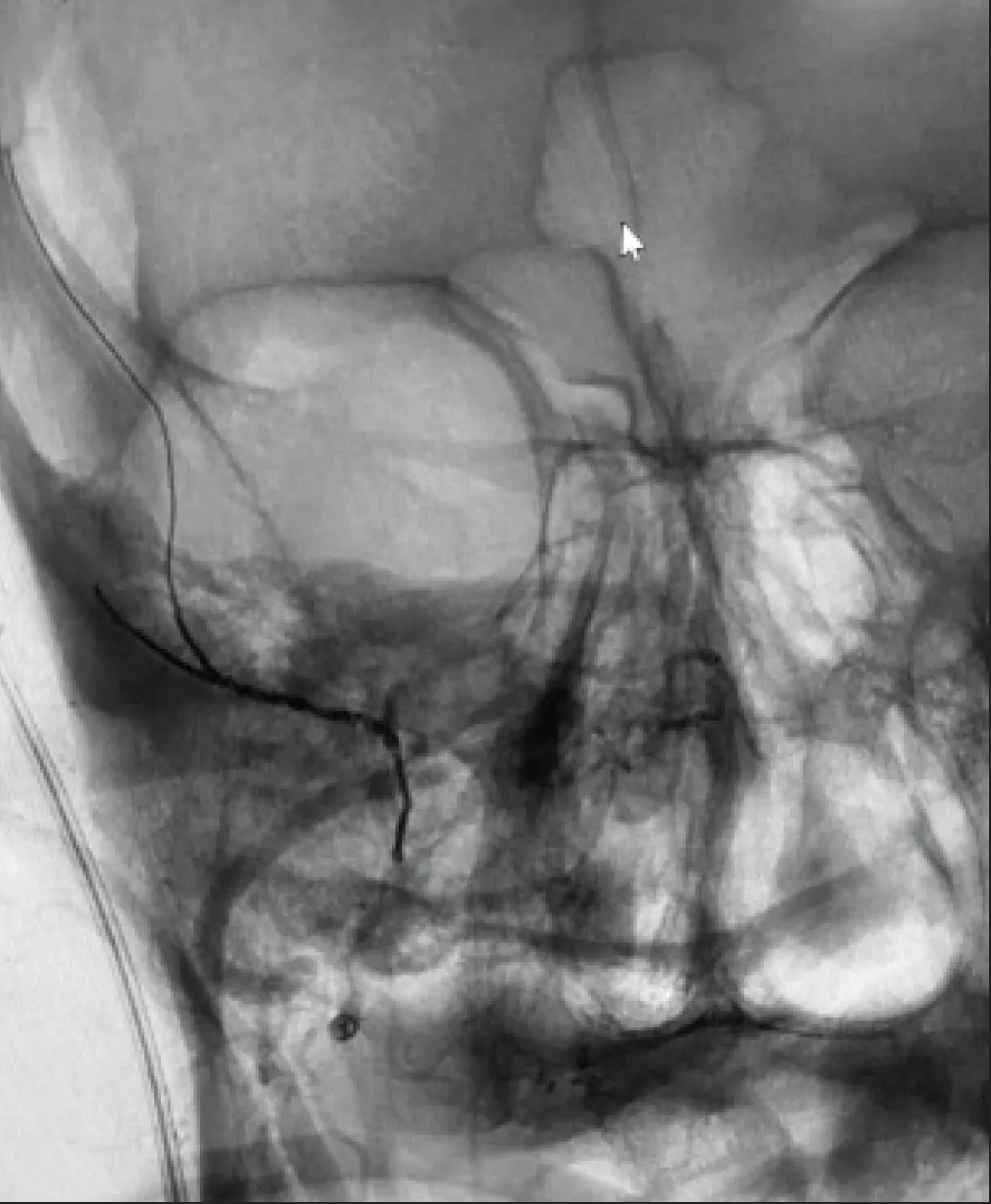
Figure 3. Interval coil embolization of the right MMA with SwiftPAC.
CONCLUSION
The patient stopped seizing and was discharged home with family. The large, acute-on-chronic right-sided SDH decreased in size and was smaller on follow-up imaging.
MAXILLARY ARTERY EMBOLIZATION PRIOR TO TEMPOROMANDIBULAR JOINT REPLACEMENT
Temporomandibular joint (TMJ) replacement is performed to improve jaw function and reduce pain after damage to the joint. TMJ replacement may be recommended for patients with severe arthritis of the jaw, ankylosis, jaw joint tumors, or trauma to the jaw joint. Due to the deep collateral circulation and poor visibility of the operative area, the procedure can result in large-volume blood loss from the internal maxillary artery.13 Without appropriate management, large-volume blood loss can require blood transfusions, which incur a variety of additional risks.14
Multiple strategies have been used to control this intraoperative bleeding. Common approaches include administration of tranexamic acid and internal maxillary artery (IMAX) embolization.13,14 While there is no definitive frontline approach, preoperative IMAX embolization is gaining popularity as a strategy for preventing intraprocedural bleeding altogether.13
Preliminary data suggest that preoperative embolization may be a safe and effective technique for minimizing blood loss during TMJ replacement. However, researchers have expressed concern that liquid embolics may increase the risk of inadvertent embolization of the vasa nervorum, orbital vessels, or cerebral vessels. Coil embolization may be a preferred approach, as this technique enables precise deployment in the desired IMAX segment while mitigating risk of off-target embolization.13 “The SwiftPAC coil is able to seek out small spaces and act like liquid metal. As a coil, it allowed for a controlled deployment I could reposition,” commented Nitin Goyal, MD, an endovascular neurologist at Semmes Murphey Clinic in Memphis, Tennessee.
Successful preoperative embolization of the IMAX should reduce intraprocedural blood loss without incurring additional complications. Although prospective research is needed, a recent retrospective analysis found that preoperative coil embolization of the IMAX significantly reduced blood loss while maintaining a low rate of complications.15 Thus, IMAX embolization represents a promising option for improving the safety profile of TMJ replacement.
CASE 4: IMAX EMBOLIZATION ADDRESSED WITH SWIFTPAC COILS

CASE PRESENTATION
A man in his late 60s presented with chronic temporal mandibular joint disorder. Oral and maxillofacial surgery (OFMS) found end-stage degenerative joint disease and chronic TMJ arthralgia; the optimal treatment was determined to be total TMJ replacement. The OFMS surgeon requested preoperative embolization of the right IMAX to decrease intraoperative blood loss.
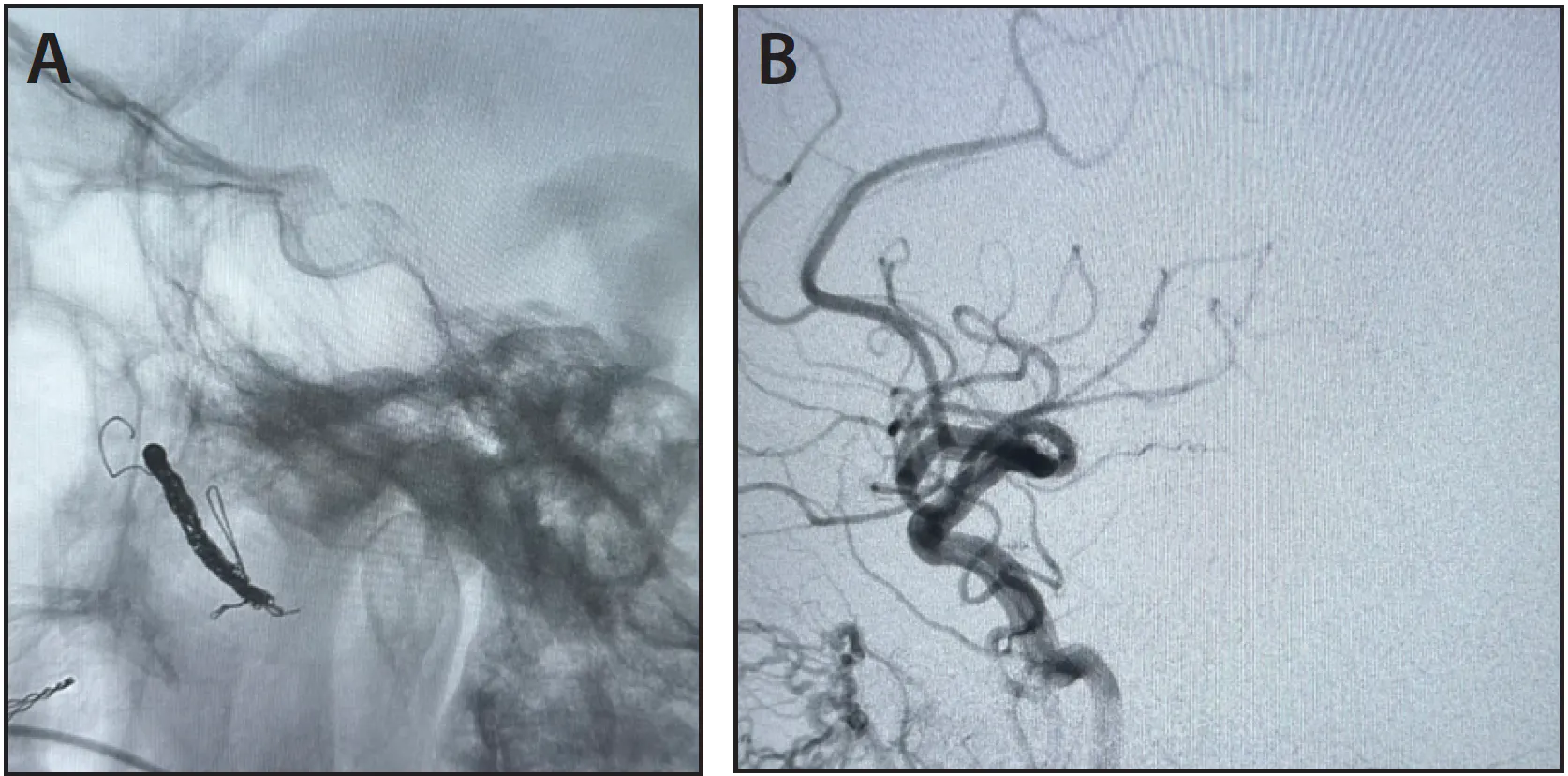
Figure 4. A lateral native angiogram demonstrated a coil mass in the right IMAX (A). The right external carotid artery run lateral projection demonstrated adequate coil embolization of the right IMAX (B).
INTERVENTION
Access was obtained with BENCHMARK 071 and a 5-F Select™ Catheter (Penumbra, Inc.). Embolization was completed with a 3-mm X 10-cm SwiftSET Coil, 60-cm SwiftPAC, and 10-cm SwiftPAC. The surgery was performed the next day with minimal blood loss and no complications. The patient’s pain was much better postsurgery.
Disclaimer: The opinions and clinical experiences presented herein are for informational purposes only. The results may not be predictive of all patients. Individual results may vary depending on a variety of patient-specific attributes.
Disclosures
Dr. Nouri: None.
Dr. Starke: Research is supported by the Codina Kadre Endowed Chair in Neurosurgery, Neurosurgery Research & Education Foundation, Joe Niekro Foundation, Brain Aneurysm Foundation, Bee Foundation, The Aneurysm and AVM Foundation, Florida Department of Health James and Esther King Biomedical Research Program 21K02, National Institutes of Health (R01NS111119-01A1), National Center for Advancing Translational Sciences of the National Institutes of Health (UL1TR002736/ UM1TR004556), and National Institutes of Health 1R41NS134425-01A1 (content is solely the responsibility of the authors and does not necessarily represent the official views of the National Institutes of Health); consulting and teaching agreements with Penumbra, Abbott, Balt, Kaneka, Medtronic, Stryker, Microvention, and Integer PPF.
Dr. Strickland: Consultant to and speaker for Penumbra, Inc.
Dr. Goyal: Consultant to Penumbra and Stryker; receives research support from Penumbra and Medtronic.
1. Henderson AD, Miller NR. Carotid-cavernous fistula: current concepts in aetiology, investigation, and management. Eye. 2018;32:164-172. doi: 10.1038/eye.2017.240
2. Texakalidis P, Tzoumas A, Xenos D, et al. Carotid cavernous fistula (CCF) treatment approaches: a systematic literature review and meta-analysis of transarterial and transvenous embolization for direct and indirect CCFs. Clin Neurol Neurosurg. 2021;204:106601. doi: 10.1016/j.clineuro.2021.106601
3. Hoffman H, Ashok Kumar A, et al. Outcomes after endovascular treatment of direct carotid cavernous fistulas: systematic review and meta-analysis. World Neurosurg. 2022;168:e598-e610. doi: 10.1016/j.wneu.2022.10.123
4. Barrow Neurological Institute. Brain arteriovenous malformation (AVM). Accessed May 18, 2026. https://www.barrowneuro.org/condition/arteriovenous-malformation-avm/
5. Johns Hopkins Medicine. Arteriovenous malformations. Accessed May 18, 2026. https://www.hopkinsmedicine.org/health/conditions-and-diseases/arteriovenous-malformations.
6. Cleveland Clinic. Arteriovenous malformation (AVM). October 27, 2023. Accessed May 18, 2026. https://my.clevelandclinic.org/health/diseases/16755-arteriovenous-malformation-avm
7. Derdeyn CP, Zipfel GJ, Albuquerque FC, et al; American Heart Association Stroke Council. Management of brain arteriovenous malformations: a scientific statement for healthcare professionals from the American Heart Association/American Stroke Association. Stroke. 2017;48:e200-e224. doi: 10.1161/STR.0000000000000134
8. Kan P, Fiorella D, Dabus G, et al; ARISE I Academic Industry Roundtable. ARISE I consensus statement on the management of chronic subdural hematoma. Stroke. 2024;55:1438-1448. doi: 10.1161/STROKEAHA.123.044129
9. Rai AT, Halak AA, Lakhani DA, et al. Population-based estimates suggest middle meningeal artery embolization for subdural hematomas could significantly expand the scope of neurovascular therapies. J Neurointerv Surg. 2025;17:438-443. doi: 10.1136/jnis-2024-021686
10. Tudor T, Capone S, Vivanco-Suarez J, et al. Middle meningeal artery embolization for chronic subdural hematoma: a review of established and emerging embolic agents. Stroke Vasc Interv Neurol. 2024;4:e000906. doi: 10.1161/SVIN.123.000906
11. NeuroNews International. Procedural choices matter but vascular penetration has minimal impact on MMAe outcomes, new analyses find. December 5, 2025. Accessed May 27, 2026. https://neuronewsinternational.com/procedural-choices-matter-but-vascular-penetration-has-minimal-impact-on-mmae-outcomes-new-analyses-find/
12. Santiago RB, Dengri C, Kaye B, et al. Natural history of chronic subdural hematoma following middle meningeal artery embolization: a retrospective analysis. World Neurosurg. 2025;194:123501. doi: 10.1016/j.wneu.2024.11.084
13. Santillan A, Hee Sur M, Schwarz J, et al. Endovascular preoperative embolization for temporomandibular joint replacement surgery. Interv Neuroradiol. 2020;26:167-173. doi: 10.1177/1591019919880426
14. Entezari B, Wolford LM, Gunn DC, et al. Tranexamic acid use intra-operatively decreases the need for blood transfusions and post-operative edema in temporomandibular joint surgeries. Cureus. 2022;14:e31569. doi: 10.7759/cureus.31569
15. Sujijantarat N, Padmanaban V, Smith WJ, et al. Pre-operative internal maxillary artery embolization for temporomandibular joint replacement: safety and outcomes from a 10-year institutional experience. J Neurointerv Surg. 2026;18:527-531. doi: 10.1136/jnis-2024-022975
Advertisement
Advertisement