Advertisement
Advertisement
June 2026
Intracranial Aneurysms: Trials for Intrasaccular Devices in the United States
An update on the United States clinical trial landscape and evolving evidentiary standards for intrasaccular flow disruption.
By Anthony P. Terraciano, BS; Khushal Gupta, MBBS; and David J. Altschul, MD
Wide neck bifurcation aneurysms remain among the most technically challenging lesions in endovascular practice. Conventional coil embolization is limited by instability and recurrence in unfavorable dome-to-neck ratios. Adjunctive techniques such as balloon remodeling and stent-assisted coiling expand options but increase complexity and require dual antiplatelet therapy (DAPT), which is problematic in ruptured aneurysms and patients at high bleeding risk.
Flow diversion transformed the management of sidewall aneurysms by promoting endothelialization across the aneurysm neck. However, at bifurcation sites, branch incorporation and continued antiplatelet requirements can limit its applicability.1,2 These limitations created the need for a strategy that promotes aneurysm thrombosis while preserving the parent circulation without long-term antiplatelet therapy.
Intrasaccular flow disruptors were introduced to address this gap. The Woven EndoBridge (WEB) device (Terumo Neuro) entered European practice in the early 2010s and was subsequently evaluated in the United States through the WEB-IT trial, leading to FDA approval in 2018.3,4 Early clinical experience demonstrated favorable safety and reproducibility across multiple centers, with high rates of adequate occlusion in wide neck bifurcation aneurysms. Longer-term follow-up clarified its durability and highlighted an important distinction between adequate occlusion and complete aneurysm cure.5
Intrasaccular flow disruptors were introduced almost entirely through prospective investigational device exemption (IDE) trials incorporating standardized composite endpoints, independent core laboratory imaging review, and adjudicated safety outcomes. This article focuses on the United States clinical trial landscape and evolving evidentiary standards for intrasaccular flow disruption.
WEB DEVICE
The clinical foundation for intrasaccular therapy in the United States was established by the WEB-IT trial, a prospective, multicenter IDE study that enrolled 150 patients across 27 centers with wide neck bifurcation aneurysms located at the middle cerebral artery (MCA) bifurcation, basilar apex, anterior communicating artery, and internal carotid artery terminus.3,4 WEB-IT evaluated performance across diverse practice settings.
At 12 months, adequate occlusion was achieved in approximately 85% of treated aneurysms, with complete occlusion observed in 50% to 55%.3 Major morbidity and mortality were low, confirming safety. These findings were pivotal in securing FDA approval and establishing the device as a viable alternative to reconstructive strategies in appropriately selected lesions.
Long-term follow-up further clarified the durability profile of the technology. At 5 years, stable or improved occlusion was observed in approximately 87% of cases, with retreatment required in about 11%, most occurring within the first year.5 No delayed aneurysm ruptures were reported.
Compared with clipping (> 90%) and stent-assisted coiling (65%-80%), intrasaccular therapy improves safety and avoids long-term antiplatelet therapy but has lower complete occlusion rates.6-8 The CLARYS study confirmed safety without DAPT in ruptured aneurysms with a 0% incidence of rebleed events.9 The CLEVER study demonstrated continued improvements in outcomes and similar occlusion rates with the WEB 17 system.10
However, complete occlusion rates remain suboptimal. There is still some debate as to what constitutes an adequate occlusion, and the significance of residual neck filling remains unclear. As a result, durability and the need for retreatment are key considerations for future research.
EMERGING AND ONGOING UNITED STATES TRIALS
Several next-generation platforms are being evaluated in the United States, focusing on improving neck coverage and durable occlusion (Table 1).5,11-21 Representative angiographic outcomes across multiple intrasaccular platforms are shown in Figure 1, Figure 2, Figure 3, and Figure 4.
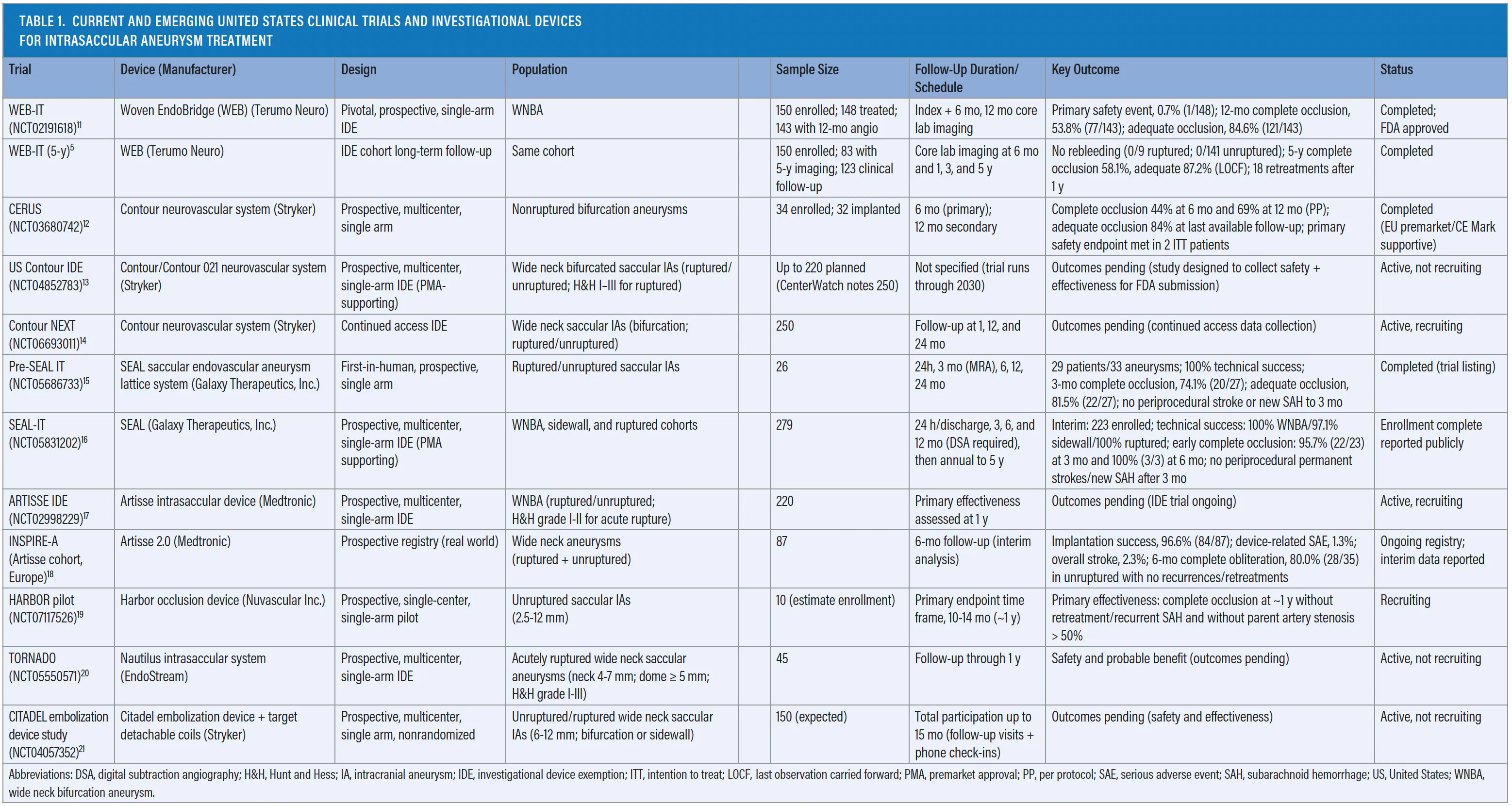
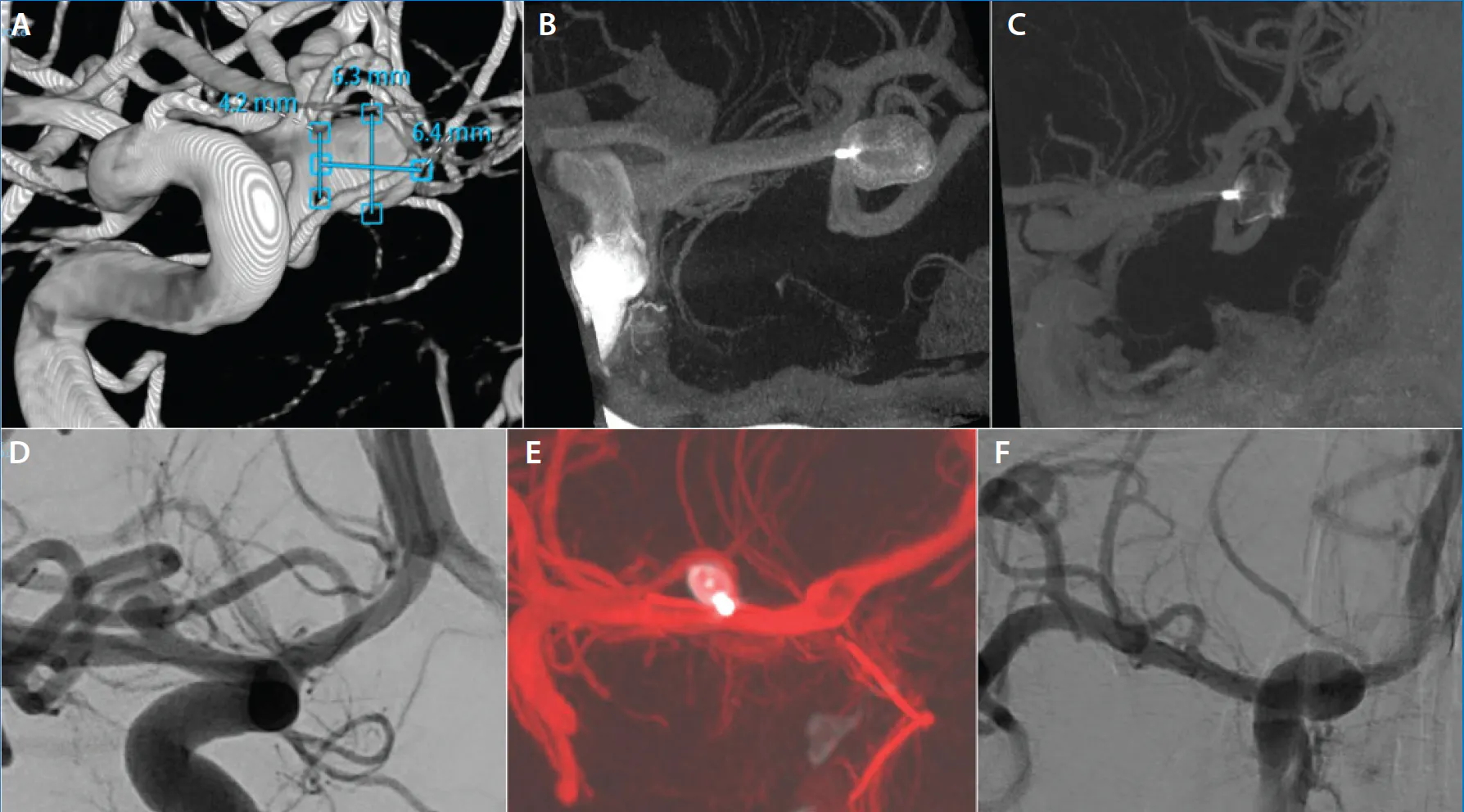
Figure 1. Representative Galaxy device cases. Left MCA aneurysm treated with a 9- X 3-mm Galaxy device showing pretreatment angiographic anatomy, immediate postdeployment, and 12-month follow-up with stable occlusion (A-C). Right MCA aneurysm treated with a 4- X 4-mm Arc Galaxy device demonstrating durable occlusion at 12 months (D-F).
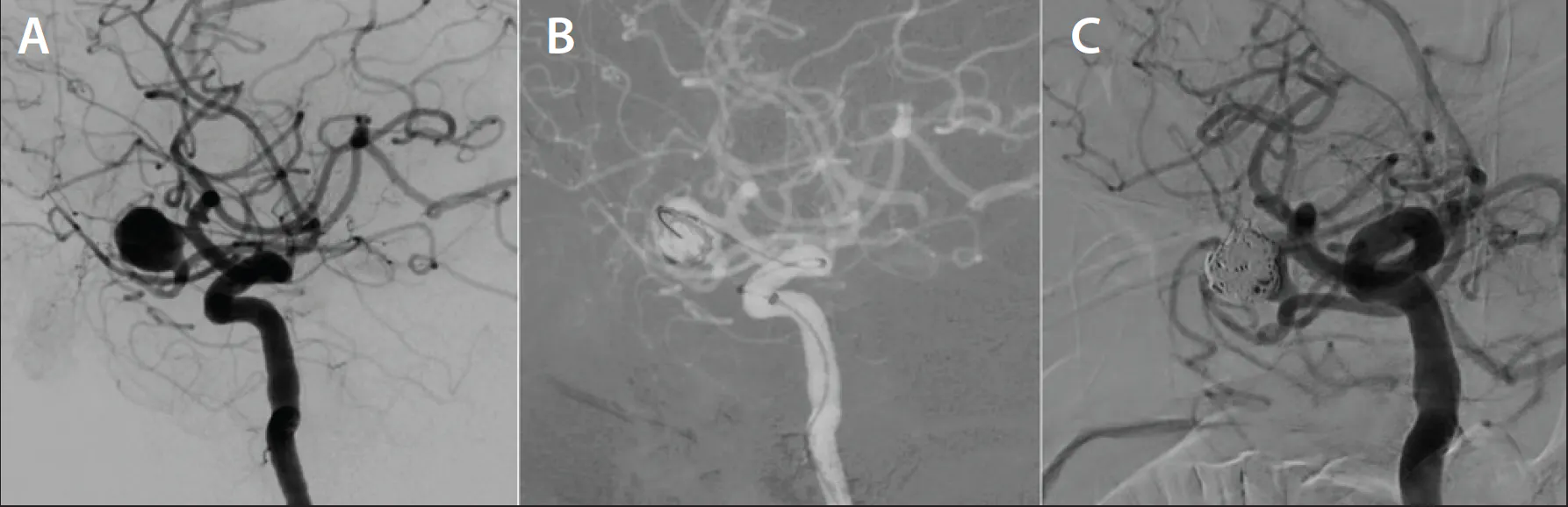
Figure 2. Right MCA aneurysm treated with the Trenza device (Stryker). Pretreatment angiography (A), immediate postdeployment angiography (B), and 12-month follow-up demonstrating maintained aneurysm occlusion (C).
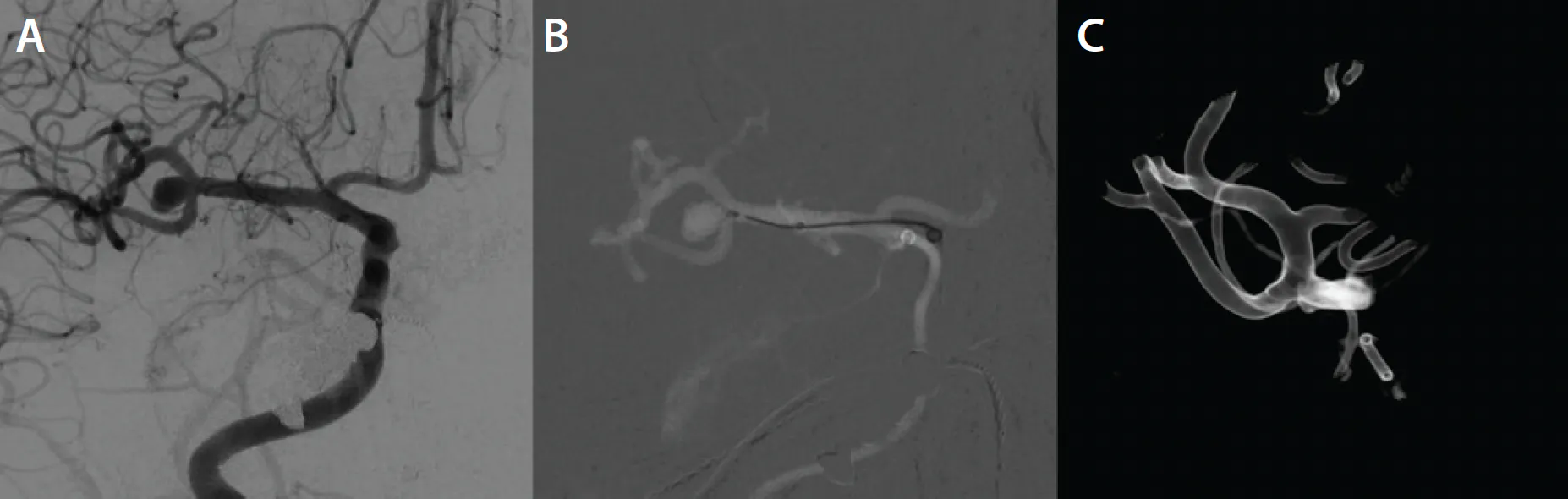
Figure 3. Right MCA aneurysm treated with the Contour device (5 mm). Pretreatment angiography (A), immediate postdeployment angiography (B), and 12-month follow-up demonstrating adequate aneurysm occlusion (C).
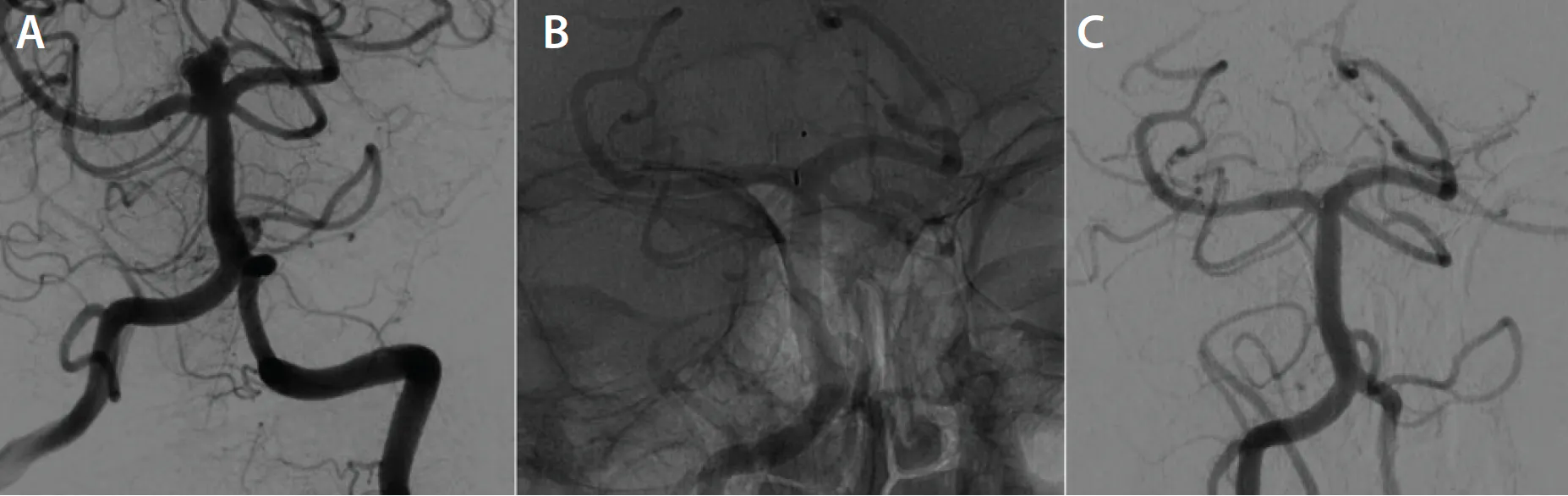
Figure 4. Basilar apex aneurysm treated with the WEB device (7 X 3 mm SL). Pretreatment angiography (A), immediate postdeployment angiography (B), and 12-month follow-up demonstrating stable aneurysm occlusion (C).
The SEAL saccular endovascular aneurysm lattice system (Galaxy Therapeutics, Inc.) is a next-generation platform being evaluated in the SEAL-IT pivotal trial (NCT05831202).16 Preliminary data from the first 254 treated patients demonstrated a 100% technical success rate and an 84.5% complete occlusion rate on early imaging, suggesting the potential for improved complete occlusion compared with earlier-generation devices.16,22
The Artisse intrasaccular device (Medtronic) represents another evolution in design.17 This flared nickel-titanium intrasaccular flow disruptor is engineered to improve circumferential wall contact in wide neck bifurcation aneurysms and is delivered through a 0.021-inch microcatheter. The ongoing United States ARTISSE IDE study (NCT02998229) is actively recruiting and is expected to complete primary data collection by 2027. European registry experience from the INSPIRE-A study (NCT02988128) demonstrated a 96.6% implantation success rate and 80% complete obliteration of unruptured aneurysms at 6 months,18 supporting continued evaluation in a regulated United States trial setting.
The Harbor occlusion device (Nuvascular Inc.) is being evaluated in a United States pilot IDE study (NCT07117526), assessing 1-year occlusion without retreatment or parent artery narrowing in patients with a single, unruptured intracranial aneurysm.19
The Contour neurovascular system (Stryker) has shown feasibility and adequate occlusion in European studies, and a United States IDE has completed enrollment and is awaiting primary outcome results.12,23-25 The Neqstent coil-assisted flow diverter (Stryker), which acts as a neck bridging device, is not available in the United States but is used regularly in Europe. The Nautilus intrasaccular system (EndoStream) uses a similar approach to the Neqstent, with early feasibility data completed in the United States.26 Currently, this system is being submitted for humanitarian device exemption approval to the FDA. The Citadel embolization device (Stryker) offers a different endosaccular approach, using a braided coil matrix to act as a neck bridge.21 The IDE trial has completed enrollment, and we are awaiting primary outcome data.
No randomized comparisons with established treatments exist, and future work should focus on durability and comparative effectiveness.
LIMITATIONS AND FUTURE DIRECTIONS
Despite encouraging safety and midterm durability data, several limitations continue to define the current evidence base for intrasaccular therapy. Most notably, no randomized controlled trials have directly compared intrasaccular flow disruption with competing reconstructive endovascular strategies or microsurgical clipping. Existing comparisons rely on observational data and are subject to selection bias and confounding variables.2,27
Reliance on composite endpoints such as 12-month adequate occlusion may not reflect true cure, and variability in grading and follow-up complicates comparisons.28 Moreover, durability data beyond 5 years remain limited and are influenced by loss to follow-up and heterogeneous imaging surveillance strategies.5,24 Modest IDE cohort sizes limit evaluation across diverse aneurysm types. Of particular interest is the role of intrasaccular technology for sidewall aneurysms, but data are limited. The SEAL-IT trial evaluating the SEAL system does have a sidewall aneurysm arm, and prospective data should be forthcoming.
Additional gaps include lack of standardized retreatment criteria, limited cost data, and minimal patient-reported outcomes. These omissions are increasingly relevant in the management of unruptured aneurysms, where decision-making is often preference-sensitive and influenced by perceived invasiveness, durability, surveillance burden, and anxiety related to residual filling.29,30
Future progress in intrasaccular therapy depends on moving beyond feasibility and regulatory milestones toward long-term durability and comparative effectiveness. Pragmatic randomized trials, registry-embedded studies, and adaptive trial designs offer potential pathways for evaluating new devices in real-world populations while maintaining methodologic rigor and generalizability.31,32 Greater standardization of occlusion grading, imaging protocols, and retreatment thresholds would further enhance interpretability across studies. Finally, incorporation of patient-centered outcomes, including quality of life and treatment burden, should complement angiographic endpoints to better reflect the realities of contemporary aneurysm care.
CONCLUSION
In the United States, trials of intrasaccular flow disruption have moved beyond feasibility to focus on achieving durable complete occlusion while maintaining safety. The WEB-IT study is a key example, showing low early complications and strong occlusion rates at 12 months, with good results over longer follow-up. As new devices and designs are developed, upcoming results will focus on durability, retreatment rates, and consistent long-term follow-up. In the end, the role of next-generation intrasaccular devices will depend on their durability beyond 1 year, consistent retreatment criteria, and how they compare to reconstructive endovascular and microsurgical treatments, along with better identification of which aneurysm types and patient groups will benefit most.
1. DeMessie B, Vaishnav D, Karandish A, et al. Review of endosaccular flow disrupters for wide-neck aneurysm treatment. Cardiol Rev. Published online January 30, 2025. doi: 10.1097/CRD.0000000000000869
2. Shao MM, White TG, Bassett JB, et al. Intrasaccular treatment of intracranial aneurysms: a comprehensive review. J Clin Med. 2024;13:6162. doi: 10.3390/jcm13206162
3. Arthur AS, Molyneux A, Coon AL, et al. The safety and effectiveness of the Woven EndoBridge (WEB) system for the treatment of wide-necked bifurcation aneurysms: final 12-month results of the pivotal WEB Intrasaccular Therapy (WEB-IT) study. J Neurointerv Surg. 2019;11:924-930. doi: 10.1136/neurintsurg-2019-014815
4. Fiorella D, Molyneux A, Coon A, et al. Demographic, procedural and 30-day safety results from the WEB Intra-saccular Therapy Study (WEB-IT). J Neurointerv Surg. 2017;9:1191-1196. doi: 10.1136/neurintsurg-2016-012841
5. Fiorella D, Molyneux A, Coon A, et al. Safety and effectiveness of the Woven EndoBridge (WEB) system for the treatment of wide necked bifurcation aneurysms: final 5 year results of the pivotal WEB Intra-saccular Therapy study (WEB-IT). J Neurointerv Surg. 2023;15:1175-1180. doi: 10.1136/jnis-2023-020611
6. Kabbasch C, Goertz L, Siebert E, et al. WEB embolization versus stent-assisted coiling: comparison of complication rates and angiographic outcomes. J Neurointerv Surg. 2019;11:812-816. doi: 10.1136/neurintsurg-2018-014555
7. Naamani KE, Chen CJ, Abbas R, et al. Woven EndoBridge versus stent-assisted coil embolization of cerebral bifurcation aneurysms. J Neurosurg. 2022;137:1786-1793. doi: 10.3171/2022.3.JNS2217
8. Kashkoush A, El-Abtah ME, Srivatsa S, et al. Comparative effectiveness of stent-assisted coiling and Woven EndoBridge embolization for the treatment of unruptured wide-neck bifurcation intracranial aneurysms. J Neurosurg. 2023;138:1487-1493. doi: 10.3171/2022.10.JNS221138
9. Spelle L, Herbreteau D, Caroff J, et al. Clinical assessment of WEB device in ruptured aneurysms (CLARYS): results of 1-month and 1-year assessment of rebleeding protection and clinical safety in a multicenter study. J Neurointerv Surg. 2022;14:807-814. doi: 10.1136/neurintsurg-2021-017416
10. Spelle L, Costalat V, Caroff J, et al. Clinical evaluation of WEB 17 device in intracranial aneurysms (CLEVER): 1-year effectiveness results for ruptured and unruptured aneurysms. J Neurointerv Surg. 2025;17:878-882. doi: 10.1136/jnis-2024-021918
11. The WEB-IT clinical study (WEB-IT). Clinicaltrials.gov website. Accessed April 22, 2026. https://clinicaltrials.gov/study/NCT02191618
12. Contour neurovascular system–European pre-market unruptured aneurysm study (CERUS). Clinicaltrials.gov website. Accessed April 22, 2026. https://clinicaltrials.gov/study/NCT03680742
13. US IDE study of the Contour Neurovascular System™ for intracranial aneurysm repair (NECC). Clinicaltrials.gov website. Accessed April 22, 2026. https://clinicaltrials.gov/study/NCT04852783
14. Contour Neurovascular System™ continued access investigational device exemption (IDE) trial (NEXT Trial) (NEXT). Clinicaltrials.gov website. Accessed April 22, 2026. https://clinicaltrials.gov/study/NCT06693011
15. Pre-SEAL™ IT: saccular endovascular aneurysm lattice system first in human interventional trial (Pre-SEAL™ IT). Clinicaltrials.gov website. Accessed April 22, 2026. https://clinicaltrials.gov/study/NCT05686733.
16. SEAL IT: saccular endovascular aneurysm lattice system interventional pivotal trial. Clinicaltrials.gov website. Accessed April 22, 2026. https://clinicaltrials.gov/study/NCT05831202
17. The Artisse™ intrasaccular device is indicated for the treatment of wide-neck bifurcating intracranial aneurysms (IAs) (ARTISSE). Clinicaltrials.gob website. Accessed April 22, 2026. https://clinicaltrials.gov/study/NCT02998229
18. Hohenstatt S, Costalat V, Dargazanli C, et al. New Artisse intrasaccular device for intracranial aneurysm treatment: short term clinical and angiographic result from the prospective registry INSPIRE-A. J Neurointerv Surg. 2026;18:558-567. doi: 10.1136/jnis-2024-022576
19. Nuvascular Harbor occlusion device pilot study. Clinicaltrials.gov website. Accessed April 22, 2026. https://clinicaltrials.gov/study/NCT07117526
20. A medical device to treat wide-neck brain aneurysms (TORNADO-US). Clinicaltrials.gov website. Accessed April 22, 2026. https://clinicaltrials.gov/study/NCT05550571
21. Citadel embolization device study. Clinicaltrials.gov website. Accessed April 22, 2026. https://clinicaltrials.gov/study/NCT04057352
22. Jankowitz B, Altschul D, Boo S, et al. A340 | Update on the saccular endovascular aneurysm lattice system interventional pivotal trial (SEAL IT). J Neurointerv Surg. 2025;17(suppl 2):A10-A11. https://doi.org/10.1136/jnis-2025-ESMINT.19
23. Günkan A, Scarcia L, Ferreira MY, et al. Safety and efficacy of the Contour Neurovascular System for treating intracranial aneurysms: a systematic review and meta-analysis. J Neurointerv Surg. 2025;18:26-33. doi: 10.1136/jnis-2024-022461
24. Ktayen H, Akhunbay-Fudge CY, Tyagi AK, et al. Endovascular treatment of wide-neck intracranial aneurysms using the novel Contour neurovascular system: 5-year follow-up. AJNR Am J Neuroradiol. 2025;46:1387-1394. doi: 10.3174/ajnr.A8641
25. Liebig T, Killer-Oberpfalzer M, Gal G, et al. The safety and effectiveness of the Contour neurovascular system (Contour) for the treatment of bifurcation aneurysms: the CERUS study. Neurosurgery. 2022;90:270-277. doi: 10.1227/NEU.0000000000001783
26. Sirakov A, Bhogal P, Sirakova K, et al. Intrasaccular neck-bridging: A technical note on Nautilus-assisted coiling of wide-necked cerebral aneurysms. Feasibility study, immediate and early angiographic results. Interv Neuroradiol. 2022;28:746-755. doi: 10.1177/15910199221113738
27. Chen CJ, Dabhi N, Snyder MH, et al. Intrasaccular flow disruption for brain aneurysms: a systematic review of long-term outcomes. J Neurosurg. 2022;137:360-372. doi: 10.3171/2021.9.JNS211706
28. Volovici V, Verploegh IS, Satoer D, et al. Outcomes associated with intracranial aneurysm treatments reported as safe, effective, or durable: a systematic review and meta-analysis. JAMA Netw Open. 2023;6:e2331798. doi: 10.1001/jamanetworkopen.2023.31798
29. King JT Jr, Tsevat J, Roberts MS. Measuring preference-based quality of life using the EuroQol EQ-5D in patients with cerebral aneurysms. Neurosurgery. 2009;65:565-572. doi: 10.1227/01.NEU.0000350980.01519.D8
30. Rinkel GJE, Ruigrok YM, Krings T, et al. Advances in screening and management of unruptured intracranial aneurysms. Lancet Neurol. 2025;24:958-968. doi: 10.1016/S1474-4422(25)00265-0
31. Raymond J, Iancu D, Boisseau W, et al. Flow diversion in the treatment of intracranial aneurysms: a pragmatic randomized care trial. AJNR Am J Neuroradiol. 2022;43:1244-1251. doi: 10.3174/ajnr.A7597
32. Buccheri S, James S, Mafham M, et al. Large simple randomized controlled trials-from drugs to medical devices: lessons from recent experience. Trials. 2025;26:24. doi: 10.1186/s13063-025-08724-x
Advertisement
Advertisement