Advertisement
Advertisement
March 2026
An Interview With Parag J. Patel, MD, MS, FSIR
Dr. Patel discusses building a multidisciplinary collaborative vascular practice, advancing global IR, shaping the next generation of interventional radiologists, and more.
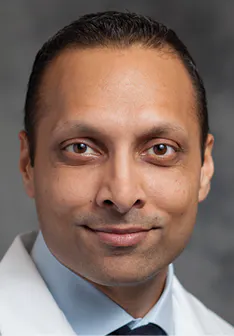
Your practice expertise spans a wide range—complex aortic disease, peripheral vascular disease, venous disease, and embolization, to name a few. How would you characterize the specific type of practice you’ve built over the course of your career, and how did your interests evolve over time?
While I truly enjoy the mix of complex diseases in my practice, I wouldn’t say that I exactly planned it this way. Much of my success has been from taking advantage of opportunities that presented themselves. Rather than focusing on a specific clinical path, I chose to do the things that I was involved in as well as I possibly could. For me, doing things well involved detailed preparation for complex procedures, responsiveness to referrals outside of “normal hours,” recruitment into clinical trials, publication of outcomes, and development of educational programs for trainees, nurses, and techs.
I was always interested in “vascular” disease—for which I include aortic, peripheral artery disease (PAD), and venous interventions. I was fortunate to join an academic practice that was well ahead of other practices regarding collaborative multidisciplinary work in the world of vascular disease. This modeled the experience that I had in my training program and served as a productive environment for my own development. For that, I owe the leaders past and present in my practice within interventional radiology (IR) and vascular surgery (VS) for my success. I try to pay it forward with strong support for our integrated training programs within IR and VS. Each trainee benefits from the knowledge and experience shared with their vascular colleagues in training and hopefully brings that collaborative nature into their future practices.
What advice would you share for up-and-coming physicians wondering whether to build a practice razor-focused on a specific condition or focus more broadly on a variety of conditions?
Early career physicians face different challenges but also have newer opportunities than we did. It used to be that expertise was largely found in the academic centers, and while that still exists to some degree, there is a growing number of opportunities for physicians who own and run their own practices. These practices are often razor-focused on a few specific disease areas—PAD, venous disease, or embolization therapy come to mind.
Regardless of the practice environment, doing a lot of procedures alone does not make one an expert, but it is hard to be an expert if you do not do a lot of procedures.
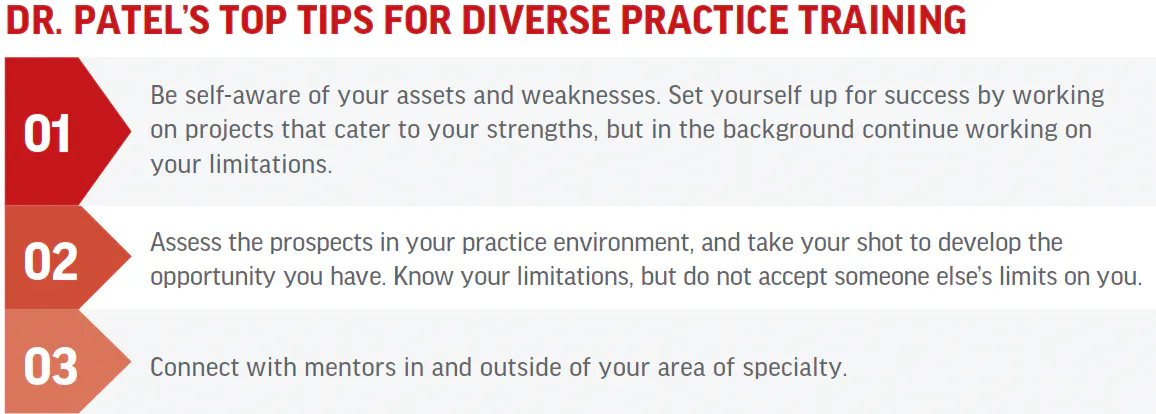
Know the literature, become an expert in the disease process, care for and follow up with your patients, track and report your outcomes, and, in time, you will become an expert in that field. Combine that with mentors who serve as a sounding board and perhaps supply sponsorship of your work, and you will likely be recognized for clinical trial participation, invitation for guidelines development, or invited lectures. Continue to do the good work, and more of the above will come. The best part is when you can serve as the mentor to support someone who was in your position not too long ago.
One common thread to your work in recent years is the idea of global IR, with a 2024 survey highlighting worldwide gaps in patient awareness and dedicated IR training.1 How can the global IR community work together to advance more unified standards in training and increased awareness efforts?
This was work that came from my time in Society of Interventional Radiology (SIR) leadership. SIR served as global leaders in establishing primary specialty recognition of IR in the United States. This hinged on recognition that IRs must take ownership (clinical care) of the disease process in the patients they treat. This moved us from procedural technicians to clinical proceduralists. We have had some success outside the United States, but most nations have struggled to gain primary specialty recognition and, in some cases, subspecialty recognition within their countries. All politics are local, and we (SIR and the Cardiovascular and Interventional Radiological Society of Europe [CIRSE], our partner in global outreach) opted to focus our efforts on IR training throughout the world and increasing patient awareness on the role IR can play in the care of their disease. If we continue to focus on disease expertise in IR training and increase patient awareness, it is likely that specialty recognition will follow. Without the former, there is no way to accomplish the latter.
To that end, SIR and CIRSE convene a Global IR Summit at each of their meetings where IR societies around the world connect to share challenges and solutions in their respective environments. We must continue shining light on this if we want to move forward. I think it is important that IR is viewed similarly by patients and clinicians in the global health care landscape, whether you are in Europe, Asia, or the Americas.
You’ve dedicated much of your career to teaching and mentoring. How has your approach to mentorship changed as you’ve moved from trainee to faculty to leadership?
Like most of my peers, I am a product of hard work and beneficial mentorship. I have seen successful mentors, and others that are less so. What I quickly realized is that the mentor-mentee relationship is absolutely a two-way street. The mentor can provide great insight, drawing from their experience, but if it is not congruent with the mentee’s needs, it will miss the mark. The mentee must have a sense of purpose, and they need to drive the relationship. This comes with self-awareness and the knowledge that a mentor is there to guide, not to do the work. The mentee comes with purposeful tasks, remains accountable to the stated goals, and drives the logistics of the relationship. The mentor is generous with their time, an exceptional listener, surveys the landscape, and helps guide the path forward. Their reward is a mentee realizing their own success.
What principles guide how you structure IR training within your role as Program Director of the IR Residency Program at Medical College of Wisconsin (MCW)? How do you prepare trainees for the realities of today’s clinical IR practice?
We are proud of the program that we have developed at MCW. The principles of high expectations, uncompromising standards, and prompt, honest feedback have driven our success. We have found that trainees are willing to meet or exceed expectations when they are explicitly stated. This is a change from my time in training, where the mantra was more like “work hard and don’t screw it up.” Current trainees don’t want to screw it up and will meet the hard work if the expectations are more clearly stated. This often means being more deliberate with guidance, prompt feedback on what needs to be corrected, and, equally important, positive feedback on what was done well. This may seem exhausting to newer program directors, but the standard is the standard, and if we want to maintain our program standard, we need to adjust to the current environment.
From your perspective on the VIVA Board of Directors, how can educational programs complement institutional efforts to create consistent, contemporary training experiences?
Educational programs are vital to supplementing contemporary training programs. Trainees value camaraderie, shared experiences, networking, and opportunities to connect with peers and mentors. They also benefit from a space where multiple specialties operate to hear about techniques, approaches, complication management, and latest clinical data in an environment that may be more balanced than in their own training. VIVA is distinctively positioned to provide this as the board and leadership is uniquely structured, with a balance of four different vascular specialties. Specialty egos are left at the door, and we look to do the good work of advocating, educating, and supporting research in all things vascular. The care of patients with vascular disease should not be siloed; neither should the education.
In a publication on ruptured abdominal aortic aneurysms (rAAAs), you reiterated the importance of a coordinated multidisciplinary pathway for management.2 What key elements of this treatment algorithm at your institution have you seen make the biggest difference in patient outcomes? What advice would you give to other leaders seeking to build or refine a multidisciplinary approach to aortic emergencies?
Shared expertise and participation in any clinical area requires some degree of shared ownership. Long ago, we recognized that no specialty can, nor should, expect to do the work during 9 AM to 5 PM, if they are not also willing to take care of that work or those patients from 5 PM to 9 AM. Our emergency vascular response or rAAA response accounts for patients inside and outside our health care system. Most patients, if they survive, will undergo some type of emergent endovascular attempt at repair. Often, these require creative solutions for challenging anatomies. We have moved from an era of strictly infrarenal endovascular aneurysm repair devices needing to meet instructions for use requirements to an era of physician-modified or off-the-shelf solutions for challenging anatomies in sick patients. Interventional radiologists and vascular surgeons respond to every rAAA, and both (with their respective trainees) are involved in the repair. Having two sets of attendings and trainees aids in rapid decision-making, identification of technical challenges, and management of complex disease.
Our response times to rAAAs are faster than any program in the region, with referrals coming in from locations looking to pass over traditionally closer large health systems, academic medical centers, or neighboring states. This requires full commitment from both teams to provide this service. Open surgical repair is not out of the question, which might mean that the IR team that is present may not be involved in the final repair.
You’ve previously discussed your love of hiking and exploring national parks. How do these breaks influence how you show up as a physician and leader?
Outlets for mental clarity and physical well-being are paramount. Our work is physically challenging and requires self-maintenance to do this for a long time. I typically start my day in the gym for some type of cardiovascular or resistance training before heading into work. I found that training for a goal carries parallels in my work life. Steady, continuous work over a period of time typically yields something worth having. Whether you are training for a race or building your reputation in your field of work, it takes consistency and sustained hard work. When I was younger, it was triathlons and obstacle course races, but in the past decade, I have found long-trek hikes to be a worthy goal and provide meaningful time to reflect. I often do not have extended free time in my day-to-day schedule, but deeper reflection in spaces outside my normal environment provides the strongest moments of clarity. I will visit museums or outdoor spaces in cities that I travel to or plan time in national parks. I found that I came back grateful and restored to resume the work that we do.
1. Guan JJ, Elhakim T, Matsumoto MM, et al. Results of a Global survey on the state of interventional radiology 2024. J Vasc Interv Radiol. 2025;36:751-760.e5. doi: 10.1016/j.jvir.2024.12.594
2. Jammeh ML, Rabaza M, Patel PJ. Multidisciplinary management of aortic emergencies: ruptured abdominal aortic aneurysms. Semin Intervent Radiol. 2025;41:531-535. doi: 10.1055/s-0045-1804998
Advertisement
Advertisement
Interested in reading more interviews?
To read more interviews with thought leaders in the vascular field, check out our Profiles & Perspectives hub.
Read More