Advertisement
Advertisement
March 2026
Sponsored by Shockwave Medical
The What, Why, and How of Shockwave’s Peripheral Balloon IVL Platform

Since the introduction of Intravascular Lithotripsy (IVL) with Shockwave M5, Shockwave Medical has continuously partnered with physicians to iterate on its products. Shockwave M5 began as an idea to crack calcium in the femoropopliteal region without much knowledge of the future capabilities of the emerging technology. Early feedback from physicians led the company to develop Shockwave S4, a shorter catheter with smaller-diameter sizes capable of navigating narrow vasculature below the knee (BTK). Since then, Shockwave has launched three new peripheral IVL balloon catheters to improve clinical effectiveness and procedural efficiency of IVL based on physician feedback (Figure 1). This article reviews the purpose of the innovations in Shockwave’s Balloon IVL Platform, including conversations with physicians who have experienced the evolution of IVL’s growing capabilities over the years.
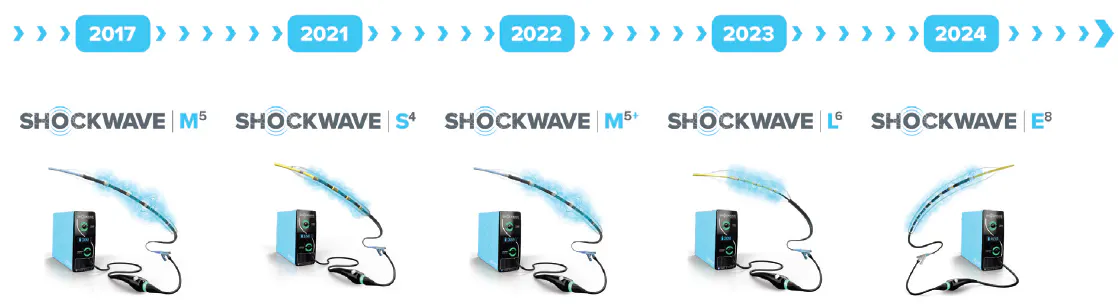
Figure 1. Shockwave’s Balloon IVL Platform is on its fourth and fifth generation with Shockwave L6 and Shockwave E8, respectively.
SHOCKWAVE E8: THE WORK HORSE
In 2024, Shockwave launched their most versatile catheter yet, the Shockwave E8 Peripheral IVL Catheter. At 80-mm long and sizes ranging from 2.5 to 6.0 mm in diameter, it can be used anywhere from larger femoropopliteal vessels down to the ankle in some of the smallest tibial vessels. Dr. Samuel Leonard walks through some of the reasons how IVL, and particularly Shockwave E8, changed his clinical practice.
What makes treating calcified peripheral artery disease (PAD) particularly challenging?
Dr. Leonard: The ultimate goal in treatment of PAD is long-term limb salvage. Achieving successful remodeling and luminal gain is particularly challenging when addressing high calcific burden or circumferential calcific disease due to reduced vessel compliance, poor stent performance, lesion crossing difficulties, and increased risk of intraoperative complications such as flow-limiting dissection and embolization. I believe that the ability to achieve long-term limb salvage directly relates to the method by which you foster remodeling of the disease.
How would you describe the limitations of treating calcified PAD prior to the introduction of Shockwave IVL?
Dr. Leonard: The primary challenge of treating calcified PAD centers around achieving successful long-term revascularization secondary to inadequate plaque modification in achieving sustainable luminal gain and vessel patency. Prior to lithotripsy, operators relied on the need for combination therapies increasing procedural cost, aggressive atherectomy with limited safety profiles, and settled for incomplete balloon and stent expansion. A single event of embolization in a patient with single-vessel runoff could be the difference between long-term limb salvage and amputation.
How would you describe the value Shockwave IVL brings to your ability to remodel calcified PAD?
Dr. Leonard: Shockwave’s IVL allows for safe calcium modification, promoting luminal gain and long-term patency without the risk of creating flow-limiting dissections that ultimately require stenting.1 Unlike other methods of plaque modification, including but not limited to atherectomy, laser, and plain old balloon angioplasty, Shockwave IVL successfully modifies intimal and medial calcium with limited risk of embolization or flow-limiting dissection.1,2 The safety profile of Shockwave allows me to feel confident in more advanced attempts at plaque modification without the associated risk of potential intraoperative complications.
SHOCKWAVE TECH VALUE
The basis of Shockwave IVL’s mechanism of action (MOA) is the production of finely tuned ultrasonic acoustic pressure waves, otherwise known as Shockwaves, that maximize safety without tradeoffs for efficacy. Shockwaves fracture both superficial and deep calcium within the intimal and medial vessel walls at low balloon pressures, significantly reducing the likelihood for dissections and lowering the risk of embolization (Figure 2).1,2
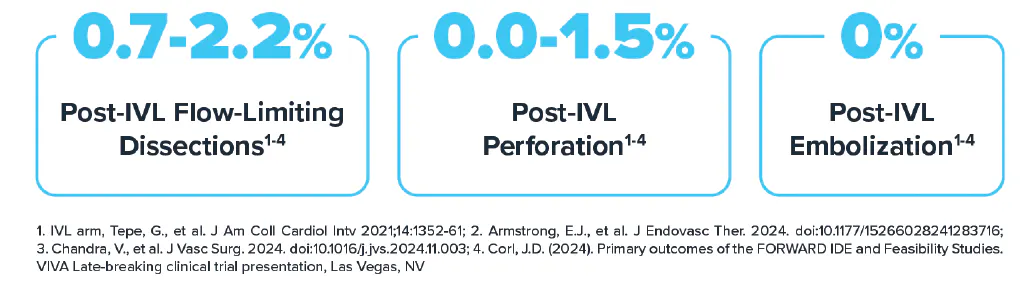
Figure 2. Shockwave IVL has demonstrated consistent safety outcomes through level 1 evidence with a randomized controlled trial, a large-scale observational study, and multiple single-arm multicenter studies.
How has the latest generation of Shockwave Peripheral IVL (Shockwave E8) changed your treatment capabilities?
Dr. Leonard: The introduction of the new Shockwave E8 80-mm catheter allows for both an impressive delivery profile and long-segment treatment lengths, therein decreasing need for additional maneuvers such as pedal access and shortening my overall operative time.
I often find myself using the longer Shockwave E8 balloon in the superficial femoral artery (SFA)–popliteal segment rather than opening Shockwave M5+. Additionally, previous iterations of peripheral IVL catheters often required pedal access to deliver balloons to distal pedal vessels. I find this technique usually unnecessary due to the crossing profile and improved deliverability of Shockwave E8.
“The introduction of the new Shockwave E8 80-mm catheter allows for both long-segment treatment lengths, shortening my overall operative time, as well as an impressive delivery profile.”
—Samuel Leonard, MD
SHOCKWAVE TECH VALUE
Shockwave recognized the need for a more clinically robust product compared to the earlier peripheral IVL iterations, Shockwave M5+ (60 mm) and Shockwave S4 (40 mm). There were three key developments that aimed to address this need:
- Redesign of the catheter components from tip to hub to improve deliverability (Figure 3)
- Lengthen the balloon to 80 mm to address long, diffuse lesions
- Add emitter pairs with a higher pulse count to increase treatment capabilities
Shockwave E8 fires its eight emitters in pairs, creating two Shockwaves per pulse—reinforcing the notion that pulses don’t crack calcium, Shockwaves do. With 400 pulses available per catheter, Shockwave E8 maximizes IVL treatment capability, delivering a total of 800 Shockwaves at a rate of four Shockwaves per second.
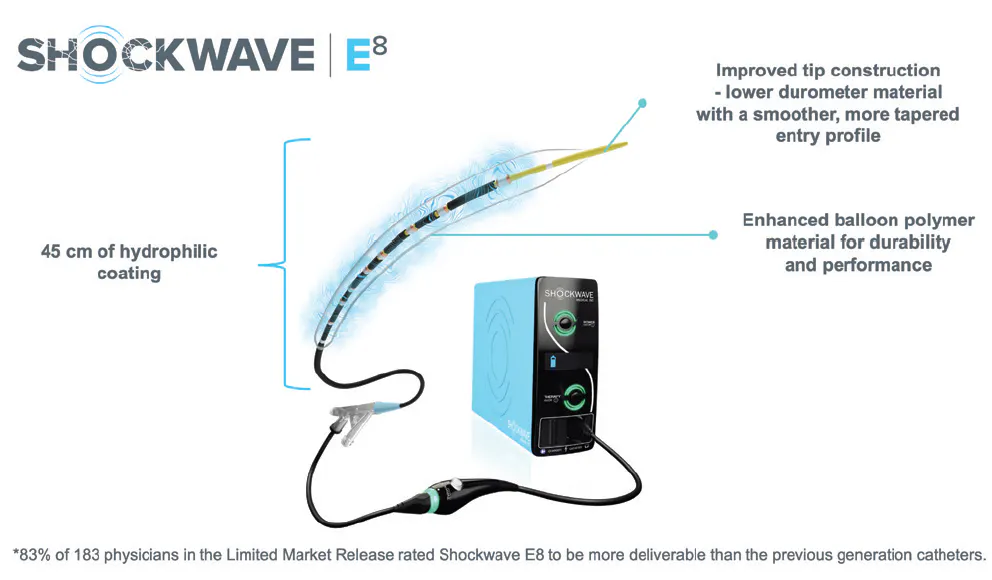
Figure 3. Shockwave redesigned the catheter from tip-to-hub to improve deliverability and crossability of Shockwave E8.
Dr. Leonard, do you have a case in mind when you think about the impact of Shockwave E8?
Patient Background
A female patient in her early 90s who lived independently and ambulated freely presented with a nonhealing wound to the right foot with severe infrainguinal calcification of the SFA-popliteal segment (Figure 4). There was high-grade stenosis with questionable occlusion, and the ankle-brachial index (ABI) was 0.3.
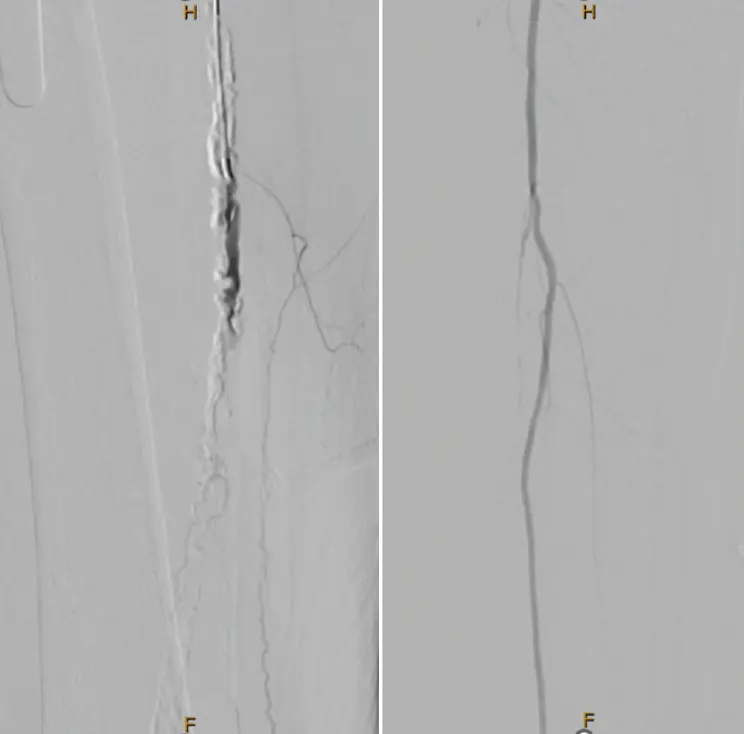
Figure 4. Preprocedure angiograms demonstrated severe calcification in the right SFA-popliteal segment with single-vessel runoff.
Treatment Decision-Making
The factors considered in treatment decision-making included the presence of single-vessel runoff, age prohibitive for open conversion due to embolization, and the high degree of calcium.
Given these factors, we selected the Shockwave E8 4.0 mm based on the optimal crossing profile, safety and success with modifying circumferential calcium, and the ability to treat the full lesion length more efficiently using a longer balloon.
Outcomes
The postintervention angiogram demonstrated a significant improvement in flow velocity (Figure 5). At the patient’s 1-month follow-up, she continued to demonstrate improvement in ABI, was ambulating freely, and had complete wound healing of her right foot.
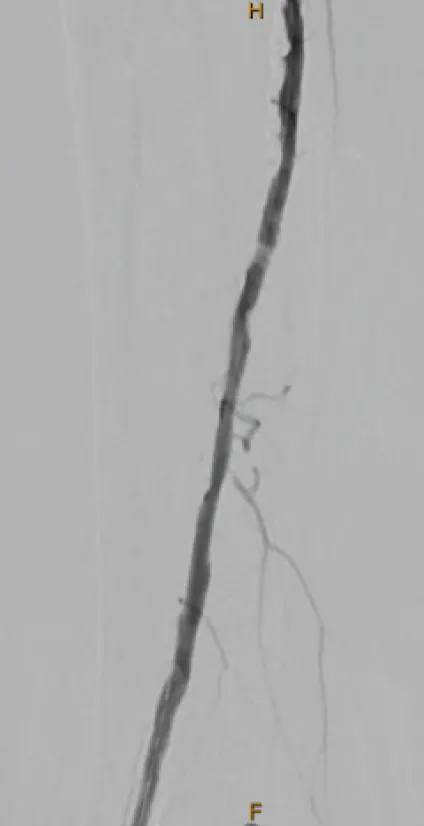
Figure 5. Post-IVL angiogram showed a significant improvement in flow velocity. Shockwave, unlike other treatment options, does not remove the calcium but rather cracks calcium in situ, increasing the compliance of the vessel.
SHOCKWAVE L6: LARGE AND IN CHARGE
Unlike Shockwave E8, which is Shockwave’s most versatile peripheral IVL catheter that can be used to treat calcium above the knee and BTK, Shockwave L6 was designed with the unique challenges of large-vessel PAD in mind. Dr. Mathew Wooster provides a unique perspective on the value of purpose-built, optimally sized Shockwave IVL in the iliac vessels and common femoral artery (CFA).
What is the impact of calcified PAD in iliac vessels?
Dr. Wooster: Iliac PAD can be one of the most rewarding while simultaneously the most frustrating segments. In the large-bore access population, iliac disease is very frequently asymptomatic, instead serving as a marker for general overall poor health with comorbid cardiopulmonary disease impeding the ability to offer more invasive surgical intervention. At the same time, these large-bore procedures are already inherently riskier, more technically challenging, and more time-intensive than the average endovascular procedure being performed. One of the most impactful benefits of Shockwave IVL is the ability to expeditiously and safely improve access for this cohort.
On the other hand, patients with symptomatic PAD due to iliac occlusive disease are frequently the most chronically disabled. These tend to be some of the most grateful patients when we can offer safe, fast, and durable outpatient procedures to revascularize this segment.
What are some of the defining clinical features of calcified lesions in iliac vessels?
Dr. Wooster: Although we can see every variation of calcification in the iliac arteries, it seems to most frequently present in one of two fashions: dense, eccentric focal lesions often comprising nearly the entire lumen over a short length and thick, circumferential lesions over longer lengths but with minimal luminal effacement.
SHOCKWAVE TECH VALUE: MOA
Physicians, such as Dr. Wooster, worked with Shockwave to detail the nature of calcium presentation and thus informed the design of Shockwave L6. It was a purpose-built IVL catheter to modify dense calcium in large vessels.
Shockwave L6 packs six emitters along a short, 30-mm balloon, which further takes advantage of the concept of constructive interference—packing a punch and providing the acoustic penetration needed to effectively modify calcium in large-diameter vessels (Figure 6).
Additionally, Shockwave L6 is 0.018-inch guidewire compatible to provide the support needed in large-vessel interventions.
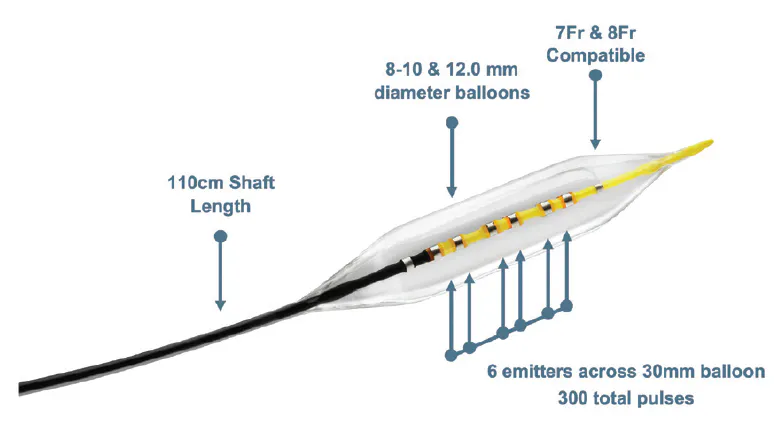
Figure 6. Shockwave L6 was designed with large vessels in mind, with a shorter shaft length than other peripheral balloon IVL products, larger-diameter balloons, and tightly spaced emitters along a short balloon.
How did Shockwave L6 change your clinical practice?
Dr. Wooster: Shockwave L6 has probably made the largest impact of the Shockwave Peripheral IVL portfolio in my practice. I broadly use it for large-bore access to reduce rates of endoconduit use, including use for pretreatment of CFAs to allow percutaneous access in patients otherwise relegated to open femoral exposure with concomitant endarterectomy. The larger diameters with tandem firing emitters function especially well for expanding common iliac artery and CFA treatment.
SHOCKWAVE TIPS & TRICKS: OPTIMAL SIZING
One of the main advantages of Shockwave L6, with balloon sizes up to 12 mm in diameter, is the ability for physicians to use properly sized balloons in larger vessels for optimal IVL treatment (Figure 7). Oversizing the balloon (1.1:1) ensures appropriate vessel wall apposition, which facilitates efficient energy transfer, contributing to more fracturing. Per a multivariable analysis in the DISRUPT PAD III Observational Study (n = 1,373), oversizing by ≥ 10% was an independent predictor of improved stenosis reduction.3,4
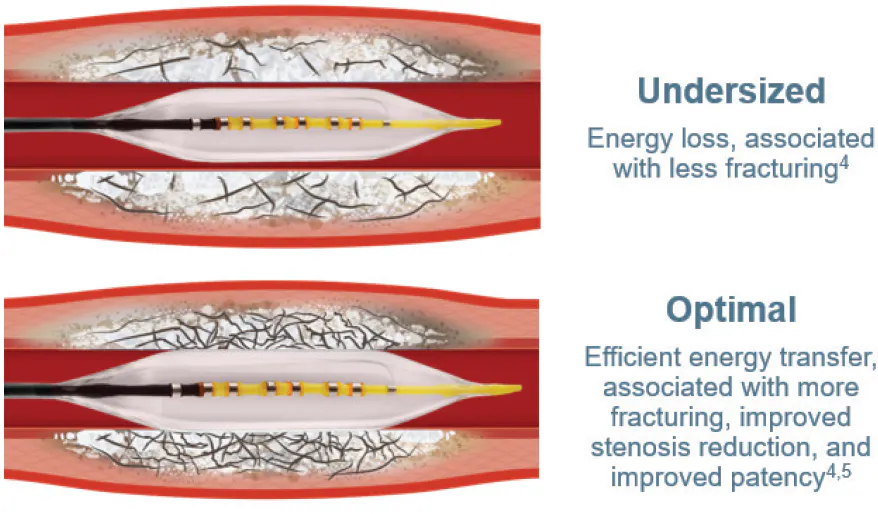
Figure 7. Optimal IVL technique, including oversizing, was associated with 15% improved primary patency and rate of clinically driven target lesion revascularization in DISRUPT PAD II.4,5
Dr. Wooster, do you have a case in mind when you think about the impact of Shockwave L6?
Patient Background
A male patient in his mid-70s with metastatic prostate cancer and a history of traumatic brain injury, heart failure, chronic obstructive pulmonary disease, and urinary incontinence presented with occlusion of the external iliac artery (EIA) through the CFA, with reconstitution of the SFA and profunda artery (Figure 8A). He presented with Rutherford 2a ischemia.
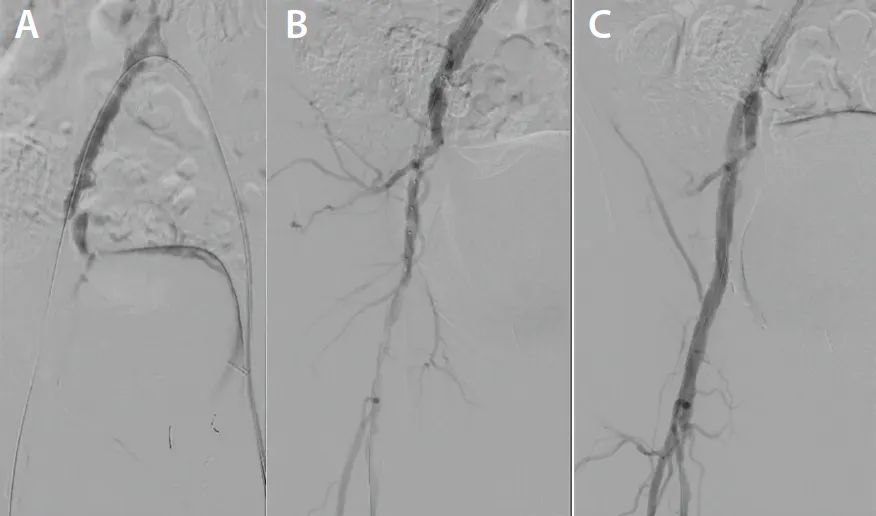
Figure 8. Initial angiogram (A), post-thrombectomy (B), and after Shockwave L6, DCB, and stent placement (C).
Treatment Decision-Making
Several factors were considered in the decision-making for this patient, including that his comorbidities made him high risk for general anesthesia and the incontinence and living situation increased the risk for wound infection with a groin incision.
We decided to proceed with endovascular thrombectomy and treat the underlying occlusive disease using contralateral 7-F femoral access. First, we utilized Lightning 7 aspiration (Penumbra, Inc.) to restore flow (Figure 8B). Intravascular ultrasound was performed to evaluate the underlying occlusive disease. The vessel was prepped using Shockwave; the Shockwave L6 8.0-mm balloon was used in the CFA and distal EIA, followed by treatment with a 7-mm drug-coated balloon (DCB) to the CFA and placement of a 7-mm stent in the EIA (Figure 8C).
“Shockwave L6 has probably made the largest impact of the Shockwave Peripheral IVL portfolio in my practice.”
—Mathew Wooster, MD, MBA
Outcome
The patient was discharged home the following morning without complications. The patient continues to do well and is maintained in routine duplex surveillance.
CONCLUSION
Shockwave’s latest innovations only scratch the surface of what’s possible. Its team continues to work with physicians on their 38 ongoing research and development projects with new product launches expected every year through 2030.
1. Tepe G, Brodmann M, Bachinsky W, et al. Intravascular lithotripsy for peripheral artery calcification: mid-term outcomes from the randomized Disrupt PAD III trial. J Soc Cardiovasc Angiogr Interv. 2022;1:100341. doi: 10.1016/j.jscai.2022.100341
2. Adams G, Shammas N, Mangalmurti S, et al. Intravascular lithotripsy for treatment of calcified lower extremity arterial stenosis: initial analysis of the Disrupt PAD III study. J Endovasc Ther. 2020;27:473-480. doi: 10.1177/1526602820914598
3. Armstrong EJ, Adams G, Soukas PA, et al. Intravascular lithotripsy for peripheral artery calcification: 30-day outcomes from the Disrupt PAD III observational study. J Endovasc Ther. Published online October 18, 2024. doi: 10.1177/15266028241283716
4. Kereiakes DJ, Virmani R, Hokama JY, et al. Principles of intravascular lithotripsy for calcific plaque modification. JACC Cardiovasc Interv. 2021;14:1275-1292. doi: 10.1016/j.jcin.2021.03.036
5. Brodmann M, Werner M, Holden A, et al. Primary outcomes and mechanism of action of intravascular lithotripsy in calcified, femoropopliteal lesions: results of Disrupt PAD II. Catheter Cardiovasc Interv. 2019;93:335-342. doi: 10.1002/ccd.27943
Shockwave M5, Shockwave M5+, Shockwave S4, Shockwave L6 and Shockwave E8 Safety Information
In the United States: Rx only.
Indications for Use— The Shockwave Medical Intravascular Lithotripsy (IVL) System is intended for lithotripsy-enhanced balloon dilatation of lesions, including calcified lesions, in the peripheral vasculature, including the iliac, femoral, ilio-femoral, popliteal, and infra-popliteal arteries. Not for use in the coronary, carotid or cerebral vasculature. Peripheral IVL is also indicated for use in renal arteries in certain jurisdictions, including the United States. Please reference Instructions For Use for country specific information.
Contraindications— Do not use if unable to pass 0.014" (M5, M5+, S4, E8) or 0.018" (L6) guidewire across the lesion-Not intended for treatment of in-stent restenosis or in coronary, carotid, or cerebrovascular arteries.
Warnings— Only to be used by physicians who are familiar with interventional vascular procedures—Physicians must be trained prior to use of the device— Use the generator in accordance with recommended settings as stated in the Operator’s Manual.
Precautions— Use only the recommended balloon inflation medium—Appropriate anticoagulant therapy should be administered by the physician— Decision regarding use of distal protection should be made based on physician assessment of treatment lesion morphology.
Adverse effects— Possible adverse effects consistent with standard angioplasty include-Access site complications -Allergy to contrast or blood thinner- Arterial bypass surgery—Bleeding complications—Death— Fracture of guidewire or device—Hypertension/Hypotension— Infection/sepsis—Placement of a stent—renal failure— Shock/pulmonary edema—target vessel stenosis or occlusion— Vascular complications. Risks unique to the device and its use— Allergy to catheter material(s)— Device malfunction or failure— Excess heat at target site.
Prior to use, please reference the Instructions for Use for more information on indications, contraindications, warnings, precautions and adverse events. www.shockwavemedical.com/IFU
SPL-79586 Rev. A
Advertisement
Advertisement