Advertisement
Advertisement
May 2026 Supplement
Sponsored by Surmodics
Peripheral Arterial Thrombus Removal Above or Below the Knee Using the Pounce™ Thrombectomy Platform
A conversation with Dr. Amanjit S. Baadh.
Dr. Amanjit S. Baadh is trained in vascular medicine and interventional radiology and practices with Midwest Radiology. He is affiliated with several major medical centers in the Minneapolis/St. Paul metro area. His work focuses on medical management and minimally invasive treatment for peripheral artery disease (PAD), with an emphasis on limb salvage for chronic limb-threatening ischemia (CLTI). A contributor to the field, Dr. Baadh has coauthored several papers in peer-reviewed journals. In 2022, he was recognized as a “Top Doctor Rising Star” by Mpls.St.Paul Magazine.
In terms of limb salvage, how would you describe the patient population you treat in your practice?
The patients we see in clinic are typically diabetic, with a fair number of chronic renal failure patients on dialysis. A lot of these folks have had PAD for many years, and they’ve developed a wound. We work closely with podiatry and other specialties to optimize their care. In terms of revascularization, we try to keep people out of the hospital, but some patients we see have rest pain or rapid worsening of their wounds that has brought them into the emergency department. These inpatients tend to be farther along in their disease course.
What has been your traditional approach to peripheral arterial revascularization?
Many CLTI patients we see have chronic plaques and disease that may lead to in situ thrombosis or acute worsening of disease. Our treatment approach depends on patient presentation and the amount of time we feel we have to revascularize. For Rutherford class 1 or 2a patients, we traditionally used thrombolytics as the primary treatment, followed by angioplasty, stenting, or additional clot clearance. We also used aspiration thrombectomy, but these devices were often not amenable to removing organized material.
What role does the Pounce™ Thrombectomy Platform (Surmodics, Inc.) play in your practice?
The availability of the Pounce™ Platform has changed our approach. You really don’t know how old clot will be in any given patient. There have also been times when I thought a clot would be fresh but couldn’t remove it using thrombolytics or aspiration. When I removed the clot using the Pounce™ Platform, it turned out to be organized and rubbery. As we’ve gained experience with the Pounce™ Platform, we’ve increasingly used it as a primary treatment.
Having said that, if there’s a high volume of clot or occlusion of small distal vessels, we may still use lytics or aspiration devices. It’s good to have all these tools available so you can customize your approach. The Pounce™ Platform includes systems with different basket sizes, including the Pounce™ LP System, which is indicated for arterial vessels 2 to 4 mm in diameter. Having multiple sizes available in the Pounce™ Platform is very helpful for complex cases with multiple occluded vessels above and below the knee.
Case Report
Use of the Pounce™ and Pounce™ LP Thrombectomy Systems to Remove Lower Extremity Arterial Thrombus Following Attempted Aspiration Thrombectomy and Thrombolysis
By Amanjit S. Baadh, MD
PATIENT PRESENTATION
An active man in his early 50s with no known comorbidities presented to the clinic with left leg claudication of several weeks’ duration. The patient had previously been misdiagnosed with shin splints at a primary care facility and been provided with a walking boot. When his symptoms persisted, he received a duplex ultrasound (DUS) examination that showed left popliteal and infrapopliteal thrombosis. He was referred to the emergency department (ED).
DIAGNOSTIC FINDINGS
In the ED, the patient received a CTA examination that confirmed the DUS results, showing occlusion of the left P1 popliteal artery extending into the infrapopliteal vessels with reconstituted flow in the posterior tibial (PT) artery. The patient’s motor and sensory function remained intact.
TREATMENT
Following unsuccessful aspiration thrombectomy, the patient was admitted to the intensive care unit for overnight catheter-directed thrombolysis (CDT). At 21.5 hours, the popliteal artery segment remained occluded, with limited flow into the reconstituted PT artery completely occluding at the ankle level. Peroneal, anterior tibial, and pedal arteries were occluded. Overnight CDT was again attempted, but little change was noted following an additional 22.5 hours of thrombolytic therapy (total of 44 hours of CDT) (Figure 1). As the next step in treatment, a 7 Fr guiding sheath and a crossing catheter were introduced from contralateral femoral access, and angioplasty was performed at nominal pressure using a 5 X 40 mm balloon to disrupt clot in the popliteal vessel. The Pounce™ Thrombectomy System (3.5-6 mm) (Surmodics, Inc.) was then deployed in the popliteal segment, removing clot and achieving flow into the PT artery (Figure 2). The Pounce™ LP (Low-Profile) System (2-4 mm) was then used to remove mixed-morphology clot (Figure 3) from the plantar artery (Figure 4A) and tibial arteries (Figure 4B), restoring flow to the foot (Figure 4C).
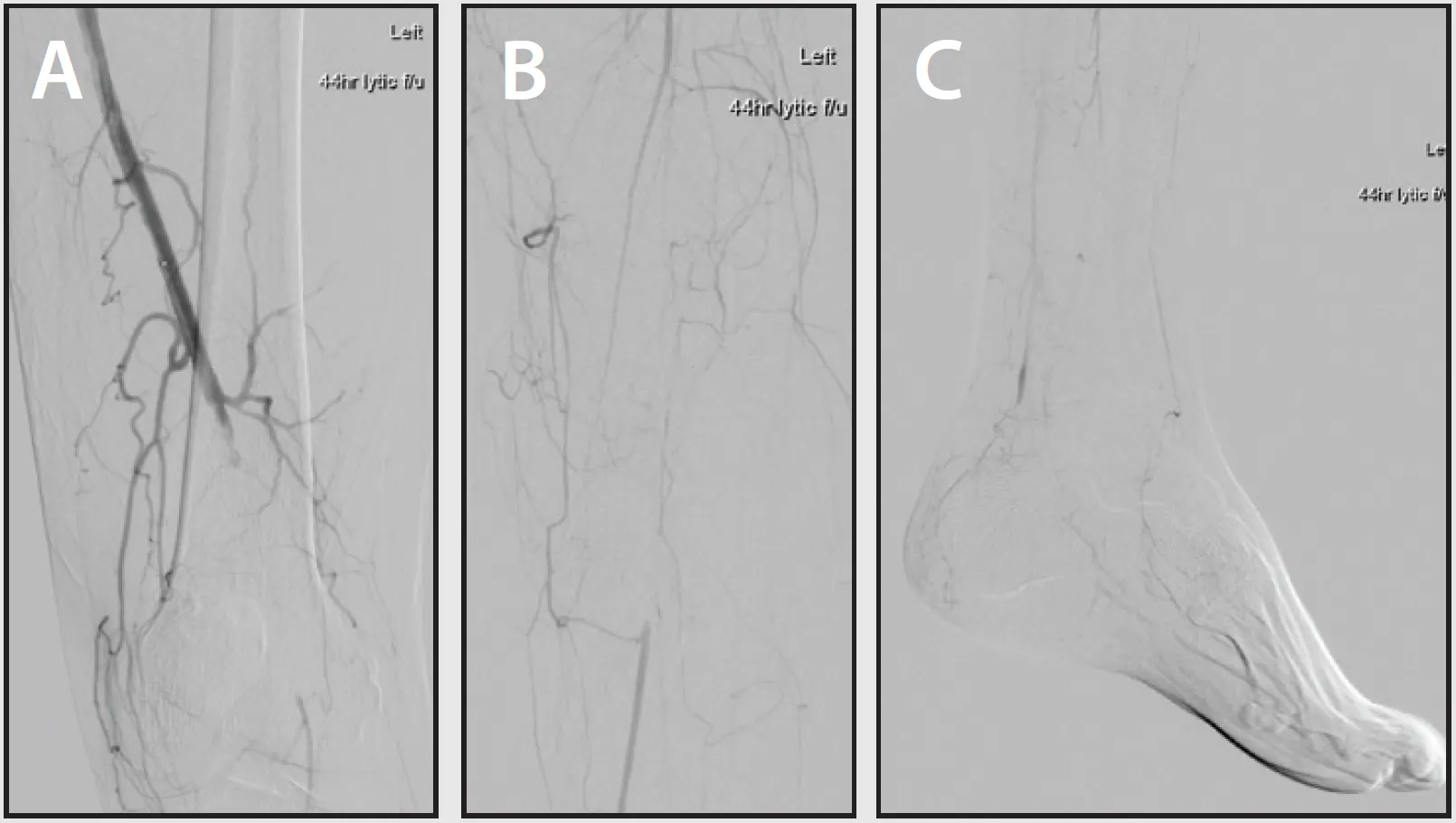
Figure 1. Angiography showing occluded left popliteal (A), tibial (B), and plantar (C) arteries following 44 hours of thrombolytic therapy.
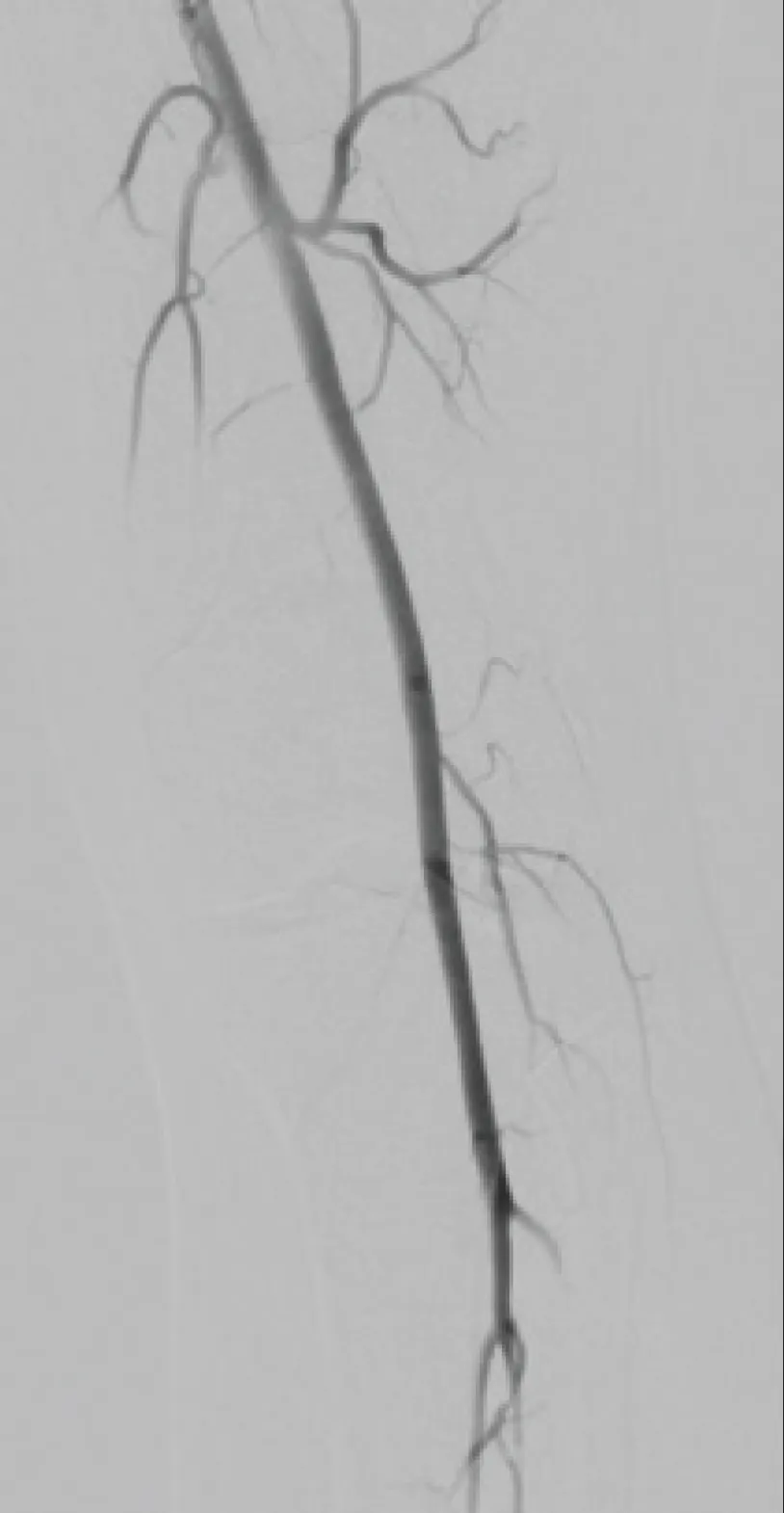
Figure 2. Restoration of left popliteal arterial flow following Pounce™ System thrombectomy.
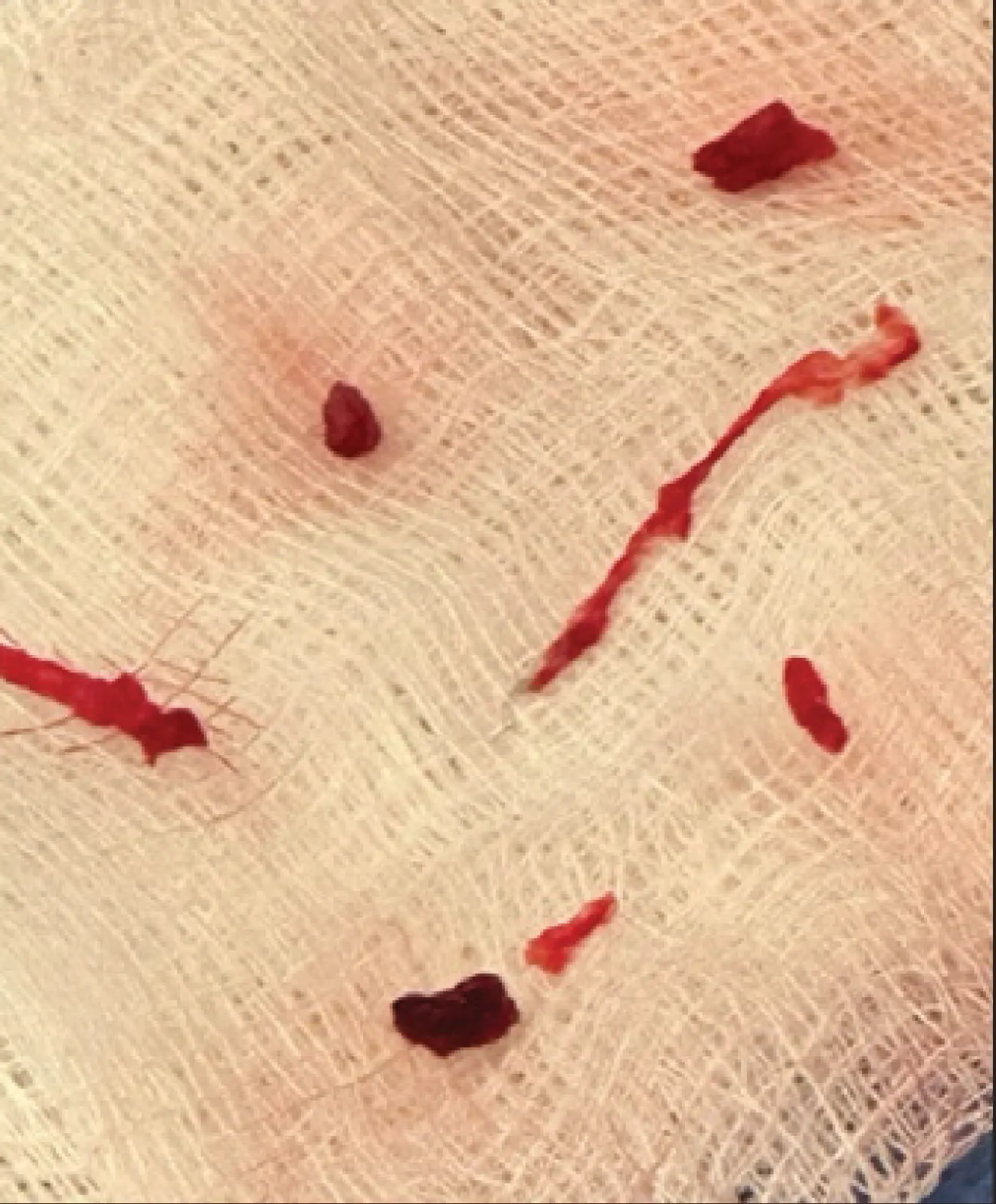
Figure 3. Mixed-morphology clot removed from plantar and tibial arteries using the Pounce™ LP Thrombectomy System.
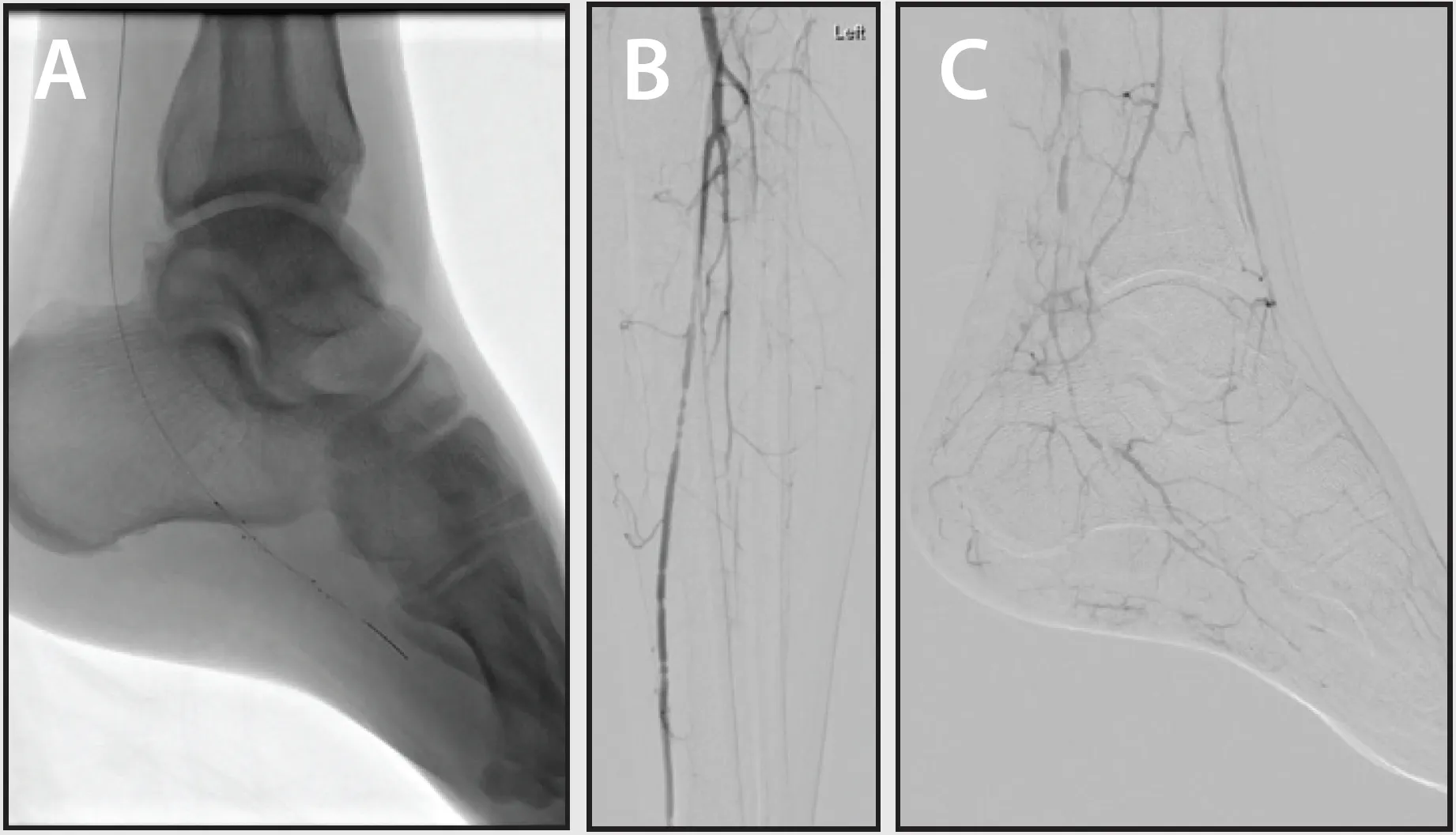
Figure 4. Deployment of Pounce™ LP System baskets in the left plantar artery (A). Restoration of tibial (B), and pedal (C) arterial flow following Pounce™ LP System thrombectomy.
POSTPROCEDURE OUTCOMES
The patient was discharged from the hospital with prescribed oral anticoagulation. Use of the Pounce™ System and Pounce™ LP System removed lower extremity arterial thrombus, which restored inline flow in a patient at risk of amputation following unsuccessful CDT and aspiration thrombectomy.

Caution: Federal (US) law restricts the Pounce™ Thrombectomy System to sale by or on the order of a physician. Please refer to the product’s Instructions for Use for indications, contraindications, warnings, and precautions. SURMODICS, POUNCE, and SURMODICS and POUNCE logos are trademarks of Surmodics, Inc. and/or its affiliates. Third-party trademarks are the property of their respective owners.
Intended Use: The Pounce™ Thrombectomy System is intended for the non-surgical removal of thrombi and emboli from the peripheral arterial vasculature.
Contraindications: The device is contraindicated for use in patients who cannot receive recommended intravenous anticoagulant therapy.
Advertisement
Advertisement