Advertisement
Advertisement
May 2026
An Interview With Anna Louise Pouncey, BM BCh, BA (Hons), PhD
Ms. Pouncey discusses the WARRIORS trial of EVAR in women with small AAAs, her health equity–focused research approach, fully automated volume segmentation for AAA assessment, and cultural challenges in vascular surgery.
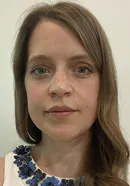
You are leading the WARRIORS trial (NCT06394271), an international, multicenter, open-label, randomized controlled trial studying elective early endovascular aneurysm repair (EVAR) compared to routine surveillance in women with small abdominal aortic aneurysms (AAAs).1 What was the impetus behind the trial, and what are the primary gaps in knowledge it is designed to address?
I am very grateful to be coleading the WARRIORS trial with Colin Bicknell, which we started together with Professor Janet Powell. Considering that women have smaller arteries, are more likely to rupture at smaller AAA sizes, lose eligibility for EVAR earlier, are less likely to be offered repair at the current threshold, and are more likely to die and suffer complications when we do treat them, we wanted to test the hypothesis that women are treated too late in their clinical course.2-5 The trial will assess whether early EVAR, when the AAA is 4 to 5.5 cm, reduces AAA-related death and rupture and is associated with improved quality of life.
What are some key lessons learned so far about designing and conducting a clinical trial at this scale?
I learn something new every day. Some key lessons are:
- Trials are fundamentally a team effort. We would be nowhere without the dedication, expertise, and support of our international collaborators.
- Sometimes, you have to slow down. My instinct is to provide immediate solutions, but it’s often better to pause and let the dust settle.
- You can’t achieve everything, and you can’t anticipate everything. A pragmatic approach—separating what is “essential” from what is simply “nice to have”—helps keep the project on course.
- Take things professionally, not personally. In large research teams, even well-considered decisions made in the interests of the trial will not satisfy everyone.
Understanding the sex-specific differences in AAA screening, treatment, and outcomes has been a core focus of your published research. How would you like to see clinicians be thinking differently about AAA in female patients today?
Fundamentally, it’s about acknowledging that women differ across cardiovascular medicine, that much of the evidence base has been generated in men, and that treating women and men the same does not equate to equitable care.6
How has your PhD in health equity prepared you for the kind of research you are doing now, and how does it influence the questions you aim to answer in your work?
My PhD in health equity really shaped how I frame research questions. It grounded my ideas of fairness and justice, and it pushed me to look beyond average effects to ask who benefits, who is excluded, and why. That perspective underpins my current work, where I focus on intersectional differences, how new technologies might either reduce or widen inequities, and what influences clinician and patient decision-making. Alongside strong methodological training, the PhD enabled me to build an international collaborative network and gain some incredible mentors, who I am lucky enough to work with and learn from in my current role.
Can you tell us about your work with fully automated volume segmentation (FAVS) for AAA assessment? How might this technology ultimately support more equitable care for women needing AAA repair?
My work with FAVS focuses on using imaging data to assess AAA anatomy more precisely and consistently than simple diameter measurements. FAVS can help us better understand anatomic differences that are more common in women but underrepresented in the evidence base.7,8 In combination with improved data, this has the potential to inform graft design, improve procedural planning, and support more predictive assessment. Because the approach is automated and scalable, it may also help reduce measurement variability between centers and support more equitable access to high-quality AAA assessment for women.
Outside of your work in AAA, you recently published a paper on associations between reproductive factors and the risk of peripheral artery disease (PAD).9 What did this study reveal about how we need to approach risk stratification for women with PAD?
Pregnancy can, in some respects, be seen as a test bed for cardiovascular disease later in life. Our study suggested that adverse reproductive factors, such as pregnancy loss and earlier menopause, are associated with higher PAD risk and highlights an opportunity to identify and intervene in higher-risk women earlier.
Where do you see the biggest gaps in the care of women with vascular disease, beyond AAA?
Much of the evidence base in vascular disease has been built on male-dominant populations, and that shapes how risk is assessed, how symptoms are interpreted, and how pathways are designed. As a result, women’s symptoms are more likely to be normalized or attributed to nonvascular causes, and disease is often diagnosed later. There’s also an element of clinician bias—often unconscious—linked to assumptions about who is at risk. Together, limitations in the evidence base and how it translates into practice mean women frequently reach vascular services later and with more advanced disease. Cardiology has been ahead in recognizing that women present differently, investing in sex-specific evidence and adapting guidelines and risk assessment accordingly. That shift in mindset, accepting that one size doesn’t fit all, is something vascular medicine is still catching up on.

Your work also touches on cultural challenges in vascular surgery,10,11 including workplace hazards and structural barriers that affect women. What changes would you most like to see to make the specialty more inclusive and sustainable for the next generation?
I believe that some of the most harmful elements in vascular surgery stem from a culture of normalization, enabling, and even “paying it forward.” During my training, I have witnessed situations that highlight how cultural issues can manifest in practice, including instances of bullying, sexual harassment, and occasions where trainees were not provided with a safe working environment. Responses to these incidents from senior surgeons (inherently good people) were often half-hearted or inadequate, allowing these behaviors to persist. Breaking these cycles takes courage and a deliberate decision that “it stops with me.” Acknowledging and challenging these patterns can be uncomfortable and, at times, personally difficult, but even one individual can make a meaningful difference. A shift toward a culture of active self-appraisal is what I would most like to see, and I am grateful to the colleagues I have encountered who make the efforts to do this.
At a systemic level, the workplace has been designed around a workforce in a different era. It does not fit with the needs of those working in health care today for both women and men. These limitations exist at both regulatory and physical levels. For example, even in our excellent new hybrid suite, the operating table is designed for a taller-than-average male, unintentionally disadvantaging a material portion of the workforce for the next decade! Diverse inclusion and addressing these challenges during workforce planning and development would make the specialty more inclusive and sustainable.
If you weren’t a vascular surgeon, what career do you think you might have pursued?
I love to paint portraits. I like to think if I dedicated enough time to it, people might be willing to pay me. Either that or a Formula 1 engineer.
You worked closely with Prof. Janet Powell, including as co-Chief Investigator of WARRIORS, as mentioned. How did Prof. Powell influence your approach to research and mentorship, and how do you hope to carry on her legacy?
I chose my PhD specifically to work with Prof. Janet Powell, and it was hard work but the best decision I ever made. Janet was a direct communicator, extremely fair, and placed research integrity and the patient above politics and personalities. I feel the best way to continue her legacy is to stick to high standards and commit to “lift as you climb.”
1. Imperial. International WARRIORS trial: information for clinicians and trialists. Accessed April 17, 2026. https://www.imperial.ac.uk/department-surgery-cancer/research/surgery/clinical-trials/international-warriors-trial/
2. Pouncey AL, David M, Morris RI, et al. Editor's choice - systematic review and meta-analysis of sex specific differences in adverse events after open and endovascular intact abdominal aortic aneurysm repair: consistently worse outcomes for women. Eur J Vasc Endovasc Surg. 2021;62:367-378. doi: 10.1016/j.ejvs.2021.05.029
3. Pouncey AL, Sweeting MJ, Bicknell C, et al. Sex-specific differences in alive hospital discharge following infrarenal abdominal aortic aneurysm repair. Eur Heart J. 2025;46:1705-1716. doi: 10.1093/eurheartj/ehae675
4. Pouncey AL, Loría-Rebolledo LE, Sharples L, et al. Impact of patient sex on selection for abdominal aortic aneurysm repair: a discrete choice experiment. BMJ Open. 2025;15:e091661. doi: 10.1136/bmjopen-2024-091661
5. Pouncey AL, Sweeting MJ, Bicknell C, Powell JT. Sex-specific differences in the standard of care for infrarenal abdominal aortic aneurysm repair, and risk of major adverse cardiovascular events and death. Br J Surg. 2023;110:481-488. doi: 10.1093/bjs/znad018
6. Tsai J, Brown T, van Herzeele I, et al; ESVS Consensus Group on Women With Arterial Vascular Disease. Editor's choice - evaluation of sex specific representation and sex disaggregated reporting in European Society for Vascular Surgery 2024 clinical practice guidelines on the management of abdominal aorto-iliac artery aneurysms. Eur J Vasc Endovasc Surg. 2025;70:458-465. doi: 10.1016/j.ejvs.2025.06.025
7. Kawka M, Caradu C, Scicluna R, et al. Editor's choice - sex specific differences in abdominal aortic aneurysm morphology based on fully automated volume segmented imaging: a multicentre cohort study and propensity score matched analysis. Eur J Vasc Endovasc Surg. 2026;71:64-73. doi: 10.1016/j.ejvs.2025.08.058
8. Kawka M, Caradu C, Scicluna R, et al. Unsupervised machine learning for identifying morphological phenotypes in abdominal aortic aneurysms using fully automated volume-segmented imaging: a multicentre cohort study. Eur Heart J Digit Health. 2025;7:ztaf136. doi: 10.1093/ehjdh/ztaf136
9. Shea J, De Louche C, Grainger T, et al. Sex and reproductive history as nontraditional risk factors for PAD. Arterioscler Thromb Vasc Biol. 2026;46:97-104. doi: 10.1161/ATVBAHA.125.323040
10. Pouncey AL, Grainger T. What if the gloves don’t fit? How workplace hazards affect women vascular surgeons. Bull R Coll Surg Engl. 2025;107. https://doi.org/10.1308/rcsbull.2025.130
11. Dixon F, Pouncey AL, Ali R, Vitish-Sharma P, Bengtzen M, Nortley M. Sexual misconduct: UK medical practitioners tribunal service is not fit to practise. BMJ. 2025 Sep 18;390:e086867. doi: 10.1136/bmj-2025-086867
Advertisement
Advertisement
Interested in reading more interviews?
To read more interviews with thought leaders in the vascular field, check out our Profiles & Perspectives hub.
Read More