Advertisement
Advertisement
August 2020 Supplement
Sponsored by Silk Road Medical
Data Update From the VQI Registry
With Patric Liang, MD; Marc L. Schermerhorn, MD; Hanaa Dakour-Aridi, MD; Mahmoud B. Malas, MD, MHS, FACS; and Scott S. Berman, MD, MHA, RVT, FACS, DFSVS


The Vascular Quality Initiative transcarotid artery revascularization (VQI TCAR) Surveillance Project registry captures > 95% of all TCAR with flow reversal neuroprotection procedures performed in the United States. Given the detailed nature of this registry, which contains more than 200 patient- and procedure-specific variables, robust statistical comparisons can be made with other carotid revascularization procedures in the VQI. In particular, transfemoral carotid artery stenting procedures are captured in the VQI and its registry contains identical variables as those used in the TCAR registry. Therefore, utilizing propensity-score matched statistical methods, we have been able to carefully match patients on > 30 unique variables to compare stroke or death outcomes between similar patients undergoing the two methods of carotid stenting. The variables captured in the VQI not only include baseline comorbid conditions, such as presenting stroke severity, age, gender, race, coronary artery disease, congestive heart failure, or preoperative medication use (ie, aspirin, P2Y12 inhibitors or statins), but also contain details on physician and center volume data to account for carotid stenting experience.
In a recent peer-reviewed publication in JAMA, we detailed a propensity-matched analysis of 5,251 and 6,640 patients in the VQI who underwent TCAR and transfemoral carotid artery stenting, respectively, from September 2016 to April 2019.1 This analysis resulted in 3,296 matched pairs of patients, of which the mean age was 72 years, 35% were women, and 55% were treated for symptomatic carotid disease. We found that TCAR was associated with a significantly lower risk of both the combined endpoint of in-hospital stroke or death (1.6% vs 3.1%; relative risk [RR], 0.51; 95% CI, 0.37-0.72; P < .001), as well as the individual in-hospital endpoints of stroke (1.3% vs 2.4%; 95% CI, 0.38-0.79; P = .001) and death (0.4% vs 1%; RR, 0.44; 95% CI, 0.23-0.82; P = .008). Using Kaplan-Meier life-table estimation methods, we also found that the benefit for stroke or death with TCAR persisted up to 1-year follow-up, as TCAR was associated with a higher freedom from stroke or death events (94.9% vs 90.5%; hazard ratio [HR], 0.52; 95% CI, 1.02-2.61; P < .001) (Figure 1).
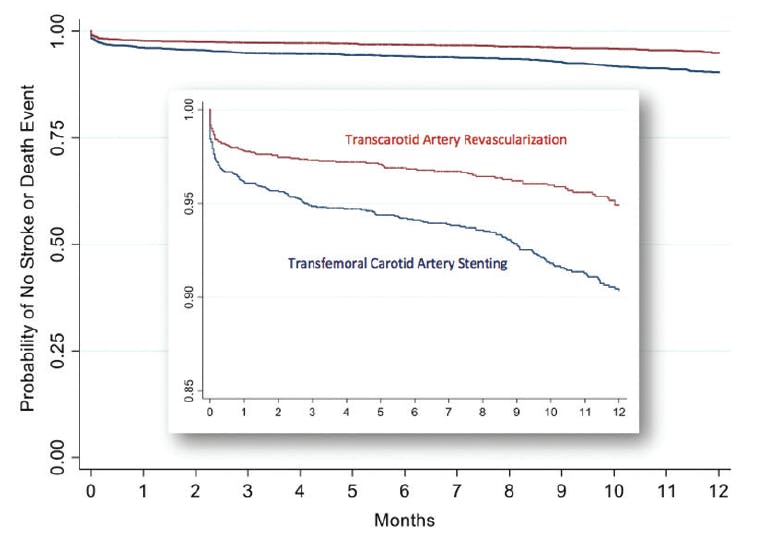
Figure 1. Kaplan-Meier estimated freedom from stroke or death event in patients undergoing TCAR or transfemoral carotid artery stenting in a propensity score-matched study population.
The lower risk of stroke or death after TCAR was found to be statistically significant in treatment of symptomatic patients (2.1% vs 4.2%; RR, 0.51; 95% CI, 0.35-0.75; P < .001), but not statistically different for treatment of asymptomatic patients (1% vs 1.5%; RR, 0.56; 95% CI, 0.26-1.20; P = .13). However, the effect size and direction favoring TCAR was similar to that of symptomatic patients, but with lower event rates, indicating that more patients would be needed to prove a statistical difference. These statistical discrepancies mirror findings from randomized trials in which statistically significant differences in stroke or death rates after transfemoral carotid stenting compared with endarterectomy have been predominately demonstrated in trials of symptomatic disease and not in those of asymptomatic disease.2-4
A criticism of the transcarotid approach to carotid stenting is the need for a surgical incision, albeit an incision that is more minimally invasive than that for endarterectomy and one that obviates the need to manipulate multiple cranial nerves. Having to make a surgical incision rather than a percutaneous transfemoral puncture increases the risk of incision-related complications and, compared with those undergoing transfemoral carotid stenting, patients undergoing TCAR have higher associated rates of bleeding complications resulting in reintervention (1.3% vs 0.8%; RR, 1.63, 95% CI, 1.02-2.61; P = .04).1 However, we found that nearly 21% of patients undergoing TCAR during our study period did not receive protamine. Protamine has been commonly used for heparin reversal in endarterectomy and has shown to be associated with decreased risk of bleeding complications without an increase in thromboembolic events.5
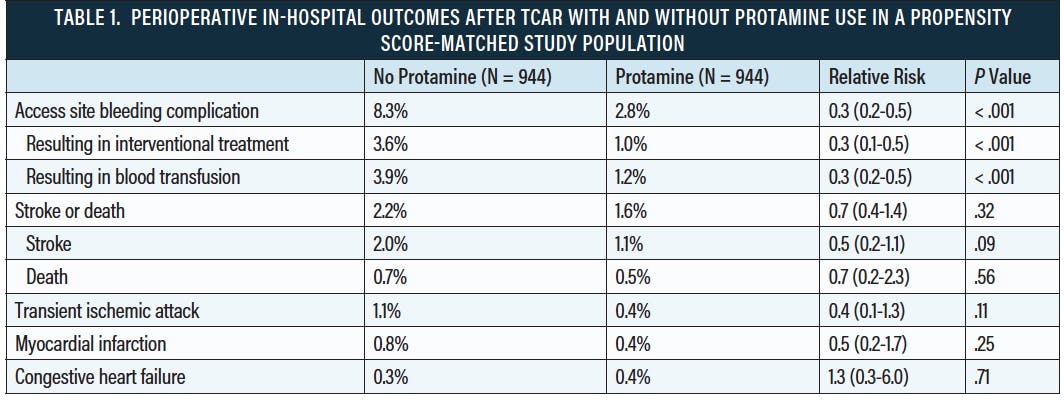
Utilizing the VQI, we also evaluated outcomes after protamine use in TCAR in a propensity score-matched patient population and found that protamine use was also associated with a significantly lower risk of bleeding complications (2.8% vs 8.3%; RR, 0.33; 95% CI, 0.21-0.52; P < .001), including bleeding that resulted in interventional treatment (1% vs 3.6%; RR, 0.26; 95% CI, 0.13-0.54; P < .001) and in blood transfusion (1.2% vs 3.9%; RR, 0.30; 95% CI, 0.15-0.58; P < .001), without any difference in in-hospital stroke or death (1.6% vs 2.2%; RR, 0.71; 95% CI, 0.37-1.39; P = .32) or other thromboembolic events.6 Interestingly, we found a trend toward a lower risk of stroke in patients who received protamine (1.1% vs 2.0%; RR, 0.53; 95% CI, 0.24-1.13; P = .09), stressing the critical relationship between perioperative bleeding complications and stroke risk in carotid revascularization procedures. This study underscores the importance for TCAR users to routinely administer protamine after TCAR to help further decrease the risk of perioperative bleeding and strokes associated with the procedure.
There are currently no prospective, randomized trials comparing TCAR and transfemoral carotid artery stenting, and it is unlikely that such a trial will be designed based on the results of several pivotal trials documenting the increased stroke risk of transfemoral carotid stenting compared with endarterectomy.2,3,7-9
Future randomized studies should rather be aimed at comparing TCAR with endarterectomy or with medical management in asymptomatic patients. Nonetheless, based on data from our well-matched retrospective VQI data analysis, TCAR should largely replace transfemoral carotid artery stenting as the preferred carotid stenting approach, particularly in those who are symptomatic or at high surgical risk.
1. Schermerhorn ML, Liang P, Eldrup-Jorgensen J, et al. Association of transcarotid artery revascularization vs transfemoral carotid artery stenting with stroke or death among patients with carotid artery stenosis. JAMA. 2019;322:2313. doi:10.1001/jama.2019.18441
2. Brott TG, Hobson RW, Howard G, et al. Stenting versus endarterectomy for treatment of carotid-artery stenosis. N Engl J Med. 2010;363:11-23. doi:10.1056/NEJMoa0912321
3. Mas J-L, Chatellier G, Beyssen B, et al. Endarterectomy versus stenting in patients with symptomatic severe carotid stenosis. N Engl J Med. 2006;355:1660-1671. doi:10.1056/NEJMoa061752
4. Rosenfield K, Matsumura JS, Chaturvedi S, et al. Randomized trial of stent versus surgery for asymptomatic carotid stenosis. N Engl J Med. 2016;374:1011-1020. doi:10.1056/NEJMoa1515706
5. Stone DH, Nolan BW, Schanzer A, et al. Protamine reduces bleeding complications associated with carotid endarterectomy without increasing the risk of stroke. J Vasc Surg. 2010;51:559-564.e1. doi:10.1016/j.jvs.2009.10.078
6. Liang P, Motaganahalli RL, Malas MB, et al. Protamine use in transcarotid artery revascularization is associated with lower risk of bleeding complications without higher risk of thromboembolic events. J Vasc Surg. April 2020. doi:10.1016/j.jvs.2020.02.019
7. Barnett HJM, Taylor DW, Eliasziw M, et al. Benefit of carotid endarterectomy in patients with symptomatic moderate or severe stenosis. N Engl J Med. 1998;339:1415-1425. doi:10.1056/NEJM199811123392002
8. Ederle J, Dobson J, Featherstone RL, et al. Carotid artery stenting compared with endarterectomy in patients with symptomatic carotid stenosis (International Carotid Stenting Study): an interim analysis of a randomised controlled trial. Lancet. 2010;375:985-997. doi:10.1016/S0140-6736(10)60239-5
9. Ringleb PA, Allenberg J, Brückmann H, et al. 30 day results from the SPACE trial of stent-protected angioplasty versus carotid endarterectomy in symptomatic patients: a randomised non-inferiority trial. Lancet. 2006;368:1239-1247. doi:10.1016/S0140-6736(06)69122-8
A New Era Of Endovascular Treatment Of Carotid Artery Stenosis?


Since its introduction, TCAR has shown promising outcomes in high-risk patients with carotid artery stenosis.1,2 TCAR offers a hybrid surgical and endovascular intervention in high-risk patients and mitigates the maneuvers associated with the increased stroke risk during transfemoral carotid artery stenting (TFCAS). In the pivotal United States FDA approval trial (ROADSTER 1), the overall stroke rate after TCAR using the ENROUTE® Transcarotid Neuroprotection System (Silk Road Medical) was 1.4%, the lowest reported stroke rate to date for any prospective, multicenter clinical trial of carotid stenting.1 These favorable outcomes extended to 1 year after the procedure.2 In the ROADSTER 2 study, which evaluated real-world usage of the ENROUTE® System in 632 high-surgical-risk patients, the combined 30-day stroke/death rate was 1%. The reported success rate was high despite that the fact that most operators (80%) were new TCAR operators.3
The Center for Medicare & Medicaid Services (CMS) covers TCAR for patients in any institution who meet criteria for high surgical risk, are symptomatic, and have ≥ 70% stenosis. However, reimbursement could also be achieved for institutions approved for the VQI TCAR Surveillance Project, a postmarket quality initiative by the Society of Vascular Surgery in collaboration with the FDA and CMS to evaluate the outcomes of TCAR in real-world clinical practice. The VQI TCAR Surveillance Project thus allowed institutions to offer TCAR for a wider range of high-risk patients, including those who are symptomatic with ≥ 50% stenosis or are asymptomatic with ≥ 80% stenosis.4 This is shown by the exponential increase of centers performing TCAR between September 2016 through December 2019 (Figure 1).
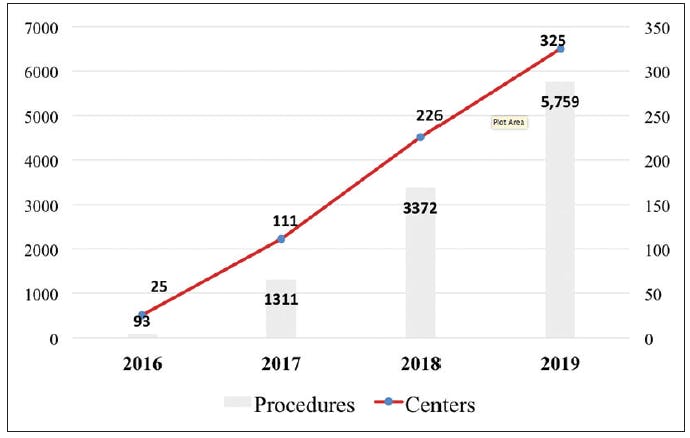
Figure 1. Number of centers participating in the TCAR Surveillance Project between September 2016 and December 2019.
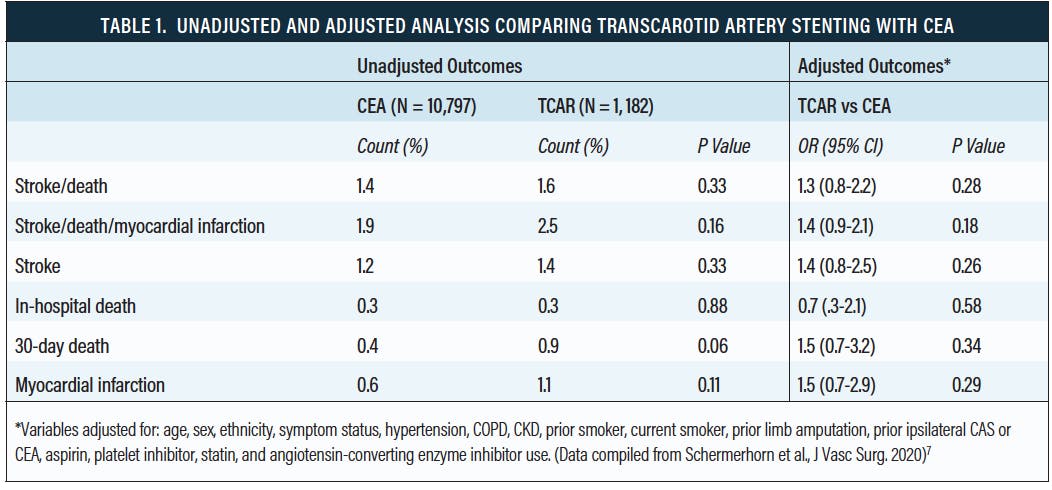
Initial data from the VQI TCAR Surveillance Projects showed a significant reduction in the risk of adverse neurological events after TCAR compared with TFCAS.5 In a recent study from JAMA, TCAR was associated with a 49% reduction in the risk of stroke or death compared with TFCAS,6 thus making TCAR a safe and durable revascularization option for patients who require a carotid revascularization procedure but who are at high risk for carotid endarterectomy (CEA). On the other hand, comparison of the outcomes of TCAR and CEA showed similar in-hospital stroke/death rates between the two procedures, despite a substantially higher medical risk in patients undergoing TCAR (Table 1). TCAR was also associated with lower rates of cranial nerve injury.7
The applicability of TCAR in patients with carotid occlusive disease and high-risk anatomic features continues to expand. TCAR has been shown to be safe in elderly patients and in patients with contralateral carotid artery occlusion.8,9 Moreover, in a small institutional series, TCAR was shown to be safe in patients with restenotic carotid arteries with acceptable rates of ipsilateral stroke, myocardial infarction, and death.10 Pending long-term results from the VQI TCAR Surveillance Project and ROADSTER 2 trial, more evidence-based data will be available to guide clinical decision-making within the next decade.
1. Kwolek CJ, Jaff MR, Leal JL, et al. Results of the ROADSTER multicenter trial of transcarotid stenting with dynamic flow reversal. J Vasc Surg. 2015;62:1227-1234. doi: 10.1016/j.jvs.2015.04.460
2. Malas MB, Lorenzo JI, Nejim B, et al. Analysis of the ROADSTER pivotal and extended-access cohorts shows excellent 1-year durability of transcarotid stenting with dynamic flow reversal. J Vasc Surg. 2019;69:1786-1796. doi: 10.1016/j.jvs.2018.08.179
3. Eckstein HH. Early outcomes in the ROADSTER 2 clinical trial of transcarotid artery revascularization in patients with significant carotid artery disease. Eur J Vasc Endovasc Surg. 2019;58(supp 3):e637.
4. Dermody M, Wood T. Transcarotid artery revascularization (TCAR). J Lancaster Gen Hosp. 2019;14:36-41.
5. Malas MB, Dakour-Aridi H, Wang GJ, et al. Transcarotid artery revascularization versus transfemoral carotid artery stenting in the Society for Vascular Surgery Vascular Quality Initiative. J Vasc Surg. 2019;69:92-103. doi: 10.1016/j.jvs.2018.05.011
6. Schermerhorn ML, Liang P, Eldrup-Jorgensen J, et al. Association of transcarotid artery revascularization vs transfemoral carotid artery stenting with stroke or death among patients with carotid artery stenosis. JAMA. 2019;322:2313-2322. doi: 10.1001/jama.2019.18441
7. Schermerhorn ML, Liang P, Dakour-Aridi H, et al. In-hospital outcomes of transcarotid artery revascularization and carotid endarterectomy in the Society for Vascular Surgery Vascular Quality Initiative. J Vasc Surg. 2020;71:87-95. doi: 10.1016/j.jvs.2018.11.029
8. Dakour-Aridi H, Kashyap VS, Wang GJ, et al. The impact of age on in-hospital outcomes after transcarotid artery revascularization, transfemoral carotid artery stenting, and carotid endarterectomy. J Vasc Surg. 2020;S0741-5214(19)32862-9. doi: 10.1016/j.jvs.2019.11.037
9. Dakour-Aridi H, Nolan B, Schermerhorn ML, et al. In-hospital outcomes of transcarotid artery revascularization with dynamic flow reversal in patients with contralateral carotid artery occlusion. J Vasc Surg. 2019;70:e85. doi: 10.1016/j.jvs.2019.06.113
10. Wang SK, King AH, Kashyap VS, et al. Treatment of carotid restenosis using transcarotid revascularization. Vasc Endovasc Surg. 2020;54:436-440. doi: 10.1177/1538574420923815
Impact Of Real-World Data On Clinical Vascular Surgery Practice

The TCAR procedure is an alternative approach to carotid bifurcation stenting that received FDA approval (for the ENROUTE® Neuroprotection System) in September 2015. Following the procedure’s approval, the unique relationship between Silk Road Medical (the company who brought the technology to the United States market), the CMS, and the VQI (the database of the Society for Vascular Surgery’s Patient Safety Organization [PSO]) led to reimbursement for TCAR for high-surgical–risk patients contingent upon data entry into the VQI TCAR Surveillance Project in September 2016. Payment by CMS for the TCAR procedure for patients who met inclusion criteria was conditional upon participation by the institution in the carotid stenting module of the VQI. One of the unique characteristics of the VQI when compared with other procedural data registries is the requirement for long-term follow-up with a window of 9 to 21 months after the date of service for the index procedure. The result of this exclusive relationship is an enlarging, prospective data set of approximately 95% of the TCAR procedures performed in the United States collected within the VQI, which allows for contemporaneous comparisons of TCAR to not only carotid artery (CAS) stenting performed via TFCAS, but also to CEA.
One of the obvious challenges of such comparisons arises from the differences in volume of cases collected within the VQI for each procedure. When the VQI was incorporated into the PSO in 2009, CEA and CAS procedures were part of the initial modules available, thus resulting in 7 years of data collection for TFCAS and CEA ahead of the TCAR procedure. To address the differences in volume when performing statistical comparisons, investigators will use a technique known as propensity matching to develop data sets for comparison that only differ by the treatments being assessed. Specifically, each subject is assigned a propensity score based-upon presence and distribution of attributes. Subjects in each group are then matched by propensity score. This produces two groups who are similar in covariate attributes, but only differ by the treatment they received. This technique was employed by Malas et al in their recent publication comparing TCAR to CEA using VQI data as part of the TCAR Surveillance Project.1
At the time of the data review, there were 5,716 TCAR procedures and 44,442 CEA procedures in the VQI CAS and CEA modules, respectively. A direct comparison of the full data set yielded a stroke and death rate of 1.5% for TCAR and 1.4% for CEA (P = .67) as published by Schermerhorn et al.2 It was estimated that 57,942 patients per group would be required to detect a statistical difference for this outcome within a randomized controlled trial. The statistical technique of propensity match was thus applied to provide a more meaningful comparison and eliminate the effect of disparate sample size. The two groups were then matched based upon symptomatic status, age, coronary artery disease, congestive heart failure, chronic obstructive pulmonary disease, chronic kidney disease, previous ipsilateral CEA, previous ipsilateral CAS, contralateral occlusion, aspirin class, and statin use. Propensity matching resulted in 5,160 patients in each of the TCAR and CEA groups. The results are summarized in Figure 1. Compared with CEA, TCAR was more favorable in regard to incidence of cranial nerve injury, myocardial infarction (MI), postprocedural hypertension, stroke/death/MI, length of stay > 1 day, and nonhome discharge.

Figure 1. Propensity matching results in patients in each of the TCAR and CEA groups.
For the practicing vascular surgeon, the results of propensity matching of TCAR versus CEA are compelling. CEA, long considered the gold standard for care of carotid bifurcation disease and arguably one of vascular surgery’s centerpiece operations for more than 60 years, is now facing competition regarding safety and efficacy for standard-risk patients by the TCAR approach to carotid stenting. Historically, TFCAS has never been able to achieve equipoise to CEA. Data from the VQI TCAR Surveillance project not only show superiority of TCAR over TFCAS for traditional indications for carotid stenting, but now provide evidentiary support to potentially expand the indication to standard-risk patients who currently do not meet the high-risk inclusion criteria for TCAR. In my own practice, the outcomes of TCAR have been so compelling, combined with the VQI TCAR Surveillance Project results, that I have virtually abandoned TFCAS for any patient who otherwise meets current criteria for TCAR. Based upon the propensity matching data for TCAR versus CEA, I would welcome the opportunity to offer TCAR to standard-risk patients who meet anatomic criteria.
1. Malas M, Dakour-Aridi H, Kashyap V, et al. Outcomes of transcarotid revascularization with dynamic flow reversal (TCAR) versus carotid endarterectomy (CEA) in the TCAR Surveillance Project. Eur J Vasc Endovasc Surg. 2019;58:e638.
2. Schermerhorn ML, Liang P, Dakour-Aridi H, et al. In-hospital outcomes of transcarotid artery revascularization and carotid endarterectomy in the Society for Vascular Surgery Vascular Quality Initiative. J Vasc Surg. 2020;71:87-95.
Advertisement
Advertisement