Advertisement
Advertisement
April 2021
Sponsored by Penumbra, Inc.
A Coil for Every Case: Achieving Volume and Softness With the Penumbra Embolization Platform
With Jafar Golzarian, MD; Russ M. Guidry Jr, MD; Andrew J. Gunn, MD; Sonya S. Noor, MD, FACS; Kristina A. Giles, MD; Austin Bourgeois, MD; Omar Chohan, MD; and Howaida El-Said, MD, PhD

EVOLUTION OF COIL TECHNOLOGY
Embolization technologies have evolved over the last few decades from the use of pushable coils in the early 1970s to detachable coils in the 2000s (Figure 1). These early coils were available in smaller sizes and lengths. In fact, many of the early detachable coils were not adapted for peripheral use. When one needed to embolize a large aneurysm or occlude a vessel, a significant number of pushable coils were needed to ensure long-term occlusion to prevent recanalization. Many of the original pushable coils relied on fibers to aid with thrombus formation within aneurysms or vessels. Similarly, detachable coils relying on fibers and hydrogel-coated technologies were also designed for high thrombogenicity.1
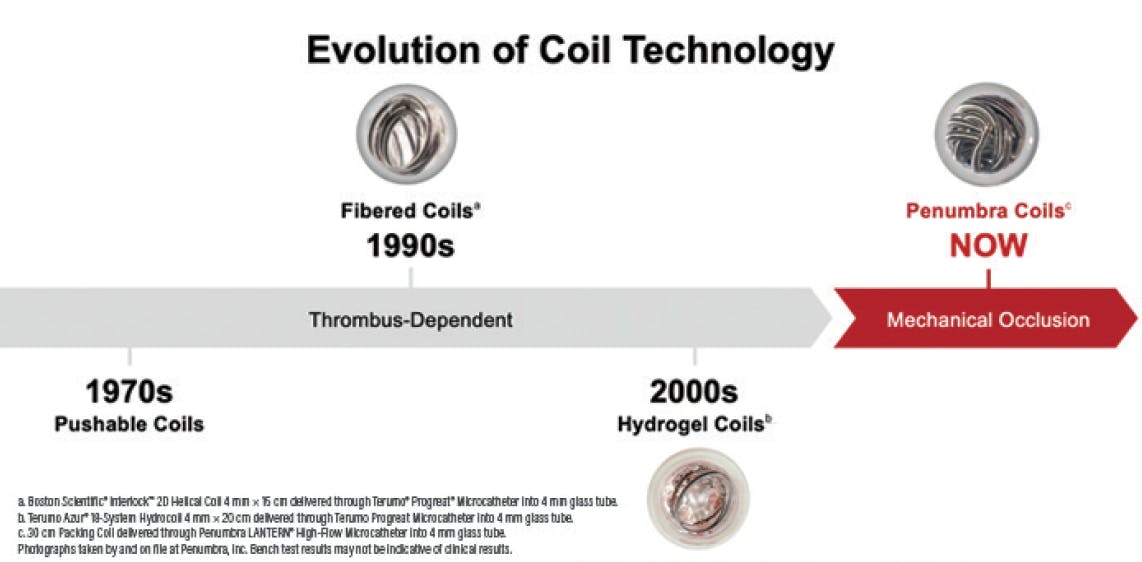
Figure 1. Evolution of Coil Technology.
COIL TECHNOLOGY TODAY: THE IDEAL COIL?
Today, coil technology has dramatically improved. Better understanding of the role of mechanical occlusion has allowed physicians to address more complex and challenging procedures. While no coil can be considered the “ideal coil,” every interventionalist should understand what tools should be utilized in the appropriate setting. In my opinion, the ideal coil should possess the following characteristics:
- Easy to load and deploy
- Precise positioning and reliable detachment
- Smooth transitions through catheter and tortuosity
- Minimal to no catheter kick back
- A variety of lengths and sizes available
- Large volume and softness for effective packing density
- Resistant to recanalization
PENUMBRA’S COMPLETE EMBOLIZATION PLATFORM
Penumbra’s embolization platform is composed of five detachable technologies: Ruby Coil, POD, and Packing Coil (Penumbra, Inc.), all of which are large-volume coils, similar in volume to 0.035-inch coils and deliverable through the company’s high-flow LANTERN (0.025-inch inner diameter) microcatheter (Figure 2). In 2020, Penumbra expanded its platform with the launch of its large-volume, low-profile coils, Ruby Coil LP and Packing Coil LP, both of which are deliverable through low-profile microcatheters (0.0165-0.021 inch).
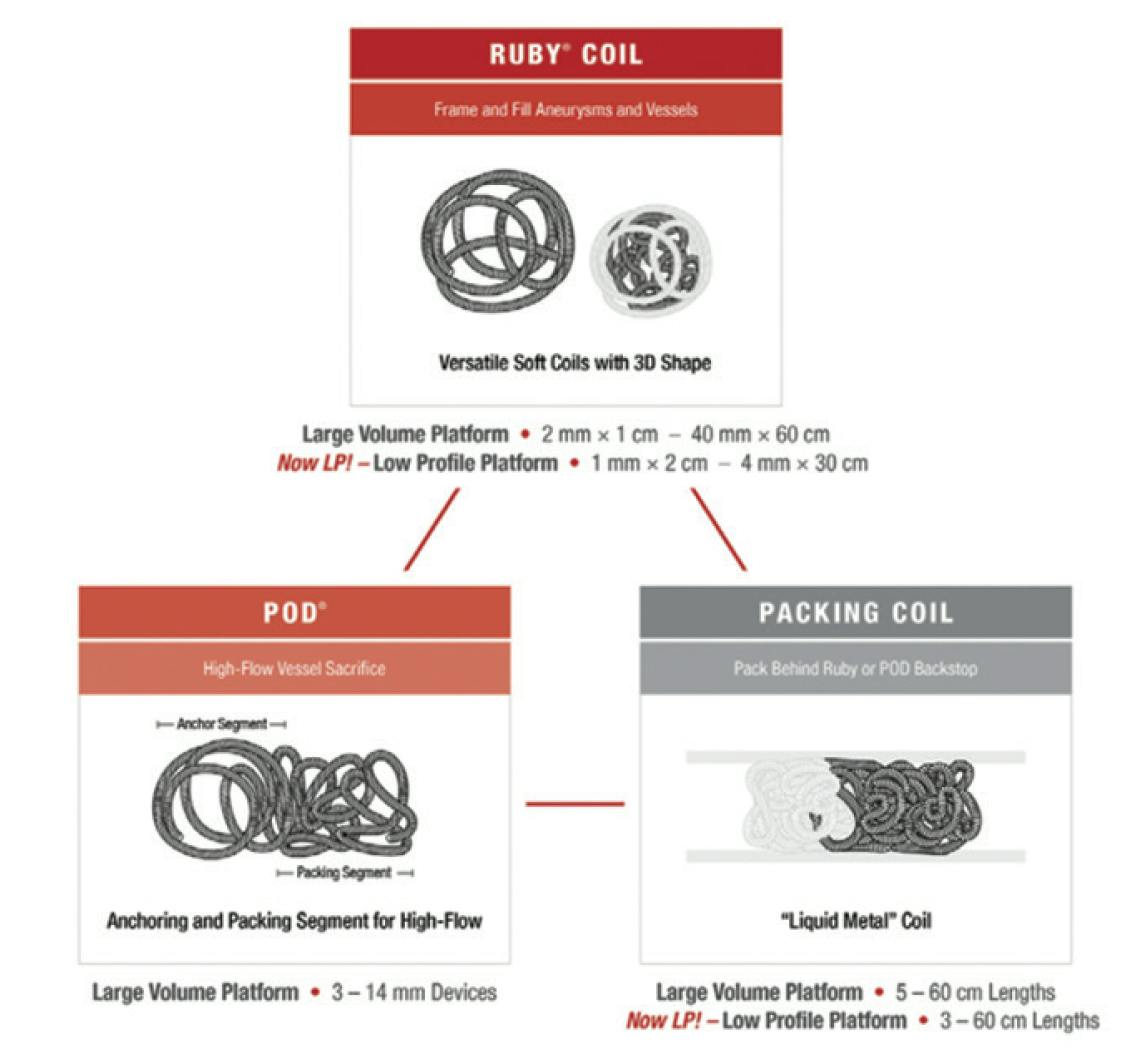
Figure 2. Penumbra’s Complete Embolization Platform.
Each of the Penumbra coil technologies are characterized by their volume and softness, enabling a mechanical occlusion. The ability to densely pack with soft, large-volume, bare platinum Penumbra coils have been associated with low rates of recanalization.2
1. Fohlen A, Namur J, Ghegediban H, et al. Peripheral embolization using hydrogel-coated coils versus fibered coils: short-term results in an animal model. Cardiovasc Intervent Radiol. 2018;41:305-312. doi: 10.1007/s00270-017-1834-7
2. Vogler J, Gemender M, Samoilov D. Packing density and long-term occlusion after transcatheter vessel embolization with soft, bare-platinum detachable coils. Am J Interv Radiol. 2020;4:2. doi: 10.25259/AJIR_31_2019
Proximal Splenic Artery Embolization in High-Grade Splenic Trauma


Splenic injury remains one of the most common sequelae of abdominal trauma, and its management has rapidly evolved with the expansion of endovascular therapies. Splenic artery embolization (SAE) has supplanted immediate splenectomy for hemodynamically stable patients with splenic injury.1 This approach avoids splenectomy complications such as thrombocytosis and sepsis and presents the best opportunity for preserving splenic function when nonoperative management is pursued.2
Proximal SAE involves embolic agent deployment within the mid-splenic artery, distal to the dorsal pancreatic artery and proximal to the pancreatica magna artery, thus decreasing the arterial pressure to the spleen, thereby promoting hemostasis and preserving perfusion through collateral vessels.1 Proximal SAE is associated with high rates of technical and clinical success, with fewer complications and shorter procedural times when compared to selective catheterization and embolization.3-7 For these reasons, proximal SAE is our chosen treatment for high-grade splenic injuries, regardless of direct signs of vascular injury such as extravasation or pseudoaneurysms.
Proximal SAE can present technical challenges. If conventional coils are used, there is the possibility of coil pack migration due to the inherent high flow of the splenic artery. Coil migration could result in continued hemorrhage or splenic infarction. Further, the tortuosity of the splenic artery and/or stenosis of the celiac axis can also present challenges as they could preclude the use of endovascular plugs that require a larger delivery system. Our recently published trial examined the use of POD versus endovascular plugs in proximal SAE in high-grade splenic trauma.8 In this pilot trial, we found that POD likely had higher rates of primary technical success than plugs. POD is well-suited for proximal SAE since its robust distal aspect assists with anchoring while its softer proximal aspect allows for dense packing. Moreover, the coil can be delivered through a standard high-flow microcatheter.
CASE STUDY
A hemodynamically stable man in his mid-50s was brought to the emergency department after a motor vehicle collision. Initial CT of the abdomen and pelvis with contrast demonstrated a grade III splenic laceration (Figure 1A). As is standard at our institution, he was referred for proximal SAE in the setting of high-grade splenic trauma. Digital subtraction angiography (DSA) of the celiac artery was performed using a 5-F diagnostic catheter (Soft-Vu® RC-2; AngioDynamics) (Figure 1B). The mid-splenic artery measured 6.3 mm, and the origin of the pancreatica magna artery was well visualized (Figure 1C). The mid-splenic artery was selected using a microwire (Glidewire® GT wire; Terumo Interventional Systems) and high-flow microcatheter (Progreat®; Terumo Interventional Systems). Once in satisfactory position, proximal SAE was performed using an 8-mm POD anchoring coil, followed by a 30-cm Packing Coil. Hemostasis was obtained in the mid-splenic artery 2 minutes after coil deployment with preservation of collateral flow (Figure 1D). The patient was discharged 3 days postprocedure.
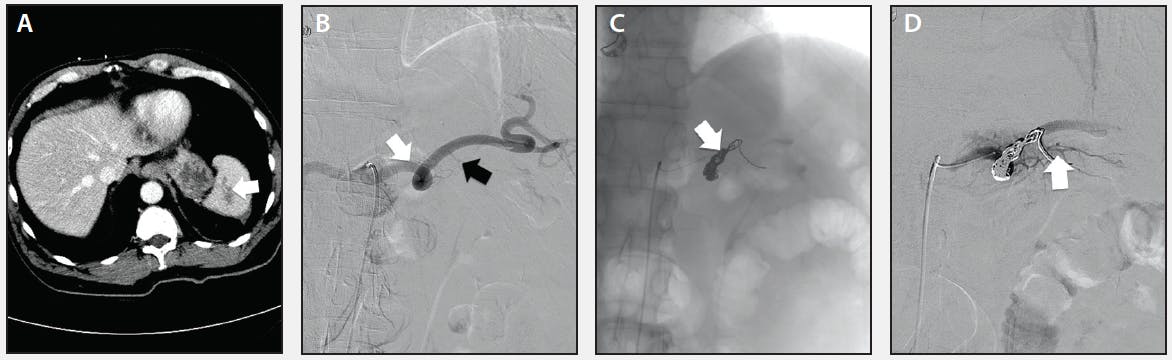
Figure 1. A patient with a grade III splenic laceration. Contrast-enhanced axial CT image demonstrating grade III splenic laceration (white arrow) (A). DSA from the celiac artery demonstrating the splenic artery (white arrow) and the pancreatica magna artery (black arrow) (B). Spot radiograph after successful deployment of a POD 8-mm anchoring coil and a Packing Coil (white arrow) (C). DSA demonstrating complete occlusion of the mid-splenic artery with preserved collateral flow to the spleen (white arrow) (D).
POD anchoring coils have improved our efficiency and confidence in performing proximal SAE for high-grade splenic trauma with coils. The Packing Coils have the ability to nicely fill into the frame created by the anchoring coil to provide rapid, reliable hemostasis.
1. Quencer KB, Smith TA. Review of proximal splenic artery embolization in blunt abdominal trauma. CVIR Endovasc. 2019;2:11. doi: 10.1186/s42155-019-0055-3
2. Rosati C, Ata A, Siskin GP, et al. Management of splenic trauma: a single institution’s 8-year experience. Am J Surg. 2015;209:308-314. doi: 10.1016/j.amjsurg.2014.06.034
3. Haan JM, Bochicchio GV, Kramer N, Scalea TM. Nonoperative management of blunt splenic injury: a 5-year experience. J Trauma. 2005;58:492-498. doi: 10.1097/01.ta.0000154575.49388.74
4. Requarth JA, D’Agostino RB, Miller PR. Nonoperative management of adult blunt splenic injury with and without splenic artery embolotherapy: a meta-analysis. J Trauma. 2011;71:898-903. doi: 10.1097/TA.0b013e318227ea50
5. Banerjee A, Duane TM, Wilson SP, et al. Trauma center variation in splenic artery embolization and spleen salvage: a multicenter analysis. J Trauma Acute Care Surg. 2013;75:69-74. doi: 10.1097/TA.0b013e3182988b3b
6. Schnuriger B, Inaba K, Konstantinidis A, et al. Outcomes of proximal versus distal splenic artery embolization after trauma: a systematic review and meta-analysis. J Trauma. 2011;70:252-260. doi: 10.1097/TA.0b013e3181f2a92e
7. Rong JJ, Liu D, Liang M, et al. The impacts of different embolization techniques on splenic artery embolization for blunt splenic injury: a systematic review and meta-analysis. Mil Med Res. 2017;4:17. doi: 10.1186/s40779-017-0125-6
8. Gunn AJ, Raborn JR, Griffin R, et al. A pilot randomized controlled trial of endovascular coils and vascular plugs for proximal splenic artery embolization in high-grade splenic trauma. Abdom Radiol (NY). Published online January 2, 2021. doi: 10.1007/s00261-020-02904-w
Asymptomatic 3.5-cm Right Internal Iliac Artery Aneurysm

CASE PRESENTATION
A man in his late 70s was diagnosed with an asymptomatic abdominal aortic aneurysm and treated with AFX endograft (Endologix, Inc.) 3 years prior. He had a history of peripheral artery disease and we were following him post-endovascular aneurysm repair (EVAR) for a right internal iliac artery (IIA) aneurysm. The IIA aneurysm initially measured 2 cm and therefore was not treated at the time of EVAR; however, over the last 2 years, it grew to 3.5 cm and he remained asymptomatic. The patient was evaluated for right IIA coiling and extension of the AFX limb into the external iliac artery (EIA).
Challenges
On evaluation of the patient’s anatomy, he had a fairly steep common iliac artery (CIA) bifurcation into the EIA and IIA and a short IIA trunk (Figure 1A). The challenges included obtaining a stable platform for placement of a sheath into the CIA and IIA to allow safe and stable cannulation, as well as accurate coil embolization without migration of the coils distally into the IIA branches or the EIA.
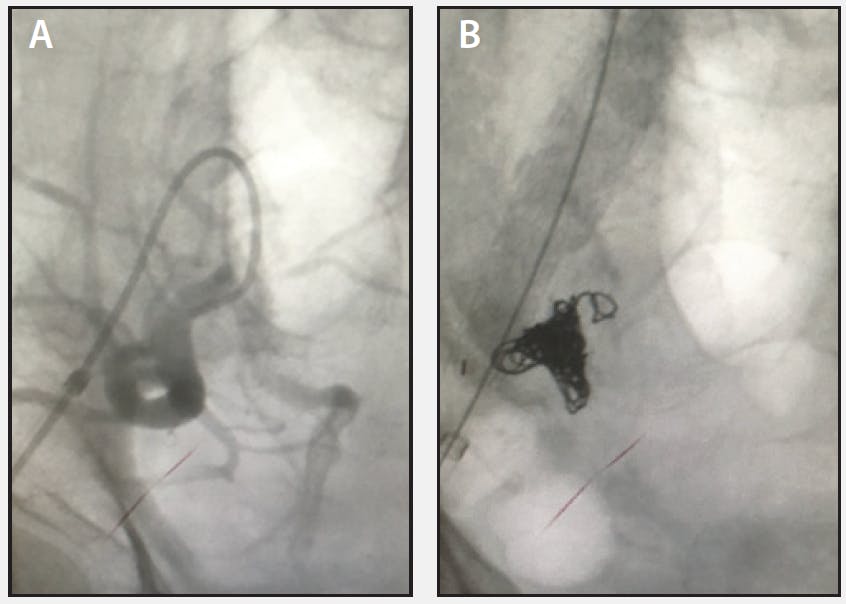
Figure 1. Steep angle of the right IIA, tortuosity, and the short trunk of the IIA (A). Successful delivery of the coils into the main trunk of the IIA, with no migration into the distal branches or EIA (B).
Procedural Overview
Ultrasound-guided access was achieved with the right common femoral artery, followed by placement of a micropuncture sheath and an 8-F sheath to allow placement of a ProGlide® device (Abbott Vascular) to allow future closure. Over a stiff wire, a 12-F sheath was introduced into the EIA, as this would be required for placement of an extension limb into the EIA. With a 12-F sheath in place, a 4-F Glidecath® (Terumo Interventional Systems) was used to cannulate and confirm the IIA trunk and branches. A LANTERN high-flow microcatheter was inserted and tracked distally to the main trunk of the hypogastric artery. The LANTERN microcatheter was easily delivered through the Glidecath and anchored into the first branch of the IIA with confirmation. The CIA bifurcation made the case challenging because of the steep angle into the IIA; however, the Glidecath and LANTERN microcatheter negotiated this angle into the branches of the IIA and offered a stable platform for coil embolization successfully. The total coils used included 6-mm X 20-cm, 6-mm X 30-cm, and 5-mm X 20-cm Ruby Standard coils, all successfully placed into the origin of the IIA branches, as well as the rest of the IIA trunk (Figure 1B). The extension iliac limb of the AFX graft was placed successfully into the EIA with balloon angioplasty. Completion angiography showed good flow from the CIA into the EIA, with almost no flow into the IIA and obvious coil embolization of the IIA trunk.
When embolizing large aneurysm sacs or shutting down high-flow vessels, Penumbra’s softer and larger-volume coils have been helpful in my practice. Past embolizations required stiffer plugs or smaller conventional coils. With the availability of longer 60-cm lengths and wide range of coil offerings, Penumbra’s coil platform has simplified my approach to embolization.
Value of Large-Volume Soft Coils for Transcaval Approach to Type II Endoleak

CASE STUDY
A man in his late 70s with significant medical comorbidities had undergone EVAR 3 years prior for an 8-cm aneurysm. He was found to have gradual enlargement of the aneurysm sac; however, no clear type II endoleak was initially seen on postoperative imaging. On his most recent annual surveillance CT, a clear type II endoleak was identified emanating from the superior portion of the 9.6-cm aneurysm sac from lumbar feeding vessels (Figure 1).
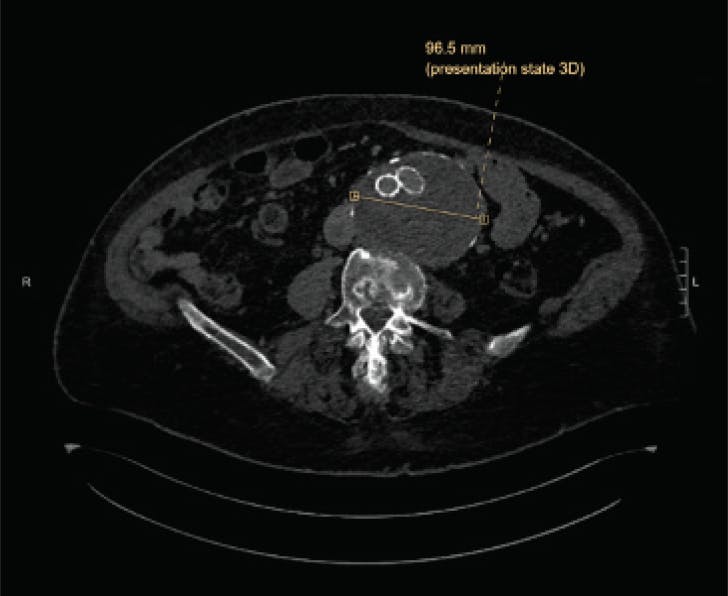
Figure 1. CT image demonstrating a 9.6-cm expanding aneurysm.
An aortogram showed no evidence of type Ia or Ib endoleak, no evidence of type III endoleak, and no clear type II endoleak; however, possible retrograde flow in lumbar vessels was noted with a long delay. There was no clear access to the presumed lumbar source from the hypogastric artery or superior mesenteric artery collaterals for selective catheterization. We attempted to track a wire and catheter alongside the right iliac EVAR limb. However, this proved unsuccessful because of vessel tortuosity, an area of calcification, and good apposition of the graft limb. This type of anatomy is known to be excellent for transcaval access, so we proceeded with this approach.
We gained access to the right common femoral vein with a micropuncture needle under ultrasound access and upsized to the Rösch-Uchida sheath (Cook Medical). The Rösch-Uchida device was then advanced and positioned at the appropriate location. Due to a calcified aortic sac wall, we were able to observe the aneurysm sac moving as we applied pressure against the inferior vena cava wall as it bowed out from the aneurysm. We confirmed our orientation with our two preplanned gantry angles and proceeded to advance the needle stylet and guiding catheter into the aneurysm sac. When we removed the needle after advancing the sheath, there was no backbleeding, indicating our presence within the sac thrombus. We then advanced a Glidewire® (Terumo Interventional Systems) into the sheath and into the sac, noting the wire to coil within the confines of the aneurysm sac. We then exchanged the catheter that came with the sheath for a 5-F, 65-cm KMP catheter, which we positioned in the sac. We then performed angiography within the sac, revealing two superior lumbar arteries, which were likely the source of the patient’s expanding aneurysm and type II endoleak (Figure 2). This was consistent with his preoperative imaging.
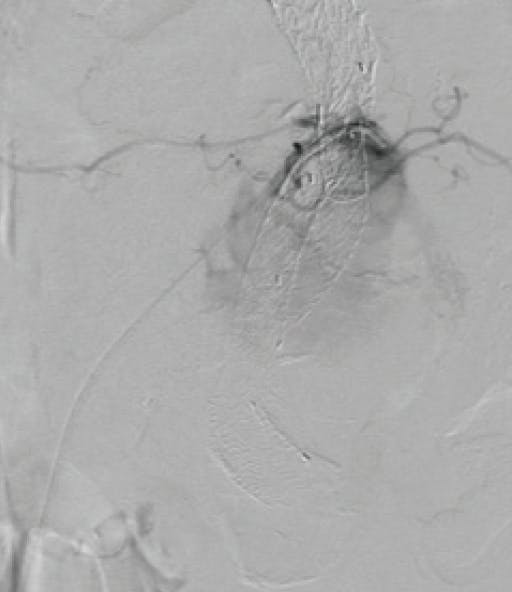
Figure 2. Sacogram revealing the source of the expanding aneurysm and feeding lumbar arteries.
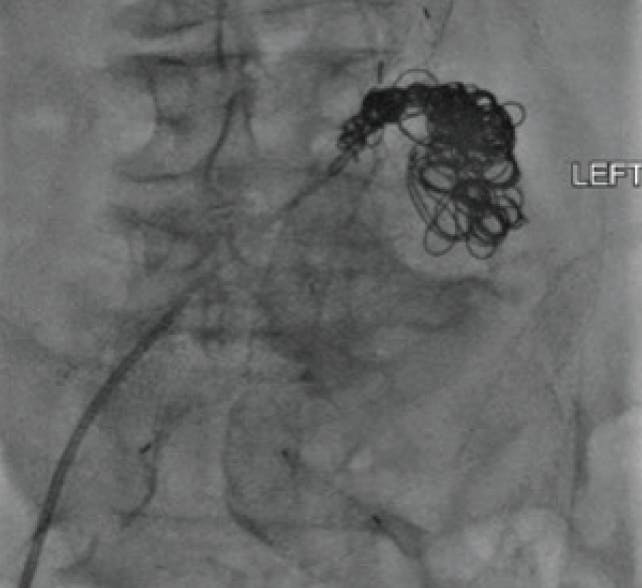
Figure 3. Two 40-mm X 60-cm Ruby Standard Coils and one 32-mm X 60-cm Ruby Standard Coil.
Based on these results, we advanced a LANTERN microcatheter and then deployed two 40-mm X 60-cm Ruby Standard Coils and one 32-mm X 60-cm Ruby Standard Coil in this area until we had no further flow from the KMP catheter (Figure 3). We also injected 2,000 units of thrombin in divided doses in two areas and then subselected a more inferior portion of the posterior sac, noting dark serous fluid. This was aspirated, having the appearance of liquified thrombus but no fresh blood, confirming that the type II endoleak had resolved. We then again obtained a sacogram, which revealed presence of contrast within the sac, and no outflow or inflow via lumbar or other arteries was visualized. At this point, we removed the KMP catheter and performed a venacavogram via the sheath, which revealed no evidence of arteriovenous fistula between the sac and the vena cava, nor any other pathology. In follow-up, the patient’s CT scan showed no further endoleak and stable size.
Embolization With Penumbra’s Low-Profile System
Gastrointestinal Bleed

Why I Chose The LP Coils
- Ability to form and densely pack in small tortuous vessels
- Softness profile of the coils
- Immediate occlusion
CASE STUDY
A man in his late 70s with a history of rectal cancer was referred to our service for CT-guided biopsy of a hypermetabolic para-aortic lymph node. He underwent a biopsy in which five specimens were obtained. Serial CT imaging showed evidence of a hematoma (Figure 1), and CTA was performed as an extension of the biopsy procedure. The CTA showed a large focus of active extravasation from the nodal biopsy side (Figure 2). Given the rate of ongoing bleeding, he was taken immediately to the angiography suite for intervention.
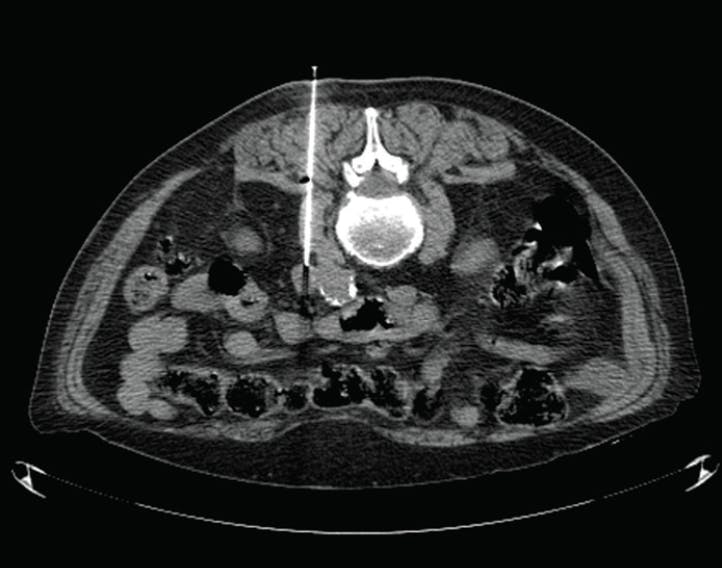
Figure 1. CT-guided biopsy of the 1.2-cm para-aortic lymph node.
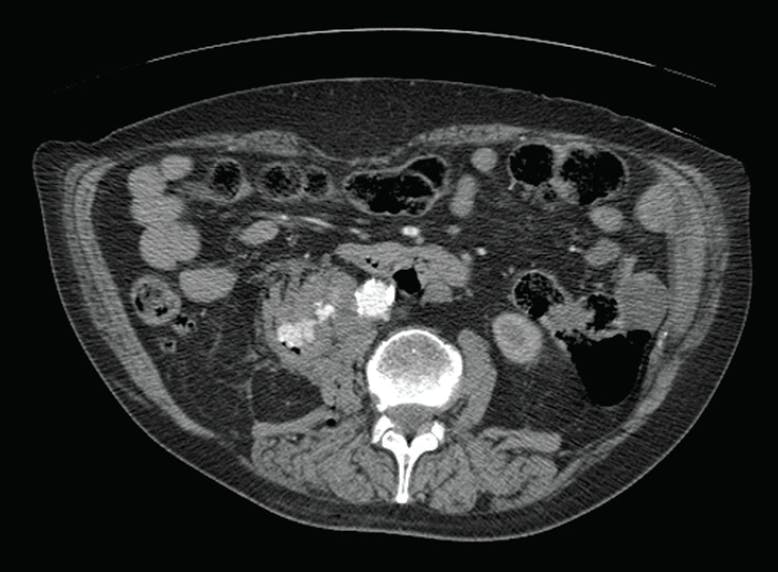
Figure 2. CTA performed immediately after the biopsy showed a large focus of active arterial bleeding.
Multiple angiograms showed that the regional lumbar arteries were not supplying the site of active bleeding. Instead, a nodal artery directly supplying the para-aortic left node was found after a few minutes of angiographic interrogation. This artery was extremely diminutive in size, and base catheter purchase was challenging (5-F Mikaelsson®, Cook Medical). I was eventually able to select the artery using a TruSelect® microcatheter (Boston Scientific Corporation). Given the small size of the artery, the microcatheter was occlusive and could only be advanced a few centimeters beyond the artery origin. A selective arteriogram via the microcatheter revealed ongoing active bleeding (Figure 3). With relatively unstable catheter position, a total of two 1-mm X 2-cm Ruby LP were deployed in the artery, causing occlusion. The coils landed as desired and immediately stopped the bleed (Figure 4 and Figure 5).
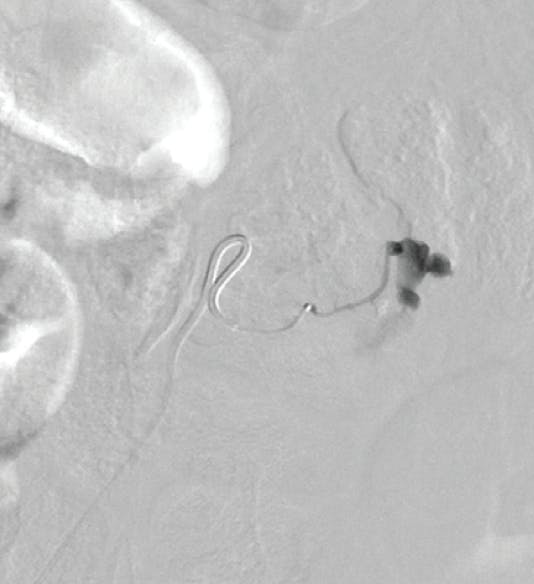
Figure 3. Selective arteriogram of the nodal branch of the aorta supplying the site of active bleeding.
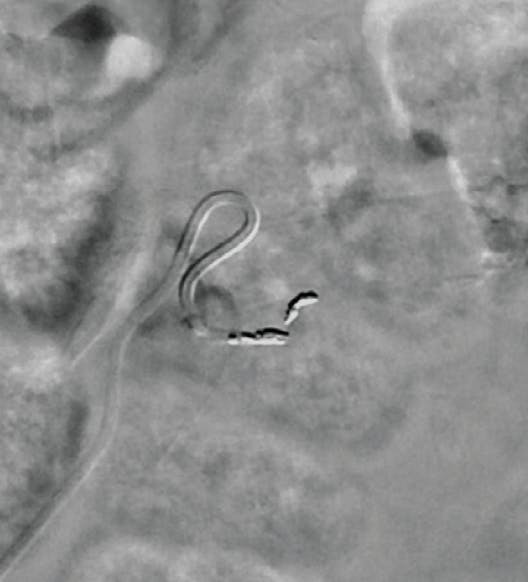
Figure 4. Completion angiogram after embolization with two 1-mm X 2-cm Ruby LP Coils. Vessel occlusion was confirmed.
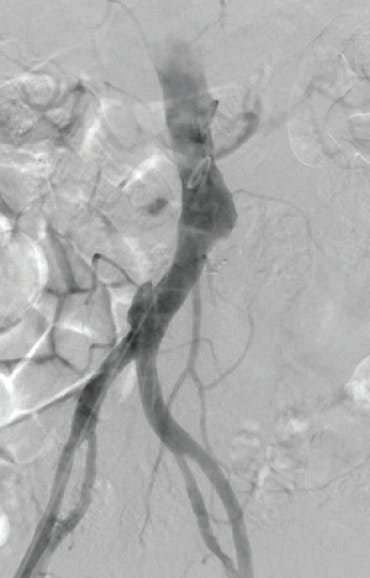
Figure 5. Completion aortogram demonstrated no further active bleeding.
The patient was admitted overnight for observation and discharged the next morning. He showed no further clinical or laboratory evidence of ongoing bleeding.
This case illustrates several advantages of the Ruby LP system. These coils form well, without sacrificing catheter stability. They are fully detachable and compatible with very low-profile microcatheters. These features allow for efficient and reproducible small vessel embolization.
Preoperative Embolization of Hypervascular Osseous Renal Cell Carcinoma Metastasis

Why I Chose The LP Coils
- Use of a lower-profile 2.4-F microcatheter
- Trackability for distal embolization
- Dense packing that lends to true and immediate occlusion
- Ability to recapture and track over the coil
CASE STUDY
A patient in his early 50s with a history of renal cell carcinoma presented with complaints of shoulder pain. Upon further examination, two new lytic lesions were discovered in his right humerus with a significant cortical breach and destruction with large soft tissue components. Avascular necrosis was also discovered in the right humeral head.
The patient had been scheduled for an intramedullary fixation of his right humerus; however, prior to surgery, the vascular and interventional radiology service was consulted for preoperative embolization to minimize any intraoperative bleeding.
Access was achieved through the right radial artery using a 5-F Berenstein catheter, which was advanced into the right axillary artery. Additional angiography showed a high radial artery takeoff with the lesions being supplied proximally by the humeral circumflex artery and distally by the deep brachial branches coming off the brachial artery (Figure 1, Figure 2, and Figure 3). The retrograde approach required to treat the distal lesion necessitated the use of a Rösch inferior mesenteric (RIM) catheter, producing a rather tight U-turn (Figure 4). First, the proximal humeral lesion was addressed. Using a 5-F Berenstein and a coaxial 2.4-F microcatheter, two 4-mm X 15-cm Ruby LP Coils were deployed into the targeted circumflex humeral artery branches. The coils accurately and rapidly occluded the targeted branches while fully preserving the distal muscular branches. I then exchanged for a 5-F RIM catheter and a coaxial 2.4-F microcatheter into the brachial artery to address the multiple tumoral feeding branches. These branches were all very tortuous and distal, with one branch in particular having a very short landing zone. I was able to embolize each of the feeding branches distally with a variety of 2- to 3-mm Ruby LP Coils. Once again, the coils landed with excellent precision and rapid occlusion. The coils did not hang out of the feeding branches into the brachial artery, and there was no presence of non-target embolization. In total, eight Ruby LP Coils were used, with the final angiogram showing significant reduction in tumor vascularity (Figure 5).
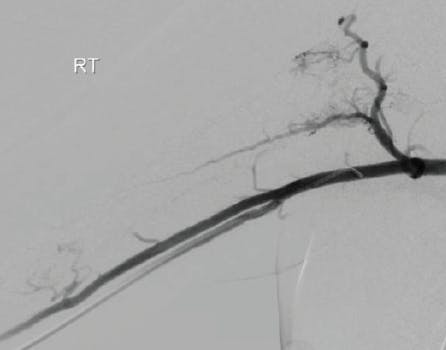
Figure 1. Initial right axillary artery angiogram (early phase) demonstrating tumoral supply to the proximal humeral lesion via the circumflex humeral artery.
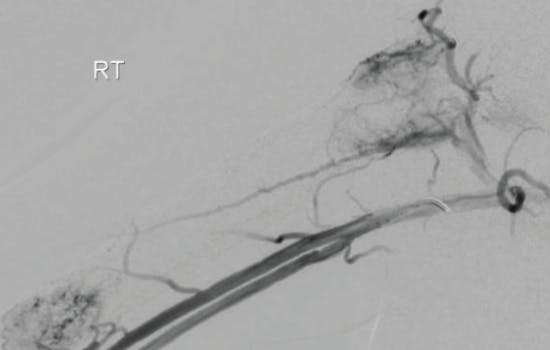
Figure 2. Initial right artery angiogram (middle phase) demonstrating tumoral supply to the proximal and distal humeral lesion.
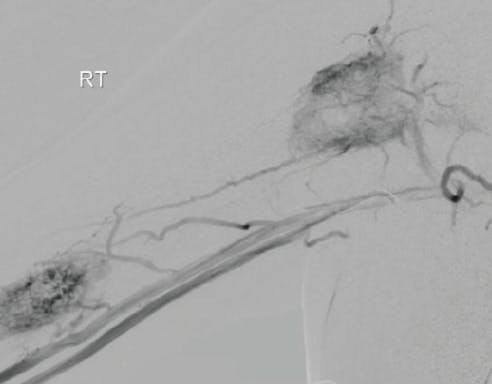
Figure 3. Initial right axillary artery angiogram (delayed phase) demonstrating tumoral supply to the proximal and distal humeral lesion. Tumor blush of the hypervascular masses is more pronounced.
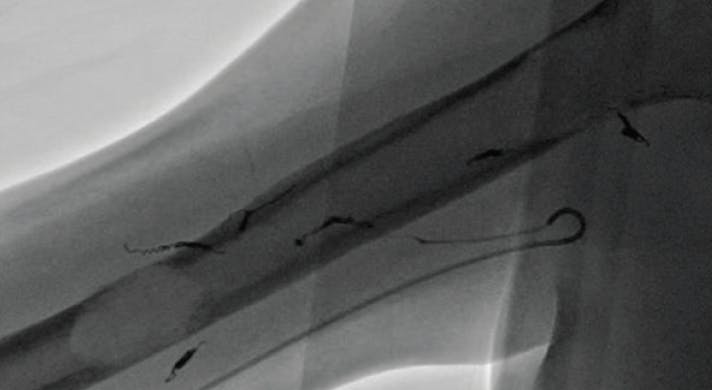
Figure 4. Spot image of Ruby LP deployment within a deep brachial artery collateral supplying the distal humeral lesion. Note the cortical destruction and erosion of proximal and mid humerus.
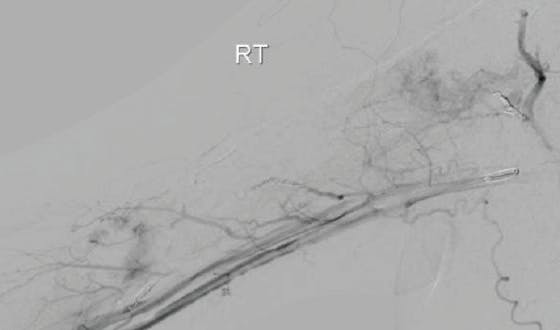
Figure 5. A completion right axillary angiogram showing a significant reduction in tumor vascularity and complete occlusion of embolized arteries.
For this case, Ruby LP Coils provided smooth trackability, accurate deployment, and rapid occlusion. The coils prevented non-target embolization to the digital arteries. The unexpected right radial artery takeoff required coils that could make the tight turns, reach the targeted vessel, and deploy precisely. The Ruby LP Coils were the ideal choice in this situation. The patient was able to return to the orthopedic surgeon the next day for his surgery with minimal blood loss.
Aortopulmonary Collateral Embolization to Unload the Single Ventricle

Why I Chose The LP Coils
- LP lends itself to dense and efficient packing
- Designed to efficiently occlude tortuous vessels
- “Liquid metal” designed to occlude branch vessels and collaterals
CASE PRESENTATION
The patient was a 7-month-old infant with complex congenital heart disease consisting of hypoplastic left heart syndrome (HLHS). She had undergone a Norwood operation (the making of the pulmonary valve the systemic semilunar valve with the coronary arteries filling retrograde through the native small ascending aorta) and a Sano (a conduit from the right ventricle [RV] to the pulmonary arteries) (Figure 1). At 6 months, she had undergone a Glenn operation, where the superior vena cava was connected to the right pulmonary artery to allow blue blood to bypass the heart and go directly into the lungs (Figure 1). The presence of aortopulmonary collaterals caused volume load on the single ventricle, resulting in an elevated Glenn pressure of 14 mm Hg. Thus, the collaterals needed to be closed.
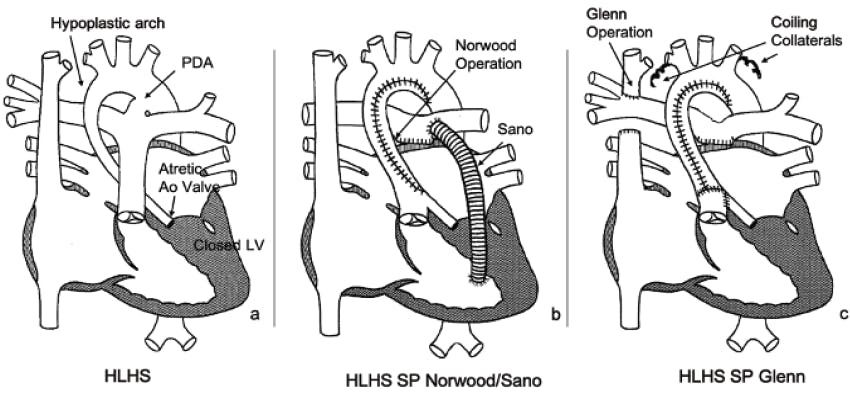
Figure 1. Illustration showing the Norwood operation and Sano. Note the new conduit from the RV to the pulmonary artery.
These collaterals tend to vary according to the size of the patient and can range between 1 and 4 mm, with the branches having various sizes. As the body does not necessarily like this single ventricle physiology, these collaterals have a tendency to recanalize, particularly if the collaterals are not effectively embolized in their entirety or if the coils used are not densely packed.
Procedural Overview
Access was achieved in the femoral artery using a 4-F sheath, through which a 4-F Berenstein catheter was placed through. A 2.4-F Renegade® microcatheter (Boston Scientific Corporation) was advanced into the right internal mammary artery (RIMA) using a BMW guidewire (Abbott Vascular) (Figure 2A). The RIMA was embolized first with a combination of two 60-cm Packing Coil LPs, then a 30-cm Packing Coil LP. In cases like these, I like to cap off the proximal section of the vessel with a framing coil, in this case with a 3-mm X 8-cm hydrogel coil (Figure 2B). Next was the left internal mammary artery (LIMA), and similar to the RIMA, two 60-cm Packing Coil LPs and a 30-cm Packing Coil LP were used (Figure 2C). The microcatheter was then moved up to address the collaterals coming off the subclavian artery. These tortuous vessels were going cephalad then trifurcating to three branches like a medusa head (Figure 3A). These individual collaterals were subsequently closed with a combination of the 3-mm X 15-cm Ruby LP and a 2-mm X 2-cm hydrogel coil (Figure 3B).
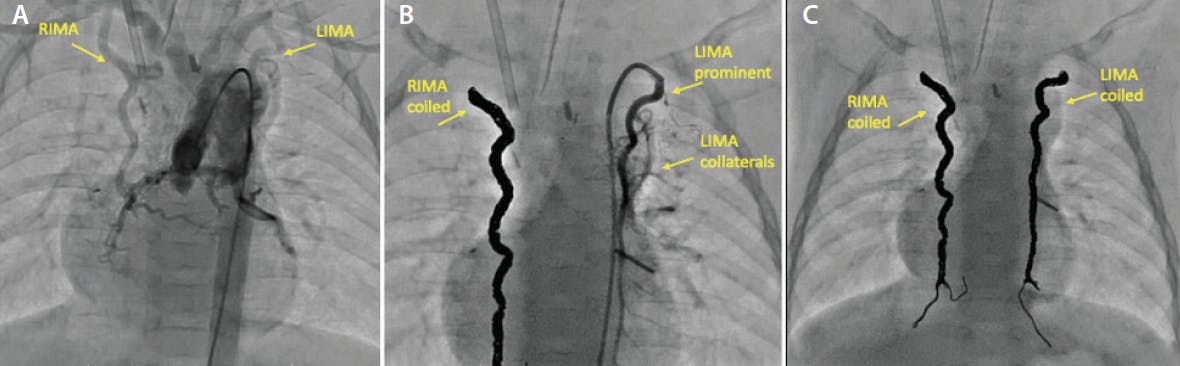
Figure 2. Image showing 2.4-F microcatheter advanced into the RIMA (A). The RIMA was completely embolized with “liquid metal” Packing Coils and a 2-F microcatheter engaging the LIMA (B). Both sides completely occluded. “Liquid metal” Packing Coils are able to find and occlude the collateral vessels coming off the RIMA and LIMA (C).
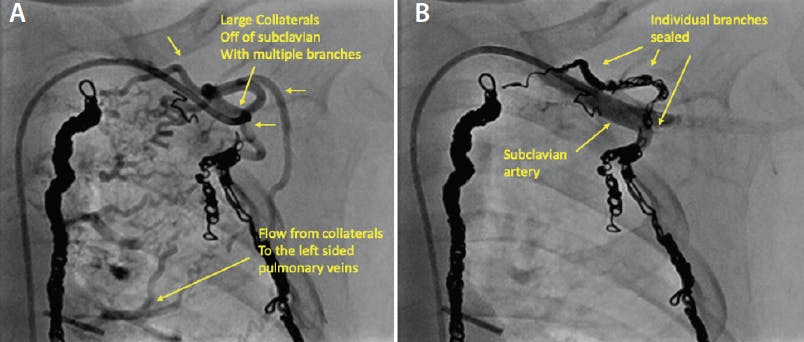
Figure 3. Large collateral coming of the subclavian artery with multiple branches. Note the flow from the collaterals to the left-sided pulmonary veins (A). Individual branches are sealed while preserving the subclavian artery (B).
The final angiogram showed the desired collateral embolized with improved hemodynamics, a lower end-diastolic pressure of the RV, and a decrease in Glenn pressure from 14 to 10 mm Hg.
Disclaimer: The opinions and clinical experiences presented herein are for informational purposes only. The results may vary depending on a variety of patient-specific attributes.
Advertisement
Advertisement