Advertisement
Advertisement
April 2021
Sponsored by Shape Memory Medical
Shape Memory Polymer Technology
Biodegradable polymers are shaping up to change peripheral embolization.
Transcatheter techniques using coils and vascular plugs for peripheral artery and vein embolization continue to increase in popularity, offering alternatives to surgical procedures that can lead to shorter hospital stays and reduced health care costs. The IMPEDE Embolization Plug product family (Shape Memory Medical) represents the latest advancement in embolotherapy using a novel, biodegradable shape memory polymer (SMP).
SMPs belong to a decades-old, broad class of synthetic materials that can be designed to change one or more of their properties (in this case their shape) upon stimulation by external triggers. SMPs were first investigated in the 1960s and more aggressively developed in the 1980s,1 at the same time that researchers were investigating vascular stents made of the shape memory alloy nitinol.2 However, unlike nitinol, which is actuated by heat, stress, and strain,3 SMPs collectively have a broader range of both physical (eg, heat, light, electric or magnetic fields) and chemical (eg, pH, biological stimuli) triggers, a greater opportunity for multiple and/or reversible responses, a better tolerance of strain with higher elastic deformation, and lower density than the shape memory alloys.1,4 SMPs have been studied for their utility as medical devices for multiple clinical applications, some of which are biodegradable,1,5 adding to their versatility.
A NEW AGE OF PERIPHERAL EMBOLIZATION THERAPY: DEVELOPMENT OF PROPRIETARY SMPs
Among the many polymers from which SMPs can be constructed, polyurethanes are particularly well suited for biomedical applications.1,6,7 Nontoxic,8 these porous structures can be chemically manipulated and programmed to respond to a variety of stimuli.9,10 In the early 2000s, researchers at Lawrence Livermore National Laboratory (LLNL) began work on refining a polyurethane-based SMP developed for neurovascular occlusion. Funded by grants from the National Institute of Biomedical Imaging and Bioengineering (a division of the National Institutes of Health), the LLNL researchers transitioned the work to Texas A&M University to develop tunable, thermoset SMPs that changed from a set shape to a “memorized” configuration upon an increase in temperature and exposure to a liquid environment (eg, blood). The goal was to develop catheter-based medical devices that utilized the shape-shifting characteristics of SMPs to rapidly occlude blood flow.
In the laboratory, the researchers tuned SMP formulations and pore sizes (Figure 1) to create materials with differing cross-link densities, glass transition temperatures (threshold for retaining the primary expanded state), and moisture plasticization and expansion rates.11-14 To test a promising formulation, the SMP was chemically created in its primary expanded shape, and then small holes were made in the pore membranes to maximize blood flow through the structure and promote clotting and subsequent connective tissue deposition.15,16 The SMP was crimped into the desired secondary shape (eg, for catheter delivery) above its glass transition temperature and cooled; only when the SMP again experienced conditions above its transition temperature would it recover its primary expanded shape. Tuning the SMP formulation and pore size altered the working time during catheter delivery before the material begins to expand.
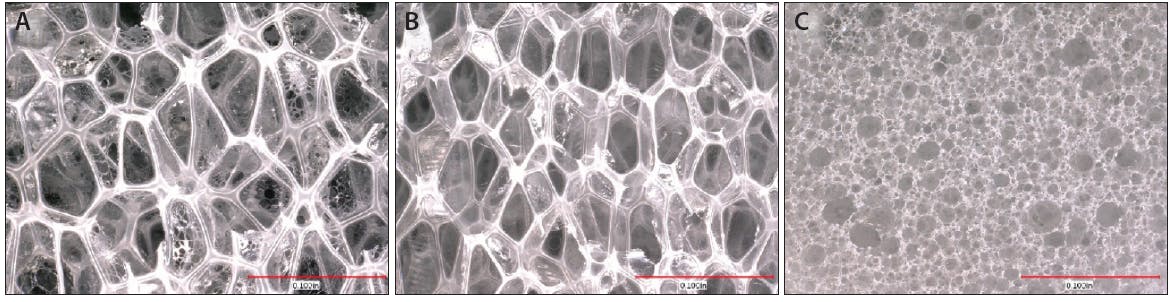
Figure 1. Close-up view of the SMP for three different formulations (A, B, C) at 50X magnification. Different compositions of mixed closed-to-open cell structure with thin cell membranes between the struts give different structures.
(Images on file at Shape Memory Medical.)
Experimental studies on the SMP in various embolic applications proved that the material could be compressed to a size compatible with catheter delivery and then passively actuated within a vessel, achieving up to a 100-fold volume expansion, a large surface-to-volume ratio, and a tortuous flow path.17-20 In 2009, the researchers formed Shape Memory Medical Inc. to study and market vascular occlusion devices constructed with this proprietary SMP technology.
THE PRINCIPLES OF SMP FOR EMBOLOTHERAPY
SMP is crimped into a secondary shape for low-profile catheter delivery (Figure 2). In its expanded shape, Shape Memory Medical’s proprietary SMP offers several unique advantages in vessel embolization, all of which are based on four principles: (1) predictable space filling, (2) stable clot formation, (3) progressive healing, and (4) imaging clarity.
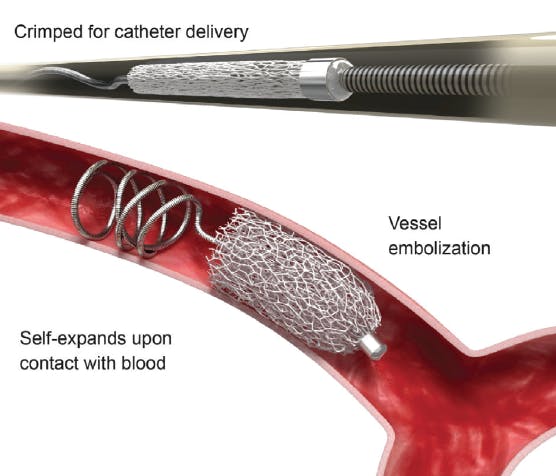
Figure 2. Delivery and implantation of the IMPEDE Embolization Plug.
The first principle of the SMP is predictable space filling, as the size, shape, and morphology are consistent throughout the device. Studies have shown that the high-volume embolic material can predictably and effectively fill a void with low radial force.19,21 The material is highly compliant and exerts minimal force on anatomic boundaries,22 which translates to low vessel or target lesion trauma.
The second principle of the SMP is stable clot formation through the porous embolic scaffold. The inherent 100% packing volume of the porous embolic scaffold slows blood flow and induces rapid thrombus formation throughout its structure,16,20,23 a factor that Yasumoto et al showed was important in avoiding recanalization.24 As blood flows through the porous, high-surface-area material, thrombus forms within the pores due to blood flow stasis, and with reduced turbulence, these clots become stable quickly. This is the intended effect of any embolization procedure (Figure 3).
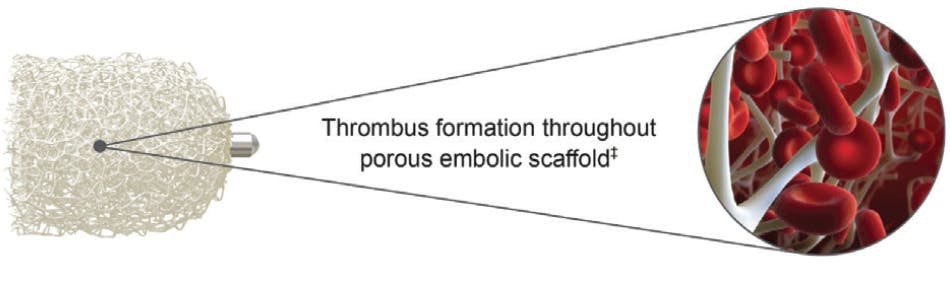
Figure 3. The intricately compact yet porous embolic scaffold encourages formation of stable thrombus. ‡Evidence from preclinical studies.
The third principle of the SMP is enhanced healing. Investigations have found that stable clot formation19,20 leads to enhanced intradevice healing, evidenced by connective tissue deposition that slowly and gradually replaces the biodegradable SMP.20,25 In a microscopic assessment of the healing process of an IMPEDE Embolization Plug in a porcine model, Jessen et al described the cellular-level mechanisms of the SMP through 90 days postimplantation compared to controls (a nitinol vascular plug and nylon-fibered platinum embolization coils).20 The authors observed that the SMP plug implantation initiated an acute inflammatory response, in combination with the clotting cascade, to form an initial thrombus throughout the porous embolic scaffold. Over 90 days, there was progressive intra-aneurysm healing, with gradual, noninflammatory replacement of SMP struts with collagenous connective tissue. Importantly, this series of cellular processes resulted in a stable vessel occlusion, with no microscopic indication of a sustained chronic-active inflammatory response (Figure 4).
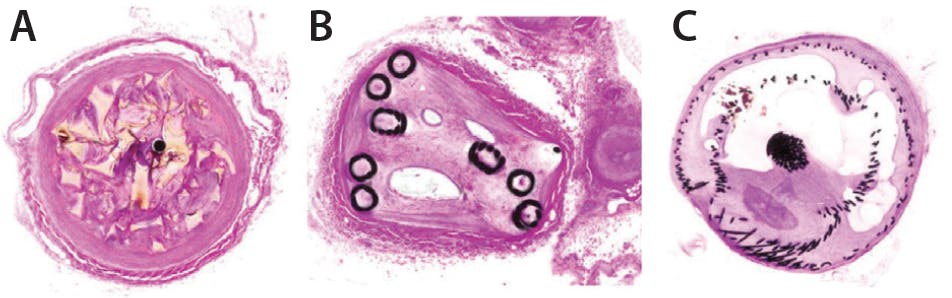
Figure 4. Porcine blood vessels treated with the IMPEDE Embolization Plug (A), platinum coils (B), and a nitinol plug (C). Over time, as the healing process progresses, the biodegradable SMP material is replaced by collagen, which mitigates intradevice recanalization. Intradevice (through) or peridevice (around) recanalization observed in platinum coil- and nitinol plug–treated vessels (B, C).
(Histologic images on file at Shape Memory Medical.)
The last principle of the SMP is imaging clarity. Because SMP is radiolucent, surrounding anatomy is more visible during procedural and follow-up imaging (Figure 5). The material is visible under ultrasound to appreciate its expansion and filling capabilities.
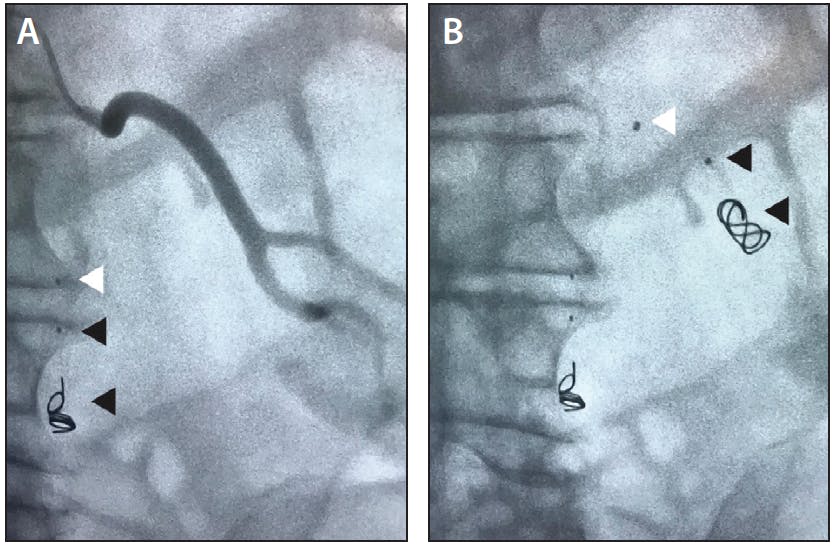
Figure 5. Pre-EVAR embolization of inferior mesenteric and renal accessory arteries using one IMPEDE Embolization Plug (black arrows) and one IMPEDE-FX Embolization Plug (white arrows) per vessel.
(Courtesy of Dr. med Alexander Massmann, MD, PhD, Saarland University Medical Center, Homburg/Saar, Germany.)
IMPEDE EMBOLIZATION PLUG PRODUCT FAMILY
The IMPEDE Embolization Plug product family is designed to obstruct or reduce the rate of blood flow in the peripheral vasculature. Both the IMPEDE and IMPEDE-FX Embolization Plugs are CE Marked for use in the European Union and other countries that recognize CE Marking and cleared for use in the United States. The SMP component of the device is crimped for catheter delivery, and once implanted at the target site, the SMP expands to its memorized shape, stagnating blood flow for stable clot formation and gradual conversion to mature, connective tissue. The IMPEDE Embolization Plug contains a nitinol anchor coil, which stabilizes the device in higher-flow situations; the IMPEDE-FX Embolization Plug is identical to the IMPEDE Embolization Plug but without an anchor coil (Figure 6). Both devices provide an approximate 1.25-mL volume embolic material fill capacity and are designed with a proximal platinum/iridium marker band for visualization under fluoroscopy because the SMP is radiolucent. The IMPEDE Embolization Plug, which comes in three sizes to embolize vessels from 2 to 10 mm in diameter, may be used in combination with the IMPEDE-FX Embolization Plug (6- to 12-mm vessel diameters) to maximize embolic material space filling. Notably, an IMPEDE Embolization Plug leaves behind less material than traditional embolization devices since the SMP biodegrades. In 2019, the IMPEDE Embolization Plug received awards for innovation26 and commercialization success.27
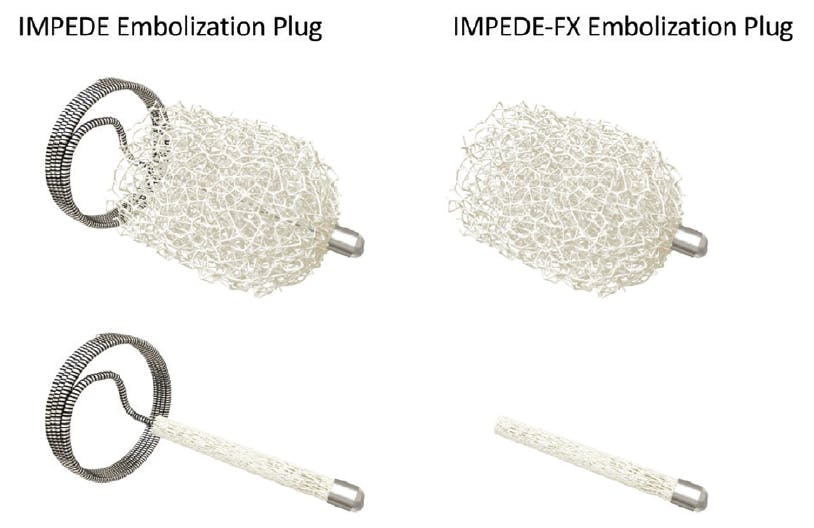
Figure 6. IMPEDE and IMPEDE-FX Embolization Plugs in their crimped shape and expanded shapes.
CLINICAL APPLICATIONS AND TRIALS
The IMPEDE and IMPEDE-FX Embolization Plugs have been used to treat a wide range of conditions, including vascular malformations, arteriovenous fistulas, pelvic congestion syndrome, hemorrhage, tumors, aneurysms, endovascular aneurysm repair (EVAR) endoleaks, and aortic dissection.
To date, nearly 600 patients have been successfully treated worldwide with the IMPEDE and IMPEDE-FX Embolization Plugs. In New Zealand, the EMBO-FIH prospective safety study of the IMPEDE Embolization Plug for arterial and venous embolization (ACTRN12617000906358) enrolled 11 patients for indications including varicocele, pretumor resection, and pre- and post-EVAR branch vessel embolization. Technical success was achieved in all study participants in which the device was implanted, and there was no recurrence of clinical symptoms related to the treated pathology during follow-up.
In the United Kingdom, the prospective postmarket registry of the IMPEDE and IMPEDE-FX Embolization Plugs (EMBO-PMS UK; NCT04044443) is evaluating the safety and efficacy of these devices. Case examples are shown in Figure 7, Figure 8, and Figure 9, and early results were published in 2021.28
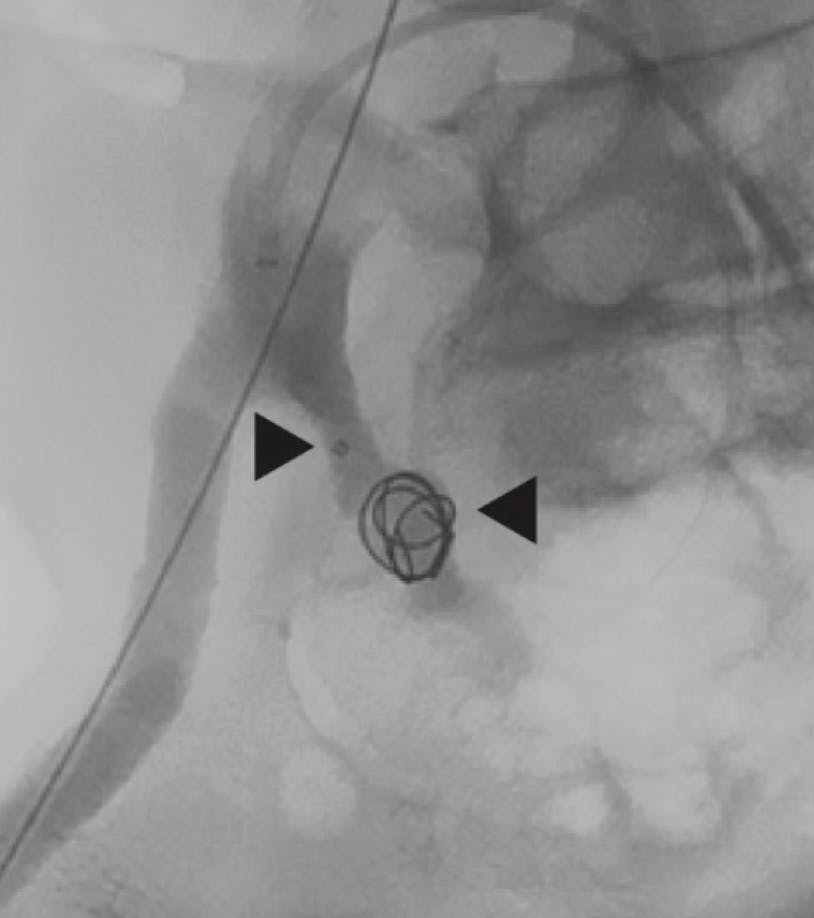
Figure 7. Embolization of right common iliac artery aneurysms using a 12-mm-diameter SMP plug in an 8-mm-diameter right internal iliac artery. The lower arrow indicates the device anchor coil distal to the proximal marker (upper arrow).
(Courtesy of Dr. Robert A. Morgan, Department of Radiology, St. George’s Hospital, London, United Kingdom.)
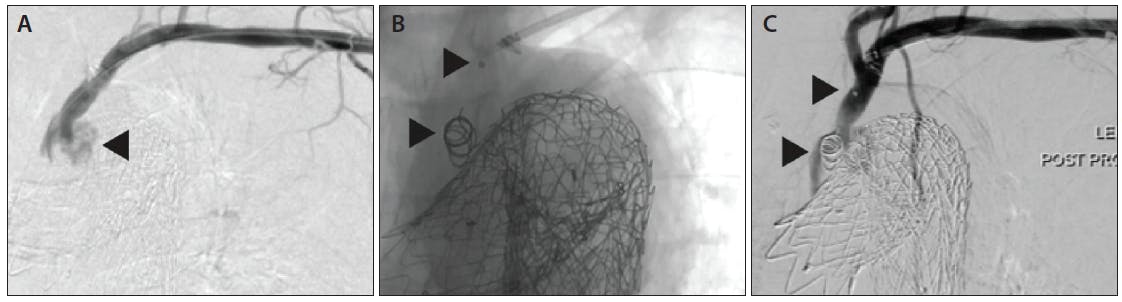
Figure 8. Pre-embolization fluoroscopic imaging of a type II endoleak into the thoracic aorta following thoracic endovascular aneurysm repair (A). Intraprocedural fluoroscopic imaging following delivery of a 12-mm-diameter SMP plug into the 10-mm-diameter left subclavian artery. Arrows indicate the anchor coil and proximal marker (B). Contrast injection following deployment of the plug (C).
(Courtesy of Dr. Robert A. Morgan, Department of Radiology, St. George’s Hospital, London, United Kingdom.)
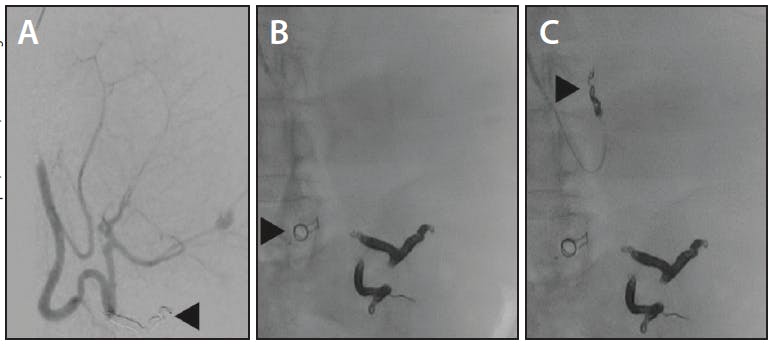
Figure 9. Pre-embolization fluoroscopic imaging of an 8-mm splenic artery prior to splenectomy to treat splenomegaly. The arrow indicates the result of a prior coil embolization procedure (A). An 8-mm-diameter SMP plug was deployed (arrow indicates the anchor coil) after distal packing with gelatin sponge and polyvinyl alcohol particles (B). Microcoil embolization of another branch completed the case (C).
(Courtesy of Dr. Mohamad S. Hamady, Interventional Radiology, Imperial College-London-St. Mary’s Campus, London, United Kingdom.)
SUMMARY
Studies have shown that the SMP-based IMPEDE Embolization Plug product family offers predictable, controlled, high-volume fill, encouraging stasis and rapid thrombus formation with progressive healing as the biodegradable SMP is replaced by mature connective tissue over time. The SMP plugs are compliant, exerting minimal force on the target vessel or lesion and are radiolucent, facilitating imaging of surrounding anatomy.
In countries recognizing CE Marking, the IMPEDE and IMPEDE-FX Embolization Plugs are indicated for use to obstruct or reduce the rate of blood flow in the peripheral vasculature. In the United States, the IMPEDE Embolization Plug is indicated to obstruct or reduce the rate of blood flow in the peripheral vasculature, and the IMPEDE-FX Embolization Plug is indicated for use with the IMPEDE Embolization Plug to obstruct or reduce the rate of blood flow in the peripheral vasculature. Refer to the instructions for use, supplied with each device, for a complete statement of the indications, contraindications, warnings, and instructions for use. For more information, visit www.shapemem.com.
1. Hager MD, Bode S, Weber C, Schubert US. Shape memory polymers: past, present and future developments. Prog Polym Sci. 2015;49/50:3-33. doi: 10.1016/j.progpolymsci.2015.04.002
2. Dotter CT, Buschmann PAC, McKinney MK, Rösch J. Transluminal expandable nitinol coil stent grafting; preliminary report. Radiology. 1983;147:259-260. doi: 10.1148/radiology.147.1.6828741
3. Holman H, Kavarana MN, Rajab TK. Smart materials in cardiovascular implants: shape memory alloys and shape memory polymers. Artif Organs. Published online October 27, 2020. doi: 10.1111/aor.13851
4. Wen C, Yu X, Zeng W, et al. Mechanical behaviors and biomedical applications of shape memory materials: a review. AIMS Mater Sci. 2018;5:559-590. doi: 10.3934/matersci.2018.4.559
5. Jang LK, Fletcher GK, Monroe MBB, Maitland DJ. Biodegradable shape memory polymer foams with appropriate thermal properties for hemostatic applications. J Biomed Mater Res A. 2020;108:1281-1294. doi: 10.1002/jbm.a.36901
6. Small WT 4th, Singhal P, Wilson TS, Maitland DJ. Biomedical applications of thermally activated shape memory polymers. J Mater Chem. 2010;20:3356-3366. doi: 10.1039/B923717H
7. Hearon K, Gall K, Ware T, et al. Post-polymerization crosslinked polyurethane shape-memory polymers. J Appl Polym Sci. 2011;121:144-153. doi: 10.1002/app.33428
8. Cabanlit M, Maitland D, Wilson T, et al. Polyurethane shape-memory polymers demonstrate functional biocompatibility in vitro. Macromol Biosci. 2007;7:48-55. doi: 10.1002/mabi.200600177
9. Maitland DJ, Small W 4th, Ortega JM, et al. Prototype laser-activated shape memory polymer foam device for embolic treatment of aneurysms. J Biomed Opt. 2007;12:030504. doi: 10.1117/1.2743983
10. Buckley PR, McKinley GH, Wilson TS, et al. Inductively heated shape memory polymer for the magnetic actuation of medical devices. IEEE Trans Biomed Eng. 2006;53:2075-2083. doi: 10.1109/TBME.2006.877113
11. Hearon K, Wierzbicki MA, Nash LD, et al. A processable shape memory polymer system for biomedical applications. Adv Healthc Mater. 2015;4:1386-1398. doi: 10.1002/adhm.201500156
12. Singhal P, Rodriguez JN, Small W, et al. Ultra low density and highly crosslinked biocompatible shape memory polyurethane foams. J Polym Sci B Polym Phys. 2012;50:724-737. doi: 10.1002/polb.23056
13. Hasan SM, Fletcher GK, Monroe MBB, et al. Shape memory polymer foams synthesized using glycerol and hexanetriol for enhanced degradation resistance. Polymers (Basel). 2020;12:2290. doi: 10.3390/polym12102290
14. Singhal P, Small W, Cosgriff-Hernandez E, et al. Low density biodegradable shape memory polyurethane foams for embolic biomedical applications. Acta Biomater. 2014;10:67-76. doi: 10.1016/j.actbio.2013.09.027
15. Muschenborn AD, Ortega JM, Szafron JM, et al. Porous media properties of reticulated shape memory polymer foams and mock embolic coils for aneurysm treatment. Biomed Eng Online. 2013;12:103. doi: 10.1186/1475-925X-12-103
16. Rodriguez JN, Miller MW, Boyle A, et al. Reticulation of low density shape memory polymer foam with an in vivo demonstration of vascular occlusion. J Mech Behav Biomed Mater. 2014;40:102-114. doi: 10.1016/j.jmbbm.2014.07.037
17. Rodriguez JN, Clubb FJ, Wilson TS, et al. In vivo response to an implanted shape memory polyurethane foam in a porcine aneurysm model. J Biomed Mater Res A. 2014;102:1231-1242. doi: 10.1002/jbm.a.34782
18. Boyle AJ, Landsman TL, Wierzbicki MA, et al. In vitro and in vivo evaluation of a shape memory polymer foam-over-wire embolization device delivered in saccular aneurysm models. J Biomed Mater Res B Appl Biomater. 2016;104:1407-1415. doi: 10.1002/jbm.b.33489
19. Horn J, Hwang W, Jessen SL, et al. Comparison of shape memory polymer foam versus bare metal coil treatments in an in vivo porcine sidewall aneurysm model. J Biomed Mater Res B Appl Biomater. 2017;105:1892-1905. doi: 10.1002/jbm.b.33725
20. Jessen SL, Friedemann MC, Ginn-Hedman A, et al. Microscopic assessment of healing and effectiveness of a foam-based peripheral occlusion device. ACS Biomater Sci Eng. 2020;6:2588-2599. doi: 10.1021/acsbiomaterials.9b00895
21. Boyle AJ, Wierzbicki MA, Herting S, et al. In vitro performance of a shape memory polymer foam-coated coil embolization device. Med Eng Phys. 2017;49:56-62. doi: 10.1016/j.medengphy.2017.07.009
22. Hwang W, Volk BL, Akberali F, et al. Estimation of aneurysm wall stresses created by treatment with a shape memory polymer foam device. Biomech Model Mechanobiol. 2012;11:715-729. doi: 10.1007/s10237-011-0345-8
23. Ortega JM, Hartman J, Rodriguez JN, et al. Virtual treatment of basilar aneurysms using shape memory polymer foam. Ann Biomed Eng. 2013;41:725-743. doi: 10.1007/s10439-012-0719-9
24. Yasumoto T, Osuga K, Yamamoto H, et al. Long-term outcomes of coil packing for visceral aneurysms: correlation between packing density and incidence of coil compaction or recanalization. J Vasc Interv Radiol. 2013;24:1798-1807. doi: 10.1016/j.jvir.2013.04.030
25. Herting SM, Ding Y, Boyle AJ, et al. In vivo comparison of shape memory polymer foam-coated and bare metal coils for aneurysm occlusion in the rabbit elastase model. J Biomed Mater Res B Appl Biomater. 2019;107:2466-2475. doi: 10.1002/jbm.b.34337
26. Heney P. 2019 R&D 100 award winners unveiled! October 29, 2019. Accessed January 27, 2021. https://www.rdworldonline.com/2019-rd-100-award-winners-unveiled/
27. 2019 FLC Far West and Mid-Continent regional winners announced. October 9, 2019. Accessed January 27, 2021. https://federallabs.org/news/2019-flc-far-west-and-mid-continent-regional-winners-announced
28. Morgan RA, Loftus I, Ratnam L, et al. Clinical experience with a shape memory polymer peripheral vascular embolisation plug: a case series. CVIR Endovasc. 2021;4:29. doi: 10.1186/s42155-021-00214-w
Advertisement
Advertisement