Advertisement
Advertisement
April 2021
Sponsored by Boston Scientific Corporation
Making Critical Radioembolization Therapy Available for More Patients With Hepatocellular Carcinoma
TheraSphere™ Y-90 Glass Microspheres are the only radioembolization therapy FDA-approved for HCC.
Hepatocellular carcinoma (HCC) is the most prevalent form of primary liver cancer, and more than half a million new global cases are diagnosed each year.1 The American Cancer Society estimates that approximately 32,000 new cases of HCC will be diagnosed in the United States in 2021.2 Concerningly, HCC is also the fastest-growing cause of cancer-related death in the United States.3 There are a variety of treatment options for HCC, including surgical resection, liver transplantation, ablation, transarterial chemoembolization (TACE), transarterial radioembolization (TARE), or systemic therapy. Importantly, depending on the stage of the tumor(s) and the status of the patient, surgical resection or transplantation may not be possible.
TARE—also commonly referred to as selective internal radiation therapy (SIRT)—and TACE are often used for patients with unresectable HCC. There are different types of SIRT, each using radiotherapy to control HCC or other types of liver tumors that cannot be removed with surgery. Over the last 2 decades, radioembolization with TheraSphere™ Y-90 Glass Microspheres (Boston Scientific Corporation) has emerged as an effective SIRT for HCC. During the procedure, millions of yttrium-90 (Y-90) glass microspheres are injected into hepatic arteries that supply blood to hepatic tumors, preferentially depositing radiation directly into the tumor while sparing surrounding normal parenchyma. It is a simple but elegant technique to deliver targeted, high-dose radiotherapy.
Unlike conventional external radiotherapy, TheraSphere treatment does not pass through healthy body tissues and organs to reach the tumor, which substantially minimizes normal tissue from the negative effects of nontargeted radiation. TheraSphere treatment does not require hospitalization and is typically performed as an outpatient procedure in as little as 1 hour. Over the years, hundreds of studies have been published that detail the impact of this therapy on HCC tumors.
IMPROVED ACCESS FOR MORE PATIENTS WITH HCC
The United States Food and Drug Administration (FDA) first approved the TheraSphere microspheres in December 1999 by granting it a humanitarian device exemption (HDE) for use in patients with unresectable HCC (Figure 1).4 An HDE is a regulatory pathway for products intended for diseases or conditions affecting small (rare) populations. Under an HDE, there is a requirement that a local Institutional Review Board (IRB) approves its use. Additionally, HDEs limit the number of patients who can be treated with the therapy to 8,000 each year.5
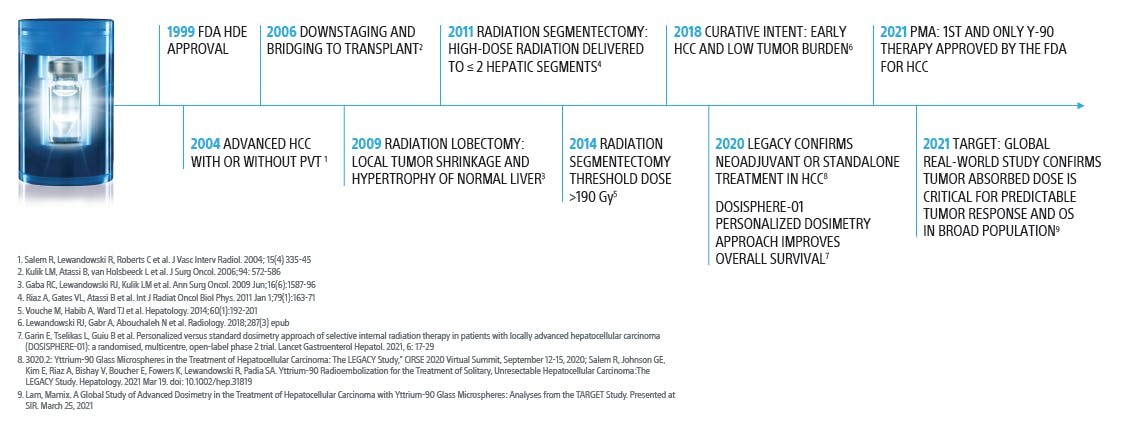
Figure 1. A 20-year legacy of clinical evidence and milestones. (Abbreviation note: PVT, portal vein thrombosis.)
Treatment with TheraSphere has amassed a 21-year track record of clinical trial and real-world success. The treatment is the subject of > 500 publications in peer-reviewed journals, > 100 global investigator-initiated trials, and has been used to treat > 70,000 HCC patients globally. During this period, the LEGACY clinical trial, designed to evaluate the safety and efficacy of TheraSphere for the treatment of early and advanced HCC, was completed.
These efforts culminated in the premarket approval of TheraSphere by the FDA in March of 2021, making it the only SIRT treatment approved for the treatment of unresectable HCC in the United States. Clinicians no longer need IRB approval to administer TheraSphere therapy, and most importantly, this life-prolonging treatment option is now accessible to a larger number of HCC patients.
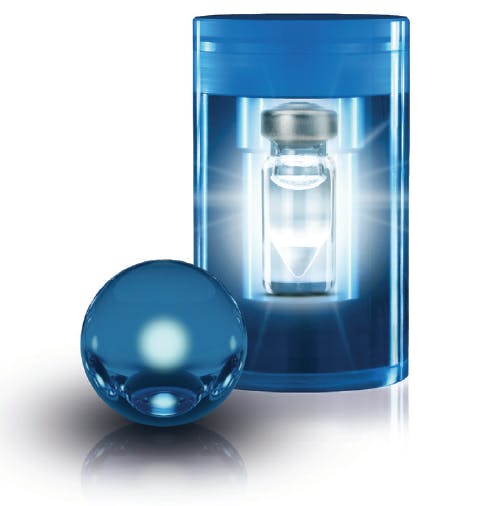
TheraSphere™ Y-90 Glass Microspheres.
A BRIEF HISTORY OF THERASPHERE5
The idea to deliver HCC therapy via the hepatic artery originated in the 1950s with the discovery that liver tumors get most of their blood supply from the hepatic artery, whereas parenchymal cells get theirs mainly from the portal vein. The first reports of successful radioembolization of liver cancer with Y-90 microspheres appeared in the 1960s and 1970s.6-8
Findings from several early phase trials with TheraSphere therapy were first published in the 1980s and 1990s.9,10 Several dose-escalation studies showed the safety and early efficacy of TheraSphere therapy in HCC patients, confirming it selectively delivered high doses of radiation to tumors and had acceptable toxicity.
NOTEWORTHY CLINICAL OUTCOMES WITH THERASPHERE
As shown in Figure 1, a variety of large clinical studies that focused on the safety, efficacy, and long-term outcomes of TheraSphere treatment were initiated after the 1999 HDE approval. Since then, studies have evaluated personalized dosimetry with TheraSphere and whether it could be used as a stand-alone therapy, as a neoadjuvant treatment to downstage prior to resection, or as a neoadjuvant treatment to bridge to transplantation. All studies demonstrated noteworthy clinical outcomes.
The DOSISPHERE-01 design compared standard, single-compartment dosimetry (uniform distribution of absorbed dose within the perfused volume [both tumor and normal liver]) to personalized dosimetry (multicompartment Y-90 distribution of absorbed dose within the perfused volume that incorporates blood flow to the tumor).11 DOSISPHERE-01 was a prospective, randomized, multicenter, investigator-sponsored phase 2 trial of 60 advanced HCC patients (intention-to-treat population) treated with TheraSphere therapy. The trial showed that median overall survival was significantly greater in the personalized dosimetry group (26.6 months) compared to the standard dosimetry group (10.7 months). This study set the stage for personalized treatment in unresectable HCC—TheraSphere dosimetry can be tailored to each patient’s unique tumor location, volume, and mass as well as vascular supply. This offers the clinician more control to optimize treatment.
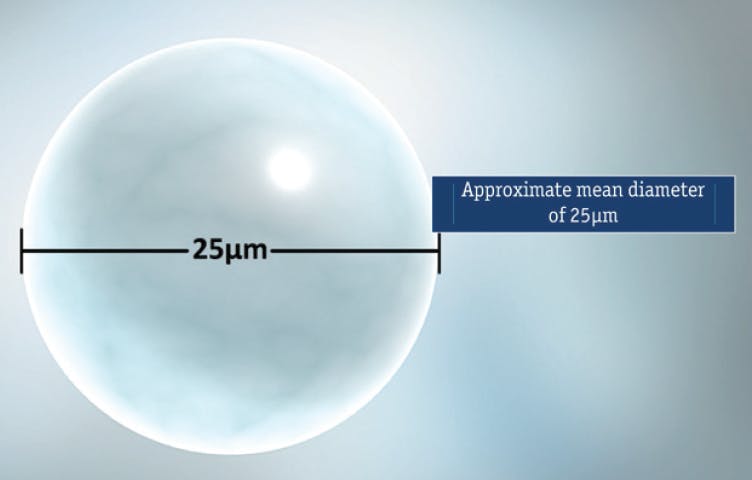
TheraSphere microspheres have an approximate mean diameter of 25 µm.
Furthermore, in a 2020 retrospective analysis, a multidisciplinary team of specialists reviewed data from 207 patients with unresectable HCC who underwent liver transplantation after being treated with TheraSphere as part of a bridging or downstaging care pathway. Results showed that 18% of patients were downstaged to within Milan transplant criteria and 82% bridged to transplantation. The median overall survival after liver transplantation was 12.5 years.12
To further improve the treatment approach, it was important to understand the circumstances in which TheraSphere therapy was most effective. Research had already suggested that treatment with TheraSphere did not disqualify TACE as another treatment option. But could treatment with TheraSphere allow resection for patients previously deemed as unresectable? Could TheraSphere be used as a neoadjuvant therapy prior to transplantation? LEGACY—a robust, multicenter, single-arm, retrospective study—helped to find answers to these questions. Results from LEGACY were recently published in Hepatology, and included data from 162 patients who had unresectable HCC and received TheraSphere as a primary therapy or as a neoadjuvant bridge to resection or transplantation.13
LEGACY met its primary efficacy endpoints of objective response rate and duration of response, and the findings were confirmed with subsequent imaging evaluated through blinded, independent, central review (BICR)—two independent radiologists for each patient and a third to adjudicate—thus ensuring objectivity in assessing responses to TheraSphere therapy. LEGACY was the first study of its kind to use a BICR to review all imaging scans and determine and confirm tumor response. See the Key LEGACY Findings sidebar for more study outcomes.
Key LEGACY Findings
- 72.2% objective response rate (primary endpoint)
- 100% of evaluable patients responded to TheraSphere (96.8% with one treatment, 100% with two treatments)
- TheraSphere is a safe and effective therapy for both early and advanced HCC
- 76.1% of patients with a confirmed response experienced a duration of response of ≥ 6 months (primary endpoint)
- Overall survival was comparable between TheraSphere used as stand-alone or neoadjuvant therapy, and survival rates were 93% for transplant or resection patients at 3 years, comparable to curative therapies
Investigators concluded that patients with solitary, unresectable HCC treated with TheraSphere therapy had high response rates, clinically meaningful duration of response, and comparable overall survival to existing curative therapy. The LEGACY study was the basis for the recent FDA approval of TheraSphere.
CONCLUSION
TheraSphere, the only approved therapy for HCC, represents a major advancement in the treatment of HCC, providing clinically meaningful therapeutic options for a wide range of patients. Its versatility allows for stand-alone use, neoadjuvant therapy for bridging to liver resection or transplantation, and the pinpoint accuracy of radiation segmentectomy. It results in equal or better survival rates compared to current standards of care and is well-tolerated by patients.
In contrast with many other HCC therapies, treatment with TheraSphere can often be completed in < 2 hours with minimal staff support in the outpatient setting, potentially alleviating pressure on health care systems in an increasingly complex care environment. In certain clinical scenarios, the procedure can be completed in < 1 hour. Given the pandemic, this can also help to address current patient concerns about exposure to COVID-19 in health care facilities. Now that this technology is available to a greater number of United States physicians and their patients, more paths to successful treatment are possible.
© 2021 Boston Scientific Corporation or its affiliates. All rights reserved.
PI-998607-AA
1. Mittal S, El‐Serag HB. Epidemiology of hepatocellular carcinoma: consider the population. J Clin Gastroenterol. 2013;47(suppl):S2‐S6. doi: 10.1097/MCG.0b013e3182872f29
2. American Cancer Society. Cancer facts & figures 2021. Accessed March 4, 2021. https://www.cancer.org/content/dam/cancer-org/research/cancer-facts-and-statistics/annual-cancer-facts-and-figures/2021/cancer-facts-and-figures-2021.pdf
3. Bray F, Ferlay J, Soerjomataram I, et al. Global cancer statistics 2018: GLOBOCAN estimates of incidence and mortality worldwide for 36 cancers in 185 countries. CA Cancer J Clin. 2018;68:394-424. doi: 10.3322/caac.21492
4. US Food and Drug Administration. Humanitarian Device Exemption (HDE). Accessed February 12, 2021. https://www.accessdata.fda.gov/scripts/cdrh/cfdocs/cfhde/hde.cfm?id=H980006
5. Saini A, Wallace A, Alzubaidi S, et al. History and evolution of yttrium-90 radioembolization for hepatocellular carcinoma. J Clin Med. 2019;8:55. doi: 10.3390/jcm8010055
6. Ariel IM. Treatment of inoperable primary pancreatic and liver cancer by the intra-arterial administration of radioactive isotopes (Y90 radiating microspheres). Ann Surg. 1965;162:267-278. doi: 10.1097/00000658-196508000-00018
7. Simon N, Warner RR, Baron MG, Rudavsky AZ. Intra-arterial irradiation of carcinoid tumors of the liver. Am J Roentgenol Radium Ther Nucl Med. 1968;102:552-561. doi: 10.2214/ajr.102.3.552
8. Grady ED. Internal radiation therapy of hepatic cancer. Dis Colon Rectum. 1979;22:371-375. doi: 10.1007/BF02586901
9. Herba MJ, Illescas FF, Thirlwell MP, et al. Hepatic malignancies: improved treatment with intraarterial Y-90. Radiology. 1988;169:311-314. doi: 10.1148/radiology.169.2.3174978
10. Wollner I, Knutsen C, Smith P, et al. Effects of hepatic arterial yttrium 90 glass microspheres in dogs. Cancer. 1988;61:1336-1344. doi: 10.1002/1097-0142(19880401)61:7<1336::aid-cncr2820610711>3.0.co;2-k
11. Garin E , Tselikas L, Guiu B, et al. Personalised versus standard dosimetry approach of selective internal radiation therapy in patients with locally advanced hepatocellular carcinoma (DOSISPHERE-01): a randomised, multicentre, open-label phase 2 trial. Lancet Gastroenterol Hepatol. 2021;6:17-29. doi: 10.1016/S2468-1253(20)30290-9
12. Gabr A, Kulik L, Mouli S, et al. Liver transplantation following yttrium-90 radioembolization: 15-year experience in 207-patient cohort. Hepatology. 2021;73:998-1010. doi: 10.1002/hep.31318
13. Salem R, Johnson GE, Kim E, et al. Yttrium‐90 radioembolization for the treatment of solitary, unresectable hepatocellular carcinoma: the LEGACY study. Hepatology. Published online March 19, 2021. doi: 10.1002/hep.31819
Indications, Safety, and Warnings
CAUTION: Federal law (USA) restricts this device to sale by or on the order of a physician. Rx only. Prior to use, please see the complete “Directions for Use” for more information on Indications, Contraindications, Warnings, Precautions, Adverse Events, and Operator’s Instructions.
INDICATION FOR USE
TheraSphere is indicated for use as selective internal radiation therapy (SIRT) for local tumor control of solitary tumors (1-8 cm in diameter), in patients with unresectable hepatocellular carcinoma (HCC), Child- Pugh Score A cirrhosis, well-compensated liver function, no macrovascular invasion, and good performance status.
CONTRAINDICATIONS
TheraSphere is contraindicated in patients:
- whose Tc-99m macroaggregated albumin (MAA) hepatic arterial perfusion scintigraphy shows any deposition to the gastrointestinal tract that may not be corrected by angiographic techniques
- who show shunting of blood to the lungs that could result in delivery of greater than 16.5 mCi (0.61 GBq) of Y-90 to the lungs. Radiation pneumonitis has been seen rarely in patients receiving doses to the lungs greater than 30 Gy in a single treatment
- in whom hepatic artery catheterization is contraindicated, such as patients with vascular abnormalities or bleeding diathesis
- who have pulmonary insufficiency (conventionally defined by an arterial oxygen pressure (Pa,O2) of < 60 mmHg, or oxygen saturation (Sa,O2) of < 90%) or severe liver dysfunction, including hepatic encephalopathy, clinically evident ascites or treatment with diuretics for ascites
- with portal vein thrombosis (PVT) Type 4 involvement and lack of Tc-99m MAA deposition on the PVT seen on the Tc-99m MAA imaging
- with > 70% tumor replacement in the liver
- with comorbidities or poor overall health (e.g., ECOG performance status rating > 2) which may make the patient a poor candidate for locoregional radiation treatment
- who are pregnant
WARNINGS
The following pre-treatment, high-risk factors (disease characteristics) have been associated with serious adverse events deemed possibly related to use of the device:
- infiltrative tumor type
- tumor nodules too numerous to count
- AST or ALT > 5 times ULN
- bilirubin > 2 mg/dL
- tumor volume > 50% combined with albumin < 3 g/dL
Keep the TheraSphere dose vial upright and stored in its lead pot before and during patient treatment, except as required for radiation measurement. Do not open the dose vial acrylic shield prior to patient treatment. Post-treatment, waste materials require caution to prevent contamination and beta shielding due to residual glass microspheres.
PRECAUTIONS
GENERAL PRECAUTIONS
- As in any intra-arterial procedure, aseptic technique should be practiced, and care should be taken to ensure minimum patient anesthesia exposure extraneous to therapeutic objective.
- Consideration of patient comorbidities should be used when determining the type and volume of fluid to infuse via catheter to avoid electrolyte imbalance, fluid shift, and hyperglycemia.
- It is important to avoid any aggressive arterial procedure that may lead to arterial spasm that impairs TheraSphere distribution into the perfused liver target volume which may lead to underdosing or non- target deposition of TheraSphere.
PRECAUTION IN PATIENTS WITH IMPAIRED LIVER FUNCTION
- No efficacy or safety data from the LEGACY study are available to support the use of the device in patients with Child-Pugh score B or C cirrhosis.
PRECAUTION IN VULNERABLE PATIENTS
- No effectiveness or safety data are available to support the use of the device in children or breast-feeding women.
ENDOCRINE DISRUPTION, CARCINOGENICITY, MUTAGENICITY, TOXICITY TO REPRODUCTION
- Ideally the use of this radioactive device in women of childbearing capability should be performed during the first few (approximately 10) days following the onset of menses.
RADIATION SAFETY
- Radioactive products should be used only by healthcare professionals who are qualified by specific training in the safe use and handling of radionuclides and whose experience and training have been approved by the appropriate government agency authorized to license the use of radionuclides.
- As in the use of any radioactive material, ensure minimum radiation exposure to the patient extraneous to the therapeutic objective, and to minimize radiation exposure to workers and others in contact with the patient.
RELEASE AND POST-TREATMENT PRECAUTIONS
- Post treatment patient care: use universal precautions for body fluid contact. Trace Y-90 may be detectible in blood and urine; handle with gloves and dispose as normal body fluids. The radiation field is expected to be less than 1 mrem/h (10 µSv/h) at 3 ft (1 m) from the patient’s abdomen. Supplemental shielding and segregation of the patient are not required to maintain exposure to others below regulated limits.
- Release instructions: The patient should follow good hygiene (e.g., proper hand washing). Caregivers, family, and others do not require restrictions on patient contact; however, they can minimize their radiation exposure by avoiding prolonged time (> 12 hours per day) within 1 ft (0.3 m) of the patient’s abdomen for the first week post therapy. Patients should be advised that radiation emitted from the patient may be detectible at security screening (e.g., international travel).
- Special precautions post-administration: If the patient requires hospitalization, surgery, medical assessment or treatment regarding any part of their thorax or abdomen within first 2 weeks of treatment, the patient should advise the hospital and treating physician of the Y-90 TheraSphere implant. The physician should consult their radiation safety staff for handling and disposal of liver tissue.
- Special liver tissue handling: Special liver tissue handling may be required for post-treatment surgery, explant, or transplant since the glass microspheres remain permanently implanted in the liver tissue. Disclosure of the treatment will be required if cremation is considered.
POTENTIAL ADVERSE EVENTS
The use of this product leads to irradiation of both tumorous and normal liver tissue. As a result, patients with compromised liver function may be at greater risk of liver function impairment and hence could experience complications.
Clinical side effects usually occur within the first 4 to 6 weeks after treatment. Based on clinical trial data, literature reviews and post market surveillance, adverse events potentially associated with treatment using Y-90 microspheres, including TheraSphere, may include the following:
Complications related to the administration procedure itself may include:
- Allergic reaction
- Altered liver function, acute or chronic
- Anorexia
- Anxiety
- Ascites
- Bile Duct injury
- Bleeding/hemorrhage
- Chills / rigors
- Cholecystitis (inflammatory or infectious)
- Colitis
- Death
- Dehydration
- Diarrhea
- Dizziness
- Dyspnea
- Edema (any location)
- Electrolyte abnormalities
- Elevated BUN/creatinine
- Fall
- Fatigue
- Fever
- Gastrointestinal bleeding / hemorrhage
- Gastrointestinal ulcer or ulceration
- Hepatic encephalopathy
- Hepatorenal failure
- Hiccups
- Hypertension
- Hypotension
- Infection (any location)
- Liver failure, acute or chronic
- Lymphopenia
- Malaise
- Mood alteration
- Muscle weakness
- Nausea
- Neutropenia
- Pain (any location)
- Pancreatitis
- Platelet count abnormalities
- Pleural effusion
- Portal hypertension
- Pre-existing chronic liver disease decompensation
- Pulmonary edema
- Pulmonary fibrosis
- Radiation hepatitis
- Radiation induced disease, acute
- Radio Embolization Induced Liver Disease (REILD)
- Sepsis
- Supraventricular arrhythmia
- Thrombosis (arterial or venous)
- Tumor inflammation (including tumor edema)
- Tumor-lysis syndrome
- Vomiting
- Weight loss
Complications related to the administration procedure itself may include:
- Allergic reaction
- Arterial injury including vessel dissection
- Aspiration pneumonia
- Bruising/bleeding/hematoma at site
- Constipation/abdominal distension
- Fatigue
- Flushing
- Infection
- Nausea
- Nerve damage
Advertisement
Advertisement