Advertisement
Advertisement
April 2021
An Interview With Michael Lichtenberg, MD, FESC
Dr. Lichtenberg discusses his vision as President of the German Society for Angiology and his work with the Society’s Venous Intervention Project Group, his role as Head of the Center for Pelvic Vein Obstruction, and goals of the Arnsberg venous and RECCORD registries.
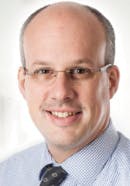
What is your vision for your term as President of the German Society for Angiology?
Vascular medicine is an exciting specialty, backed by an immense desire for innovation in terms of new procedures and techniques. Novel and highly effective endovascular procedures have been developed in the last few years, and these enable our patients to maintain a high quality of life. As President of the German Society for Angiology, I believe my task is to advance the training of young doctors in vascular medicine and familiarize them with the excitement and challenges of angiology. In the absence of well-trained young staff, we will be unable to meet the challenges of the future. Simultaneously, we must promote scientific research projects and create evidence because many questions remain unanswered, such as those related to critical limb ischemia. We are also confronted with major economic challenges because endovascular therapy has become very expensive due to the large number of innovations in the field. It takes persistence to convince health insurance companies of the highly effective procedures and achieve coverage of their costs. This would serve the interests of our patients, whose care is one of the foremost concerns of our Society.
Also part of your work with the German Society for Angiology is the Venous Intervention Project Group, for which you are spokesman. Can you give us an update on the group’s work in improving the detection of and creating a quality standard for pelvic vein intervention?
The greatest challenges we face are patient education and the transfer of knowledge to colleagues to ensure that patients with a postthrombotic syndrome due to an iliofemoral venous obstruction are treated effectively by means of recanalization. A very small number of patients are referred to specialized centers because many are not aware that a treatment exists.
We are also working on a combined quality strategy on pelvic vein intervention for Germany. Venous recanalization should only be conducted in centers at which a minimum of 50 interventions in pelvic veins per year have been performed in the past and where scientists are actively working to answer the many open questions concerning this treatment.
A few years ago, you founded the Center for Pelvic Vein Obstruction at Klinikum Arnsberg. What inspired you to start this program?
We started routine interventions in the pelvic veins > 10 years ago, and we perform > 250 venous interventions in our angiography laboratories per year. Over time, it became evident that a large number of young patients may develop a severe postthrombotic syndrome after iliofemoral deep vein thrombosis and are not treated adequately. For several years now, we have tried to educate the public and the medical community about endovascular therapy options. I believe it is very important to perform scientific investigations and obtain convincing evidence for these options. At our study center, six study nurses are focused on the initiation of vein studies and the recruitment of patients for these studies. In my view, we cannot develop the rather young subspecialty of venous interventions in the absence of profound scientific data.
With several options for dedicated venous stents now on the market, what factors do you consider when selecting the appropriate device for each patient? Are there any particular characteristics that you would like to study further in future venous stent studies?
There are > 12 approved stents for venous interventions in Europe. I am not sure we need all of these devices because we see few differences in terms of efficacy. Of course, venous stents in the common femoral vein and the external iliac vein are very challenging, but we now have good options even for these physically demanding anatomic regions. Rather, we should focus our attention on questions concerning adequate venous inflow and long-term patency rates. I believe we need prospective multicenter studies to determine the presence of adequate venous inflow.
Likewise, what is the status of the Arnsberg venous registry, which started at your clinic?
Right now, this registry comprises more than 1,500 patients. Based on these data, we are trying to draw conclusions about the safety and efficacy of venous interventions. The registry enables us to analyze new stent technologies directly. We hope to contribute to the existing body of evidence in the field.
As someone with more than a dozen clinical trials in various stages of progress, how would you describe your philosophy for evaluating a new device or technique?
Personally, I find new procedures and techniques very exciting. We try our best to incorporate these directly into our studies to obtain the required evidence. I am always happy to read publications that demonstrate the success of new procedures because they boost my ambition to work on further developments in many areas.
With the RECCORD registry, you and colleagues are reporting real-world data on the demographic and procedural characteristics of medical and interventional care in patients with vascular diseases. What are the main takeaways so far? What do you hope to do with the information gleaned from the registry moving forward?
The RECCORD registry is the first and only registry on health care research after endovascular interventions in Germany. We believe it is important to obtain data on the efficacy and safety of endovascular procedures in a large-scale study, which now comprises 4,000 patients. More than 4,000 patients will be followed so we learn as much as possible about posttreatment care. A multicenter registry of this nature can only function if many centers and experts participate in it, and 35 centers have now joined the project. The registry reflects the quality of care in our country.
Much of your work focuses on questions and issues related to peripheral artery disease (PAD)—in trials, published journal articles, and even a book written with Professor Marianne Brodmann. What do you believe is the biggest challenge that needs to be overcome in this field?
In Germany, we still perform far too many amputations in patients with PAD without considering revascularization before amputation. I believe this a dramatic situation, and we need to work together to find a resolution. This requires concerted and joint efforts on the part of many, and we also need the support of policymakers. As long as amputation receives more remuneration than many revascularization therapies, I believe we are dealing with an inappropriate incentive system.
Advertisement
Advertisement
Interested in reading more interviews?
To read more interviews with thought leaders in the vascular field, check out our Profiles & Perspectives hub.
Read More