Advertisement
Advertisement
February 2021
Sponsored by Medtronic
CLTI BTK Intervention With the Chocolate™* PTA Balloon to Minimize Flow-Limiting Dissections
Chronic limb-threatening ischemia (CLTI) remains a challenging problem, as patients tend to have multiple comorbidities that add to the complexity of the disease. The goal of CLTI treatment is revascularization to prevent limb loss. This requires rapid tissue perfusion; medical optimization of comorbid conditions, including glycemic control; aggressive wound care, including tissue offloading; and infection management. Particularly in patients with diabetes, obstructive arterial disease related to CLTI is often characterized by multilevel disease above and below the knee (BTK).1-3 Treatment options for infrapopliteal vessels can be limited due to the small vessel diameter and the lack of on-label BTK drug-coated balloons (DCBs) and stents for severe, occlusive dissections.
I am a proponent of preserving the native vessel endovascularly, with aggressive attempts to minimize stenting and leave nothing behind. My standard algorithm for treating femoropopliteal lesions is to obtain satisfactory luminal gain followed by DCBs. For lesions at high risk for dissection or where stenting may be prohibitive or unfavorable, we use specialty balloons such as the Chocolate™* percutaneous transluminal angioplasty (PTA) balloon (Medtronic). The Chocolate BAR registry reported no postprocedural flow-limiting dissections, as adjudicated by angiographic core laboratory, in all 488 patients treated with the device.4 This article highlights a case requiring multilevel intervention with a focus on BTK using the Chocolate PTA balloon to reduce the potential for flow-limiting dissection in an area where adjunctive stenting would not be possible or favorable.
CASE STUDY
The case patient was a Caucasian male in his early 70s with a complex history of both coronary and peripheral artery disease (PAD), systolic congestive heart failure, coronary artery bypass grafting, cerebrovascular accident with mostly resolved neurologic deficit, diabetes mellitus, and paroxysmal atrial fibrillation on anticoagulation. The patient was told at another institution that because the ankle-brachial indices (ABIs) were normal, his wound on his left foot would heal. The patient requested a second opinion, and he was sent to our program.

Upon referral, the patient presented with 5-month-old dry gangrene of the left hallux and nonpalpable pulses (Figure 1). Noninvasive testing demonstrated noncompressible vessels proximally with an ABI of 1.09 on the right and 0.99 on the left. After a full vascular evaluation confirming the lack of pedal pulses, it was clear his ABIs were falsely elevated due to the severe medial calcinosis from his diabetes. Importantly, a comprehensive vascular examination identified a left toe-brachial index (TBI) of 0.17, which was more helpful in the presence of severe diabetes. Given the tissue loss, we recommended catheter-based angiography, which demonstrated critical stenosis of the distal superficial femoral artery (SFA), as well as single-vessel runoff to the left foot via the peroneal artery; an abruptly occluded posterior tibial (PT) artery was noted in the distal third of the leg (Figure 2).
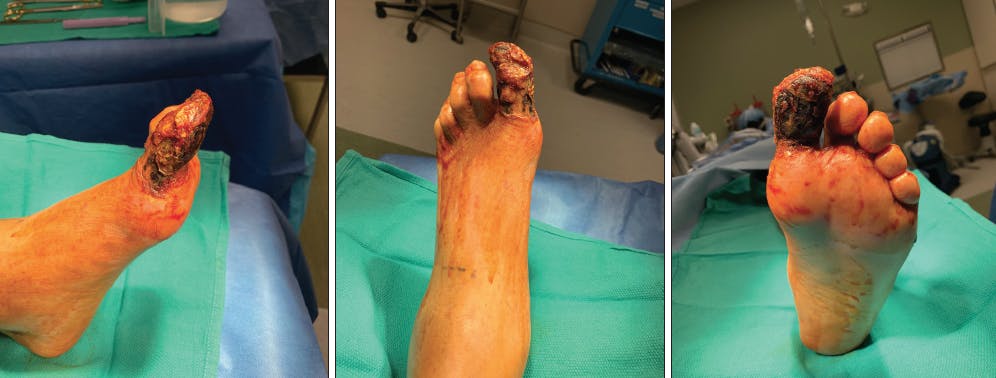
Figure 1. Photos of the left foot showing dry gangrene of the left hallux.
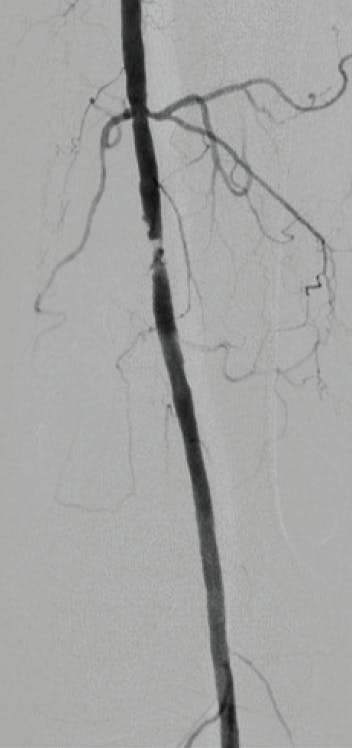
Figure 2. Angiogram showing critical left SFA stenosis.
We proceeded with left lower extremity revascularization focused on our “leaving nothing behind” strategy. Contralateral common femoral artery access was achieved with ultrasound guidance and micropuncture technique, ultimately upsizing to a 6-F crossover Flexor Raabe™* sheath (Cook Medical); the patient was systemically anticoagulated with intravenous weight-based heparin. A standard wire and catheter technique with a Glidewire Advantage™* (Terumo Interventional Systems) and TrailBlazer™ support catheter (Medtronic) was used to cross the lesion into the distal SFA. The true lumen was confirmed with contrast injection. A 7-mm SpiderFX™ distal embolic filter (Medtronic) was placed in the P2 popliteal artery, and the lesion was treated with directional atherectomy using a HawkOne™ M atherectomy system (Medtronic), achieving luminal gain to < 20% residual stenosis in multiple views (Figure 3). Luminal gain was confirmed with a low-pressure balloon inflation technique.5 Next, a 6- X 40-mm IN.PACT™ Admiral™ Drug-Coated Balloon (Medtronic) was used to treat the distal SFA stenosis, inflated for 3 minutes per the instructions for use (Figure 4).6 This produced an excellent angiographic result without evidence of vessel injury or abnormality (Figure 5).
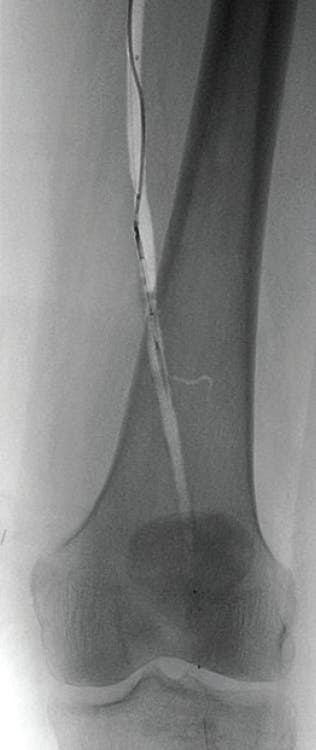
Figure 3. Angiogram showing directional atherectomy of the distal SFA lesion with the HawkOne M directional atherectomy system.
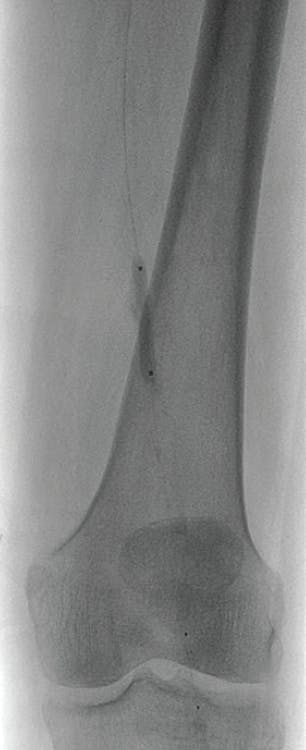
Figure 4. Deployment of the IN.PACT Admiral DCB.

Figure 5. Angiogram showing an excellent result after use of directional atherectomy and DCB.
The focus then was on managing the BTK segment because only peroneal flow was noted without flow into the foot; the PT occluded abruptly (Figure 6). The left PT artery was engaged using a 0.014-inch Command ES™* (Abbott) and a 0.014-inch, 150-cm TrailBlazer catheter. With difficulty, the PT artery was crossed into the plantar vessels (Figure 7). The true lumen was confirmed. Vessel preparation with atherectomy was not performed due to the difficulty crossing and the small caliber of the vessel. At this point, angioplasty was performed with a 2.5- X 120-mm Chocolate PTA balloon slowly inflated up to 4 atm for 30 seconds, followed by nominal pressure for 90 seconds. Completion imaging demonstrated satisfactory flow into the plantar vessels with no dissection or vessel injury (Figure 8).
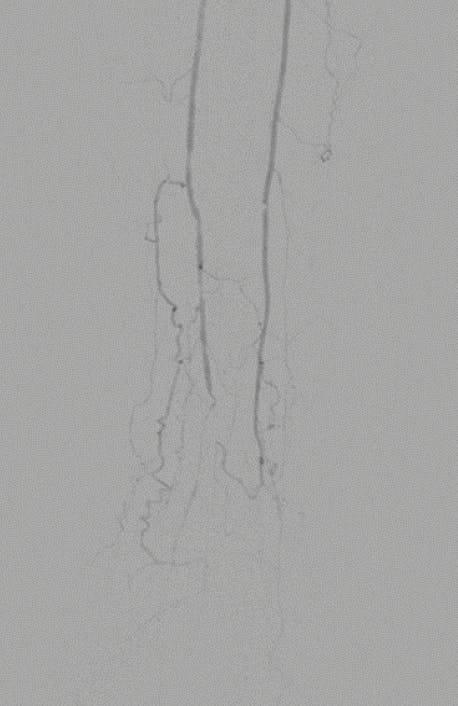
Figure 6. Single-vessel runoff via the peroneal artery. The PT occluded in the distal third of the leg.
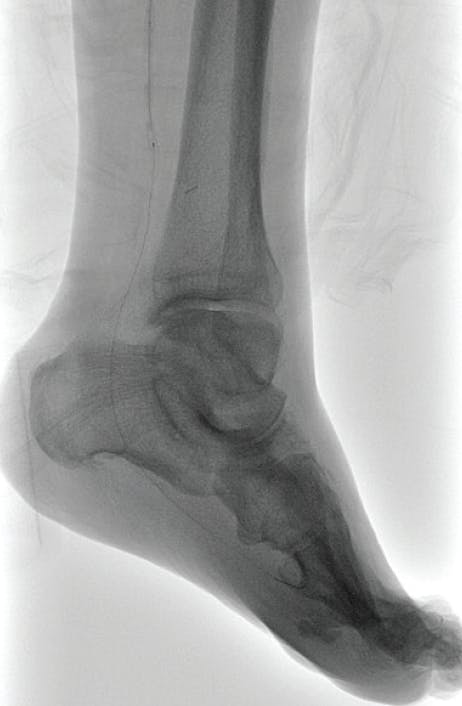
Figure 7. Angiogram showing crossing of the PT artery into the plantar vessels using a 0.014-inch Command ES and a 0.014-inch, 150-cm TrailBlazer catheter.
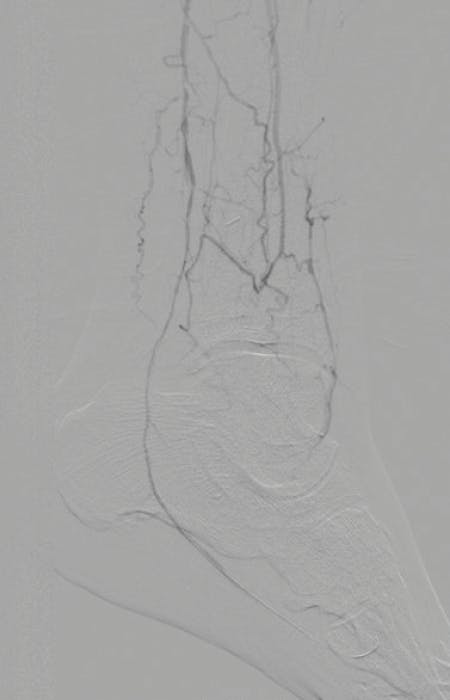
Figure 8. Completion angiogram showing flow into the plantar arteries with no dissection or vessel injury.
The patient ultimately underwent amputation of the left hallux due to the extent of gangrene from the delayed presentation; however, the amputation site healed completely. Postintervention, his ABIs remained “normal” (as expected), but his TBI had increased to 0.62.
This case illustrates the extent of multilevel vascular disease expected in patients with CLTI, which is not unlike the very many complex patients seen at centers managing this disease process. There are multiple coexisting patient- and lesion-related factors complicating the treatment algorithm. Importantly, a full comprehensive vascular examination is imperative, as this patient was told that he had normal ABIs despite nonpalpable pulses. A comfort with and understanding of diabetic vascular disease and medial calcinosis may have prevented his delayed presentation.
DISCUSSION
Satisfactory luminal gain may be achieved with directional atherectomy, and in the DEFINITIVE LE trial, directional atherectomy was shown to be noninferior for treating PAD in patients with diabetes compared with those without diabetes (1-year primary patency, 77% in diabetics vs 78% in nondiabetics).7 The primary patency rate of infrapopliteal vessels (mean length, 5.5 cm) was 90% in the claudicant group and 78% in the CLTI group (mean length, 6 cm). In lesions ≥ 10 cm in length, 12-month patency for infrapopliteal vessels was 91% for the claudicant group and 73% for the CLI group.7 This established the safety and efficacy of directional atherectomy in infrapopliteal vessels.
It is known that standard PTA causes multidirectional stress to the vessel wall, leading to distortion and possible dissection (Figure 9, Figure 10, Figure 11).8-10 These vessel complications can be extremely concerning, and stenting in any of the tibial vessels is an unfavorable and generally prohibited option. In most cases, only one BTK vessel is present, therefore risking the limb entirely if flow is disrupted. To mitigate these concerns, we have moved to using the Chocolate PTA balloon catheter exclusively in the BTK space as a specialty balloon, and this is particularly helpful when crossing with an atherectomy device may be difficult or impossible. The Chocolate PTA balloon incorporates a nitinol-constraining structure that creates pillows and grooves to provide uniform, predictable, and atraumatic dilatation (Figure 12). These pillows allow for vessel dilatation without cutting or scoring, while the grooves provide stress relief and plaque modification.
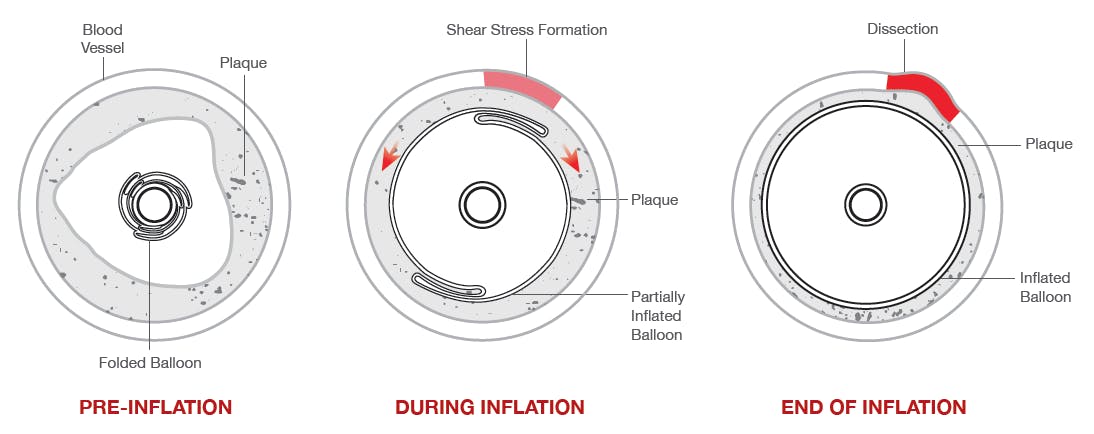
Figure 9. Torsional stress can be imparted on the vessel wall through a twisting motion when a plain balloon unfolds during inflation. Reprinted from Ward C, Mena-Hurtado C. Novel use of pillows and grooves: the Chocolate™ PTA balloon catheter. Endovasc Today. 2014;13:24-28.
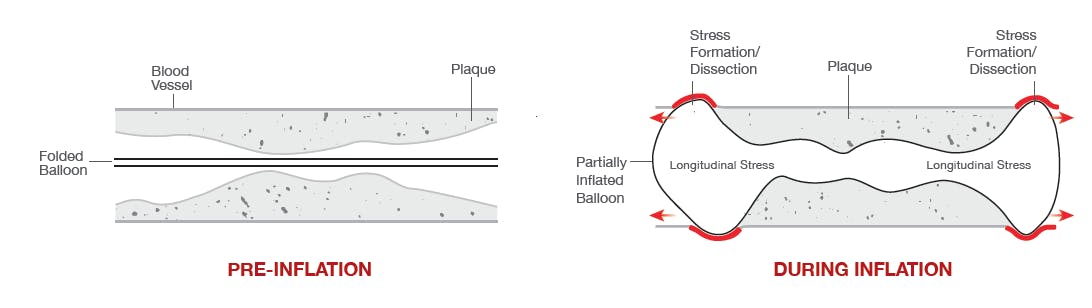
Figure 10. Longitudinal stress elongates the vessel wall when a plain balloon unfolds during inflation. Reprinted from Ward C, Mena-Hurtado C. Novel use of pillows and grooves: the Chocolate™ PTA balloon catheter. Endovasc Today. 2014;13:24-28.
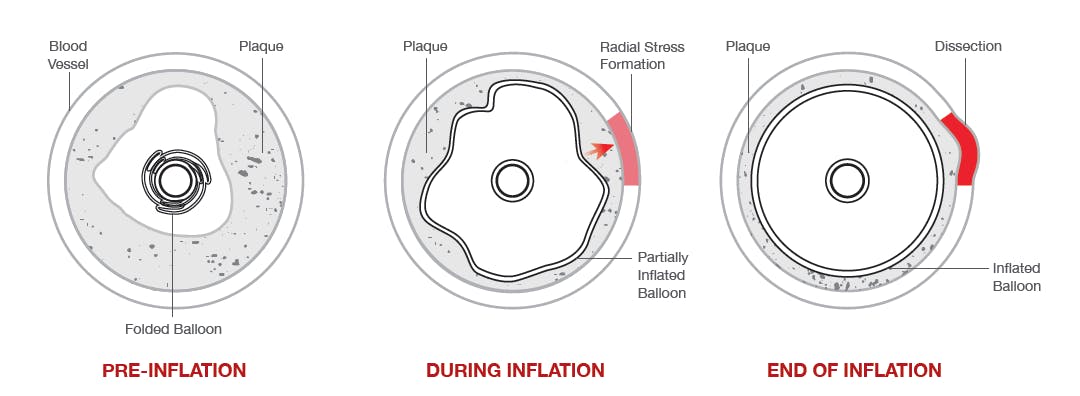
Figure 11. Radial stress outwardly expands the vessel wall when a plain balloon unfolds during inflation. Reprinted from Ward C, Mena-Hurtado C. Novel use of pillows and grooves: the Chocolate™ PTA balloon catheter. Endovasc Today. 2014;13:24-28.
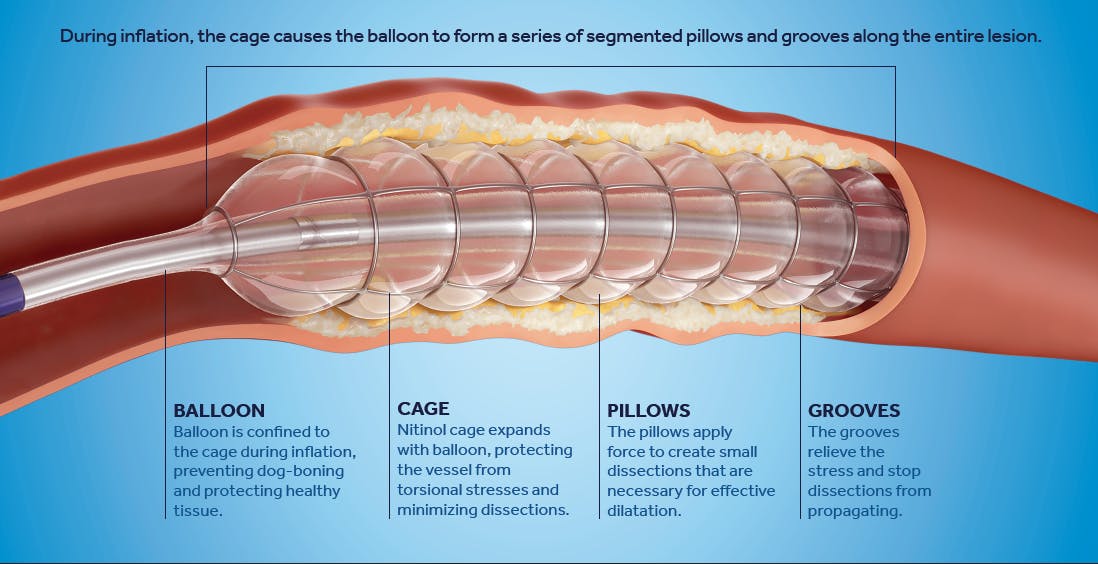
Figure 12. The Chocolate PTA balloon is a semi-compliant balloon that is encased in a nitinol-constraining structure, or cage. As the balloon inflates, the cage causes the balloon to form a series of segmented pillows and grooves along the entire lesion. The pillows apply force to create small dissections that are necessary for effective dilatation. The grooves relieve the stress and stop dissections from propagating.
In our experience and depending on the BTK lesion characteristics, we either employ the Chocolate PTA balloon as a stand-alone or following vessel preparation with atherectomy. This allows us comfort in employing the current technology that minimizes dissections in a critical and difficult location.
We expect that once BTK DCBs become available in appropriate sizes, the Chocolate PTA balloon will help prepare the lesion and vessel with a uniform inflation (minimizing dissection potential), which will be followed by administration of antirestenotic therapy for increased patency. This supports our aggressive approach to endovascular interventional strategies that preserve the native vessel.
The combination of the Chocolate PTA specialty balloon with adjunctive vessel preparation strategies offers a comprehensive portfolio to manage difficult BTK lesions in CLTI patients.
TM* third party brands are trademarks of their respective owner.
1. Hinchliffe RJ, Andros G, Apelqvist J, et al. A systematic review of the effectiveness of revascularization of the ulcerated foot in patients with diabetes and peripheral arterial disease. Diabetes Metab Res Rev. 2012;28(suppl 1):179-217. doi: 10.1002/dmrr.2249
2. Ferraresi R, Palena LM, Mauri G, Manzi M. Tips and tricks for a correct “endo approach.” J Cardiovasc Surg (Torino). 2013;54:685-711.
3. Norgren L, Hiatt WR, Dormandy JA, et al. Inter-society consensus for the management of peripheral arterial disease (TASC II). J Vasc Surg. 2007;45(suppl S):S5-S67. doi: 10.1016/j.jvs.2006.12.037
4. Mustapha JA, Lansky A, Shishehbor M, et al. A prospective, multi-center study of the Chocolate balloon in femoropopliteal peripheral artery disease: the Chocolate BAR registry. Catheter Cardiovasc Interv. 2018;91:1144-1148. doi: 10.1002/ccd.27565
5. Stanley GA, Winscott JG. Maximizing lumen gain with directional atherectomy. J Endovasc Ther. 2016;23:648-652. doi: 10.1177/1526602816644914
6. IN.PACT Admiral drug-coated balloon [instructions for use-revision 1H]. Minneapolis: Medtronic, Inc.; 2018.
7. McKinsey JF, Zeller T, Rocha-Singh KJ, et al. Lower extremity revascularization using directional atherectomy: 12-month prospective results of the DEFINITIVE LE study. JACC Cardiovasc Interv. 2014;7:923-933. doi: 10.1016/j.jcin.2014.05.006
8. Schillinger M, Sabeti S, Loewe C, et al. Balloon angioplasty versus implantation of nitinol stents in the superficial femoral artery. N Engl J Med. 2006;354:1879-1888. doi: 10.1056/NEJMoa051303
9. Dick P, Wallner H, Sabeti S, et al. Balloon angioplasty versus stenting with nitinol stents in intermediate length superficial femoral artery lesions. Catheter Cardiovasc Interv. 2009;74:1090-1095. doi: 10.1002/ccd.22128
10. Laird JR, Katzen BT, Scheinert D, et al. RESILIENT investigators. Nitinol stent implantation versus balloon angioplasty for lesions in the superficial femoral artery and proximal popliteal artery: twelve-month results from the RESILIENT randomized trial. Circ Cardiovasc Interv. 2010;3:267-276. doi: 10.1161/CIRCINTERVENTIONS.109.903468
HawkOne:
Important Information: Indications, contraindications, warnings and instructions for use can be found in the product labeling supplied with each device.
Indications for Use: The HawkOne™ peripheral directional atherectomy system is intended for use in atherectomy of the peripheral vasculature. The HawkOne catheter is indicated for use in conjunction with the SpiderFX embolic protection device in the treatment of severely calcified lesions. The HawkOne catheter is NOT intended for use in the coronary, carotid, iliac or renal vasculature.
CAUTION: Federal (USA) law restricts these devices to sale by or on the order of a physician.
In.Pact Admiral
Indications for Use:
The IN.PACT™ Admiral™ Paclitaxel-coated PTA Balloon Catheter is indicated for percutaneous transluminal angioplasty, after appropriate vessel preparation, of de novo, restenotic, or in-stent restenotic lesions with lengths up to 360 mm in superficial femoral or popliteal arteries with reference vessel diameters of 4-7 mm.
Contraindications
The IN.PACT Admiral DCB is contraindicated for use in:
- Coronary arteries, renal arteries, and supra-aortic/cerebrovascular arteries
- Patients who cannot receive recommended antiplatelet and/or anticoagulant therapy
- Patients judged to have a lesion that prevents complete inflation of an angioplasty balloon or proper placement of the delivery system
- Patients with known allergies or sensitivities to paclitaxel
- Women who are breastfeeding, pregnant or are intending to become pregnant or men intending to father children. It is unknown whether paclitaxel will be excreted in human milk and whether there is a potential for adverse reaction in nursing infants from paclitaxel exposure.
Warnings
- A signal for increased risk of late mortality has been identified following the use of paclitaxel-coated balloons and paclitaxel-eluting stents for femoropopliteal arterial disease beginning approximately 2-3 years post-treatment compared with the use of non-drug coated devices. There is uncertainty regarding the magnitude and mechanism for the increased late mortality risk, including the impact of repeat paclitaxel-coated device exposure. Physicians should discuss this late mortality signal and the benefits and risks of available treatment options with their patients.
- Use the product prior to the Use-by Date specified on the package.
- Contents are supplied sterile. Do not use the product if the inner packaging is damaged or opened.
- Do not use air or any gaseous medium to inflate the balloon. Use only the recommended inflation medium (equal parts contrast medium and saline solution).
- Do not move the guidewire during inflation of the IN.PACT Admiral DCB.
- Do not exceed the rated burst pressure (RBP). The RBP is 14 atm (1419 kPa) for all balloons except the 200 and 250 mm balloons. For the 200 and 250 mm balloons the RBP is 11 atm (1115 kPa). The RBP is based on the results of in vitro testing. Use of pressures higher than RBP may result in a ruptured balloon with possible intimal damage and dissection.
- The safety and effectiveness of using multiple IN.PACT Admiral DCBs with a total drug dosage exceeding 34,854 µg of paclitaxel in a patient has not been clinically evaluated.
Precautions
- This product should only be used by physicians trained in percutaneous transluminal angioplasty (PTA).
- This product is designed for single patient use only. Do not reuse, reprocess, or resterilize this product. Reuse, reprocessing, or resterilization may compromise the structural integrity of the device and/or create a risk of contamination of the device, which could result in patient injury, illness, or death.
- Assess risks and benefits before treating patients with a history of severe reaction to contrast agents.
- The safety and effectiveness of the IN.PACT Admiral DCB used in conjunction with other drug-eluting stents or drug-coated balloons in the same procedure or following treatment failure has not been evaluated.
- The extent of the patient’s exposure to the drug coating is directly related to the number of balloons used. Refer to the Instructions for Use (IFU) for details regarding the use of multiple balloons and paclitaxel content.
- The use of this product carries the risks associated with percutaneous transluminal angioplasty, including thrombosis, vascular complications, and/or bleeding events
- Vessel preparation using only pre-dilatation was studied in the clinical study. Other methods of vessel preparation, such as atherectomy, have not been studied clinically with IN.PACT Admiral DCB.
- This product is not intended for the expansion or delivery of a stent.
Potential Adverse Effects
The potential adverse effects (e.g. complications) associated with the use of the device are: abrupt vessel closure; access site pain; allergic reaction to contrast medium, antiplatelet therapy, or catheter system components (materials, drugs, and excipients); amputation/loss of limb; arrhythmias; arterial aneurysm; arterial thrombosis; arteriovenous (AV) fistula; death; dissection; embolization; fever; hematoma; hemorrhage; hypotension/hypertension; inflammation; ischemia or infarction of tissue/organ; local infection at access site; local or distal embolic events; perforation or rupture of the artery; pseudoaneurysm; renal insufficiency or failure; restenosis of the dilated artery; sepsis or systemic infection; shock; stroke; systemic embolization; vessel spasms or recoil; vessel trauma which requires surgical repair.
Potential complications of peripheral balloon catheterization include, but are not limited to the following: balloon rupture; detachment of a component of the balloon and/or catheter system; failure of the balloon to perform as intended; failure to cross the lesion.
Although systemic effects are not anticipated, potential adverse events that may be unique to the paclitaxel drug coating include, but are not limited to: allergic/immunologic reaction; alopecia; anemia; gastrointestinal symptoms; hematologic dyscrasia (including leucopenia, neutropenia, thrombocytopenia); hepatic enzyme changes; histologic changes in vessel wall, including inflammation, cellular damage, or necrosis; myalgia/arthralgia; myelosuppression; peripheral neuropathy.
Refer to the Physician’s Desk Reference for more information on the potential adverse effects observed with paclitaxel. There may be other potential adverse effects that are unforeseen at this time.
Please reference appropriate product Instructions for Use for a detailed list of indications, warnings, precautions and potential adverse effects. This content is available electronically at www.manuals.medtronic.com.
CAUTION: Federal (USA) law restricts this device to sale by or on the order of a physician.
Spider FX
Important Information: Indications, contraindications, warnings and instructions for use can be found in the product labeling supplied with each device.
Indications for Use:
Lower Extremity (LE) Interventions
The SpiderFX™ Embolic Protection Device is indicated for use as a guidewire and embolic protection system to contain and remove embolic material in conjunction with the TurboHawk™ Peripheral Plaque Excision System, either during standalone procedures or together with PTA and/or stenting, in the treatment of severely calcified lesions in arteries of the lower extremities. The vessel diameter at the filter basket placement site should be between 3.0 mm and 6.0 mm.
Carotid Interventions
The SpiderFX Embolic Protection Device is indicated for use as a guidewire and embolic protection system to contain and remove embolic material (thrombus/debris) while performing angioplasty and stenting procedures in carotid arteries. The diameter of the artery at the site of filter basket placement should be between 3.0mm and 7.0mm.
Saphenous Vein Graft (SVG) Interventions
The SpiderFX Embolic Protection Device is indicated for use as an embolic protection system to contain and remove embolic material (thrombus/debris). The device also acts as the guidewire while performing percutaneous transluminal coronary angioplasty or stenting procedures in coronary saphenous vein bypass grafts with reference vessel diameters of 3.0mm to 6.0mm. The safety and effectiveness of this device as an embolic protection system has not been established in the cerebral vasculature.
CAUTION: Federal (USA) law restricts this product for sale by or on the order of a physician.
TrailBlazer
Important Information: Indications, contraindications, warnings and instructions for use can be found in the product labeling supplied with each device.
TrailBlazer™ Support Catheter
Indications for Use:
TrailBlazer™ Support Catheter are percutaneous, single lumen catheters designed for use in the peripheral vascular system. TrailBlazer™ Support Catheters are intended to guide and support a guide wire during access of the vasculature, allow for wire exchanges and provide a conduit for the delivery of saline solutions or diagnostic contrast agents.
TrailBlazer™* Angled Support Catheter
Indications for Use:
TrailBlazer™* Angled Support Catheters are percutaneous, single lumen catheters designed for use in the peripheral vascular system. TrailBlazer™ Support Catheters are intended to guide and support a guide wire during access of the vasculature, allow for wire exchanges and provide a conduit for the delivery of saline solutions or diagnostic contrast agents.
CAUTION: Federal (USA) law restricts these devices to sale by or on the order of a physician.
Chocolate™* PTA Balloon
Important Information: Indications, contraindications, warnings and instructions for use can be found in the product labelling supplied with each device.
Indications for Use: The ChocolateTM* PTA Balloon Catheter is intended for balloon dilatation of lesions in the peripheral vasculature, including the iliac, femoral, ilio-femoral, popliteal, infra-popliteal, and renal arteries.
CAUTION: Federal (USA) law restricts this product for sale by or on the order of a physician.
UC202113362 EN ©2021 Medtronic. All rights reserved. Medtronic, Medtronic logo are trademarks of Medtronic. All other brands are trademarks of a Medtronic company. For U.S. distribution. 02/2021
Advertisement
Advertisement