Advertisement
Advertisement
February 2021
Sponsored by AngioDynamics, Inc.
The Right Device in Right Heart: AngioVac System for Clot in Transit and Right Heart Vegetation
By William Brent Keeling, MD; Abdul Haseeb Qazi, MD; and Kenneth Rosenfield, MD
The last decade has seen significant improvement in the use of minimally invasive technologies for the removal of undesirable intravascular materials such as deep vein thrombus, clot in transit, and right heart masses to reduce the occurrence of pulmonary emboli, and in case of endocarditis, to eliminate a source of ongoing sepsis.1-4 With no defined treatment algorithm, surgical embolectomy, intravenous (IV) thrombolysis, catheter-directed thrombolysis, anticoagulation, or antibiotics (infective endocarditis) are some of the viable options. Catheter-based techniques utilizing large-bore aspiration thrombectomy for thrombi in transit or vegetation removal from the right atrium and/or tricuspid valve have been utilized for several years.5,6 In this case report, we discuss the successful utilization of the AngioVac system (AngioDynamics, Inc.) for the removal of clot in transit in an octogenarian patient and right atrial/tricuspid vegetation in a teenage patient with history of IV drug abuse.
CASE 1: CLOT IN TRANSIT
A woman in her early 80s with systolic heart failure (ejection fraction, 35%), chronic obstructive pulmonary disease, hypertension, and diabetes presented with several days of worsening abdominal pain combined with new-onset atrial fibrillation with rapid ventricular response. Initial physical exam findings were significant for mild bilateral lower extremity edema and abdominal pain out of proportion to the physical exam. β blockade was initiated, as well as IV heparin. An abdominal CT with contrast was then performed, which showed the presence of acute clot in her superior mesenteric artery as well as bilateral pulmonary emboli. Her clinical condition worsened along with her abdominal pain, and she was emergently taken to the operating room with the vascular surgery service. Extensive catheter-based embolectomy of her superior mesenteric artery and associated branches was performed in the hybrid operating room to restore blood flow to her intestines. In the operating room, a peripheral angiogram was performed due to a rising serum lactate and diminished right pedal pulses, and this showed acute emboli in her right lower extremity arterial system. This was addressed with further embolectomy and a right lower extremity fasciotomy. Additionally, general surgery performed an exploratory celiotomy, which showed only dusky small intestine without any frank ischemia or necrosis. At the end of this operative procedure, she underwent a transthoracic echocardiogram (TTE), which showed a large embolus traversing a patent foramen ovale (PFO) (Figure 1).
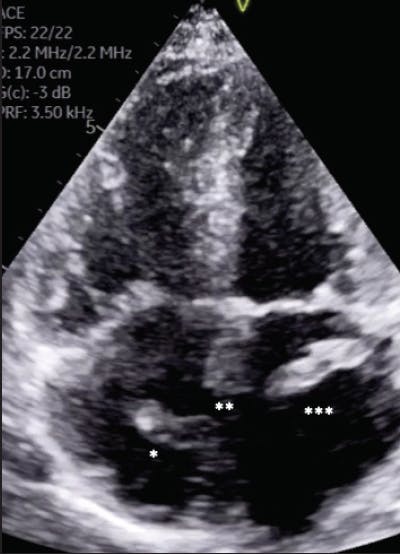
Figure 1. TTE showing a large thrombus in transit.
The patient had altered mental status postoperatively, and a CT scan of the head was performed, showing a small subdural hematoma of unclear acuity. She then underwent a transesophageal echocardiogram (TEE) on postoperative day 1, which again demonstrated the large thrombus in transit across her PFO (Figure 2). The cardiothoracic surgical service in addition to cardiology decided to proceed with suction embolectomy with concomitant venovenous bypass using the AngioVac system. Bilateral common femoral veins were accessed under ultrasound guidance, and wires were inserted into the inferior vena cava under fluoroscopy. The left femoral vein was serially dilated, and a 16-F return cannula was inserted. The contralateral groin was likewise dilated, and a 26-F sheath was inserted. The AngioVac device was inserted through the 26-F sheath, and venovenous bypass was commenced once it was placed into the right atrium under TEE guidance.
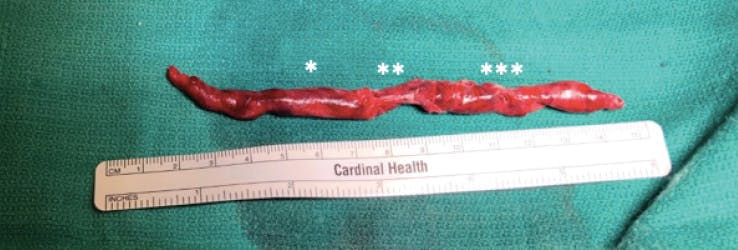
Figure 2. Clot removed postprocedure.
The total bypass time was 2 minutes, and the thrombus in transit disappeared from echocardiographic view within moments after engagement. After successful aspiration, the clot was measured at 14 cm in length, which was the length measured preoperatively on echocardiography. Vascular surgery then proceeded to deploy an inferior vena cava filter. The cannulas were withdrawn, hemostasis was obtained, and the patient was returned to the intensive care unit (ICU).
Given the patient’s tenuous nature and unclear outcome, invasive surgical intervention via a median sternotomy using full cardiopulmonary bypass was not an option. This was also an unusual situation of a patient with both a recent intracranial bleeding history as well as evidence of recent thrombus. As such, a fine balance was required: Too much anticoagulation (such as the activated clotting time of 480 sec and above necessary for cardiopulmonary bypass) could exacerbate the existent hemorrhage, but too little may cause issues with clotting during the procedure. Typically, venovenous bypass circuits can be run with lower clotting times (250–300 sec), which was ideal for this patient.
There was every indication that the clot in transit was removed in total, and no residual embolic debris was demonstrated. This was due in part to the proprietary funnel design at the tip of the AngioVac cannula. However, the patient experienced a progressive lactic acidosis and required multiple bowel resections for ongoing intestinal ischemia. As a result, she experienced renal failure and further complications in the ICU and expired on postoperative day 16.
CASE 2: RIGHT HEART MASS
A female patient in her late teenage years with history of IV drug abuse and tricuspid valve endocarditis leading to bioprosthetic tricuspid valve replacement and recent permanent pacemaker for complete heart block presented with fever and methicillin-susceptible Staphylococcus aureus bacteremia. Echocardiography revealed a large mobile vegetation associated with the prosthetic tricuspid valve. Her hospital course was complicated by septic pulmonary emboli and pulmonary abscesses. She was also noted to have thrombocytopenia and possible disseminated intravascular coagulation.
An echocardiogram showed bioprosthetic tricuspid valve leaflets with two large vegetations, resulting in obstruction of the valve orifice; the mean transvalvular gradient was 12 mm Hg (Figure 3A). The lateral vegetation measured 31 X 16 mm and the medial mass measured 18 X 13 mm. Right ventricular (RV) function was impaired. There was no evidence of significant tricuspid regurgitation by color and spectral Doppler. The patient was also noted to be tachycardic, which was likely compensatory in the setting of poor inflow between to the RV due to obstruction from the vegetation within the tricuspid valve orifice.
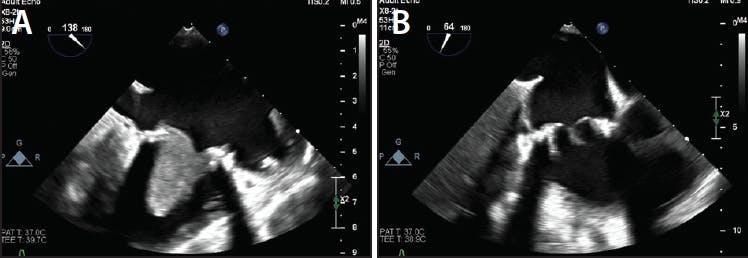
Figure 3. Echocardiogram showing bioprosthetic tricuspid valve with large adherent vegetation (A). Post-AngioVac TEE showing significant improvement in appearance of vegetation (B).
Given the large size of the vegetation and possible hemodynamic effects from tricuspid valve obstruction, risk of ongoing embolization, and persistent methicillin-susceptible S. aureus bacteremia, the AngioVac system was undertaken to debulk the vegetation and “clean” the valve. The procedure was performed under general anesthesia and with active TEE guidance. Access was obtained in the right internal jugular (IJ) and left femoral vein under ultrasound guidance. Preclosure was performed using two Perclose devices (Abbott) in the femoral vein and a single Perclose in the IJ vein. Sequential dilation of each venotomy was performed by advancing dilators over a 0.035-inch Amplatz Super Stiff wire (Boston Scientific Corporation). A 17-F extracorporeal membrane oxygenation arterial cannula was placed in the left femoral venotomy and sutured in place. A 26-F, 33-cm DrySeal sheath (Gore & Associates) (shortened by manually cutting to approximately 20 cm) was placed in the right IJ vein over the Amplatz wire. The AngioVac perfusion tubing was then primed, with careful attention to deairing the circuit. The tubing was then connected to the 17-F return cannula and the AngioVac cannula itself, which was advanced through the DrySeal sheath.
With ongoing TEE guidance, the AngioVac catheter was advanced under continuous aspiration from the superior vena cava to the right atrium and directed toward the bioprosthetic tricuspid valve and associated vegetation (Figure 4A). Several passes were performed to engage with the vegetation and “strip” the valve clean. As the valve was debrided using flow rates of between 1 and 3 L per minute, a large volume of material was aspirated into the AngioVac filter (Figure 4B). TEE demonstrated progressive removal of valve-associated vegetation, improvement in the valve orifice, and reduction in transvalvular obstruction (Figure 3B). Notably, during the actual course of debulking, the patient’s hemodynamic status improved substantially with an increase in systolic blood pressure from 92 mm Hg to 130 mm Hg and reduction in tachycardia from 118 bpm to 80 bpm.
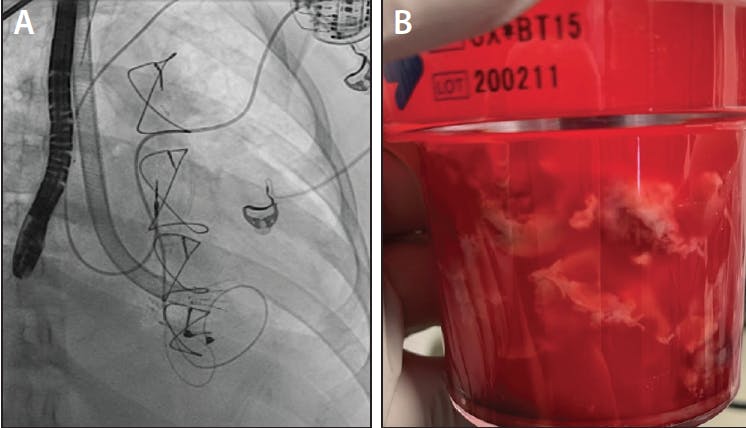
Figure 4. TEE showing the AngioVac cannula engaged with the tricuspid valve vegetation (A). Filter showing large amount of vegetation material obtained during aspiration thrombectomy (B).
Venovenous bypass was discontinued, and the AngioVac cannula was removed. Blood within the circuit was returned to the patient with saline flush. The 17-F femoral and 26-F IJ sheaths were removed, and Perclose sutures were deployed. A mattress suture was required to achieve complete hemostasis at the IJ access site. The patient was extubated in the procedure room immediately postprocedure and returned to the ICU for recovery. She had significant improvement in her hemodynamic status, with resolution of her preprocedure tachycardia and normalization of her blood pressure. Her recurring fevers resolved and she was subsequently discharged on IV antibiotics. Final pathology revealed thrombus and vegetation material with active infection, consistent with active endocarditis. No prosthetic valve tissue was identified.
CONCLUSION
The two cases described demonstrate the efficacy of the AngioVac system for complicated scenarios of embolic debris in the right atrium. These cases bring out the utility of this device to prevent pulmonary and systemic emboli by removing the thrombi in transit and the vegetations in the right heart. Experience from the RAPID registry demonstrated the versatility of the AngioVac System in 234 patients with a wide variety of clinical conditions, such as right heart masses and caval thromboembolism, and validated its safety and efficacy.7 In summary, the next-generation AngioVac system (with the enhanced safety features, proven efficacy, and versatility), distinguish this device and make it uniquely suited for clot in transit and right heart vegetations. Further prospective studies in a larger patient population are planned to replicate the excellent safety and efficacy demonstrated to date, and to establish other applications for the AngioVac system.
Views and opinions expressed in the article are of the authors and do not necessarily reflect the views and opinions of AngioDynamics, Inc., its affiliates or subsidiaries or their employees.
1. Vedantham S, Goldhaber SZ, Julian JA, et al. Pharmacomechanical catheter-directed thrombolysis for deep-vein thrombosis. N Engl J Med. 2017;377:2240-2252. doi: 10.1056/NEJMoa1615066
2. Parikh S, Motarjeme A, McNamara T, et al. Ultrasound-accelerated thrombolysis for the treatment of deep vein thrombosis: initial clinical experience. J Vasc Interv Radiol. 2008;19:521-528. doi: https://doi.org/10.1016/j.jvir.2007.11.023
3. Kim HS, Patra A, Paxton BE, et al. Catheter-directed thrombolysis with percutaneous rheolytic thrombectomy versus thrombolysis alone in upper and lower extremity deep vein thrombosis. Cardiovasc Intervent Radiol. 2006;29:1003-1010. doi: 10.1007/s00270-005-0341-4
4. George B, Voelkel A, Kotter J, et al. A novel approach to percutaneous removal of large tricuspid valve vegetations using suction filtration and veno-venous bypass: A single center experience. Catheter Cardiovasc Interv. 2017;90:1009-1015.
5. Hameed I, Lau C, Khan FM, et al. AngioVac for extraction of venous thromboses and endocardial vegetations: A meta-analysis. J Card Surg. 2019;34:170-180. doi: 10.1111/jocs.14009
6. Worku B, Salemi A, D’Ayala MD, et al. The AngioVac Device: Understanding the Failures on the Road to Success. Innovations (Phila). 2016;11:430-433. doi: 10.1097/IMI.0000000000000310
7. Moriarty JM, Rueda V, Liao M, et al. Endovascular removal of thrombus and right heart masses using the AngioVac system: results of 234 patients from the prospective, multicenter registry of AngioVac procedures in detail (RAPID). J Vasc Interv Radiol. Published online January 29, 2021. doi: 10.1016/j.jvir.2020.09.012
Indications for Use: The AngioVac Cannula is indicated for use as a venous drainage cannula and for removal of fresh, soft thrombi or emboli during extracorporeal bypass for up to 6 hours.
Indications for Use: The AngioVac Circuit is indicated for use in procedures requiring extracorporeal circulatory support for periods of up to six hours.
Refer to Directions for Use provided with the product for complete Instructions, Warnings, Precautions, Possible Adverse Effects and Contraindications. Observe all instructions for use prior to use. Failure to do so may result in patient complications.
AngioDynamics, and AngioVac are trademarks and/or registered trademarks of AngioDynamics, Inc., an affiliate or subsidiary.
Advertisement
Advertisement