Advertisement
Advertisement
July 2021 Supplement
Sponsored by The PERT Consortium®
The Promise of The PERT Consortium® PE Registry
A registry to inform physicians about the modern state of pulmonary embolism care, including risk stratification, diagnosis, and treatment.
By Eric A. Secemsky, MD, MSc, RPVI, FACC, FSCAI, FSVM; Jay Giri, MD, MPH; and Robert Lookstein, MD, MHCDL, FSIR, FAHA, FSVM
Pulmonary embolism (PE) is the third leading cause of worldwide cardiovascular death.1 However, significantly fewer resources have been put into research related to innovation in care delivery for this disease than the top two leading causes of cardiovascular death: myocardial infarction and stroke. Although evidence-based pathways for care delivery fueled by evolving therapeutics paired with registry-based assessments for quality improvement are the norm for these conditions, such a coordinated system has been largely absent from the acute PE space.
PERT CONSORTIUM® PE REGISTRY
The last large-scale multicenter registry dedicated exclusively to the study of acute PE patients enrolled patients in the mid-1990s. The International Cooperative Registry for Pulmonary Embolism (ICOPER) enrolled 2,454 patients with acute PE at 52 institutions in 1995-1996.2 A series of seminal publications arose from these efforts that were instrumental in defining prognosis, treatment patterns, and outcomes for a wide range of real-world, hospitalized PE patients. This work has largely persisted as the gold standard for observational research in acute PE, even as the field itself has continued to evolve. For instance, in 1996, direct oral anticoagulants had barely been theorized, much less developed. Imaging technologies for assessing the pulmonary circulation and the right heart were primitive compared to today’s standards. Additionally, the rapidly evolving wide range of interventional technologies we now have for acute pulmonary artery revascularization was nonexistent. These are just a few of the myriad issues that clearly need reassessment in modern, large, real-world PE populations.
It is on this background that The National Pulmonary Embolism Response Team (PERT) Consortium® embarked on a mission to create a modern PE registry. Utilizing the backbone of member sites in the organization, The PERT Consortium® has assembled a broad group of > 30 hospitals that submit data on an ongoing basis regarding hospitalized patients with PE. Member institutions submitting data vary in size, region, technologic capacity, and academic status (Figure 1). More than 4,600 patients have been entered in the registry to date, representing diversity in age, gender, race, and comorbidity profiles. For instance, the average age of a registry patient is 61 years, with a wide range of ages represented (SD, 18 years). Of all patients, currently 53% are female and 39% are of minority race. PERT activations were performed 56% of the time in the emergency department, whereas the remaining patients were consulted on in various hospital locations. Furthermore, 25% of patients were transferred from another institution prior to PERT activation to receive advanced PE care.
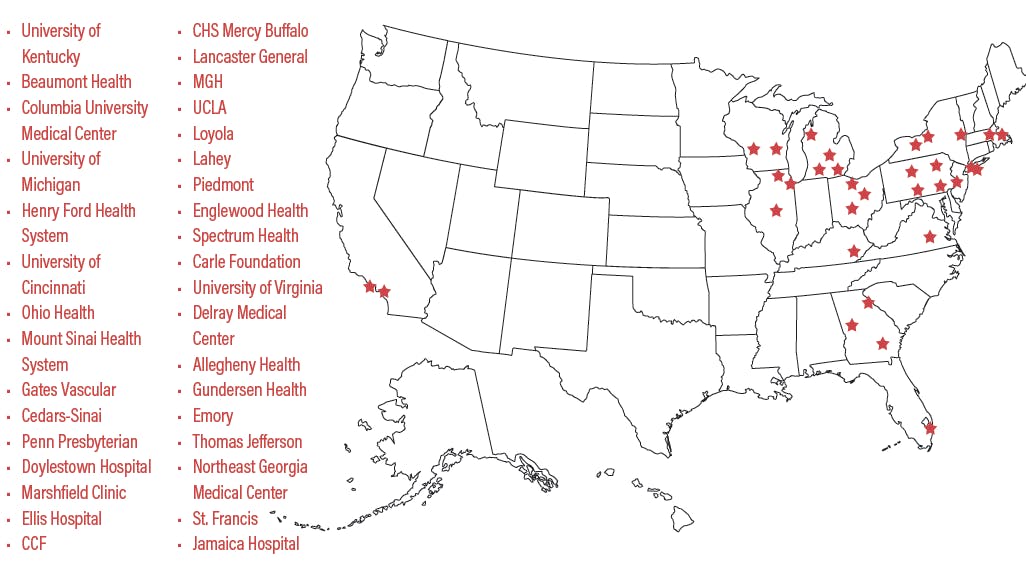
Figure 1. Participating centers in The PERT Consortium® PE Registry.
Additional data collected by the registry include signs and symptoms at presentation, risk factors for PE, laboratory and imaging studies, noninvasive and invasive therapies, in-hospital events, and longitudinal follow-up. These data are critical in estimating and categorizing PE-related risks and understanding expected prognoses. Importantly, in addition to participating sites having access to their own PE data, centers are provided quarterly dashboards with information on how their site-specific quality metrics (eg, length of stay, in-hospital events, follow-up visits, readmissions) vary compared with other participating centers (Figure 2).
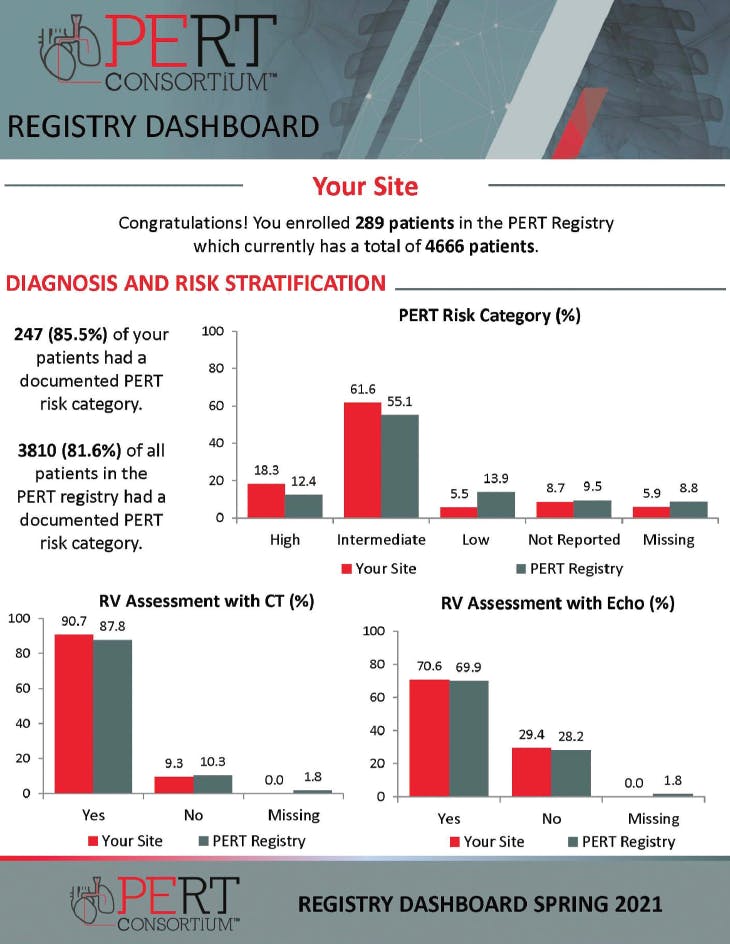
Figure 2. Representative image of the PERT Consortium® PE Registry dashboard.
Furthermore, a newly formed PERT Consortium® Research and Publications Committee launched this year. This 12-member committee, made up of national leaders in PE care and representing various medical specialties and disciplines, was developed to facilitate the use of the registry to answer pressing scientific questions regarding the management of patients hospitalized with PE. The committee has developed a research proposal application process to allow members of the PERT community to apply and lead scientific investigations for national presentation and peer-reviewed publication. The anticipation is that the registry can assist in eliminating the many data gaps that exist in current PE management.
This modern PE registry has a slightly different focus than ICOPER given the knowledge gained in the past and the specific areas of uncertainty that exist now. Specifically, registry patients are captured through the activation of PERTs, thus enriching the registry by focusing on the management of intermediate- and high-risk patients. Not incidentally, this is where most of the current controversy in prognosis and care lies, as management of low-risk PE patients is decidedly more algorithmic in the modern era. The PERT Consortium® PE Registry has the promise to better determine how contemporary hospitalized PE patients are being managed, obtain benchmark rates for adverse events, and provide much-needed longitudinal follow-up data on survivors of PE.
CONCLUSION
At its core, The PERT Consortium® PE Registry is a quality assessment and improvement tool for participating institutions. In an arena where level 1 data to guide the management of hospitalized PE patients are sparse, the ability for an institution to benchmark its processes and outcomes against like-minded peer institutions is invaluable. Similar to ICOPER before it, The PERT Consortium® PE Registry also holds considerable promise for informing PE practitioners and the medical community at large about the modern state of PE care. This includes important assessments regarding the evolution of risk stratification, diagnosis, and treatment of PE as well as observational analysis of the care delivery model of the PERT itself.
1. Goldhaber SZ, Bounameaux H. Pulmonary embolism and deep vein thrombosis. Lancet. 2012;379:1835-1846. doi: 10.1016/S0140-6736(11)61904-1
2. Goldhaber SZ, Visani L, De Rosa M. Acute pulmonary embolism: clinical outcomes in the International Cooperative Pulmonary Embolism Registry (ICOPER). Lancet. 1999;353:1386-1389. doi: 10.1016/s0140-6736(98)07534-5


Advertisement
Advertisement