Advertisement
Advertisement
July 2021
Sponsored by Penumbra, Inc.
Computer-Aided Thrombus Removal Using Penumbra’s Lightning® 7 and Lightning 12 Intelligent Aspiration System
Real-world use of the Indigo® System Lightning® 7 and Lightning 12 Intelligent Aspiration in arterial, pulmonary embolism, and venous cases.
Thrombotic disease puts patients at high risk of mortality, poor quality of life, and poor treatment outcomes. Treatment options for thrombus have been limited in function and efficiency. Lytic infusions are associated with higher risks of bleeding, while other devices are linked to incomplete thrombus removal, distal emboli, or further bleeding complications. The Lightning® Intelligent Aspiration System (Penumbra, Inc.) shows potential to be a successful treatment option for thrombotic disease.
Lightning, first introduced in July 2020, includes 7-, 8-, and 12-F catheter sizes and uses an “intelligent” device that has the ability to detect thrombus during the procedure and potentially reduce blood loss. The microchip design utilizes a thrombus detection algorithm meant to detect when the catheter is in patent flow or when it is in thrombus, initiating intermittent aspiration to mitigate blood loss. The system also provides audible feedback that alerts the operator when the catheter is transitioning between areas of thrombus in the form of clicking. The operator can focus on removing thrombus completely rather than being limited by the estimated blood loss (EBL).
The second component of the system is the catheter. Lightning 7 and Lightning 12 have laser-cut hypotube technology designed to enhance the deliverability of power aspiration in hard-to-reach vasculature. The trackability and torqueability is bolstered by the hypotube that aims to support the removal of thrombus from large vessels with wall-adherent thrombus. The Lightning unit and catheter create a mechanical thrombectomy system that is simple to use compared to other products.
From personal experience, we have seen quicker procedure times and higher rates of single-session therapy with reduced lytic use. The Lightning Intelligent Aspiration System has the capacity to change the way physicians manage and treat thrombotic disease in high-risk patients.
–Amit Srivastava, MD, FACC, FABVM
LIGHTNING 7 THROMBUS REMOVAL IN THE SFA VIA PEDAL ACCESS

PATIENT PRESENTATION
A woman in her early 80s with Rutherford class 4 claudication of the right lower leg with a known contralateral common femoral artery (CFA) occlusion presented with leg pain and a thrombosed right superficial femoral artery (SFA) stent 3 months after the first intervention. The patient had been noncompliant with antiplatelet therapy and also had a history of tobacco use, hypertension, and hyperlipidemia.
INTERVENTION
Under ultrasound guidance, the right posterior tibial artery was accessed using a 6-F GlideSheath Slender introducer sheath (Terumo Interventional Systems) that allowed Lightning 7 to be used with a 6-F access site. After gaining tibial/pedal access, fluoroscopy revealed thrombosed stents in the right lower extremity with presence of collaterals (Figure 1A). The catheter was advanced over a wire into the sheath using an introducer packaged with Lightning 7.
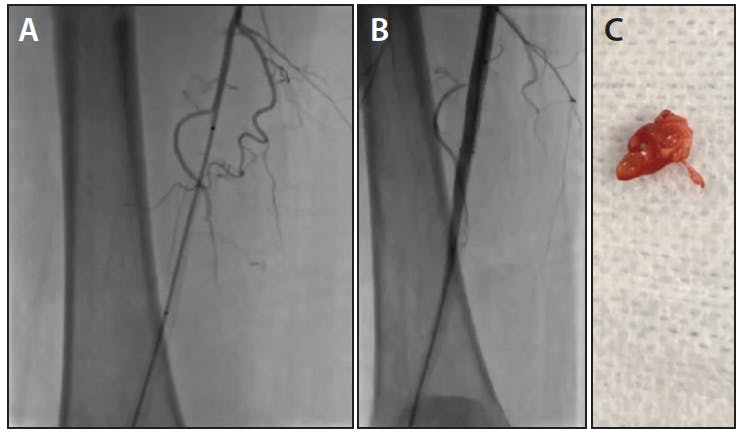
Figure 1. Lightning 7 thrombus removal case images.
Using the circumferential sweep and the Separator 7 (SEP7; Penumbra, Inc.), wall-adherent thrombus was removed from the stent, allowing the catheter to work in a 360° fashion throughout the posterior tibial artery (Figure 1C). Due to severe residual stenosis in the SFA, a prolonged percutaneous transluminal angioplasty (PTA) was performed in a retrograde fashion. Good flow was restored through the SFA to the distal popliteal segment (Figure 1B).
DISCUSSION
An advantage of mechanical thrombectomy is that you can choose to go antegrade or retrograde while potentially minimizing the risk of distal embolization. In this case, where contralateral femoral access was not an option, we were able to get pedal access with the Lightning 7. Paired with the 1:1 torqueability of the catheter, in this case, the Lightning technology also helped mitigate blood loss while removing stubborn wall-adherent thrombus in stenosed arteries.
LOWER EXTREMITY ARTERIAL THROMBUS REMOVAL USING LIGHTNING 7

PATIENT PRESENTATION
A patient in his late 60s presented with history of coronary artery disease, congestive heart failure, and peripheral vascular disease. He presented with 2 to 3 weeks of right lower extremity claudication at 100 feet after stopping dual antiplatelet therapy for 3 days for an unrelated procedure. His right thigh and medial foot and ankle were cool to the touch on examination. Arterial Doppler ultrasound demonstrated proximal long-segment right SFA occlusion.
INTERVENTION
Left groin access was achieved using a 5-F sheath. An aortogram and pelvic angiogram demonstrated patent aortoiliac inflow without significant stenosis to the bilateral lower extremities. Right lower extremity runoff angiography demonstrated patency of the right CFA and profunda femoris artery with proximal long-segment occlusion of the right SFA, including in-stent occlusion with distal reconstitution (Figure 1).
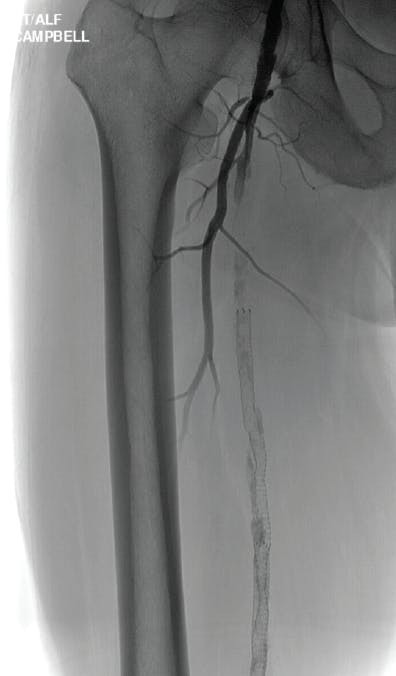
Figure 1. Right lower extremity runoff angiogram demonstrating proximal long-segment occlusion of the SFA with distal reconstitution.
The 5-F sheath was upsized to a 7-F Destination sheath (Terumo Interventional Systems) and an 0.018-inch crossing catheter and wire were used to cross the occluded segment into the popliteal artery. The Indigo® Lightning® Intelligent Aspiration System CAT™ 7 (Penumbra, Inc.) was then used to perform over-the-wire mechanical aspiration thrombectomy of the long-segment SFA occlusion. The CAT7 was preloaded with an 0.018-inch 4- X 8-mm Ultraverse balloon (BD) to assist in crossing the stent struts (Figure 2A).
After a few passes, postthrombectomy angiography demonstrated restoration of in-line flow through the right SFA stent (Figure 2B).
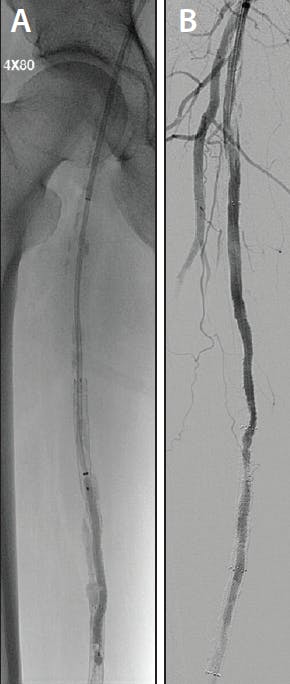
Figure 2. Balloon-assisted CAT7 crossing of the stent (A). Post CAT7 thrombectomy angiogram (B).
No tissue plasminogen activator (tPA) was given for the case. The patient was discharged the same day without an overnight stay.
DISCUSSION
Acute lower extremity ischemia, defined as a rapidly developing or sudden decrease in perfusion to the lower extremity, often results in threatened limb viability. Frequently, this is due to arterial occlusion, as was the case with this patient. Rapid revascularization is indicated when the limb is viable and salvageable.
Catheter-directed therapy can be performed using catheter-directed thrombolysis or endovascular thrombus aspiration. Thrombolysis generally requires multiple interventions, longer lengths of stay, added costs, and places patients at risk of intracranial bleeding.
The Indigo System CAT7 with Lightning Intelligent Aspiration technology provides a new and excellent alternative for endovascular revascularization. The catheter has a convenient low 7-F profile but maintains a robust inner diameter at 0.082 inches. Coupled with the high-power Penumbra ENGINE™, it is a potent tool in endovascular peripheral arterial thrombectomy. The Lightning 7 Intelligent Aspiration technology provides intraprocedural audiovisual cues to help detect thrombus, as well as dual-pressure sensors for real-time flow monitoring. The new XTORQ tip design provides the directional ability needed to tackle eccentric wall-adherent thrombus. These design features allow our team to perform revascularization while minimizing tPA use. In many cases, such as in this patient, full revascularization can be achieved with no tPA administration, and hospital length of stay can be kept to a minimum.
Percutaneous Embolectomy to Treat Acute Limb Ischemia

PATIENT PRESENTATION
The patient was admitted to the emergency room with report of leg pain. CT revealed bilateral popliteal emboli (Figure 1A), so the patient was taken directly to the catheterization lab.
INTERVENTION
Left and right popliteal embolectomy was performed using Lightning 7. Access was gained in the opposite CFA using an 8-F, 65-cm Pinnacle sheath (Terumo Interventional Systems). The catheter was used up and over with the SEP7 to maintain luminal patency as thrombus was aspirated. Once the left side was cleared, access was gained in the left CFA with the same sheath to clear the right popliteal. Throughout the procedure, the Lightning device flashed yellow without any clicking, indicating thrombus was most likely occluding the catheter. The hemostasis valve adapter was removed from the sheath and the catheter pulled back to reveal heavy thrombus corked at the tip of CAT7. Flow was restored to both popliteal arteries with good distal runoff (Figure 1B and 1C). No tPA was used, EBL was only 110 mL, and the patient was released the next day.
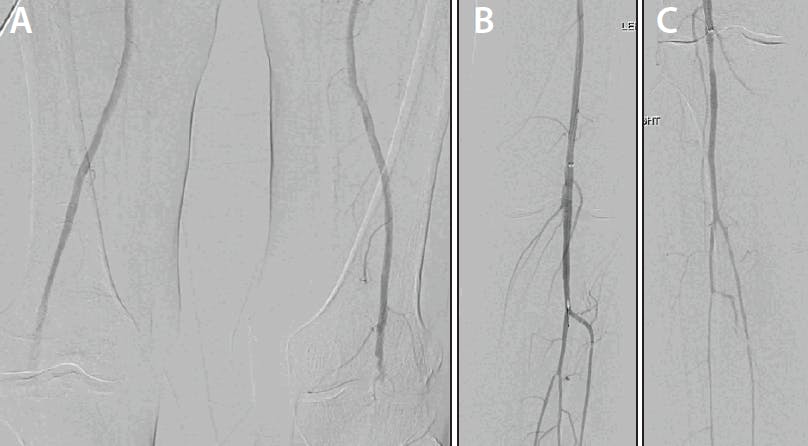
Figure 1. Angiogram of occluded left and right popliteal arteries (A). Angiogram showing restored flow to left popliteal artery (B). Flow restored to right popliteal artery (C).
DISCUSSION
Lightning 7 is a great alternative to surgical embolectomy for acute limb ischemia (ALI) patients. In years past, this patient would have been taken straight to the operating room for an open procedure. With percutaneous embolectomy, our practice has seen no issues of surgical site incisions, infections, or complicated fasciotomies. With the inherent risks of using tPA, a mechanical thrombectomy option that can minimize the need to use tPA and may reduce intensive care unit (ICU) stay is ideal.
Treating Total Occlusion of Tibioperoneal Trunk and Anterior Tibial Artery With Lightning 7

PATIENT PRESENTATION
The patient presented in the emergency room as an ALI case with irregularity of the distal left superficial femoral artery (SFA) and a total occlusion of the tibioperoneal (TP) trunk, with further thrombus in the anterior tibial (AT) artery (Figures 1A and 1B). Intravascular ultrasound (IVUS) revealed irregularity within the vessel in the form of ectatic aneurysm with free-floating thrombus.
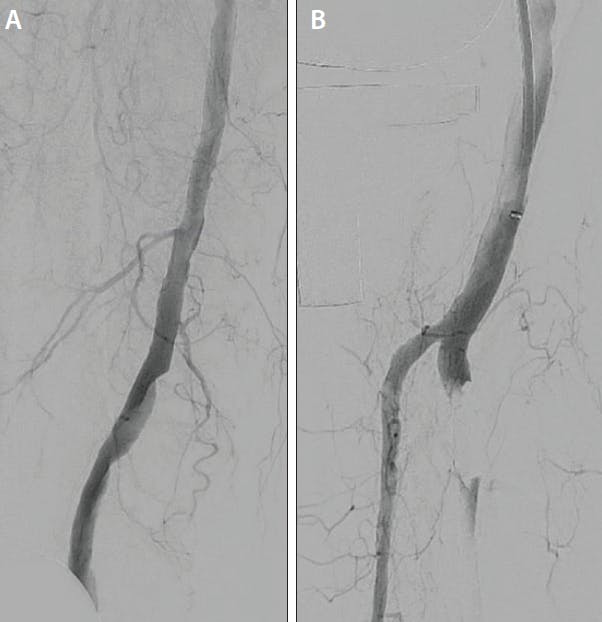
Figure 1. Occlusion in the AT artery (A) and TP trunk (B).
INTERVENTION
Via contralateral access, Lightning 7 was used to aspirate thrombus in the TP trunk in conjunction with the SEP7 to break up the dense clot in stepwise fashion. The catheter was advanced into the peroneal, and clot was quickly removed (Figure 2A). The catheter was then further advanced into the posterior tibial (PT) artery and completely cleared the vessel (not shown). After this, we advanced the Lightning 7 into the AT, which had mid-vessel occlusion. This was quickly cleared with restoration of three-vessel runoff to the foot (Figure 2B). An 11- X 5-cm Viabahn covered stent (Gore & Associates) was deployed across the lesion with complete exclusion (Figure 2C).
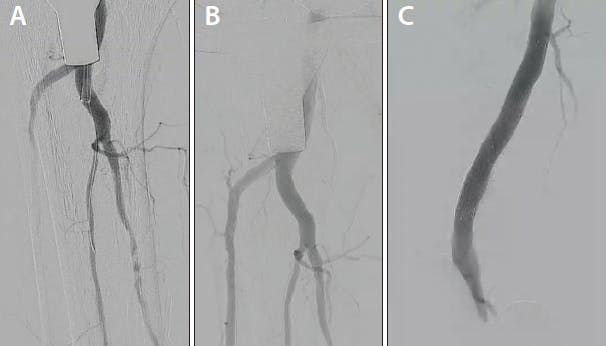
Figure 2. Flow restored to the peroneal artery (A) and to the AT artery (B). Stent placed to reduce irregularity from the ectasia (C).
DISCUSSION
In ALI cases, the Lightning 7 device serves as a great option to access clot not only above the knee but also below. The laser cut, hypotube design allows nearly the aspiration capacity of the 8-F CAT 8 catheter in a 7-F form factor (0.006-inch inner diameter difference). The lower profile facilitates access in small vessels while the larger surface area increases contact with thrombus. In my experience, combined with the Lightning Intelligent Aspiration system, blood loss and procedural time is significantly reduced; moreover, these features have been shown to facilitate single-session therapy.
Lightning 12 Thrombectomy for Bilateral Pulmonary Embolism

PATIENT PRESENTATION
A female patient in her mid-60s with a history of recent lung transplant presented with hypoxemic respiratory failure. CT demonstrated extensive pulmonary emboli (PE) bilaterally and suggestion of right heart strain (Figure 1). Echocardiogram confirmed systolic and diastolic septal flattening suggestive of right ventricle pressure and volume overload; normal right ventricular size was noted, as were moderately reduced systolic function and a hypokinetic right ventricular free wall. The patient was also found to have elevated cardiac enzymes.
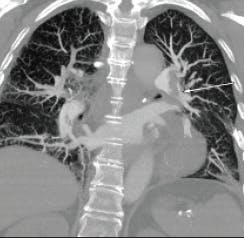
Figure 1. Submassive PE within the right main and left lobar pulmonary arteries (PAs).
Given the patient’s limited reserve secondary to idiopathic pulmonary fibrosis within the native right lung and developing infarcts within the transplant left lung, the PERT decided to proceed with thrombectomy and possible lysis.
INTERVENTION
A 12-F sheath was placed within the right internal jugular vein (Figure 2). The pulmonary arterial system was catheterized using a Swan-Ganz catheter that was subsequently exchanged for a 5-F pigtail catheter for angiography and pressure measurement. Initial pulmonary angiography demonstrated extensive clot burden throughout the bilateral pulmonary vasculature, greatest in the right-upper and left-lower segmental arteries. Using a 1-cm Floppy 0.035-inch Amplatz wire, Lightning 12 was advanced into the right PA and aspiration thrombectomy was performed. The catheter was then carefully advanced into the left lobar and segmental transplant PA for thrombectomy. Postintervention digital subtraction angiography demonstrated improvement of vascular flow in the bilateral PAs (Figure 3).
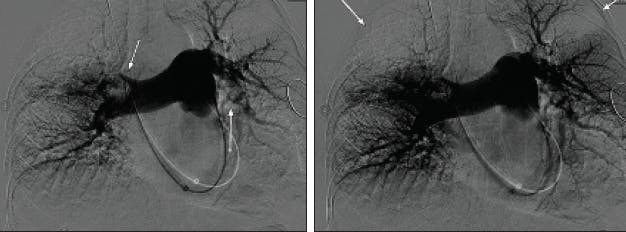
Figure 2. Balloon catheter advanced into the PA from the right internal jugular vein approach.
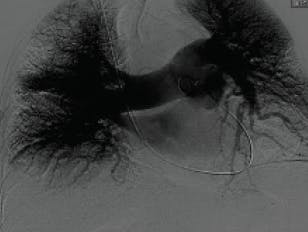
Figure 3. Postintervention angiography demonstrated a significant decrease in thrombus burden with improved parenchymal flow throughout the right and left upper lobes.
The patient’s clinical status improved on the table and served as an endpoint for intervention along with the improved appearance of the pulmonary angiogram. Postintervention echocardiography demonstrated normal right ventricular size, mildly reduced systolic function, and normal PA systolic pressure.
DISCUSSION
The Lightning 12 is made of a laser-cut stainless steel hypotube with large lumen to maximize thrombus engagement. The catheter has a multipitch hypotube for 1:1 torque transfer and advanced deliverability. In our experience, the Lightning 12 system offers an easy-to-use large-bore thrombectomy device within the Penumbra thrombectomy device portfolio that is easily navigated from the right PA into the left.
A Separator device (Penumbra, Inc.) intended to clear the catheter lumen can be used in conjunction to allow continuous aspiration and macerate clot at the tip of the catheter. The Separator is designed with a solid piece of wire, distally containing a radiopaque polymer bulb for increased visualization under fluoroscopy. The bulb is used to break up the clot as it is pulled into the reperfusion catheter to decrease catheter lumen obstruction with clot. This process is repeated throughout aspiration as the aspiration catheter is advanced to engage the thrombus.
Patients with lung transplants present unique challenges in the treatment of PE given the lack of bronchial artery circulation as seen in native lungs. There is an increasing concern for lung reserve with pulmonary infarcts as well as caution related to pulmonary hemorrhage within the infarcted tissue with the initiation of lysis.
As mechanical thrombectomy becomes a more standard technique for PE treatment, patient selection and optimizing technique become critical as many PE patients are critically ill and will not tolerate prolonged time in the interventional radiology suite. In our experience, the Lightning 12 Intelligent Aspiration system has effectively removed clot with minimal complications. Penumbra’s partnership with RapidAI, an app for PE meant to streamline communication and standardize workflow for PE patients, shows the potential to connect hospital systems and improve patient outcomes and experiences.
Thrombus Removal in Left and Right Side Pulmonary Artery

PATIENT PRESENTATION
A woman in her early 40s with no significant prior medical history was evaluated in the emergency room after experiencing syncope and identified as having a large saddle PE (Figure 1A). Echocardiography showed questionable thrombus in transit, significant right heart strain, and right ventricular enlargement and hypokinesis.
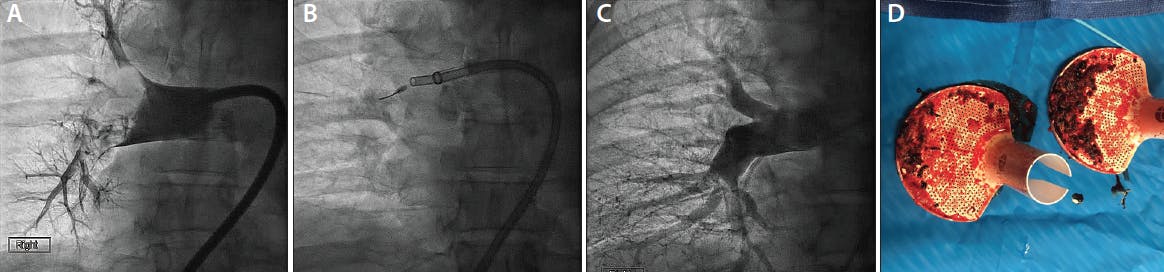
Figure 1. Angiogram showing thrombus in the right PA (A). Lightning 12 and SEP12 being used in the right PA (B). Flow restored to the right PA (C). Thrombus removed during the procedure (D).
INTERVENTION
Right femoral vein access was obtained using a micropuncture kit. A 14-F DrySeal sheath (Gore & Associates) was inserted into the main PA over a Supra Core guidewire (Abbott). Then, Lightning 12 was taken first into the left PA where there was a smaller amount of thrombus that was cleared quickly. At that point, attention was turned to the right PA where there was a large amount of thrombus. With the assistance of the Separator (Figure 1B), several passes were made into the upper, middle, and lower lobes after first clearing the right PA itself (Figure 1C). A large amount of thrombus was removed successfully (Figure 1D). The PA pressure was lowered from 42 to 26 mm Hg during the procedure. More importantly, the patient noticed that her breathing had improved on the table. Her initial oxygen requirement of 10 L upon arrival to the cardiac catheterization laboratory was lowered to room air when she was taken back to her room.
DISCUSSION
In many instances, PE requires emergent interventions. There are data to support thrombolytic therapy as well as some evidence that mechanical intervention can be clinically useful. The emergence of newer technologies such as Lightning 12 may be an example of where technology has outpaced clinical data. It will be important to see in the future if case representations such as this are the norm and the paradigm shifts to more emergent intervention of intermediate to high-risk PE.
In terms of ease of use, Lightning 12 is easy to manipulate not only in the main PA but also distally into the lobar PA. Additionally, the audiovisual cues from Lightning and the thrombus detection algorithm are very helpful when removing thrombus from the PA. The audio cues in the form of clicking help with clot detection to optimize thrombus removal and enables the operator to focus on the screen rather than monitoring how much blood is flowing through the tubing and canister. The Separator is also of great utility when trying to remove large volumes of thrombus. The blood loss remains well within acceptable limits thanks to the intelligent aspiration system that optimizes thrombus removal primarily by helping distinguish thrombus from blood.
Lightning 12 Thrombectomy for Iliac Veins and IVC

PATIENT PRESENTATION
A teenaged patient was transferred from an outside hospital for swelling, redness, heaviness, and discomfort in the right lower extremity over the previous 2 weeks. Imaging revealed extensive deep venous thrombosis of the right iliac veins (Figure 1) and a partially thrombosed, ectatic left-sided inferior vena cava (IVC; Figure 1A).
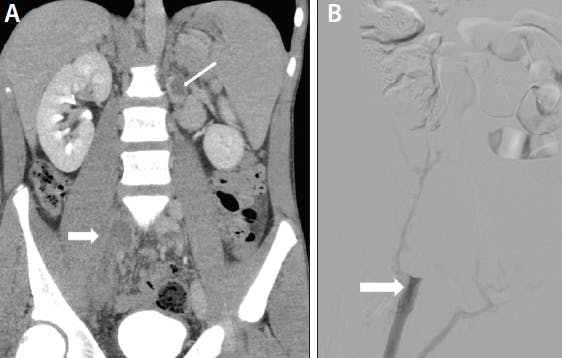
Figure 1. Contrast CT of the abdomen showing large clot burden filling and expanding the right iliac veins (wide arrow) (A). Also noted is the thrombus in the anomalous left-sided IVC (thin arrow). Venogram confirming complete thrombotic occlusion of the right iliac veins above the femoral vein (arrow) (B).
INTERVENTION
A 12-F sheath access was obtained in the right popliteal vein with the patient supine. The Lightning 12 aspiration catheter was used to perform mechanical thrombectomy in the clotted veins, including the anomalous IVC, after lacing the thrombus with alteplase. Post-thrombectomy images showed complete resolution of the thrombus (Figure 2). Significant clot was aspirated with minimal blood loss (Figure 3).
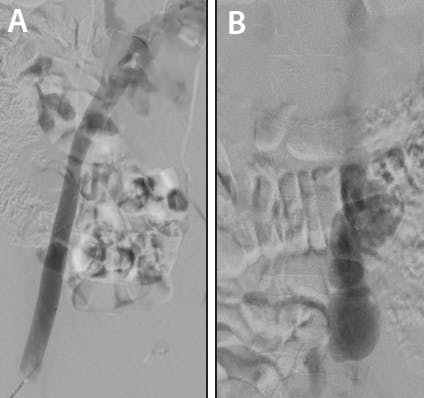
Figure 2. Post-thrombectomy venogram showing complete recanalization of the right iliac veins (A) and patency of the left-sided IVC (B).
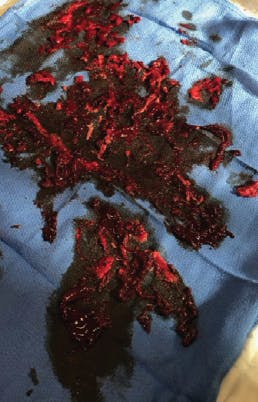
Figure 3. Picture of thrombus aspirated using the Lightning 12 aspiration catheter.
DISCUSSION
In this case, the Lightning system was used in anomalous vascular anatomy and demonstrated excellent torqueability and suction capacity. Most notably, the volume of blood loss, which is critical in younger patients, was well-controlled and insignificant. The sound alert system when the catheter tip is not in the clot is an excellent audible cue for the operator to reposition the catheter in the clot. The catheter tip is soft to mitigate the risk of intimal damage or vascular perforation, a factor to consider in younger patients. The system was easy to assemble and use. All of the clot was aspirated in one session without the need for extended-infusion thrombolysis or additional procedures to regain vascular patency. This helped reduce extended in-hospital monitoring and stay.
IVC Thrombus Removal Using Lightning 12

PATIENT PRESENTATION
A man in his early 60s with a remote history of bilateral iliocaval stenting at an outside hospital presented with a 2-week history of right leg swelling. A venous duplex ultrasound identified extensive venous thrombosis extending from the popliteal vein to the external iliac vein on the right. CT venography of the abdomen and pelvis was performed, which revealed an extension of the thrombus to the IVC. The stents placed on the left had migrated to encroach across the caval confluence (Figure 1). Finally, the patient had splenomegaly from a history of idiopathic thrombocytopenic purpura (ITP) and newly identified small bowel carcinoid. The biology of the carcinoid was favorable and given the severity of the symptoms, an intervention was planned.
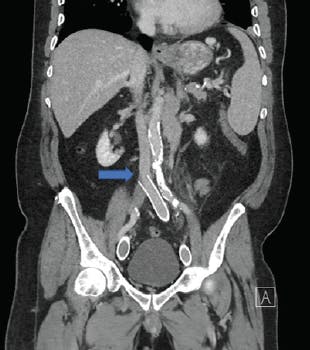
Figure 1. CT demonstrating left iliac stent migration. The blue arrow points to the encroachment of the left iliac vein stent.
INTERVENTION
The patient was placed in the prone position and right popliteal access was obtained. The Lightning 12 system was used to perform mechanical thrombectomy from the native popliteal to the common femoral vein. It was next advanced through the right venous stent up to the confluence of the IVC (Figure 2). Extensive thrombus was removed (Figure 3).
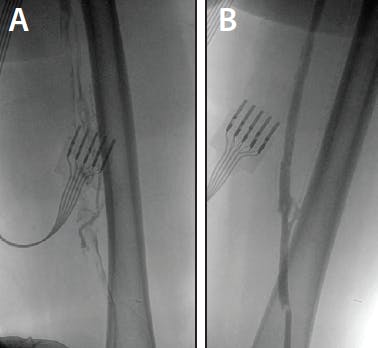
Figure 2. Femoral vein before (A) and after (B) thrombectomy.
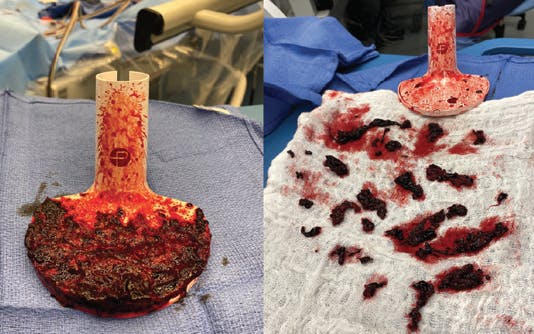
Figure 3. Thrombus removed.
IVUS was performed that demonstrated encroachment of the right common iliac vein outflow by the left venous stents. Left popliteal venous access was obtained to correct the migrated stent (Figure 4).
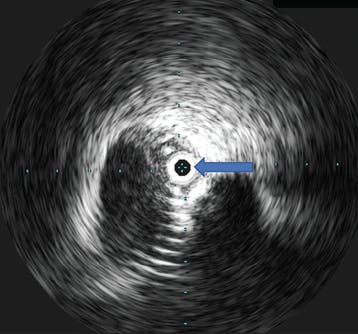
Figure 4. IVUS demonstrating outflow obstruction on the right. The blue arrow points to the right common iliac vein at the confluence of the IVC.
DISCUSSION
The Lightning 12 aspiration catheter has excellent torqueability and a curved tip that allows for a 360° sweep. The catheter is soft, has an atraumatic design, and can be used with or without the wire. Using this catheter without a wire increases the aspiration lumen and allows the catheter to form a curve, increasing the circumferential sweep. Coupled with Lightning’s intelligent aspiration, the system is effective in thrombus retrieval and designed for blood loss reduction. In this case, the thrombus was > 2 weeks in age with some organized elements that were likely present along the stent wall. The fresh thrombus was easily removed. Using the catheter without a wire worked particularly well along the stent in aspirating some of the more adherent thrombus as well.
Thrombus Removal in Left Lower Extremity Using Lightning In Patient Contraindicated to Systemic Lytics

PATIENT PRESENTATION
A man in his early 50s presented in the emergency department with left lower extremity swelling and increased pain and numbness. The patient had a history of venous thrombus from 1 year ago while being on anticoagulants, and a spinal tumor that contraindicated him for systemic tPA. Extensive left lower extremity venous thrombus was detected (Figure 1A). CTA revealed acute bilateral PE, for which high-dose heparin was prescribed as the patient exhibited no shortness of breath.
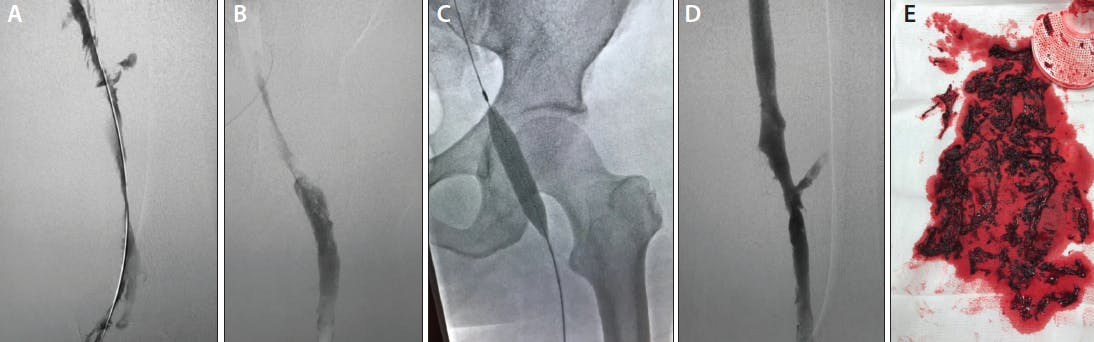
Figure 1. Angiogram of left femoral vein (A). Angiogram showing stenosis of common femoral vein (B). Angioplasty of stenosed vessel (C). Good flow was restored to the femoral vein postintervention (D). Thrombus removed during procedure (E).
INTERVENTION
The patient was laid in a supine position with access gained in the popliteal vein using a 12-F, 13-cm Check-Flo introducer (Cook Medical). Lightning 12 was used to successfully remove thrombus from the iliac to the popliteal vein. After a majority of thrombus was removed and flow established, a small amount of tPA was administered locally. The patient had an area of stenosis in the common femoral vein that was angioplastied, resulting in good flow (Figure 1B-1D). A significant amount of thrombus was removed throughout the left lower extremity (Figure 1E). The patient tolerated the procedure well, with an immediate decrease in swelling and leg pain.
DISCUSSION
The Lightning 12 device was a good option for the removal of thrombus from the iliac to the popliteal vein. Compared to other devices currently on the market, it allows more thrombus to be removed in a short amount of time, therefore, leading to less use of thrombolytics. As the patient was contraindicated to systemic lytics and presented with leg pain and bilateral PE, immediate relief was needed and the Lightning 12 technology proved to be an important tool in our armamentarium to enable treating this patient.
Disclaimer: The opinions and clinical experiences presented herein are for informational purposes only. The results may not be predictive of all patients. Individual results may vary depending on a variety of patient-specific attributes.
Advertisement
Advertisement