Advertisement
Advertisement
June 2021
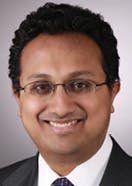
An Interview With Sahil A. Parikh, MD
Dr. Parikh shares his pathway to interventional cardiology and vascular medicine, predictions on the role of sirolimus in peripheral artery disease, insights on thromboembolism during the COVID-19 era, and his inspiration for dedicating his career to teaching and training.
What was your path from studying biomedical sciences and engineering in undergrad to now interventional cardiology and vascular medicine? How does biomedical engineering influence the work you do today?
When I started at Harvard College, I thought I was interested in orthopedic biomechanics. However, my first biomedical engineering course was about physiologic modeling; we used engineering principles to understand fluid flow in the human body. Between all of the pumps, pipes, and electrical circuits in the cardiovascular system, I was hooked! During this pivotal time, my brother Manish was starting his cardiology fellowship, and he introduced me to Professor Elazer Edelman, a biomedical engineer who was studying the role of stents, vascular injury, and repair at Harvard Medical School and Massachusetts Institute of Technology. Before I knew it, I was actively engaged in stent implantation in animal models and writing papers that were published in cardiology journals. Ironically, that initial work on stent design, local vascular drug delivery, and vascular interventions is still central in my research and clinical life.
In a study published in Vascular Medicine, you and colleagues examined the use of pulmonary embolism response teams (PERTs) during the COVID-19 pandemic.1 What additional insight have you gained about the use of PERTs since the studied months?
I was a Massachusetts General Hospital (MGH) vascular medicine and intervention fellow in the “pre-PERT” era when there were broad disparities in the management of submassive and massive pulmonary embolism (PE). To see the PERT movement originate out of my training home and sweep the nation has been very gratifying. In particular, I think PERTs have drawn attention to the scourge of venous thromboembolism and have inclusively developed multidisciplinary care teams, engendering goodwill among colleagues while improving clinical care. During the COVID era, PERTs have appropriately identified, risk stratified, and treated hemodynamically significant PEs more efficiently than ever before, and as we learn more about right ventricular hemodynamics, we’re learning to support carefully selected patients more aggressively.
You have also studied COVID-19 via the IMPROVE trial, for which you are Principal Investigator. What can you tell us about what you’ve learned regarding anticoagulation for thromboembolism in COVID-19 patients?
The IMPROVE COVID trial is an investigator-initiated, single-center, cluster-randomized, single-blind clinical trial comparing standard-dose prophylaxis to intermediate-dose prophylaxis in critically ill patients with COVID-19. The composite endpoint is survival to intensive care unit (ICU) discharge or 30 days without a major thrombotic or hemorrhagic complication. These patients are the highest risk to have morbid and mortal thrombotic and hemorrhagic complications, and we observed both early in the pandemic. As an institution, we agreed to initiate this trial in our large, academic, tertiary referral center and were able to enroll nearly 100 ICU patients to test our hypothesis. The results are forthcoming, but similar trials have shown trends toward reduced thrombosis with higher doses of prophylactic anticoagulation but with expected increases in bleeding. As such, we are forced to recommend an individualized approach in each case. Most importantly, clinicians must remember that COVID-19 is a disease of inflammation that begets thrombosis.
At the Leipzig Interventional Course held earlier this year, you gave two presentations related to sirolimus-based therapies. What role do you think this agent will play in peripheral artery disease in the years to come?
The coronary drug-eluting stent controversies of the beginning of this century were seemingly an allegory for peripheral vascular interventionalists in that we learned that drug elution was both effective at preventing restenosis and safe. However, the safety was called into question by early conflicting data. The paclitaxel controversy since the 2018 publication of the Katsanos et al summary-level meta-analysis has dominated our use of drug-eluting devices for the past 3 years,2 but the preponderance of the evidence in the interim has demonstrated no signal of harm for paclitaxel-eluting devices. Nevertheless, the controversy has stimulated the development of sirolimus-eluting devices for peripheral intervention, and it is possible (if not probable) that sirolimus-eluting devices may eventually supplant paclitaxel-eluting devices. In order to achieve that, sirolimus devices will need to demonstrate comparable efficacy and safety, as they have in the coronary circulation. However, the development timeline will be slowed by the postpandemic recovery in research and development.
What would you say are the most significant changes in the Society for Cardiovascular Angiography & Interventions (SCAI) guidelines you and colleagues wrote on device selection in aortoiliac arterial interventions?3 What needs were discovered during the course of the project that were not previously addressed?
The SCAI device selection guidelines apply broadly to all lower extremity arterial procedures and emphasize the need for identifying the appropriate indication for the appropriate procedure for the appropriate patient. In particular, the guidelines reiterate the value of stents in aortoiliac intervention in particular, with room for further evolution of novel plaque modification techniques such as intravascular lithotripsy. Most importantly, the guidelines taken as a whole clearly delineate the areas of unmet need and controversy in value regarding certain techniques in lower extremity intervention, such as the importance of drug-eluting technologies in femoropopliteal disease because of efficacy in reducing restenosis, a costly “complication.”
As SCAI Education Committee Chair, can you give us a preview of what programs are in store for the coming months?
SCAI has prided itself on being the societal home of interventional cardiologists. The mission of educating interventional cardiologists globally has long been a passion of mine, and as the Chair of the SCAI Education Committee, I’m privileged to lead the group overseeing our internally developed content that is delivered both in person and virtually. The past year has made all medical educators pivot from live to virtual, and we have learned a great deal along the way. In the coming year, one can expect SCAI to continue offering innovative online programs for interventionalists of all experience levels, from fellow to senior operator. These programs will subsume professional development, technical expertise, and clinical decision-making across the entire spectrum of interventional cardiology. Diversity, equity, and inclusion will be emphasized as SCAI seeks a more representative set of educators to engage the entire interventional cardiology community. We will continue hosting best-in-class meetings for fellows and our annual scientific sessions.
What inspired you to become involved with teaching and training, which you do as Director of the Vascular Medicine & Endovascular Intervention Fellowship at your institution, course director for various symposia (including as a Director of Transcatheter Cardiovascular Therapeutics), Chair of the aforementioned SCAI Education council, and Co-Director of the American College of Cardiology/SCAI Interventional Board Review?
I find teaching to be one of the most gratifying parts of my career. From early on, I realized that shepherding trainees from their initial experiences to clinical expertise gives me intense satisfaction, especially when I get to witness that eureka moment when an individual (or a large audience) finally understands a key point. I have actively sought out these roles in a variety of venues, but serving as a program director of an interventional and endovascular fellowship has allowed me to work closely with a small group of trainees at a pivotal time in their careers. I remain close to many of my fellows, and they have become part of my extended family. Through my activities at the Cardiovascular Research Foundation, I have the distinct honor of contributing to the education of clinicians globally, far exceeding my imagination of how many physicians (and patients) one can reach through education. I’m particularly passionate about extending the message that vascular medicine is integrally linked with cardiology and that identification and treatment of noncoronary vascular disease is critically important for the health and well-being of our patients.
What advice do you offer regarding having a fulfilling life outside of the office?
I am blessed that my life away from clinical medicine is even more rewarding. For me, the formula is as simple as knowing that my family is my top priority. I’ve been blessed with treating many patients and training many fellows and physicians. However, most gratifying of all is being able to see my children experience life through their eyes and spending unimpeded time with my incredibly supportive wife who has made innumerable sacrifices to let me have my dream job. We spend a lot of time as a family watching/playing sports, traveling (at least prepandemic), and cooking/eating. I honestly don’t know that there is anything more fulfilling than that.
1. Finn MT, Gogia S, Ingrassia JJ, et al. Pulmonary embolism response team utilization during the COVID-19 pandemic. Vasc Med. Published online April 4, 2021. doi: 10.1177/1358863X21995896
2. Katsanos K, Spiliopoulos S, Kitrou P, et al. Risk of death following application of paclitaxel-coated balloons and stents in the femoropopliteal artery of the leg: a systematic review and meta-analysis of randomized controlled trials. J Am Heart Assoc. 2018;7:e011245. doi: 10.1161/JAHA.118.011245
3. Feldman DN, Armstrong EJ, Aronow HD, et al. SCAI guidelines on device selection in aorto-iliac arterial interventions. Catheter Cardiovasc Interv. 2020;96:915-929. doi: 10.1002/ccd.28947
Advertisement
Advertisement
Interested in reading more interviews?
To read more interviews with thought leaders in the vascular field, check out our Profiles & Perspectives hub.
Read More