Advertisement
Advertisement
June 2021
Society for Vascular Medicine Perspectives: Progress Amid a Pandemic, Prospects for Moving Forward
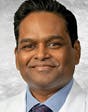
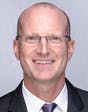
An interview with outgoing SVM President Raghu Kolluri, MD, MS, FSVM, and Herbert D. Aronow, MD, MPH, FSVM, FACC, FSCAI, who takes the helm in June 2021.
What would you say most distinguishes the Society for Vascular Medicine (SVM) among the vascular societies, and how would you summarize the society to trainees and early career members?
Dr. Aronow: SVM (www.vascularmed.org) is unique among vascular societies in that it is the vascular home to individuals from multiple specialties. Included among our ranks are those who have completed formal training in vascular medicine (VM), noninvasive cardiology, interventional cardiology, vascular interventional radiology, vascular surgery, internal medicine, family practice, podiatry, and other specialties. We are also uniquely multidisciplinary, comprising physicians, nurses, technicians, technologists, students, trainees, and nonclinical research scientists. The culture of cross-specialty and crossdisciplinary collaboration and collegiality that we have created within SVM’s walls often spills over into our extramural activities as well, as we build bridges with our colleagues in other cardiovascular organizations to tackle common challenges in education, training, quality, research, and advocacy.
Dr. Kolluri: SVM provides ample opportunities for young, early career vascular specialists to grow professionally. A succession plan is critical for every professional society. We formalized this plan with the creation of the Next Generation (NextGen) committee in 2017. These NextGen committee members have gone on to become the chairs of other committees. We hope they move onto the leadership ranks of SVM very soon. Another excellent example of early career member benefit is our Mentor/Mentee program, a collaboration between the NextGen committee and the membership committee that connects mentees within SVM with world-class mentors. There are several success stories, especially during the pandemic.1 We also have taken initiatives to welcome vascular advanced practice providers (APP) into our society.2 In 2019, we added an SVM Vascular APP course to an already hugely successful SVM Fellows course. We had tremendous success with it. We hope to resume this course once the social distancing requirements are relaxed.
How many members does the society have, and how many fellowship programs are involved? How have numbers trended in recent years?
Dr. Aronow: SVM boasts a membership of just over 500 individuals from the United States and around the globe. We have witnessed steady membership growth over the years. Our members arrive at VM through various paths, including formal VM fellowship training. One of our specialty’s biggest challenges today is the shortage of VM specialists available to help treat the millions of patients with vascular disease. As an example, there are only about two dozen VM training programs in the United States. There remains a tremendous need to secure funding for both maintenance and expansion of existing programs as well as the addition of new VM fellowship training programs.
How do individual practices vary among VM?
Dr. Aronow: VM practice comes in many flavors and is influenced by individual practitioner training, competencies, and interests, as well as by local institutional and practice needs. On completion of their training, a VM specialist might exclusively see patients with arterial, venous, and/or lymphatic disease. Some have even developed specialty clinics around less common vascular entities like fibromuscular dysplasia. Depending on their additional specialty training, VM specialists may evaluate and treat patients with nonvascular conditions as well. Many VM specialists read noninvasive vascular studies and/or perform revascularization procedures; others are heavily involved in wound care. They may be entirely office based, work exclusively in an inpatient setting, or spend time in both environments. One of the wonderful things about the VM community is that no specialty on its own can manage the entire spectrum of vascular disease. Instead, we collaborate and complement one another to provide the comprehensive multispecialty and multidisciplinary care our patients need.
What is the role of VM in both the performance of noninvasive vascular imaging and the educational activities related to it?
Dr. Kolluri: Most VM specialists are involved in the noninvasive vascular labs at their respective institutions, whether it is as directors engaged in management and maintenance of accreditation or as readers interpreting these studies. We include special ultrasound-based continuing medical education sessions at our in-person annual scientific sessions in collaboration with the Society for Vascular Ultrasound. Recently, we also released an SVM-sponsored online review course called “A Comprehensive Review of Vascular Ultrasound Interpretation and Registry Preparation.”3 Vascular education is a top priority for us at SVM.
Dr. Kolluri, what were some of the key goals of your presidency? How did serving your tenure during the pandemic affect the ability to accomplish goals set out before it?
Dr. Kolluri: I paid a visit to our SVM headquarters within the first week of my presidency to take stock of important matters. In the next few days, I called for a strategic meeting of the executive committee. At the end of the session, we decided that growing membership, ensuring financial stability, and achieving specialty recognition were the three most important 5-year objectives. These became the goals of my presidency. Creating a VM foundation also became my top priority. But unfortunately, the pandemic hit, and things changed. We also realized soon thereafter that it was time to change our association management company, which resulted in several months of planning. So, I decided to concentrate on other aspects of the three 5-year objectives. With the help of our membership committee, our membership saw a significant improvement.
We have reinvigorated our specialty recognition and fellowship accreditation efforts, and I am cautiously optimistic about this. We became involved in other collaborations to maintain our financial stability. With the new association management company, finances in the pink, healthy membership, and renewed specialty recognition efforts, I am happy to see SVM in a better place. I will continue to serve SVM as the Past-President for another 2 years and as a member after that.
And, Dr. Aronow, what goals do you have for your time as president, whether continuations or new?
Dr. Aronow: My early goals for the Society will be based around organization and infrastructure. We have just completed our transition to a new association management company, Veritas, and have begun reorganizing our committee and task force infrastructure to maximize our efficiency and effectiveness. A strategic planning retreat is planned for the early fall, and based on input from various VM community stakeholders, we will plot our course for the coming years. That course will likely include continuation of our work to establish the SVM Foundation to support VM education and fellowship training. No doubt, we will also continue our important work on VM specialty recognition. Finally, we will likely see expansion of SVM’s role in the VM research and quality spheres.
How has the pandemic shaped each of your perceptions of the road ahead for the specialty?
Dr. Aronow: The pandemic has taught us many things. On the clinical side, we have coalesced as a community around COVID-19’s vascular manifestations. In many cases, by combining resources, knowledge, and perspective, we have arrived at a consensus on their evaluation and management and in doing so, improved the care of these patients globally. We would be wise to apply this paradigm to future global vascular health issues. The pandemic also taught us to communicate and educate in unique ways. Gone are the days of board and committee meetings by telephone, where one can hear but not see each another. The transition to virtual meetings has been an improvement and has made these interactions more enjoyable and more meaningful. Hopefully, through greater engagement, we can accomplish even more in the vascular space. In contrast, vascular education and training have been impacted both positively and negatively.
The ability to meet virtually has removed many barriers to conference attendance, like the cost of travel and registration or the time away from work and family. However, that has been balanced by the need to truncate educational content to accommodate our collective attention span and the lost social dimension of these meetings (ie, no more handshakes or hugs). Although it is likely that weeknight webinars and journal clubs will continue, we fully appreciate that there is no substitute for in-person annual scientific meetings, fellows’ courses, and board review courses and are eager to return to that paradigm. Finally, vascular trainees have missed opportunities to learn from physical patient interactions when office encounters transitioned to telemedicine during pandemic surges. Although doing so may highlight the feasibility of providing routine patient care for those who would not have otherwise sought care, both training and patient care are often best served when conducted in person.
Dr. Kolluri: I agree with Herb that we may never go back to the previous normal. I believe hybrid education is going to be a norm in the future. But I can’t wait to meet colleagues and friends. I miss those chats between sessions and during dinners that spark new ideas, new projects, new papers, and even innovation. Many have tried to replicate this on the online platform, and I have yet to find someone who said it worked. The pandemic has also resulted in many innovations related to telemedicine and remote monitoring and sensing. I think the pandemic will certainly change the way we practice medicine, hopefully for the betterment of our patients.
What do you envision as SVM’s role across the spectrum of vascular disease management?
Dr. Aronow: Unlike other vascular societies, SVM has the unique ability to serve as the “great vascular convener,” bringing together those who evaluate and treat arterial, venous, and lymphatic disease from a multitude of specialties. If we harness the power of this vascular melting pot to its fullest, there should be no challenge we cannot tackle, whether around vascular education, training, quality, research, or advocacy.
Dr. Kolluri: We consider ourselves the “Switzerland of the vascular world.” The patient-centric focus, without any interest in turf wars, makes us unique. Hence, we are frequently asked to endorse important practice-changing guidelines and other documents—both interventional and noninterventional.
How is the society working toward ensuring diverse representation in its leadership and membership?
Dr. Kolluri: SVM is a very diverse and inclusive society. You will see diversity all the way up to the board and executive committee. Being the first foreign-born and foreign-trained SVM President, diversity and inclusion were top priorities as I started building the SVM committees. At SVM, we are fortunate to have almost 50% women membership. Diversity on all the committees was essential. But it is not just me. Diversity is extremely important to the SVM leadership. Our annual scientific sessions have always had significant involvement of women faculty members and session chairs. Can we improve? Yes, of course we can, and we will continually strive to improve. The racial unrest that erupted in 2020 resulted in us establishing a Diversity, Equity, and Inclusion Task Force, which further attests to our commitment. We hope that this task force will help us become even more inclusive and more diverse.
How can SVM, whether on its own or in conjunction with other societies, work toward greater patient awareness regarding prevention and earlier detection in key areas such as venous disease or amputation prevention?
Dr. Aronow: We have partnered with many cardiovascular organizations, including the American Heart Association, American College of Cardiology, Society for Cardiovascular Angiography and Interventions, Society of Interventional Radiology, American College of Radiology, Society for Vascular Surgery, American Venous Forum, American Vein and Lymphatic Society, and others on clinical care, research, quality, provider education, and patient advocacy. The collegial relationships that have ensued from these collaborative initiatives provide fertile ground for future public education and awareness campaigns. As we look ahead to the future, we hope to capitalize on this opportunity and, in doing so, improve on knowledge and outcomes in patients with vascular disease.
Dr. Kolluri: Herb is spot on. If I may, let me add a couple of examples regarding that question, specifically about early detection and prevention. SVM collaboration with other societies and regulatory agencies resulted in coverage of the supervised exercise program for peripheral artery disease by Centers for Medicare & Medicaid Services and also the creation of a separate ICD-10 code for critical limb ischemia. We have collaborated with the American Venous Forum on a consensus statement on lymphedema and will also be working on varicose vein guidelines.
1. Peruri A, Payvar S, Gerhard-Herman M, et al. Mentorship program and telemedicine for the vascular medicine physician. Vasc Med. 2020;25:511-514. doi: 10.1177/1358863X20949683
2. Moran A, Hays K. Incorporating a nurse practitioner into a vascular medicine program. Vasc Med. 2019;24:571-574. doi: 10.1177/1358863X19881196
3. Oakstone CME. A comprehensive review of vascular ultrasound interpretation and registry preparation. Accessed May 19, 2021. https://oakstone.com/a-comprehensive-review-of-vascular-ultrasound-interpretation-and-registry-preparation/
Advertisement
Advertisement