Advertisement
Advertisement
May 2021
An Interview With Germano Melissano, MD
Prof. Melissano explains his efforts to grow Aortic Disease Awareness Day, the initiative to discuss all aspects of human aorta online using the hashtag #aortaEd, the creation of the STABILISE registry to study type B aortic dissection, and more.
Movements like Aortic Disease Awareness Day and Think Aorta are just two of many recent opportunities to bring aortic disease to the forefront of conversation. What was your inspiration for starting the Aortic Disease Awareness Day event at San Raffaele Hospital, and what plans do you have for this year’s event?
I am delighted to share some of my thoughts with the readers of Endovascular Today. As a clinician active in aortic disease for > 30 years, I have concentrated on the best way to “fix” aneurysms and dissections and on sending my patients home walking with no help and their aortas mended. Other than that, I must admit that my interest in other aspects of the disease, namely the many facets of the quality of life of the patients and their families as well as prevention and awareness, was rather limited until almost a decade ago when I experienced an epiphany of sorts. I met online a Swedish man named Timo Söderlund who is a former aortic patient and now a strong advocate for aortic disease. He introduced me to the patient’s perspective through his groups on social media and other activities.
Now, I am much more aware that my patients, beyond mending their aortas, need counseling on many aspects of their life as aortic disease survivors. “Can I have sex? Take Viagra? Hike in the mountains, ride a bike, fly long haul, shoot a shotgun, have kids, lift dumbbells, scuba dive?” These are just a few of the many common questions that are asked. Other crucial aspects include family counseling for patients with genetically triggered connective tissue disease as well as professional psychologic support.
Timo founded Aortic Disease Awareness Day, held annually on September 19, several years ago without any economic support, which is pretty amazing. The movement later merged into the Marfan Foundation. As I enthusiastically joined his endeavor, he sent me posters and T-shirts featuring a snow leopard and the slogan: “Today is a good day” (Figure 1). I wore the T-shirts and hung the posters, but it took me some time to understand the meaning of either. The snow leopard, as it turns out, is a rare cat unique to central and south Asia that conceals well in its habitat, is exceedingly difficult to spot, and absolutely lethal when it strikes—a perfect metaphor for aortic dissection. The snow leopard is also beautiful; for aortic dissection, we might say it’s amazingly complex. As far as the slogan is concerned, when the first wave of the COVID-19 pandemic devastatingly struck Italy before other countries, it gave us a good taste of what vulnerability is (more than a hundred Italian doctors died in the first month of COVID-19). “Today is a good day” is also now my morning gratitude thought.
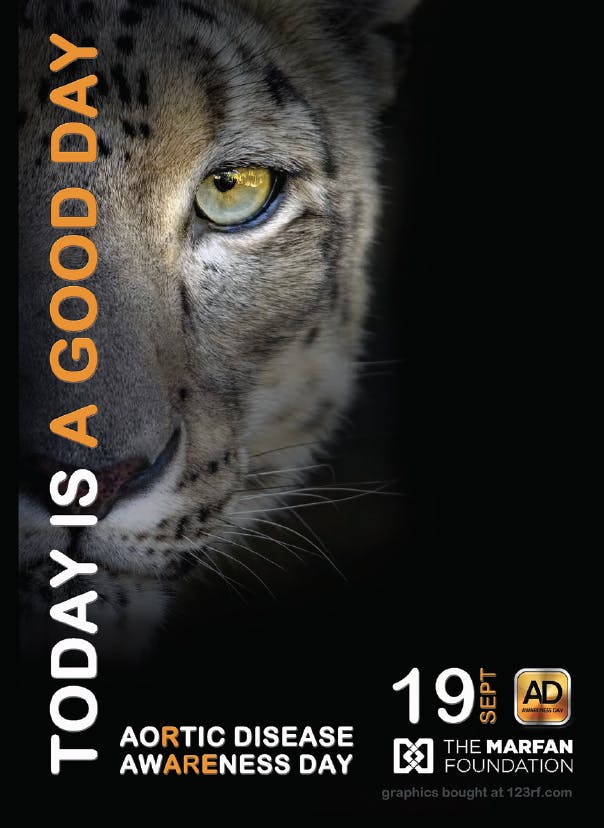
Figure 1. The Aortic Disease Awareness Day poster.
For several years now, September 19 has been celebrated at my institution with events for both patients and doctors. This year, regrettably, it seems like we’ll be confined to online-only events, but that date will not be forgotten. In addition to these events, one other way to try to decrease the toll of aortic dissection is to make emergency physicians more aware of this rare condition that still has a worrisome high rate of misdiagnoses and late diagnoses. The Think Aorta campaign, championed in the United Kingdom by Catherine Fowler, among others, is a great initiative.
Tell us about your involvement with the Think Tank Aorta group. With the group’s first project related to aortic disease and social media use now completed, what other issues in the aorta realm could benefit from collaboration via this group?
The Think Tank Aorta project is the latest of Timo’s ideas and a young and rapidly evolving one. I eagerly participate in this European movement with those concerned with the human aorta—especially when, and if, it does not function as it is supposed to—with a keen interest in diagnosis, treatments, cures, prevention, and how an aortic disease can affect not only the entire life of a patient but perhaps the patient’s whole family. The last task accomplished by Think Tank Aorta addresses the issue of finding content that is relevant to aortic research, events, and literature on social media through hashtags. Unfortunately, in most cases, hashtags that would intuitively be used (such as #AAA, #TAA, and #EVAR) lead to results that have nothing to do with the aorta. An extensive chart of the existing hashtags relevant to the aorta have been produced and one single suggestion for the future has been recommended: #aortaEd. This hashtag would be used to tag scientific, educational, and research content related to the human aorta. If it will be endorsed by many of us, it will be a game-changer.

You’ve used the expression “30 years of research equaled 30 years of additional life expectancy” to describe the progress made for patients with Marfan syndrome or other connective tissue disorders. What further advancements do you hope to see in this area in the next 30 years?
Individuals with Marfan syndrome and other genetically triggered conditions that lead to premature aortic dissection and aneurysm formation are born with a great misfortune. They are whom I call my “aortic warriors.” They have to fight very harsh struggles to achieve a life expectancy that approaches that of individuals born without that “bad” gene, and it is our obligation to help them in every possible way in their battles. Medical research has done a lot in the field of genetic diagnosis and pharmacologic therapy. Many have contributed, and I want to pay tribute to their efforts by citing just a few: Diana Milewicz, Bart Loeys, and John Elefteriades. The latter also happens to be a surgeon, and while I do hope that in the next 3 decades the advancements of genetics and drugs will make genetically triggered aortic disease a thing of the past, I strongly suspect that there will still be a significant role for surgery for many years to come.
In the STABILISE registry, you are studying outcomes of patients treated with the STABILISE technique for acute and subacute type B aortic dissection. What have been some of the most impactful insights gained since publishing the short-term outcomes in 2018?
It has been very exciting for me to witness the amazing remodeling that dissected aortas undergo after having been treated with the STABILISE technique. For those who are not familiar with it, according to this technique, a stent graft is proximally deployed in the true lumen of the dissected aorta to obliterate the proximal entry tear, and bare stents are then deployed in the more distal thoracic and down to the abdominal aorta (like in the PETTICOAT technique), then aortic balloons (compliant ones inside the stent graft and noncompliant ones in the bare stents) are inflated to intentionally rupture the septum and obtain a single-channeled aorta.
The technique is very promising; however, it is still controversial with less encouraging results also being reported, especially in patients with connective tissue diseases. Therefore, its safety and efficacy need to be proven with sound clinical data obtained in a relevant number of cases. Additionally, the technique employs the use of stents outside the manufacturer’s instructions for use, so industry is unable to provide any support for this kind of study. Thus, I have initiated a voluntary-based international multicenter registry for physicians employing this method to gather such data. The STABILISE registry has been recognized as one of the “Top 10 Candidate Aortic Disease Trials” in a recent article in the Journal of Internal Medicine out of 344 aortic trials scrutinized from the clinicaltrials.gov database.1 Patient recruitment is still ongoing as it has regrettably been slowed down by the pandemic. Anyone wishing to participate may seek information at stabiliseregistry@gmail.com.
Another important clinical trial you’re involved in is PAPAartis, which is studying the safety and effectiveness of the MISACE (minimally invasive segmental artery coil embolization) intervention in preventing paraplegia due to open or endovascular aortic repair. What will you need to see from the results to confidently recommend MISACE as a pretreatment strategy for thoracoabdominal aortic aneurysm repair?
Spinal cord ischemia and the resulting neurologic syndromes, such as paraplegia, is certainly one of the most devastating complications that can burden any aortic intervention. Unfortunately, even the most recent advances in endovascular repair have not been able to eradicate it. One very interesting concept that has emerged in the last few years is that the spinal cord vasculature may have the potential to be “preconditioned” to better respond to the occlusion of the segmental suppliers, such as the intercostal or lumbar arteries. This preconditioning may be obtained by staging the aortic procedures so that the occlusion of the segmental feeders is done in two or three steps, but also by intentionally embolizing the feeders themselves with coils or plugs inserted endovascularly (MISACE) weeks before the aortic procedure. To evaluate the safety and efficacy of this procedure, for both open surgical and endovascular thoracoabdominal aortic interventions, Christian Etz designed a prospective, multicenter, international, randomized clinical trial (PAPAartis) that received a significant grant from the European Commission and is now recruiting patients in many aortic centers in Germany and throughout Europe, including my own. The study will require several more years to complete enrollment and analyze the results. I am looking forward to that day because it will mark another important step in our fight against the neurologic complications of aortic surgery.
You have published several aortic-related books, covering aortic complexities, management of the thoracoabdominal aorta, aortic dissection, and more. Outside of issues related to the aorta, what topic would you most like to focus on in your next long-format publication?
September 14th (only a few days before Aortic Dissection Awareness Day) is remembered for the death of Italy’s most celebrated poet, Dante Alighieri, which occurred possibly due to complications of malaria on that day 700 years ago. The immortal verses of the “Divina Commedia” that signified the birth of Italian as a language of its own accompany Italian children from junior school and beyond, and many of those verses are still used as idioms in our everyday life. I have been particularly fond of this author and immensely enjoy re-reading his verses over the years, something that must be done aloud so that their beauty gets back to the reader through their sound. Regrettably, I’ll never be a scholar of Dante in this life, so I guess I’ll stick to the aorta for my future publications.
What are your predictions for the short-term future of endovascular aneurysm repair (EVAR) in Europe?
This is the shortest of your questions, but possibly the most intriguing. The popularity of EVAR has enjoyed a seemingly unstoppable increase over the last 2 decades due to its various benefits, and open surgery for abdominal aortic aneurysm (AAA) has been relegated to a small niche in many European centers, making it very difficult to teach to a new generation of vascular surgeons. In the last few years, words of caution came from several fronts: very long-term results of EVAR trials showed that worrisome issues might occur over time, and institutional documents such as National Institute for Health and Care Excellence in the United Kingdom have also cast more than a doubt on EVAR. New concepts and devices, such as endovascular aneurysm sealing, have also not fulfilled their promises, and durability is yet to be proven for devices with lower profiles.
All this being said, I do believe that EVAR is here to stay, but possibly as one of two, equally valid, alternative procedures. The European Society for Vascular Surgery (ESVS) published new guidelines for the management of abdominal aortoiliac artery aneurysms that, I believe, offer a very wise and balanced view.2 I had the privilege of being a part of the team of experts that wrote them and I am grateful to the ESVS for that honor. In a nutshell, they state that in most patients with suitable anatomy and reasonable life expectancy, EVAR should be considered as the preferred treatment modality. However, in patients with long life expectancy, open AAA repair should be considered as the preferred treatment modality; in patients with limited life expectancy, elective AAA repair is not recommended.
Teaching and investing in the lives of future physicians is an important part of your life, as evidenced by your roles as Director of the Vascular Surgery Residency Program and of the Master in Aortic Surgery at Vita-Salute San Raffaele University. What is one piece of advice you would share with someone aspiring to a career in vascular surgery?
After over 12,000 vascular operations performed, I truly feel that teaching a procedure to my younger colleagues is much more rewarding than just performing it, and I have the opportunity to do this through both my postgraduate programs: the 5-year residency in vascular surgery and the 1-year master in aortic surgery. Quite interestingly, among the four new students who enrolled in the residency program, three are women coming from different parts of the country, and the fellows of the master course come from Greece, Brazil, and Peru. I am very pleased by the high degree of acceptance of these programs and by the greater involvement of women. As I am writing, none of the 20 full professors of vascular surgery in Italy are women; this is something that has to change sooner than later, and I am proud to be instrumental in this change.
The teaching obviously does not end in the operating room and my students are involved in several educational activities. This past “COVID” year has been most challenging in many ways; nevertheless, it had the one unexpected benefit of accelerating our technical capability to offer “online” medical teaching to our students. Although this won’t completely replace “in presence” teaching once the pandemic is over, it has allowed us to realize that very high-quality content may be offered in a time- and resource-efficient way. During this year, several lectures delivered by outstanding professionals from the most prestigious institutions all over the world have also been offered through an online platform, and they are hugely appreciated. Vascular surgery is a complex discipline that requires a lot of sacrifices and is certainly not for everyone, but if the right passion is there, I sincerely believe the rewards are also very gratifying.
1. Dalman RL, Wanhainen A, Mani K, Modarai B. Top 10 candidate aortic disease trials. J Intern Med. 2020;288:23-37. doi: 10.1111/joim.13042
2. Wanhainen A, Verzini F, Van Herzeele I, et al. Editor’s choice - European Society for Vascular Surgery (ESVS) 2019 clinical practice guidelines on the management of abdominal aorto-iliac artery aneurysms. Eur J Vasc Endovasc Surg. 2019;57:8-93. doi: 10.1016/j.ejvs.2018.09.020
Germano Melissano, MD
Director, Vascular Surgery Residency Program
Director, Master’s Degree Course in Aortic Surgery
Vita-Salute San Raffaele University
IRCCS Ospedale San Raffaele
Milan, Italy
melissano.germano@hsr.it
Disclosures: Consultant to and speaker for Cook Medical.
Advertisement
Advertisement
Interested in reading more interviews?
To read more interviews with thought leaders in the vascular field, check out our Profiles & Perspectives hub.
Read More