Advertisement
Advertisement
November 2021
Complications and Failure Modes in the Proximal Thoracic Aorta
The pros and cons of management options for aortic pathology, including branched TEVAR.
By Tim J. Mandigers, MD; Daniele Bissacco, MD; Maurizio Domanin, MD; Gabriele Piffaretti, MD, PhD; Joost A. van Herwaarden, MD, PhD; and Santi Trimarchi, MD, PhD
The proximal thoracic aorta is increasingly dynamic and prone to increased mechanical fatigue over time. The aorta is a dynamic tube that moves within the human cavities due to both internal or external movements, such as the heart pulling on the aortic root with every heartbeat, thereby causing longitudinal and radial expansion. The aorta is fixated to the heart at the level of the aortic valve, to the chest wall at the level of the descending aorta, and to the left pulmonary artery via the ligamentum arteriosum.1 The major and minor side branches fixate the aorta to target organs, such as the supra-aortic, visceral, renal, and lumbosacral arteries. The relatively mobile sections of the aorta like the aortic isthmus absorb most of the kinetic energy when external movements, like sudden car decelerations, stress these aortic segments.
In addition to longitudinal expansion, the aorta, particularly the ascending aorta, serves an important cushioning function with every heartbeat. The proximal thoracic aorta stores up to 50% of the left ventricular stroke work during systole, a phenomenon referred to as the Windkessel function (Figure 1A).2,3 During diastole, the elastic aorta reduces in diameter due to its elastic properties, causing a continued antegrade movement of the blood. In this way, the aorta transfers the pulsatile cardiac flow into an almost continuous peripheral artery blood flow to target organs, a rhythmic cadence that is especially important for the microvasculature, which operates at low vascular resistance and high arterial flow (eg, brain and kidneys).4 The Windkessel function benefits not only the peripheral vasculature but also the heart as it reduces cardiac afterload and improves coronary blood flow during diastole.2,4
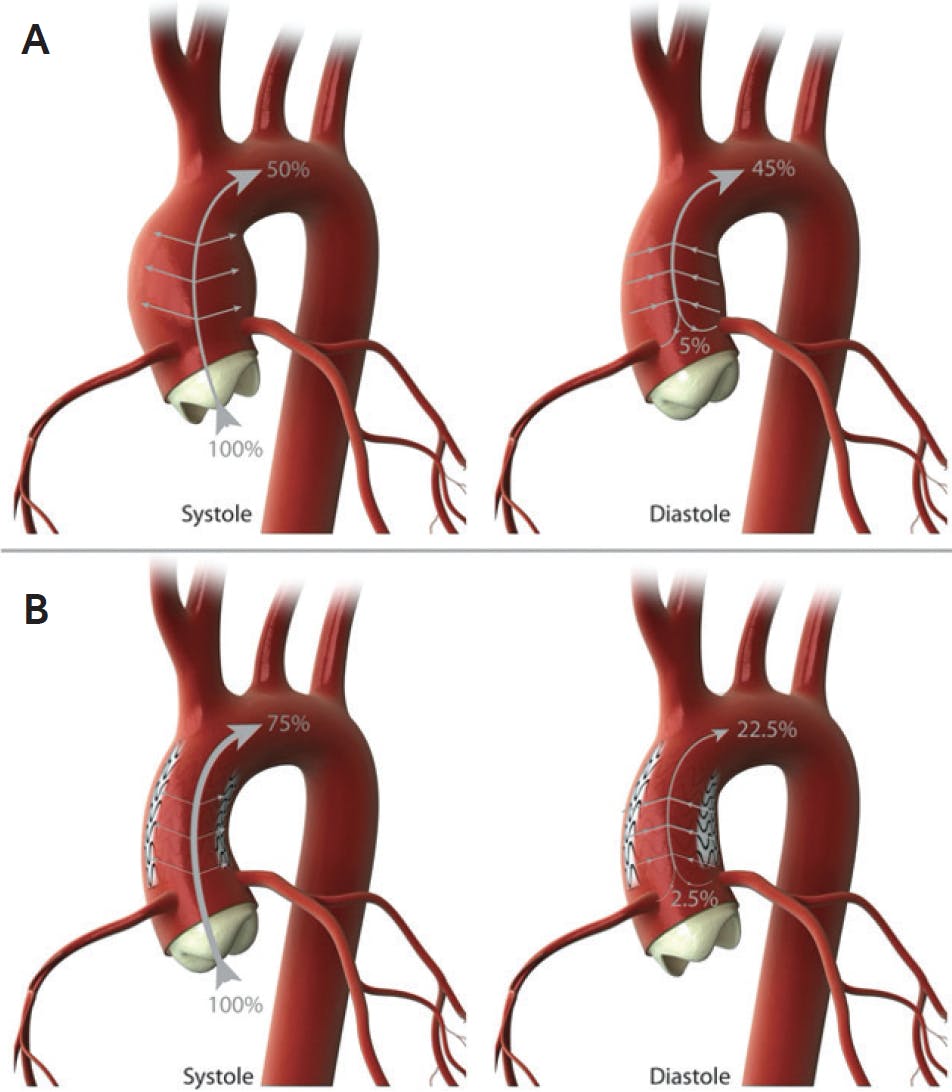
Figure 1. The Windkessel effect (A). The potential effects of ascending TEVAR on the Windkessel effect (B). Nauta FJ, et al. Impact of thoracic endovascular aortic repair on radial strain in an ex vivo porcine model, European Journal of Cardio-Thoracic Surgery, 2017, Volume 51, Issue 4, 783-789, by permission of Oxford University Press.
Over time, the elastic properties of arterial walls start to diminish. This vascular or arterial stiffness occurs with age5 and may be defined as the increased resistance offered by vascular walls to deformation by blood pressures arising from the cardiac pump. Although it remains an intrinsic arterial wall characteristic, it can be modified by several factors, including cardiac status, vessel compliance, and peripheral resistance.4 Furthermore, along the same artery (most notably, in the aorta) arterial stiffness may vary due to modifications in quantitative and qualitative wall structure, and this may lead to different elastic properties for various aortic segments (eg, ascending, arch, descending, abdominal).6 Notably, aortic stiffness or, more generally, large artery stiffening have been established as markers of increased cardiovascular disease.7,8 Increased aortic stiffness has also been associated with adverse effects on the cardiovascular system and target organs because it causes increased systolic blood pressure, increased cardiac afterload, reduced coronary perfusion pressure, and an increased pulsatile energy delivery to target organs, causing a vicious cycle of hemodynamic dysfunction over time with adverse cardiac remodeling.4,9-11
ENDOVASCULAR MANAGEMENT: PROS AND CONS
In the current endovascular era, the indications for the treatment of aortic diseases are expanding, and both endovascular aneurysm repair (EVAR) and thoracic endovascular aortic repair (TEVAR) are widely accepted treatment options for different aortic pathologies, despite a paucity of published data regarding aortic and cardiac modifications after endograft implantation.12 The mechanical properties of an endovascular stent graft differ from the native aortic mechanical wall properties (Figure 1B). Commercially available endografts (usually composed of nitinol or other metal alloy stents) can increase aortic stiffness and induce up to a 10-fold mismatch in stiffness between the endograft and the aorta.3,13 It has also been shown in ex vivo experiments that pulse wave velocity, a widely accepted surrogate for aortic stiffness, is increased after endograft deployment in porcine aortas and that this increase depends on the length of aortic coverage by one or more endografts.14,15
The stiffness mismatch induced after aortic endograft deployment at the proximal and distal edge of the endograft might be partially compensated by the native aortic wall segments that are not covered by the endograft, given that TEVAR has been shown to enable aortic remodeling over time.16,17 Aortic remodeling in this context generally indicates increases in aortic diameter and length at several locations (eg, ascending, aortic arch, proximal or distal landing zones). Unstented aortic segments might store part of the blood volume that would normally be stored during systole (according to the Windkessel effect) and can show a faster growth rate compared to healthy human aortas without endoluminal endografts.16,17 This might possibly lead to the release of the stent graft from the aortic wall in previously adequate landing zones. In the long term, this could cause complications that stress the need for endovascular or open surgical reinterventions to explant the endovascular device and replace part of the diseased aorta. However, another study proposed that aortic dilatation after TEVAR at different locations is more related to the natural aging history of the aorta rather than the hemodynamic effects of aortic endograft deployment, but it also highlights the need for longer-term follow-up data.18 Indeed, the importance of lifelong follow-up in patients treated with TEVAR seems clear, particularly in younger patients who are usually managed with TEVAR because of blunt thoracic aortic injury. This is needed to gather more insight in the hemodynamic consequences of TEVAR and to improve our endovascular treatment modalities.
TEVAR is associated with lower overall morbidity and mortality compared to open surgical repair in certain clinical situations. It is beneficial for the overall survival of patients with aortic disease, especially at an older age and when more comorbidities are present. As indications are expanding and endovascular aortic repair is more widely adopted to younger patient populations and for aortic arch or even ascending aortic diseases,19,20 the need for short-, mid-, and long-term follow-up data regarding outcomes is becoming increasingly important. Young patients generally show less comorbidities and less aortic stiffness, and the deployment of an endograft can have potential deleterious effects in the long term in this specific group of patients.
BRANCHED TEVAR
Branched TEVAR for aortic arch pathology is an alternative to open surgical repair in patients who are not suitable for open repair due to the presence of extensive comorbidities or a specific wish from the patient (Figure 2).19 Currently, there are several single- and multibranched devices available with different orientations and branch sizes that may preserve antegrade flow to the supra-aortic arteries in different ways (Figure 3).19 The development of current branched TEVAR devices and periprocedural techniques focuses on reduction of periprocedural cerebrovascular complication risk, which continues to be up to 15%.19
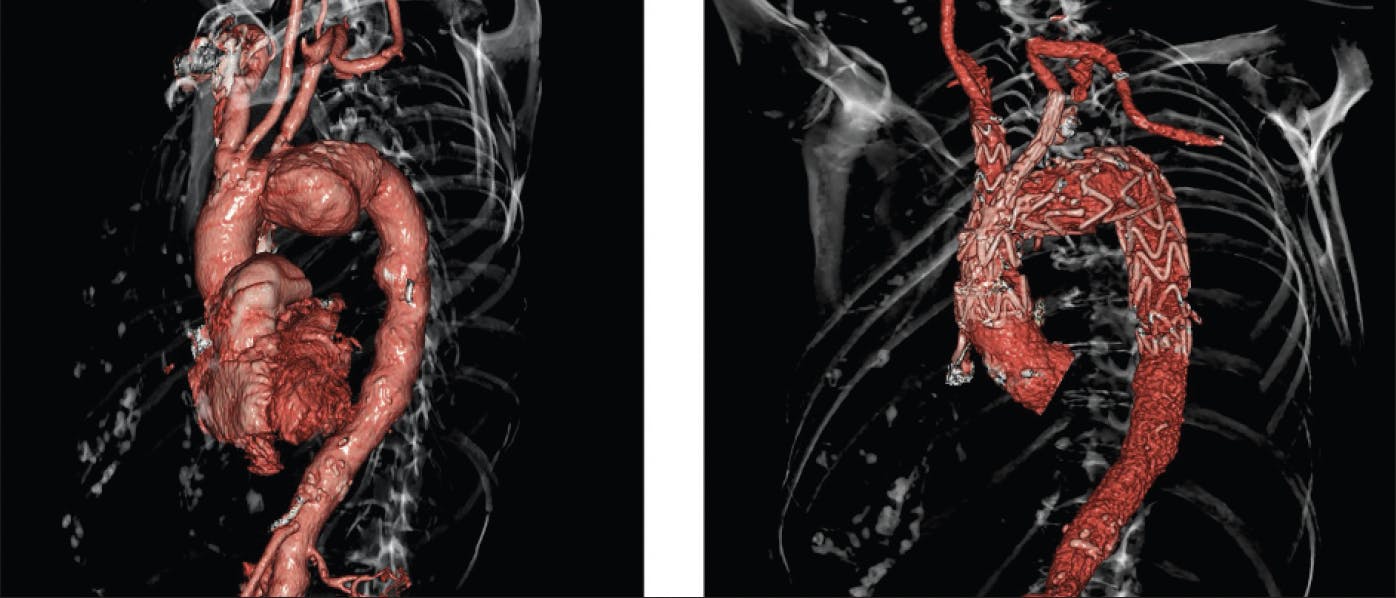
Figure 2. Aneurysm of the aortic arch treated with a custom-made fenestrated TEVAR and an LCCA-to-LSA bypass.
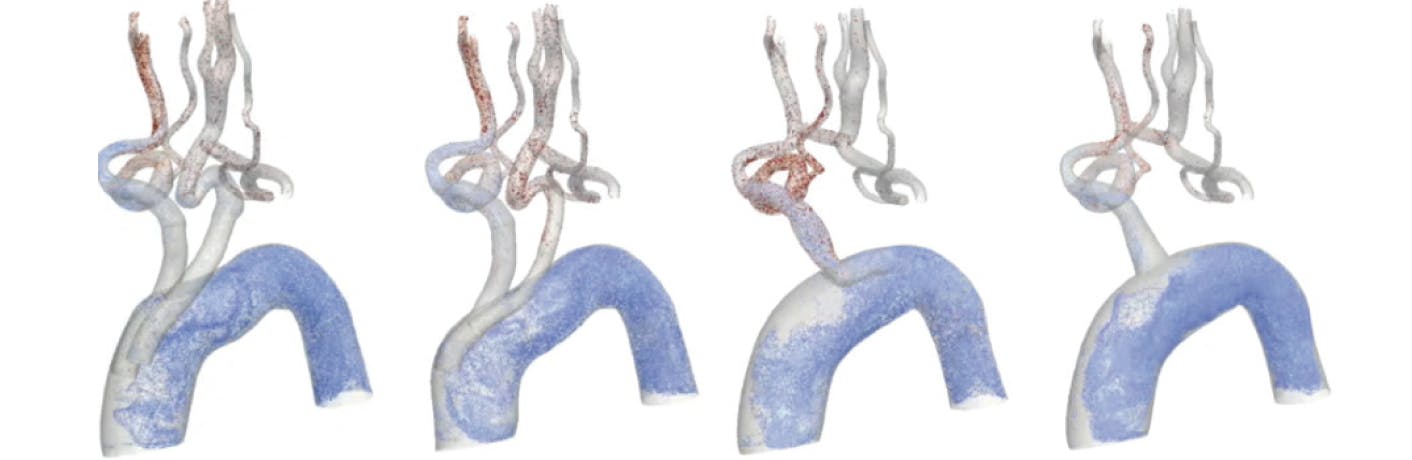
Figure 3. Zone 0 branched TEVAR devices with either one or two branches, varying branch orientations (antegrade, retrograde, cranial), and branch dimensions.
In patients unfit for open repair, endovascular treatment for ascending aortic disease has been shown to be associated with satisfactory short-term outcomes.20 TEVAR deployment in the more proximal aortic arch or even ascending aorta stresses the need to address the three supra-aortic vessels, and this can be done either with new custom-made branched, scalloped, or fenestrated devices or with more conventional open surgical approaches (bypass or transposition) to debranch the right and/or left carotid and/or subclavian arteries.21 The proximal thoracic aorta (zone 0, 1, or 2) is associated with greater elastic wall properties compared to the abdominal aorta; this is an important factor to consider when deploying an endograft at these locations.6,22-24 As previously noted, the increased rigidity induced by the endograft can diminish the important cushioning function and potentially induce cardiovascular complications by the increase in systolic blood pressure and pulse pressure. This might contribute to a vicious cycle of adverse hemodynamic consequences occurring long term.
Potential or Perceived Limitations and Failure Modes of Existing and Future Branched Devices
Besides the adverse hemodynamic consequences and high stroke rate of up to 15% associated with branched endovascular devices for aortic arch diseases, there are other device-related complications that might occur and that can eventually lead to treatment failure.25 One challenging part of endovascular aortic repair in the ascending aorta and aortic arch is choosing the appropriate percentage of oversizing for different aortic diseases (eg, aneurysm, dissection, intramural hematoma, penetrating aortic ulceration). Excessive oversizing may cause infolding or collapse of the endograft, which may alter blood flow patterns inside the endograft, cause narrowing of the aortic lumen, and cause retrograde aortic dissection.
Addressing the supra-aortic trunks remains challenging. This can partly explain cerebrovascular events, which may be caused by manipulation of the diseased aortic arch and supra-aortic trunks. Indeed, embolization of mural thrombus or atherosclerotic plaque may occur during any stage of the TEVAR procedure. Conventional open surgical techniques aimed at debranching the supra-aortic vessels are more invasive but reduce this embolic risk (eg, left common carotid artery [LCCA]–to–left subclavian artery [LSA] bypass or transposition; right common carotid artery or right subclavian artery bypass to either the LCCA or LSA).21
Other device-related complications such as endoleak (eg, at the proximal [type Ia] or distal [type II] endograft edge) might occur, for example, due to a “bird-beak” phenomenon at the inner curvature of the aortic arch.26 Stent graft migration may also result in a type Ia endoleak. Due to the maximum velocities of the blood flow in the proximal aorta and the more curved nature of the proximal aorta, endoleak might be more likely to occur when endografts are deployed in proximity to the aortic valve.
An important thing to consider is the risk of cerebrovascular complications when manipulating with different types of stiff and less stiff wires in the ascending aorta and aortic arch. Iatrogenic damage can be done to the intimal layer of the aortic wall, causing iatrogenic aortic dissection extending retrogradely into the ascending aorta,27 to atherosclerotic lesions, or to aneurysmal thrombus.
Branched endovascular devices also need to take into account the changes in aortic length, diameter, and tortuosity, especially long term. The native aortic arch is usually the most angulated part of the aorta; however, the distal part of the descending thoracic aorta shows increased tortuosity over time.28 Such tortuosities may determine a “twist” of the endograft during the aortic navigation, determining a treatment failure (Figure 4).
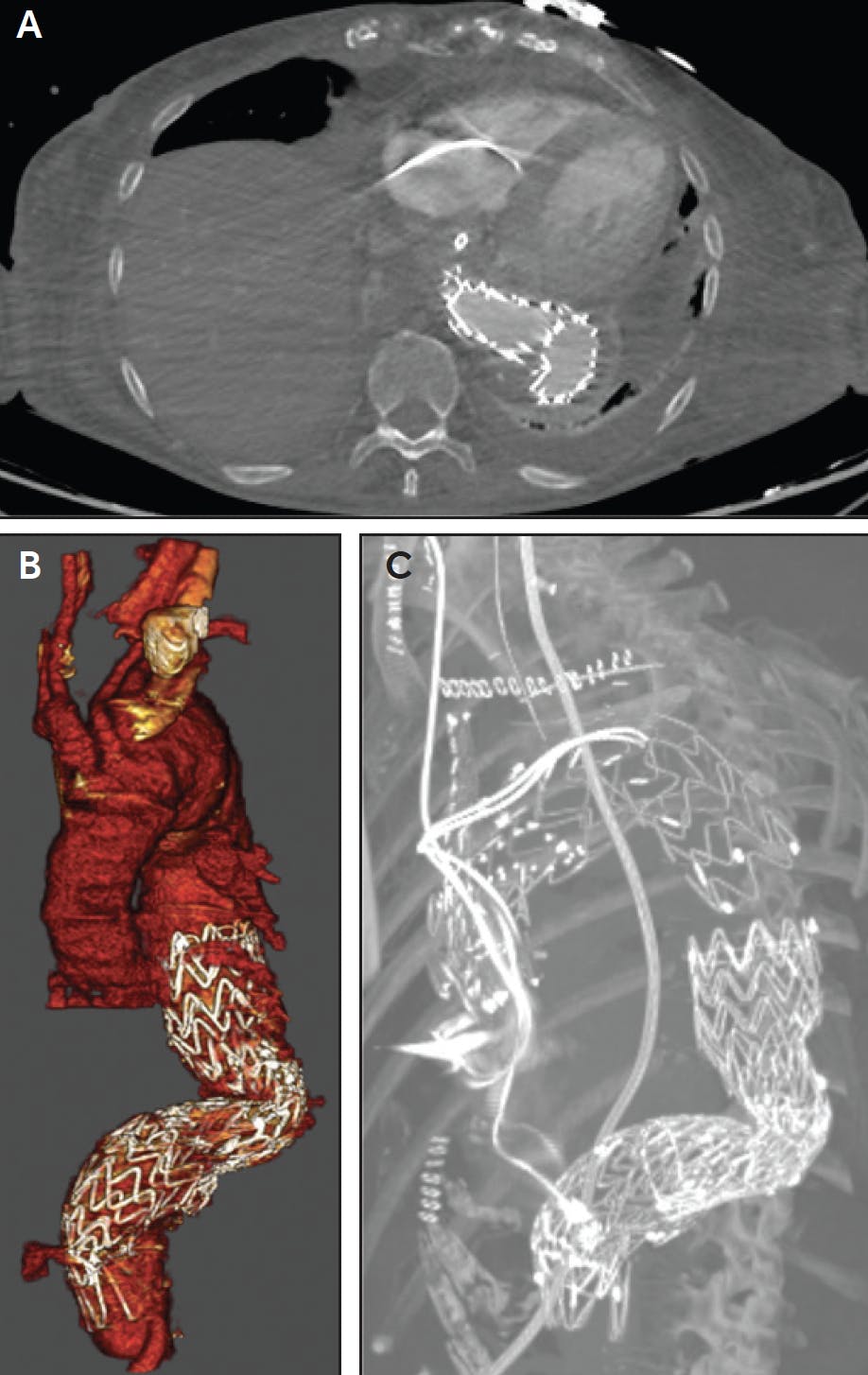
Figure 4. CTA illustrating the tortuosity of the distal descending aorta that is causing severe narrowing of the distal endograft lumen in the axial plane (A). Preoperative three-dimensional reconstruction illustrating the severe angulation in the previous (distal) aortic endograft (B). Maximum intensity projection reconstruction illustrating the “twist” of the proximal (second) aortic endograft after deployment, with the fenestration facing the inner arch curvature. A rescue chimney can be seen providing antegrade flow to the brachiocephalic trunk (C).
Altogether, this increases the importance of lifelong surveillance of patients treated by TEVAR due to the possible occurrence of aortic complications in the long term. Because the aortic environment is highly dynamic and the mechanical wall properties, length, diameters, and tortuosity change over time, the mutual interaction between the endograft and aorta also differs over time.5,28 Moreover, endografts are exposed to high peaks in physiologic blood pressure and can show mechanical fatigue over time that can cause potential endoleak, migration, or other complications, thus stressing the need for continuous surveillance in these patients.29
FUTURE STENT GRAFT designs
The further proximal we go, there is an increased risk of afterload on the heart. Thus, the question is: Should we be developing stent grafts with a compliance that more closely mimics the native vessel?
Future endograft designs might benefit from mimicking the mechanical wall properties of the native aorta to achieve a postoperative situation that most closely mimics the healthy, human aortic physiology. Logically, it is extremely challenging to develop endografts that can both withstand the intraluminal blood pressures and accompanied forces executed on the endograft as well as mimic the elastic “Windkessel” properties to prevent induction of aortic stiffness. Migration needs to be prevented, and thus fixation of the proximal and distal landing zone must be accurate and durable. Especially in younger patients with a longer life expectancy, these factors become increasingly important.
Ideally, implantation of the aortic endograft excludes the aortic pathology and returns the physiology back to a “normal,” healthy, prediseased state. In this way, adverse cardiovascular complications in the long term can theoretically be prevented. This scenario might sound unrealistic, but physicians and device manufacturers need to strive for perfection to reduce the associated morbidity and mortality of aortic diseases and the endovascular treatment modalities.
Along with the development of more compliant endografts that mimic normal, healthy, human physiologic states, it is important to apply adequate tension control because the incidence of arterial hypertension has been shown to increase in several follow-up studies of TEVAR for aortic trauma.16,30-33 Again, regular follow-up visits are indicated with close monitoring. Arterial hypertension is an important cardiovascular risk factor and is known as a “silent killer,” and thus the increase in systolic blood pressure and pulse pressure after endograft deployment needs to be countered by antihypertensive medicines to reduce the associated long-term cardiovascular complications.34
CONCLUSION
TEVAR has revolutionized the treatment of aortic disease. However, continuous surveillance and longer-term follow-up studies are needed to further improve this endovascular treatment modality and associated complications.
1. Neschis DG, Scalea TM, Flinn WR, Griffith BP. Blunt aortic injury. N Engl J Med. 2008;359:1708-1716. doi: 10.1056/NEJMra0706159
2. Belz GG. Elastic properties and Windkessel function of the human aorta. Cardiovasc Drugs Ther. 1995;9:73-83. doi: 10.1007/BF00877747
3. Nauta FJH, de Beaufort HWL, Conti M, et al. Impact of thoracic endovascular aortic repair on radial strain in an ex vivo porcine model. Eur J Cardiothorac Surg. 2017;51:783-789. Published correction appears in Eur J Cardiothorac Surg. 2018;53:1299. doi: 10.1093/ejcts/ezw393
4. Chirinos JA, Segers P, Hughes T, Townsend R. Large-artery stiffness in health and disease: JACC state-of-the-art review. J Am Coll Cardiol. 2019;74:1237-1263. doi: 10.1016/j.jacc.2019.07.012
5. Cavalcante JL, Lima JA, Redheuil A, Al-Mallah MH. Aortic stiffness: current understanding and future directions. J Am Coll Cardiol. 2011;57:1511-1522. doi: 10.1016/j.jacc.2010.12.017
6. Jana S, Hu M, Shen M, Kassiri Z. Extracellular matrix, regional heterogeneity of the aorta, and aortic aneurysm. Exp Mol Med. 2019;51:1-15. doi: 10.1038/s12276-019-0286-3
7. Pierce GL. Mechanisms and subclinical consequences of aortic stiffness. Hypertension. 2017;70:848-853. doi: 10.1161/HYPERTENSIONAHA.117.08933
8. Reference Values for Arterial Stiffness’ Collaboration. Determinants of pulse wave velocity in healthy people and in the presence of cardiovascular risk factors: ‘establishing normal and reference values’. Eur Heart J. 2010;31:2338-2350. doi: 10.1093/eurheartj/ehq165
9. van Bakel TMJ, Arthurs CJ, Nauta FJH, et al. Cardiac remodelling following thoracic endovascular aortic repair for descending aortic aneurysms. Eur J Cardiothorac Surg. 2019;55:1061-1070. doi: 10.1093/ejcts/ezy399
10. Palombo C, Kozakova M. Arterial stiffness, atherosclerosis and cardiovascular risk: pathophysiologic mechanisms and emerging clinical indications. Vascul Pharmacol. 2016;77:1-7. doi: 10.1016/j.vph.2015.11.083
11. Vlachopoulos C, Aznaouridis K, Stefanadis C. Prediction of cardiovascular events and all-cause mortality with arterial stiffness: a systematic review and meta-analysis. J Am Coll Cardiol. 2010;55:1318-1327. doi: 10.1016/j.jacc.2009.10.061
12. Georgakarakos E. Estimating the influence of aortic-stent grafts after endovascular aneurysm repair: are we missing something? Med Hypotheses. 2016;97:26-30. doi: 10.1016/j.mehy.2016.10.003
13. Nauta FJ, Conti M, Marconi S, et al. An experimental investigation of the impact of thoracic endovascular aortic repair on longitudinal strain. Eur J Cardiothorac Surg. 2016;50:955-961. doi: 10.1093/ejcts/ezw180
14. de Beaufort HWL, Conti M, Kamman AV, et al. Stent-graft deployment increases aortic stiffness in an ex vivo porcine model. Ann Vasc Surg. 2017;43:302-308. doi: 10.1016/j.avsg.2017.04.024
15. de Beaufort HWL, Coda M, Conti M, et al. Changes in aortic pulse wave velocity of four thoracic aortic stent grafts in an ex vivo porcine model. PLoS One. 2017;12:e0186080. Published correction appears in PLoS One. 2018;13:e0197453 doi: 10.1371/journal.pone.0186080
16. Kamenskiy A, Aylward P, Desyatova A, et al. Endovascular repair of blunt thoracic aortic trauma is associated with increased left ventricular mass, hypertension, and off-target aortic remodeling. Ann Surg. Published online January 3, 2020. doi: 10.1097/SLA.0000000000003768
17. Bero EH, Nguyen-Ho CT, Patel PJ, et al. Aortic remodeling and clinical outcomes following thoracic endovascular aortic repair for blunt thoracic aortic injury. J Surg Res. 2020;255:124-129. doi: 10.1016/j.jss.2020.04.019
18. Canaud L, Marty-Ané C, Ziza V, et al. Minimum 10-year follow-up of endovascular repair for acute traumatic transection of the thoracic aorta. J Thorac Cardiovasc Surg. 2015;149:825-829. doi: 10.1016/j.jtcvs.2014.10.113
19. van Bakel TM, de Beaufort HW, Trimarchi S, et al. Status of branched endovascular aortic arch repair. Ann Cardiothorac Surg. 2018;7:406-413. doi: 10.21037/acs.2018.03.13
20. Piffaretti G, Grassi V, Lomazzi C, et al; GREAT participants. Thoracic endovascular stent graft repair for ascending aortic diseases. J Vasc Surg. 2019;70:1384-1389.e1. doi: 10.1016/j.jvs.2019.01.075
21. Lomazzi C, Grassi V, Domanin M, et al. Art of operative techniques: treatment options in arch penetrating aortic ulcer. Ann Cardiothorac Surg. 2019;8:500-508. doi: 10.21037/acs.2019.07.06
22. Ruddy JM, Jones JA, Spinale FG, Ikonomidis JS. Regional heterogeneity within the aorta: relevance to aneurysm disease. J Thorac Cardiovasc Surg. 2008;136:1123-1130. doi: 10.1016/j.jtcvs.2008.06.027
23. Criado FJ, Clark NS, Barnatan MF. Stent graft repair in the aortic arch and descending thoracic aorta: a 4-year experience. J Vasc Surg. 2002;36:1121-1128. doi: 10.1067/mva.2002.129649
24. Mitchell RS, Ishimaru S, Ehrlich MP, et al. First international summit on thoracic aortic endografting: roundtable on thoracic aortic dissection as an indication for endografting. J Endovasc Ther. 2002;9(suppl 2):II98-105
25. Daye D, Walker TG. Complications of endovascular aneurysm repair of the thoracic and abdominal aorta: evaluation and management. Cardiovasc Diagn Ther. 2018;8(suppl 1):S138-S156. doi: 10.21037/cdt.2017.09.17
26. Boufi M, Guivier-Curien C, Deplano V, et al. Risk factor analysis of bird beak occurrence after thoracic endovascular aortic repair. Eur J Vasc Endovasc Surg. 2015;50:37-43. doi: 10.1016/j.ejvs.2015.04.018
27. Januzzi JL, Sabatine MS, Eagle KA, et al; International Registry of Aortic Dissection Investigators. Iatrogenic aortic dissection. Am J Cardiol. 2002;89:623-626. doi: 10.1016/s0002-9149(01)02312-8
28. Belvroy VM, de Beaufort HW, van Herwaarden JA, et al. Tortuosity of the descending thoracic aorta: normal values by age. PLoS One. 2019;14: e0215549. doi: 10.1371/journal.pone.0215549
29. Verzini F, Cieri E, Kahlberg A, et al. A preliminary analysis of late structural failures of the Navion stent graft in the treatment of descending thoracic aortic aneurysms. J Vasc Surg. 2021;74:1125-1134.e2. doi: 10.1016/j.jvs.2021.04.018
30. Tzilalis VD, Kamvysis D, Panagou P, et al. Increased pulse wave velocity and arterial hypertension in young patients with thoracic aortic endografts. Ann Vasc Surg. 2012;26:462-467. doi: 10.1016/j.avsg.2011.06.021
31. Vallerio P, Maloberti A, D’Alessio I, et al. Cardiovascular remodeling after endovascular treatment for thoracic aortic injury. Ann Vasc Surg. 2019;61:134-141. doi: 10.1016/j.avsg.2019.04.015
32. Youssef A, Kalaja I, Alkomi U, et al. Aortic stiffness and related complications after endovascular repair of blunt thoracic aortic injury in young patients. Vasa. 2020;49:295-300. doi: 10.1024/0301-1526/a000858
33. Tigkiropoulos K, Sigala F, Tsilimigras DI, et al. Endovascular repair of blunt thoracic aortic trauma: is postimplant hypertension an incidental finding? Ann Vasc Surg. 2018;50:160-166.e1. doi: 10.1016/j.avsg.2018.01.100
34. Kearney PM, Whelton M, Reynolds K, et al. Global burden of hypertension: analysis of worldwide data. Lancet. 2005;365:217-223. doi: 10.1016/S0140-6736(05)17741-1
Advertisement
Advertisement
