Advertisement
Advertisement
September 2021
Panel Discussion: CFA Disease: Exploring Options in a Typically Surgical Indication
Moderator Peter A. Schneider, MD, asks Daniela Branzan, MD; Daniel Clair, MD; Tony Das, MD, FACC; and Yann Gouëffic, MD, PhD, about their approaches to CFA lesions, patient and clinical factors they consider, data that support an endovascular approach, preferred tools and rules of thumb, and how treatment of CFA disease looks in the future.
MODERATOR





Dr. Schneider: Which anatomic considerations do you evaluate when deciding whether to approach a common femoral lesion with open or endovascular means? Do you manage an occlusion any differently than a stenosis? How do you manage disease that extends beyond the femoral bifurcation into the superficial femoral artery (SFA) and profunda femoris artery (PFA)?
Dr. Branzan: The localization, involvement of the adjacent vessels, amount and distribution of calcium, and degree of stenosis or occlusion are the main lesion-related factors that I analyze before choosing a therapeutic approach for an atherosclerotic lesion of the common femoral artery (CFA).
I usually look at the location of the lesion and its extension to the adjacent arteries. In determining my treatment strategy, it is important to assess whether the atherosclerotic lesion is isolated and confined to the CFA and whether the lesion at the CFA extends into the external iliac artery or into its bifurcation and causes combined CFA/proximal SFA lesions, combined CFA/PFA lesions, combined CFA/PFA/proximal SFA lesions, or combined CFA/bypass lesions. Lesions involving the CFA bifurcation have been shown to make endovascular repair more challenging.1
Assessing the calcification of the lesion is also extremely important to my treatment decision, as the presence of solid and rigid calcified structures in the CFA could compromise the success of an endovascular procedure, necessitating better vessel preparation or better scaffolding. I pay attention to whether the calcifications are concentric or eccentric, and I estimate whether the calcification contributes to > 50% of the target lesion. Heavy calcification of the target lesion has been shown to be an independent predictor of target lesion revascularization (TLR) after endovascular repair of CFA lesions.1
Regardless of localization, atherosclerotic chronic total arterial occlusion (CTO) is more challenging to treat than stenosis, especially by endovascular means. However, this does not automatically mean that a CTO of the CFA is a contraindication to endovascular repair. I carefully evaluate the extent of the lesion and the amount of calcification before making a therapeutic decision. For example, in the case of a short, isolated CFA CTO that is not severely calcified and is localized at least 1 cm above the bifurcation to leave an adequate landing zone above the PFA ostium, I would not rule out endovascular treatment. Nevertheless, I will definitely treat a CTO extending from the CFA to the origin of the PFA and SFA with open surgery. However, if there is concomitant SFA occlusion in this case, I will not rule out endovascular repair. Crucial to a good outcome of endovascular repair is successful guidewire passage of the CTO. I recommend using different CTO guidewires and preparing the patient for both antegrade and retrograde access to the lesion.
Lesions involving the CFA bifurcation make endovascular treatment more challenging. Bonvini et al previously reported that procedures involving the CFA bifurcation were associated with an increased risk of procedural failure and a tendency toward more restenosis and TLR at 1 year.1 For this reason, I tend to treat them with open surgery, performing an extensive endarterectomy involving the CFA, SFA, and PFA. Nevertheless, when the patient’s status does not allow surgery, I prefer debulking of the CFA lesion with atherectomy devices (as they mimic the principle of surgery) using distal filter protection, followed by dilation with a drug-coated balloon (DCB), trying to avoid stenting. In case of dissection or residual stenosis, I prefer self-expanding stents due to the risk of extrinsic compression, and I try not to jeopardize the ostium of the PFA.
Dr. Clair: The things I want to know about a lesion are: Has it been operated upon before? Was there evidence of infection, or is there currently infection? What is the level of obstruction at the origin of the profunda and the SFA? (If both are affected, it’s difficult to effectively address both interventionally.) What problem am I trying to address (critical limb ischemia, rest pain, claudication)? How old is the patient? How frail is the patient? What other procedures am I planning (bypass vs iliac intervention vs infrainguinal intervention)? How calcified is the artery?
All of these things can affect the procedure, and the outcome of each can impact my decision-making. I don’t believe the difference between stenosis or occlusion is of significance, but I do believe disease into both vessels is different, and I am much more likely to treat these patients with open surgical reconstruction.
Dr. Das: The CFA in general has a unique anatomic position because it exists in a high flexion area at the level of the hip and is subject to higher rates of stent fracture, making it a cautious stent zone. Anatomic considerations of the CFA lesion are used to assess the feasibility of a nonstent approach for this territory, which generally includes some form of atherectomy and balloon. Involvement of the PFA with a potential for plaque shift and even dissection in this area from intervention requires consideration for common femoral endarterectomy over endovascular intervention. Anatomy that excludes the PFA and SFA is generally best for endovascular intervention. Heavily calcified plaque burden previously reduced the endovascular options, but more recently, with intravascular lithotripsy (Shockwave Medical) and excisional and rotational atherectomy options for calcified lesions along with distal embolic protection, endovascular therapy can be considered for even the most complex anatomy.
An occlusion of the CFA has higher risk of acute procedural failure, including dissection, than a stenosis. Stump occlusion of the trifurcation of the CFA, PFA, and SFA has the highest likelihood of not crossing from an endovascular standpoint. A stenosis is well managed by endovascular techniques, especially with the advent of newer technologies such as intravascular lithotripsy and DCBs.
Disease that extends beyond the femoral bifurcation into the SFA and PFA is handled differently based on its extent. For instance, if the CFA is stenotic and the SFA is occluded without involvement of the PFA, I would attempt to recanalize the SFA at the same time as the CFA intervention. If the SFA cannot be crossed, CFA recanalization with atherectomy and percutaneous transluminal angioplasty (PTA) into the PFA can be done first to improve inflow with the SFA staged for later intervention.
Prof. Gouëffic: CFA lesions are classified into four types: type I in which lesions are located at the external iliac artery and extend to the CFA, type II in which lesions are limited to the CFA, type III in which lesions are located at the CFA and its bifurcation, and type IV that represents a restenosis bypass anastomosis (Figure 1).2 Currently, we consider an endovascular approach as first line for all types of CFA lesions. We do not manage occlusions differently than a stenosis. However, in case of failure of recanalization, a retrograde approach by the deep femoral artery (DFA) to cross the occlusion is more commonly used.
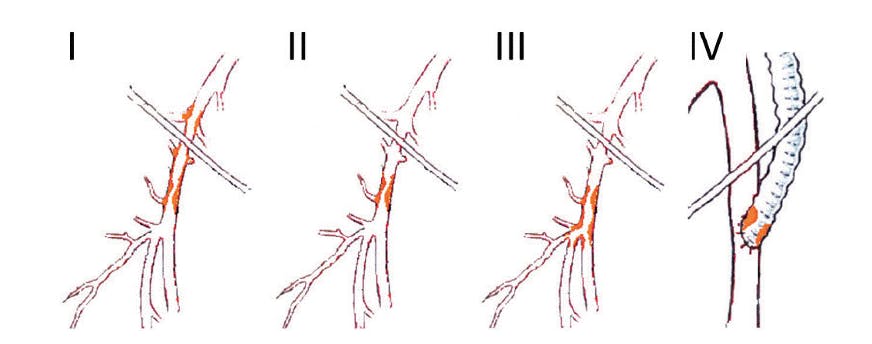
Figure 1. CFA occlusive disease classification. Reprinted from European Journal of Vascular and Endovascular Surgery, 41/6, Azéma L, Davaine JM, Guyomarch P, et al, Endovascular repair of common femoral artery and concomitant arterial lesions, 787-793, 2011, with permission from Elsevier.
CFA lesions are managed according their classification. The latest-generation self-expanding stents are recommended to treat type I and type II lesions. For type III lesions that involve the common femoral bifurcation, balloon-expandable stents are used to treat ostial stenoses of the SFA and DFA (kissing stent). For type III lesions that occlude the SFA, the SFA can be abandoned, and a self-expanding stent can be placed from the CFA into the DFA.
Dr. Schneider: What patient-related and clinical considerations do you weigh?
Prof. Gouëffic: For open surgery, the key point is to keep the DFA open, and thus everything is done to protect this artery intraoperatively. We do not take account of patient or clinical considerations such as age or severity of calcification to perform a CFA endovascular procedure.
Dr. Das: Negative patient-related factors include advanced age, severe comorbidities, heavy burden of calcium, chronic renal insufficiency, and female sex. Although the tools exist to treat all of these scenarios, the risk of complications including distal embolization, perforation, dissection, and acute renal insufficiency requiring dialysis are all increased.
Dr. Clair: As discussed in the first question, age, frailty, and the clinical problem being addressed are probably the most significant. Additionally, if there is disease in the inflow and outflow vessel, I believe this situation is best handled with the CFA addressed surgically and functioning almost as a “base” for the other interventions. If you can make the distal external iliac and the origins of the common femoral branches clear sites, it is much more likely that other interventions will be successful long term.
Dr. Branzan: When a CFA lesion is technically treatable by open or endovascular repair, I assess both the patient’s general condition and the clinical status of the limb before making a therapeutic decision. I take into account the patient’s age, functional status (ambulatory or bedridden), and the presence of cardiovascular risk factors, particularly coronary artery disease and end-stage renal disease. I look for the presence or absence of tissue loss and the presence of infection with subsequent sepsis. Finally, I assess the degree of urgency of the revascularization procedure.
Dr. Schneider: What are the best data available to support endovascular approaches to the CFA?
Prof. Gouëffic: Over the past several years, multiple studies have assessed the safety, efficacy, and long-term outcomes of CFA endovascular treatment; the anatomic behavior of the CFA; and stent size optimization.2-5 In the TECCO randomized controlled trial (RCT), we assessed the safety and efficacy of stenting versus open surgery for de novo CFA lesions and showed that perioperative morbidity and mortality were significantly lower among patients who underwent endovascular therapy with stenting as compared with surgery, and clinical, morphologic, and hemodynamic outcomes were comparable between groups at midterm.6 The TECCO trial provides level 1 evidence in favor of endovascular treatment of the CFA.
Dr. Branzan: Goueffic et al reported the findings of the TECCO trial, a multicenter, prospective trial that included 117 patients with de novo CFA disease randomized to endarterectomy (n = 61) versus stenting (n = 56). Median follow-up was 2 years. The primary outcome events (mortality within 30 days, complications that required reintervention or prolonged hospitalization, lymphorrhea > 3 days, and postoperative paresthesia requiring pharmacologic intervention) occurred in 26% of the endarterectomy group and 12.5% of the stent group (P = .05). At 2 years, there were no differences in primary patency or TLR rates between the two groups. The TECCO trial demonstrated that endovascular therapy with stenting is a viable alternative treatment to endarterectomy.6
A recent meta-analysis of endovascular versus open repair for CFA atherosclerosis treatment including 28 studies (14 open surgery of 1,920 patients, 12 endovascular repairs of 1,900 patients, and two comparative randomized trials of 197 patients) revealed no differences in 30-day mortality or reintervention rates but improved 30-day morbidity after endovascular repair. At 1 year, primary patency and late reintervention rates did not differ between endovascular repair and open surgery. In the noncomparative studies (mean follow-up, 23.8 months for endovascular repair and 66 months for open surgery), the restenosis rate was 14.4% and 4.7%, respectively. The reported stent fracture rate was 3.6%. In the endovascular repair cohort, overall primary patency at 1, 2, and 3 years was 81.9%, 77.8%, and 75.1%, respectively. For the open surgery cohort, overall primary patency at 1, 2, and 3 years was 93.4%, 91.4%, and 90.5%, respectively.7
Dr. Das: Bonvini et al looked at 321 patients who underwent endovascular treatment of CFA disease with angioplasty and provisional stenting and reported a procedural success rate of 92.8% and major and minor complication rates of 1.4% and 5%, respectively, thus justifying the endovascular approach.1 In a later study of 94 patients by the same authors, 38% of patients received stents, and restenosis and TLR rates were acceptable at 19.5% and 14.1%, respectively.8 More recently, the TECCO trial randomized 117 patients with de novo CFA lesions to endarterectomy or stenting. At 30 days, morbidity and mortality was 26% in the surgery group and 12.5% in the stent group (odds ratio, 2.5; P = .05), which was primarily driven by wound healing and paresthesia in the surgery group. Additional data and a meta-analysis of stenting and DCB in the CFA suggest that the CFA may no longer be considered a strict “no-stent zone” or an area only served by surgery.9
Dr. Clair: There is a large review of CFA interventions from the VQI.10 I am not sure the data strongly support interventional therapy, but they do offer that intervention can be an option, especially in situations where there is a patient factor favoring intervention. Recently, Deloose and colleagues in Europe looked at a primarily endovascular approach to the CFA,11 but did not really address the profunda femoris, which, for many vascular surgeons, is the primary vessel for revascularization of the lower extremity and is critical in preserving the knee joint and lower extremity collaterals. Not addressing this when addressing the CFA is inadequate in my view to sustain long-term resolution of problems. I have patients who walk miles with just a profunda outflow; I even have a patient who runs regularly and has completed 10K races with just the profunda. I believe both the SFA and the profunda are important, and both need to be addressed when dealing with the CFA.
Dr. Schneider: What is your preferred endovascular modality to use? Does it make sense to consider endovascular in a patient younger than age 80 with claudication due to a CFA lesion, given that the longest-term data we have is only 2 years?
Dr. Das: My preference is to use atherectomy (TurboHawk excision system, Medtronic; Diamondback 360 orbital atherectomy, Cardiovascular Systems, Inc.; or Excimer laser system, Philips) in combination with PTA with DCB. Occasionally, I will stent the area with a nitinol woven stent with high radial strength and low risk of fracture (eg, Supera, Abbott) as long as the artery is ≤ 6.5 mm. In the United States, we do not have Supera in sizes > 6.5 mm.
Because the endovascular CFA procedure has low morbidity, very low mortality, reasonable 2-year patency, and little risk of negatively impacting a future surgical approach, I believe it makes complete sense to consider an endovascular approach first.
Dr. Clair: I prefer to avoid device implantation in the CFA, and my choice of treatment depends on the state of the vessel disease. For patients with extensive calcification in the CFA, I prefer lithoplasty followed by medicated balloon angioplasty. For vessels with recurrent stenosis after a surgery or intervention, I most often exclusively use medicated balloon angioplasty. I have used stents extending into the CFA and medicated stents at the origins of the CFA branches, but I am not a fan of this and use this only when I need to provide support to an angioplasty. Overall, I only treat a minimum of patients with interventional therapy in this area.
Dr. Branzan: I prefer to use the strategy of “leaving nothing behind” and avoid routine stenting of the CFA due to the risk of potential stent fractures and compromising future anastomosis sites for bypass surgery. After successful guidewire passage of the target CFA lesions, I choose an atherectomy device for vessel preparation prior to balloon angioplasty to debulk and avoid vessel dissection, elastic recoil, and the need for bailout stenting. I combine it with an embolic protection device, particularly in patients with compromised runoff to decrease distal embolization. I prefer to use relatively large DCBs (7, 8, and 9 mm) for angioplasty. I perform repeat angiography after retrieval of the embolic protection device to document patency of the distal vessels. If the guidewire passage is not clearly intraluminal, after predilation of the target lesion, I consider implantation of the latest generation of self-expanding stents, trying to avoid “jailing” the PFA. I also consider self-expanding stents in cases of residual gradient and flow-limiting dissection. For heavily calcified CFA lesions, I sometimes use both retrograde and antegrade access to cross the lesion with the guidewire and avoid extension of the dissection to the healthy adjacent vessels.
The results after endarterectomy of CFA lesions are highly favorable and set a high standard for the treatment of the CFA. Prospective registries have shown a very high success rate (93.2%–100%) in treating the CFA with endarterectomy. In addition, a low rate of complications was seen in these studies, although traditionally CFA endarterectomy is associated with wound infections, hematomas, or seromas affecting > 15% of patients. Finally, sustained primary patency (93%–96%) and low TLR rates (9%–18.3%) were seen with long-term follow-up. However, it should be noted that these studies are limited by being single-center, as well as probable selection bias because procedures were performed by experienced operators.9
If the patient wants to avoid the local postoperative complications, and after detailed information about the increased risk of restenosis and multiple redo procedures and obtaining written informed consent, I would consider an endovascular approach. Of course, in a nonoctogenarian at high surgical risk and with hostile groin anatomy, I would perform an endovascular CFA treatment.
Prof. Gouëffic: Although the type of endovascular modality is not well defined for the CFA, stenting should be preferred over angioplasty. Indeed, the largest registries of CFA endovascular repair have shown that outcomes were significantly better in patients in whom stents had been implanted.12,13 Some operators may be concerned about the risk of stent fracture or that CFA stenting could preclude further CFA puncture or make groin open surgery difficult. However, the risk of stent fracture is very low and has a low clinical impact. A CFA stent does not prevent a redo CFA puncture or CFA endarterectomy.
It is true that the lack of long-term data on CFA endovascular repair is a limitation. However, it should be balanced with the high morbidity of open surgery for CFA disease14 and the poorer quality of CFA open surgery studies.
Dr. Schneider: What potential complications should be considered for endovascular CFA treatment? What does a worst-case scenario look like?
Dr. Clair: I often quote patients about a 5% chance of skin-edge dehiscence and an infection rate of < 2%. These are my own outcomes from a recent evaluation of the outcomes of these procedures (unpublished data). I have changed my technique significantly over the years to reduce the infection rate, and I have been successful in doing so. Unless I am directly cauterizing a blood vessel, I use only the cut mode on electrocautery. I remind trainees not to use cautery for the entire dissection because it destroys so much tissue. I only use bioprosthetic patches or autogenous material for the closure; in instances where I am concerned about infection, I will perform an eversion endarterectomy, which completely removes the need for any patch. I never use any substance for hemostasis. I believe with patience and time, all bleeding can be addressed, and these products increase the risk for infection, in my opinion. I now only use monofilament suture rather than braided suture in closing all layers. Finally, I close the tissue of the femoral sheath and then at least three layers of tissue above it to provide much less room for collections in the area. With this approach, I have not had an infection reach the patch in at least 10 years.
The worst-case scenario is infection on the patch with “blowout.” In these situations, one may be forced to proceed with extra-anatomic bypass and oversewing of the groin. With a meticulous approach over time, I am convinced the risk for this problem can be dramatically reduced.
Prof. Gouëffic: Intraoperatively, revascularization of the DFA should be the priority. I keep a guidewire in the DFA during the procedure to protect it, and if complications are encountered during the procedure, a retrograde approach can be used for salvage. Postoperatively, regular follow-up with duplex ultrasound should be performed to detect in-stent restenosis. Type III CFA lesions are technically demanding and are associated with a higher risk of in-stent restenosis during follow-up.
Dr. Das: Potential complications of the CFA include dissection into the profunda, perforation from atherectomy or aggressive balloon dilation in calcified lesions, and distal embolization with poor runoff and bulky plaque. A worst-case scenario is losing the profunda femoris vessel supplying the lower extremity while attempting to recanalize a severely stenotic or occluded CFA. Additionally, perforation can be a serious complication in this territory as a covered stent would likely jail the profunda and lead to possible acute and chronic lower extremity ischemia.
Dr. Branzan: Periprocedural complications of endovascular therapy are mostly vascular related, including hematoma, arterial dissection or stenosis/occlusion, distal embolization, target lesion perforation, and target lesion aneurysm. A scenario I fear is that of a claudicant patient developing acute limb ischemia due to occlusion of outflow vessels after peripheral embolization during endovascular repair of a CFA lesion, with no option of revascularization and the patient undergoing subsequent major amputation. Another dreadful complication could be massive bleeding due to arterial perforation after endovascular repair of a CFA lesion, with no endovascular treatment possibility and requiring immediate surgical conversion.
Dr. Schneider: What tools or studies do we need to help develop a balanced algorithm for CFA treatment going forward?
Dr. Branzan: We need solid, unbiased evidence on the clinical safety, efficacy, and cost profile of endovascular CFA treatment. In addition, we need to better describe the endovascular technique because there is no consensus on how this technique should be performed, especially stenting of the CFA branches, which may also be diseased. I am still concerned that stenting into the CFA may limit access for subsequent treatments and that stent fracture may cause subsequent CFA occlusion. Identification of actual risk factors for worsening outcome in patients with CFA lesions undergoing endovascular revascularization would allow us to estimate outcome before endovascular treatment, thus providing important information for an optimal therapeutic approach.
With respect to efficacy, the use of DCBs after CFA atherectomy does not reduce TLR compared with plain old balloon angioplasty, as expected. A possible explanation for the lack of impact of DCBs on TLR could be the differences in lumen size of the CFA and available DCBs. I believe that the development of appropriately sized DCBs will further improve the results of CFA angioplasty. Thus, direct studies comparing open surgery to endovascular therapy with new devices should be performed to draw meaningful conclusions. In the meantime, the prospective, randomized, multicenter PESTO trial, which is currently underway, will provide some evidence as to whether atherectomy followed by DCB angioplasty can compete with endarterectomy in the treatment of CFA.
Prof. Gouëffic: In the TECCO RCT, we demonstrated a lower rate of morbidity in the endovascular arm. At 2 years, the secondary endpoints including symptomatology, patency, and reinterventions were similar between groups.6 We need more RCTs comparing both open and endovascular treatment and to establish endovascular treatment as a standard of care for CFA lesions. We need to demonstrate the noninferiority of endovascular treatment versus open surgery for CFA lesions and obtain long-term follow-up data regarding clinical and morphologic outcomes. Additionally, many technologies could be evaluated for CFA endovascular treatment, such as drug-coated devices, atherectomy, bifurcation-dedicated stents, and bioresorbable scaffolding.
Dr. Das: The tools to help CFA treatment from an endovascular standpoint are atherectomy devices that can reliably avoid distal embolization and debulk heavily calcified plaque. Additionally, self-expanding stents with larger-diameter woven nitinol, high radial strength, and fracture resistance will help. Some newly available tools like intravascular lithotripsy and DCBs certainly have helped.
Dr. Clair: I don’t have all the answers, but we clearly need something that addresses bifurcations interventionally. I don’t think treating the CFA without addressing both branches is a successful intervention. As for an algorithm, I have trouble considering interventional therapy for a patient without a contraindication. I now perform > 100 endarterectomy procedures each year, and I remain convinced this is an operation that will be challenging to match with interventional therapy. With that said, I still have patients who need interventional therapy because surgery is not a good option, and it would be helpful to have a reliable method of providing bifurcated outflow for these patients.
Dr. Schneider: What are some rules of thumb for how you like to perform femoral endarterectomy (eg, preoperative assessment, where to clamp, do you patch and with what, your approach when combining with an iliac or infrainguinal endovascular procedure)?
Prof. Gouëffic: Each medical school has a different approach to how open arterial reconstruction is performed. Regardless of the approach, priority should be given to revascularization of the DFA. For endovascular or open repair, the preoperative assessment is similar. Based on guidelines,15 my preference is to use CT for preoperative assessment of calcification and to determine the need for an iliac or contralateral open femoral approach and the clamping zone. I do not like to perform a combined approach (endovascular and open), given the disadvantages of morbidity and restenosis.
Dr. Clair: I try to obtain a CTA in everyone undergoing femoral endarterectomy. I do not believe angiography provides an adequate assessment of how extensive the procedure will need to be, and I often don’t want to perform angiography before a procedure. I also think that CTA allows me to identify more disease than is visualized with any other therapy and has led to better treatment of patients with lower extremity ischemia. I usually expose the distal external iliac artery and preserve all the side branches of the vessel. I will often ligate the crossing vein above the inguinal ligament, and I clamp well into the pelvis. My dissection distally is driven by the extent of disease in the profunda. The more distal this vessel is affected, the further distally I will carry the procedure; this might entail a separate incision for endarterectomy of the profunda itself. In all situations, I will mobilize to the first branch of the profunda.
The endarterectomy is usually performed through a relatively short arteriotomy, and I will perform somewhat of a remote endarterectomy on the upper aspect of the vessel, removing plaque under direct vision by viewing directly into the vessel. Distally, I want to get to a normal segment of profunda. Often, simply an eversion endarterectomy can be performed of the profunda femoris. If needed, an incision can be made on this vessel to perform a distinct endarterectomy, and this vessel can be patched or closed based primarily on its size. I mostly use bovine pericardium as a patch but have used vein and endarterectomized SFA as autogenous patches if needed. I have also performed a number of eversion endarterectomy procedures, dividing the CFA at its bifurcation, then dividing the SFA and PFA at their junction, and everting these vessels much further than can ordinarily be achieved. These vessels are then sewn back together, the proximal and distal CFA are reunited, and no patch at all is required. This works well when the size of the CFA is > 7 mm but can lead to restenosis in patients with smaller CFA diameters.
There are two ways I address performing concomitant interventions: (1) If I am doing an infrainguinal intervention at the same time, I will access the contralateral groin and perform the infrainguinal intervention as though I had not done an endarterectomy. Iliac lesions can be treated also from the opposite side after the infrainguinal issue is addressed. (2) If I am only treating ipsilateral iliac disease, I will usually do this through a sheath inserted through the patch and then sew the patch with a running closure transversely after finishing.
Dr. Branzan: I prefer either biplane angiography or thin-slice CTA because they can fully characterize not only the CFA lesion but also the inflow and outflow vessels. As for surgical technique, I make a skin incision slightly lateral to the femoral artery to mobilize the lymph vessels medially and prevent their injury. I expose the CFA under the inguinal ligament and prefer to clamp in a calcium-free area, usually the distal external iliac artery. I continue the dissection on the anterior surface of the PFA, avoiding injury of its side branches. I end the dissection of the vessel when I reach a disease-free PFA. After a longitudinal arteriotomy, usually extending beyond the first accessory branch of the PFA, I perform an extensive endarterectomy, including the ostium of the SFA. Finally, I close the arteriotomy usually with a prosthetic xenogen patch. When treating an inflow or outflow obstruction, I prefer to use a contralateral crossover approach. When treating stenosis of the outflow or inflow vessels, I usually puncture the CFA sidewall and avoid direct puncture of the patch.
Dr. Schneider: Are there cases in which a femoral endarterectomy is not possible or is too risky? Can you give us a sense of what kinds of results and complications we should expect from femoral endarterectomy?
Dr. Clair: Infection or increased frailty may make intervention favored. With infection or radiation, the risk of the femoral endarterectomy may be too high to consider. But, this is a very small minority of patients. I think we should expect very high patency rates for endarterectomy—on the order of ≥ 90% at 5 years. As noted previously, skin dehiscence rates should be about 5%. I don’t think infection to the patch should be common at all (< 0.5%).
Prof. Gouëffic: Endarterectomy is a risky procedure! Despite most surgeons considering common femoral open repair as safe, studies have reported elevated complication rates. For example, in a large registry, Nguyen et al reported morbidity and mortality rates of 15% and 3.4%, respectively.14 Moreover, paresthesia and delayed wound healing as a postoperative complication of the CFA approach are poorly reported in published reports and impair the quality of life of the patient.
Dr. Branzan: The CFA is easily accessible surgically, even under local anesthesia, and the open CFA endarterectomy procedure is technically simple. However, I sometimes find it difficult to clamp the proximal CFA due to massive circular calcification, in which case I perform endoclamping using a Fogarty catheter. Furthermore, CFA endarterectomy is short in duration, with minimal postoperative complications. Despite this, local complications such as early thrombosis and postoperative hemorrhage requiring immediate revision may occur. The most frequent complications are related to the groin wound. To identify predictors of postoperative endarterectomy complications, Nguyen et al evaluated 30-day outcomes in 1,843 patients undergoing CFA endarterectomy from the National Surgical Quality Improvement Program database between 2005 and 2010 in a retrospective analysis.14 Ten percent of patients required a return to the operating room. Postoperative mortality was 3.4%, and wound-related complications such as infection, hematoma, and seroma were 8%. Thus, particularly in obese patients with a high risk of wound infection, I recommend preventive measures to avoid groin complications.
Dr. Schneider: If you have a chronic limb-threatening ischemia (CLTI) patient with multilevel disease that also includes the CFA, how likely are you to perform a hybrid operation, and how likely are you to use an endovascular approach alone?
Dr. Branzan: The primary goal of revascularization for CLTI is to restore pulsatile inline flow to the affected part, especially in patients with tissue loss. Therefore, in patients with CLTI caused by combined inflow and outflow disease and involvement of the CFA, I opt for simultaneous multilevel revascularization, centered on the CFA. The decision of whether I perform a full endovascular repair or combine a CFA endarterectomy with recanalization of the inflow or outflow is based on the severity of the limb threat, the anatomic complexity of the lesion, and patient risk. In all cases, I try to achieve permanent inline PFA flow. In most cases of inflow obstruction, I perform a hybrid procedure that combines endovascular treatment of the aortoiliac segment with surgical CFA endarterectomy. However, in high-risk patients, especially those with rest pain and minimal tissue loss, I prefer to perform endovascular inflow correction and endovascular CFA treatment simultaneously to reduce perioperative morbidity and mortality, especially if I have to treat stenosed arteries. When major tissue loss in CLTI is caused by combined inflow and outflow disease, I usually use the hybrid technique, combining CFA endarterectomy with inflow and outflow revascularization to preserve both the ostium of the PFA and SFA.
Dr. Clair: A CLTI patient with multilevel disease including the CFA is the most common patient we see in our practice, and nearly all of these patients are treated with hybrid therapy. It is uncommon to use endovascular therapy alone, but there are some instances that may make an endovascular approach favorable (eg, infection or radiation therapy).
Prof. Gouëffic: As previously mentioned, a hybrid intervention combines the disadvantages of both techniques: morbidity of the open surgery and restenosis after stent implantation. For these reasons, we try to do the entire procedure endovascularly, including in CLTI and claudicant patients. Studies report close to 40% of concomitant procedures (ie, iliac, superficial femoral artery, below the knee) are associated with CFA stenting.
Dr. Schneider: If you were to look 10 years into the future, how do you think CFA disease will be managed?
Dr. Das: I think ultimately there will be a minimally invasive tool to debulk the calcium and a biologic balloon/device to coat the vessel to avoid restenosis. Additionally, larger-diameter, woven-nitinol, high-radial-strength, fracture-resistant self-expanding stents will be developed. In the future, there will be noninvasive ways to remotely alert clinicians using sensor technology of the increase in Doppler velocity or reduction in flow in the lower extremities before occlusion occurs.
Prof. Gouëffic: Endovascular repair as the first line of treatment, of course!!
Dr. Clair: As I noted previously, I believe this will be a challenging area to match operative outcomes in. I believe that for the foreseeable future, surgery will be the primary mode of therapy for those who have experience in this area.
Dr. Branzan: I think it is too early to determine whether endovascular repair can replace open surgery of CFA because the long-term results are uncertain and previously reported studies have many limitations. My opinion is that the two techniques will be used in a complementary manner to provide a treatment tailored to the patient’s needs. Certainly, with the development of new endovascular tools and techniques, the balance will shift toward endovascular repair, but one of the prerequisites for endovascular repair to compete with open repair is improvement in patency.
1. Bonvini RF, Rastan A, Sixt S, et al. Endovascular treatment of common femoral artery disease: medium-term outcomes of 360 consecutive procedures. J Am Coll Cardiol. 2011;58:792-798. doi: 10.1016/j.jacc.2011.01.070
2. Azéma L, Davaine JM, Guyomarch B, et al. Endovascular repair of common femoral artery and concomitant arterial lesions. Eur J Vasc Endovasc Surg. 2011;41:787-793. doi: 10.1016/j.ejvs.2011.02.025
3. Nasr B, Della Schiava N, Thaveau F, et al. The common femoral artery bifurcation lesions: clinical outcome of simple versus complex stenting techniques—an analysis based on the TECCO trial. Ann Vasc Surg. 2020;64:2-10. doi: 10.1016/j.avsg.2019.10.031
4. Tijani Y, Burgaud M, Hamel A, et al. The common femoral artery is a fixed arterial segment. Ann Vasc Surg. 2021;73:51-54. doi: 10.1016/j.avsg.2020.10.049
5. Nasr B, Kaladji A, Vent PA, et al. Long-term outcomes of common femoral artery stenting. Ann Vasc Surg. 2017;40:10-18. doi: 10.1016/j.avsg.2016.07.088
6. Gouëffic Y, Della Schiava N, Thaveau F, et al. Stenting or surgery for de novo common femoral artery stenosis. JACC Cardiovasc Interv. 2017;10:1344-1354. doi: 10.1016/j.jcin.2017.03.046
7. Boufi M, Ejargue M, Gaye M, et al. Systematic review and meta-analysis of endovascular versus open repair for common femoral artery atherosclerosis treatment. J Vasc Surg. 2021;73:1445-1455. doi: 10.1016/j.jvs.2020.10.026
8. Bonvini RF, Rastan A, Sixt S, et al. J Vasc Interv Radiol 2013;24:175-183
9. Changal KH, Syed MA, Dar T, et al. Systematic review and proportional meta-analysis of endarterectomy and endovascular therapy with routine or selective stenting for common femoral artery atherosclerotic disease. J Interv Cardiol. 2019;2019:1593401. doi: 10.1155/2019/1593401
10. Siracuse JJ, Van Orden K, Kalish JA, et al. Vascular Quality Initiative. Endovascular treatment of the common femoral artery in the Vascular Quality Initiative. J Vasc Surg. 2017;65:1039-1046. doi: 10.1016/j.jvs.2016.10.078
11. Deloose K, Martins I, Neves C, Callaert J. Endovascular treatment for the common femoral artery: is there a challenger to open surgery? J Cardiovasc Surg (Torino). 2019;60:8-13. doi: 10.23736/S0021-9509.18.10787-7
12. Bonvini RF, Rastan A, Sixt S, et al. Endovascular treatment of common femoral artery disease: medium-term outcomes of 360 consecutive procedures. J Am Coll Cardiol. 2011;58:792-798. doi: 10.1016/j.jacc.2011.01.070
13. Baumann F, Ruch M, Willenberg T, et al. Endovascular treatment of common femoral artery obstructions. J Vasc Surg. 2011;53:1000-1006. doi: 10.1016/j.jvs.2010.10.076
14. Nguyen BN, Amdur RL, Abugideiri M, et al. Postoperative complications after common femoral endarterectomy. J Vasc Surg. 2015;61:1489-1494.e1. doi: 10.1016/j.jvs.2015.01.024
15. Aboyans V, Ricco JB, Bartelink MEL, et al. Editor’s choice—2017 ESC guidelines on the diagnosis and treatment of peripheral arterial diseases, in collaboration with the European Society for Vascular Surgery (ESVS). Eur J Vasc Endovasc Surg. 2018;55:305-368. doi: 10.1016/j.ejvs.2017.07.018
Advertisement
Advertisement