Advertisement
Advertisement
September 2021
Sponsored by Medtronic
Saving Limbs to Save Lives: Holistic Approaches to Limb Salvage
The global burden of atherosclerotic peripheral artery disease (PAD) has increased by 25% during the preceding decade, with > 200 million individuals affected by this disease. PAD is recognized as a global pandemic.1 Chronic limb-threatening ischemia (CLTI) is the most severe form of PAD, manifested by ischemic rest pain, tissue loss, nonhealing ulcers, or gangrene, and it carries a significant increase in risk for limb loss and cardiovascular mortality. Without revascularization, major amputation rates are as high as 30% to 50% in CLTI patients in the first year.2
The major recognized risk factors for PAD include diabetes mellitus, tobacco use, and dyslipidemia. Diabetes mellitus and smoking have been associated with a two- to fourfold increase in the prevalence of PAD, whereas the presence of dyslipidemia increased the risk of PAD by nearly double.3,4 Furthermore, diabetes, smoking, and dyslipidemia have been associated with acceleration of the disease, leading to more ischemic events and functional decline.4 In addition, PAD patients with comorbidities (diabetes, smoking, dyslipidemia, hypertension, etc.) frequently present with more complex lesions, such as multivessel disease, long lesions, diffuse disease, and calcified lesions, and thus provide unique treatment challenges for clinicians.
Although autologous bypass surgery has been the standard for many complex lesions, there has been a revolution in contemporary endovascular techniques being increasingly used to treat these complex lesions, particularly in patients with severe comorbidities that add to surgical risk and patients who no longer have acceptable veins for distal bypass. Unfortunately, with increased use of endovascular technologies (plain old balloon angioplasty, stent) comes an increase in in-stent restenosis (ISR), which can result in abrupt occlusion and a potentially limb-threatening scenario. The restenosis rate after standard percutaneous transluminal angioplasty (PTA) is especially high in long lesions, with 1-year restenosis rates > 70%.5 After stenting of long superficial femoral artery (SFA) lesions, ISR has been reported to occur at a frequency ≤ 50%.6 Moreover, ISR of full metal jackets is associated with a diffuse pattern or in-stent occlusion, which is a challenging class of lesions to treat on its own.
Among the endovascular therapies, drug-coated balloons (DCBs) have emerged as an effective treatment option by combining the ease of balloon angioplasty with antirestenotic features that reduce or delay neointimal hyperplasia. The most important paradigm shift of the DCB technology is the reduction of risks of ISR and stent fractures by avoiding use of the full metal jacket.
Numerous randomized controlled trials have demonstrated the superior performance of DCBs compared to PTA for short femoropopliteal arterial lesions.7-9 Recent evidence from prospective real-world studies has further expanded the use of DCBs for long femoropopliteal lesions. For instance, the IN.PACT™ Admiral™ drug-coated balloon (Medtronic) has demonstrated excellent 1-year primary patency after treatment of long femoropopliteal lesions (91.1% in IN.PACT Global and 83.2% in DEB-SFA-LONG).10,11 Although treatment of ISR remains a clinical challenge, data from the IN.PACT Global study have shown DCB as a promising revascularization option for ISR.12
The following two case examples highlight how I treat these challenging, long, complex lesions and obtain good outcomes by avoiding stents altogether or using spot stenting when bailout stenting is required.
CASE EXAMPLE 1: ISR
A man in his mid-60s with diabetes, hypertension, hyperlipidemia, and a prior cerebrovascular accident presented with chronic right lower extremity nonhealing wounds that had persisted for > 1 year (Figure 1). His ankle-brachial index was 0.5 on the right side, with a toe pressure of 43 (Figure 2). Before this visit, he had multiple lower extremity revascularization procedures: a left lower extremity angiogram and SFA stenting and 1.5 years later, left femoropopliteal in situ saphenous vein bypass and femoral below-knee popliteal bypass with a reversed right great saphenous vein. On the right side, he had a previously placed bare-metal stent in the SFA. CTA showed diffuse SFA disease throughout the right SFA with ISR. The wound on the posterior aspect of his leg was grafted by our plastic surgery colleagues and subjected to excellent wound care, but it had not healed.
The patient underwent right lower extremity angiogram via left femoral access, which confirmed severe, long ISR of the SFA (Figure 3A). There were multiple areas of stenosis with varying percentages, but the distal reconstitution of the below-knee popliteal was adequate. Intravascular ultrasound (IVUS) was used to better assess vessel size and plaque morphology (Figure 3B).
At that point, it was opted to re-establish brisk flow via the SFA to allow for inline flow to the wound on the posterior aspect of the right leg. This wound had persisted and been cared for in a wound care center, where the plastic surgeon wanted to graft the area. However, this was not an option until appropriate flow was established. Given that this was a long-segment ISR, laser atherectomy—the only approved atherectomy for ISR—was chosen. A Turbo-Power™* 2.0 laser (Philips) was used via a 6-F sheath. The first and second passes were 45/45 after which the third pass was on 60/60. This was followed by angioplasty with 6- X 200-mm IN.PACT Admiral DCB (Figure 4A and 4B). Postintervention angiographic results showed resolution of stenosis and no mechanical complications (Figure 4C). The patient’s grafted wound site healed completely within 1 month.
Case Example 1
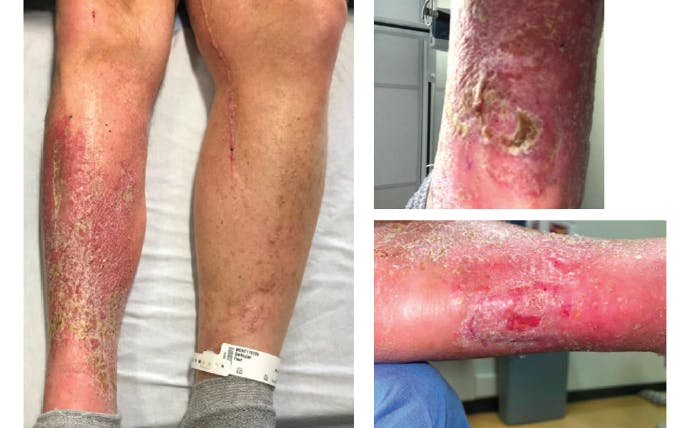
Figure 1. Chronic nonhealing wounds before intervention.
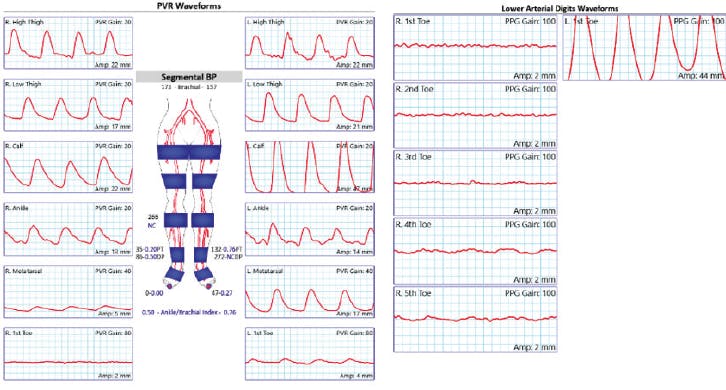
Figure 2. Noninvasive testing before intervention.
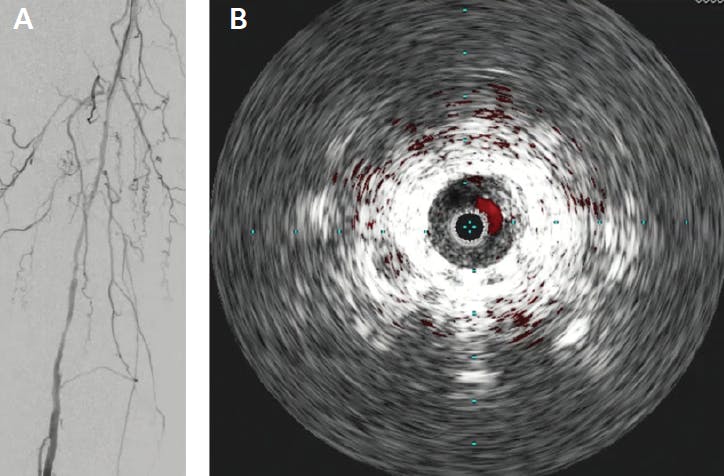
Figure 3. Preintervention angiogram showing ISR of SFA (A) and plague morphology observed using IVUS (B).
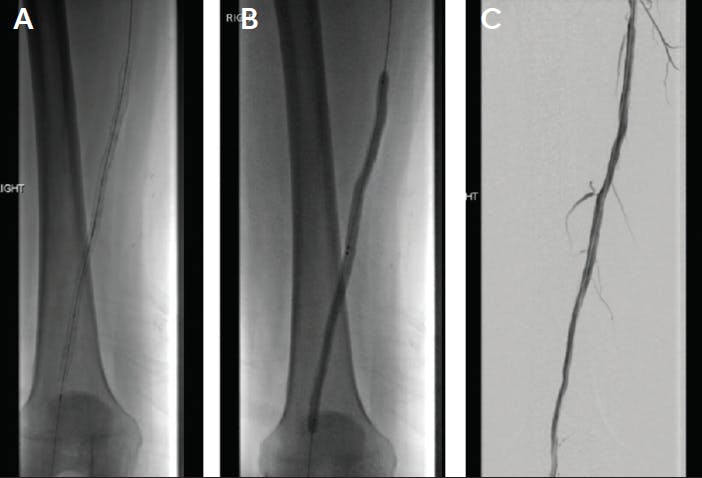
Figure 4. Angioplasty of SFA ISR with 6- X 200-mm IN.PACT Admiral DCB (A, B) and final angiogram (C).
CASE EXAMPLE 2: LONG SFA AND MULTILEVEL DISEASE
A man in his late 50s who smoked one and a half to two packs a day for > 20 years presented with ischemic rest pain and 3-month-old wounds on his right lateral calf and on the dorsum of his right foot (Figure 5).
This patient was offered an amputation because his forefoot wound was significant and had caused multiple bouts of cellulitis, which resulted in him being admitted to the hospital for intravenous antibiotics. We obtained a CTA and an angiogram, which revealed almost complete occlusion of the right common femoral artery (CFA), occlusion of the common iliac artery, and multilevel stenosis of the SFA, with popliteal occlusion (Figure 6). Distally, the patient had two-vessel runoff.
Based on this CTA, he was brought to the operating room for right femoral endarterectomy, right common iliac artery stenting, right SFA and popliteal recanalization with DCB, right SFA stenting, and right lower extremity wound debridement.
First, a longitudinal incision was made over his right CFA. The CFA was identified, and a longitudinal arteriotomy was made in the right CFA. A freer elevator was used to remove the plaque from the CFA, profunda, and proximal aspect of the SFA. Then, an 0.018-inch wire was used to achieve antegrade access to the SFA and retrograde access to the iliac arterial system. The 0.018-inch wire and a crossing catheter were used to cross the SFA and popliteal lesions, and the wire was parked in the anterior tibial. A similar technique was used to cross the iliac occlusion and park the wire in the aorta. At that point, a bovine pericardial patch was sutured onto the CFA to complete the femoral endarterectomy. A wire was used to puncture the patch and externalize the two wires. Then, balloon angioplasty and stenting of the external iliac were performed with a Gore Viabahn™* VBX 8-mm stent (Gore & Associates) and a balloon was used to occlude the VBX stent (Figure 7). Excellent inflow was noted after this.
Work on the SFA and popliteal continued. In the SFA, a 6- X 200-mm IN.PACT Admiral DCB achieved a patent SFA without residual stenosis (Figure 8). For the distal SFA and popliteal, an IN.PACT Admiral DCB was again used, but the angiogram showed one (previously occluded) portion of the distal SFA to have some dissected flow, thus a 6-mm Zilver™* PTX™* stent (Cook Medical) was placed in this location (Figure 9.). The final runoff showed excellent flow to the wound bed. Then the wound bed was debrided and a vacuum-assisted closure was placed. The wound was healing well at follow-up (Figure 10).
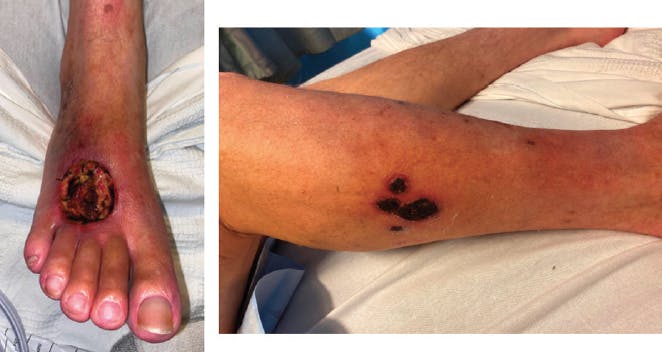
Figure 5. Three-month-old nonhealing wounds.
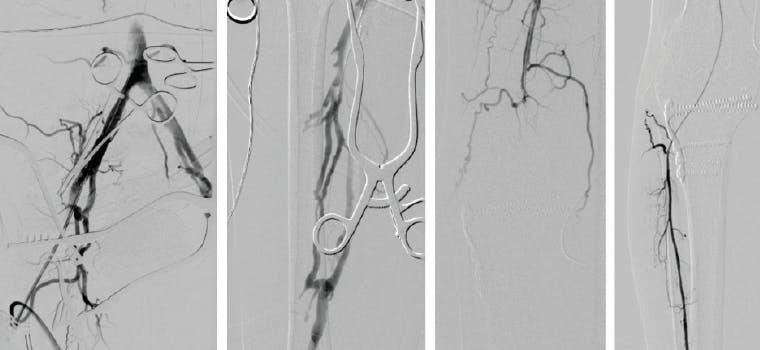
Figure 6. Multilevel disease including occlusions in iliac, SFA, and popliteal.
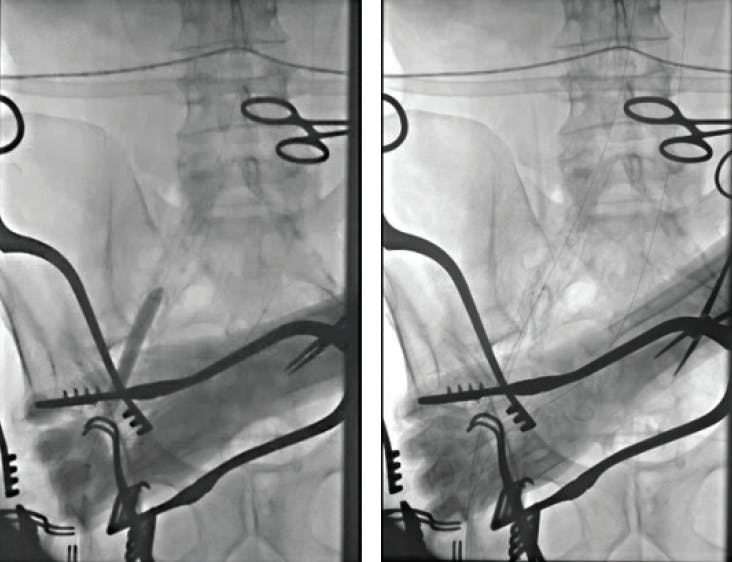
Figure 7. Iliac intervention with stenting.
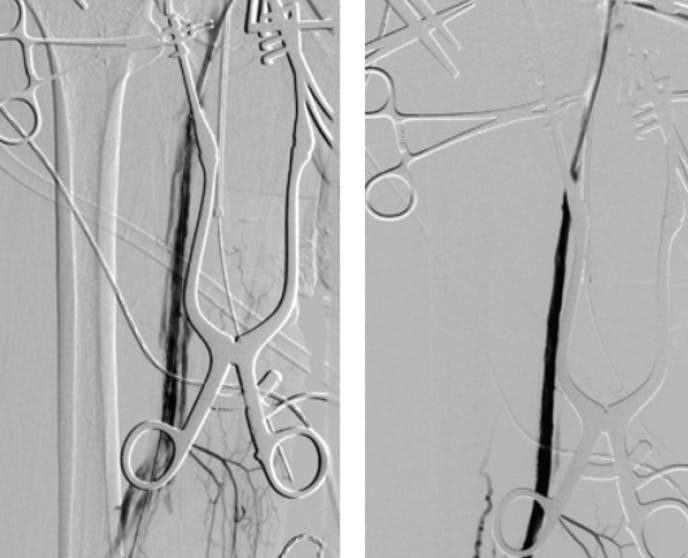
Figure 8. Preintervention angiogram and post-DCB angiogram in the SFA.
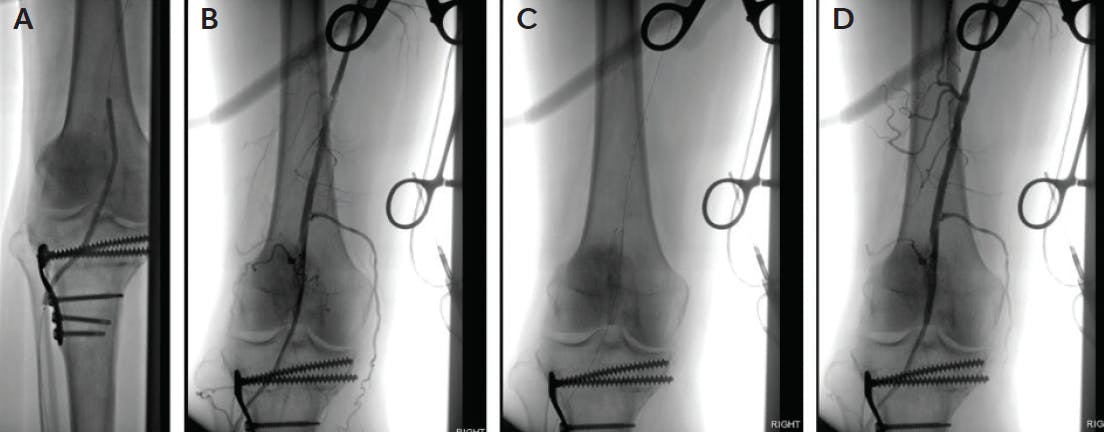
Figure 9. Right SFA and popliteal angioplasty with IN.PACT Admiral DCB (A, B) followed by spot stenting (C, D).
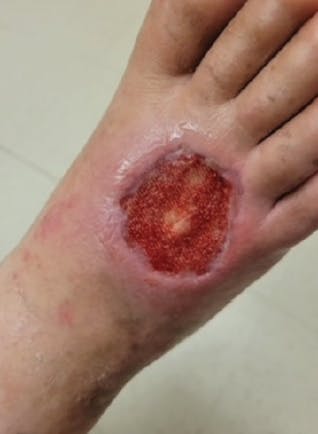
Figure 10. Wound healing following interventions.
CONCLUSION
Long length of the stented region and stent overlap are both recognized as predictors of treatment failure,13 and a second ISR will be much worse for future reintervention strategies. As shown in Case 1, great outcomes can be achieved with use of a long DCB and avoidance of stent placement for a long SFA ISR, leaving better options for future endovascular interventions. When stenting is absolutely required in highly complex, multilevel disease cases, as in Case 2, spot stenting after long DCB angioplasty is sufficient to establish the flow and achieve the desired clinical outcomes.
1. Hirsch AT, Duval S. The global pandemic of peripheral artery disease. Lancet. 2013;382:1312-1314. doi: 10.1016/S0140-6736(13)61576-7
2. Norgren L, Hiatt WR, Dormandy JA, et al. Inter-society consensus for the management of peripheral arterial disease (TASC II). J Vasc Surg. 2007;45(suppl S):S5-67. doi: 10.1016/j.jvs.2006.12.037
3. Shu J, Santulli G. Update on peripheral artery disease: epidemiology and evidence-based facts. Atherosclerosis. 2018;275:379-381. doi: 10.1016/j.atherosclerosis.2018.05.033
4. Thiruvoipati T, Kielhorn CE, Armstrong EJ. Peripheral artery disease in patients with diabetes: epidemiology, mechanisms, and outcomes. World J Diabetes. 2015;6:961-969. doi: 10.4239/wjd.v6.i7.961
5. Capek P, McLean GK, Berkowitz HD. Femoropopliteal angioplasty. Factors influencing long-term success. Circulation. 1991;83(2 suppl):I70-80.
6. Laird JR, Yeo KK. The treatment of femoropopliteal in-stent restenosis: back to the future. J Am Coll Cardiol. 2012;59:24-25. doi: 10.1016/j.jacc.2011.09.037
7. Laird JA, Schneider PA, Jaff MR, et al. Long-term clinical effectiveness of a drug-coated balloon for the treatment of femoropopliteal lesions. Circ Cardiovasc Interv. 2019;12:e007702. doi: 10.1161/CIRCINTERVENTIONS.118.007702
8. Rosenfield K, Jaff MR, White CJ, et al. Trial of a paclitaxel-coated balloon for femoropopliteal artery disease. N Engl J Med. 2015;373:145-153. doi: 10.1056/NEJMoa1406235
9. Krishnan P, Faries P, Niazi K, et al. Stellarex drug-coated balloon for treatment of femoropopliteal disease: twelve-month outcomes from the randomized ILLUMENATE pivotal and pharmacokinetic studies. Circulation. 2017;136:1102-1113. doi: 10.1161/CIRCULATIONAHA.117.028893
10. Scheinert D, Micari A, Brodmann M, et al. Drug-coated balloon treatment for femoropopliteal artery disease. Circ Cardiovasc Interv. 2018;11:e005654. doi: 10.1161/CIRCINTERVENTIONS.117.005654
11. Micari A, Vadalà G, Castriota F, et al. 1-year results of paclitaxel-coated balloons for long femoropopliteal artery disease: evidence from the SFA-Long study. JACC Cardiovasc Interv. 2016;9:950-956. doi: 10.1016/j.jcin.2016.02.014
12. Brodmann M, Keirse K, Scheinert D, et al. Drug-coated balloon treatment for femoropopliteal artery disease: the IN.PACT Global study de novo in-stent restenosis imaging cohort. JACC Cardiovasc Interv. 2017;10:2113-2123. doi: 10.1016/j.jcin.2017.06.018
13. Colombo M, He Y, Corti A, et al. Baseline local hemodynamics as predictor of lumen remodeling at 1-year follow-up in stented superficial femoral arteries. Sci Rep. 2021;11:1613. doi: 10.1038/s41598-020-80681-8

IN.PACT™ Admiral™ Paclitaxel-coated PTA balloon catheter Brief Statement
Indications for Use:
The IN.PACT™ Admiral™ Paclitaxel-coated PTA Balloon Catheter is indicated for percutaneous transluminal angioplasty, after appropriate vessel preparation, of de novo, restenotic, or in-stent restenotic lesions with lengths up to 360 mm in superficial femoral or popliteal arteries with reference vessel diameters of 4-7 mm.
Contraindications
- The IN.PACT Admiral DCB is contraindicated for use in:
- Coronary arteries, renal arteries, and supra-aortic/cerebrovascular arteries
- Patients who cannot receive recommended antiplatelet and/or anticoagulant therapy
- Patients judged to have a lesion that prevents complete inflation of an angioplasty balloon or proper placement of the delivery system
- Patients with known allergies or sensitivities to paclitaxel
- Women who are breastfeeding, pregnant or are intending to become pregnant or men intending to father children. It is unknown whether paclitaxel will be excreted in human milk and whether there is a potential for adverse reaction in nursing infants from paclitaxel exposure.
Warnings
- A signal for increased risk of late mortality has been identified following the use of paclitaxel-coated balloons and paclitaxel-eluting stents for femoropopliteal arterial disease beginning approximately 2-3 years post-treatment compared with the use of non-drug coated devices. There is uncertainty regarding the magnitude and mechanism for the increased late mortality risk, including the impact of repeat paclitaxel-coated device exposure. Physicians should discuss this late mortality signal and the benefits and risks of available treatment options with their patients.
- Use the product prior to the Use-by Date specified on the package.
- Contents are supplied sterile. Do not use the product if the inner packaging is damaged or opened.
- Do not use air or any gaseous medium to inflate the balloon. Use only the recommended inflation medium (equal parts contrast medium and saline solution).
- Do not move the guidewire during inflation of the IN.PACT Admiral DCB.
- Do not exceed the rated burst pressure (RBP). The RBP is 14 atm (1419 kPa) for all balloons except the 200 and 250 mm balloons. For the 200 and 250 mm balloons the RBP is 11 atm (1115 kPa). The RBP is based on the results of in vitro testing. Use of pressures higher than RBP may result in a ruptured balloon with possible intimal damage and dissection.
- The safety and effectiveness of using multiple IN.PACT Admiral DCBs with a total drug dosage exceeding 34,854 µg of paclitaxel in a patient has not been clinically evaluated.
Precautions
- This product should only be used by physicians trained in percutaneous transluminal angioplasty (PTA).
- This product is designed for single patient use only. Do not reuse, reprocess, or resterilize this product. Reuse, reprocessing, or resterilization may compromise the structural integrity of the device and/or create a risk of contamination of the device, which could result in patient injury, illness, or death.
- Assess risks and benefits before treating patients with a history of severe reaction to contrast agents.
- The safety and effectiveness of the IN.PACT Admiral DCB used in conjunction with other drug-eluting stents or drug-coated balloons in the same procedure or following treatment failure has not been evaluated.
- The extent of the patient’s exposure to the drug coating is directly related to the number of balloons used. Refer to the Instructions for Use (IFU) for details regarding the use of multiple balloons and paclitaxel content.
- The use of this product carries the risks associated with percutaneous transluminal angioplasty, including thrombosis, vascular complications, and/or bleeding events
- Vessel preparation using only pre-dilatation was studied in the clinical study. Other methods of vessel preparation, such as atherectomy, have not been studied clinically with IN.PACT Admiral DCB.
- This product is not intended for the expansion or delivery of a stent.
Potential Adverse Effects
- The potential adverse effects (e.g. complications) associated with the use of the device are: abrupt vessel closure; access site pain; allergic reaction to contrast medium, antiplatelet therapy, or catheter system components (materials, drugs, and excipients); amputation/loss of limb; arrhythmias; arterial aneurysm; arterial thrombosis; arteriovenous (AV) fistula; death; dissection; embolization; fever; hematoma; hemorrhage; hypotension/hypertension; inflammation; ischemia or infarction of tissue/organ; local infection at access site; local or distal embolic events; perforation or rupture of the artery; pseudoaneurysm; renal insufficiency or failure; restenosis of the dilated artery; sepsis or systemic infection; shock; stroke; systemic embolization; vessel spasms or recoil; vessel trauma which requires surgical repair.
- Potential complications of peripheral balloon catheterization include, but are not limited to the following: balloon rupture; detachment of a component of the balloon and/or catheter system; failure of the balloon to perform as intended; failure to cross the lesion.
- Although systemic effects are not anticipated, potential adverse events that may be unique to the paclitaxel drug coating include, but are not limited to: allergic/immunologic reaction; alopecia; anemia; gastrointestinal symptoms; hematologic dyscrasia (including leucopenia, neutropenia, thrombocytopenia); hepatic enzyme changes; histologic changes in vessel wall, including inflammation, cellular damage, or necrosis; myalgia/arthralgia; myelosuppression; peripheral neuropathy.
- Refer to the Physician’s Desk Reference for more information on the potential adverse effects observed with paclitaxel. There may be other potential adverse effects that are unforeseen at this time.
- Please reference appropriate product Instructions for Use for a detailed list of indications, warnings, precautions and potential adverse effects. This content is available electronically at www.manuals.medtronic.com.
CAUTION: Federal (USA) law restricts this device to sale by or on the order of a physician.
500884 ©2021 Medtronic. Medtronic, Medtronic logo and Further, Together are trademarks of Medtronic. TM* third party brands are trademarks of their respective owner.
All other brands are trademarks of Medtronic. For global distribution. 09/2021
Advertisement
Advertisement