Advertisement
Advertisement
September 2021
Sponsored by iVascular
New Generation BX Covered Stent: Visibility and Conformability Were Needed
A look at the recently launched iCover, a new generation of balloon-expandable covered stents.
With Koen Deloose, MD; Prof. Vicente Riambau, MD, PhD; Prof. Eric Ducasse, MD, PhD; and Caroline Caradu, MD, PhD
Balloon-expandable (BX) covered stents have demonstrated their efficacy in occlusive lesions or restenotic lesions previously treated with endovascular techniques because they provide a mechanical barrier to neointimal hyperplasia.1 BX covered stents are also used for perforations, ruptures, aneurysm exclusion, and arteriovenous fistulas. Even though BX covered stents have become an excellent treatment option for peripheral arterial disease (PAD), visibility and crimping remain imperfect.
Most BX covered stents are made of a stainless-steel alloy with low radiopacity compared with other options, such as cobalt chromium (CoCr). Without radiopaque markers, these stents present difficulties to identify the stent during and after implantation.2-5
The recently launched iCover (iVascular) BX covered stent is bringing the visibility that was needed, as demonstrated in the first clinical experiences presented in this article. iCover is a new generation BX covered stent made of CoCrL605 with three tantalum radiopaque markers at each end. CoCr alloy stents can reach higher radial despite decreased metal burden, resulting in lower French sizes and fewer turbulences at the level of the struts.
iVascular has designed iCover with the aim to offer a stent that adapts to the most tortuous arteries, with high flexibility and postexpansion capacity using iVascular’s proprietary technology: CoverTech. This technology attaches the inner and outer expandable polytetrafluoroethylene (ePTFE) layers to ensure a complete encapsulation. The stent has an open-cell design with alternate links and nested peaks to avoid strut-to-strut contact on bends.
The following cases highlight the first clinical experiences with the iCover BX covered stent in Europe within varied anatomies.
RIGHT COMMON AND EXTERNAL ILIAC OCCLUSION—RIGHT SFA OCCLUSION

A man in his early 70s with high blood pressure, hypercholesterolemia, history of smoking, and noninsulin-dependent diabetes mellitus presented with critical limb ischemia (CLI) Rutherford class 3, with an occlusion in the right common and external iliac arteries (Figure 1) and in the right superficial femoral artery (SFA).
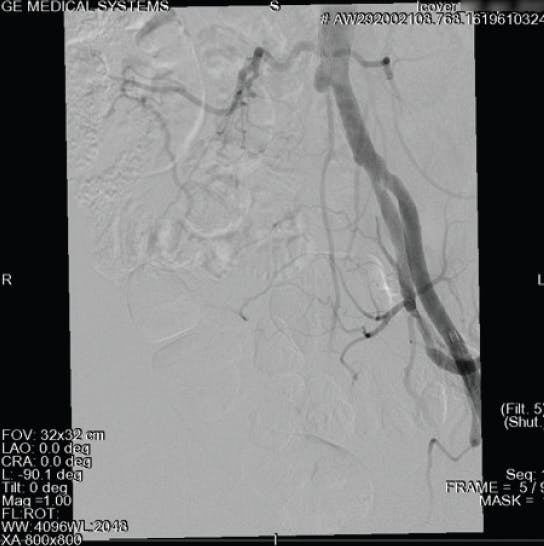
Figure 1. Iliac occlusion.
The procedure started by accessing through the left common femoral artery (CFA) using a 7-F, 45-cm long Destination introducer sheath (Terumo Europe) together with a 0.035-inch curved guidewire. To cross the occlusion, a 0.035-inch Sergeant straight and braided support catheter (iVascular) was used. With the good pushability and torque capacity of Sergeant, it successfully crossed the lesions in the iliac arteries and SFA. The SFA was treated by an efficacious combination of a Luminor drug-coated balloon (iVascular) and iVolution pro self-expanding stent (iVascular). The right common iliac occlusion was treated using iCover. The iCover went through the iliac bifurcation easily (Figure 2) due to its flexibility, and with the good visibility of iCover, the implantation was easy and precise (Figure 3). The treatment of the iliac external occlusion was continued by an accurate implantation of an iVolution pro.
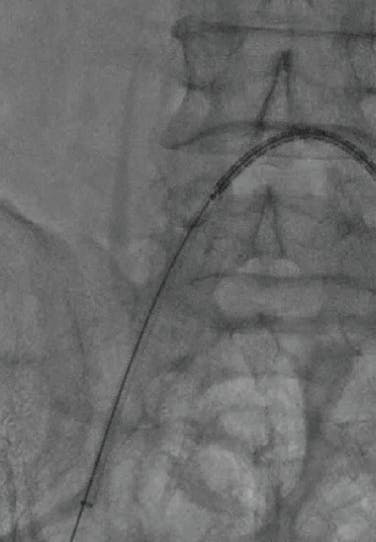
Figure 2. iCover crossing the aortoiliac bifurcation.
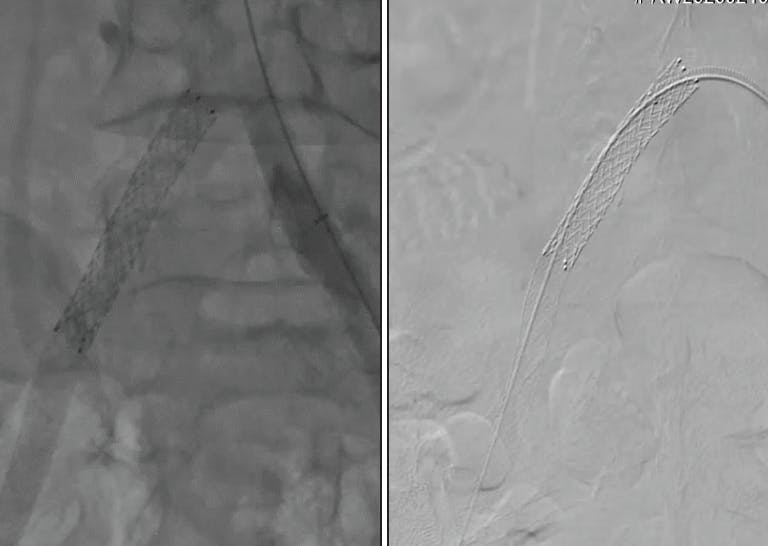
Figure 3. Final outcome following iCover implantation.
The treatment postprocedure was lifelong aspirin plus clopidogrel during the first 3 months. In the first 24 hours after the procedure, the patient showed no false aneurysm, no distal embolization, and had a distal pulse. There was a triphasic signal to the foot.
Discussion
iCover stands out for its incredible visibility, with low profiles, well crimped on the balloon, perfectly tapered, high flexibility in undeployed state, and perfect wall apposition.
AORTOILIAC BIFURCATION TREATMENT: CERAB TECHNIQUE

A woman presented with an aortoiliac occlusion as detected by CT scan (Figure 4), after which it was decided to implant four iCovers using the CERAB technique.6
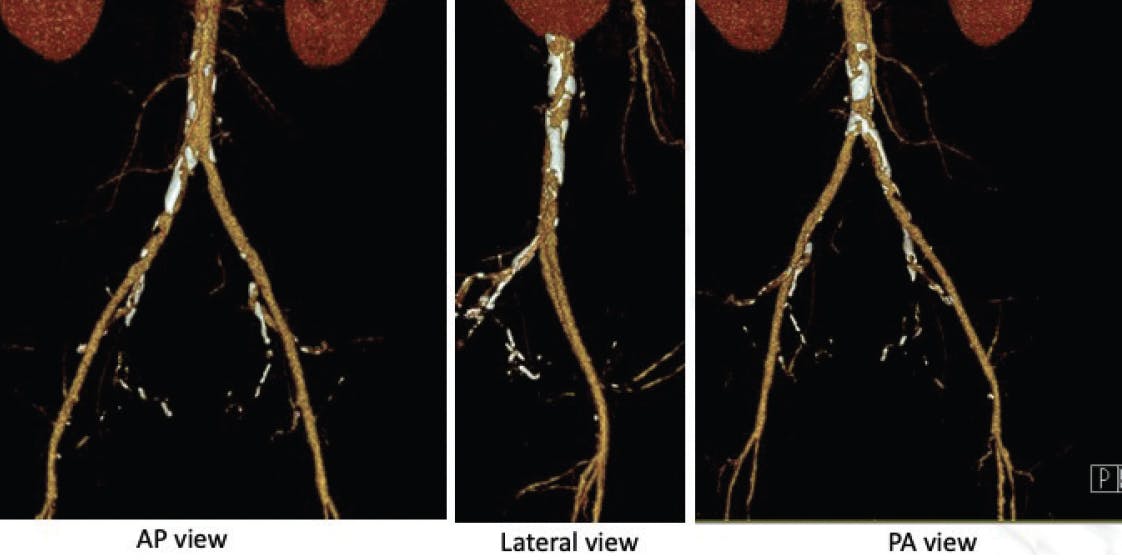
Figure 4. Aortoiliac occlusion on initial CT scan.
After puncture and introduction of a 0.035-inch guidewire from each side, a 10-mm diameter iCover BX covered stent was implanted in the aorta, and later postexpanded distally to 14 mm.
Then, two 7-mm diameter iCovers were introduced in each common iliac artery and inflated simultaneously (Figure 5). Because the left iliac artery had some proximal stenosis, a fourth iCover of 6-mm was used. Finally, postdilatation of all the covered stents was done.
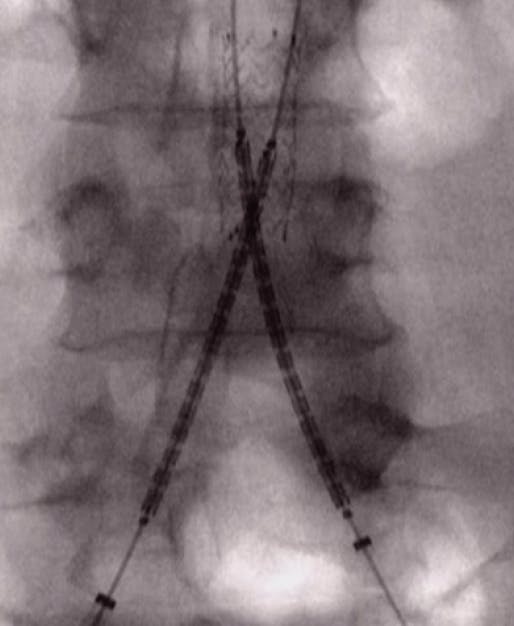
Figure 5. CERAB technique with iCover.
The final outcomes were exceptional, and the patient presented good outflow (Figure 6).
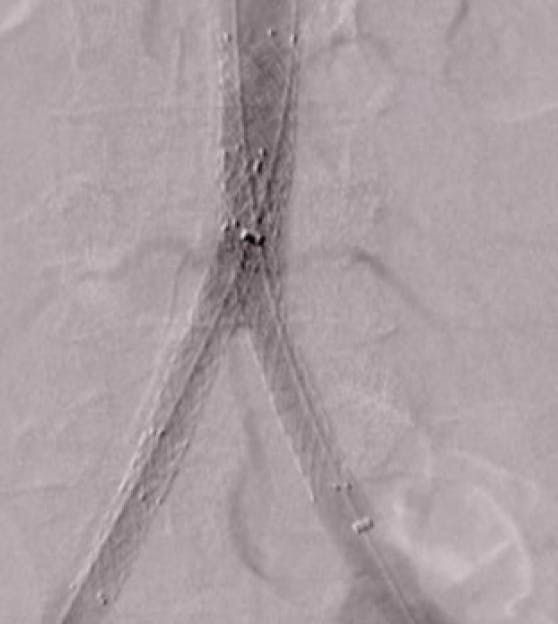
Figure 6. Final outcome following CERAB technique using iCover.
DISCUSSION
The excellent visibility of iCover helped to identify where each iCover was implanted. Other important features are the small profiles, the postexpansion capacity as observed in this case, and that it is a completely encapsulated ePTFE stent.
FIRST IMPLANTATION OF iCOVER ePTFE COVERED BX STENT AS A BRIDGING STENT FOR FEVAR


A man in his mid-80s with diabetes and history of open aortic repair for an abdominal aortic aneurysm with an aortobiiliac bypass graft (Dacron) presented with a thoraco-abdominal aortic aneurysm with high suspicion of vascular graft infection over a tender aneurysm with rapid expansion. He also underwent a surgical hernia repair in 2007, and had coronary artery disease, chronic kidney disease with a chronically occluded left renal artery and celiac trunk, and pulmonary embolism.
The procedure plan was to implant a physician-modified aortic device (Zenith TX2 36/32 mm, Cook Medical) with superior mesenteric artery (SMA) and right renal artery (RRA) fenestrations using two iCovers as bridging stents.
After the endoprosthesis’ partial deployment, the cannulation of the RRA and the SMA was performed using a 0.035-inch guidewire and a Kumpe access catheter (Cook Medical). The guidewire was then exchanged for a Rosen guidewire to insert a 7-F Flexor Raabe guiding-sheath (Cook Medical) into the target arteries followed by the inflation of the aortic graft with a latex balloon. Then, an 8- X 37-mm iCover was inserted through a 7-F sheath in the SMA (Figure 7) demonstrating a great balloon crimping. The stent was inflated to nominal pressure and demonstrated rapid deflation to reintegrate the sheath inside the stent over the deflating balloon. It was then flared using a 10-mm diameter X 20-mm length balloon.
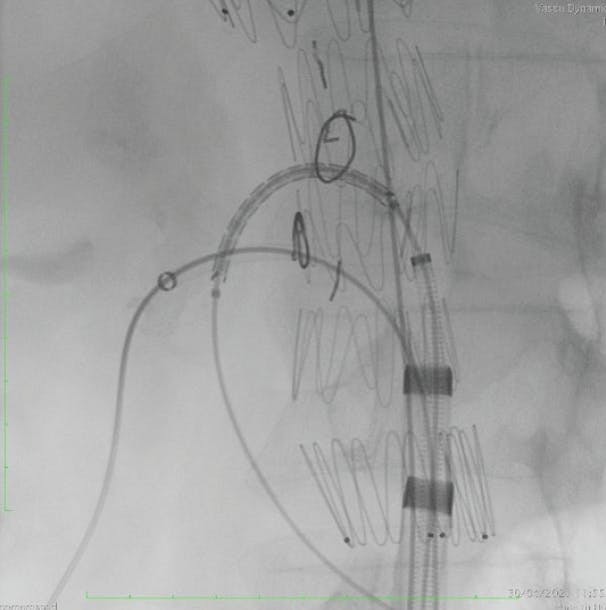
Figure 7. iCover used in the SMA.
In the RRA, a 5- X 37-mm iCover was used (Figure 8), compatible with a 6-F sheath, inflated up to nominal pressure (9 atm), and flared at 9 mm (Figure 9).
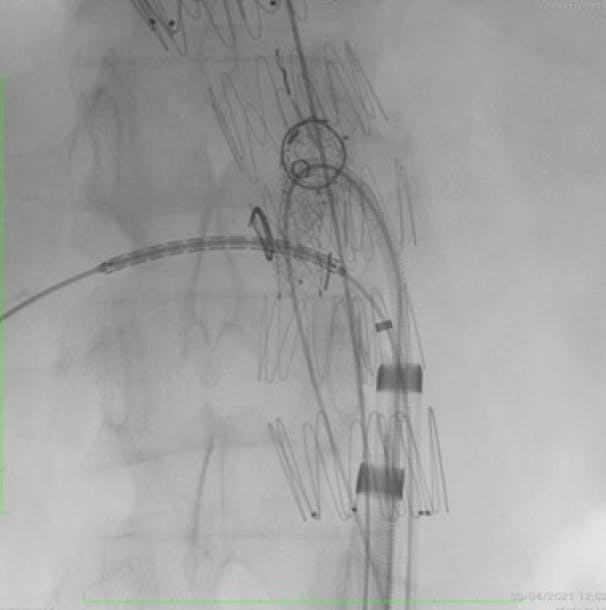
Figure 8. iCover used in the RRA.
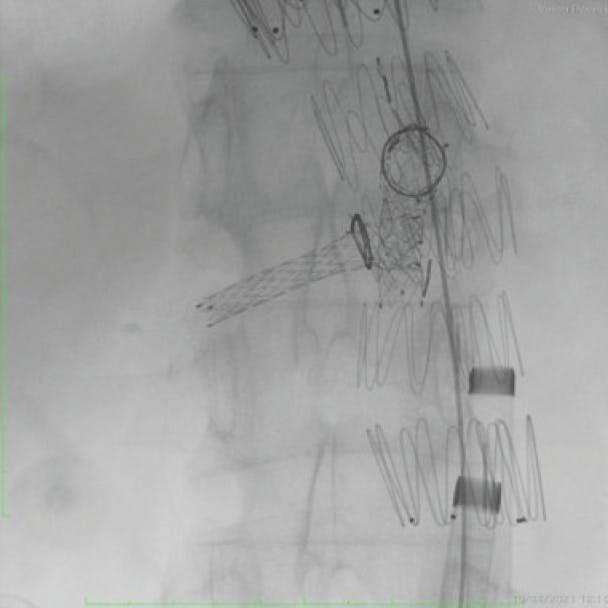
Figure 9. Final outcome illustrating good postexpansion capacity of iCover.
The complex procedure was finished successfully with no difficulties removing the sheaths and the guidewires, and perfect patency and deployment of all the devices.
DISCUSSION
The first implantation of iCover covered stent in thoraco-abdominal aortic aneurysm for an emergent setting using a physician-modified device had excellent results, with enhanced visibility, stent crimping, and good postexpansion capacity.
1. Mwipatayi BP, Sharma S, Daneshmand A, et al. Durability of the balloon expandable covered versus bare-metal stents in the Covered versus Balloon Expandable Stent Trial (COBEST) for the treatment of aortoiliac occlusive disease. J Vasc Surg. 2016;64:83-89. doi: 10.1016/j.jvs.2016.02.064
2. LifeStream™ Balloon Expandable Vascular Covered Stent [instructions for use]. Tempe (AZ): Bard Peripheral Vascular, Inc.; 2021. http://www.bardpv.com/LifeStream-IFU.php. Accessed September 8, 2021.
3. Advanta V12 Balloon Expandable Covered Stent [instructions for use]. Rastatt, Germany: Getinge; 2021. https://www.getinge.com/siteassets/products-a-z/atrium-advanta-v12-balloon-expandable-covered-stent/010881-rev-ac_v12_ous_brochure_rev_ac.pdf. Accessed September 8, 2021.
4. Gore® Viabahn® VBX Balloon Expandable Endoprothesis [instructions for use]. Flagstaff (AZ): W. L. Gore & Associates; 2021. https://eifu.goremedical.com. Accessed September 8, 2021.
5. BeGraft Peripheral Stent Graft [instructions for use]. Hechingen, Germany: Bentley InnoMed GmbH. https://www.bentley.global/var/upload/ben409_brochure_begraftperipheral_2019_pages.pdf. September 8, 2021.
6. Goverde PCJM, Grimme FAB, Verbruggen PJEM, Reijnen MMPJ. Covered endovascular reconstruction of aortic bifurcation (CERAB) technique: a new approach in treating extensive aortoiliac occlusive disease. J Cardiovasc Surg (Torino) 2013;54:383-387.
Advertisement
Advertisement