Advertisement
Advertisement
September 2021
Sponsored by Boston Scientific Corporation
Strategies for Real-World Use of Varithena® Chemical Ablation for Safe and Effective Management of Symptomatic Varicose Veins
“You’re going to have to give me some good reasons to switch over.” That was what I told the clinical representative of Varithena® (Boston Scientific Corporation) in 2018 when he suggested I try microfoam chemical ablation for closure of proximal truncal veins. At our institution, my vascular surgery colleagues and I were high-volume users of radiofrequency ablation (RFA) for closure of the great (GSV) and small saphenous (SSV) veins since 2004 with good clinical results. In 2010, we reported our institutional outcomes following 500 consecutive RFA of the GSV.1 We demonstrated successful closure rates, developed a classification system and treatment algorithm for treatment of deep venous thrombotic extension, and had a very low rate of adverse thrombotic events (ATEs; 2.6%). In 2013, we published the largest series (at the time) of consecutive saphenous vein RFA with similar results.2 Our anecdotal experience with thermal ablation mirrored the good results reported by others in the peer-reviewed literature. At the time, I was skeptical of alternative therapies for treating saphenous vein reflux.
Today, I use Varithena for most of my patients who present with symptomatic varicose veins requiring truncal vein closure at UCLA. Since we began performing chemical ablations with FDA-approved Varithena 3 years ago, we have noted excellent closure rates with low ATEs comparable to outcomes with thermal ablation. Because tumescent anesthesia is not required with Varithena, procedure times can be lower and patients have significantly less discomfort. Three general principles related to our success with Varithena have been good patient selection, detailed mapping of preprocedure venous anatomy, and careful application of Varithena volume.
SEEING THE DATA
When performing outpatient venous procedures as a vascular surgeon, a primary concern is avoidance of deep venous thrombosis (DVT). In 2004, when Hingorani and colleagues reported a 16% incidence of DVT following RFA of the GSV, thermal saphenous ablation was called into question until subsequent research eventually validated its safety.1-3 When I first reviewed the results of the original phase 3 clinical trials for Varithena, the authors reported an increased incidence of ATEs compared with the rates reported following truncal vein RFA.4 In the VANISH-2 study by Todd et al, the overall rate of ATEs was 10.4%, and thrombus extension into the common femoral vein occurred in 3.9% of the study population.4 In a study by Gibson et al, a significantly decreased rate of DVT was noted after the maximal volume of microfoam allowed decreased from 30 to 15 mL.5 Albeit, the study protocol for these trials (leading to FDA drug approval) required a very strict and comprehensive postprocedure ultrasound surveillance protocol (up to four to five ultrasound scans postprocedure) not generally performed in a conventional outpatient venous practice. Despite my initial reservations for potentially increased ATEs with Varithena based on the phase 3 data, the VANISH-2 trial demonstrated excellent clinical outcomes.4 The level 1 evidence suggested that Varithena is safe and effective for use.
OUR CENTER’S EXPERIENCE
Due to its versatility, low patient morbidity, and potential clinical benefits for patients, implementing Varithena into our clinical venous practice as an alternative to thermal saphenous ablation while maintaining safety and efficacy became our goal. Early in our clinical experience, our group developed “adjunctive techniques” during Varithena procedures to optimize closure rates and decrease the risk of thrombotic complications (Table 1).6 One strategy is to perform duplex ultrasound to identify and localize large perforator veins in the target vessel prior to injection of Varithena. The rationale is that digital occlusion of these perforator veins during Varithena treatment can prevent migration and potential thrombus formation in the deep venous system (Figure 1). As a preference, I avoid using Varithena to ablate truncal vein segments that contain more than one perforator vein, although there is no specific evidence against this.
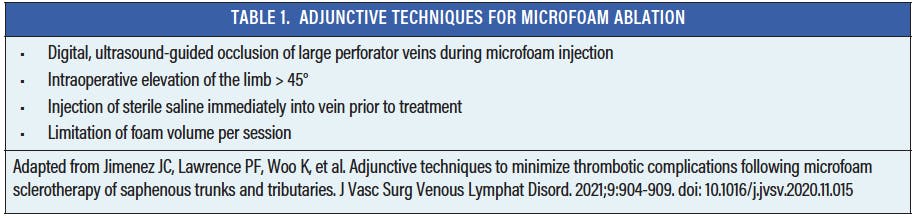
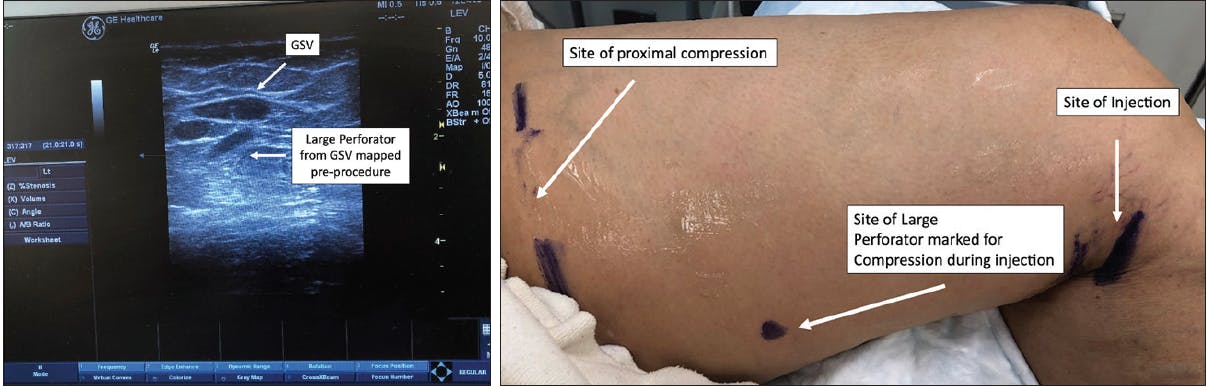
Figure 1. Mapping and digital occlusion of perforator veins during Varithena ablation. Reprinted from Journal of Vascular Surgery: Venous and Lymphatic Disorders, 9, Jimenez JC, Lawrence PF, Woo K, et al, Adjunctive techniques to minimize thrombotic complications following microfoam sclerotherapy of saphenous trunks and tributaries, 904-909, Copyright (2021), with permission from Elsevier.
Due to its small and consistent bubble size and minimal nitrogen content, Varithena safely and effectively damages the intimal lining of the target vein and induces vasoconstriction via immediate spasm and closure with limited volumes of polidocanol microfoam (Figure 2). In our clinical practice, we administer the minimal amount required for successful vein closure, which varies from case to case. In addition to our strict adherence to the instructions for use (IFU), we apply several techniques that help us to maximize Varithena intimal contact in the target veins. Elevation of the leg to > 45° during injection decreases the amount of blood peripherally within the vein and decreases its luminal diameter. Immediately prior to Varithena administration, we inject 10 mL of sterile saline into the truncal vein to additionally displace blood from its lumen and maximize microfoam contact with the intimal surface; this is not a stated step in the product instructions but is something we have found to be useful in our practice. We compress the axial vein 5 cm caudal to saphenofemoral or saphenopopliteal junctions following Varithena injection for 5 minutes. During these 5 minutes, I instruct the patients to dorsiflex and plantar flex the ipsilateral foot and ankle to increase ve
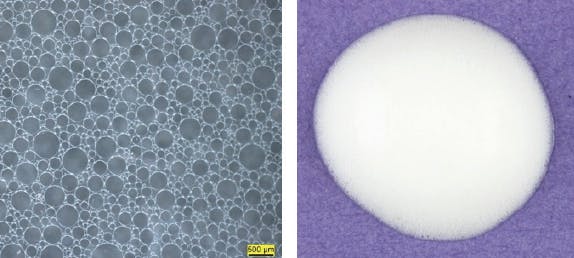
Figure 2. Small and consistent bubble diameter with Varithena microfoam.
nous return through the deep venous system.
Determining the optimal volume of microfoam can be challenging and was part of our learning curve with Varithena. In our recently published series, using “adjunctive techniques,” the mean maximal truncal vein diameter and amounts of microfoam used for treatment were 7.2 mm and 7.6 mL, respectively. We try to limit the initial amount of Varithena administered to ≤ 5 mL. Following the initial injection, I evaluate whether there is vasoconstriction present throughout the intended target vein segment (Figure 3). If needed, I inject an additional 1 to 2 mL aliquots of polidocanol microfoam until the desired effect is achieved. Based on our experience, 1 mL of Varithena per 1-mm truncal vein diameter is a good rule of thumb for where to begin estimating optimal microfoam volumes.
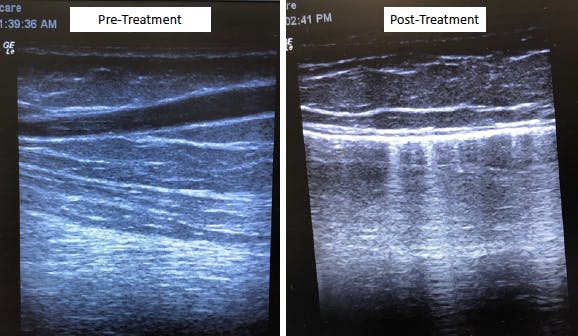
Figure 3. Severe vasoconstriction following injection of 5 mL into the ATK GSV.
From the beginning of our experience with Varithena, we collected our outcomes data using a prospectively maintained database. In our first published series in the Journal of Vascular Surgery: Venous and Lymphatic Disorders, we treated 129 limbs in 99 patients for symptomatic truncal and tributary vein reflux between April 2018 and August 2020. During our Varithena procedures, we utilized the “adjunctive techniques” described.6 Veins treated included the GSV (n = 89), accessory saphenous vein (n = 15), SSV (n = 14), and associated tributary veins (n = 56). Only tributary veins that were treated during the same visit with truncal veins were included in this cohort. The mean preoperative Venous Clinical Severity Score (VCSS) was 11.4. Because we have an ambulatory venous center within a high-volume tertiary care health system, we treat many patients with longstanding, advanced chronic venous hypertension, venous stasis dermatitis, and venous ulceration (Figure 4). Most patients in this cohort were classified CEAP (clinical, etiology, anatomy, pathophysiology) C4 to C6 (53%), and 25% of patients had active venous ulcers. All patients in the study underwent duplex ultrasound examination of the entire deep and superficial venous systems within 48 to 72 hours after the procedure.
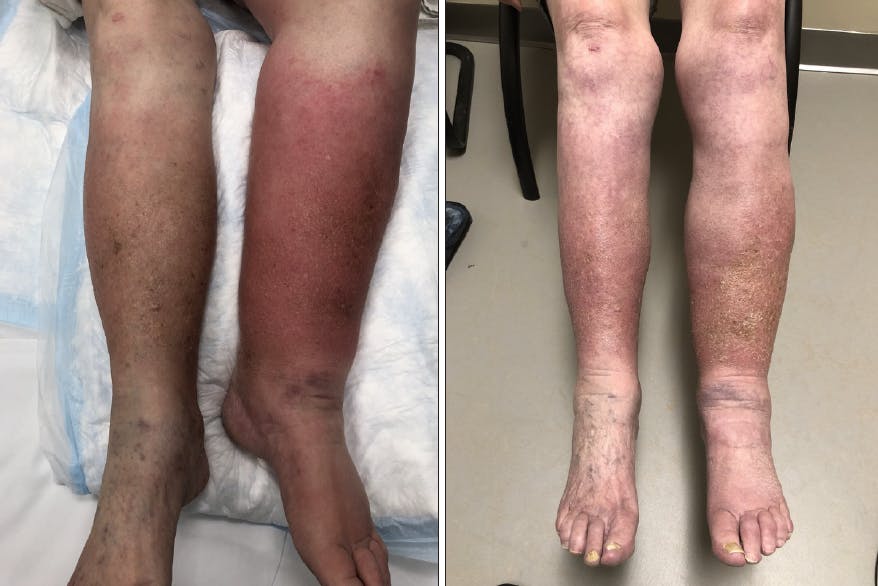
Figure 4. Patient with CEAP C4b disease (A) and 4 weeks after closure of her left GSV using Varithena (B). Reprinted from Journal of Vascular Surgery: Venous and Lymphatic Disorders, 9, Jimenez JC, Lawrence PF, Woo K, et al, Adjunctive techniques to minimize thrombotic complications following microfoam sclerotherapy of saphenous trunks and tributaries, 904-909, Copyright (2021), with permission from Elsevier.
The immediate closure rate was 95%. Six veins partially occluded, and one vein remained patent after the initial treatment but subsequently closed after a second injection. The incidence of postoperative pain and superficial phlebitis were 15.6% and 14.8%, respectively. The mean VCSS decreased from 11.4 to 9.7 after Varithena treatment. Overall, 81% of patients reported symptomatic relief after their treatment.
The incidence of early ATEs was 2.3% (similar to the 2.6% rate reported in our 2010 study following RFA ablation). Two limbs were noted to have proximal thrombus extension into the common femoral and popliteal veins and were treated with apixaban resulting in thrombus resolution. Another patient developed an occluded paired femoral vein after treatment. All patients with ATEs were asymptomatic and none required long-term anticoagulation.
These promising early results led us to conduct follow-up studies analyzing the role of Varithena microfoam in a more diverse patient population. We investigated this technique for below-the-knee (BTK) truncal veins in patients with prior saphenous closure, and large diameter truncal veins (> 8 mm). Both studies were recently presented at the 39th Annual Meeting of the Southern California Vascular Surgery Society and have been submitted for peer-reviewed publication.7,8
Because nonthermal ablation of truncal veins obviates saphenous and sural nerve injury, Varithena is a good choice in this clinical scenario. Our data suggest that Varithena chemical ablation is a safe and effective treatment for nonthermal closure of BTK truncal veins in patients with prior saphenous vein treatments. Over 3 years, we treated 68 limbs in 49 patients for symptomatic BTK axial vein reflux. All patients underwent prior proximal saphenous vein ablation or stripping. In this subset of patients, 63% had preoperative CEAP C4 to C6 and 37% had open venous ulcers. The preoperative VCSS in this cohort was 12.5. Veins treated included BTK GSV (n = 45), SSV (n = 23), and associated tributary veins (n = 30). The mean truncal vein diameter treated was 5 ± 2 mm, and the mean volume of microfoam used was 7 ± 3 ml. The median follow-up for this study was 97 days (range, 33-457 days).
Immediate closure rates were 96% (four veins partially occluded), and 78% of patients reported overall symptomatic improvement after Varithena closure. Most patients (64%) with venous ulcers were healed at their last follow-up. Postprocedure pain and phlebitis were reported in only 12% and 12% of patients, respectively. The overall incidence of ATEs was 3% (n = 2). One patient developed an extension of thrombus into her popliteal vein following SSV ablation that resolved after 14 days of apixaban. Another patient developed an asymptomatic thrombus within a gastrocnemius vein and was not anticoagulated. No patient developed pulmonary emboli or an acute neurologic or visual event.
There is recently published evidence that thermal and mechanochemical ablation of larger diameter truncal veins and advanced CEAP class result in inferior occlusion rates compared with smaller veins.9 Large saphenous vein diameter has also been associated with an increased risk of thrombus extension into the deep venous system after thermal ablation.10 To study the effects of Varithena in patients with large diameter truncal veins, we analyzed our outcomes following microfoam chemical ablation of veins measuring ≥ 8 mm. Thirty-nine limbs in 31 patients were treated with Varithena. Veins treated included: above-the-knee (ATK) GSV (n = 23), BTK GSV (n =7), accessory saphenous vein (n = 6), and SSV (n = 3). Similar to our previous studies, the patient population was composed of 62% CEAP C4 and above. The mean truncal vein diameter treated was 10.9 mm. The average volume of microfoam used was 7.5 mL. Our closure rate at last follow-up for large diameter truncal veins (mean, 98.1 days) was 97.3%. One GSV measuring 18 mm remained patent following microfoam ablation with 5 mL. That patient was subsequently treated at a second session with 10 mL and successfully closed. The mean postoperative VCSS decreased from 12.2 to 9.9, and 84% reported overall symptomatic improvement at last follow-up. Rates of postprocedure pain and superficial phlebitis were 8% and 8%, respectively. All patients underwent a duplex ultrasound of the superficial and deep venous systems 48 to 72 hours following their procedure, and no early ATEs were noted in this cohort. Only one ATE occurred during the study period. This patient with a Factor V Leiden mutation developed an acute ipsilateral femoropopliteal DVT 4 months following her procedure and required anticoagulation. No other DVT was noted. No patient developed pulmonary emboli or an acute neurologic or visual event during the study period.
CONCLUSION
Varithena is a safe and effective tool for the management of symptomatic truncal and tributary vein reflux. One of its main advantages is versatility. Our clinical research and experience along with level 1 data suggest that it can be used successfully across a wide range of CEAP classes, for ATK and BTK axial and tributary veins, in patients with prior proximal saphenous vein ablation, and in large-diameter truncal veins. I believe that minimizing the amount of foam used, strict adherence to the IFU, and utilizing the “adjunctive techniques” described decrease the rates of ATEs and maximize rates of vein closure. Varithena is an essential tool in the armamentarium of all health care practitioners managing patients with varicose vein disease.
1. Lawrence PF, Chandra A, Wu M, et al. Classification of proximal endovenous closure levels and treatment algorithm. J Vasc Surg. 2010;52:388-393. doi: 10.1016/j.jvs.2010.02.263
2. Harlander-Locke M, Jimenez JC, Lawrence PF, et al. Endovenous ablation with concomitant phlebectomy is a safe and effective method of treatment for symptomatic patients with axial reflux and large incompetent tributaries. J Vasc Surg. 2013;58:166-172. doi: 10.1016/j.jvs.2012.12.054
3. Hingorani AP, Ascher E, Markevich N, et al. Deep venous thrombosis after radiofrequency ablation of greater saphenous vein: a word of caution. J Vasc Surg. 2004;40:500-504. doi: 10.1016/j.jvs.2004.04.032
4. Todd KL 3rd, Wright DI, VANISH-2 Investigator Group. The VANISH-2 study: a randomized, blinded, multicenter study to evaluate the efficacy and safety of polidocanol endovenous microfoam 0.5% and 1.0% compared with placebo for the treatment of saphenofemoral junction incompetence. Phlebology. 2014;29:608-618. doi: 10.1177/0268355513497709
5. Gibson K, Kabnick L, Varithena® 013 Investigator Group. A multicenter, randomized, placebo-controlled study to evaluate the efficacy and safety of Varithena® (polidocanol endovenous microfoam 1%) for symptomatic, visible varicose veins with saphenofemoral junction incompetence. Phlebology. 2017;32:185-193. doi: 10.1177/0268355516635386
6. Jimenez JC, Lawrence PF, Woo K, et al. Adjunctive techniques to minimize thrombotic complications following microfoam sclerotherapy of saphenous trunks and tributaries. J Vasc Surg Venous Lymphat Disord. 2021;9:904-909. doi: 10.1016/j.jvsv.2020.11.015
7. Chin A, Jimenez JC, Lawrence PF, et al. Endovenous microfoam ablation of truncal veins with a large diameter saphenofemoral and saphenopopliteal junction results in excellent closure and low thrombotic complication rate. Presented at: Southern California Vascular Surgical Society (SCVSS); June 18, 2021; Ojai, California.
8. Pavlyha M, Jimenez JC, Lawrence PF, et al. Endovenous microfoam ablation of symptomatic below knee truncal and associated tributary veins is a safe and effective alternative to avoid thermal nerve injury. Presented at: Southern California Vascular Surgical Society (SCVSS); June 18, 2021; Ojai, California.
9. Vähäaho S, Halmesmäki K, Mahmoud O, et al. Three-year results of a randomized controlled trial comparing mechanochemical and thermal ablation in the treatment of insufficient great saphenous veins. J Vasc Surg Venous Lymphat Disord. 2021;9:652-659. doi: 10.1016/j.jvsv.2020.08.007
10. Sufian S, Arnez A, Labropoulos N, Lakhanpal S. Incidence, progression, and risk factors for endovenous heat-induced thrombosis after radiofrequency ablation. J Vasc Surg Venous Lymphat Disord. 2013;1:159-164. doi: 10.1016/j.jvsv.2012.07.008

VARITHENA BRIEF SUMMARY:
1 INDICATIONS AND USAGE
VARITHENA (polidocanol injectable foam) is indicated for the treatment of incompetent great saphenous veins, accessory saphenous veins, and visible varicosities of the great saphenous vein (GSV) system above and below the knee. VARITHENA improves the symptoms of superficial venous incompetence and the appearance of visible varicosities.
2 DOSAGE AND ADMINISTRATION
For intravenous use only.
VARITHENA is intended for intravenous injection using ultrasound guidance, administered via a single cannula into the lumen of the target incompetent trunk veins or by direct injection into varicosities. Use up to 5 mL per injection and no more than 15 mL per session.
Physicians administering VARITHENA must be experienced with venous procedures and be trained in the administration of VARITHENA.
Activate VARITHENA using the VARITHENA oxygen canister and polidocanol canister (see Instructions for Use). Once a VARITHENA transfer unit is in place, foam can be generated and transferred to a syringe. Discard the syringe contents if there are any visible bubbles. Administer the injectable foam within 75 seconds of extraction from the canister to maintain injectable foam properties. Use a new sterile syringe after each injection. Use a new VARITHENA transfer unit for each treatment session.
Local anesthetic may be administered prior to cannula insertion but neither tumescent anesthesia nor patient sedation is required. Cannulate the vein to be treated using ultrasound guidance to confirm venous access.
Inject freshly generated VARITHENA injectable foam slowly (approximately 1 mL/second in the GSV and 0.5 mL/second in accessory veins or varicosities) while monitoring using ultrasound. Confirm venospasm of the treated vein using ultrasound.
When treating the proximal GSV, stop the injection when VARITHENA is 3-5 cm distal to the saphenofemoral junction (SFJ).
Apply compression bandaging and stockings and have the patient walk for at least 10 minutes, while being monitored. Maintain compression for 2 weeks after treatment.
Repeat treatment may be necessary if the size and extent of the veins to be treated require more than 15 mL of VARITHENA. Separate treatment sessions by a minimum of 5 days.
Retained coagulum may be removed by aspiration (microthrombectomy) to improve comfort and reduce skin staining.
3 DOSAGE FORMS AND STRENGTHS
VARITHENA is available in the following presentations:
- 180 mg/18 mL (10 mg/mL)
- 77.5 mg/7.75 mL (10 mg/mL)
Once activated, VARITHENA is a white, injectable foam delivering a 1% polidocanol solution.
Each mL of VARITHENA injectable foam contains 1.3 mg of polidocanol
4 CONTRAINDICATIONS
The use of VARITHENA is contraindicated in patients with:
- known allergy to polidocanol [see Warnings and Precautions (5.1)]
- acute thromboembolic disease
5 WARNINGS AND PRECAUTIONS
5.1 Anaphylaxis
Severe allergic reactions have been reported following administration of liquid polidocanol, including anaphylactic reactions, some of them fatal. Observe patients for at least 10 minutes following injection and be prepared to treat anaphylaxis appropriately.
5.2 Tissue Ischemia and Necrosis
Intra-arterial injection or extravasation of polidocanol can cause severe necrosis, ischemia or gangrene. Patients with underlying arterial disease, such as marked peripheral arteriosclerosis or thromboangiitis obliterans (Buerger’s Disease) may be at increased risk for tissue ischemia. If intra-arterial injection of polidocanol occurs, consult a vascular surgeon immediately.
5.3 Venous Thrombosis
VARITHENA can cause venous thrombosis [see Adverse Reactions (6)]. Follow administration instructions closely and monitor for signs of venous thrombosis after treatment. Patients with reduced mobility, history of deep vein thrombosis or pulmonary embolism, or recent (within 3 months) major surgery, prolonged hospitalization, or pregnancy are at increased risk for developing thrombosis.
6 ADVERSE REACTIONS
6.1 Clinical Trials Experience
Because clinical trials are conducted under controlled but widely varying conditions, adverse reaction rates observed in clinical trials of VARITHENA cannot be directly compared to rates in the clinical trials of other drugs or procedures and may not reflect the rates observed in practice.
A total of 1333 patients with GSVI in 12 clinical trials were evaluated for safety when treated with VARITHENA at dose concentrations of 0.125%, 0.5%, 1.0%, or 2.0%, including 437 patients treated with VARITHENA in placebo-controlled clinical trials.
Adverse reactions occurring in 3% more patients receiving VARITHENA 1% than receiving placebo are shown in Table 1.
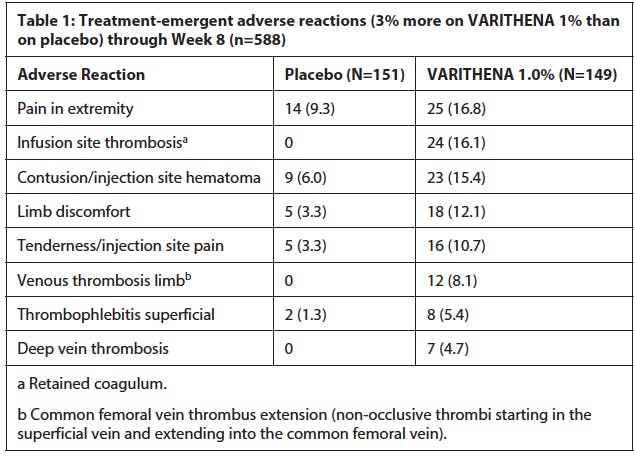
In VARITHENA-treated patients, 80% of pain events in the treated extremity resolved within 1 week.
Proximal symptomatic venous thrombi occurred in <1% of patients treated with VARITHENA. Approximately half of patients with thrombi received treatment with anticoagulants.
Since VARITHENA induces thrombosis in the treated superficial veins, D-dimer is commonly elevated post-treatment and is not useful diagnostically to assess patients for venous thrombus following treatment with VARITHENA.
Neurologic adverse events (cerebrovascular accident, migraines) have been reported in patients following administration of physician compounded foam sclerosants. None of the 1333 patients in the VARITHENA trials experienced clinically important neurological or visual adverse events suggestive of cerebral gas embolism. The incidence of neurologic and visual adverse events within 1 day of treatment in the placebo-controlled studies was 2.7% in the pooled VARITHENA group and 4.0% in the placebo groups.
Skin discoloration adverse events were reported in 1.1% of the pooled VARITHENA group and 0.7% of the placebo group in the placebo-controlled studies.
7 DRUG INTERACTIONS
No specific drug interaction studies have been performed. There are no known drug interactions with VARITHENA.
8 USE IN SPECIFIC POPULATIONS
8.1 Pregnancy
Risk Summary
Few published case reports with use of polidocanol-containing products, including VARITHENA, in pregnant women have not identified any drug-associated risk for major birth defects, miscarriage, or adverse maternal or fetal outcomes. Although no risks have been identified, there is minimal benefit in treating lower extremity varicosities during pregnancy and lower extremity varicosities that develop during pregnancy as they may spontaneously regress postpartum. In animal reproduction studies, no adverse developmental effects were observed with intravenous administration of polidocanol to pregnant rats and rabbits during organogenesis at dose levels up to approximately 13.5 and 12 times, respectively, the proposed maximum human dose of 15 mL of 1% VARITHENA based on body surface area (see Data).
The estimated background risk of major birth defects and miscarriage for the indicated population is unknown. All pregnancies have a background risk of birth defect, loss, or other adverse outcomes. In the U.S. general population, the estimated background risk of major birth defects and miscarriage in clinically recognized pregnancies is 2 to 4% and 15 to 20%, respectively.
Data
Animal Data
Developmental reproductive toxicity testing was performed in rats and rabbits using intravenous administration of polidocanol solution. In rabbits, dose levels up to and including 10 mg/kg/day (approximately 12 times the proposed maximum human dose of 15 mL of 1% VARITHENA based on body surface area) did not produce any indication of adverse effects on embryo-fetal mortality, fetal weight, or the incidences of fetal abnormalities and variants. In rats administered 27 mg/kg/day of polidocanol solution (approximately 13.5 times the human dose based on body surface area), there were no adverse effects on pregnancy performance or fetal development. In a peri-natal and post-natal study in rats, dose levels of polidocanol up to 9 mg/kg/day (approximately 4.5 times the human dose based on body surface area) were without effects on the development of the conceptus and offspring, and at a dose level of 27 mg/kg/day of polidocanol solution (approximately 13.5 times the human dose based on body surface area), effects were confined to an equivocal reduction in body weights of first-generation males, and an associated equivocal delay in the age of preputial separation.
8.2 Lactation
Risk Summary
There are no data on the presence of polidocanol in human milk, the effects on the breastfed infant, or the effects on milk production. A lactating woman may consider interrupting breastfeeding and pumping and discarding breast milk up to 8 hours after VARITHENA administration in order to minimize exposure to a breastfed infant.
8.4 Pediatric Use
Safety and effectiveness in pediatric patients have not been established.
8.5 Geriatric Use
Of the 1333 subjects in clinical studies treated with VARITHENA, 9.1% (n=121) were ≥65 years of age. No clinically important differences in safety or efficacy were observed between older and younger patients in all studies.
10 OVERDOSAGE
There are no known cases of overdosage with VARITHENA. In clinical studies, total volumes of up to 60 mL of VARITHENA per treatment session have been administered.
RX Only
Advertisement
Advertisement