Advertisement
Advertisement
April 2022
An Interview With Maarit Venermo, MD
Prof. Venermo shares insights on projects with the International Consortium of Vascular Registries and VASCUNET, the simulation training program at her center, upcoming activities of the European Society for Vascular Surgery, her passion for working with young researchers, and more.
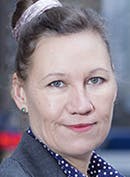
Serving as a lead contributor for the International Consortium of Vascular Registries (ICVR) and as a member of VASCUNET, what are some key ongoing or upcoming projects you can share with us? Given your experience with the inner workings of registries, can you share any lessons learned in terms of the unique role these registries play in the clinical data landscape?
Despite all the challenges related to the ongoing pandemic, the VASCUNET and ICVR collaboration has yielded several projects on quality improvement and research. Together with many international stakeholders and the FDA, a registry-based device study on stent grafts for the treatment of ruptured abdominal aortic aneurysm (AAA) was conducted. For the first time since the reformation of the European Union data protection law, the technical framework of the European Chapter of the Medical Device Epidemiological Network was used to gather device data in a lawful way. In 2021, the VASCUNET collaboration brought together 60 international experts as well as patient representatives in three modified Delphi studies to find consensual agreement on patient-reported outcomes and registry core items in the fields of peripheral artery disease (PAD), carotid revascularization, and AAA repair. Several other projects have been discussed in recent meetings or will be launched in 2022.
I have had the privilege of being at the core of VASCUNET and ICVR. The current VASCUNET Chair is Dr. Christian-Alexander Behrendt from Germany, and the ICVR European Chair is Dr. Kevin Mani from Uppsala, Sweden. The lessons I have learned during my path at VASCUNET since 2004 and in ICVR since 2014 are that first of all, the validity of registry data is of key importance to achieve any relevant and reliable information from the registry. To achieve this, VASCUNET launched a validation program roughly 10 years ago—validation of the Hungarian vascular registry was done in 2013 to 2014, validation of Swedvasc was done in 2015, and validation of Karbase was in 2018 to 2019. This validation project will continue after COVID restrictions are over. Another positive lesson has been how fruitful international collaboration can be when really engaged people work together for the cause of quality improvement in vascular surgery. Also, through the tighter rules and regulations, such as in the General Data Protection Regulation, it was great to see the group’s capacity to solve the problems related to using clinical registry data in studies that aim to improve the quality of our treatments and patient selection.
How can registries such as VASCUNET be utilized to better understand long-term outcomes in AAA patients?
So far, VASCUNET data collections from most of the countries have only had 30-day information or sometimes just in-hospital outcomes. To understand long-term outcomes, we need to collect longer-term outcomes data. This would be important, especially when the quality of endovascular aneurysm repair (EVAR) treatment is evaluated, because 30-day mortality is close to zero and does not give the entire picture. Information on the long-term outcome after open surgery for AAA is just as important. European Society for Vascular Surgery (ESVS) guidelines recommend CT for patients treated with EVAR as well as those treated with open surgery at 5 years. One step would be to include these 5-year data in the VASCUNET data collection. VASCUNET is a unique collaboration with a large group of people, and this could be one of the topics on our agenda at our next brainstorming session in Granada, Spain.
In 2019 in Journal of Vascular Surgery, you described the successful implementation of simulation training for endovascular repair of ruptured AAAs at your center.1 Have you been able to use the simulation program throughout the pandemic and the resultant restrictions? What does your program look like today?
We are very proud of our simulation program because we have clearly shown how simulation training improves real-life performance. During the pandemic, we have been able to have most of our simulation sessions, although some have been canceled due to lack of personnel. Our current program involves a simulation session on the first Monday of each month where the team (made up of two vascular surgeons, an anesthesiologist, two scrub nurses, a radiologic nurse, and an anesthesia nurse) treats a patient with ruptured AAA and collapse in the CT room. This is really authentic for the team, and it has truly increased the staff’s skills, which are amazing nowadays! After a short introduction, the session starts with a call for a vascular surgeon, informing them of a patient with suspected ruptured AAA on CT, and ends when the occlusion balloon is in place. That is followed by a debriefing session with free discussion on what went well and what parts of the performance could be improved.
We have modified the program a lot since it began in 2015. Nowadays, the setup allows for real puncture and use of introducers and occlusion balloons. We use a system of two Gore DrySeal sheaths (Gore & Associates): the inner portion to support the balloon in the descending thoracic aorta and the outer portion to allow a pigtail catheter to be placed at the level of renal arteries for imaging. Furthermore, we have added a resuscitation period to the session to practice how the table and C-arm should be used during resuscitation.
How would you like to see AAA screening improve in Finland?
Oh, this question hurts my heart, as we have not been able to achieve AAA screening in Finland. We had a huge effort 10 years ago to really push this through, but the answer was that although it was evaluated to be cost-effective, no new screening programs would be established in Finland. We have made some attempts to bring up this topic again. For example, an article in our largest national newspaper interviewed one of our patients who survived EVAR for ruptured AAA. In large capital letters, the text read: “In Finland, men die due to a disease that almost does not exist in Sweden.”
I would like to see national screening for AAA in Finland and to include some other measures, such as ankle-brachial index (ABI) as we’ve seen in the VIVA trial. My gut feeling is that screening should be done by 60 years of age because so many aneurysms rupture before age 65. But that is another topic, and careful calculations should be made to find the optimal solution.
Another focus of your recent work has been carotid revascularization—for example, a December 2021 paper that demonstrated the safety of carotid endarterectomy after endovascular thrombectomy for acute ischemic stroke.2 What are the next steps for investigation into this population of patients with concomitant carotid artery stenosis?
This is an interesting topic, and as we know, no controlled trials exist on the optimal timing. I myself believe that intervention in patients with underlying carotid stenosis should be done soon after thrombectomy to avoid a recurrent stroke, and careful blood pressure monitoring after the intervention will be required to effectively treat possible hyperperfusion syndrome, which is more common in patients treated soon after the acute phase. The next step is to investigate timing in larger patient series to achieve more power. Of course, a randomized trial would give the best answer to this question, but it should be a large trial with several centers to include a substantial number of patients in reasonable timing. We are not planning such a randomized controlled trial at the moment.
In a 2021 paper in Journal of Vascular Surgery,3 you and coauthors highlighted the role of toe pressures in evaluating patients with PAD and coronary artery disease. How would you summarize the utility of this measure, and what might be some misconceptions about toe pressure?
In my opinion, toe pressures should always be measured together with ankle pressures because in patients with calcific crural arteries, ankle pressures are always unreliable and show values that are too high. In our chronic limb-threatening ischemia patients, ABIs are pseudohypertensive in 40% to 50% of patients. In our practice, we routinely use toe pressures in clinical decision-making instead of ABI, although they both are measured. The benefit of toe pressure is that because medial sclerosis is very rare in the digital arteries, it gives a better estimate of the foot perfusion than ABI. Of course, toe pressure measurement does have its pitfalls, and it has to be extremely standardized. We have very strict protocols for the measurement, and our vascular laboratory nurses, who do > 5,000 measurements annually, are very qualified. We ask patients not to smoke or have caffeine a few hours before measurement. We also have a standard toe temperature because we warm up the toe using a heating probe, which is available in the Perimed laser Doppler device (Perimed AB). We have studied the repeatability of toe pressures and found that there are also some downsides in the measurement.4 When we compared two photoplethysmographic devices and the laser Doppler device, we found that laser Doppler was most reliable. In every case, toe pressure must be compared with the clinical picture. As an additional measure, we use transcutaneous oximetry if further information is needed.
With your role as Supervisor of the Doctoral Programme in Clinical Research, you have the unique opportunity to work with and support the next generation of vascular physicians. What has been your favorite aspect of this position?
I love to supervise young researchers. It is very motivating and rewarding. I wish I had more time to spend valuable moments with them. My routine is to have a short follow-up meeting every month to see the progress and do some brainstorming around the topic. I try to engage a group of people with these projects rather than only one person, because ideas and innovations start to fly and in turn generate more ideas in the group. I am very happy that the attitude toward clinical research is very positive in our unit and hospital.
As an executive in the ESVS, how have you seen the society grow and evolve in recent years, and what are you most excited about in the near future?
The ESVS has significantly increased its activities in the last few years. The fourth edition of the ESVS Masterclass just finished, and it was an extremely successful event, with altogether four evenings focusing on deep and superficial venous disorders. We also have several webinars throughout the year on different hot topics. These webinars are free for all who are interested in the vascular surgical topic. The Translational meeting will take place in early June in Stockholm, Sweden, and will focus on lower limb ischemia. We hope it will be as successful as the previous meeting in 2020. We have a strong ESVS Academy program that has five different pathways running all year and includes online sessions, hands-on workshops, and an extensive offer of workshops at the annual meeting.
One of the most important recent developments has been the launch of the ESVS e-Library, which hosts Virtual Vascular, an e-textbook with 17 chapters (and that number is increasing steadily). Furthermore, the e-Library hosts > 250 videos and > 70 podcasts, and new e-learning courses are expected to be launched later in 2022.
Our main journal, European Journal of Vascular and Endovascular Surgery, has an impact factor > 7 and is receiving increasingly higher-quality papers from researchers all over the world. Our second open access journal, EJVES Vascular Forum, is also rapidly evolving and opening the door to more interactive and audiovisual content. Six people are now working in our office, and they are extremely energetic and skillful with a great team spirit.
After the last 2 years of restrictions and virtual gatherings, the most exciting upcoming activity for me is the face-to-face annual meeting in Rome, Italy, next September. I expect a huge and innovative happening to start the post-COVID happy ‘20s.
With the heavy demands of your diverse clinical practice and research initiatives, how do you stay grounded outside the office? What are your favorite pastimes?
This is a nice question, thank you! In order to do this kind of work, it is mandatory that at least part of the work feels like a pastime. But when I am totally off, my favorite hobbies are golfing and biking. Sometimes I joke that I could take 6 months off from the hospital and take a personal trainer in golf. Maybe I will do that at some point, you never know!
1. Aho P, Vikatmaa L, Niemi-Murola L, Venermo M. Simulation training streamlines the real-life performance in endovascular repair of ruptured abdominal aortic aneurysms. J Vasc Surg. 2019;69:1758-1765. doi: 10.1016/j.jvs.2018.09.026
2. Jonsson M, Aro E, Björses K, et al. Carotid endarterectomy after intracranial endovascular thrombectomy for acute ischaemic stroke in patients with carotid artery stenosis. Eur J Vasc Endovasc Surg. Published online December 6, 2021. doi: 10.1016/j.ejvs.2021.10.034
3. Laivuori M, Hakovirta H, Kauhanen P, et al. Toe pressure should be part of a vascular surgeon’s first-line investigation in the assessment of lower extremity artery disease and cardiovascular risk of a patient. J Vasc Surg. 2021;73:641-649.e3. doi: 10.1016/j.jvs.2020.06.104
4. Widmer LW, Vikatmaa P, Aho P, et al. Reliability and repeatability of toe pressures measured with laser Doppler and portable and stationary photoplethysmography devices. Ann Vasc Surg. 2012;26:404-10. doi: 10.1016/j.avsg.2011.10.011
Advertisement
Advertisement
Interested in reading more interviews?
To read more interviews with thought leaders in the vascular field, check out our Profiles & Perspectives hub.
Read More