Advertisement
Advertisement
April 2022
How I Do It: Pulmonary Arteriovenous Malformations: A Summary of Interventional Management
An overview of the management of PAVMs and treatment procedure for patients with hemorrhagic hereditary telangiectasia.
By Zachary Schwartz, MD; Russ M. Guidry Jr, MD; and Theresa M. Caridi, MD, FSIR
Pulmonary arteriovenous malformations (PAVMs) are congenital pulmonary vascular anomalies that provide a direct communication between the pulmonary and systemic circulation. These lesions consist of a feeding artery (FA), vascular sac or nidus, and a draining vein.1 Simple PAVMs contain a single FA, while complex PAVMs include multiple segmental FAs.2 The incidence of PAVMs has been reported as high as 1 in 2,600.3 Most PAVMs occur in the setting of hemorrhagic hereditary telangiectasia (HHT), which has an incidence of up to 1 in 5,000.4 These lesions are rare but serious, as untreated PAVMs carry the potential for paradoxical embolism. Initially treated surgically, transcatheter embolotherapy has become the standard of care for treatment of PAVMs over the past 4 decades.5,6 This article provides a broad overview of the critical role of the interventionalist in the management of PAVMs in patients affected by HHT.
HHT is an autosomal dominant condition traced to several specific genetic mutations, with some causative mutations yet unknown.7 Vascular malformations develop in multiple organ systems, including the skin, mucous membranes, gastrointestinal tract, liver, and lungs. The multisystem nature of the disease leads to myriad manifestations, including mucocutaneous telangiectasias, epistaxis, and gastrointestinal bleeding. The Curacao diagnostic criteria provides consensus criteria for the diagnosis of HHT and include recurrent epistaxis, multiple mucocutaneous telangiectasias, internal organ AVMs, and a positive family history. If three criteria are present, HHT is definitively diagnosed; if two criteria, HHT is suspected; and if fewer than two, HHT is unlikely.8 Genetic testing may then be offered to family members of the proband. Workup for PAVMs was described in 2009 practice guidelines, which were updated in 2020.9 Although screening for PAVMs originally involved an arterial blood gas to demonstrate hypoxemia secondary to right-to-left shunting, contemporary screening relies on contrast echocardiography (CE) to show an extracardiac right-to-left shunt. PAVMs may be asymptomatic or manifest as hypoxemia, exercise intolerance, hemoptysis, or hemothorax. Paradoxical embolism may present with transient ischemic attacks, stroke, and brain abscess.1
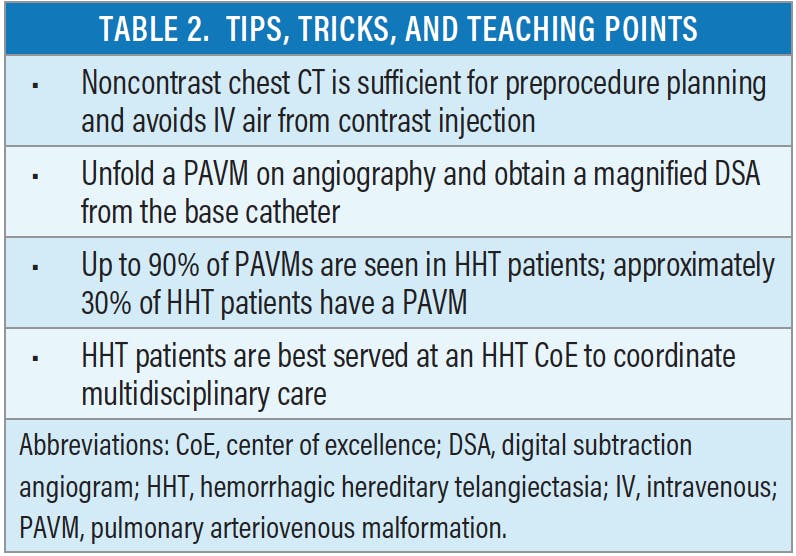
Because multisystem involvement of HHT requires a multidisciplinary approach, institutions have developed HHT centers of excellence (CoEs). The 29 CoEs in North America address the clinical decisions related to HHT diagnosis, screening, and treatment. It is important to remember that although up to 90% of PAVMs are seen in HHT patients, only 30% of HHT patients have a PAVM. The treatment of PAVMs is not limited to these CoEs. Patients with PAVMs may seek treatment outside the CoE network for various reasons, including personal preference, geographic limitations, and health insurance considerations.10 Consequently, the practicing interventionalist should remain capable of treating PAVMs as well as cognizant of the HHT patient’s unique needs.
PREPROCEDURE
Preprocedure workup consists of imaging, laboratory testing, and a clinic visit. Patients presenting with CT evidence of PAVMs do not require CE; however, for those presenting with a positive CE, a subsequent CT is performed to facilitate procedural planning.10 Use of contrast-enhanced or unenhanced CT varies among centers. For contrast-enhanced studies, extreme care must be taken to avoid air emboli during contrast injection, which renders unenhanced CT potentially safer and is our preference. However, patients often present with a contrasted CT of the chest with an unexpected finding of a PAVM (Figure 1). Historically, a minimum PAVM FA diameter of 3 mm was required for embolization. In 2009, the practice guidelines recognized that FAs < 3 mm are also amenable to treatment.9 Thus, any PAVM that is technically feasible to treat should be treated.1,2 Other testing includes complete blood count, coagulation studies, and an electrocardiogram (ECG) to rule out left bundle branch block, which can lead to a complete heart block during pulmonary artery (PA) catheterization. The patient should be evaluated for moderate sedation or general anesthesia, but the vast majority of PAVM procedures are performed with moderate sedation. Special populations, such as pediatric patients and pregnant patients, are beyond the scope of this article; more information can be found at www.hhtguidelines.org.11
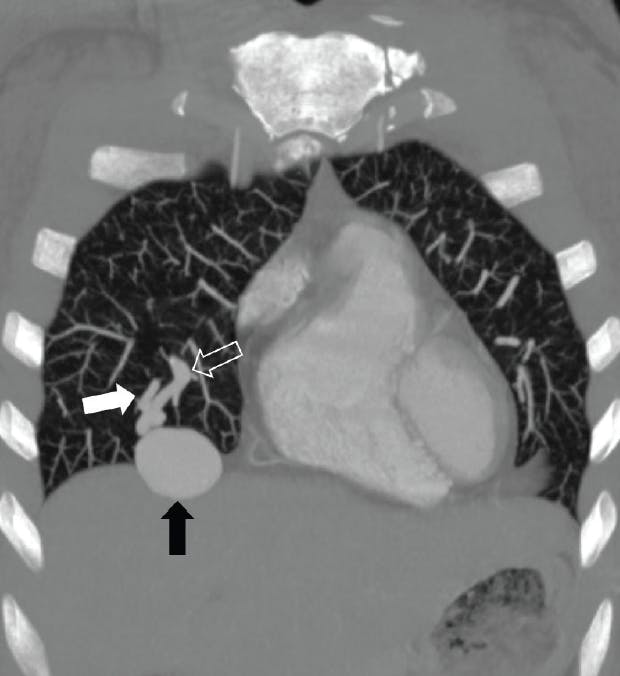
Figure 1. Contrast-enhanced CT of a PAVM demonstrates an FA (white arrow), nidus (black arrow), and draining vein (arrow outline).
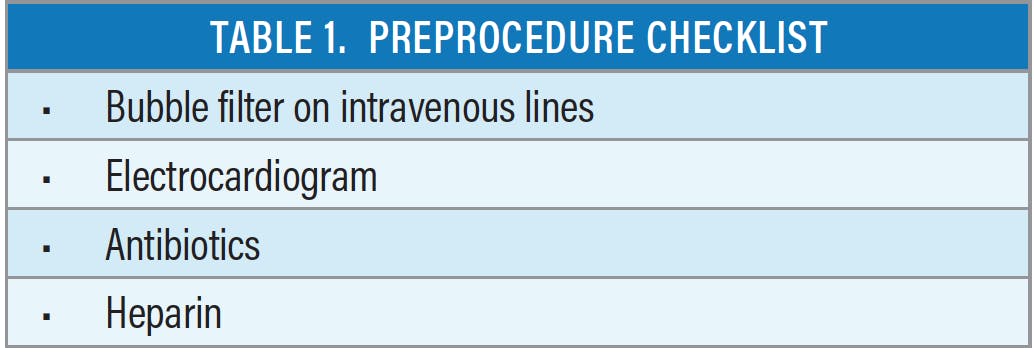
During the preoperative clinic visit, the provider should clearly explain the implications of PAVMs. If applicable, the diagnosis of HHT should also be discussed, as some patients may not know they are carriers.10 Although overt symptoms of HHT such as epistaxis may be more troublesome day-to-day, the serious consequences of paradoxical embolism through PAVMs should be discussed to undoubtedly establish the rationale for treatment. Informed consent should be obtained, including a detailed discussion of the risks, benefits, and side effects of treatment. Potential side effects include pleurisy and fever in the days after embolization, estimated at 15% to 30%.1 Serious complications are rare but bear mention. Periprocedural paradoxical embolization, which is the risk the procedure aims to mitigate, is estimated at 0.5% to 1%, and the development of pulmonary hypertension is rare.10 Catheter placement through the right heart carries a risk of arrhythmia, for which preoperative ECG is required. Postprocedural recommendations should be explained, including continued lifetime requirement for antibiotic prophylaxis during dental procedures, care to avoid air emboli with any intravenous (IV) lines, follow-up imaging, and the possibility of repeat embolization. Preprocedural requirements are summarized in Table 1.
INTRAPROCEDURE
General Points
PAVM embolization routinely occurs as an outpatient procedure. Multiple lesions may be treated in a single session, ideally starting with the largest; treatment of up to 10 lesions in a single session has been described.10 Patients receive bubble filters on all IV lines, antibiotic prophylaxis to cover skin flora (eg, 1 g of cefazolin), and systemic anticoagulation (eg, 5,000 units of heparin) to mitigate the risk of catheter-associated thromboembolism. However, the use of anticoagulation should be weighed against the risk of bleeding from mucosal telangiectasias in patients with HHT.12 Meticulous care to avoid air emboli includes continuous saline infusion into the sheath, wire removal under saline, and care with contrast injections. When deploying numerous embolics, consider if follow-up CT imaging will be degraded by metallic artifact.
Step-by-Step
The patient is prepped and draped in standard sterile fashion, and a time-out is performed. At our center, we prefer to use right femoral vein access. Local anesthetic is administered, and then a microintroducer set is used to achieve venous access with ultrasound guidance. A 4-F microintroducer sheath is used to advance a 0.035-inch wire into the inferior vena cava. The 4-F sheath is exchanged for a 7- or 8-F sheath. Next, a 5-F angled pigtail catheter is inserted through the sheath and placed into the main PA. Selection of the right or left PA is then performed, and pressure measurements are obtained. A pulmonary arteriogram is obtained to identify the target PAVM (Figure 2). It can be challenging to select the right PA trunk with the pigtail catheter, and we would use a stiff Glidewire (Terumo Interventional Systems) in this case. Then, an exchange-length Amplatz wire is introduced through the pigtail catheter, which is exchanged for an 8-F Lumax guiding catheter system (Cook Medical). The Lumax guiding catheter system is used to catheterize the segmental PA feeding the PAVM. An angiogram is obtained to redemonstrate the PAVM (Figure 3). Oblique and magnified angiograms are obtained to fully characterize and unfold the tortuous vessels of the PAVM. We recommend these detailed images be obtained at the segmental level (Figure 3) rather than the subsegmental level (Figure 4), because this allows for visualization of the entire FA and is usually a better location to perform safe aspiration prior to injection. Figure 4 is an example of a distal injection that shows the PAVM sac and draining vein well but highlights the difficulty in imaging the FA when injection is near the nidus. Finally, the guiding catheter is advanced to the distal FA for embolization, which typically involves placement of a plug, followed by dense coil packing if needed. A postembolization arteriogram is obtained to demonstrate nonopacification of the nidus or draining vein (Figure 5). After satisfactory embolization, the catheter and sheath are removed over a wire. Hemostasis is achieved by holding manual pressure.
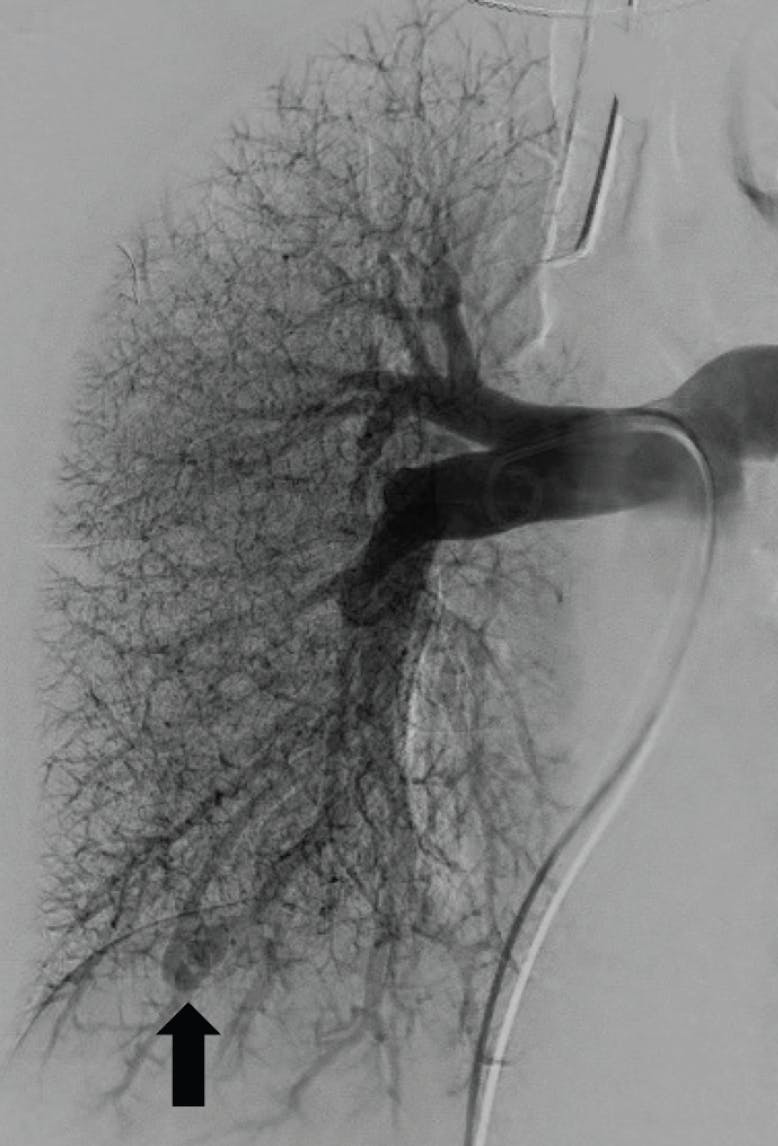
Figure 2. Right pulmonary arteriogram using a diagnostic angled pigtail catheter reveals the PAVM nidus (arrow).
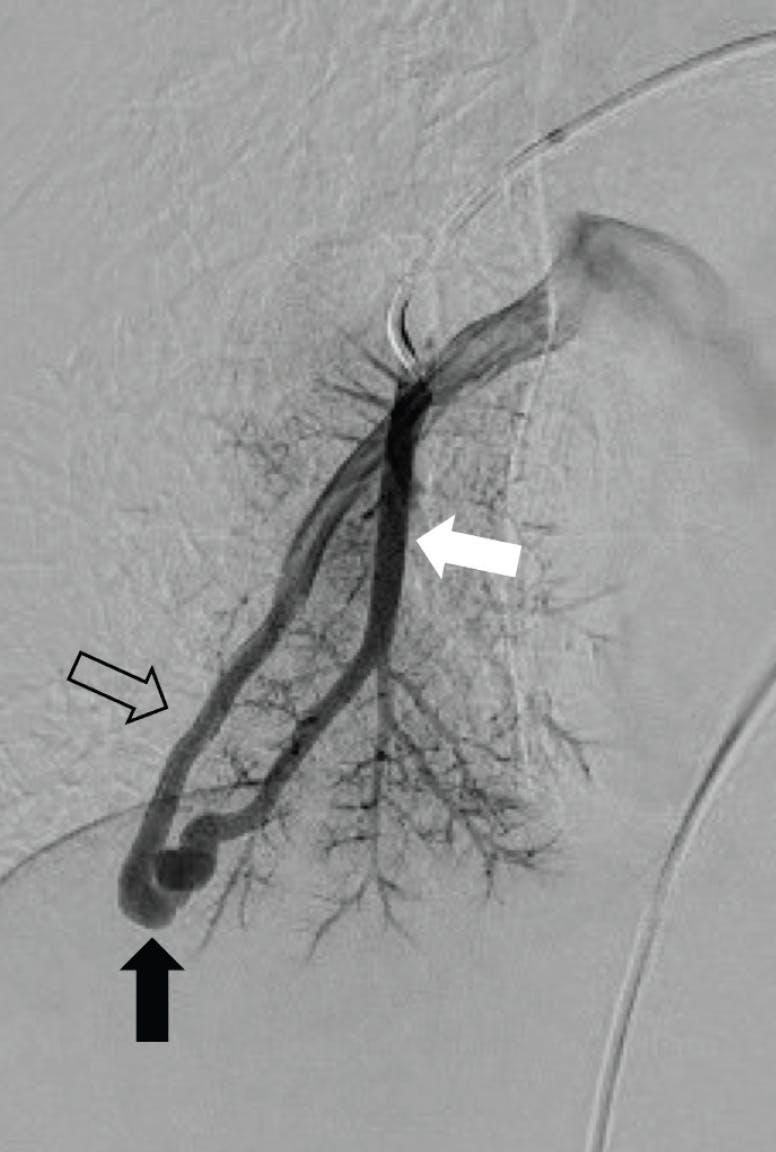
Figure 3. Selective segmental pulmonary arteriogram using the Lumax catheter system demonstrates a PAVM with FA (white arrow), nidus (black arrow), and draining vein (arrow outline) (same patient as Figure 2).
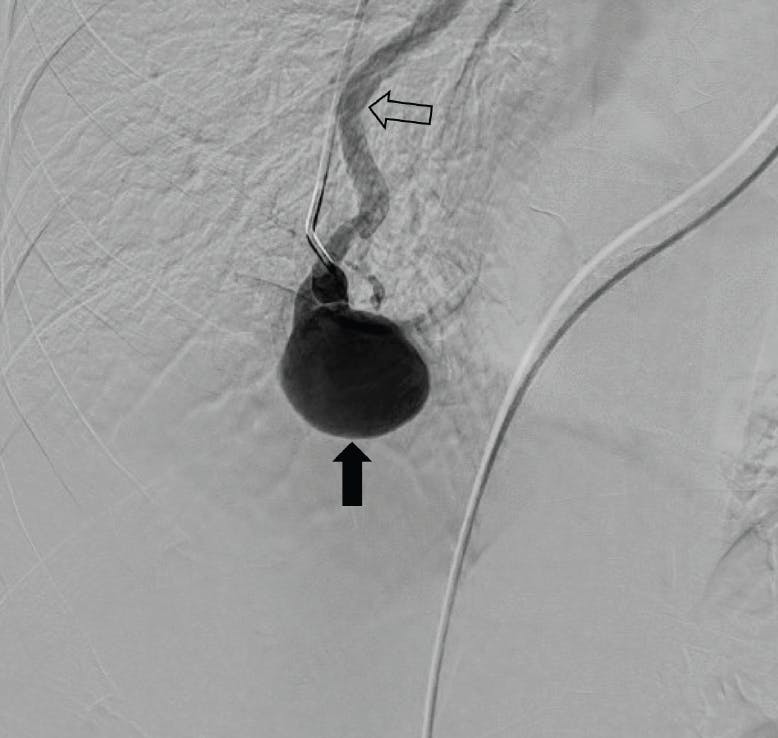
Figure 4. Subsegmental pulmonary arteriogram obtained within the distal FA shows the nidus (black arrow) and draining vein (arrow outline) (same patient as Figure 1).
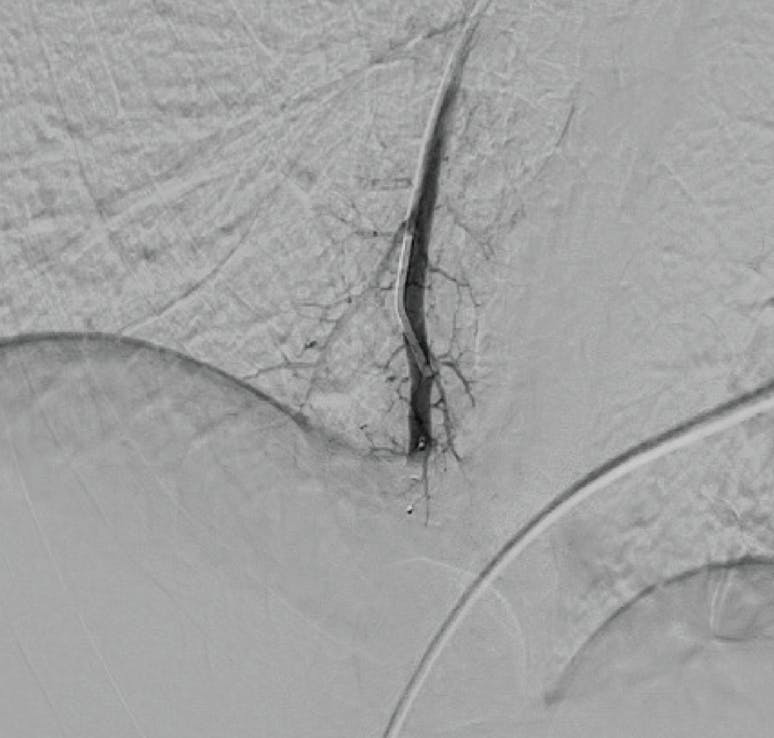
Figure 5. Repeat pulmonary arteriogram obtained after embolization with an AVP 4 plug shows no opacification of the nidus or the draining vein (same patient as Figures 1 and 4).
Embolic Agents and Techniques
Transcatheter treatment of PAVMs has employed numerous embolic agents over the past few decades following the development of new devices. Current mainstays include vascular plugs and coils used alone or in combination. The advent of detachable vascular plugs has increased the accuracy and confidence with which occlusive devices can be placed. These include the Amplatzer vascular plug (AVP, Abbott) and the MVP micro vascular plug (Medtronic), which are resheathable, repositionable, and available in various sizes. Appropriate sizing for the target vessel and delivery catheter compatibility must be considered. We prefer to use the AVP 4 plug when a 5-F catheter can navigate the extent of the FA. Additionally, many coils are available. We now typically reserve coil embolization for cases in which the correct-sized plug is not available or when anatomy does not allow navigation with the compatible catheter. However, this is rarely an issue because of the wide range of available vascular plug sizes. Liquid embolics have no standard role in the treatment of PAVMs due to the concern of paradoxical embolism.
Embolization techniques are just as variable as embolization devices and are the subject of current research. The anatomy or angioarchitecture of a particular PAVM may guide therapeutic technique. When considering embolization of the FA, embolics may be placed distally (within 1 cm of the nidus) or proximally (> 1 cm from the nidus). Distal FA embolization is desired to preserve normal lung parenchyma and exclude collaterals that could contribute to recanalization.13 Coil embolization of the FA should employ coils that are oversized 20% compared to the target vessel. Recent literature suggests that embolization of both the nidus and FA may be associated with increased treatment success when compared to embolization of the FA alone.14 Additionally, the use of both plugs and coils has been shown to have the most durable treatment effect compared to either agent alone.15 In our experience, embolization of the distal FA alone with plugs and/or coils provides a durable occlusion without significant recanalization. Cost, time, and radiation exposure make treatment of the nidus challenging, especially when many experienced operators have not found it to be beneficial (personal experience and discussions with experts).
POSTPROCEDURE CARE AND FOLLOW-UP
PAVM embolization is a same-day procedure, and patients are usually discharged within 2 hours of the procedure conclusion. Postoperative pleuritic chest pain or fever may be treated with nonsteroidal anti-inflammatory drugs. At our center, we currently see patients 1 week after the procedure via a telehealth visit to evaluate symptoms and immediate postoperative course. The next follow-up clinic visit occurs at 6 months with CTA of the chest performed to assess treatment effect, nidus size, and possible recanalization. Long-term follow-up for both spontaneous PAVMs and HHT patients with PAVMs typically involves imaging every 3 years thereafter.9
REMINDERS FOR THOSE WHO TREAT PAVMs INFREQUENTLY
PAVMs are high-flow arteriovenous fistulas and should be treated as such. Prevention of paradoxical embolism begins with the preoperative placement of bubble filters on IVs and continues throughout the procedure, with extreme care during contrast injections and wire manipulation. Treatment of the distal FA close to the nidus (plus or minus the nidus) is essential. Detachable plugs may be used as the initial embolic device, providing confidence for further device deployment. With more coils comes increased metallic artifact, which degrades subsequent evaluation of recanalization on follow-up CT. If PAVM embolization is performed infrequently, a checklist can provide a quick resource when reviewing for an upcoming case.
CONCLUSION
Highlights for the treatment of patients with PAVMs are summarized in Table 2. Most patients with PAVMs carry a diagnosis of HHT and should seek care at an HHT CoE. However, PAVMs may be treated outside this network as a result of geographic challenges, patient preference, and insurance dilemmas. Transcatheter embolotherapy by an experienced interventionalist remains the treatment of choice. The advent of detachable devices has increased the repertoire of embolic agents while providing topics for active research into the best embolic agents and techniques.
1. Müller-Hülsbeck S, Marques L, Maleux G, et al. CIRSE standards of practice on diagnosis and treatment of pulmonary arteriovenous malformations. Cardiovasc Intervent Radiol. 2020;43:353-361. doi: 10.1007/s00270-019-02396-2
2. Chamarthy MR, Park H, Sutphin P, et al. Pulmonary arteriovenous malformations: endovascular therapy. Cardiovasc Diagn Ther. 2018;8:338-349. doi: 10.21037/cdt.2017.12.08
3. Nakayama M, Nawa T, Chonan T, et al. Prevalence of pulmonary arteriovenous malformations as estimated by low-dose thoracic CT screening. Intern Med. 2012;51:1677-1681. doi: 10.2169/internalmedicine.51.7305
4. Shovlin CL. Hereditary haemorrhagic telangiectasia: pathophysiology, diagnosis and treatment. Blood Rev. 2010;24:203-219. doi: 10.1016/j.blre.2010.07.001
5. White RI Jr, Lynch-Nyhan A, Terry P, et al. Pulmonary arteriovenous malformations: techniques and long-term outcome of embolotherapy. Radiology. 1988;169:663-669. doi: 10.1148/radiology.169.3.3186989
6. Terry PB, White RI Jr, Barth KH, et al. Pulmonary arteriovenous malformations. Physiologic observations and results of therapeutic balloon embolization. N Engl J Med. 1983;308:1197-1200. doi: 10.1056/NEJM198305193082005
7. Guttmacher AE, Marchuk DA, White RI Jr. Hereditary hemorrhagic telangiectasia. N Engl J Med. 1995;333:918-924. doi: 10.1056/NEJM199510053331407
8. Shovlin CL, Guttmacher AE, Buscarini E, et al. Diagnostic criteria for hereditary hemorrhagic telangiectasia (Rendu-Osler-Weber syndrome). Am J Med. Genet. 2000;91:66-67. doi: 10.1002/(sici)1096-8628(20000306)91:1<66::aid-ajmg12>3.0.co;2-p
9. Faughnan ME, Mager JJ, Hetts SW, et al. Second international guidelines for the diagnosis and management of hereditary hemorrhagic telangiectasia. Ann Intern Med. 2020;173:989-1001. doi: 10.7326/M20-1443
10. Trerotola SO, Pyeritz RE. PAVM embolization: an update. AJR Am J Roentgenol. 2010;195:837-845. doi: 10.2214/AJR.10.5230
11. International HHT Guidelines. Accessed March 16, 2022. https://www.hhtguidelines.org/
12. Li X, Alkukhun L, Partovi S, et al. Endovascular treatment of pulmonary arteriovenous malformations: how we do it. Arab J Intervent Radiol. 2018;2:64-70. doi: 10.4103/ajir.ajir_23_18
13. Milic A, Chan RP, Cohen JH, Faughnan ME. Reperfusion of pulmonary arteriovenous malformations after embolotherapy. J Vasc Interv Radiol. 2005;16:1675-1683. doi: 10.1097/01.RVI.0000182163.25493.BB
14. Roberts DG, Sparks HD, Cusumano LR, et al. Comparison of feeding-artery-only versus nidus-plus-feeding-artery embolization of pulmonary arteriovenous malformations. J Vasc Interv Radiol. 2021;32:993-1001. doi: 10.1016/j.jvir.2021.01.271
15. Wu Z, Lin J, Yang W, et al. Evaluation of percutaneous transcatheter embolization for pulmonary arteriovenous malformations. BMC Pulm Med. 2021;21:77. doi: 10.1186/s12890-021-01448-z
Advertisement
Advertisement