Advertisement
Advertisement
August 2022
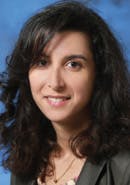
An Interview With Nadine Abi-Jaoudeh, MD, FSIR
Dr. Abi-Jaoudeh discusses her endeavors in the HCC trial landscape, research consensus panels with the SIR Foundation, tips for fostering DEI as an institutional leader, and more.
Before joining University of California Irvine (UCI), you worked as a staff clinician at the National Institutes of Health (NIH). How has your time there informed your current work?
I joined the NIH immediately after fellowship and worked there for 7 years. The first few years I also did “official duty” at University of Virginia. In those 7 years, I developed a tremendous understanding in translational and clinical research that enabled me to start and grow the interventional radiology (IR) program at UCI. The knowledge gained from my time at NIH still benefits me to this day. I also developed a greater understanding of research in general and the NIH structure.
Much of your research is dedicated to novel techniques for liver cancer, with several clinical trials specifically studying hepatocellular carcinoma (HCC). How would you summarize your current endeavors in this trial landscape?
There are numerous clinical and preclinical trials at UCI to treat various stages of HCC, but I will focus on the trials where UCI is the leading or only site. We published the phase 1 trial that combined a novel hypoxia-activated agent called tirapazamine with embolization for the treatment of unresectable HCC.1 Once funding is secured, the phase 2 trial will restart, and it will be a prospective randomized trial comparing transarterial chemoembolization (TACE) versus embolization with tirapazamine. The remainder of the trials address more advanced disease and combine locoregional therapies and systemic agents. UCI is the only site for a phase 2 single-arm, open-label clinical trial determining efficacy of cabozantinib in combination with ipilimumab/nivolumab and TACE in patients with HCC who are not candidates for curative intent treatment (NCT04472767). We have another trial that will combine tirapazamine embolization with nivolumab in patients who have failed systemic therapy (NCT03259867). Some other efforts are still in the preclinical stages and not ready for prime time.
You and colleagues recently published a paper on biomarker testing for cholangiocarcinoma,2 with the goal of identifying gaps in standard practice and defining best practice. What was found, and what are the next steps for study?
The manuscript concluded that next-generation sequencing biomarker testing in intrahepatic cholangiocarcinoma (iCCA) identifies actionable genomic aberrations that enable precision medicine. Unfortunately, iCCA is difficult to diagnose, partly compounded by the lack of standardization in imaging and biopsy techniques. The manuscript recommended a multidisciplinary approach in hopes of improving awareness of biomarker testing. There are several FDA-approved targeted therapies recently approved for iCCA that are correlated with biomarkers testing. Therefore, education and communication between the team members was identified as essential for improving iCCA patient care and outcomes.
One of your roles at UCI is serving on the Principal Investigator (PI) team at the Translational Imaging Lab. What are the main objectives of the lab, and can you give us a preview of the work the group has in store?
Dr. Zhang Zhuoli is Director of the Translational Imaging Lab, and there are five PIs: Dr. Vahid Yaghmai, Dr. Kejia Cai, Dr. Marian L. Waterman, Dr. Lydia Min-Ying Su, and me. Our purpose is to advance knowledge and develop novel therapeutics to cure cancers. The lab focuses on combination of locoregional therapies with image-guided immunotherapy (including natural killer and dendritic cells), image-guided combination therapies of local ablation and targeted immunotherapy, image-guided drug delivery, and utilization of artificial intelligence for prediction of prognosis and evaluation of clinical outcomes—just to name a few projects. We work with several animal models, including mice, rats, rabbits, woodchucks, and swine tumor models. There are several grants involving irreversible electroporation and ablation in combination with immunotherapies for the treatment of liver and pancreatic cancer.
The Society of Interventional Radiology Foundation (SIRF) recently published research consensus panels (RCPs) on racial disparities in critical limb ischemia and uterine artery embolization.3,4 Along with these projects, what are other priorities of the SIRF, specifically related to your role as Clinical Research and Registries Division Chair?
These documents refer to the SIRF-hosted RCPs aimed at advancing an area of IR that has been identified by members, SIR and SIRF volunteers, and industry partners as a priority. Multidisciplinary experts in the specific topic summarize the current knowledge and discuss clinical gaps required to advance the field. After discussion, three research priorities are identified as key questions needed to close knowledge gaps and improve procedure adoption and outcomes. The proceedings are published as white papers on these topics.
My role as SIRF Clinical Research and Registries Division Chair is to aid in identifying the topics that are approved by the SIRF Operations Board, invite the investigators, and moderate the RCPs. Some upcoming white papers include percutaneous image- and endoscopy-guided interventions for biliary and gallbladder diseases (specifically exploring cholangioscopy and new techniques5), the role of artificial intelligence in IR, and the harmonization of local and systemic therapies for HCC. Upcoming RCPs this year will explore the role of IR in breast interventions.
From your experience as Chair of the SIR meeting and your role as Chair of the DEI Committee at UCI Radiology, can you share practical ways institutional leaders can foster diversity, equity, and inclusion (DEI)?
This is a very complex question that can have a 3,500-word manuscript. My first piece of advice is to educate yourselves and your teams on DEI. Subconscious bias is ubiquitous and deleterious to any DEI effort. Second, make sure that as leaders, you ensure DEI representation on every committee—not just recruitments but also promotions, disciplinary committees, etc. Third, focus on retention as much as recruitment. It is just as important, if not more vital, to retain diverse candidates. A revolving door of diverse candidates sends the opposite message of what is intended. Fourth, understand the barriers, whether work schedules or parental benefits, to recruitment/retention of diverse candidates. This can be accomplished by fostering an environment where people feel empowered to speak up.
What areas of growth in interventional oncology (IO) are most exciting to you? What do you hope the field looks like 10 years from now?
There are so many things that I am excited about, from expanding our indications into radioembolization for glioblastoma to novel therapies combined with embolization to new ablation technologies such as histotripsy. There are a lot of innovations and advancements. I think that 10 years from now, IR specialized in oncology will have a greater role in therapeutic algorithms. Surgical oncology and IO will amalgamate into one, and noninvasive or minimally invasive therapeutic options will be integrated into every stage of disease and histology. IR started in more advanced settings, but as our techniques are refined and improved, we are moving earlier into the treatment paradigms. Combination therapies with systemic and locoregional deliveries will result in IR playing a role in the treatment of almost every oncology patient.
What is one piece of advice that all aspiring interventional oncologists need to hear?
Never give up. The old expression holds true: Determination and perspiration are the key to success. Inspiration is only a small part of that success.
What is your favorite way to unwind after a long week in the IR suite?
Hiking or biking.
1. Liu CH, Peng CM, Hwang JI, et al. Phase I dose-escalation study of tirapazamine chemoembolization for unresectable early- and intermediate-stage hepatocellular carcinoma. J Vasc Interv Radiol. Published online April 30, 2022. doi: 10.1016/j.jvir.2022.04.031
2. Cho MT, Gholami S, Gui D, et al. Optimizing the diagnosis and biomarker testing for patients with intrahepatic cholangiocarcinoma: a multidisciplinary approach. Cancers (Basel). 2022;14:392. doi: 10.3390/cancers14020392
3. Bryce Y, Katzen B, Patel P, et al. Closing the gaps in racial disparities in critical limb ischemia outcome and amputation rates: proceedings from a Society of Interventional Radiology Foundation research consensus panel. J Vasc Interv Radiol. 2022;33:593-602. doi: 10.1016/j.jvir.2022.02.010
4. Caridi TM, De la Garza-Ramos C, Brook OR, et al. Uterine artery embolization for symptomatic adenomyosis: proceedings from a Society of Interventional Radiology Foundation research consensus panel. J Vasc Interv Radiol. 2022;33:586-592. doi: 10.1016/j.jvir.2022.01.017
5. Riaz A, Trivedi P, Aadam AA, et al. Research priorities in percutaneous image and endoscopy guided interventions for biliary and gallbladder diseases: proceedings from the Society of Interventional Radiology Foundation multidisciplinary research consensus panel. J Vasc Interv Radiol. Published online July 6, 2022. doi: 10.1016/j.jvir.2022.06.025
Advertisement
Advertisement
Interested in reading more interviews?
To read more interviews with thought leaders in the vascular field, check out our Profiles & Perspectives hub.
Read More