Advertisement
Advertisement
February 2022
An Interview With Eric A. Secemsky, MD, MSc
Dr. Secemsky discusses his work with FDA using Medicare data in SAFE-PAD and SAFE-AAA, how a statistical education and mentor relationships were formative to his career, his experience with PERTs, and his perspective on how to increase the breadth of evidence for peripheral vascular disorders.
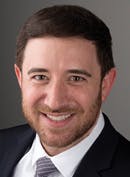
You are a prolific researcher with a wide diversity of subject material, including key papers in coronary and peripheral artery disease, pulmonary embolism (PE), and abdominal aortic aneurysms (AAAs), to name a few. How would you describe your research approach, and what are its foundations?
I am humbled just reading this question. My interest in cardiovascular research started with my work in percutaneous coronary intervention (PCI) with my mentors Drs. Bobby Yeh and Laura Mauri. During my cardiovascular fellowship and postdoctorate, I was deeply immersed in learning and employing new statistical methodologies to evaluate cardiovascular devices and compare treatment strategies. This was strengthened by a Master’s of Science in Epidemiology that I completed at the Harvard School of Public Health. My clinical passion during this time evolved to center on peripheral vascular disorders, primarily due to the influence of Dr. Kenneth Rosenfield, who I was privileged to train under. I found myself in a lucky, unique situation after fellowship—I’d developed a deep interest in peripheral vascular disorders and, at the same time, realized that there was an opportunity to extend the work I was doing on the coronary side to the vascular field. So, there was a very natural opportunity to merge these two interests.
My priority now is to tackle areas I think are important in moving our field forward. I received some early advice when I decided to go down the path of a clinician-scientist: think big and aim high. Each year, I set goals I want to accomplish. In the last few years, my agenda was to demonstrate how we could use observational data to support regulatory decisions. I think we’ve done a nice job of providing some examples and a template for this through SAFE-PAD, which is examining the safety of paclitaxel-coated devices, and SAFE-AAA, which is evaluating the safety of aortic stent grafts. These were both unique situations that allowed our group to employ novel statistical methods and work with the FDA to contribute to solving a real-world dilemma.
Currently, I’m focused on expanding the use of intravascular imaging to peripheral intervention. We’ve learned so much from intravascular imaging during PCI, and it amazes me how we’ve underused a tool that can clearly improve the quality of our interventions. I’m also dedicated to helping responsibly grow the PE intervention field. This has just exploded in recent years. I think that through the PERT Consortium and in collaboration with the FDA, we have the opportunity to set practice standards and treatment approaches to ensure we all responsibly move this field forward to better the care for our PE patients.
One hallmark of your work to date has been probing the Medicare database to address critical questions that arise—as you’ve done for SAFE-PAD and the upcoming SAFE-AAA. How did this method of research come about? What have you learned about the study process in terms of trial design, safety and regulatory concerns, and FDA collaboration?
I have always lived with the mantra that success comes from being in the right place at the right time with the right preparation. The FDA work using Medicare data exemplifies this. As I mentioned, for several years, Bobby Yeh and I had been exploring how to perform more rigorous device safety evaluation using novel statistical methods with real-world observational data. Our early publications from the National Cardiovascular Data Registry (CathPCI) set the foundational work for what became SAFE-PAD. When I joined the Smith Center at Beth Israel Deaconess Medical Center, I became more comfortable with the strengths and limitations of insurance claims data, such as the data available from Medicare. Then, the Katsanos et al Journal of the American Heart Association (JAHA) paper1 dropped, and it was a perfect opportunity to leverage unique claims insurance codes for peripheral drug-coated devices with some of the causal inference methods we had been perfecting to evaluate the safety of these devices. Some of our early data and publications nicely demonstrated that real-world data can be used to provide timely device evaluations, particularly for a controversy where we felt the randomized trial data were flawed due to substantial missing data. It was unique to get immediate support from the FDA, who expressed interest in collaborating and developing a pathway forward, which subsequently became SAFE-PAD. This relationship has continued with ongoing close collaborations looking at mechanical support devices and aortic endografts.
There has been plenty of learning along the way. I think one key step was transparency and prespecification. We all know that observational analyses can easily be manipulated by misapplied statistical methods and lack of understanding of key assumptions. As such, we made it a priority to prespecify our entire SAFE-PAD analysis and make it public, both through registration on ClinicalTrials.gov and through publication of a methods paper.2 This has not frequently been done for observational studies, and I think it helped cement that this is an independent, rigorous analysis that meets all the standards of regulatory-level evidence.3
A recent instance of this work with the Medicare database is a JAHA article studying the impact of frailty measurement on treatment selection and outcomes among patients hospitalized with chronic limb-threatening ischemia, demonstrating the association of frailty and worse outcomes.4 What did these findings reveal about how we should approach the assessment of and care for this population?
This project was really exciting for me as I think we all understand what a frail patient is, and we see these patients regularly, but we haven’t done a great job of capturing this characteristic in our research. This study was a prime example of identifying a patient phenotype that is prognostic of survival and can also be used to inform selection of a revascularization strategy. We aren’t the first group to show this, but I think what was unique about our study was the use of a claims-based assessment of frailty that can be a surrogate of the gold standard physical assessment. My hope is to use this approach to supplement randomized trial data where frailty may not have been collected but could be useful in identifying patients with the greatest likelihood of benefit or risk with intervention.
You’ve shared your appreciation for the time you spent working in underserved communities during your training years, an interest that has carried over to some of your research work, studying sex, socioeconomic, and racial disparities across various topics. Where would you like to focus on concerning underserved communities in the interventional field next?
I foresee this being a big part of the next chapter in my career and the broad vascular community. It is amazing how much interest there has been in tackling disparities in care for other cardiovascular disorders and how little we have focused on this in the peripheral vascular space. We are clearly failing our patients if two people with threatened limbs may receive vastly different care based on where they live in the country. Right now, I think we are still in the raising awareness phase, but this is now on everyone’s radars. I think there now exists the necessary impetus to meaningfully tackle these inequities. Boston Scientific has been a notable leader in this space, with targeted enrollment of minorities into clinical trials and registries, as well as through charitable work. We need to keep this conversation active to make any real movement.
You’ve also discussed the importance of statistical education for physicians. How would you describe the role this has played in your career?
One of the more formative opportunities I had in my career was to get a Master’s of Science in Epidemiology, at the encouragement of Bobby Yeh. We both recognized that if you want to spend your time designing studies and trials, you need to know the basics of the statistical methods and how to “talk the talk” with your statisticians. This is even more important in observational research, which is frequently confounded by poor methods selection and lack of thought about statistical assumptions.
Stepping back, we need to spend more effort evaluating a paper based on statistical rigor as much as the sample size, duration of follow-up, magnitude of treatment effect, and so on. The only way to do this is by improving the education of anyone contributing to clinical research. I hope to see more dedicated statistical training opportunities for clinical researchers, as well as more focus on publishing or posting prespecified statistical methods and analytic plans.
What was your early experience like during the formation of the PE response team (PERT) at Massachusetts General Hospital (MGH)? With that experience and your role as Chair of the PERT Consortium Research Committee, what elements do you think contribute to a successful PERT?
It was unique to have the opportunity to participate as an early member of the PERT at MGH and watch it become an international consortium. When this first started, I was a cardiology fellow and was given the honorable task of performing on-call echocardiography for all patients with PE. This was before we moved to using the right ventricular/left ventricular ratio off the CTA and was quite painful in the middle of the night. Through this opportunity, I quickly observed how we could better manage patients hospitalized with PE, who were often lost between medical services and were clearly suffering from lack of coordinated care. When I transitioned over to Beth Israel Deaconess, I was in close company as my friend and colleague Dr. Brett Carroll had started their PE program as a fellow. He is now Section Head of Vascular Medicine at Beth Israel Deaconess and did a phenomenal job creating a truly multidisciplinary approach to PE care. We have also been privileged to participate as a member of the national PERT Consortium and a contributing member to the PERT database.
Leading the PERT database has been a blast. I’ve gotten to work closely with great people like Drs. Robert Lookstein and Jay Giri, and we now have a large, growing database that is poised to significantly influence how we generate data for PE care and can be used to help run pragmatic PE clinical trials. We are also continuing to work with FDA to develop the database to help facilitate postapproval regulatory evaluation of PE devices and therapies.
The key to a successful PERT is collaboration and empowerment of all members. We have a wonderful team of PE experts who are willing to take the time out of their schedules to get on a call, no matter the day or time. Everyone’s opinion is weighed equally—whether or not they are a proceduralist. We also found a great way to work collaboratively across interventional specialties. For divvying procedures, on even days they go the cath lab, and on odd days they go to the interventional radiology suite. This solves most issues that plague other multidisciplinary efforts.
What have been the highlights of your work as Section Head of Interventional Cardiology and Vascular Research at Beth Israel Deaconess Medical Center’s Smith Center for Outcomes Research in Cardiology?
This is my pride and joy. Bobby Yeh, the Founding Director of the Smith Center, had the vision to create a state-of-the-art health services and outcomes research center in Boston, which took shape in 2015. I was fortunate to be recruited over in 2018 to help build the center and grow the cardiovascular interventional research efforts. We have accomplished a lot as a group in a short time and have grown substantially. Within just my section, we have more than two dozen active collaborators, including practicing physicians, junior faculty, physician trainees, and medical students. Last year alone, we published more than 60 papers and had major presentations at meetings of the American Heart Association (AHA), Transcatheter Cardiovascular Therapeutics, Vascular InterVentional Advances, American College of Cardiology, and others. Key highlights have been presenting at two FDA advisory panels in 3 years.
What I am most proud of is the ability to contribute to the training and development of future physician-scientists. This is an absolute mandate at our center. One of my fondest moments is when my mentee Dr. Anna Krawisz won the AHA’s Jay D. Coffman Early Career Investigator award. I’m also thrilled when I can help a resident or medical student get their first lead author peer-reviewed publication or conference presentation.
What has been the impact of mentorship in your career? Now that you have spent time as a mentor yourself, what do you consider to be the most important piece of advice for trainees?
If you read this whole interview, you’ll see that mentorship has been incredibly impactful in shaping my career. Strong mentorship is the key to success. I have both benefited from this and am working hard to help continue the precedent. I often give a research talk to our first-year cardiology fellows in which I spend most of the hour speaking about mentorship. I think it’s unfortunate that trainees often look for mentors who can give them the best opportunity of publishing a bunch of papers in a short amount of time. True mentorship is much deeper and long term. You need to invest in a relationship, build trust, demonstrate you have similar interests and work ethics, and show you are committed and able to follow through. Then, the payoff can be huge. I wouldn’t be where I am now without the mentorship I received from many, including Drs. Rod Passman, Priscilla Hsue, Laura Mauri, Kenneth Rosenfield, Michael Jaff, and, in particular, Bobby Yeh. Mentorship has helped me publish, receive research funding, get a job, and build my career. Success is truly a collaborative effort, and I hope that over time I can pay this back to a generation of mentees.
With many clinical responsibilities and a lengthy list of published work and journal roles, how do you achieve a balance between clinical practice, academic research, and life outside of work?
I’m not sure I’m qualified to answer this question, as I have certainly not figured it out. I sleep much less than I should and don’t exercise enough. But my family is everything. So, if I’m not working, I’m spending all my time with my wife and my two children. I’ll end this interview with my goal for this upcoming year: to spend more time figuring out how to achieve better balance.
1. Katsanos K, Spiliopoulos S, Kitrou P, et al. Risk of death following application of paclitaxel-coated balloons and stents in the femoropopliteal artery of the leg: a systematic review and meta-analysis of randomized controlled trials. J Am Heart Assoc. 2018;7:e011245. doi: 10.1161/JAHA.118.011245
2. Secemsky EA, Raja A, Shen C, et al; SAFE-PAD Investigators. Rationale and design of the SAFE-PAD study. Circ Cardiovasc Qual Outcomes. 2021;14:e007040. doi: 10.1161/CIRCOUTCOMES.120.007040
3. Secemsky EA, Shen C, Schermerhorn M, Yeh RW. Longitudinal assessment of safety of femoropopliteal endovascular treatment with paclitaxel-coated devices among medicare beneficiaries: the SAFE-PAD study. JAMA Intern Med. 2021;181:1071-1080. doi: 10.1001/jamainternmed.2021.2738
4. Butala NM, Raja A, Xu J, et al. Association of frailty with treatment selection and long-term outcomes among patients with chronic limb-threatening ischemia. J Am Heart Assoc. 2021;10:e023138. doi: 10.1161/JAHA.121.023138
Advertisement
Advertisement
Interested in reading more interviews?
To read more interviews with thought leaders in the vascular field, check out our Profiles & Perspectives hub.
Read More