Advertisement
Advertisement
January 2022
Sponsored by Guerbet
Case Report: Combination Treatment of Hepatocellular Carcinoma Using Microwave Ablation and DEB-TACE
By Govindarajan Narayanan, MD; Thompson Antony; and Raihan Noman
Hepatocellular carcinoma (HCC) is the sixth most common cancer worldwide and a frequent cause of cancer-related death. Treatment is based on a number of factors, including liver function status, quantity and size of nodules, and vascular invasion.1 The Barcelona Clinic Liver Cancer (BCLC) classification is one of the tools used for direct management of HCC. Transarterial chemoembolization (TACE) is the recommended option for HCC patients with BCLC stage B (ie, intermediate-stage disease with preserved liver function and no evidence of vascular invasion or extrahepatic metastasis).2 TACE may be performed with drug-eluting beads (DEB-TACE). DEBs are infused with calibrated chemotherapeutic agents and are released in a controlled manner within the target artery.1 Regardless of technique, one of the most concerning complications of TACE is embolization of nontarget vessels, which may potentially damage healthy tissue. Various microcatheters have been developed to address this complication using clever reflux control mechanisms that prevent nontarget embolization (NTE), such as the Surefire infusion system (TriSalus Life Sciences) with its expanding distal tip,3 the Sniper balloon catheter (Embolx, Inc.), and the SeQure fluid barrier reflux control microcatheter (RCM; Guerbet).
This article highlights a case of HCC treated with DEB-TACE using the SeQure microcatheter.
CASE PRESENTATION
A man in his late 70s with a history of insulin-dependent diabetes mellitus, hypertension, and glaucoma underwent hepatic ultrasound due to elevation of his liver enzymes. The ultrasound showed an abnormality, and an MRI of the abdomen was subsequently performed, which demonstrated a 3- X 3-cm Liver Imaging Reporting and Data System (LI-RADS) 5 lesion in segment 6/7 (Figure 1). Upon further workup, the patient was determined to be an ECOG 0, BCLC stage A, and Child-Pugh class A with a score of 5 with a normal bilirubin level of 0.4 mg/dL (normal, 0.3-1.2 mg/dL) and an alpha-fetoprotein of 1.8 ng/dL (normal, 10-20 ng/mL). After a tumor board discussion, he underwent microwave ablation (MWA) of a right hepatic lobe lesion.
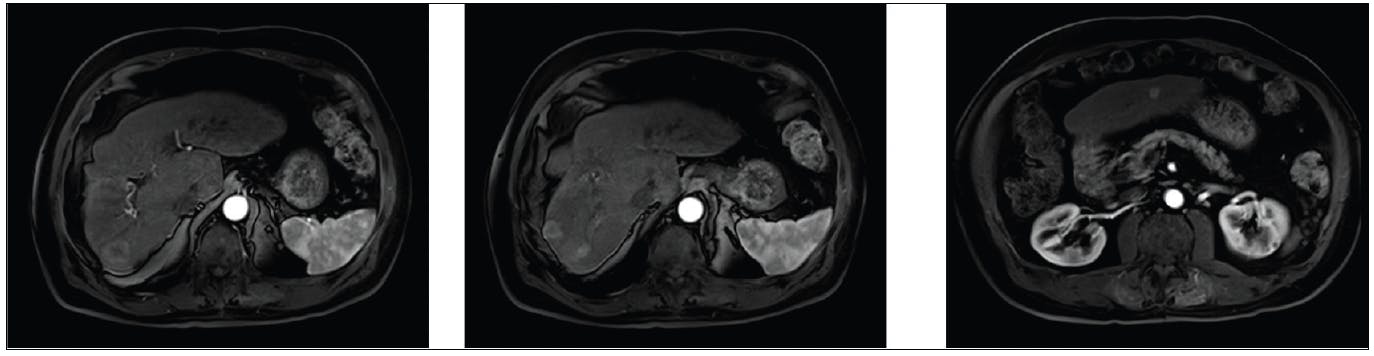
Figure 1. MRI of the abdomen with contrast demonstrated a 3- X 3-cm LI-RADS 5 lesion in segment 6/7.
He had an uneventful recovery, and the 1-month follow-up CT demonstrated satisfactory postablation changes. He then underwent a 5-month follow-up MRI instead of his scheduled 3-month scan, which showed that the treated lesion in segment 7 now measured 2.9 X 2.5 cm, slightly decreased in size from the scan obtained before the ablation. In addition, there was a 1.3-cm area of nodular enhancement in close proximity to the treated lesion suspicious for local recurrence. There was another 1.9- X 1.9-cm lesion more anterior and lateral in segment 7, a 1.2-cm lesion in segment 3, and a few scattered subcentimeter foci of hyperenhancement. The patient was referred for a repeat treatment, and the plan was to use a combination of MWA followed by DEB-TACE the next day.
PROCEDURAL OVERVIEW
MWA was performed under general anesthesia, and the lesions in segments 7 and 3 were treated (Figure 2). The patient had an uneventful recovery and was admitted for overnight observation. The following day, DEB-TACE was performed under conscious sedation. A GlideCath Cobra catheter (Terumo Interventional Systems) was used to catheterize the celiac axis. The patient had an anatomic variant with the common hepatic artery arising directly from the aorta. Following selective catheterization, a diagnostic angiogram from the proximal common hepatic artery demonstrated rapid antegrade flow within the common hepatic, gastroduodenal, right hepatic, and left hepatic arteries.
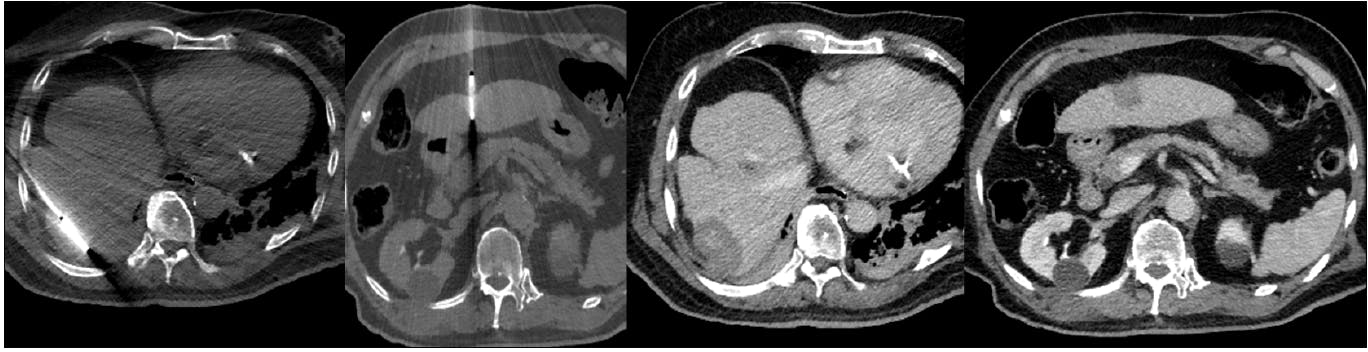
Figure 2. Intraprocedural MWA performed on the lesions in segments 7 and 3.
The left hepatic artery was then selected with a 2.7-F SeQure microcatheter and a Transend microwire (Boston Scientific Corporation). An angiogram was performed (Figure 3), followed by a cone-beam CT (Figure 4). Review of the cone-beam CT demonstrated enhancement with hyperemia around the previously microwave-ablated hepatic segment 3 lesion. LC Bead M1 (Boston Scientific Corporation) loaded with doxorubicin was delivered slowly under fluoroscopic guidance.
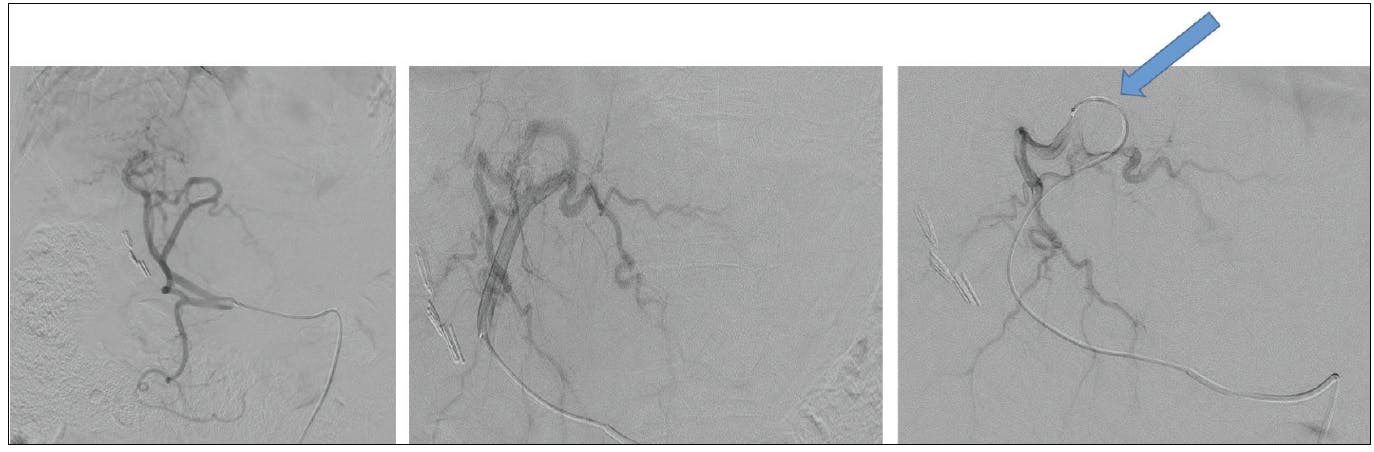
Figure 3. Selective catheterization and angiography of the left hepatic artery with 2.7-F SeQure microcatheter and a Transend microwire.
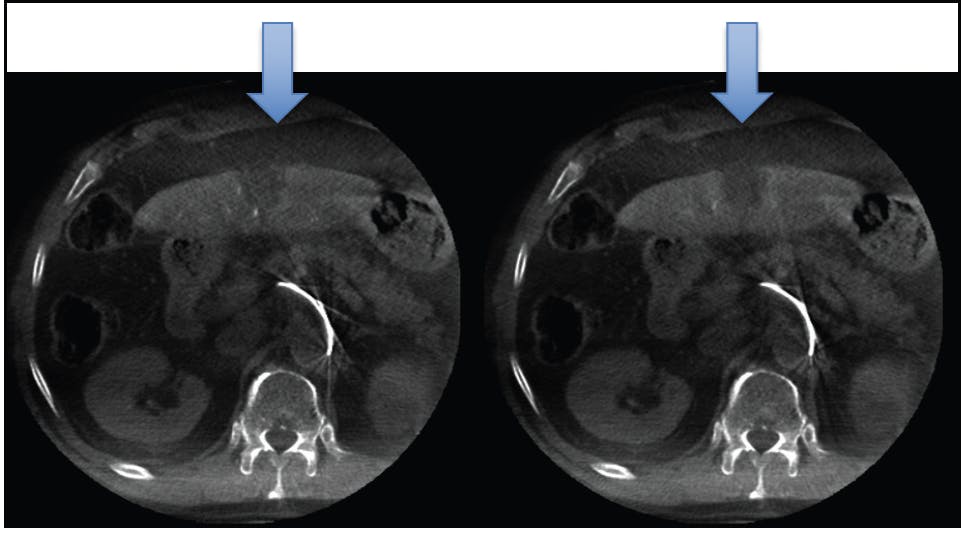
Figure 4. Intraprocedural cone-beam CT demonstrated enhancement with hyperemia around the previously microwave-ablated hepatic segment 3 lesion.
Next, the right hepatic artery was subselected with the 2.7-F SeQure microcatheter and the Transend microwire. A right hepatic artery angiogram was performed, followed by a cone-beam CT, which demonstrated hyperemia around the previously microwave-ablated hepatic segment 6/7 lesions (Figure 5). The remaining M1 beads with doxorubicin were selectively delivered through the microcatheter under fluoroscopic guidance. Post-TACE angiograms were performed after each respective embolization. Hemostasis was achieved with a 6-F Angio-Seal closure device (Terumo Interventional Systems). The patient had an uneventful recovery from the procedure.
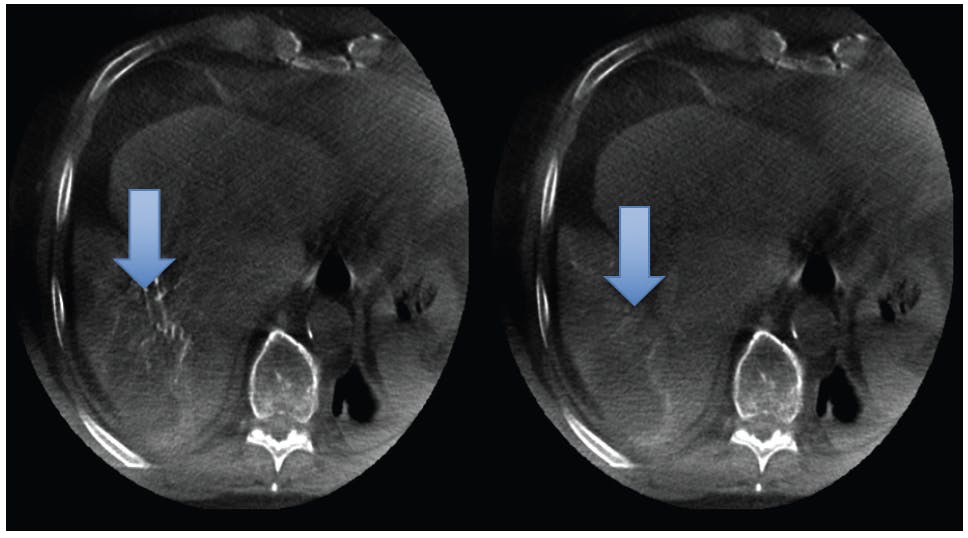
Figure 5. Intraprocedural cone-beam CT demonstrated hyperemia around the previously microwave-ablated hepatic segment 6/7 lesions.
Posttreatment MRIs at 1 and 6 months demonstrated treated lesions within hepatic segments 3, 6, and 7 with no evidence of NTE or recurrent/residual tumor (Figure 6).
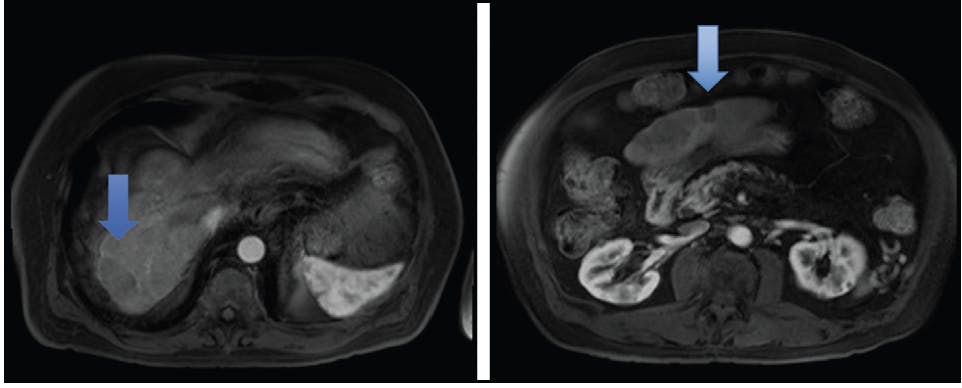
Figure 6. MRI of the abdomen with contrast at 6-month follow-up.
DISCUSSION
Patients with intermediate-stage HCC by the standard classification are prime candidates for treatment with TACE. This case report highlights the use of a combination of MWA followed by DEB-TACE first described by Lencioni et al, along with the use of a reflux control catheter for superselective delivery of DEBs.4 The combination of sublethal heating and chemotherapeutic agents has been effective in increasing tumor necrosis, as was shown in experimental animal tumor models.5 Thermal ablation techniques alone can be limited by inadequate treatment of neoplastic cells at the periphery of tumors due to poor heat propagation. Combining thermal ablation with TACE harnesses the advantages of both techniques. The initial ablation causes tumor destruction and also induces hyperemia in the periphery of the ablation zone. This increases vascular endothelial pore size and causes reversible damage to the membrane efflux pump, allowing even more DEBs to be deposited when compared with TACE without any prior thermal ablation. Thus, it was demonstrated that HCC tumors treated with thermal ablation had a higher rate of complete response when treated subsequently with DEB-TACE.4
A potential complication that may occur with all types of embolization procedures is NTE (ie, the occlusion of vessels that lie outside the area of interest). NTE is likely to cause deleterious effects through ischemia of healthy tissue and/or direct damage from cytotoxic chemotherapeutic agents, resulting in a variety of symptoms depending on the arteries involved.6 For instance, cutaneous symptoms may arise from occlusion of the internal mammary, intercostal, or lumbar artery, and gastrointestinal symptoms may arise from occlusion of the branches of the gastric artery.7
The SeQure microcatheter is an RCM designed to produce a fluid barrier for flow-directed embolization, allowing for more targeted delivery of microspheres and reducing the risk of NTE. In a swine model comparing RCMs to standard end-hole microcatheters, a statistically significant difference was observed for NTE with 42% (27/65) of observations with a score of 5 (very good result) for the RCM versus 29% (19/65) with a score of 5 for the standard end-hole microcatheter.8
The SeQure microcatheter was used in this case for its trackability as a microcatheter and its effect on NTE. This microcatheter has a radiopaque marker situated at its tip to help signal that it is in the vessel proximal to the area of interest. The fenestrations that lie proximal to this marker are designed to allow for iodinated contrast to spread radially and create a fluid barrier that reduces the risk of reflux of embolic beads. The fluid barrier allows for the targeted delivery of embolic beads, while reducing the risk of reflux.
1. Song JE, Kim DY. Conventional vs drug-eluting beads transarterial chemoembolization for hepatocellular carcinoma. World J Hepatol. 2017;9:808-814. doi: 10.4254/wjh.v9.i18.808
2. Kinoshita A, Onoda H, Fushiya N, et al. Staging systems for hepatocellular carcinoma: current status and future perspectives. World J Hepatol. 2015;7:406-424. doi: 10.4254/wjh.v7.i3.406
3. Defreyne L. Interventional radiology for liver diseases. Eur Radiol. 2021;31:2227-2230. doi: 10.1007/s00330-020-07356-w
4. Lencioni R, Crocetti L, Petruzzi P, et al. Doxorubicin-eluting bead-enhanced radiofrequency ablation of hepatocellular carcinoma: a pilot clinical study. J Hepatol. 2008;49:217-222. doi: 10.1016/j.jhep.2008.03.021
5. Goldberg SN, Girnan GD, Lukyanov AN, et al. Percutaneous tumor ablation: increased necrosis with combined radio-frequency ablation and intravenous liposomal doxorubicin in a rat breast tumor model. Radiology. 2002;222:797-804. doi: 10.1148/radiol.2223010861
6. Pardo Moreno P, Ruiz Villaverde G, Ciampi Dopazo JJ, Navarro Vergara P. Novel reflux-control microcatheter: an alternative to maximize the effect of superselective embolization. Intervencionismo. 2020;20:126-133. doi: 10.30454/2530-1209.2020.3.4
7. Sueyoshi E, Hayashida T, Sakamoto I, Uetani M. Vascular complications of hepatic artery after transcatheter arterial chemoembolization in patients with hepatocellular carcinoma. AJR Am J Roentgenol. 2010;195:245-251. doi: 10.2214/AJR.08.2301
8. Rizzitelli S, Holtzman N, Maleux G, et al. Reduced nontarget embolization and increased targeted delivery with a reflux-control microcatheter in a swine model. Diagn Interv Imaging. 2021;102:641-648. doi: 10.1016/j.diii.2021.05.002.



Advertisement
Advertisement