Advertisement
Advertisement
January 2022
Sponsored by Medtronic
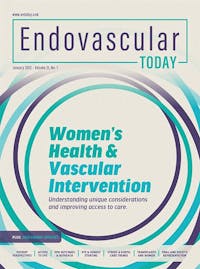
Women in the Vascular Field: Challenges, Solutions, and Moving Forward
With Gloria Salazar, MD, FSIR; Venita Chandra, MD, FACS; Katharine McGinigle, MD, MPH, FACS, FSVS; and Jean Starr, MD, FACS, DFSVS
Gender- and sex-related disparities in clinical practice as well as in the diagnosis and treatment of vascular diseases have been well recognized. There is a need to understand the factors contributing to these disparities and what positive impact professional societies and health care industries can have moving forward. In this panel, four women vascular health professionals discuss trials and triumphs in their own career paths and thoughts on attracting diverse, younger professionals to the vascular field. They also provide insights on sex-related disparities in the diagnosis and treatment of vascular patients in their own practice and what can be done to close the gap.
What are the challenges you faced in your early career as a woman vascular health care provider, and how did you surmount those challenges? Did these challenges change as you moved to mid career?
Dr. Salazar: When I became an attending, I was the only woman in my group and one of few Latino(a) doctors within my department.
I faced several challenges in the early days of my career as a woman vascular health provider. As an example, I can cite cultural differences; perhaps ethnicity and gender were part of the predicament. I think that lack of understanding of one’s culture and values, gender differences and communication style/problem-solving approaches, intrinsic biases, and personal experiences are all part of a great web causing misunderstandings and wasted energy on how to appropriately handle such differences in lieu of creating an optimal medical environment and patient care.
The way I handle these situations is to first observe and become aware that these issues exist within myself and everyone else with whom we interact. Second, I use specific methods or techniques to remediate the conflict. For example, I use effective dialogue where differences are recognized and identified. From that point, all parties will have a better understanding of these disparities and welcome the opportunity for a common ground solution.
On the other hand, my cultural background has also helped me connect with my patients in a way that is more common in my own Latino culture, where we value the mantra, “Qué crees que te ayudo en tu camino” (“We believe I can support your path”). This involves sponsors, mentors, exposure to research early on, taking on leadership positions, working with multidisciplinary groups, and following your heart. In addition, I am always open to giving advice and supporting people who want to embrace a similar path. Networking is essential as well—participating in conferences, meetings, and adopting the “elevator pitch” principle where you know how you want to be able to connect with people.
Dr. McGinigle: When I decided to become a vascular surgeon, < 10% were women, and I didn’t know any of them. After considering many other options, I chose vascular halfway through residency for the patients, pathology, interventions, and operations. It was a great choice, but unlike many other (mostly male) surgeons I know, my choice wasn’t guided by a mentor or by trying to emulate a role model. In fact, as opposed to being sponsored and encouraged, although well intentioned, most people asked me if I was sure I could handle vascular surgery and inquired about my desire to have a family.
Despite having a great job with great partners, the well-documented biases against women in medicine1-5 have been a daily problem in my career (ie, fewer referrals, less tolerance for a bad outcome, pigeon-holing into less technical clinical care, status-leveling burden, unpaid administrative and committee work, unrecognized accomplishments). Early on, I could not surmount those challenges, but I coped by forming a support network and by working as hard as possible. As I transition to mid career, I have recognized that no amount of work relative value units (RVUs), grants awarded, or papers published will reverse the effect of those biases. The challenges are the same, but I feel better positioned to surmount them as my network of family, women surgeons, and #HeForShe6 allies grow.
Dr. Starr: I was the first woman accepted to my vascular surgical fellowship, and I have always been attracted to nontraditional female roles. I was fortunate enough to have the full support and encouragement of my attendings and mentors and then matriculated to a community practice where my three male partners all acted as true sponsors and are partially responsible for my success. They also helped drive my achievements when moving into academic practice.
Some of the obstacles that I hear young professionals needing to surmount involve the support (or rather the lack of support) they receive very early in practice. I would encourage young surgeons, and especially women, to build a network early on with good people. In mid career, these relationships should continue to be cultivated, but horizons should expand to include those outside the early “bubble” and in other specialties. By later career, women surgeons should actively seek to mentor and sponsor younger vascular surgeons as a means to give back.
Dr. Chandra: Until recently, I believed that the challenges and pressure I felt were universal for early career surgeons. We all have our challenges at that stage: establishing a brand, gaining confidence, building a practice and referrals, developing clinical/research interests, and balancing life, work, family, etc. I realize now that that probably wasn’t the case. I was fortunate to have had amazing support and sponsorship in my early career, which greatly helped me advance through that phase, although I was not without my share of difficulties. Now, as I move into my mid career, I can better recognize the unconscious bias (even in myself) and more clearly call out the unique challenges caused by the lack of diversity. I hope I can use this experience to help early career surgeons navigate through this phase in a more supportive and engaging environment.
How can you as a women vascular professional influence students and residents to consider this field as a viable, rewarding career for women?
Dr. McGinigle: The great news is that vascular surgery is a viable and rewarding career for anyone. I truly love vascular surgery, and my goal is to have every student I meet at least consider, if not join, the specialty. The vascular workforce is becoming more diverse, and I hope that means more students and residents have the opportunity to see themselves more easily in their careers. Visibility is so important. As a woman, I take every opportunity I can to share my passion for vascular surgery and to let other women (and, honestly, anyone who will listen) know that it is possible to thrive and have fun in this career despite the aforementioned challenges.
Dr. Chandra: First and foremost, by example! I truly feel that I have a viable and rewarding career. I love my job! The best way to engage students and residents is for them to see us in roles that resonate with them. This is important across our societies and for our industry partners. We need to show that our profession is relevant, thoughtful, and proactive.
Dr. Salazar: As a woman vascular professional, I influence students and residents in considering this field by attempting to be an example and a role model within my career. You first need to become visible, and that is a lesson I learned over time. Moreover, the lack of diversity in the medical field and interventional radiology (IR) workplace may enhance feelings of imposter syndrome in many women, which can lead to failure in recruiting more diversity into the workforce as well.7,8 Associate Justice of the Supreme Court of the United States Sonia Sotomayor described in her memoir that she felt like she did not belong at Princeton University as one of the few minorities there at the time.9 Similarly, in our profession, the lack of role models who reflect your gender, race/ethnicity, etc, may be a major reason to not enter the field of IR, for example. Therefore, diversity in leadership roles is critical for us to be able to influence others to enter this field.
Dr. Starr: I sometimes find that young women (as well as men sometimes) feel that a vascular surgical career is not conducive to a happy and healthy family and social life. I feel the best way to combat this misconception is to truly inspire by example. There are ways to ensure enjoyable participation in many aspects of life, while also maintaining a satisfying clinical and/or academic career. I am always happy to share personal experiences because this is frequently what early professionals seek to understand.
How do you think our societies and/or industry can champion women’s careers in the vascular field?
Dr. Chandra: There are so many ways! Here are a few of my thoughts:
- Intentionality: Have the goal of improving diversity for every invitation for all aspects of your program/society. Avoid including just a “token woman” as a moderator or as a sole speaker; shoot for diversity throughout the entire program.
- Choose diverse organizers for the event: Increased diversity of the program organizers or society/industry leadership can help substantially, although intentionality is still important.
- Give new people a chance: There are plenty of talented and diverse surgeons to choose from, but it is unbelievably easy to keep working with the same few people who are already known.
- Say yes: Those new people need to say yes when asked, and that involves managing any imposter syndrome they may have.
In summary, everyone in our societies and industry should be an advocate for diversity. As a speaker/participant, ask who else is on a panel when you receive your invitation. If not diverse, turn it down, and suggest women and people of color speakers. As a conference attendant, if asked to attend a program and there is a lack of diversity, consider declining, and make the reasons clear to the organizer. As a sponsor, ask conferences to show gender, racial, and geographic balance if they want your money.
Dr. Salazar: Industry has played a major role in innovation techniques for patients, and it has also introduced physicians to research, thus facilitating their careers. Unfortunately, data show a severe gender disparity among IR physicians. Women represent 13% of the overall IR physicians in the United States in recent data, but only 1% of female physicians are paid by industry.10 As a general consensus, it is well known that, historically, most industries play a part in the prevalence of men versus women.11 We should be aware of this fact and continue to work toward shifting this trend to the benefit of us all.
Dr. McGinigle: It is incumbent on our medical societies, health care systems, and industry partners to champion women’s careers because the playing field is not leveled, and it has been demonstrated that inequity throughout the medical system has serious clinical and business consequences. Most have acknowledged the problem, but there has been little action. Change can happen at many levels. Individuals can refuse to speak on panels or participate as an invited faculty member at a meeting unless the other invitees are representative of the workforce. Medical societies can be more thoughtful about their membership and outreach programs or form diversity, equity, and inclusion (DEI) committees that inform every other committee or society product. Industry should carefully evaluate their list of medical consultants and clinical trial investigators and not depend on their current field networks when looking for new talent that is more representative of the medical workforce. Finally, rather than depending on individuals to do the right thing, there must be regulations and financial incentives to promote equity at all levels.
Dr. Starr: My copanelists’ opinions are well thought out and on track. Industry, like most of the medical field, is just beginning to understand the role of DEI in medicine and the workplace. It’s easy to rely on known opinions, but evidence shows us that diversity of thought leads to better medical care for our patients.12 Industry especially understands the importance of being inclusive of a variety of thought processes in research, as well as device development and refinement.
What patient demographic do you see in your practice? What are your thoughts about disparities in treatment for women with vascular disease, and what can women do to promote change?
Dr. McGinigle: I work at an academic institution that also happens to be the state’s safety net hospital, so I generally see medically complex patients with “end-stage” surgical problems who are either uninsured or underinsured. My primary focus is on limb preservation, and I do track my outcomes by gender and race because it has been shown time and again that women and people of color have worse outcomes, especially in peripheral artery disease. We know that women are less likely to be diagnosed with vascular disease, and I recently published a paper in Journal of Vascular Surgery demonstrating that even after diagnosis, women are less likely to be treated.13 The undertreatment of women is baffling to me. This problem is systemic, and we need dedicated research to determine why it is happening and how to correct it. In the meantime, on an individual level, it is important to educate patients, families, and referring physicians about looking for vascular disease in women. Once patients are referred to your practice, review your outcomes and implement quality improvement projects if they are not equal by gender and race.
Dr. Salazar: I have a Latino background, and this segment of the patient demographic has become my niche in my practice. Before moving to University of North Carolina (UNC), I worked at Massachusetts General Hospital, where the overall number of Spanish-speaking patients was approximately 6%, with some clinics like obstetrics and gynecology reaching 8%. In the interventional services in 2019, 5% of our patients were Hispanic, and almost 80% of these patients were evaluated in my clinic. My practice has changed in the recent months, as I moved to UNC Chapel Hill to take the Chief Vascular IR position. Now, I see more underrepresented minorities and deal with socioeconomic factors that may interfere with patient care.
One other well-known factor is the racial and gender disparities in cardiovascular disease, which we need to understand on a deeper level. For example, African Americans are more likely than Caucasians to die from heart disease and hypertension.14,15 Also, a higher proportion of African American and Hispanic patients undergo amputation rather than limb salvage for critical limb ischemia.16 The presence of implicit bias toward Hispanics is well documented and is present in about two-thirds of health care providers.17 Lastly, physicians’ biases may influence the management of chest pain based on patients race and sex, as women with angina are more likely to be misdiagnosed and mistreated.18 This is not happening in a vacuum, and to promote change, we need to be educated about these disparities and create a mechanism to overcome these issues. We are in the 21st century, and technology has made this a very small world where disparities are evident for everyone to see. Awareness of the existence of implicit bias in health care is an important step toward minimizing such disparities.
How are you encouraging patients to come to the clinic for evaluation? Do you do anything differently for women and minorities?
Dr. Salazar: Communication is very important—and it is not just communication but empathic communication that opens the gates to an authentic connection with the patient, particularly women and minorities. When I see these patients in my clinic for evaluation, I go beyond my technical duty as a physician and have significant discussions about the fact that they are (without saying the word) underrepresented. In the United States, discrimination is commonly experienced among Latinos, which creates an environment in which they face the “illegal” stereotype regardless of their actual status.19 Many do not seek appropriate medical help for that reason. I then share with them relevant information to empower them and give them full knowledge of their presenting problem so they can make the best medical/health decisions for themselves. Many times, I laugh and cry with them, and in return, I see a better outcome from an emotional/psychologic standpoint, which greatly facilitates my work.
Dr. McGinigle: This is a great point. We do not do any targeted marketing or vascular disease awareness campaigns directed specifically to women or people of color, and we really should. Of course, there are many barriers to care, but often, patients just don’t know about vascular disease and aren’t sure if they need the evaluation. A more targeted approach is one way that health care systems can use physician and hospital networks to effect positive change and reduce disparities in populations particularly at risk for under- or misdiagnosis and delayed treatment.
1. Harvard Business Review. Mangurian C, Linos E, Sarkar U, et al. What’s holding women in medicine back from leadership. Published June 19, 2018. Accessed December 16, 2021. https://hbr.org/2018/06/whats-holding-women-in-medicine-back-from-leadership
2. Wallis CJ, Ravi B, Coburn N, et al. Comparison of postoperative outcomes among patients treated by male and female surgeons: a population based matched cohort study. BMJ. 2017;359:j4366. doi: 10.1136/bmj.j4366
3. Dossa F, Zeltzer D, Sutradhar R, et al. Sex differences in the pattern of patient referrals to male and female surgeons. JAMA Surg. Published online November 10, 2021. doi: 10.1001/jamasurg.2021.5784
4. Zhang B, Westfal ML, Griggs CL, et al. Practice patterns and work environments that influence gender inequality among academic surgeons. Am J Surg. 2020;220:69-75. doi: 10.1016/j.amjsurg.2019.10.029
5. Oberlin DT, Vo AX, Bachrach L, Flury SC. The gender divide: the impact of surgeon gender on surgical practice patterns in urology. J Urol. 2016;196:1522-1526. doi: 10.1016/j.juro.2016.05.030
6. DiBrito SR, Lopez CM, Jones C, Mathur A. Reducing implicit bias: Association of Women Surgeons #heforshe task force best practice recommendations. J Am Coll Surg. 2019;228:303-309. doi: 10.1016/j.jamcollsurg.2018.12.011
7. Arleo EK, Wagner-Schulman M, McGinty G, et al. Tackling impostor syndrome: a multidisciplinary approach. Clin Imaging. 2021;74:170-172. doi: 10.1016/j.clinimag.2020.12.035
8. Harvard Business Review. Corkindale G. Overcoming imposter syndrome. Published May 7, 2008. Accessed December 16, 2021. https://hbr.org/2008/05/overcoming-imposter-syndrome
9. Sotomayor S. My beloved world. Alfred A. Knopf; 2014.
10. Deipolyi AR, Becker AS, Covey AM, et al. Gender disparity in industry relationships with academic interventional radiology physicians. AJR Am J Roentgenol. 2020;215:494-501. doi: 10.2214/AJR.19.22176
11. Weiss A, Parina R, Tapia VJ, et al. Assessing the domino effect: female physician industry payments fall short, parallel gender inequalities in medicine. Am J Surg. 2018;216:723-729. doi: 10.1016/j.amjsurg.2018.07.031
12. Gomez LE, Bernet P. Diversity improves performance and outcomes. J Natl Med Assoc. 2019;111:383-392. doi: 10.1016/j.jnma.2019.01.006
13. McGinigle KL, Browder SE, Strassle PD, et al. Sex-related disparities in intervention rates and type of intervention in patients with aortic and peripheral arterial diseases in the National Inpatient Sample Database. J Vasc Surg. 2021;73:2081-2089.e7. doi: 10.1016/j.jvs.2020.11.034
14. Carnethon MR, Pu J, Howard G, et al; American Heart Association Council on Epidemiology and Prevention; Council on Cardiovascular Disease in the Young; Council on Cardiovascular and Stroke Nursing; Council on Clinical Cardiology; Council on Functional Genomics and Translational Biology; and Stroke Council. Cardiovascular health in African Americans: a scientific statement from the American Heart Association. Circulation. 2017;136:e393-e423. doi: 10.1161/CIR.0000000000000534
15. Lackland DT. Racial differences in hypertension: implications for high blood pressure management. Am J Med Sci. 2014;348:135-138. doi: 10.1097/MAJ.0000000000000308
16. Traven SA, Synovec JD, Walton ZJ, et al. Notable racial and ethnic disparities persist in lower extremity amputations for critical limb ischemia and infection. J Am Acad Orthop Surg. 2020;28:885-892. doi: 10.5435/JAAOS-D-19-00630
17. Blair IV, Havranek EP, Price DW, et al. Assessment of biases against Latinos and African Americans among primary care providers and community members. Am J Public Health. 2013;103:92-98. doi: 10.2105/AJPH.2012.300812
18. Schwartz LM, Woloshin S, Welch HG. Misunderstandings about the effects of race and sex on physicians’ referrals for cardiac catheterization. N Engl J Med. 1999;341:279-283. doi: 10.1056/nejm199907223410411
19. Viruell-Fuentes EA, Miranda PY, Abdulrahim S. More than culture: structural racism, intersectionality theory, and immigrant health. Soc Sci Med. 2012;75:2099-2106. doi: 10.1016/j.socscimed.2011.12.037




500964b ©2022 Medtronic. Medtronic, Medtronic logo are trademarks of Medtronic All other brands are trademarks of Medtronic. For global distribution. 01/2022
Advertisement
Advertisement