Advertisement
Advertisement
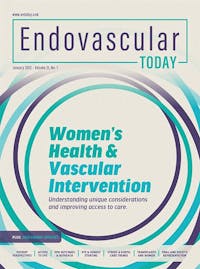
January 2022
Increasing Representation of Women Entering Vascular Specialties
The importance of diversity and inclusion, and strategies for overcoming barriers.
With Dawn Coleman, MD; Laura Findeiss, MD, FSIR, FAHA; Elizabeth V. Ratchford, MD; Jenny Tsai, MD, FRCPC; and Haimanot (Monnie) Wasse, MD, MPH, FASN, FASDIN





If known, what is the current percentage of female representation in your specialty?
Dr. Coleman: Women comprise approximately 15% of the vascular surgery workforce. Currently, 14% of all board-certified vascular surgeons are women,1 and approximately one-third of vascular surgery trainees are women.
Dr. Findeiss: Most data cite around 9% female representation for interventional radiology (IR). The 2014 Association of American Medical Colleges data book showed 9%, and the 2021 edition using 2019 data showed that percentage slightly increase to 9.8%.2,3
Additionally, the Accreditation Council for Graduate Medical Education reported that IR ranked among the specialties with the lowest percentage of female residents at 22% for integrated residency and 14% for independent residency.4
Dr. Ratchford: Based on a recent survey sent out by the Society for Vascular Medicine (SVM) to vascular medicine providers, the breakdown was 75% male and 25% female.
Dr. Tsai: The senior membership of the Society of NeuroInterventional Surgery (SNIS) is approximately 7% female, but the exact number is unclear. We conducted a survey of SNIS members in April to May 2021. With over half the respondents spanning the early to midcareer years, the survey reported approximately 14% female representation. These data may suggest that more women are entering the neurointerventional workforce in recent years.
Dr. Wasse: Female physicians comprise 7.1% of American Society of Diagnostic and Interventional Nephrology (ASDIN)–certified physicians (27 of 379 ASDIN-certified physicians). (Mary Lea Nations, Executive Director, ASDIN, email communication, December 1, 2021.)
Historically, what perceptions and barriers to entry for women have affected female representation in your specialty? Are any of these specific to the specialty?
Dr. Tsai: Lack of mentorship, perceived personality “fit” (or lack thereof), and considerations of work-life balance are barriers and concerns often brought up by female trainees and colleagues. Mentorship is key as trainees identify with the lifestyle, successes, and setbacks that their mentors may encounter. As such, the paucity of female neurointerventionalist mentors likely played a long-standing role in female trainees’ questioning whether this pathway may be suitable for them, with some ultimately opting for a different career path. Entry to fellowship programs also often require guidance, counsel, and mentors’ recommendations, and the availability of mentorship can play a significant role in this process.
These perceptions and barriers are not specific to our subspecialty but are mirrored by other disciplines where female representation is disproportionately low, such as IR and some surgical subspecialties. The imbalance in the entry process to fellowship training is also a challenge that other subspecialties (including radiology, orthopedics, and ophthalmology) have encountered and subsequently improved through a fellowship match process.
Dr. Wasse: Thirty-five percent to 40% of nephrology trainees are female.5 Yet in general, nephrology trainees receive very little education or exposure to dialysis access procedures beyond that of temporary catheter placement and receive even less teaching related to the importance of dialysis vascular access planning, placement, and maintenance. A general lack of exposure to the topic area may certainly serve as a barrier. In addition, there are a limited number of interventional nephrology programs at academic hospitals in the United States and a limited number of female interventional nephrologists to serve as role models and mentors.
Dr. Coleman: There are many well-described barriers to women entering the specialty. Historically, our specialty was reliant on the recruitment of general surgery residents to vascular surgery fellowship, a pool of candidates that has not reflected the gender symmetry of most medical school classes (although this has improved, such that contemporary classes average approximately 40% women). The integrated vascular surgery residency now draws recruits directly from medical school, but it remains evident that there are smaller proportions of women present at each sequentially higher level of medical training.
Beyond a “leaky pipeline,” there are numerous well-described barriers to not just recruiting women into vascular surgery but also promoting their advancement. Drivers include specialty-specific stereotypes/perceptions (which frankly impact both men and women), explicit bias, challenges to work-life integration, unconscious bias and prescriptive gender norms, variable opportunity, and differential mentorship and sponsorship.
Dr. Ratchford: The 13 founding members of the Society for Vascular Medicine & Biology (which became the SVM in 2007) were all men. The main barrier in my view is the historical precedent, but now that is no longer an issue. Currently, two of the four leadership positions on the SVM Executive Committee are held by women. Nearly half of all SVM Committee Chairs are women, along with the Editor-in-Chief of the SVM’s journal (Vascular Medicine). In my opinion, nothing about vascular medicine as a specialty would be a barrier. Focused on the diagnosis and management of vascular diseases, vascular medicine provides a wide array of career options, which can be procedural or not, depending on interest and training. I think both men and women find it rewarding to be part of a multidisciplinary team, providing long-term comprehensive vascular care.
Dr. Findeiss: This one is tough. The reasons often cited don’t really resonate. These include lifestyle (call, long and late days, unpredictable), procedural (possibly referring to a historical bias that women don’t enjoy or aren’t good at working with their hands), technical (as in not enough doctor-patient relationship), and because of pregnancy and parenting (radiation exposure cited as an underlying reason, as well as the lifestyle issues with parenting).
I have a hard time believing that these are real reasons, partly because general surgery and emergency medicine are 38% women, neurosurgery comprises 16% women, and pathology (highly technical and has no doctor-patient relationship) is 50% women. All exceed IR in female representation.
My own observations are that women radiology residents have been discouraged from going into IR, both by diagnostic radiology and IR attendings. Many of the biases inherent in the reasons I referenced above are applied to women when advising them; they’re told by their trusted advisors in training that IR is too disruptive and the lifestyle too hard, frequently by individuals who do not practice IR. There is also misinformation that is foisted on women about radiation exposure and pregnancy. The risks are highly overstated, and the policies in many radiology residencies reinforce the myths about pregnancy and safe (shielded) radiation exposure, despite science that doesn’t support these policies.
There’s also an impression that the culture in IR is not friendly to women. These perceptions are difficult to validate or measure, and individuals clearly have different experiences specific to their practice or training environment. As more women enter the specialty and the culture of medicine changes in general, I would expect these perceptions will change. There’s definitely been a push in training programs and in practices to be more inclusive in recruitment to improve diversity.
In 2019, it was reported that women outnumbered men in medical school enrollment. With the overall number of female doctors increasing, how is your society endeavoring to increase its representation of female physicians? Do you have additional ideas for how the society might increase its visibility and draw to the next generation of med students, particularly women?
Dr. Ratchford: SVM is committed to diversity, equity, and inclusion (DEI). We have a DEI task force that was formed to promote DEI in the SVM community, from training to leadership to collaborative engagements. In my view, the recruitment of women should start very early on (ie, at university and medical school); increasing the awareness of vascular medicine as a specialty will help us achieve this goal. When I give the annual lecture on peripheral artery disease to the medical students at Hopkins, I talk about vascular medicine in detail as a career option. It is important for students and residents to be able to envision themselves in our shoes.
Dr. Tsai: Diversity initiatives are strongly supported by the SNIS. As such, the SNIS DEI Committee was formed in 2021. Both in recognition of the success that several of our female leaders have achieved in increasing women’s representation in neurointervention and in support of this continuous effort, Women in Neurointervention remains a stand-alone committee within the SNIS. The Women in Neurointervention gathering at the SNIS annual meeting used to be a small event attended by only a few. In 2021, the annual dinner had 108 attendees, both virtual and in person.
The SNIS has an open commitment to have female representation among the speakers and moderators in every session of our webinars and conferences, if possible. Additionally, our new Mentor Match Program, under the leadership of Dr. James Milburn, creates a pathway for all trainees to connect with a mentor. This is really important because it allows female mentees to find like-minded mentors (who do not have to be female!) to help them become successful neurointerventionalists. The DEI Committee is working on an upcoming initiative that shows our next generation of trainees that we not only value our diversity but also the strengths that diversity brings to our field. The SNIS is also addressing the complex challenge of providing equitable access to fellowship training by spearheading and sponsoring the establishment of a Neurointerventional Fellowship Match.
Dr. Findeiss: The Society of Interventional Radiology (SIR) has been active in addressing the disparity. The Women in IR section of SIR began in 2006-2007. At the time, names of members were used to estimate the number of women in SIR because no demographic data were available. It was estimated there were about 200 women interventional radiologists in the United States (4%-9% of interventional radiologists; 10% of fellows in training).
In 2015 at the SIR annual scientific meeting, there was a plenary session featuring an international group of women interventional radiologists on a panel that included a discussion of diversity. The session kicked off a meaningful societal conversation about diversity, initially focused on gender.
SIR became intentional about understanding the demographics of our membership and celebrating and promoting diversity. This led to the popular “I Am IR” campaign that continues today.
SIR’s Women in IR has been successful in promoting women within the specialty. You can read more about their section objectives on their Women in IR webpage.
Tactics from Women in IR to increase representation include:
- Tap women to moderate and plan meeting sessions
- Women added to IR speaker’s bureau—intentionally invite women to speak
- Encourage women to apply for fellow recognition
- Online mentor match program
- SIRConnect Women in IR forum
- SIR position statement on parental leave published6
- Networking events targeted at women but welcoming to men
- Strong “He For She” network
Finally, the creation of the IR residency is viewed as an important part of recruiting women into IR, with early wins observed. The past state required fishing in the 73% male diagnostic radiology pond, limiting access to IR for women. The current/future state of IR residency is more diverse, pulling directly from medical schools with more opportunity to recruit inclusively. Women in IR have a strong presence in the in-training sections of SIR, and medical student membership in SIR has grown dramatically over the last 10 years. This has enhanced the visibility of IR for medical students and has facilitated recruitment of women in medical schools to IR residencies.
Dr. Wasse: The American Society of Nephrology Workforce Committee has focused considerable efforts on stimulating interest in nephrology among students and residents, initiating several mentored programs to encourage applicants from all backgrounds, as there has been a decline of fellowship applicants in the past decade. Because interventional nephrologists must be board certified in general nephrology, the pipeline to more women physicians in ASDIN depends on the proportion of female general nephrology trainees.7,8
Dr. Coleman: The Society for Vascular Surgery (SVS) and others are actively prioritizing the diversification and inclusivity of our workforce to optimize the care we deliver to our patients and the education we offer our trainees. I would reference the efforts of the SVS DEI Committee efforts and a recent DEI supplement published in Journal of Vascular Surgery, which captures a tremendous effort from societal leadership and engaged members to address “persistent and pernicious structural disparities across health care … (with the goal) to implement the structural changes necessary to ensure the future of the SVS and the wellness and professional success of our evolving membership.”9
What steps can be taken toward increased leadership opportunities for women, both at the society level and within divisions and departments? What are the key current calls to action regarding female representation in your society?
Dr. Wasse: During my tenure as the first female president of the ASDIN, I put out a specific call for more women to join ASDIN committees and put their hat in the ring for council and executive committee positions. We also started a Women in Interventional Nephrology reception at our annual scientific meeting where members could network. I’m very pleased there are now several more women in leadership positions and that the ASDIN will have its second female president in 2022.
Dr. Coleman: Although there has been increased inclusion of women in our societies, leadership in our societies and in the academic ranks at an institutional level have lagged. Humphries et al propose: “To achieve true gender diversity within vascular surgery, the goal of membership should be to achieve 50% female representation, mirroring what’s seen in the general population as well as the medical school graduating classes”… in contrast to “the current proportion of women members or women vascular surgeons.”1 This requires the intentional inclusion of women and gets back to leadership development, mentorship, and sponsorship. Additionally, consider shared leadership models and expand opportunities (ie, create more positions!) to build high-performance teams! Widely promote open positions, standardize candidate evaluation tools/interviews, and ensure leadership has been trained to the ever-present implicit bias that challenges recruitment and retention.
Dr. Findeiss: SIR has a strong history of women in leadership and of women with impact despite the low overall numbers. Dr. Vicki Marx, former SIR president, stated it well, saying that in SIR, “There is no glass ceiling, but instead there’s a glass floor.” There were three women in the inaugural Society of Cardiovascular & Interventional Radiology fellows class of 1973: Renate Soulen, Helen Redman, and Ethel Finck. Arina Van Breda was the first woman to be president of Society of Cardiovascular & Interventional Radiology (1992).
There have been 48 presidents of SIR. I was the 46th president and the sixth woman in that role, and the 2023-2024 SIR president, Alda Tam, is another woman. This keeps us at a rate of about 13% to 14% women presidents, exceeding the overall representation of women in the specialty. The current Executive Council (Board of Directors) of SIR is 29% women and the SIR Foundation Board is 44% women, so the leadership pipeline is strong. The visibility of women in leadership is an increasingly important part of recruiting women to the specialty and then to leadership.
Dr. Ratchford: An important and relatively straightforward first step is to have an ongoing commitment to DEI in selecting conference speakers, panels, and committees.
It is important to note that the pandemic has been difficult for everyone but especially for working women who found themselves facing increased stress at work and at home and social isolation, while shouldering much of the responsibility of childcare, household tasks, and virtual school. Although most kids are back in school, it will take much longer for us as parents to recover because many of us have found ourselves declining such leadership opportunities just to maintain our own sanity. The long-term impact of the pandemic on our careers remains to be seen, and priorities continue to shift. On a positive note, the increased use of virtual meetings has allowed many people to join the conversation who may have otherwise missed out.
Along those lines, we need to be cognizant of what adjustments may be needed to encourage women to participate. As the Chair of the Membership Committee for SVM, I make a point of not holding any meetings outside of business hours, and we schedule far in advance to allow the members to adjust their work schedule to attend, rather than asking them to rearrange their home life. This year, we moved our monthly Board of Trustees meetings from the evening to regular business hours for the same reason. Evening conference calls are “easier” for some people and nearly impossible for many working parents.
Dr. Tsai: Equity and inclusion can be more challenging to achieve than diversity. Informing our colleagues of all genders of the challenges faced by female neurointerventionalists is important to begin to address implicit biases that all of us have to various extents. Providing education and resources for women to increase proficiency and confidence in negotiating for opportunities commensurate with their abilities is also crucial to help them reach leadership positions in the workplace. The Women in Neurointervention Committee’s highly attended dinner during the society’s annual meetings addresses these needs. Leadership programs are also a great way to build these tools, especially if the department can invest time or funding support for women interested in pursuing them.
It is also key for women interested in leadership positions to consider running for them within the professional society. Following the 2021 elections, there are four women on the SNIS Board of Directors for the first time.
What opportunities do you envision there might be to work across specialties, with industry, or with lay organizations, to improve representation?
Dr. Findeiss: SIR is actively working with industry as well as internally to increase diversity in IR across the board. SIR has also connected through its international division with societies in Europe and the Middle East to collaborate on initiatives to grow the representation of women in IR.
Increasing diversity in the representatives of our industry partners, with whom we interact around patient care and innovation, would have a synergistic effect on promoting diversity in the specialty. There has been literature published on the lack of industry collaboration with women IR physicians, which may impact women physicians’ professional growth and visibility, as well as limiting the diversity of perspectives provided to industry on opportunities for improvements in patient care.10 Additionally, few women physicians transition to industry roles, such that there are few female vascular physician leaders in industry. These patterns may partially be driven by the tenor of relationships between physicians and industry representatives.
Interspecialty connections between the vascular-focused societies, at the in-training, early career, and senior leadership levels could be valuable in generating collaboration focused on growing the presence of women in vascular specialties and could enhance models for multispecialty collaboration nationally and locally. Setting an example of collaboration over competition, starting at the society leadership level, may favor recruitment of women and would benefit patients, health systems, and vascular physicians in general.
Dr. Tsai: Similar efforts are made across many of our societies, either neurointerventional or affiliated with our “parent” specialties of neuroradiology, neurology, or neurosurgery, to increase female representation. There is a shared understanding that the challenges we meet do overlap. This shared space is also continuous with our industry partners, many of which have initiatives that support internal growth for women and in increasing female presence in leadership positions. Efforts our societies or industry partners make to address these issues can be mirrored and our successes will benefit one another, so it is important that these initiatives have the support of their respective leaders. Consideration of engaging female speakers for industry events or sponsoring of educational, networking, and mentorship events for women are other steps that professional or industry organizations can take to help us further increase female representation.
Dr. Wasse: There are many incredible, experienced women in surgical and interventional fields, but as we have seen, particularly in the era of virtual meetings, a disproportionate number of men are given opportunities for visibility (ie, chosen to deliver lectures at scientific meetings or serve on topic expert panels in industry-sponsored workshops). I believe greater intentionality by our industry partners and lay organizations in engaging female physicians would improve representation.
Dr. Ratchford: Awareness is the first step, and I think our charge going forward is to keep representation in the forefront of our minds as we form committees, choose committee chairs, select speakers, or send invitations for collaborative agreements. It is vital to have a voice and a champion always asking this question.
Dr. Coleman: Cross-specialty outreach and visibility (with the support of industry and lay organizations) to ensure diversity in leadership, clinical/research teams (ie, grants, clinical trials), and speaker/discussant panels is critical! Impactful change requires resources and commitment in the form of leadership prioritization, human capital (ie, effort), and funding to support interventions, as well as the acknowledgment that we can do better, prioritizing DEI efforts across not just gender but all other phenotypes that merit diversification. Leadership development and mentorship programs and funds to drive DEI/disparities work and scholarship are also essential.
1. Humphries MD, Mikityuk A, Harris L, et al. Representation of women in vascular surgery science and societies. J Vasc Surg. 2021;74:15S-20S. doi: 10.1016/j.jvs.2021.03.056
2. Association of American Medical Colleges. 2014 Physician specialty data book. Accessed December 6, 2021. https://www.aamc.org/media/8386/download?attachment
3. Association of American Medical Colleges. Active Physicians by Sex and Specialty, 2019. Accessed December 6, 2021. https://www.aamc.org/data-reports/workforce/interactive-data/active-physicians-sex-and-specialty-2019
4. Accreditation Council for Graduate Medical Education. ACGME data resource book. Accessed December 6, 2021. https://www.acgme.org/about-us/publications-and-resources/graduate-medical-education-data-resource-book/
5. American Board of Internal Medicine. Percentage of first-year fellows by gender and type of medical school attended. Accessed December 6, 2021. https://www.abim.org/about/statistics-data/resident-fellow-workforce-data/first-year-fellows-by-gender-type-of-medical-school-attended.aspx
6. Englander MJ, Ghatan CE, Hamilton BN, et al. Society of Interventional Radiology position statement on parental leave. J Vasc Interv Radiol. 2017;28:993-994. doi: 10.1016/j.jvir.2017.04.006
7. Parker MG, Sozio SM. The future nephrology workforce: there will be one. Clin J Am Soc Nephrol. 2021;16:1752-1754. doi: 10.2215/CJN.05040421
8. American Board of Internal Medicine. Percentage of first year fellows who are female by subspecialty. Accessed December 6, 2021. https://www.abim.org/about/statistics-data/resident-fellow-workforce-data/Percentage-of-first-year-fellows-who-are-female-by-subspecialty
9. Aulivola B, Coleman DM, Mills JL. Creating success in comprehensive vascular surgical care through diversity, equity, and inclusion. J Vasc Surg. 2021;74(suppl):S1S-132S.
10. Deipolyi AR, Becker AS, Covey AM, et al. Gender disparity in industry relationships with academic interventional radiology physicians. AJR Am J Roentgenol. 2020;215:494-501. doi: 10.2214/AJR.19.22176
Advertisement
Advertisement