Advertisement
Advertisement


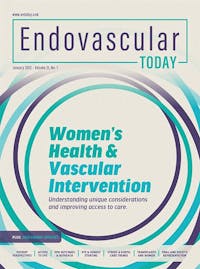
As medicine evolves, we continue to observe multifactorial gaps in care delivery. Women may have different presentations for the same disease observed in men, and they are also inserted in different sociocultural realities. One may ask, is it our job to understand these differences, or should we evaluate the current differences and improve on them?
In this issue dedicated to women’s health and beyond, our goal is to bring awareness and also inspire researchers, clinicians, and junior aspiring vascular interventionalists to critically think about these concerns and provide a framework for vascular diseases dedicated to women’s health beyond reproductive needs.
The past few years have seen an increased focus on female vascular health, as well as women working in vascular specialties. There are new outreach and awareness programs, research into disparities and female-specific health concerns, parity in medical school enrollment, and a strong focus from our societies on providing support and leadership opportunities. Despite this progress, the work is far from done.
We have designed this issue based on three pillars—leadership, research, and clinical needs—understanding that a diverse health care system plays a significant role in patient compliance with treatments for cardiovascular disease as well as with workforce recruitment.
Opening our feature is a piece by Claire S. Kaufman, MD, on the barriers to uterine fibroid embolization access, a procedure that, despite its benefits, struggles with awareness for patients and referring providers. Awareness and barriers to care are a common thread to these vascular health issues concerning women, as we learn in our discussion with Janice M. Newsome, MD; Ethel Rivas Zuleta, MD; and Greg Makris, MD, on uterine artery embolization and the response, outcomes, and outreach related to postpartum hemorrhage. Then, Vivian Bishay, MD, takes a look at high-risk pregnancy-associated pulmonary embolism, reviewing diagnosis, management, and the role of advanced therapies.
A conversation with Erin H. Murphy, MD, delves into patient-specific factors to consider for venous stenting in women, as well as the key unknowns to be explored. Following the theme of anatomic concerns specific to women, we asked Linda M. Harris, MD, to moderate a discussion on aortic health in women in which panelists Young Erben, MD; Javairiah Fatima, MD; Joseph V. Lombardi, MD; and Jessica P. Simons, MD, share their perspectives on appropriateness of screening for abdominal aortic aneurysm in women, anatomic considerations, differences in outcomes compared to men, and more.
Next, Youngran Kim, PhD, and Sunil A. Sheth, MD, elaborate on their recent study demonstrating that women with large vessel occlusions were less likely than men to be taken to a comprehensive stroke center. We also have a conversation with Brooke Spencer, MD, and Nichole Vollmer on the impact of pelvic venous disease on a patient’s life, needed improvements in diagnosis and management, and areas of current and future research.
Jayer Chung, MD, shares takeaways on the low representation of women in United States clinical trials of common vascular disease. Pilar Bayona Molano, MD, and colleagues then highlight the driving factors associated with gender disparities in liver transplantation, as well as the potential solutions for equitable access.
We close with a leadership panel featuring Dawn Coleman, MD; Laura Findeiss, MD; Elizabeth V. Ratchford, MD; Jenny Tsai, MD; and Haimanot (Monnie) Wasse, MD, on the perceptions and barriers to entry for women in vascular specialties and what can be done to increase representation and leadership opportunities.
Also in the issue is our annual CPT coding update by Katharine L. Krol, MD, and a featured interview with Karen Woo, MD, on health services and outcomes research, improving the patient experience of vascular access, updates on current projects and leadership roles, and how physicians can advocate for an equitable health care environment.
Jayer Chung, MD, sums up our intentions with this issue nicely in his interview, “Modern medicine means precision medicine. Underrepresentation proscribes our ability to provide precision medicine to women. Instead, we are forced to generalize our recommendations and quality metrics from data gathered about male patients. The ultimate effect of underrepresentation on health care disparities is that precision medicine is impossible for women. The magnitude of this disparity is unknown because the alternative (using data that appropriately represent females) has not been performed adequately.”
We hope this issue of Endovascular Today can play a role in encouraging provision of precision medicine to women and spark conversations on equitable care irrespective of sex and gender, race and ethnicity, geographic location, or socioeconomic status. Our goal should be to replicate and expand these efforts to deliver optimal vascular care to all patient demographics and populations.
We hope you enjoy the articles and get to know these amazing leaders who are paving the way to better and more accessible comprehensive vascular care for all.
Gloria Salazar, MD
Kirema Garcia-Reyes, MD
Guest Chief Medical Editors
Advertisement
Advertisement